The Tooth Fairy (a flash fiction horror story)

Image courtesy of Raw Pixel.
Introduction to “The Tooth Fairy”
This story was based on an actual experience, though I didn’t run into any Freddy Krueger-style monsters from dreamland.
We had a grocery store in town at the time – Food World – which was my go-to destination for cheap beer and cigs. Yes, I smoked back then – this would have been in the ’90s, and you could still get a carton of cigarettes for about $10. They put them in display cases that were accessible to the public. It was a much more trusting time.
One night I headed over to Food World for something – I forget what. I don’t think it was cigarettes, but it might have been. Food World stayed open until 9 p.m.; otherwise, I would have had to do my cigarette shopping at a convenience store.
I remember walking into the store and thinking: This is strange. Something about the bright fluorescent lights overhead throwing everything into stark, electric contrast, made me feel as if I were walking through a Dennis Etchison short story. Not only that but the store was ghostly quiet. Hardly anybody was shopping. You could hear every creak and groan of the building.
As I said, strange.
I got whatever I was looking for and went to the cash registers. Only one was open, and there was a person ahead of me. I remember seeing all those packages of meat rolling down the conveyor belt to be scanned and bagged. Why would somebody come to a grocery store late at night to buy lots and lots of meat?
All kinds of thoughts sprang to mind, thoughts that only a writer of scary stories would consider, all of them involving caged beasts back at the house, or something with a taste for blood, or maybe an evil presence in one’s dreams, foreshadowing the awful things it had planned for you once you fell asleep.
Unless you were already asleep and this was part of your nightmare.
Is the Jimmy of “The Tooth Fairy” asleep and dreaming these events? Has the nightmare invaded his waking hours? I’m not sure. I will say I’m not a fan of ambiguity in horror stories, but in this case I think it works.
One more thing: When you were a kid and your mom and dad told you about the tooth fairy who comes at night and finds that tooth under your pillow and gives you money for it, did they ever say why the tooth fairy wants your tooth?
Did they ever tell you what the tooth fairy does with that tooth?
I didn’t think so.
And I’m not sure I want to consider the possibilities.
—
THE TOOTH FAIRY
A pack of cigarettes. That’s all Jimmy wanted. A pack of cigarettes, and the safety of his townhouse, and sleep.
But sleep brought the Tooth Fairy, and that was no good. The Tooth Fairy … a monstrous vision of teeth clicking and snapping at him from his nightmares, set within a face as pale as moonlight on dead flesh, surrounded by a field of black, as if Jimmy’s fear of the world had taken on a predatory life of its own.
So Jimmy couldn’t sleep, and after reaching for the pack of Marlboros on the nightstand and coming up empty, he’d climbed into his blue jeans and sweatshirt and had driven to the 24-hour Food World across town, a careful visit to the grocery store, a foray into a realm he tried to avoid. The world was full of horrors, yes: murderers and thieves and liars. But it was the little deaths that nibbled at his soul: the petty indifferences and incessant sales pitches and the all-consuming, voracious demand for his attention that warped him and transformed him into something unnatural, so that his time away from home became a gauntlet of senseless noise and chaos, and his time at home took on the quality of a siege. What lay between had become one thing:
The Tooth Fairy.
But if he remained awake all night he might eventually collapse into that merciful land of exhausted unconsciousness that lay beneath fearful dreams. So.
The supermarket was electric and weird this time of night, the lights as bright and the aisles as quiet as an oncology ward. They kept the cigarettes up front where the store manager could watch for shoplifters. But nobody was there. Jimmy yanked a pack from the kiosk and walked straight to the express lane.
Another customer was already there, dressed in a broad, gray duster that brushed the linoleum floor. He was unloading groceries onto the moving belt in front of the register, and the teen-aged cashier was running them across the scanner. Big cuts of meat, bloody and shiny in the preternatural light.
Jimmy sighed and scanned the racks of tabloids. Famous actor is really a vampire. Woman gives birth to 17 babies. Rendering of Mr. Spock found in Egyptian tomb. Jimmy shook his head. Nothing shocked or amazed him anymore. It was all a blizzard of images and sounds.
The scanner beeped. Steaks and flanks trimmed in opaque fat. The man certainly liked his meat, Jimmy thought, watching him stoop over the shopping cart and extract packages and set them down on the belt. The girl whipped them across the scanner and as Jimmy studied her, he noticed she would not look up, not even once. A fellow sojourner, he decided. Probably waiting to start her weekend.
The man slapped down dripping packages. Jimmy peered around the sweep of the man’s duster and saw heaps of meat still in the cart, cuts of meat he’d never seen before. The man dropped a shrink-wrapped package on the belt and the scanner bleated. The girl waved it across the laser three more times, and each time the scanner refused to ring up the price. She gazed at the bar code with an exasperated look. Then her face went white.
She dropped the package. She snatched her fingers away and wiped them on her apron. She glanced up at the man, then, and her lips trembled, as if a scream were forming behind them but refused to come out.
The package contained an assortment of jawbones.
Jawbones studded with perfectly normal incisors and canines and molars. One of them had a gold filling.
Jimmy felt a part of his brain go numb, like a pot roast that had thawed on the outside but remained frozen on the inside, and a tiny gasp escaped him so that the man turned and looked down at him, and Jimmy recognized the bloodless pallor of that face and the picket fence of teeth that sank into his sleep, and he knew this time he would not awaken in his bed, the sheets drenched with sweat, to wonder how he might keep the world at bay another day.
“Hurry home,” the man whispered in a tissue-soft, dreamlike voice. “Hurry home and go to sleep. I’m hungry.”
The cigarettes slipped from Jimmy’s fingers and went bumping down the belt, where they joined the man’s other possessions.
As the world sank its teeth in, and would not let go.
About the author:
Del Stone Jr. is a professional fiction writer. He is known primarily for his work in the contemporary dark fiction field, but has also published science fiction and contemporary fantasy. Stone’s stories, poetry and scripts have appeared in publications such as Amazing Stories, Eldritch Tales, and Bantam-Spectra’s Full Spectrum. His short fiction has been published in The Year’s Best Horror Stories XXII; Alfred Hitchcock’s Mystery Magazine; the Pocket Books anthology More Phobias; the Barnes & Noble anthologies 100 Wicked Little Witch Stories, Horrors! 365 Scary Stories, and 100 Astounding Little Alien Stories; the HWA anthology Psychos; and other short fiction venues, like Blood Muse, Live Without a Net, Zombiesque and Sex Macabre. Stone’s comic book debut was in the Clive Barker series of books, Hellraiser, published by Marvel/Epic and reprinted in The Best of Hellraiser anthology. He has also published stories in Penthouse Comix, and worked with artist Dave Dorman on many projects, including the illustrated novella “Roadkill,” a short story for the Andrew Vachss anthology Underground from Dark Horse, an ashcan titled “December” for Hero Illustrated, and several of Dorman’s Wasted Lands novellas and comics, such as Rail from Image and “The Uninvited.” Stone’s novel, Dead Heat, won the 1996 International Horror Guild’s award for best first novel and was a runner-up for the Bram Stoker Award. Stone has also been a finalist for the IHG award for short fiction, the British Fantasy Award for best novella, and a semifinalist for the Nebula and Writers of the Future awards. His stories have appeared in anthologies that have won the Bram Stoker Award and the World Fantasy Award. Two of his works were optioned for film, the novella “Black Tide” and short story “Crisis Line.”
Stone recently retired after a 41-year career in journalism. He won numerous awards for his work, and in 1986 was named Florida’s best columnist in his circulation division by the Florida Society of Newspaper Editors. In 2001 he received an honorable mention from the National Lesbian and Gay Journalists Association for his essay “When Freedom of Speech Ends” and in 2003 he was voted Best of the Best in the category of columnists by Emerald Coast Magazine. He participated in book signings and awareness campaigns, and was a guest on local television and radio programs.
As an addendum, Stone is single, kills tomatoes and morning glories with ruthless efficiency, once tied the stem of a cocktail cherry in a knot with his tongue, and carries a permanent scar on his chest after having been shot with a paintball gun. He’s in his 60s as of this writing but doesn’t look a day over 94.
Contact Del at [email protected]. He is also on Facebook, twitter, Pinterest, tumblr, TikTok, and Instagram. Visit his website at delstonejr.com .
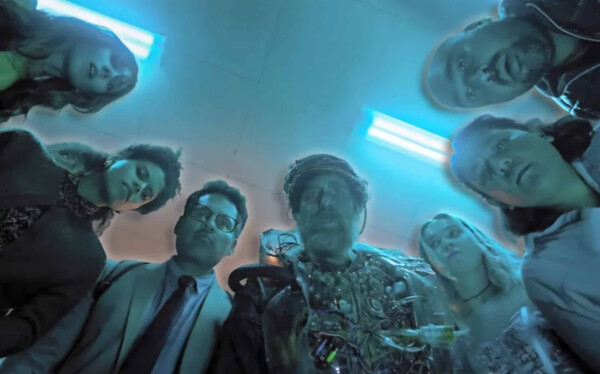
Image courtesy of Briarcliff Entertainment.
“Good Luck Have Fun Don’t Die” Starring Sam Rockwell as Future Man, Haley Lu Richardson as Ingrid, Juno Temple as Susan, Mark Peña as Mark, Zazie Beets as Janet, and Artie Wilkinson-Hunt as the AI boy. Directed by Gore Verbinski. 2 hours, 14 minutes. Rated R. Theatrical release.
Plot summary: Is he a man from the future as he claims, or just some off-the-street, attention-seeking lunatic? Either way, he’s burst into a Los Angeles diner seeking volunteers to help him defeat an AI hellbent on making zombies of us all.
Spoilers: Knowing Mladen, almost certainly.
Del’s take
Minutes before “Good Luck Have Fun Don’t Die” began, and as we sat through interminable assaults of probably AI-created and enabled advertising, I was ranting to Mladen about how technology – primarily “smart” phones – are exacerbating America’s intellectual laziness and ignorance. Then along comes this movie and holy cow! Déjà vu all over again.
That’s the thesis of “Good Luck Have Fun Don’t Die”: Mobile phones, the internet, technology, and all the movies/TV/music/internet/advertising and other distracting digital crap are transforming Americans into mindless zombies incapable of thinking and feeling. I so agree with that thesis. I mean, c’mon. SWEDEN – you know, that country sandwiched between Norway and Finland – is doing away with its “digital-first” approach to education and investing hundreds of millions of kronor in books, pencils and paper tablets to reverse what it calls declining literacy and the ability to focus. In America, where declining literacy and the ability to focus are celebrated as superpowers, the idiotification process is light years ahead of Sweden’s. How else could we have elected an anal polyp like Donald Trump?
“Good Luck Have Fun Don’t Die” begins with a weirdo (Sam Rockwell) bursting into an L.A. diner to announce the end of the world is imminent. He needs volunteers to help him battle a rogue AI being developed by an also weird 9-year-old kid. Fail to comply and he’ll detonate a bomb strapped to his chest. Two women – Ingrid and Susan – offer to join his cause. Future Man conscripts the rest. What follows is a kind of road-trip story (although the trip isn’t very long) with interruptions along the way for various members of this plucky band to relate their personal beefs with technology. Mark and Janet, for instance, are high school substitute teachers who run afoul of zombified, “smart”-phone addicted teenagers. Susan’s son, Darren, is killed in one of the district’s many school shootings and is directed by the traffic-obsessed parents of other school shooting victims to a company that can produce a clone of her son, although Susan should be careful what she wishes for – the clone is an advertising-spewing automaton who is nothing like her real son. Ingrid, who is physically allergic to technology, loses her boyfriend to a VR headset – he asks her why he should remain in this reality when there’s a superior reality – albeit fake – inside the magic box.
They eventually reach the house of AI boy and things get really weird, with giant horse cats – that’s “horse,” not “house” – eating teenage “smart” phone zombies, and robots cobbled together from tech junk coming to life and menacing anybody who threatens the kid sitting atop a mountain of cast-off cables and junked devices.
“Good Luck Have Fun Don’t Die” was written by Matthew Robinson and it is whip smart. Clearly Robinson has no love for our AI overlords and it shows in the layered dialogue and events-as-metaphors that transpire in this biting two-hour satire. Rockwell is perfectly cast as the weirdo from the future, as is Richardson as Ingrid, who has a connection to Future Man. ALL the actors seem well suited for their roles. Verbinski’s pacing is frenetic, which matches the movie’s pell-mell tone. My one gripe is the character backstories interrupt the flow. I’m not sure how I’d fix that problem but I need to acknowledge it is a problem. The movie at times reminded me of “The Matrix” and at other times “Groundhog Day” but not to worry – there’s plenty of original content to keep the audience engaged.
I don’t think it’s an A film because of the structural problem I referenced earlier, but I do think it’s a B+ film and that’s what I’m going with. It’s nice to see somebody – ANYBODY – in Hollywood trying to do something that isn’t a retread, prequel or sequel. You’ll need brains to enjoy “Good Luck Have Fun Don’t Die.” I’m supposing there are still a few of you out there.
Oh, and remember: Before the movie starts, please silence your “smart” phones.
Mladen’s take
I am Ingrid without the nosebleed. Let me explain.
Ingrid of “Good Luck Have Fun Don’t Die” gets a nosebleed when she gets too close to junk technology such as cell phones, tablets, and portable video game players. She’s allergic to the screens, microprocessors, and lithium batteries now shaping our lives. So am I. Hate them devices, I do. My phone is a hand-me-down from my son. It’s in lockdown mode. My TVs are disconnected from the internet. I’m blowing away Rippers in Borderlands 4 in solo campaign mode offline. I uploaded the game using, get this, a disc.
Also, I’m no longer a newspaper reporter because I saw the handwriting-on-the-screen some 19 years ago when that new fangled contraption called the Internet started taking control. The hell I was going to work the Military Affairs beat to get validated facts when my bosses were throwing all that information on the Net for free because they, and the rest of society, were unable or unwilling to regulate the tech. Pretty soon after I left, facts and objectivity started losing to conjecture and opinion, an ongoing, unstoppable phenomenon produced by, then, “citizen reporters,” yesterday, “influencers,” and today, “Large Language Models.” I saw what we’re now facing coming a long time ago. Gee-whiz connectivity copulating with gee-whiz gadgets to produce ignorance, immorality, and lies by the byte.
“Good Luck Have Fun Don’t Die” simply confirms what we all know, a vast majority of mankind loves bullshit and AI is making access to bullshit ever more convenient. But, don’t let that discourage you from seeing this A of a movie. GLHFDD is funny. A bit violent. It rocks with real instruments.
All the acting is good but there are standouts.
Rockwell as Future Man is damn near perfect. Sardonic and truthful. Focused but caring. Realistic though chasing a pure fantasy, regulation of the AI industry and its ghastly algorithm-driven platforms because they contort then twist then invert then bend reality so that it’s impossible to discern the actual from the programmed.
Richardson as Ingrid is as good as Rockwell playing his role. Her unshakeable faith that people prefer real reality more than virtual reality. Her heartbreak when her boyfriend tells her, over the dinner that he cooked, that he has decided to roll his life into a computer program that generates a nicer culture is palpable.
Temple as Susan is very convincing as a distraught and grief-stricken mother trying to find solace amid a society that’s only interested in making money from her boy’s death. Her expressions of disbelief, befuddlement, and vexation are as good as any I’ve seen on the screen.
If GLHFDD’s Future Man from the AI-mutilated future disturbs my dinner at a restaurant by accusing me of complicity in turning mankind into a tool for computers, I’ll have only one riposte. “Yes, sir, but I was an unwilling co-conspirator.” Would you be able to say that about yourself? Or have you already, and intentionally, sacrificed your fate, your individuality, and your capacity to think at the altar of Altman? Yeah, I thought so.
Mladen Rudman is a former journalist and technical writer. Del Stone Jr. is a former journalist and writer.

Image by Zarina Khalilova for Pexels. CC license. https://www.pexels.com/@zarina-khalilova-207741792/
Introduction to “When She Cries”
Back in the ’80s America held a lively conversation with itself about self-defense.
Several high-profile cases had come to pass where wives had shot and killed abusive husbands, girlfriends had killed abusive boyfriends, and children had killed abusive parents.
Were there limits to self-defense? Was there a line that should not be crossed where self-defense became plain old-fashioned murder?
With “When She Cries” I wanted to examine two things:
1. Instances where self-defense becomes a kind of execution. This story illustrates that concept. Was the protagonist defending himself or was he executing his antagonist to prevent future abuse?
2. What about the mental toll exacted by killing another human being, warranted or not? Would the shooter be able to rationalize his or her actions as self-defense, or would they be crippled by the knowledge they had killed another human being?
This story demonstrates that not all horror tales require a monster.
Sometimes the monster lies within.
—
WHEN SHE CRIES
A scream like broken glass, cutting a jagged edge against the shower’s hiss. David heard it. The air was suddenly unbreathable. Then a thud, a dull sound, worn sawteeth drawn across the bones of his spine.
Evie –
He wrenched down the faucets and cupped a hand over the shower nozzle.
Feet trampled the hallway. Another lunatic scream, amplified into the throat of the hallway and echoing madly.
“DAVID!”

https://www.pexels.com/@zarina-khalilova-207741792/
A snare-drum brace of fists pounded the door. He threw back the shower curtain and shimmied wet and lathered into his shorts, too quick for any thought but the sick panic she had screamed into him. He jerked open the door and Evie lunged at him, a shuddering angina of terror, just escaped from monsters and her eyes, her face bald from the fright of it.
She screamed, “It’s BUDDY!” She dug needlelike fingernails into his arms. “He’s lost it! He’s lost – my God! – he’s got an ax – he’s gonna – oh, Jesus! – he’s – he’s – ”
Buddy. The old boyfriend. Who drove the truck – with the oversized tires, shotguns mounted in the back window. Big Buddy. Big, big Buddy. A wad of tobacco perpetually wedged between his cheek and jaw. Ditched over the phone by Evie. That was nice. “I’m gonna make you wish to hell you were never born,” Buddy seethed at her from midnight telephone calls. Even nicer.
Crazy, crazy Buddy.
From the living room came the sound of something thick and stubborn flying apart. The door. A short, guttural bark; Evie’s eyes peeled white, and David grabbed her, terror twisting his stomach. He spoke in a strangled whisper, “The bedroom! Run!”
He shoved her out of the bathroom, her hip smacking solidly against the door molding. She ran sideways, David shoving from behind, half-running, half-staggering across the hallway until they had made it to the bedroom. David slammed the door, locked it and backed away as if it might try to grab him. Evie crouched at the foot of the bed.
“Gun,” she whispered. David turned, and she was pointing at the gun cabinet, at his father’s .38. It hung from the corner, holstered, dark and slippery with oil, too slippery for his mind to grip what she was saying.
“Get the damn gun!” she whispered again and David stared down at her, numb.
“I can’t shoot anyone. …”
Something smashed loudly against the door and sank to the bone, wooden ribs snapping, then squeaked as smooth metal was jerked away. Somebody was laughing, a crawling lunatic snake of a sound. Evie curled into herself and twitched when the door boomed again. Wood cracked. A shark’s tooth of ax blade chewed through the facing.
David threw back the cabinet door and grabbed the pistol; he almost dropped it. It seemed too heavy, too dirty, and he held it as he would have held something infected. He turned to Evie. She swallowed, took a shuddering breath, and lost herself to a sudden palsy of tears.
“Sh – shoot through the door.”
Again, the thought misfired, and he stared at her lamely, not a hint of understanding in his expression, the gun dangling limply in his hands.
The spine of the door broke and the ax blade chewed cleanly through to their side, wood strips broken and cartwheeling away from the hole. The blade twisted and worried itself from the door.
David rotated on his heel, almost fell, pointed the gun at the door, both hands on the butt and his fingers sweaty around the trigger. His heart pulsed and he felt it with his entire body. He squeezed on the trigger but he could not pull it – he couldn’t do it and they would be killed, but My God, oh Jesus I can’t do this please help me Jesus –
He heard a back-of-the-throat grunt and an agony of shattered wood – the door exploded into flying pieces that spun crazily into the walls and cabinet. Evie lunged at David, screamed “SHOOT! SHOOT! SHOOT!” Screamed all thought from him, the terror, until he could not see or hear or even understand what it was he had been afraid of and could only pull the trigger.
The shot was a bomb going off – the gun bucked fire and curdled smoke – the ax spun straight up, then fell and thunked to the floor. Silence.
Oh. Oh. …
Then … thrashing. Angry, meaningless thrashing, a bellow that sounded like a truck horn. David peered uncomprehendingly into the smoke spreading across the hallway. Evie peeked over his shoulder.
Buddy lay midway between the door and the bathroom, his arms and legs working back and forth, clawing at air, kicking, his fists clenching and unclenching, grabbing at unseen throats. He jerked to one side – David backed away – and a reddish-black spray of blood spattered the floor. He coughed and shouted, and against the narrow walls his deep voice resonated spastic hate.
David watched, horror caught in his throat and impossible to swallow; he felt pain in his arm and saw Evie hanging there, fingers hooked into him, her eyes marbled and moonlike. She turned to him.
“He’s not dead yet.”
David nodded, not taking his eyes from the hall. Buddy kicked with his foot and the ax went tumbling.
“Again,” she murmured. David stopped breathing.
“Again,” she said.
Buddy coughed blood, coughed and sucked a gurgling breath, coughed again and sputtered a growl.
“Again?” David frowned at her.
“AGAIN! Shoot him again! Dammit He’s – he’s – ” Her face tightened with hysteria. “We won’t – I won’t – be able to live – ” Her voice dissolved into a warbling sob. “They’ll – they’ll save him – and – and – he’ll come – back.” She began to cry, a sound utterly without hope, shot with remorse. “That is not,” and she punctuated the “not” by squeezing his arm, “how I – I – want to live.”
He shut his eyes and opened them. The gun was still pointed at the hall. He shook his head. Barely.
“I can’t – I – can’t. …”
She grabbed his chin, turned his face to hers. She squeezed hard.
“Shoot him again.”
He started to back away, new terror in his gut.
“Shoot!”
The hallway was strangely quiet. David looked into the gloom. He saw Buddy watching him, his eyes narrowed and incandescent, something beyond understanding – monstrous and preternatural – lurking within the dead stare. It was a hungry, predatory look, as if he would shake off the effects of the wound, his purpose restored, and finish what he had come here to do. David watched, spellbound, falling into those eyes, sucked down and falling, losing his sight, his senses. …
Then smooth hands were wrapping around his, smooth as smoke, a woman’s hands, Evie’s, tightening in a grip that was both repugnant and irresistible.
“I can’t,” he whispered.
They pulled the trigger.
—
She’s crying again.
And I hate it – I hate the sound. Mothers grieving, wives alone, sounds of deserts inside people. It’s too much to bear. It eats at the soul – you hurt in all the same places. Sometimes I think we share too much.
It’s not as if we did a bad thing. Buddy was crazy. He would have killed us. I’m sure he would have killed us. Hacked us with an ax – forty whacks. Crazy. He wrecked his place before he came here – his truck. With an ax – forty whacks. Putting his life into disorder. We were forty-one.
Shoot him. I didn’t have the nerve – I don’t know … maybe, if he’d gotten into the room … I don’t know. Would I have done it? I mean, would I have really made the decision myself? Would I have been quick enough? Would I –
Dear God.
She made me do what had to be done. I see that now. “Self-defense” the investigating officer called it. “Simple self-defense.” No jury in the world would have moved for a conviction. But there was no jury, because there was no trial. The D.A. did not press charges. “Self-defense,” he said.
Self-defense.
I wish she would stop crying. I hate the sound – I hate it. I don’t know what to do.
She shouldn’t make us hurt over this. What’s the point? Tears aren’t penitence. Remorse. Fear. What is it she’s feeling? If she would only say. Pain. Useless, squandered pain.
She cries like this every day, it seems, and I don’t know what to do. It isn’t fair; she’s killing me … us … slowly. It hurts.
I don’t know what to do. But I’ve got to do something. I’ve talked to her but she won’t listen. Blame … she has to see blame. Why does there have to be blame? There is no blame. We did what we had to do.
This thing is eating at her, at me. She won’t let it go. She – she needs to let it go. For my sake, if nothing else.
But I don’t think she’ll want to do that, and don’t know what to do.
She’s crying. I hate the sound of crying. When she cries, I get these … urges – I don’t want to talk about it. If she would only stop – If I could make her stop crying.
I – I don’t know what to do. If she would say. If she would tell me.
Maybe she will tell me, again. When the hurt is unbearable, when it eats the heart, the life right out of her. Maybe then she will tell me … I will wait for her to tell me, and this time, I won’t be indecisive. I swear to God, I’ll do it. Just what she tells me.
If I could only make her stop crying.
About the author:
Del Stone Jr. is a professional fiction writer. He is known primarily for his work in the contemporary dark fiction field, but has also published science fiction and contemporary fantasy. Stone’s stories, poetry and scripts have appeared in publications such as Amazing Stories, Eldritch Tales, and Bantam-Spectra’s Full Spectrum. His short fiction has been published in The Year’s Best Horror Stories XXII; Alfred Hitchcock’s Mystery Magazine; the Pocket Books anthology More Phobias; the Barnes & Noble anthologies 100 Wicked Little Witch Stories, Horrors! 365 Scary Stories, and 100 Astounding Little Alien Stories; the HWA anthology Psychos; and other short fiction venues, like Blood Muse, Live Without a Net, Zombiesque and Sex Macabre. Stone’s comic book debut was in the Clive Barker series of books, Hellraiser, published by Marvel/Epic and reprinted in The Best of Hellraiser anthology. He has also published stories in Penthouse Comix, and worked with artist Dave Dorman on many projects, including the illustrated novella “Roadkill,” a short story for the Andrew Vachss anthology Underground from Dark Horse, an ashcan titled “December” for Hero Illustrated, and several of Dorman’s Wasted Lands novellas and comics, such as Rail from Image and “The Uninvited.” Stone’s novel, Dead Heat, won the 1996 International Horror Guild’s award for best first novel and was a runner-up for the Bram Stoker Award. Stone has also been a finalist for the IHG award for short fiction, the British Fantasy Award for best novella, and a semifinalist for the Nebula and Writers of the Future awards. His stories have appeared in anthologies that have won the Bram Stoker Award and the World Fantasy Award. Two of his works were optioned for film, the novella “Black Tide” and short story “Crisis Line.”
Stone recently retired after a 41-year career in journalism. He won numerous awards for his work, and in 1986 was named Florida’s best columnist in his circulation division by the Florida Society of Newspaper Editors. In 2001 he received an honorable mention from the National Lesbian and Gay Journalists Association for his essay “When Freedom of Speech Ends” and in 2003 he was voted Best of the Best in the category of columnists by Emerald Coast Magazine. He participated in book signings and awareness campaigns, and was a guest on local television and radio programs.
As an addendum, Stone is single, kills tomatoes and morning glories with ruthless efficiency, once tied the stem of a cocktail cherry in a knot with his tongue, and carries a permanent scar on his chest after having been shot with a paintball gun. He’s in his 60s as of this writing but doesn’t look a day over 94.
Contact Del at [email protected]. He is also on Facebook, twitter, Pinterest, tumblr, TikTok, and Instagram. Visit his website at delstonejr.com .
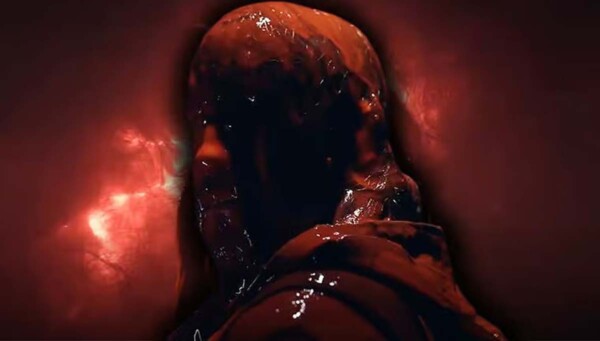
Image courtesy of Markiplier Studios.
“Iron Lung” starring Mark Fischbach as Simon, Caroline Kaplan as Ava, Elsie Lovelock as SM-8 Research Lead, Elle LaMont as SM-8 Research Assistant, and others. Directed by Mark Fischbach. 2 hours, 7 minutes. Rated R. Theatrical release.
Plot summary: Mankind, the whole universe, actually, faces extinction by a phenomenon labeled “The Quiet Rapture.” The extinction source, or at least one of its local representatives, lurks at bottom of a moon’s blood-red sea. Simon, accused of destroying a colony of increasingly rare humans, is the “convict” sent to find the beast. His vessel is a claustrophobic submersible, the iron lung.
Mladen’s take
“Iron Lung” is a miraculous movie. It deserves the honor of getting its own genre, science fiction sectarian horror. The film also deserves an A-.
So, let’s get the insults of Del, who hated “Iron Lung,” out of the way.
Del is the first to complain about the lack of originality coming out of film studios these days but then gets pissy when something original such as “Iron Lung” forces him to pay attention. How he was able to nap intermittently through this strident, pulsing film is puzzling.
Second, the movie is intelligible despite what Del contends. Yes, some of the dialogue is difficult to separate from blaring alarms, buzzing proximity sensors, overlapping voices on the PA, and the Iron Lung hull clanging from impacts but the message is clear. There’s something out there with god power and its switching off the universe.
The soundscape in “Iron Lung” is done with stunning alacrity and precision. To me the sound effects are the star of the film. The ambience, the suspense, and the scares in “Iron Lung” are driven by sound. The snap and recharge of an X-ray scanner that our star‑crossed hero Simon uses to snap pictures of whatever is outside his submersible. A shrill, electronic voice repeating over and over “hull breach, hull breach, hull breach.” The clicking of the dial helm that Simon uses to control the direction of travel of the iron lung. The soundscape in this film is matched very nicely with the score. It’s electronica that brings drama to “Iron Lung,” rather than a soulless silliness.
When visual effects come into play, they’re almost entirely practical. The tight spaces of the submersible bleed condensation and, eventually, the ocean. Simon endures a body-wrecking metamorphosis. Between getting introduced as a convict whose journey to the bottom of the blood sea is punishment and the iron lung getting crushed, Fischbach puts on a very good one‑man show. He’s the only person you see, with a couple of brief exceptions, throughout the movie. The voice performances in this film are also very good. Kudos to Kaplan’s Ava.
Though “Iron Lung” is driven by nearly incomparable soundscaping, its antagonist is nothing new. The Quiet Rapture, which snuffs stars and planets by expanding, has been witnessed elsewhere. It was The Nothing in “The NeverEnding Story” (1984). It was the Great Evil or, to the principal bad human in the film, Mr. Shadow in “The Fifth Element (1997). And, in “Event Horizon” (1997), the malign force was something demonic from another dimension. “Iron Lung” offers a fresh perspective on the genre of the universe-ending beast by adding a touch of religious mysticism to the filmmaking. Here, the Light is the enemy.
Man, I wish I had seen this film in a Dolby theater.
Del’s take
What the hell did I just watch?
“Iron Lung” may be successful as a video game but it’s unwatchable as a movie. I didn’t “nap” as Mladen incorrectly asserted but I sure as hell struggled to stay awake because “Iron Lung” is thuddingly dull and dense as hundred-year-old fruitcake. Little to nothing happens in this Lovecraftian set piece and what does is incomprehensible.
The story, revealed through a series of grunts, moans, shouts and sobs, is about a guy (Simon) who did a bad thing (destroyed Filament Station) and gets sent on a one-way mission to recover a sample of a skeleton (?) – but then the mission objective changes when Simon reveals he found the wreckage of a previous sample mission … NOW they want the black box from that sub – but unfortunately “alien shit” is transforming Simon into something that isn’t human. Oh, and he’s experiencing hallucinations and he might be crazy so we don’t know if what we’re seeing is really happening or if it’s a figment of Simon’s pickled imagination.
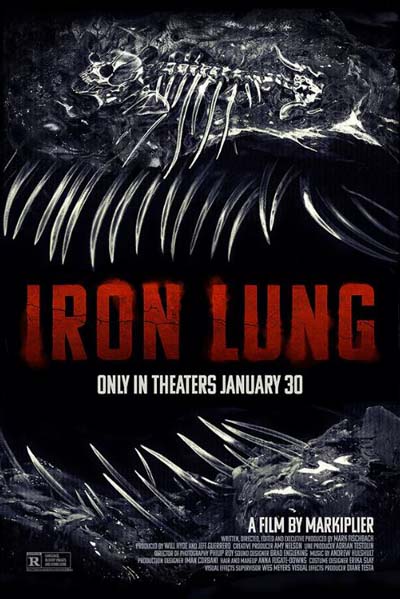
This so-called story takes place in a tiny submersible that looks like a weiner-shaped bathyscape built in the 1930s. It’s dark. It’s clammy. It leaks blood. It’s VERY claustrophobic. We get lots of detailed, almost loving shots of fluids running down walls and slime dripping from pipes à la “Alien” but done to head-shaking excess. The bathyscape does have a somewhat interesting camera display of X-rays taken whenever Simon pushes a big red button, but the black-and-white photos are so grainy and unfocused they merely contribute to the mystery. Still, it’s a nice touch.
My big gripe with “Iron Lung,” apart from its lack of action, is that it NEVER explains its backstory. I have the following questions:
– What is Filament Station, and how did Simon destroy it, and why?
– What is “The Quiet Rapture”?
– Why is it so important to retrieve a bone fragment from the bottom of a blood ocean? (Mladen said it wasn’t blood. Everything I’ve read says it was. I’m going with blood.)
– Exactly what information does that black box contain that’s so damned important to Simon’s handlers?
– What are these alien creatures?
In other words, what is this movie about?
The soundtrack had the acoustic balm of a jackhammer, and the constant barrage of superfluous visuals did nothing to advance the plot and merely dragged out the agony of watching “Iron Lung.” Simon’s incessant screaming and crying, along with his annoying habit of overstressing every single point he tried to make, convinced me YouTuber Markiplier – that’s director/star David Fischbach’s YouTube handle – was simply trying to pad the movie to a feature length. I suppose if you’re familiar with the game, all this might make more sense. But for someone walking in with zero knowledge it was 2 hours of wasted time and $12 of wasted money.
The movie has pulled in $21 million in box office receipts, far offsetting its under-$3 million production costs, so I guess Markiplier is enjoying the last laugh, which is OK. I’m glad to see an independent filmmaker succeed and I applaud his effort. Contrary to Mladen’s MAGA-like reasoning, I don’t have to like a movie to support its conception and the work that went into creating it.
I don’t like “Iron Lung.” It makes no sense and it’s boring. I’m grading it a D, and the only reason I don’t give it an F is because I’m happy to see an indie filmmaker beat the odds. I hope Markiplier’s next effort is a vast improvement over this.
Mladen Rudman is a former journalist and technical writer. Del Stone Jr. is a former journalist and writer.

Image courtesy of Vertical Entertainment.
“We Bury the Dead” Starring Daisy Ridley as Ava, Brenton Thwaites as Clay, and Mark Coles Smith as Riley. Directed by Zak Hilditch. 1 hour, 34 minutes. Rated R. Theatrical release.
Plot summary: Ava has gone to Tasmania to search for her husband, who was in the area when an American experimental weapons test went awry and killed most of the people there, transforming others into weird, “offline” catatonia victims. Along the way she discovers insights about the victims of the disaster and herself.
Spoilers: Actually, not really. We did a good job of not exposing the big reveals.
Del’s take
“We Bury the Dead” is one of those quiet little movies that sneaks into and out of theaters on little cat feet. That would be consistent with the tone of this moody, atmospheric zombie thriller.
What’s good about “We Bury the Dead” is very good. Unfortunately, what’s bad is hard to overlook.
The movie debuted on the film festival circuit in 2024 and is just now reaching theaters in the United States. I had not seen a single trailer for it in all my movie-going this year. If you hope to see it yourself, better hurry. I think it won’t be around long.
The movie is about Ava (Daisy Ridley), an American who travels to the island of Tasmania in search of her husband, Mitch (Matt Whelan), who was attending a corporate retreat at a resort when the United States tests an experimental weapon of mass destruction known only as “the pulse” off the coast of Australia. The device killed just about everybody on the island. Those who didn’t die had their brains scrambled, placing them in a coma-like state referred to in the movie as “offline.” But some of the offliners have started to come back “online,” though in a radically altered state – some are passive, others aggressive, and some are maybe even sentient.
The island is restricted from public access, but Ava joins a body reclamation crew with the intent of skipping out when the opportunity presents itself and heading to the resort to find her husband. To accomplish this she enlists the help of her reclamation partner, Clay (Brenton Thwaites), a free-spirited beach bum type who is more than happy to boost a crotch rocket Ducati and blaze off into the zombie-infested hinterlands on a dangerous new adventure.
The movie has several strengths. The cinematography is breathtaking. Director Hilditch has a taste for long, tracking shots, imbuing beauty to even ugly vistas such as the city of Hobart in flames. He uses distance as an establishing visual to suggest the poetic isolation of this new and tragic world. And he also understands the concept of Theater of the Mind by using darkness or obscured visuals to generate tension. I was jolted in my seat by a couple of scenes.
Chris Clark’s score is eerie, lush and entirely consistent with the tone of the movie. It’s accompanied by violins and vocals by Rakhi Singh, and peppered with singles from PJ Harvey, Kid Cudi and Metric, to name a few.
Plus, Hilditch manages to bring something new to the zombie mythos. These aren’t ravening beasts eager for human brains or flesh, though some appear headed in that direction. In a way they strike me as avatars for what many of us have become – folks who are stunned by the onslaught of change in these rapidly evolving and confusing times.
As for the flaws in “We Bury the Dead,” I have two major gripes.
1. The motivation for Ava undertaking this journey doesn’t make sense to me. I can’t go into detail without spoiling the movie. Suffice it to say there’s a revelation toward the end that will come as a surprise, and Hilditch seems so determined to spring this surprise on his audience, he sets aside the internal logic of the story.
2. Ava and Clay are shitty people – not Trump Cabinet-level shitty but not the kind of folks you want to root for. In fact, I can’t think of a single sympathetic character in the entire film. They were all creepy, selfish and hedonistic in one way or another.
In many ways “We Bury the Dead” reminds me of 1987’s “Near Dark.” Both are stylish horror films that transform their respective mythoses into something new. But ultimately, “We Bury the Dead” offers only a thin promise of redemption at the very end, and that was not enough to compel a more enthusiastic review.
I’m giving the movie a B-. I think Hilditch is a talented moviemaker and “We Bury the Dead” has some great ideas, and was beautiful to look at and listen to. But logic flaws and unlikable characters reduce this effort to the status of Nice Try, Better Luck Next Time.
Mladen’s take
I didn’t dislike “We Bury the Dead.” Nor did I like the newly released film now in theaters. What’s left? Dislikable likability. Likable dislikability. A C+ or a C-?
Have to hand it to the producers, writer/director, and actors for taking a risk with an artsy film that tackles zombie‑ish‑ness. And by that I mean telling a story about Aussies brain‑fried by the accidental detonation of a Yankee device and the principal non‑affected humans who have zombie‑like moral bearings.
The “We Bury the Dead” score is energetic or brooding, intense or subtle, soft or loud to match the unfolding scene.

The cinematography is stylish without descending into the contemporary trap of too much CGI. The background scenes of an austere, somewhat arid, somewhat lush land added to the movie’s vivid filmscape. And, frankly, I can’t get enough of the panoramic shots of a city ablaze.
The acting in “We Bury the Dead” is very good. Ridley as troubled, guilt‑riddled Ava, Thwaites as puckish rake Clay, and Coles Smith as an indefatigable and nascent creep Riley all hit the mark. Somehow, the movie explains all the strangeness that drives the trio but I didn’t buy it. Would any of us take a step into a man‑made deadly unknown to seek redemption for the bad acts we committed in the past or some such other nonsense?
That’s the trouble with “We Bury the Dead.” It uses a localized apocalyptic event and its consequences to introduce personal stories that end up intertwining. The plot makes less and less sense as we learn more about Ava, Clay, and Riley and their adventures into the stricken zone. And, then, there’s a happy ending. Or at least one that exudes hopefulness. I hate hopefulness. We all know mankind’s story. We all know mankind, as individuals and as a herd, fucks up again and again and each fuck-up gets worse because our technology has advanced. Where’s the hope amid that reality? Sheesh.
And, enough already with graphic vomiting in films. It’s gross. It’s trite. It’s unimaginative. It’s an unneeded way to show disgust or illness or drunkenness. If you’re compelled to include vomiting in your movie, show it indirectly as background noise or someone heaving into a punch bowl from their backside.
Most disappointing of all is the undeveloped potential of the pseudo‑zombies portrayed in “We Bury the Dead.” Some of the humans who came “online” – back to something resembling life – after the big-boom mishap are catatonic, some are ragers as in the “28 Days Later” franchise, and some are very human. I still don’t understand how Ava failed to address one of the very human humanoids by his name during a touching scene to determine if the once‑male was aware of his personhood. This would’ve flowed perfectly with Ava’s hunch that not all onliners were vacant intellectually, that not all onliners were Trump. The Ava‑Zombie Family Man interaction wouldn’t have added much length to the 94-minute movie but it sure as hell would’ve added some soulfulness.
Look, see “We Bury the Dead” in the theater to reward its risk‑taking. Filmmaking needs folks like the ones who produced, directed, and acted in the movie. And, there’s enough there to make “We Bury the Dead” a cinematic experience even if it ain’t perfect.
Mladen Rudman is a former journalist and technical writer. Del Stone Jr. is a former journalist and writer.

Image courtesy of Sony Studios.
“Anaconda” Starring Jack Black as Doug McCallister, Paul Rudd as Ronald Griffin Jr., Thandiwe Newton as Claire Simons, Steve Zahn as Kenny Trent, and Daniela Melchior as Ana Almeida, and others. Directed by Tom Gormican. Rated PG-13. 1 hour, 39 minutes. Theatrical release.
Plot summary: In this sci-fi-like horror comedy some folks decide to re-make 1997’s ridiculous and wonderful “Anaconda.” Unfunny foibles ensue.
Spoilers: How does one write a movie review without spoilers?
Mladen’s take
Jack Black must be feeling cowed right about now. From starring in one of the highest grossing movies – “A Minecraft Movie” – of 2025 to playing a central role in what will be one of the year’s crappiest, Black is proof that previous success ain’t a guarantee of future performance.
“Anaconda,” now playing in theaters, is a miss. It barely deserves a C-. Only a couple of funny-ish scenes keep it from entering the Brazil Rain Forest of The Doldrums. Note that “Doldrums” starts with a ‘D.’
Where to start? A plot summary, I suppose.
Lifelong friends McCallister, Griffin, Simons, and Trent decide to “re-imagine” the delightfully campy “Anaconda” film all of us know and love made some 28 years ago. They see their “Anaconda” re-boot as the ticket to lives they always imagined for themselves. That life is Hollywood stardom, show awards, and self‑respect. Toss in a subplot about illegal gold mining in the Amazon and you get an idea of the movie’s narrative.
The above‑mentioned Gang of Four dragged us through a film with meek slapstick, no good jokes, some okay VX, and predictable intrigue.
Black is cliché Black in “Anaconda,” too kinetic. McCallister’s sing-song-y impromptu riffing failed most of the time.
Rudd is too Rudd. Griffin demurred a lot but always followed his good-hearted nature, which generally led to bad things happening to those around him.
Newton as Simons seemed to be cast because the producers felt a woman – the J Lo mimic – had to be present.
Zahn is the funniest meatball in this non‑zany movie but not so funny that I remember anything he said.
Ice Cube’s appearance in the new “Anaconda,” he starred in the original, is uninspiring. His modern equivalent of jive talk during the minute or two he’s on the screen is annoying.
Also, the snake in the new “Anaconda” fails to menace. There’s nothing malevolent about the critter. It blasts through decks like an RPG. It slithers through detonating pyrotechnics. It chases its prey like a cheetah. The 1997 great‑grandaddy anaconda lurked. It ambushed. It was patient. Remember the overhead shot of the predator weaving among the group of ship‑wrecked meals‑to‑be as they waded through a wetland? Top notch stuff. Or, is that scene in the second “Anaconda” film (2004)? No matter. You get the point.
More than anything else, today’s “Anaconda” sucked at two fundamental levels.
The first suck was its Hollywood self‑parody, including taking shots at Sony, the studio that produced the original “Anaconda.” If I have a complaint about Sony, it’s about the television in my living room. Sony, why did you use a Google processor in the “smart” TV? The Google device is as glitchy as Trump’s brain.
The second suck is the piss-on-a-snake-bite-wound scene that went on and on and on. I swear, the movie‑makers added the scene just to make the film feature length. Man, the script writers couldn’t even come up with decent synonyms. All I heard was “piss” and “pee.” What about “urinate?” Or “tinkle?” Or “wee-wee?” Or “drain the main vein?” The latter would’ve been perfect because the scene is juvenile.
I like all the actors in “Anaconda.” I wanted, nay, expected, the movie to be funny considering the cast and the plot. It wasn’t. Damn.
Del’s take
My decline into geezerhood must be accelerating because I largely agree with what Mladen says about the new “Anaconda.” That can’t be good. Make a note to my doctor: Agreeing with Mladen. Look for signs of cognitive collapse.

The new “Anaconda” has one big problem for a comedy – it ain’t funny. That might be all you need to know.
I blame its lack of humor on two crucial factors:
1. The writing.
2. Paul Rudd.
Let’s tackle the writing first. The movie’s approach to comedy is lackadaisical. The humor is often overwrought – it drawls past the inflection point of a well-timed joke and plods into a realm I would describe as tedium. Watching these actors mumble, shrug and shuffle as the joke lies there, flopping like a beached flounder, isn’t funny. There were two scenes I thought rose to the level of hilarity: the afore-mentioned pissing scene, and Jack Black hightailing it across a grassy field with a live pig duct-taped to his back. The rest was, I hate to say it, b-o-r-i-n-g.
And whatever patina of meet-cute charm Paul Rudd might have possessed in the past has vanished from “Anaconda.” He looked haggard – middle-aged haggard – and struck me as a tragic character, worthy of pity more than anything that could be called relatability.
All the characters are either poorly developed or so trite the writers must have felt they didn’t need to give them backstories and personalities. Ronald’s budding romance with Claire just sort of happens. Steve Zahn’s character, Kenny Trent, is a cipher. The snake handler, Selton Mello as Santiago, seems to spring from the ethers, as does Ana, the sultry boat captain who is on the run from mysterious armed men. Who are these people? Where do they come from? Why should I care about them?
Also, the movie never really seems to find its center. It orbits between Black and Rudd, with both offering mediocre to non-existent reasons for anyone to give a damn about them. And the plot? Trust me, you’ve seen it in a thousand movies.
The snake, the real star of “Anaconda,” sucks as an antagonist. It’s a CGI joke that simply appears without provocation and runs through its scenes minus tension or menace. It’s the Alien on a coffee break.
I wanted this movie to succeed but it didn’t. My impression is that it was rushed through its design and construction without much thought given to its comedic elements and plot. It’s a paint-by-number comedy-horror flick that will quickly be forgotten.
Like Mladen (Lord help me, I need another Prevagen) I’m giving it a C-. If the movie had been longer, with better-developed characters and a plot that at least aspired to something original, I could have been more charitable. But in my opinion it’s a lash-up that doesn’t warrant anything higher than a lackluster score.
Mladen Rudman is a former journalist and technical writer. Del Stone Jr. is a former journalist and writer.

All images courtesy of 20th Century Fox.
“Avatar: Fire and Ash” Starring Sam Worthington as Jake, Zoe Saldaña as Neytiri, Sigourney Weaver as Kiri, Stephen Lang as Quaritch, Oona Chaplain as Varang and others. Directed by James Cameron. Rated PG-13. 3 hours, 17 minutes. Theatrical release.
Plot summary: Jake, Neytiri and the kids – Tuktirey, Lo’ak, Kiri, and Spider – depart the Metkayina clan to return Spider to humanity, as he cannot breathe Pandoran air. Along the way they are ambushed by the Mangkwan clan, who eventually throw in with the RDA to slaughter the whale-like Tulkuns and claim dominion over the moon and its resources. Jake and the allied clans must rally to defeat the Mangkwans and humans, or Pandora will be plundered and looted for its riches.
Spoilers: Yes.
Del’s take
Dear James Cameron,
It’s beautiful but … enough.
Nobody denies your spectacular vision, the unparalleled special effects and stunning complexity of the world you’ve created in Pandora, but …
Enough.
“Avatar: Fire and Ash” is an excellent movie … but. …
I’m tired.
This is the third time you’ve told this story: Noble savages frolic amid the idyll. Evil outsiders invade. Noble savages and outsiders skirmish. Then, in a final showdown, noble savages and outsiders wage all-out war. Somehow, noble savages prevail. Idyll restored. Frolicking resumes.
“Avatar,” “Avatar: The Way of Water” and now “Avatar: Fire and Ash” are essentially pastoral myths, which extol the purity and virtue of a life allied with nature, devoid of the corrupting influences of urbanization, pollution, and the refined moral essence of mankind, which is something selfish and destructive. And for the most part I agree with those tenets – until I need a dentist or want my garbage picked up. Then I’m full Team Civilization.

I want to repeat what I said earlier: “Avatar: Fire and Ash” is an excellent movie. People should see it in a theater, preferably one equipped with an IMAX screen and Dolby Atmos, not their (likely) crappy home monitor (unless you’re my friends Jim and Karen, who have a 98-inch OLED TV that looks more like a picture window than a monitor … that thing blows me away). The special effects are groundbreaking and the world-building is the most intricate I’ve seen in a film, EVER, and that includes “Dune” and “Blade Runner.”
But please – and I say this not as a person who could do what you’ve done, but as a member of your audience, just some schmoe from the panhandle of Florida – now that you’ve conquered those other aspects of moviemaking, concentrate on improving your stories, because they’re all the same. “Fire and Ash” is essentially “The Way of Water,” which was a retelling of “Avatar.” We get it. Natives = good. Humans = bad. There’s got to be a new wrinkle to this epic, one that’s worth all the visual firepower you bring to the table.
And please, work on the dialogue. Apart from Stephen Lang’s Quaritch, who gets the best lines of the movie, your characters speak dialogue so cringeworthy it makes the fillings in my teeth ache. It comes across like middle-school moralizing. That scene with Jake and Spider, which by the way was the most emotionally fraught of the entire film, was nearly ruined by Spider’s corny acceptance-of-his-fate speech. Thank God it lasted only a few seconds.
I’m dismayed to hear this is not the end of “Avatar,” that there’s a fourth installment in the works for 2029, and a fifth for sometime in the 2030s. In fact, it’s distinctly possible this could become a continuing series of film and streaming series. IF that’s the case, then you’ve got to bring more to these films than just clashes between city people and country folks, because that conflict is getting old.
I’m giving your film an A-. Its technical achievements and the sweeping vision of the story are undeniable. But the quality of the plot doesn’t match the epic sweep of the storytelling. In that regard you could take pointers from the extended versions of Peter Jackson’s “Lord of the Rings” trilogy. “Avatar: Fire and Ash” is an excellent movie, yes. But I guess what I’m trying to say is: You can do better.
That’s it. I’m done. I hope you’re not mad at me.
Please tell Sigourney hi for me. I’ve always been a fan.
Del
Mladen’s take
I learned a couple of, ah, truths, about myself watching “Avatar: Fire and Ash.”
The first realization? I’d have no trouble sharing a bed with an alien if the entity is as soulless, ambitious, take-no-prisoners, and sultry as Varang. She is the evil asshole boss of a clan of very human Pandora natives portrayed in the recently released Avatar III.
Second, I’m unable to cope anymore with stories that extend the myth of other‑than‑earthly hopefulness conveyed in earlier sci-fi movies such as “2001: A Space Odyssey” and “2010: The Year We Make Contact,” or any such movie that argues there’s a heaven waiting for us when we die. There’s no supernatural something that’ll save us mortals from mortality. Yours truly agrees completely and without a shred of doubt with Bob Marley and The Wailers – “If you know what life is worth, you would look for yours on earth.” Or Pandora. God almighty, wait until you see how Pandora’s planet god Eywa manifests as a physical being. My head almost exploded it was so derivative and blatantly Space Odyssey.

Yes, the good Na’vi fight the bad Na’vi and the human colonialists still digging for Unobtainium and killing Pandora’s whale equivalents for the secret sauce contained in their bodies. But, that’s insufficient because the good Na’vi almost get their butts kicked and sustain terrible loss of life across species in the process. I offer this. Had the good Na’vi assumed that Eywa was, at least, indifferent to their lives, they would have fought harder earlier, kicking the crap out of the bad Na’vi and squalid humans while sustaining fewer fatalities by going on the offensive. Rely on a god, and all gods are unreliable, and it might be too late to save your only life when the shit hits the fan.
Third, what do you do when the bad guys are more charismatic than the good guys in a movie? I ask this because, more and more these days, people apply the fiction of moviemaking to their beliefs in actual life. Beautiful feline Varang and steadfast Quaritch, both very bad folk, are more entertaining than Jake and Neytiri, who are unentertaining and conscientious good folk. Entertainment is what ordinary Americans, and the rest of the peasants on this planet, want. What’s the result? A deranged orange blob at the head of the U.S. Senate‑sanctioned and Supreme Court‑unleashed Executive branch. Fascists running Argentina, El Salvador, Hungary, Israel, and Russia, to name just a few countries.
Fourth, I was forewarned. After we saw “Avatar: Fire and Ash,” Del said that he’d write a thoughtful and fair review. He did, unfortunately. I’m unable to disagree with what he put to e‑paper. Expect the movie’s grade. The third Avatar is way too first and second Avatar. It’s as bad as “Star Wars: The Force Awakens,” which mimics its excellent and ancient predecessor “Star Wars” or, as it later came to be known, “Episode IV – A New Hope.” I hope there’s no Avatar IV but there will be. Varang and Quaritch, thankfully, survive in Avatar III. They’re the couple who is most likely to make the next Avatar slightly better than unpalatable.
“Avatar: Fire and Ash” gets a B-, eh, a C+ from me and that’s generous. The movie delivers fabulous sight and sound. Del and I should’ve seen it in a Dolby theater because that might have distracted me from noticing the film’s irredeemable wankiness.
Mladen Rudman is a former journalist and technical writer. Del Stone Jr. is a former journalist and writer.
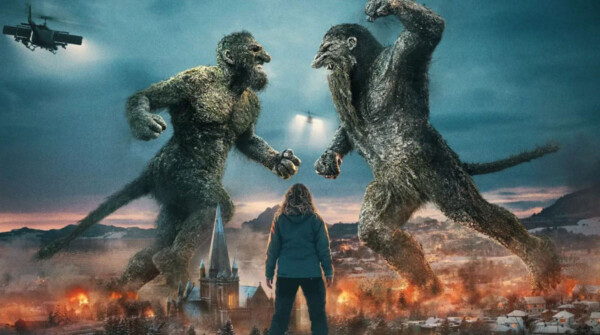
Image courtesy of Netflix.
“Troll 2” Starring Ine Marie Wilmann as eccentric troll chaser Nora Tidemann; Kim Falck as lovable self‑sacrificing Andreas Isaksen; what‑a‑great‑name Mads Sjøgård Pettersen as studly but kind Major Kristoffer Holm; Sara Khorami as sultry scientist and bureaucrat Marion Auryn Rhadani; and others. Directed by what‑another‑great‑name Roar Uthaug. 1 hour, 45 minutes. Rated TV-14. Streaming on Netflix.
Plot summary: After centuries of hibernation, a gigantic mountain troll is awakened and goes on a revenge-fueled rampage. A scratch group of lovable but eccentric scientists and lovable but bumbling bureaucrats must stop the creature before it reduces Norway to rubble.
Spoilers: Yes, this is a movie review after all.
Mladen’s take
When I imagine a troll, it’s a humanoid shape with a size that falls somewhere between a dwarf and an ogre or, in real world terms, between Rubio and Trump. I’m wrong about their size, if you believe Norwegians know more about trolls than me, a Croatian. In both the original 2022 “Troll” and the recently released “Troll 2,” these mythical creatures are, what, 15 stories tall, sentient, and scruffy. Without question, they should take some hair styling cues from Del.
While “Troll” is a very good movie, “Troll 2” is not. It just makes the cut as a B- because it’s too derived from the first “Troll” movie and predictable. But, “Troll 2” does have some merits despite its paint‑by‑numbers plot.
Ah, yes, the plot.
The federal government of Norway has shackled a tough‑looking mature male troll that was found hibernating. How do I know the troll is a male when its pubic region is covered by a thick growth of lichen? It lacks boobs, that’s how. Come to think of it, the algae beard is a bit of a giveaway, too.
Anyway, government scientists have reached a dead end studying the critter. They recruit troll whisperer Tidemann to help. She becomes instantly disgruntled because the bureaucrats and the military are treating the troll as an object and a threat because the troll in the first “Troll” movie rampaged trying to find its home in the mountains. Poof, in no time Tidemann is at the top of the scaffold erected near the troll. She approaches the troll, touches its warty nose, hums a Norwegian lullaby, and, whamo, the troll awakes. Mayhem ensues after the grandaddy of trolls, who I’ll call Buster, breaks free, steps on a few humans, and busts through the mountain redoubt where the government has been hiding him.
You may be asking why Buster is so angry, so determined, so focused on whapping Norway, whose people I’ve always thought of as being among the happiest and nicest in the world. Well, as it turns out, Norwegians haven’t always been so nice, especially when one of their medieval kings decided to force feed them, and trolls, Catholic Christianity.
I was enjoying the movie until Tidemann, accompanied by Isaksen, Holm, and Rhadani, commits a very non‑science‑y act. She goes to a cave where a late puberty troll is hiding from the world. She then asks the kid troll to stop the adult troll from wrecking Norway. And, I’m like, girl, ain’t no way your troll, ironically nicknamed “Beautiful,” stands a chance against Buster. So, yeah, Buster takes out Beautiful without the former every laying a hand, a paw, whatever, on the latter. I concede that the no‑fight is one of the cooler scenes in the movie. It deftly illustrated that Buster was a smart troll, indeed, but that scene, and a couple of others, aren’t enough to elevate the second movie to the original film’s level.
The CGI in “Troll 2” is good. The characters likable. The soundtrack adequate. Despite my unenthusiastic grade for the film, I recommend that you watch it. “Troll 2” has just enough moments sprinkled through its reasonable runtime to make it enjoyable. And, though you don’t need to see the original “Troll” to enjoy the unoriginal “Troll 2,” it won’t hurt. The way I figure it, you may as well see both to better prepare for the third Troll universe film that’s on the way.
Del’s take
First things first, let’s sort out the plethora of troll movies.
Back in the ’80s we had “Troll,” a not very good B horror movie, followed by a sequel in 1990, “Troll 2.” Didn’t much care for either. The trolls looked like Rat Fink dolls. (Fun facts: The lead actor in “Troll” was Noah Hathaway, who played the young boy Boxey in the original “Battlestar Galactica,” and Atreyu in “The Neverending Story.” His “Troll” character’s fictional name was “Harry Potter.”)
Then in 2010 came “Troll Hunter,” the first feature-length movie I watched on Netflix. That movie blew my mind. Or it might have been the six-pack of Corona I consumed while watching it. Either way, “Troll Hunter” set the standard for troll movies. I mean, c’mon on – a troll as big as a mountain contracting RABIES? What a trip!
Then in 2022, Netflix rolled out “Troll,” unrelated to the ’80s “Troll” or “Troll Hunter.” This new troll became Norway’s Godzilla – it stomped around, squashing buildings and whatnot. No fire breath. That could have helped. I liked it, though not as much as “Troll Hunter.”
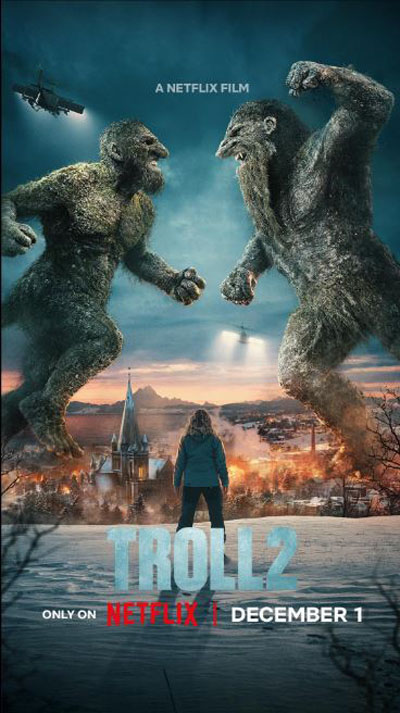
Now we have “Troll 2,” another Netflix production and a sequel to the 2022 film. Same characters, same dilemma, just a tad sillier.
This movie’s strong points are its special effects, its setting (I never tire of seeing Norway’s beautiful back country and fjords), and its premise – that once, human beings and giant, humanoid creatures lived side-by-side in harmony, until religion arrived. That’s when trolls became persona non grata and were hunted down by marauding humans until only a few relics, unknown to modern man, remained within the deepest recesses of Norway’s Dovre Mountains.
“Troll 2’s” problems are as follows: It skimps on action, instead wasting valuable time re-establishing character backstories and hinting at romantic entanglements that go nowhere. As it happens, the pogrom against trolls is just one big screw-up resulting from a torn piece of paper – not even plausible in the error-prone Trump regime. Also, in my opinion, it relies too heavily on the viewer having seen the first movie. Apart from the viewpoint character and her military pal, I struggled to remember who these people were.
You’ll forgive my lack of wokeness on this issue, but the thought of gigantic, possibly rabies-infected monsters striding through major population centers leaves me feeling less concerned about their right to exist and more concerned about my right to not get squashed flat or eaten by said gigantic monster, which is exactly what happens in one ghastly scene where an enraged troll rips the roof off an Alpine disco and makes a quick snack of the badly dancing inhabitants within.
“Trolls 2” doesn’t give you much opportunity to worry about that. Instead, we see the military commander tasked with stopping this thing bringing his new love interest along on missions, which confused me. I thought the Tidemann character was his girlfriend. She’s not? Somebody better let her know because she, in her eccentric way, is still flirting with him. We see the newly married bureaucrat trading Star Trek puns with his wife, who is pregnant with their first child, who will be named after a Star Trek character. At that point you know he’s doomed to Red Shirt status. And we see the military commander’s bitchy girlfriend undergo a total character transformation so that by movie’s end she’s solidly Team Troll. It’s all a little too convenient and trite for my tastes.
Sounds like I didn’t like it, eh? Not true. It was OK. I don’t think it was equivalent to the first “Troll” but the premise was so interesting I couldn’t NOT like it. I’ll go along with Mladen’s grade of a B-, though I should give it a B just to disagree with him.
“Troll 2” continues a legacy of Scandinavian filmmaking that does not receive the credit it’s due. “Troll Hunter” is a classic, as is the Norwegian adventure movie “The Wave” and its followup, “The Quake.” Throw in the Finnish Nazi zombie movies “Dead Snow” and “War of the Dead,” the two Sisu films and the superb Swedish horror film “Let the Right One In” and you’ve got a fine collection of provocative – and evocative – speculative movies that deserve more attention than they’ve received.
“Troll 2” is not on the same level as those films but it comes close.
You can see it on Netflix.
Mladen Rudman is a former journalist and technical writer. Del Stone Jr. is a former journalist and writer.
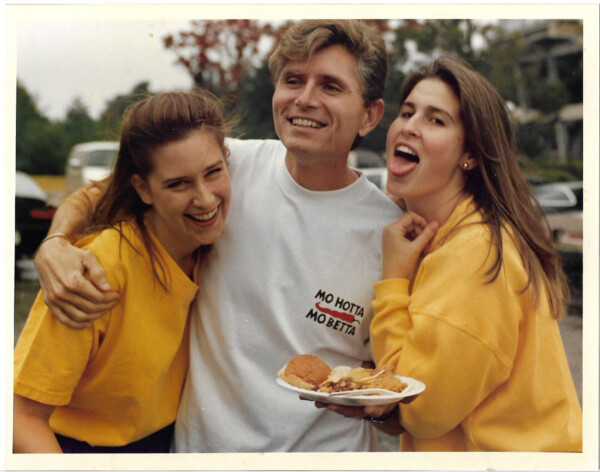
Karen Wolfe (Jarnigan), Del Stone Jr., and Elizabeth Hefflefinger goof around in the parking lot of the Daily News in Fort Walton Beach, Fla., waiting for snow that was forecast to fall one Christmas Eve in the mid-1990s.
It’s a cold, gray day here in the panhandle of Florida and I’m remembering Karen Wolfe Jarnigan.
Thanksgiving Day, 1993. Karen is hosting a holiday get-together for us newsroom types at her Okaloosa Island townhouse. She’s got the Dolphins-Cowboys game on TV, and as a Dolphins’ fan, I’m mesmerized. She and I make plans for a concert in Pensacola. Then, a miracle on ice: A Cowboys player slips on the sleet-coated field and knocks the ball into the end zone, giving the Dolphins a chance to kick a game-winning field goal. They do. Dolphins win, 16-14.
Monday night. I’m city editor. Karen is cops reporter, something she doesn’t normally do. She must be filling in for somebody. There’s been a triple homicide, the ghastly Edward Zakrzewski case. The details are so horrible Karen is on the verge of tears, but she works the story and somehow gets the name of the suspect, which we report, exclusively, the next morning.
Five o’clock in the morning of Oct. 3, 1995. My telephone rings. I pick it up. “THERE’SACATEGORY3HURRICANEHEADINGRIGHTATUSCANIEVACUATE – ” I hold up my hand, placating, though she can’t see it because she lives 10 miles away in Mary Esther, with Tracey Steele and Marley the cat. I tell her to let me check the TV. I’ll call her right back. I turn on The Weather Channel. There’s John Hope, TWC’s geriatric hurricane expert, pointing to a nasty vortex called Opal, smack dab in the middle of the Gulf of Mexico, racing for the western Florida panhandle. I call her back. “You can – ” “OK bye!” she shouts and drops the phone. Thus begins a strange evacuation odyssey that will be retold in stories for years to come.
I’m driving down Hollywood Boulevard one sleepy Saturday afternoon and I spot the complex of Cumulus radio stations coming up. On impulse I pull in to wave at Karen through the studio window during her afternoon gig. She drags me into the booth and we have an impromptu on-air session.
Doc calls and asks a favor. He wants me to make sure Karen is in the newsroom on a certain day at a certain time. He has something planned. So I come up with a cock-eyed story for Karen about an important interview subject dropping by the newsroom at the appointed hour. I need her to be there. Make sure she’s there! Karen asks questions. She knows something is up; she just doesn’t know what. We do this back-and-forth thing and I’m sure, I’m just POSITIVE, she’s going to bolt from the newsroom like a filly breaking out of its paddock. But finally, there’s Doc, over by Dorothy’s desk. He’s wearing a black tux. He’s carrying a dozen roses, so red they look like Disney roses. The newsroom falls silent as he threads his way through the desks to Karen. She’s understandably shocked. He drops to one knee, and Karen’s hand flies to her mouth, the way everyone’s hand flies to their mouth when they’re asked to share their life with another person. It’s all very, very good.
Karen and Doc’s wedding. It looks like most everybody from the Daily News and WKSM is there. It’s held at a church I’ve never attended; the room is bright. Everyone is happy.
Karen comes up with an idea. We should give a small award for people in the newsroom who’ve done a good job on a story, photo, column, page, or whatever. These awards would be given out each week during our Wednesday staff meeting. The presenter would rotate among the staff and would be responsible for picking out a token gift – a candy bar from the vending machine, an inexpensive plastic cup, just something. Everybody loves the idea. Thus, the Wolfie Awards are born, named for their creator. Eventually the newspaper pays a $25 stipend for each Wolfie. Even today, when Daily News vets from the ’90s and ’00s get together, the subject of the Wolfies comes up.
The year is 2000. I’m in Dayton, Ohio, for my niece’s wedding. At the reception I’m talking to Chris, a wise guy from the same part of New York where Karen once lived. I take out my brick of a cell phone, a trusty Nokia perpetually strapped to my waist, and call Karen. I tell her I’m talking to a wise guy from the same part of New York where she once lived. I hand the phone to the wise guy. He and Karen talk New York stuff. I approve. This is appropriate for a guy who’s four beers into his niece’s wedding reception.
Other memories, floating in my mind like confetti:
Karen ushers in the granny-gown-and-combat-boots look for the newsroom.
We go to the concert in Pensacola and people think I’m her dad.
I make Karen cry by being a jerk to her in a budget meeting.
Karen, Elizabeth Hefflefinger and I stand in the Daily News parking lot on a cold and cloudy Christmas Eve, watching for snowflakes that never fall.
And now, another memory. Of a phone call missed, and a text message with the terrible news.
Karen was a sweet soul.
She loved fiercely and she was loved with equal ferocity, not just by those who knew her but the community at large, which made her acquaintance through her stories in
the newspaper and her sessions at the radio station.
She is remembered by more people than we’ll ever know.
I’ve missed her for years, and I miss her even more knowing I can’t pick up the phone and yell, “Hey Wolfie! What are you doing?”
A sad day.
I want her husband, Doc, and her kids to know they brought her all the happiness a person can want in this world. In fact, I can’t think of a better epitaph for anybody:
She was happy.
About the author:
Del Stone Jr. is a professional fiction writer. He is known primarily for his work in the contemporary dark fiction field, but has also published science fiction and contemporary fantasy. Stone’s stories, poetry and scripts have appeared in publications such as Amazing Stories, Eldritch Tales, and Bantam-Spectra’s Full Spectrum. His short fiction has been published in The Year’s Best Horror Stories XXII; Alfred Hitchcock’s Mystery Magazine; the Pocket Books anthology More Phobias; the Barnes & Noble anthologies 100 Wicked Little Witch Stories, Horrors! 365 Scary Stories, and 100 Astounding Little Alien Stories; the HWA anthology Psychos; and other short fiction venues, like Blood Muse, Live Without a Net, Zombiesque and Sex Macabre. Stone’s comic book debut was in the Clive Barker series of books, Hellraiser, published by Marvel/Epic and reprinted in The Best of Hellraiser anthology. He has also published stories in Penthouse Comix, and worked with artist Dave Dorman on many projects, including the illustrated novella “Roadkill,” a short story for the Andrew Vachss anthology Underground from Dark Horse, an ashcan titled “December” for Hero Illustrated, and several of Dorman’s Wasted Lands novellas and comics, such as Rail from Image and “The Uninvited.” Stone’s novel, Dead Heat, won the 1996 International Horror Guild’s award for best first novel and was a runner-up for the Bram Stoker Award. Stone has also been a finalist for the IHG award for short fiction, the British Fantasy Award for best novella, and a semifinalist for the Nebula and Writers of the Future awards. His stories have appeared in anthologies that have won the Bram Stoker Award and the World Fantasy Award. Two of his works were optioned for film, the novella “Black Tide” and short story “Crisis Line.”
Stone recently retired after a 41-year career in journalism. He won numerous awards for his work, and in 1986 was named Florida’s best columnist in his circulation division by the Florida Society of Newspaper Editors. In 2001 he received an honorable mention from the National Lesbian and Gay Journalists Association for his essay “When Freedom of Speech Ends” and in 2003 he was voted Best of the Best in the category of columnists by Emerald Coast Magazine. He participated in book signings and awareness campaigns, and was a guest on local television and radio programs.
As an addendum, Stone is single, kills tomatoes and morning glories with ruthless efficiency, once tied the stem of a cocktail cherry in a knot with his tongue, and carries a permanent scar on his chest after having been shot with a paintball gun. He’s in his 60s as of this writing but doesn’t look a day over 94.
Contact Del at [email protected]. He is also on Facebook, twitter, Pinterest, tumblr, TikTok, and Instagram. Visit his website at delstonejr.com .
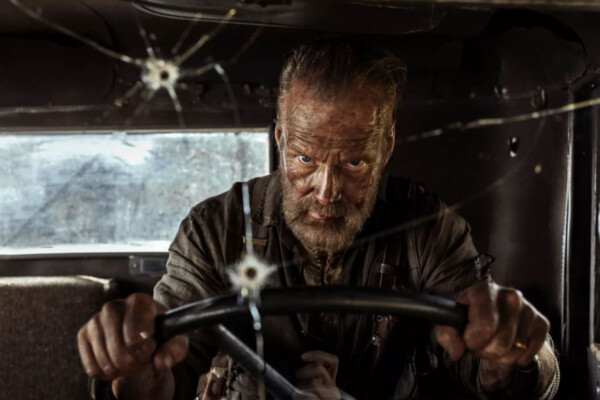
Image courtesy of Screen Gems.
“Sisu: Road to Revenge” Starring Jorma Tommila as Astami Korpi (Sisu), Stephen Lang as Igor Dragonov and Richard Brake as the evil KGB officer. Directed by Jalmari Helander. 1 hour, 29 minutes. Rated R. Theatrical release.
Spoilers: No.
Plot summary: Sisu returns to his former family home, which is now behind Soviet lines, to recover timbers for a new house in Finland. But the man who murdered Sisu’s family is given orders to finish the job, and Sisu must battle the crazed killer – and the Red Army – to make his way back home.
Del’s take
“Sisu: Road to Revenge” is a flaming train of fiery dumpsters hurtling down the track at breakneck speed, conducted by a maniacal tweaker three days into withdrawal, his drool-flecked lips twitching as his finger hovers over a trigger that will detonate 40,000 pounds of TNT, nitro and an atomic bomb, all at once, and somebody better damn well give him what he wants or the duck he’s taken hostage is gonna end up in a confit – or as confetti.
That’s pretty much the plot of “Sisu.” Equal parts violence and absurdity, “Sisu” is so ridiculous and funny it’s impossible not to love, kinda like that goofy pitbull that slobbers you with kisses but scares the bejesus out of everyone else. It’s not a grindhouse movie and it’s not serious drama. Rather, it walks somewhere between films like “Machete,” “Return of the Living Dead II” and “From Dusk till Dawn.”
The story is simple: Sisu returns to the territory occupied by the USSR during World War II to recover timbers from the family home. He wants to rebuild his house – and his life – in what remains of Finland. All hell breaks loose when the Russians unleash psychotic killer Igor Dragonov (Stephen Lang), the man who diced up Sisu’s wife and sons with a shovel, to “clean up” the mess he created and terminate Sisu.
Everything about Sisu is primordial, elemental and unyielding, from the war wagon of a truck he drives – the thing looks like it was forged in the foundries of Hell – to Sisu himself, an unkillable killing machine who, like John Wick or the Road Warrior, destroys only those who deserve to be destroyed. Even when tortured so horrifically his back resembles a Strawberry Pop Tart warmed with an arc welder, Sisu bears his misery like a monk who has taken a vow of silence.
But there’s a human side to the myth. John Wick has his dog. Frodo has his ring. And Sisu has his timbers, which he treats with divine reverence – they are symbols of his family. He salvaged them barehanded from the empty house and now they will salvage him – from Molotov cocktails, marauding IL-2 Sturmaviks, T-55 tanks and more machine gun rounds than Al Capone’s felony convictions.
Like “Toxic Avenger” it’s all done with a sly wink. The manic inventiveness of the kills and the relentlessly kinetic action propel the story so briskly you almost miss the sly humor, which I warn you, is dark. Sisu trying to sneak through a train car filled with sleeping soldiers, or crawling bare-chested through broken glass, only to stick his fingers into a rat trap – it’s wince-inducing, yes, but in the Sisu universe it’s freaking hilarious.
Stephen Lang is the only face you’ll recognize in this bunch and he does a terrific job of portraying the murderous Red Army psychopath Draganov. Never fear. Draganov will get what’s coming to him, and you’ll groan with both horror and hilarity when it happens.
“Road to Revenge” is not for the faint of heart but by movie’s end, if you can stick it out that long, you’ll be cheering for this Finnish Rambo as he deals out a lethal dose of truth, justice and the Sisu way.
I’m giving “Sisu: Road to Revenge” an A. It’s vastly entertaining. Mad Max and John McClaine may have to make room for “the Immortal,” as the Russians call Sisu.
As they say in the land of Nokia, “Yippee-ki-yay, kusipää!”
Mladen’s take
Ever wonder what happens to a horse when it steps on an anti‑tank mine? Watch the first Sisu movie. In this one, the Nazis are the enemy.
Ever wonder what happens to a Russian soldier after he gets caught beneath the heavily studded, rear wheel of a 6 × 6 fortress truck from another dimension when the clutch is popped? Watch the second “Sisu” movie, which Del and I couldn’t stop enjoying despite its profound absurdness.
“Sisu: Road to Revenge” is bonkers whacky nuts with a swirl of outlandish and a dash of demon hot sauce.
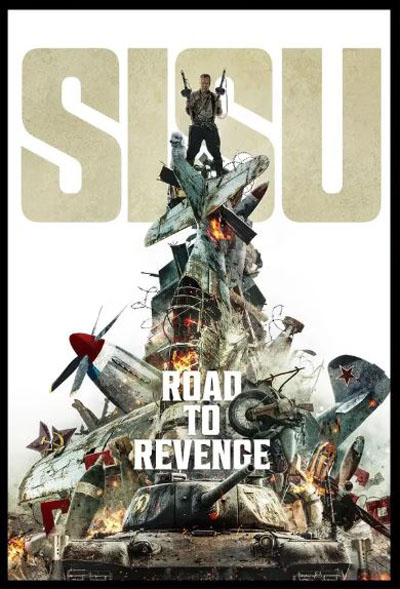
As with any good piece of violence cinema, “Sisu” delivers at every level. This movie is a linear bundle of coherent mayhem. It depicts thoughtful violence. Creative violence. Violence by fire, bullet, and explosion. And, dare I say, subtle violence. There’s never pointless violence. Loved it all.
Hell, Sisu doesn’t say one word the whole time, though he releases howls, screams, and murmurs. Yet, somehow, the Ferocious Finn is still charismatic and likable.
I don’t understand how “Wicked: For Good” surpassed “Sisu” at the box office on their shared opening weekend. Like “Wicked,” “Sisu” is about righting wrongs, overcoming obstacles, and enduring when all seems lost. But it was the fairies and the flying monkeys that raked in the big bucks. Gross.
Though I agree with Del that “Sisu” is an A. I disagree with his opening paragraph characterization of our hyper-hero. Sisu, who has a name in the film by the way, Aatami Korpi, is deliberate in his capacity to extract himself spontaneously from dire situations. He has no need for food or water, not to mention alcohol or drugs, because the Unfathomable Finn is driven by the pursuit of justice and longing for his murdered wife and sons. He survived World War II in the first “Sisu.” He sure as hell managed the Commies in “Sisu: Road to Revenge.” Wonder who he’ll pulverize, skewer, perforate, or detonate with endless bursts of innovative defensive aggression in the third film.
I promise. When you leave the theater after seeing “Sisu,” you’ll be confident that the evil ones among us will, painfully, encounter their culture’s equivalent of “Sisu,” a human who’s only inhumane to those who deserve inhumanity.
What does “Wicked” have to offer? The maudlin moral that all is not what it seems and even bad people can be redeemed. Sheesh.
Mladen Rudman is a former journalist and technical writer. Del Stone Jr. is a former journalist and writer.