The Thing in the Dark (a flash fiction horror story)
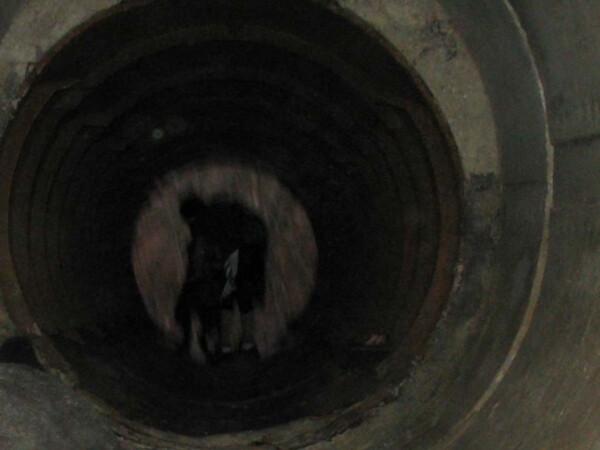
Image by Oakley Originals of Flickr. https://www.flickr.com/photos/oakleyoriginals/
Introduction to “The Thing in the Dark”
I’ve always been afraid of the dark. To this day, I’m hesitant to go outside at night. We live in a dark neighborhood. I don’t care how many streetlights they install, it still looks dark dark dark at night.
You never know what’s hiding out there.
I remember one night – I must have been about 14 – Mom ordered me to take out the garbage. Our garbage cans were up next to the fence on the side of the house. Next door the house was vacant. It had been empty for awhile and leaves had piled up in the yard and weeds were getting tall.
I carried the paper grocery bag full of trash through the carport and out to the garbage cans. As I lifted the metal lid from the can, I heard the telltale crunch, crunch, crunch of somebody walking through leaves. The people on the next street over had their backyard porchlight on. I could see, in the glare of that light, an eclipse moving toward me, a human-shaped shadow approaching out of the dark.
The hair on my arms stood on end. My skin froze. I think my heart stopped.
Then suddenly, I was free. I dropped the garbage and the lid and sprinted for the front door. I burst inside the house, slammed the door and locked it.
Mom asked me what was wrong. I told her, “Somebody’s out there!”
I had a shotgun, an old 20-guage bolt action, hanging from a wall rack in my bedroom. She told me to go get it. I did. It wasn’t loaded, but that didn’t matter.
Together, we went back outside, Mom hefting that ridiculous shotgun.
“All right, you son-of-a-bitch! I’m gonna blow your goddamned brains out!”
Silence.
“I’ll blow your brains out!” she shouted again.
I picked up the bag of garbage where I’d dropped it, hurled it into the can and slammed the lid closed. Both of us hightailed it back to the house.
Months later, we found out that somebody had been living in the crawlspace under the vacant house. They had a mattress and a flashlight set up under there. The idea that somebody was there, watching us come and go, still creeps me out. And that’s what prompted me to write “The Thing in the Dark.”
It was one of 13 under-a-thousand-words stories I created for a project called “13 Seconds” I hoped to sell to a comic book publisher. My friend C.M. Terry planned to illustrate each one.
Alas, that project didn’t sell, but along came “365 Scary Stories” from Barnes & Noble. I submitted all 13 stories and they bought seven, including this one.
The others are the following:
“And Baby Makes 13”
“Crisis Line”
“Mall of the Dead”
“The Garage”
“In the Wilds of the Suburbs”
“The Tooth Fairy”
“The Thing in the Dark”
—
THE THING IN THE DARK
Danny scrunched his eyes shut and pulled the covers over his head, entombing himself in darkness and silence.
On this night he would see nothing. He would hear nothing. He would spend the night in his bedroom without once screaming for his mother, his voice climbing the panicky octaves until even the sound of his own shouts frightened him.
Nothing would breathe beneath his bed. Nothing would growl behind the closet door. Nothing would scratch the window behind the curtains. It was all in his imagination, he told himself, reciting the mantra that had been drilled into him by his exasperated mother. How many nights had she staggered into his bedroom, her breath sickly sweet with bourbon, to dump herself on the edge of the mattress and yank back the covers and blabber at him drunkenly about his foolish, childish fear of the dark? How many times had she come into the room angry, then seen the look of stark terror in his eyes and try to salve her anger with sloppy kisses and stern but gentle insistences that he look under the bed, or in the closet, or through the part in the curtains?
https://www.flickr.com/photos/oakleyoriginals/
Always, he had checked. And always, nothing was there.
But it was the light that chased them away, he told her, and then her anger would return and she’d stalk from the room, slamming the door behind her, and he’d try to sleep with the light on until sometime later when she’d snatch the door open – a loud rasping that always sent his heart jumping into his throat – and flick it off.
The terror would begin anew.
But tonight he would put it out of his mind. That scrabbling sound beneath the bed – that was the floorboards vibrating from a passing truck. The shudder from the closet door – it was not the furtive movement of the runner within the track as a clawed hand slowly drew the door ajar. And he did not hear a soft thumping at the window, as something out there tested the glass for a way to get inside. These things were all perfectly normal occurrences that the darkness transformed into mysteries, things that would go totally unnoticed in the blessed light of day. In fact, if he peeked at the closet door he would see it was shut, as he’d left it. If he yanked back the covers and hung his head over the edge of the mattress, he would see a jumble of toys beneath the bed and nothing more. From the window, he would see the soft glow of lights brightening the neighborhood windows.
If he peeked – if he peeked – he would see that it was all in his imagination, and that he had nothing to be afraid of. If he peeked.
He slitted an eye and eased the covers back.
The closet door was open.
The mattress shimmied ever so slightly, and the pressure of the bedspread on his legs decreased as something lifted the corner and began to probe softly for something to – something to grab and haul beneath the bed, an ankle, a calf, the arm of a trembling 9-year-old boy –
Bobby hurled himself from the bed and hit the light switch.
Nothing there. Closet door, closed. Toys beneath the bed.
And then he heard it. A tapping at the window.
He tiptoed across the carpet and paused at the curtains, knowing with dread certainty that if he dared look out, something horrible would look in –
“Bobby! Let me in!” the whisper snaked through the glass.
It sounded like his mother.
“Bobby? Are you there? Let me in! I heard a noise outside. I went to check and – and I locked myself out! Let me in!”
It really did sound like his mother. But Bobby hesitated.
“Let me in, dammit,” the voice whispered. “I think there’s someone out here!”
What if it weren’t his mother?
Bobby, there’s someone out here – I hear them!”
What if it were something using his mother’s voice to trick him into opening the window?
“Open the goddamn window!” the voice said, louder this time, a tremble of fear wiggling through the words. “Bobby, please!”
And if he opened the window, it would reach in with its claws and grab him around the throat –
“Bobby – oh, Bobby – ” the voice wailed.
– and the blood would splatter the walls and the bedspread and the closet door –
He heard a scream and a low-throated growl, and then a thrashing sound, as if some kind of struggle were being waged outside.
He stepped away from the curtains. He padded back to the bed and slipped beneath the covers. He could hear his heart pounding. It might have been a monster’s heart pounding.
But he would get through this night without calling his mother. Because it was all in his imagination.
About the author:
Del Stone Jr. is a professional fiction writer. He is known primarily for his work in the contemporary dark fiction field, but has also published science fiction and contemporary fantasy. Stone’s stories, poetry and scripts have appeared in publications such as Amazing Stories, Eldritch Tales, and Bantam-Spectra’s Full Spectrum. His short fiction has been published in The Year’s Best Horror Stories XXII; Alfred Hitchcock’s Mystery Magazine; the Pocket Books anthology More Phobias; the Barnes & Noble anthologies 100 Wicked Little Witch Stories, Horrors! 365 Scary Stories, and 100 Astounding Little Alien Stories; the HWA anthology Psychos; and other short fiction venues, like Blood Muse, Live Without a Net, Zombiesque and Sex Macabre. Stone’s comic book debut was in the Clive Barker series of books, Hellraiser, published by Marvel/Epic and reprinted in The Best of Hellraiser anthology. He has also published stories in Penthouse Comix, and worked with artist Dave Dorman on many projects, including the illustrated novella “Roadkill,” a short story for the Andrew Vachss anthology Underground from Dark Horse, an ashcan titled “December” for Hero Illustrated, and several of Dorman’s Wasted Lands novellas and comics, such as Rail from Image and “The Uninvited.” Stone’s novel, Dead Heat, won the 1996 International Horror Guild’s award for best first novel and was a runner-up for the Bram Stoker Award. Stone has also been a finalist for the IHG award for short fiction, the British Fantasy Award for best novella, and a semifinalist for the Nebula and Writers of the Future awards. His stories have appeared in anthologies that have won the Bram Stoker Award and the World Fantasy Award. Two of his works were optioned for film, the novella “Black Tide” and short story “Crisis Line.”
Stone recently retired after a 41-year career in journalism. He won numerous awards for his work, and in 1986 was named Florida’s best columnist in his circulation division by the Florida Society of Newspaper Editors. In 2001 he received an honorable mention from the National Lesbian and Gay Journalists Association for his essay “When Freedom of Speech Ends” and in 2003 he was voted Best of the Best in the category of columnists by Emerald Coast Magazine. He participated in book signings and awareness campaigns, and was a guest on local television and radio programs.
As an addendum, Stone is single, kills tomatoes and morning glories with ruthless efficiency, once tied the stem of a cocktail cherry in a knot with his tongue, and carries a permanent scar on his chest after having been shot with a paintball gun. He’s in his 60s as of this writing but doesn’t look a day over 94.
Contact Del at [email protected]. He is also on Facebook, twitter, Pinterest, tumblr, TikTok, and Instagram. Visit his website at delstonejr.com .
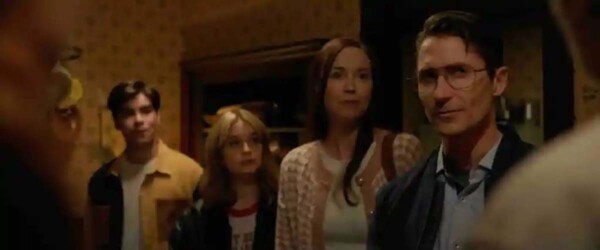
Image courtesy of Tubi.
“Lowlifes” Starring Amanda Fix as Amy, Matthew MacCaull as Keith, Brenna Llewellyn as Savannah, Elese Levesque as Kathleen, Josh Zaharia as Jeffrey, and Richard Harmon as Vern. Directed by Tesh Guttikonda and Mitch Oliver. 1 hour, 30 minutes. Rated TV-MA. Streaming on Tubi.
Plot summary: A family borrows grandpa’s RV for a vacation in the country. They encounter a couple of hillbilly locals. Terror ensues.
Spoilers: None
If you’ve been avoiding Tubi TV because you don’t like movies being interrupted by commercials, you should (a) sign up for commercial-free premium Tubi or (b) get used to it, because you’re missing some damn good streaming entertainment, especially if you’re a horror fan.
One example is “Lowlifes,” a nasty little frolic from Al Kaplan, author of other comedy-horror projects like “Zombeavers,” “The Drone,” and “Critters: A New Binge.” “Lowlifes” is a Tubi-original film, part of the streamer’s attempt to fatten its horror lineup.
In “Lowlifes” a Southern California family borrows Grandpa’s broken-down RV for a trip to the country. There, they encounter a couple of local hicks who are looking for trouble. Events predictably proceed downhill from there.
I won’t say anything about what happens next because the movie serves up a “Sixth Sense”-style plot twist that will blow your mind. Suffice it to say you’ll laugh, you’ll puke, you’ll forget about this movie 10 minutes after watching it. But what a fun hour and a half of entertainment until then!
Grade B.
Del Stone Jr. is a former journalist and writer.

Image courtesy of Raw Pixel.
Introduction to “The Tooth Fairy”
This story was based on an actual experience, though I didn’t run into any Freddy Krueger-style monsters from dreamland.
We had a grocery store in town at the time – Food World – which was my go-to destination for cheap beer and cigs. Yes, I smoked back then – this would have been in the ’90s, and you could still get a carton of cigarettes for about $10. They put them in display cases that were accessible to the public. It was a much more trusting time.
One night I headed over to Food World for something – I forget what. I don’t think it was cigarettes, but it might have been. Food World stayed open until 9 p.m.; otherwise, I would have had to do my cigarette shopping at a convenience store.
I remember walking into the store and thinking: This is strange. Something about the bright fluorescent lights overhead throwing everything into stark, electric contrast, made me feel as if I were walking through a Dennis Etchison short story. Not only that but the store was ghostly quiet. Hardly anybody was shopping. You could hear every creak and groan of the building.
As I said, strange.
I got whatever I was looking for and went to the cash registers. Only one was open, and there was a person ahead of me. I remember seeing all those packages of meat rolling down the conveyor belt to be scanned and bagged. Why would somebody come to a grocery store late at night to buy lots and lots of meat?
All kinds of thoughts sprang to mind, thoughts that only a writer of scary stories would consider, all of them involving caged beasts back at the house, or something with a taste for blood, or maybe an evil presence in one’s dreams, foreshadowing the awful things it had planned for you once you fell asleep.
Unless you were already asleep and this was part of your nightmare.
Is the Jimmy of “The Tooth Fairy” asleep and dreaming these events? Has the nightmare invaded his waking hours? I’m not sure. I will say I’m not a fan of ambiguity in horror stories, but in this case I think it works.
One more thing: When you were a kid and your mom and dad told you about the tooth fairy who comes at night and finds that tooth under your pillow and gives you money for it, did they ever say why the tooth fairy wants your tooth?
Did they ever tell you what the tooth fairy does with that tooth?
I didn’t think so.
And I’m not sure I want to consider the possibilities.
—
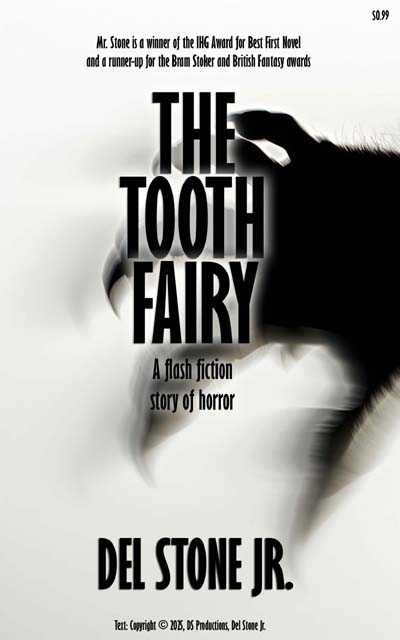
THE TOOTH FAIRY
A pack of cigarettes. That’s all Jimmy wanted. A pack of cigarettes, and the safety of his townhouse, and sleep.
But sleep brought the Tooth Fairy, and that was no good. The Tooth Fairy … a monstrous vision of teeth clicking and snapping at him from his nightmares, set within a face as pale as moonlight on dead flesh, surrounded by a field of black, as if Jimmy’s fear of the world had taken on a predatory life of its own.
So Jimmy couldn’t sleep, and after reaching for the pack of Marlboros on the nightstand and coming up empty, he’d climbed into his blue jeans and sweatshirt and had driven to the 24-hour Food World across town, a careful visit to the grocery store, a foray into a realm he tried to avoid. The world was full of horrors, yes: murderers and thieves and liars. But it was the little deaths that nibbled at his soul: the petty indifferences and incessant sales pitches and the all-consuming, voracious demand for his attention that warped him and transformed him into something unnatural, so that his time away from home became a gauntlet of senseless noise and chaos, and his time at home took on the quality of a siege. What lay between had become one thing:
The Tooth Fairy.
But if he remained awake all night he might eventually collapse into that merciful land of exhausted unconsciousness that lay beneath fearful dreams. So.
The supermarket was electric and weird this time of night, the lights as bright and the aisles as quiet as an oncology ward. They kept the cigarettes up front where the store manager could watch for shoplifters. But nobody was there. Jimmy yanked a pack from the kiosk and walked straight to the express lane.
Another customer was already there, dressed in a broad, gray duster that brushed the linoleum floor. He was unloading groceries onto the moving belt in front of the register, and the teen-aged cashier was running them across the scanner. Big cuts of meat, bloody and shiny in the preternatural light.
Jimmy sighed and scanned the racks of tabloids. Famous actor is really a vampire. Woman gives birth to 17 babies. Rendering of Mr. Spock found in Egyptian tomb. Jimmy shook his head. Nothing shocked or amazed him anymore. It was all a blizzard of images and sounds.
The scanner beeped. Steaks and flanks trimmed in opaque fat. The man certainly liked his meat, Jimmy thought, watching him stoop over the shopping cart and extract packages and set them down on the belt. The girl whipped them across the scanner and as Jimmy studied her, he noticed she would not look up, not even once. A fellow sojourner, he decided. Probably waiting to start her weekend.
The man slapped down dripping packages. Jimmy peered around the sweep of the man’s duster and saw heaps of meat still in the cart, cuts of meat he’d never seen before. The man dropped a shrink-wrapped package on the belt and the scanner bleated. The girl waved it across the laser three more times, and each time the scanner refused to ring up the price. She gazed at the bar code with an exasperated look. Then her face went white.
She dropped the package. She snatched her fingers away and wiped them on her apron. She glanced up at the man, then, and her lips trembled, as if a scream were forming behind them but refused to come out.
The package contained an assortment of jawbones.
Jawbones studded with perfectly normal incisors and canines and molars. One of them had a gold filling.
Jimmy felt a part of his brain go numb, like a pot roast that had thawed on the outside but remained frozen on the inside, and a tiny gasp escaped him so that the man turned and looked down at him, and Jimmy recognized the bloodless pallor of that face and the picket fence of teeth that sank into his sleep, and he knew this time he would not awaken in his bed, the sheets drenched with sweat, to wonder how he might keep the world at bay another day.
“Hurry home,” the man whispered in a tissue-soft, dreamlike voice. “Hurry home and go to sleep. I’m hungry.”
The cigarettes slipped from Jimmy’s fingers and went bumping down the belt, where they joined the man’s other possessions.
As the world sank its teeth in, and would not let go.
About the author:
Del Stone Jr. is a professional fiction writer. He is known primarily for his work in the contemporary dark fiction field, but has also published science fiction and contemporary fantasy. Stone’s stories, poetry and scripts have appeared in publications such as Amazing Stories, Eldritch Tales, and Bantam-Spectra’s Full Spectrum. His short fiction has been published in The Year’s Best Horror Stories XXII; Alfred Hitchcock’s Mystery Magazine; the Pocket Books anthology More Phobias; the Barnes & Noble anthologies 100 Wicked Little Witch Stories, Horrors! 365 Scary Stories, and 100 Astounding Little Alien Stories; the HWA anthology Psychos; and other short fiction venues, like Blood Muse, Live Without a Net, Zombiesque and Sex Macabre. Stone’s comic book debut was in the Clive Barker series of books, Hellraiser, published by Marvel/Epic and reprinted in The Best of Hellraiser anthology. He has also published stories in Penthouse Comix, and worked with artist Dave Dorman on many projects, including the illustrated novella “Roadkill,” a short story for the Andrew Vachss anthology Underground from Dark Horse, an ashcan titled “December” for Hero Illustrated, and several of Dorman’s Wasted Lands novellas and comics, such as Rail from Image and “The Uninvited.” Stone’s novel, Dead Heat, won the 1996 International Horror Guild’s award for best first novel and was a runner-up for the Bram Stoker Award. Stone has also been a finalist for the IHG award for short fiction, the British Fantasy Award for best novella, and a semifinalist for the Nebula and Writers of the Future awards. His stories have appeared in anthologies that have won the Bram Stoker Award and the World Fantasy Award. Two of his works were optioned for film, the novella “Black Tide” and short story “Crisis Line.”
Stone recently retired after a 41-year career in journalism. He won numerous awards for his work, and in 1986 was named Florida’s best columnist in his circulation division by the Florida Society of Newspaper Editors. In 2001 he received an honorable mention from the National Lesbian and Gay Journalists Association for his essay “When Freedom of Speech Ends” and in 2003 he was voted Best of the Best in the category of columnists by Emerald Coast Magazine. He participated in book signings and awareness campaigns, and was a guest on local television and radio programs.
As an addendum, Stone is single, kills tomatoes and morning glories with ruthless efficiency, once tied the stem of a cocktail cherry in a knot with his tongue, and carries a permanent scar on his chest after having been shot with a paintball gun. He’s in his 60s as of this writing but doesn’t look a day over 94.
Contact Del at [email protected]. He is also on Facebook, twitter, Pinterest, tumblr, TikTok, and Instagram. Visit his website at delstonejr.com .
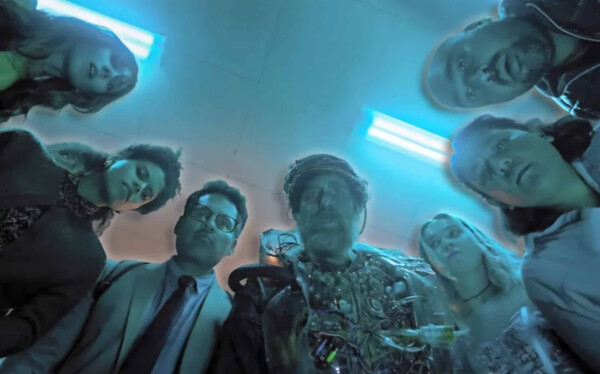
Image courtesy of Briarcliff Entertainment.
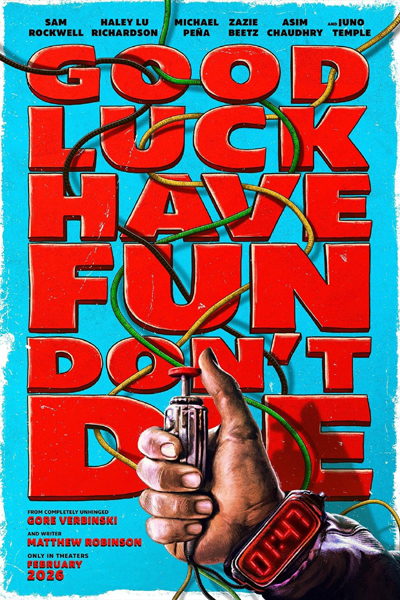
“Good Luck Have Fun Don’t Die” Starring Sam Rockwell as Future Man, Haley Lu Richardson as Ingrid, Juno Temple as Susan, Mark Peña as Mark, Zazie Beets as Janet, and Artie Wilkinson-Hunt as the AI boy. Directed by Gore Verbinski. 2 hours, 14 minutes. Rated R. Theatrical release.
Plot summary: Is he a man from the future as he claims, or just some off-the-street, attention-seeking lunatic? Either way, he’s burst into a Los Angeles diner seeking volunteers to help him defeat an AI hellbent on making zombies of us all.
Spoilers: Knowing Mladen, almost certainly.
Del’s take
Minutes before “Good Luck Have Fun Don’t Die” began, and as we sat through interminable assaults of probably AI-created and enabled advertising, I was ranting to Mladen about how technology – primarily “smart” phones – are exacerbating America’s intellectual laziness and ignorance. Then along comes this movie and holy cow! Déjà vu all over again.
That’s the thesis of “Good Luck Have Fun Don’t Die”: Mobile phones, the internet, technology, and all the movies/TV/music/internet/advertising and other distracting digital crap are transforming Americans into mindless zombies incapable of thinking and feeling. I so agree with that thesis. I mean, c’mon. SWEDEN – you know, that country sandwiched between Norway and Finland – is doing away with its “digital-first” approach to education and investing hundreds of millions of kronor in books, pencils and paper tablets to reverse what it calls declining literacy and the ability to focus. In America, where declining literacy and the ability to focus are celebrated as superpowers, the idiotification process is light years ahead of Sweden’s. How else could we have elected an anal polyp like Donald Trump?
“Good Luck Have Fun Don’t Die” begins with a weirdo (Sam Rockwell) bursting into an L.A. diner to announce the end of the world is imminent. He needs volunteers to help him battle a rogue AI being developed by an also weird 9-year-old kid. Fail to comply and he’ll detonate a bomb strapped to his chest. Two women – Ingrid and Susan – offer to join his cause. Future Man conscripts the rest. What follows is a kind of road-trip story (although the trip isn’t very long) with interruptions along the way for various members of this plucky band to relate their personal beefs with technology. Mark and Janet, for instance, are high school substitute teachers who run afoul of zombified, “smart”-phone addicted teenagers. Susan’s son, Darren, is killed in one of the district’s many school shootings and is directed by the traffic-obsessed parents of other school shooting victims to a company that can produce a clone of her son, although Susan should be careful what she wishes for – the clone is an advertising-spewing automaton who is nothing like her real son. Ingrid, who is physically allergic to technology, loses her boyfriend to a VR headset – he asks her why he should remain in this reality when there’s a superior reality – albeit fake – inside the magic box.
They eventually reach the house of AI boy and things get really weird, with giant horse cats – that’s “horse,” not “house” – eating teenage “smart” phone zombies, and robots cobbled together from tech junk coming to life and menacing anybody who threatens the kid sitting atop a mountain of cast-off cables and junked devices.
“Good Luck Have Fun Don’t Die” was written by Matthew Robinson and it is whip smart. Clearly Robinson has no love for our AI overlords and it shows in the layered dialogue and events-as-metaphors that transpire in this biting two-hour satire. Rockwell is perfectly cast as the weirdo from the future, as is Richardson as Ingrid, who has a connection to Future Man. ALL the actors seem well suited for their roles. Verbinski’s pacing is frenetic, which matches the movie’s pell-mell tone. My one gripe is the character backstories interrupt the flow. I’m not sure how I’d fix that problem but I need to acknowledge it is a problem. The movie at times reminded me of “The Matrix” and at other times “Groundhog Day” but not to worry – there’s plenty of original content to keep the audience engaged.
I don’t think it’s an A film because of the structural problem I referenced earlier, but I do think it’s a B+ film and that’s what I’m going with. It’s nice to see somebody – ANYBODY – in Hollywood trying to do something that isn’t a retread, prequel or sequel. You’ll need brains to enjoy “Good Luck Have Fun Don’t Die.” I’m supposing there are still a few of you out there.
Oh, and remember: Before the movie starts, please silence your “smart” phones.
Mladen’s take
I am Ingrid without the nosebleed. Let me explain.
Ingrid of “Good Luck Have Fun Don’t Die” gets a nosebleed when she gets too close to junk technology such as cell phones, tablets, and portable video game players. She’s allergic to the screens, microprocessors, and lithium batteries now shaping our lives. So am I. Hate them devices, I do. My phone is a hand-me-down from my son. It’s in lockdown mode. My TVs are disconnected from the internet. I’m blowing away Rippers in Borderlands 4 in solo campaign mode offline. I uploaded the game using, get this, a disc.
Also, I’m no longer a newspaper reporter because I saw the handwriting-on-the-screen some 19 years ago when that new fangled contraption called the Internet started taking control. The hell I was going to work the Military Affairs beat to get validated facts when my bosses were throwing all that information on the Net for free because they, and the rest of society, were unable or unwilling to regulate the tech. Pretty soon after I left, facts and objectivity started losing to conjecture and opinion, an ongoing, unstoppable phenomenon produced by, then, “citizen reporters,” yesterday, “influencers,” and today, “Large Language Models.” I saw what we’re now facing coming a long time ago. Gee-whiz connectivity copulating with gee-whiz gadgets to produce ignorance, immorality, and lies by the byte.
“Good Luck Have Fun Don’t Die” simply confirms what we all know, a vast majority of mankind loves bullshit and AI is making access to bullshit ever more convenient. But, don’t let that discourage you from seeing this A of a movie. GLHFDD is funny. A bit violent. It rocks with real instruments.
All the acting is good but there are standouts.
Rockwell as Future Man is damn near perfect. Sardonic and truthful. Focused but caring. Realistic though chasing a pure fantasy, regulation of the AI industry and its ghastly algorithm-driven platforms because they contort then twist then invert then bend reality so that it’s impossible to discern the actual from the programmed.
Richardson as Ingrid is as good as Rockwell playing his role. Her unshakeable faith that people prefer real reality more than virtual reality. Her heartbreak when her boyfriend tells her, over the dinner that he cooked, that he has decided to roll his life into a computer program that generates a nicer culture is palpable.
Temple as Susan is very convincing as a distraught and grief-stricken mother trying to find solace amid a society that’s only interested in making money from her boy’s death. Her expressions of disbelief, befuddlement, and vexation are as good as any I’ve seen on the screen.
If GLHFDD’s Future Man from the AI-mutilated future disturbs my dinner at a restaurant by accusing me of complicity in turning mankind into a tool for computers, I’ll have only one riposte. “Yes, sir, but I was an unwilling co-conspirator.” Would you be able to say that about yourself? Or have you already, and intentionally, sacrificed your fate, your individuality, and your capacity to think at the altar of Altman? Yeah, I thought so.
Mladen Rudman is a former journalist and technical writer. Del Stone Jr. is a former journalist and writer.

Image by Zarina Khalilova for Pexels. CC license. https://www.pexels.com/@zarina-khalilova-207741792/
Introduction to “When She Cries”
Back in the ’80s America held a lively conversation with itself about self-defense.
Several high-profile cases had come to pass where wives had shot and killed abusive husbands, girlfriends had killed abusive boyfriends, and children had killed abusive parents.
Were there limits to self-defense? Was there a line that should not be crossed where self-defense became plain old-fashioned murder?
With “When She Cries” I wanted to examine two things:
1. Instances where self-defense becomes a kind of execution. This story illustrates that concept. Was the protagonist defending himself or was he executing his antagonist to prevent future abuse?
2. What about the mental toll exacted by killing another human being, warranted or not? Would the shooter be able to rationalize his or her actions as self-defense, or would they be crippled by the knowledge they had killed another human being?
This story demonstrates that not all horror tales require a monster.
Sometimes the monster lies within.
—
WHEN SHE CRIES
A scream like broken glass, cutting a jagged edge against the shower’s hiss. David heard it. The air was suddenly unbreathable. Then a thud, a dull sound, worn sawteeth drawn across the bones of his spine.
Evie –
He wrenched down the faucets and cupped a hand over the shower nozzle.
Feet trampled the hallway. Another lunatic scream, amplified into the throat of the hallway and echoing madly.
“DAVID!”

https://www.pexels.com/@zarina-khalilova-207741792/
A snare-drum brace of fists pounded the door. He threw back the shower curtain and shimmied wet and lathered into his shorts, too quick for any thought but the sick panic she had screamed into him. He jerked open the door and Evie lunged at him, a shuddering angina of terror, just escaped from monsters and her eyes, her face bald from the fright of it.
She screamed, “It’s BUDDY!” She dug needlelike fingernails into his arms. “He’s lost it! He’s lost – my God! – he’s got an ax – he’s gonna – oh, Jesus! – he’s – he’s – ”
Buddy. The old boyfriend. Who drove the truck – with the oversized tires, shotguns mounted in the back window. Big Buddy. Big, big Buddy. A wad of tobacco perpetually wedged between his cheek and jaw. Ditched over the phone by Evie. That was nice. “I’m gonna make you wish to hell you were never born,” Buddy seethed at her from midnight telephone calls. Even nicer.
Crazy, crazy Buddy.
From the living room came the sound of something thick and stubborn flying apart. The door. A short, guttural bark; Evie’s eyes peeled white, and David grabbed her, terror twisting his stomach. He spoke in a strangled whisper, “The bedroom! Run!”
He shoved her out of the bathroom, her hip smacking solidly against the door molding. She ran sideways, David shoving from behind, half-running, half-staggering across the hallway until they had made it to the bedroom. David slammed the door, locked it and backed away as if it might try to grab him. Evie crouched at the foot of the bed.
“Gun,” she whispered. David turned, and she was pointing at the gun cabinet, at his father’s .38. It hung from the corner, holstered, dark and slippery with oil, too slippery for his mind to grip what she was saying.
“Get the damn gun!” she whispered again and David stared down at her, numb.
“I can’t shoot anyone. …”
Something smashed loudly against the door and sank to the bone, wooden ribs snapping, then squeaked as smooth metal was jerked away. Somebody was laughing, a crawling lunatic snake of a sound. Evie curled into herself and twitched when the door boomed again. Wood cracked. A shark’s tooth of ax blade chewed through the facing.
David threw back the cabinet door and grabbed the pistol; he almost dropped it. It seemed too heavy, too dirty, and he held it as he would have held something infected. He turned to Evie. She swallowed, took a shuddering breath, and lost herself to a sudden palsy of tears.
“Sh – shoot through the door.”
Again, the thought misfired, and he stared at her lamely, not a hint of understanding in his expression, the gun dangling limply in his hands.
The spine of the door broke and the ax blade chewed cleanly through to their side, wood strips broken and cartwheeling away from the hole. The blade twisted and worried itself from the door.
David rotated on his heel, almost fell, pointed the gun at the door, both hands on the butt and his fingers sweaty around the trigger. His heart pulsed and he felt it with his entire body. He squeezed on the trigger but he could not pull it – he couldn’t do it and they would be killed, but My God, oh Jesus I can’t do this please help me Jesus –
He heard a back-of-the-throat grunt and an agony of shattered wood – the door exploded into flying pieces that spun crazily into the walls and cabinet. Evie lunged at David, screamed “SHOOT! SHOOT! SHOOT!” Screamed all thought from him, the terror, until he could not see or hear or even understand what it was he had been afraid of and could only pull the trigger.
The shot was a bomb going off – the gun bucked fire and curdled smoke – the ax spun straight up, then fell and thunked to the floor. Silence.
Oh. Oh. …
Then … thrashing. Angry, meaningless thrashing, a bellow that sounded like a truck horn. David peered uncomprehendingly into the smoke spreading across the hallway. Evie peeked over his shoulder.
Buddy lay midway between the door and the bathroom, his arms and legs working back and forth, clawing at air, kicking, his fists clenching and unclenching, grabbing at unseen throats. He jerked to one side – David backed away – and a reddish-black spray of blood spattered the floor. He coughed and shouted, and against the narrow walls his deep voice resonated spastic hate.
David watched, horror caught in his throat and impossible to swallow; he felt pain in his arm and saw Evie hanging there, fingers hooked into him, her eyes marbled and moonlike. She turned to him.
“He’s not dead yet.”
David nodded, not taking his eyes from the hall. Buddy kicked with his foot and the ax went tumbling.
“Again,” she murmured. David stopped breathing.
“Again,” she said.
Buddy coughed blood, coughed and sucked a gurgling breath, coughed again and sputtered a growl.
“Again?” David frowned at her.
“AGAIN! Shoot him again! Dammit He’s – he’s – ” Her face tightened with hysteria. “We won’t – I won’t – be able to live – ” Her voice dissolved into a warbling sob. “They’ll – they’ll save him – and – and – he’ll come – back.” She began to cry, a sound utterly without hope, shot with remorse. “That is not,” and she punctuated the “not” by squeezing his arm, “how I – I – want to live.”
He shut his eyes and opened them. The gun was still pointed at the hall. He shook his head. Barely.
“I can’t – I – can’t. …”
She grabbed his chin, turned his face to hers. She squeezed hard.
“Shoot him again.”
He started to back away, new terror in his gut.
“Shoot!”
The hallway was strangely quiet. David looked into the gloom. He saw Buddy watching him, his eyes narrowed and incandescent, something beyond understanding – monstrous and preternatural – lurking within the dead stare. It was a hungry, predatory look, as if he would shake off the effects of the wound, his purpose restored, and finish what he had come here to do. David watched, spellbound, falling into those eyes, sucked down and falling, losing his sight, his senses. …
Then smooth hands were wrapping around his, smooth as smoke, a woman’s hands, Evie’s, tightening in a grip that was both repugnant and irresistible.
“I can’t,” he whispered.
They pulled the trigger.
—
She’s crying again.
And I hate it – I hate the sound. Mothers grieving, wives alone, sounds of deserts inside people. It’s too much to bear. It eats at the soul – you hurt in all the same places. Sometimes I think we share too much.
It’s not as if we did a bad thing. Buddy was crazy. He would have killed us. I’m sure he would have killed us. Hacked us with an ax – forty whacks. Crazy. He wrecked his place before he came here – his truck. With an ax – forty whacks. Putting his life into disorder. We were forty-one.
Shoot him. I didn’t have the nerve – I don’t know … maybe, if he’d gotten into the room … I don’t know. Would I have done it? I mean, would I have really made the decision myself? Would I have been quick enough? Would I –
Dear God.
She made me do what had to be done. I see that now. “Self-defense” the investigating officer called it. “Simple self-defense.” No jury in the world would have moved for a conviction. But there was no jury, because there was no trial. The D.A. did not press charges. “Self-defense,” he said.
Self-defense.
I wish she would stop crying. I hate the sound – I hate it. I don’t know what to do.
She shouldn’t make us hurt over this. What’s the point? Tears aren’t penitence. Remorse. Fear. What is it she’s feeling? If she would only say. Pain. Useless, squandered pain.
She cries like this every day, it seems, and I don’t know what to do. It isn’t fair; she’s killing me … us … slowly. It hurts.
I don’t know what to do. But I’ve got to do something. I’ve talked to her but she won’t listen. Blame … she has to see blame. Why does there have to be blame? There is no blame. We did what we had to do.
This thing is eating at her, at me. She won’t let it go. She – she needs to let it go. For my sake, if nothing else.
But I don’t think she’ll want to do that, and don’t know what to do.
She’s crying. I hate the sound of crying. When she cries, I get these … urges – I don’t want to talk about it. If she would only stop – If I could make her stop crying.
I – I don’t know what to do. If she would say. If she would tell me.
Maybe she will tell me, again. When the hurt is unbearable, when it eats the heart, the life right out of her. Maybe then she will tell me … I will wait for her to tell me, and this time, I won’t be indecisive. I swear to God, I’ll do it. Just what she tells me.
If I could only make her stop crying.
About the author:
Del Stone Jr. is a professional fiction writer. He is known primarily for his work in the contemporary dark fiction field, but has also published science fiction and contemporary fantasy. Stone’s stories, poetry and scripts have appeared in publications such as Amazing Stories, Eldritch Tales, and Bantam-Spectra’s Full Spectrum. His short fiction has been published in The Year’s Best Horror Stories XXII; Alfred Hitchcock’s Mystery Magazine; the Pocket Books anthology More Phobias; the Barnes & Noble anthologies 100 Wicked Little Witch Stories, Horrors! 365 Scary Stories, and 100 Astounding Little Alien Stories; the HWA anthology Psychos; and other short fiction venues, like Blood Muse, Live Without a Net, Zombiesque and Sex Macabre. Stone’s comic book debut was in the Clive Barker series of books, Hellraiser, published by Marvel/Epic and reprinted in The Best of Hellraiser anthology. He has also published stories in Penthouse Comix, and worked with artist Dave Dorman on many projects, including the illustrated novella “Roadkill,” a short story for the Andrew Vachss anthology Underground from Dark Horse, an ashcan titled “December” for Hero Illustrated, and several of Dorman’s Wasted Lands novellas and comics, such as Rail from Image and “The Uninvited.” Stone’s novel, Dead Heat, won the 1996 International Horror Guild’s award for best first novel and was a runner-up for the Bram Stoker Award. Stone has also been a finalist for the IHG award for short fiction, the British Fantasy Award for best novella, and a semifinalist for the Nebula and Writers of the Future awards. His stories have appeared in anthologies that have won the Bram Stoker Award and the World Fantasy Award. Two of his works were optioned for film, the novella “Black Tide” and short story “Crisis Line.”
Stone recently retired after a 41-year career in journalism. He won numerous awards for his work, and in 1986 was named Florida’s best columnist in his circulation division by the Florida Society of Newspaper Editors. In 2001 he received an honorable mention from the National Lesbian and Gay Journalists Association for his essay “When Freedom of Speech Ends” and in 2003 he was voted Best of the Best in the category of columnists by Emerald Coast Magazine. He participated in book signings and awareness campaigns, and was a guest on local television and radio programs.
As an addendum, Stone is single, kills tomatoes and morning glories with ruthless efficiency, once tied the stem of a cocktail cherry in a knot with his tongue, and carries a permanent scar on his chest after having been shot with a paintball gun. He’s in his 60s as of this writing but doesn’t look a day over 94.
Contact Del at [email protected]. He is also on Facebook, twitter, Pinterest, tumblr, TikTok, and Instagram. Visit his website at delstonejr.com .
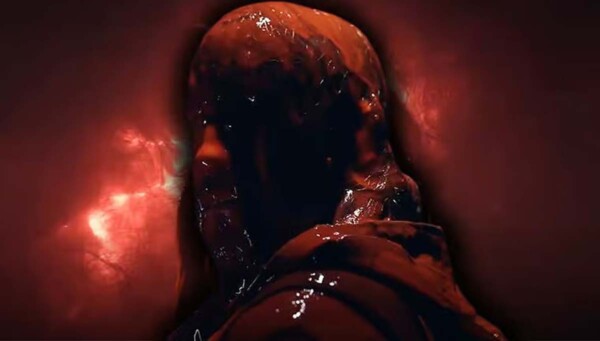
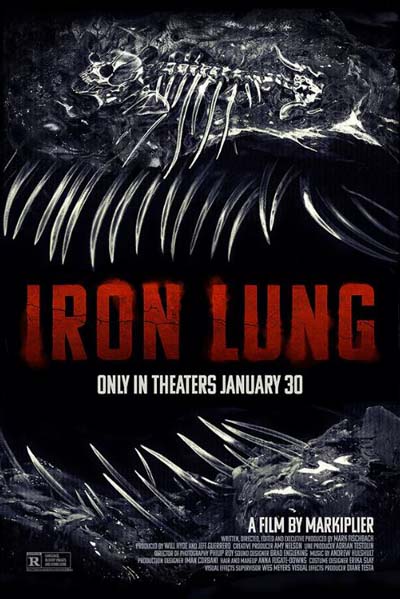
Image courtesy of Markiplier Studios.
“Iron Lung” starring Mark Fischbach as Simon, Caroline Kaplan as Ava, Elsie Lovelock as SM-8 Research Lead, Elle LaMont as SM-8 Research Assistant, and others. Directed by Mark Fischbach. 2 hours, 7 minutes. Rated R. Theatrical release.
Plot summary: Mankind, the whole universe, actually, faces extinction by a phenomenon labeled “The Quiet Rapture.” The extinction source, or at least one of its local representatives, lurks at bottom of a moon’s blood-red sea. Simon, accused of destroying a colony of increasingly rare humans, is the “convict” sent to find the beast. His vessel is a claustrophobic submersible, the iron lung.
Mladen’s take
“Iron Lung” is a miraculous movie. It deserves the honor of getting its own genre, science fiction sectarian horror. The film also deserves an A-.
So, let’s get the insults of Del, who hated “Iron Lung,” out of the way.
Del is the first to complain about the lack of originality coming out of film studios these days but then gets pissy when something original such as “Iron Lung” forces him to pay attention. How he was able to nap intermittently through this strident, pulsing film is puzzling.
Second, the movie is intelligible despite what Del contends. Yes, some of the dialogue is difficult to separate from blaring alarms, buzzing proximity sensors, overlapping voices on the PA, and the Iron Lung hull clanging from impacts but the message is clear. There’s something out there with god power and its switching off the universe.
The soundscape in “Iron Lung” is done with stunning alacrity and precision. To me the sound effects are the star of the film. The ambience, the suspense, and the scares in “Iron Lung” are driven by sound. The snap and recharge of an X-ray scanner that our star‑crossed hero Simon uses to snap pictures of whatever is outside his submersible. A shrill, electronic voice repeating over and over “hull breach, hull breach, hull breach.” The clicking of the dial helm that Simon uses to control the direction of travel of the iron lung. The soundscape in this film is matched very nicely with the score. It’s electronica that brings drama to “Iron Lung,” rather than a soulless silliness.
When visual effects come into play, they’re almost entirely practical. The tight spaces of the submersible bleed condensation and, eventually, the ocean. Simon endures a body-wrecking metamorphosis. Between getting introduced as a convict whose journey to the bottom of the blood sea is punishment and the iron lung getting crushed, Fischbach puts on a very good one‑man show. He’s the only person you see, with a couple of brief exceptions, throughout the movie. The voice performances in this film are also very good. Kudos to Kaplan’s Ava.
Though “Iron Lung” is driven by nearly incomparable soundscaping, its antagonist is nothing new. The Quiet Rapture, which snuffs stars and planets by expanding, has been witnessed elsewhere. It was The Nothing in “The NeverEnding Story” (1984). It was the Great Evil or, to the principal bad human in the film, Mr. Shadow in “The Fifth Element (1997). And, in “Event Horizon” (1997), the malign force was something demonic from another dimension. “Iron Lung” offers a fresh perspective on the genre of the universe-ending beast by adding a touch of religious mysticism to the filmmaking. Here, the Light is the enemy.
Man, I wish I had seen this film in a Dolby theater.
Del’s take
What the hell did I just watch?
“Iron Lung” may be successful as a video game but it’s unwatchable as a movie. I didn’t “nap” as Mladen incorrectly asserted but I sure as hell struggled to stay awake because “Iron Lung” is thuddingly dull and dense as hundred-year-old fruitcake. Little to nothing happens in this Lovecraftian set piece and what does is incomprehensible.
The story, revealed through a series of grunts, moans, shouts and sobs, is about a guy (Simon) who did a bad thing (destroyed Filament Station) and gets sent on a one-way mission to recover a sample of a skeleton (?) – but then the mission objective changes when Simon reveals he found the wreckage of a previous sample mission … NOW they want the black box from that sub – but unfortunately “alien shit” is transforming Simon into something that isn’t human. Oh, and he’s experiencing hallucinations and he might be crazy so we don’t know if what we’re seeing is really happening or if it’s a figment of Simon’s pickled imagination.
This so-called story takes place in a tiny submersible that looks like a weiner-shaped bathyscape built in the 1930s. It’s dark. It’s clammy. It leaks blood. It’s VERY claustrophobic. We get lots of detailed, almost loving shots of fluids running down walls and slime dripping from pipes à la “Alien” but done to head-shaking excess. The bathyscape does have a somewhat interesting camera display of X-rays taken whenever Simon pushes a big red button, but the black-and-white photos are so grainy and unfocused they merely contribute to the mystery. Still, it’s a nice touch.
My big gripe with “Iron Lung,” apart from its lack of action, is that it NEVER explains its backstory. I have the following questions:
– What is Filament Station, and how did Simon destroy it, and why?
– What is “The Quiet Rapture”?
– Why is it so important to retrieve a bone fragment from the bottom of a blood ocean? (Mladen said it wasn’t blood. Everything I’ve read says it was. I’m going with blood.)
– Exactly what information does that black box contain that’s so damned important to Simon’s handlers?
– What are these alien creatures?
In other words, what is this movie about?
The soundtrack had the acoustic balm of a jackhammer, and the constant barrage of superfluous visuals did nothing to advance the plot and merely dragged out the agony of watching “Iron Lung.” Simon’s incessant screaming and crying, along with his annoying habit of overstressing every single point he tried to make, convinced me YouTuber Markiplier – that’s director/star David Fischbach’s YouTube handle – was simply trying to pad the movie to a feature length. I suppose if you’re familiar with the game, all this might make more sense. But for someone walking in with zero knowledge it was 2 hours of wasted time and $12 of wasted money.
The movie has pulled in $21 million in box office receipts, far offsetting its under-$3 million production costs, so I guess Markiplier is enjoying the last laugh, which is OK. I’m glad to see an independent filmmaker succeed and I applaud his effort. Contrary to Mladen’s MAGA-like reasoning, I don’t have to like a movie to support its conception and the work that went into creating it.
I don’t like “Iron Lung.” It makes no sense and it’s boring. I’m grading it a D, and the only reason I don’t give it an F is because I’m happy to see an indie filmmaker beat the odds. I hope Markiplier’s next effort is a vast improvement over this.
Mladen Rudman is a former journalist and technical writer. Del Stone Jr. is a former journalist and writer.