I Feed the Machine (a science fiction story)
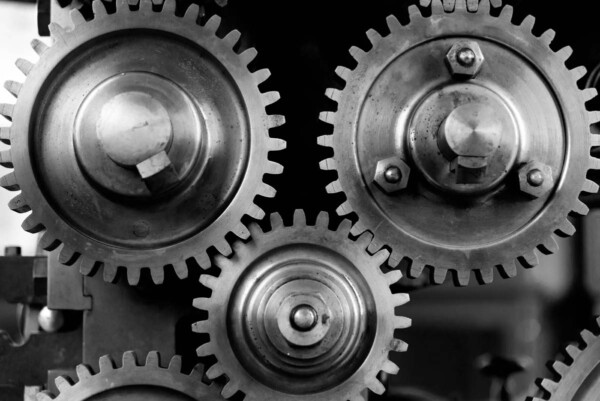
Machinery gear close up image, public domain CC0 photo. More: View public domain image source here
INTRODUCTION
As I was writing “I Feed the Machine” I did not envision a future America where political criminals and religious fundamentalists might rule the land.
Yet here we are, in the summer of 2024. The corrupt Supreme Court has just ruled that presidents, in their capacity as commander in chief, are not subject to the rule of law, invalidating 248 years of American jurisprudence. Republicans are busy rewriting voting districts so that only they can be elected, and the GOP is silencing the ability of the loyal opposition to make its voice heard.
Simultaneously, religious fundamentalists are attacking the institutions that have made America such a wonderful experiment in democracy and egality. They would have us think and behave in their own drab perception of what is right and wrong, or good and bad.
And corporate entities are solidifying their hold over both the architecture of our leadership and the reins of our economy, ensuring that we remain indefinitely within their thrall.
Powerful forces are arrayed against us, forces that do not care about you or me, forces that have only their preservation and enrichment in mind.
I’m reminded of the following quote, taken from astronomer Carl Sagan in his book “The Demon-Haunted World”:
“I have a foreboding of an America in my children’s or grandchildren’s time – when the United States is a service and information economy; when nearly all the manufacturing industries have slipped away to other countries; when awesome technological powers are in the hands of a very few, and no one representing the public interest can even grasp the issues; when the people have lost the ability to set their own agendas or knowledgeably question those in authority; when, clutching our crystals and nervously consulting our horoscopes, our critical faculties in decline, unable to distinguish between what feels good and what’s true, we slide, almost without noticing, back into superstition and darkness. …”
“I Feed the Machine” is a fictional rendering of that quote. It is what happens when good people stop thinking and leave the solutions to others, or as the Rev. Charles Frederic Aked (not Edmund Burke) wrote, “It has been said that for evil men to accomplish their purpose it is only necessary that good men should do nothing.”
I contemplated the 2024 Fourth of July with no small degree of despair. It may well have been our last as a free people. A great evil has clouded the minds of otherwise decent and hardworking Americans, one that would have them support a felon and sex offender for the highest office in the land. And his odious Project 2025 is nothing less than a blueprint for 21st century fascism.
That is not what America is about, yet many people eagerly anticipate the calamity, as if it would solve their problems. It won’t.
Everything hangs in the outcome of the presidential election in 2024. Will America continue to be America, or will it become a Christo-fascist state with strutting, smirking potentates folding their arms, jutting their jaws and nodding at the adoring masses, abetted by evil religionists and fawning corporate parasites?
The choice, as I see it, is simple:
A vote for democracy.
Or a vote for “I Feed the Machine.”
We shall see. …
Del Stone Jr., July 5, 2024
—
I FEED THE MACHINE
I feed the machine.
I bring his breakfast, lunch, and dinner.
I have always done this. I always will.
The machine is a man. He is called a Tabulator. He performs calculations, and he is the company’s most valuable asset.
We live in the Redoubt, where the machine is served by me and others. Doctors. Teachers. Groomsmen. His breeding pool.
We have always lived here. We always will.
—
Sometimes the machine favors me with talk.
“Have you never traveled beyond these walls?” he asks. He knows I have not, but still he asks. “Have you never seen the mountains that conceal our fortress? Have you never seen the ocean, or the sky?”
Sometimes the machine speaks in these questions that are not really questions. He knows I was born here just as he, the fifth of his line. He knows we all were born here under the watchful eye of the company. Otherwise we might be set upon by martyrs from other companies who covet his calculations.
Or the infidels.
Mostly it is at dinner that the machine favors talk. I tell him my supervisor will punish me if I do not return at once, but the machine scoffs. “I have made it clear to the company that if I wish my servers to linger they will not be punished,” And when he finishes saying that he winks at me. It is flattering that a man of such value would favor my company, but my supervisor will be unhappy.
Still, I linger. I enjoy the machine’s questions.
—
What is a mountain? What is an ocean, or a sky?
I have heard of these things. A mountain is a mass of rock which protects us from martyrs and the infidels. An ocean is a great body of water. It separates us from the infidels, who live on the other side of the world. The sky is a great open thing from which the infidels might descend to destroy us all.
But I have never seen a mountain, an ocean, or a sky.
—
“Have you never loved?” the machine asks. His eyes are alive and glittering, and through them I see a sliver of the vast world his thoughts occupy. I tell him I have a great love of the company, and of The Rapture, our leaders of the government. He waves a hand to dismiss this answer. “We all love those things of course. I am speaking of the love of another person.”
The machine has always treated me with respect and affection. I tell him I love him.
He smiles warmly and says, “As I love you. But I am speaking of an even greater love, the love that exists between a man and a woman, or a man and a man as the case may be.”
I am horrified by his words. The love between a man and a man would be smitten by The Rapture as an abomination. And here at the Redoubt the love between a man and a woman is forbidden. It interferes with important work. We servers are given monthly inoculations to prevent it. I gaze about the dining room and my expression seems to convey more than my simple answer of no.
“It doesn’t matter if they are listening,” he says. “I am the company’s most valuable asset.” He is silent a moment. I gather his food, which he has barely touched, and as I leave he reveals to me, “I am in love.”
I cannot fathom such a thing. It is as mountain, ocean, and sky.
—
I live in a 500-square-foot room. I take my meals in a cafeteria. I have access to a gymnasium, a swimming pool, and a fitness room. For entertainment I look at approved books, compete in sporting events, or browse the aisles of the company store. I receive weekly sunlamp treatments and blood tests. I pray three times a shift at organized services. Once a month I receive a castration inoculation. I am allowed access to certain parts of the Redoubt and my whereabouts are reported by transponder. If I deviate from approved areas an explosive device with a blast radius of two centimeters will detonate inside my brain.
I have a busy and rewarding life. I have no room for love.
—
“I am in love with the Checker,” the machine whispers surreptitiously. I don’t understand.
A Checker is a person who checks a Tabulator’s work. He constructs proofs to validate or invalidate the Tabulator’s calculations. The proofs are then returned to the Tabulator, who either certifies or revises them. Once the calculations and proofs are certified by both Tabulator and Checker they are sold to the contractee, another company or The Rapture itself.
The Checker and the Tabulator are never allowed to meet. To do so might corrupt their work. They are kept away from one another and it is this I do not understand. How could the machine love a person he has never met?
“The Checker is a woman,” the machine says with a smile. “Her proofs are constructed with an intricacy that only a woman might understand and a man admire.”
The machine has been distressed. I wonder if these thoughts grow from that discontent. He is currently performing a set of calculations for The Rapture, the most important calculations any Tabulator has attempted to produce. If he is successful the menace of the infidel will be ended.
“I hide messages in my calculations,” the machine whispers to me, glancing suspiciously at the walls, “and she responds to them in her proofs.” The glitter in his eyes has been replaced with a desperate sheen.
“She validates my love, and I validate hers.”
I do not understand.
—
The infidels live on the other side of the world. They are a lost people who exist in moral squalor. They celebrate primitive animal desires: lust, greed, pleasure. They use devices wantonly and most abominable are the thinking devices, the ones that perform their calculations. They use these devices to support and export their evil culture. For their efforts they will suffer eternity in the Lake of Fire.
The Rapture wisely outlawed such devices and we are protected from the moral squalor they induce. Now only simple devices are allowed, such as the device inside my brain. The infidels would decry such a device as an invasion of personal freedom, but human beings are born with only one choice – the choice to accept or reject the Savior. I made my choice a long time ago. I am free.
—
“I have asked the company to let me see her,” the machine murmurs. “They will refuse and I will be forced to act.” The room has become cluttered with papers filled with inscrutable markings. Pages are attached to the walls and bear the frantic formulae of a genius who cannot write as quickly as he can calculate. I understand none of it, which is why I am allowed to see it.
“I am approaching a critical juncture in my calculations,” he says. He looks weary and perplexed. Perhaps he has encountered a problem he cannot solve. “If they do not allow me to see her I will be unable to complete their calculations.”
Had another person spoken these words he would have been smitten as a heretic. To threaten the company and The Rapture is unthinkable. But the machine is a genius and from him they seem words of uncanny insight, though I cringe to hear them. He says the very things we are told not to think.
“Let us hope they have the good sense not to retire us,” he says but I am not afraid. We will all be retired one shift and in some fashion. Should the machine fall from grace we servers will be retired with the push of a button, the devices in our brains detonating simultaneously. Should I slip poison into the machine’s afternoon tea I alone will be retired – not before I have been compelled to reveal the source of my corruption. Retirement is a fact of life.
But the machine seems to value something more than his life.
—
I bring the machine his breakfast. He is leaning back in a chair with his feet propped on the table. His smile is fat with glee.
“It has begun,” he gloats. “I have asked the company to let me see the Checker. They have refused. So I have told them I cannot complete the orbital calculations for The Rapture.”
I do not know what “orbital calculations” are, but I am familiar with the term “blackmail,” having been intensively studied in the dark arts of manipulation used by the infidels. I fear for the machine’s soul.
“The company will distribute my work among other Tabulators and they will fail. The company will then be required to grant my request. I expect this will take a week. Meanwhile, let’s eat!” he proclaims, rubbing his hands together. “Self-determination can give a man an appetite.”
He winks.
—
My supervisor tells me I will not feed the machine this shift.
Am I being retired?
No. It is a company intercession. The machine is not to be fed until further notice.
—
After seven shifts I am allowed to feed the machine.
He does not look healthy. His skin is sallow and hangs from his cheeks and elbows. His hair is coarse and gray. He has the sunken posture of an elderly man.
But his eyes are alive.
“The company has tried to starve me into submission,” he says, eating only a little of this and that as if his stomach were no longer capable of accepting food. “But I will not submit. I am a middle-aged man and soon a thing like romance will be lost upon me. I am determined to solve this problem.”
If he were to receive castration inoculations like the rest of us he would not be grappling with these feelings. But the chemicals might dull his ability to calculate, so the company refrains from giving them to him.
“They have promised to reconsider my request if I provide them with the first dimension of my calculations. I have agreed to do that. I will not, however, provide them with enough information to enable a second Tabulator to complete the calculations. Not until I have met with my sweet Checker.”
I do not understand why this liaison is so important but I relegate it to the body of arcane notions the machine sometimes shares with me. Perhaps I will understand it after I have seen a mountain, an ocean or a sky.
—
The machine is sobbing.
The sound is terrible. I have heard it only once in my life, during a sporting event when a fellow server was injured and suffered great pain. The machine must be suffering great pain. I cannot place his oatmeal on the table because he is resting his head there.
“The company has said it will not consider my request to meet the Checker until I’ve provided them with the second and third dimensions of my calculations.”
I don’t understand. The company said it would consider his request after he provided them with the first.
“They lied,” he says bitterly.
For a moment my thoughts go blank. The company cannot lie; lying is an abomination that would bring harsh sanctions from The Rapture.
“They said they were ‘revising’ the conditions of our agreement because of unforeseen circumstances. I asked them what those circumstances were and they said The Rapture was anxious to acquire my calculations and had advanced their deadline. They said the risk of having the results tainted by my meeting the Checker were too great, and that afterwards such a meeting might be arranged. But I know they are lying.”
This is the most vexing of all the new ideas the machine has shared with me and I truly fear for his soul. The company cannot lie. Truth is the foundation of our life here at the Redoubt.
“I will not submit,” the machine says in an unsteady voice.
Has he begun to fail?
—
At my nightly prayer ritual I ask that the Savior provide clarity of thought and moral guidance to the machine. My prayers are approved by the minister who presides over the service. He is a company man. He tells me the Savior will look kindly upon my request because the machine is providing an invaluable service for all who believe in The Rapture.
Later, in my room, I wonder: Should I have asked for my own clarity of thought?
—
“Did you need further proof the company lies?” the machine snarls as I bring him his dinner. “Look at this.”
He is shaking a piece of paper.
“They told me it was a message from the Checker! Bah!”
He does not offer me the piece of paper, which is just as well. I would not know what to make of anything written there.
“It has none of her personality or her insights. In every way it says nothing. An imposter wrote this!”
I struggle for a response. I suggest the Checker may not be able to express her thoughts outside of mathematics.
“It is signed by a man,” the machine mutters grimly. “They don’t know that I know.”
I do not want to say what occurs to me: that the machine has made an error, that the Checker in fact is a man and the messages hidden in the calculations are nothing more than coincidence.
“I performed the second dimension of calculations. I asked the Checker if she had written such a message. She vigorously denied doing so.”
For the first time in my life I am sick with uncertainty. The two pillars of my belief are at war with one another and I feel I am being asked to choose.
“They will never receive the completed calculations.”
I don’t know what to say.
—
My supervisor takes me aside. I am led to a room. I am introduced to a Disciple of The Rapture.
I fall to my knees.
He motions that I rise. I am humbled by his presence. He is one of only 12 and is second only to the Foremost who is the titular head of The Rapture. Apart from encounters with the machine I have never bowed in the presence of such wisdom and insight.
He asks me questions about the machine. What does he eat? When does he sleep. What are his interests? I answer each question truthfully. Then he asks if I know what the machine hopes to accomplish by meeting the Checker. In fact I do not, as the concept of love is as unknown to me as a mountain, ocean, or sky.
The Disciple ponders this a moment and then delivers a homily in which he confirms what I already know, that the machine is performing a set of calculations that will bring the menace of the infidels to an end and I should help him to finish his work by performing my server duties to the best possible extent.
I vow to do that (without pointing out that I have always done that) and I am dismissed. Outside the room others who serve the machine are called to question.
At the end of my shift I attend my nightly prayer ritual and I pray more fervently than ever for guidance. I could have told the Disciple about the machine’s communication with the Checker through their calculations but I did not. Was that a lie? And why was I protecting the machine?
—
The machine is ecstatic. I place his breakfast before him and he shovels great dripping spoons of oatmeal into his mouth. He is hardly able to speak between his appetite and his joy.
“I met with the Disciple and he has agreed to my request!” he blurts. I can barely understand him.
But I feel two things – an overwhelming happiness for the machine and an unspeakable sense of relief for myself. The conflict is resolved. Better, my faith in the forces around me has been restored. The company is good. The Rapture is wise. And the machine is as smart and virtuous as I have always believed. It is by my relief that I measure the depth of my uncertainty, which I suppose demonstrates that what The Rapture teaches us is true: Human beings are fallible creatures who must always reaffirm their faith in order to earn a seat at the Savior’s table in the Great Hereafter.
“I must hurry to prepare,” the machine whispers as he lifts the bowl to his lips and literally sucks down the remainder of the oatmeal. It is hot and burns his throat but he swallows anyway, grimacing with pain. The sight of the company’s greatest asset attacking his breakfast with the gusto of a 10-year-old is too comical for me to restrain a chuckle, and the machine sees this and winks at me.
“Always remember: The Savior did not place us on this earth to work and pray and never celebrate the marvel of life. Even the infidels, damned as they are, know this.”
I will not let his casual heresies spoil my good mood. I collect his plates and he lunges from the table to put away papers and restore order to his living area. I leave with a smile.
I am happy for him. I am happy for myself. I am happy for all of us.
—
At my midshift prayer ritual I am removed from the sanctuary and escorted to my room by company officiates. Each officiate is armed with an omnus, a wand-like device that can disable a person with a touch. Along the way, I see other servers being similarly escorted. I have never seen such a display of military authority and it frightens me. Are we under attack? Have the infidels invaded?
As I lie on my bed awaiting instructions my thoughts take a dour turn. Might this have something to do with the machine’s liaison with the Checker? Has calamity struck? Has their relationship been tainted?
Are we all to be retired?
I stay in my room for an entire service cycle. Then I am instructed to feed the machine.
—
A company officiate stops me as I prepare to enter the machine’s quarters. “You will not speak to him,” he says. “You will leave his food and collect the dishes from the previous meal. Any deviation from these instructions will result in immediate retirement. Do you understand?”
A chill passes through me and I feel my eyes growing wide. I can only nod. The officiate conducts me through the door.
Another officiate is standing in the corner of the room. He is holding an omnus which crackles ominously with electrical charge. He watches me the way I think a predator must study its prey.
The machine is hunched over his table. He looks worse than after his starvation and my heart aches for him. An oozing weal crosses his cheek and it is clearly the stinging mark of an omnus lash. That the company would treat their greatest asset with such harsh disregard troubles me more than any heresy the machine has spoken in my presence.
“How can I work with that infernal noise,” the machine mutters as I place his meal before him.
“Do not speak,” the officiate orders.
The machine looks up at me and his eyes are wild with rage. “The meeting was a fraud! They lied!”
The officiate snarls, “Do not speak, Tabulator!” but the machine shouts, “The woman was no Checker! She came from the breeding stock of some other Tabulator! She knew nothing of mathematics!”
The officiate advances. Evil purple feelers of electricity crawl menacingly across its tip. I step back and the machine hunches down over his sheets of calculations. But the rage still smolders in his glare.
“Leave,” the officiate tells me. I collect dishes and leave.
I ask to be excused from my midshift prayer ritual. I feel an emptiness inside.
—
I feed the machine.
He has not eaten the breakfast I brought him.
Slowly I place his lunch before him and as I collect the bowl of oatmeal he looks at me with a quiet desperation and whispers, “They say I have been corrupted by the infidels!”
The officiate strides across the room and lashes out with the omnus. The machine screams and arches his back. His face is pinched into an expression of agony so complete that for a long moment he does not breath. Then he collapses to the table and the air gushes out of his lungs in a pitiful moan.
I cannot stand the sight of it. Without being told I grab the dishes and hurry for the door.
—
I lie in my room. I think about things. What is a mountain, or an ocean, or sky? What is truth anymore?
I know the machine has not been corrupted by the infidels. Such a thing is not possible. We were all born here – the machine, the Checker, and all the servers who make his life possible. We have never left the Redoubt and nobody has ever entered. The company made it that way to protect us from corruption and retirement.
Each of us has faithfully executed his duties.
Something is happening to me that I don’t understand.
A slow transformation of belief.
What is this love the machine would give his life for?
I begin to cry.
—
I feed the machine.
The room is draped in shadow with only a small lamp in the center of the table providing illumination. The officiate is a dark shape in the corner and the flickering of his omnus somehow fails to reveal any further detail, as though light itself would shun his presence. The machine stares blankly at an empty sheet of paper.
He has not eaten his lunch and I expect he will have nothing to do with the dinner I have brought him. He seems reduced, as if pain were sucking the bone from his body. I wish he would eat but I know I cannot make him. I don’t expect I’ll be feeding him much longer.
As I have always done, I carefully place the bowls and plates on the table, avoiding the precious sheets of mathematics. I remove the bowls and plates I brought earlier. I prepare to leave. As I do so, the machine slowly looks up at me. He says, “I want you to know something.”
The officiate comes striding across the room.
The machine says, “I think you already know what I was going to say.”
The officiate raises the omnus to strike and I react without thinking.
I grab his arm.
He is strong, far stronger than I, having been bred for the purpose of striking people. But perhaps he hesitates because it is unthinkable that a food server who has been conditioned from birth to obey would defy that conditioning. Whatever the reason, I snatch the omnus from his grip and ram it into his chest and it discharges with a strangely satisfying explosion of sparks. The officiate’s muscles spasm and he grabs the shaft of the omnus and receives a second jolt that knocks him across the room, where he collapses and lies still.
The machine gazes up at me with wonder. He says, “God help us but thank you!” and leaps from his seat. I am stunned by what I have done and as the machine scuttles into the shadows to check on the officiate and then returns to our island of light I begin to sense the enormity of my actions. I try to sit down. The machine helps me.
I am an abomination, I whisper.
The machine shakes his head vigorously. When I don’t respond he takes my face into his hands. It is the first time he has ever touched me. His skin is rough, the fingers callused from all the years of scribbling and erasing and scratching out. He looks into my eyes and I see his vast intelligence, unfettered now by hierarchy or ritual, and it transcends everything I have been taught.
He says, “You are a human being, and I thank you.”
He lets go. He darts back across the room and returns with the omnus. He hefts it with his right hand and collects the basket of dishes with the other. He says, “May I borrow your frock? Perhaps they’ll think it is you.”
I ask him what he is doing.
“I mean to find her,” he answers.
But that’s impossible. He doesn’t know where she is.
“If I must search every room of the Redoubt, I will find her,” he says.
But he cannot do that. The device in his brain. If he goes beyond the areas that have been approved the device will. …
“Yes, I know.”
No, I blurt. I am lost in every way now. He sets the dishes down and crouches at my feet and takes my hand into his. “You must listen to me,” he says, “and you must listen carefully because this may be the last chance you and I have to speak and I have something very important to tell you.”
I nod without understanding.
“I will not finish my calculations for The Rapture.”
I stare at him without comprehension.
“I have a very good reason. Circling far above our world is a series of hateful devices placed there by the governments that preceded The Rapture,” he says. “These devices are similar to the ones inside our brains, but they are much larger, capable of retiring whole cities in a pulse of light that would destroy many millions of people and spread poison across the face of the world.”
I cannot conceive of such a thing.
“The Rapture intends to use these devices to destroy the infidels,” he says angrily, taking his eyes from me to swear softly, “and that is what I have been doing. Performing the calculations that will tell the devices where to fall. The calculations must be executed in three dimensions, and I am the only Tabulator capable of keeping all the variables in order.”
My thoughts are a storm of turmoil.
He hangs his head in silence a moment, but when he speaks his voice is firm.
“I know nothing of these infidels. Perhaps they deserve such a fate. But I do know if the infidels are corrupt they will answer to the Savior, not The Rapture. And that is what our leaders really want – a world rendered in their image, where love is imprisoned, watched over by guards and struck down when it defies them. That is not what the Savior intended when he placed us here. He expected us to celebrate life.
“He expected us to love.”
Enough. I cannot take it all in – devices and cities and love. It is too much and I feel my world falling away from me. I do not know whom to ask for guidance.
The machine stands and smiles down at me.
“This moment has brought me more joy than any other in my life,” he says, “and I thank you for it.”
I give him my frock. I don’t know what else to do.
He steals to the door. He opens it and lashes out with the omnus. The officiate tumbles to the floor.
The machine glances back at me. He winks. And then he is gone.
I sit in the chair.
Moments later, I hear the sharp crack of a detonation, and when I peer into the hallway the machine is lying on the floor, a fine mist of blood coating the opposite wall.
—
I am confined to my room for a period of seven shifts. I wait to be given absolution. I wait for the device inside my brain to detonate. I wonder if it will hurt. But it doesn’t happen. I am brought to face an inquiry. Officiates from the company and a Disciple are there. The officiate I attacked has not regained consciousness. No mention is made of the machine. They ask me what happened and I tell them the officiate attempted to strike the machine and I intervened. They seem almost amused. They tell me my loyalty to the machine is commendable but a greater loyalty to the company and The Rapture must be observed. I insist I am telling them the truth. They tell me I am lying. They tell me I have been corrupted by the infidels. None of these things are true and I become angry. They send me back to my room to await the Hereafter.
On the seventh shift my supervisor tells me to feed the machine.
—
He is lying in his bed. His head has been shaved, and a bandage covers the right hemisphere of his skull. A wheeled table that extends over his chest is covered in papers.
Calculations.
His eyes finally find mine. They are filled with defeat.
“It seems I have been outwitted,” he says, and his voice possesses none of the vigor I had always known. He throws a weak sigh and his gaze wanders to the ceiling. “The device inside my brain … it was implanted in such a way as to disable, not kill. I am paralyzed from the waist down.” A disappointed frown momentarily clouds his expression. “How was I to know?”
I tell him I am glad to see him. He shakes his head.
“I am happy they chose not to retire you. I told them I attacked the officiate. It seemed to fit their mode of thinking.”
I am overcome by equal parts sadness and gratitude. He lied – blatantly lied. But he did so on my behalf. That a man of his importance would sacrifice himself for a server – the idea fills me with a peculiar devotion that has nothing to do with anything I have learned in my life.
“And now I have finished their infernal calculations.”
I say nothing.
“I had no choice,” he explains, his voice heavy with misery. “They threatened to retire the Checker! They threatened to retire all of you! I could not allow it. What is life in a world without love?”
He sighs again. “So I will exchange the lives of millions of people for the love of a single woman. It is I,” he says gravely, “who is the abomination.”
I tell him he is not though I cannot say why. He dismisses my objection with a flick of a finger and draws me close so I may hear without being overhead. “The courier will be here soon to carry my work to the Checker. In it I have delivered a final message. I have explained everything to her. She will know what to do.” I don’t understand, but much of what the machine tells me I don’t understand.
“And then,” he continues wearily, “I will likely be retired. But I am hopeful they will honor their agreement and not retire the Checker, or any of you.”
He clears a space on the table for the food I have brought him but I don’t want to set it down. I want to linger and draw out my time with him, but he beckons me to get on with things.
I look back at him from the door. The enclosing fog of sadness clears a moment, and he does a curious thing.
He winks.
—
I try to picture it in my mind’s eye: a vast prominence of stone rising farther than the eye can see into a limitless void. A body of water unthinkably larger than the biggest swimming pool splashing against the foundation of that prominence. Millions upon millions of people occupying those reaches, coming and going as they choose without regard for approval.
I cannot get my brain around any of it. So I remember that moment when I grabbed the officiate’s arm and wrestled the omnus from his grasp and drove it into his body. I remember a shock of some unnamable emotion, compelled by a deeper feeling of … affection? As I sort through my memory I slowly realize that whatever the feeling was, it had been there a very long time, longer than I had realized.
Was it love?
—
“The Checker has approved my final calculations,” the machine tells me. His face is radiant. “She found no errors.”
—
We are summoned to a conclave. Everybody who lives at the Redoubt attends. Even the machine.
It is unprecedented.
A Disciple of The Rapture, the same Disciple as before, stands before us. He tells us in a righteous voice the menace of the infidel will be put to rest this very evening. He thanks us on behalf of The Rapture for our work.
As we leave, those of us who serve the machine are taken aside. We are led to the sanctuary where we are given absolution.
It can only mean one thing.
—
For the last time, I feed the machine.
—
“What do you think retirement will be like?” he asks.
I no longer care very much one way or the other. Retirement is a small issue now that life itself is false.
But I tell him retirement is a slow warmth that steals over the soul followed by an awakening in the Hereafter where all questions are answered. I have been taught to say that but I no longer believe it. Soon we will all know the truth.
“I disagree,” the machine chuckles around a crust of bread. “Retirement is not a transmigration of the soul. It is merely the physical collapse of the body. The brain’s electrical signals become randomized then cease altogether. Afterwards,” he pauses to swallow, “there is nothing.”
His table is set. I begin collecting dishes from the previous meal.
“Do you think the citizens of our land could live with such a thing?” he asks. I tell him no. It defies what they have been taught.
“Yes,” he nods. “It is a principle by which the infidels live. But what if it were true?”
I finish collecting the dishes. They must be arranged in the basket in a particular way and I kneel at his bedside and set about doing that. As I work, I tell him that if there were no Hereafter then this life would become much more important.
“Yes,” he agrees mischievously.” We would celebrate life, would we not?”
I look up at him. He beams down at me.
“I knew they would not honor their agreement,” he whispers. “I knew they would retire us all after they got what they wanted – the destruction of the infidels, and a world rendered in their grim likeness. I could not allow that either.”
His expression softens.
“For all your life you believed somebody would push a button and the device in your brain would detonate and you would float away to your cozy Hereafter. But might there be a different way?” He raises himself on an elbow. I wait for him to speak.
“Suppose I were to say you would be retired in a pulse of sanctifying white light that would carry your body out of this mountain and scatter it across the ocean and sky? Suppose parts of your body would be converted to energy itself and flung on an endless voyage across the universe. Suppose we would be together – you, me, the Checker, all of us at the Redoubt – rising into the sky and falling across the world and flying into the Savior’s realm forever.
“If I told you that do you think we could share one moment of peace before it happens?”
He looks into me and I see the vast world his thoughts occupy. And then God help me I see the answer – I see it, circling far overhead and falling toward me on the gravity of the machine’s supreme calculations and as it draws closer I see it with a clarity I have struggled to achieve for my entire life and I am struck speechless with wonder.
The machine lies back into the pillow. “She accepted my calculations,” he says, his face relaxing into a contented smile. “That is my celebration of life.”
I forget to breathe as I see myself in a wave of light that spreads across a world I have never seen, and belief pours into me and fills the empty places with a warmth I have been told comes only with the Hereafter.
I don’t know what to say. I don’t know what to do. It is more than my heart can bear.
I take the machine’s hand and press it against my cheek. Flesh against flesh teaches me more than a life of instruction.
And a miraculous thing happens.
The hand is withdrawn. A crust of bread appears.
And the machine feeds me.
About the author:
Del Stone Jr. is a professional fiction writer. He is known primarily for his work in the contemporary dark fiction field, but has also published science fiction and contemporary fantasy. Stone’s stories, poetry and scripts have appeared in publications such as Amazing Stories, Eldritch Tales, and Bantam-Spectra’s Full Spectrum. His short fiction has been published in The Year’s Best Horror Stories XXII; Alfred Hitchcock’s Mystery Magazine; the Pocket Books anthology More Phobias; the Barnes & Noble anthologies 100 Wicked Little Witch Stories, Horrors! 365 Scary Stories, and 100 Astounding Little Alien Stories; the HWA anthology Psychos; and other short fiction venues, like Blood Muse, Live Without a Net, Zombiesque and Sex Macabre. Stone’s comic book debut was in the Clive Barker series of books, Hellraiser, published by Marvel/Epic and reprinted in The Best of Hellraiser anthology. He has also published stories in Penthouse Comix, and worked with artist Dave Dorman on many projects, including the illustrated novella “Roadkill,” a short story for the Andrew Vachss anthology Underground from Dark Horse, an ashcan titled “December” for Hero Illustrated, and several of Dorman’s Wasted Lands novellas and comics, such as Rail from Image and “The Uninvited.” Stone’s novel, Dead Heat, won the 1996 International Horror Guild’s award for best first novel and was a runner-up for the Bram Stoker Award. Stone has also been a finalist for the IHG award for short fiction, the British Fantasy Award for best novella, and a semifinalist for the Nebula and Writers of the Future awards. His stories have appeared in anthologies that have won the Bram Stoker Award and the World Fantasy Award. Two of his works were optioned for film, the novella “Black Tide” and short story “Crisis Line.”
Stone recently retired after a 41-year career in journalism. He won numerous awards for his work, and in 1986 was named Florida’s best columnist in his circulation division by the Florida Society of Newspaper Editors. In 2001 he received an honorable mention from the National Lesbian and Gay Journalists Association for his essay “When Freedom of Speech Ends” and in 2003 he was voted Best of the Best in the category of columnists by Emerald Coast Magazine. He participated in book signings and awareness campaigns, and was a guest on local television and radio programs.
As an addendum, Stone is single, kills tomatoes and morning glories with ruthless efficiency, once tied the stem of a cocktail cherry in a knot with his tongue, and carries a permanent scar on his chest after having been shot with a paintball gun. He’s in his 60s as of this writing but doesn’t look a day over 94.
Contact Del at [email protected]. He is also on Facebook, twitter, Pinterest, tumblr, TikTok, and Instagram. Visit his website at delstonejr.com .

Leave a Reply