The Fear of Fear Itself (a short horror story)
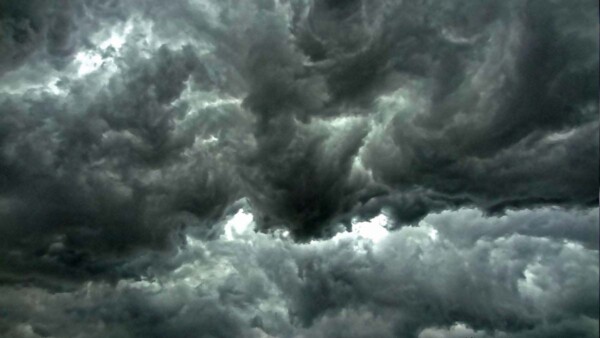
Image courtesy of Pickpik by way of a Creative Commons search.
INTRODUCTION
I’m trying to think back to the first moment I experienced a fear of heights. It has something to do with my father.
Lest you believe this sounds like a therapy session, I mean, quite literally my father.
I couldn’t have been more than 3 or 4 years old – I’m thinking 3. My dad was active duty Air Force and we were stationed at either Vancouver or Spokane, Washington. We were living in base housing.
One night, my dad picked me up and put me on his shoulders. I remember thinking I was about to fall off. I had nothing else to hold onto, so I grabbed his forehead in a death grip. We headed off down the hall. My head bonked against the opening to the hallway.
I remember being so afraid of the highness that I couldn’t wait for him to put me back down.
A couple of years later we flew to Spain, and I was not bothered by heights. I did have one episode of acrophobia in Spain. We were touring a castle and had to navigate a narrow board that crossed an abyss between two turrets. I had to get down on my knees and crawl, I was so afraid. But on the flight home I was fine.
Cut to age 14. I was flying to Detroit to spend part of the summer with my sister and her husband. Mom put me on a DC-9 out of Eglin Air Force Base in Northwest Florida. I was to fly from there to Dothan, Alabama, then to Atlanta, where I would change planes and fly direct to Detroit. I thought that was pretty cool, being able to do that by myself at age 14.
The plane hurtled down the runway and leaped into the air. I took one look out the window and my brain swooned. I remember thinking, “Oh my God, I’ve made a mistake,” and in a moment of panic I actually considered walking up to the cockpit – you could do that in those days – and asking the pilots to turn around and let me off. But I was paralyzed with terror so I averted my eyes from the porthole and looked straight ahead, up the aisle. Eventually, I was able to look out and not seize with fear. By the time I got to Detroit I was mostly OK.
Needless to say, I’m not a fan of flying. I have an irrational fear of heights. It’s not just airplanes – I find ladders difficult to manage, and climbing up on my roof to clear tree limbs and leaf litter has become a challenge. I realize airplanes are the safest way to get from Point A to Point B, that the odds of dying in a plane crash are lower than ridiculous … but I don’t care. I’ve beaten the odds many times before, in things totally unrelated to air travel, and I don’t want to be on an airplane the next time I defy the impossible. Lottery ticket, yes. Handsome boyfriend, yes. Delta 787, no way in hell!
So I wrote this story, an homage to my phobia about flying.
As an acrophobe I can’t imagine a fate worse than being stuck on airplane, terrified beyond words, alongwith a hostile individual hellbent on scaring the living shit out of you. That actually happened to me, on a flight from Pensacola to Los Angeles. I was seated next to a guy who was flying to Houston – he designed video games for a living. When he found out I was afraid to fly he spent the entire flight suddenly grabbing my arm and whispering, “WHAT WAS THAT SOUND?” Needless to say I wasn’t amused.
But there was something else I wanted to say in this story – that anger, hatred and vengeance are often unfocused. You see that so often in this world of 2024, especially involving politics and issues such as LGBTQ rights and the rights of women. People treat their hate as a matter of convenience without bothering to check the facts first. It’s sad that each of us must rediscover the wheel when it comes to the things we think we know, opposed to what is truly there.
I haven’t flown in 24 years. Now that I’m retired, travel is an option. I would love, for instance, to visit Spain, where we lived for three years, and try to find my boyhood house. But to get there will require a trip across the Atlantic Ocean aboard a jetliner. Does enough Xanax and Valium exist in the world to get me there with my wits intact?
If I find out, I’ll let you know.
Meanwhile, what’s that sound?
—
THE FEAR OF FEAR ITSELF
The first hour
From five miles up, Paul Westerbrook thought the ground resembled an impossible dream of heaven.
Impossible, he thought, his depth of focus shifting to his reflection in the airliner porthole. Impossible that I could be here and the ground could be so far away.
He watched his image. Shafts of sunlight slanted through the row of portholes on the opposite side of the cabin, back-lighting his head so that his face was masked in shadow. Darker pools filled in the spaces around his eyes and mouth.
He might have been staring at a skull.
And he could hear a rushing sound. Not the dull thunder of a flood but a fine sandpapery hiss, the sound of air whistling over the bright aluminum skin of the 767 as it hurtled through the thin atmosphere, its engines and wings maintaining a hair-trigger equilibrium between thrust and weight and lift, and he could feel the plane sinking and rising as variables of air density and wind velocity and engine compression altered the formula in tiny but noticeable increments that brought mists of perspiration to his forehead as he tried to calculate the forces of turbulence necessary to send the airplane spinning out of control –
He slammed the porthole visor down.
He squeezed his eyes shut.
And he recited a silent prayer: Please, God. I’ll do anything you want. Just get this plane on the ground safely.
Somebody was speaking to him. He blinked.
“Did you want something to drink, sir?” A flight attendant. She was older than most, with thin, blond hair, pale skin and high cheekbones. She had the calm look of a kindergarten teacher handing out waxed Dixie cups of warm Kool-Aid. The aniline blue uniform of South Air smoothed the curves of her body and gave her a confident, almost motherly aspect.
A bump rattled the plane. Paul grabbed the back rest of the seat in front of him and felt his palm slide greasily over the plastic upholstery.
Finally, he said, “A drink? Yes,” and was instantly ashamed of the tremor in his voice. “Bring me a couple of Valiums and a bottle of Crown Royal. That should do the trick.”
The attendant smiled warmly. “White knuckles, eh?” she whispered, and he nodded too quickly. He thought he must look to her like a contrite child.
“Do you fly often?” She was easing into the seat next to him, and he thought he could feel a shuddering vibration passing through the floor of the airplane and up through the frame of his seat. Or was that a change in engine pitch? Was the pilot throttling back as a warning light suddenly blinked red, or was a turbine starting to rattle as hairline cracks widened into chasms of flawed metal and the blades prepared to fly off the shaft like knives thrown by a blindfolded magician –
“Not much. But from now on, yes,” he said. And he had made the decision himself, hadn’t he? In spite of Gail’s subtle coercion, he had accepted the position of regional buyer for the McAndliss chain of department stores, a promotion that would give him more opportunities – a final chance as it were, because twice before he had refused offers like this for whatever reason had seemed important at the time, and if he’d refused again … Well. Gail would have said nothing, but her measured ways of doing things when she was angry would have spoken volumes. You are an indecisive and fearful man, she would have thought, adding: I don’t know why I married you.
So he’d accepted the offer.
But the job required flying.
“It’s nothing to be ashamed of,” the attendant said and laid an utterly cool palm on his hand. Her skin was as dry and smooth as a pool hustler’s chalked cue. “Most people experience a little anxiety while flying. Sometimes it’s acrophobia, claustrophobia, or even a combination of the two. Are you afraid of heights?”
Paul nodded once. Heights. God, yes.
She patted his hand. “My father used to say, ‘We have nothing to fear but fear itself,’” She shook her head sadly.
Paul nodded without enthusiasm. At that moment he didn’t care about borrowed aphorisms. He simply wanted to be on the ground.
“My father was an airline pilot.” She smiled mysteriously. “He never worried about … the unexpected.”
A staticky voice scratched from the cabin speakers. It was the captain, announcing that Air South’s non-stop service from Los Angeles to Atlanta had reached its cruising altitude, that passengers could remove their seatbelts, that their flight time would be about four hours and 45 minutes – Paul stopped listening. His heart seemed ready to jump out of his throat.
The attendant gave Paul’s hand a reassuring pat and stood up. “I’ll bring you a cocktail and check to see how you’re doing.” At that moment the whining throb of the engines shifted to a lower, almost subliminal pitch that seemed to resonate through Paul’s bones. His stomach looped into a tense knot.
She looked at him and said, “Try not to worry, Mr. Westerbrook,” and her gaze hardened for a moment, as if a layer of ice had formed over her eyes and melted, long enough for her to whisper, “If the plane crashes, all the worrying in the world won’t change a thing.”
Then she was padding silently toward the rear of the airplane, and the terror was swarming all over Paul again as he tried to remember when he had told her his name.
The second hour
Paul wondered what Gail was doing at this moment.
In his mind’s eye he saw her at the dining room table, her leather portfolio beside her with papers spilling between the teeth of the zipper – homework papers or tests to be graded, the things teachers carried with them. She would remove the papers and arrange them into neat stacks and attack them until they were back inside the portfolio.
That is, if she were there. And not next door.
When he landed at Hartsfield International Airport he would go home in a taxi. After 17 years, their marriage could no longer supported airport reunions.
But he envied her. He envied her discipline and her stubbornness and her immunity to fear.
“Here’s your drink, Mr. Westerbrook,” the flight attendant announced. Two other attendants were pushing a drink cart up the aisle, tossing ice cubes into plastic glasses like crap shooters and popping the tabs on cans of 7-Up and Coca-Cola.
He thanked her nervously and drained half the glass in a single swallow. The liquor seemed to cauterize the lining of his throat. Bourbon and Coke – mostly bourbon. He wasn’t a bourbon drinker, but anything with alcohol would have served the moment.
He glanced at her nametag: It said TESS.
She slid into the seat next to him and in a conspiratorial whisper said, “Do you like the drink? That’s the way my father liked them – heavy on the bourbon.”
Paul took another sip. Why hadn’t she asked him what he wanted to drink? He thought to ask, but said, “You mention your father often. You must love him very much.”
Her gaze became unfocused, and a tracing of a smile crossed her lips. “Yes,” she said. The smile dimmed to an expression Paul approximated with regret. Then she was back to business. “Now finish that drink because the first officer tells me we’re headed for some rough weather.”
Paul felt ice crystals forming in his blood. Rough weather? Turbulence? Something cold was sliding along the lifeline in his palm – a drop of moisture, either condensation from the cup or chilled sweat. He managed to stammer, “Will – will it be bad?”
The flight attendant – Tess – shrugged. “You never know, especially with this flight crew.”
He raised an eyebrow and took another hit off the drink.
“The first officer has been drinking since we left LAX,” she said.
The liquor burned like lye. It caught in his windpipe and he choked, spraying bourbon over the tray. He hacked until his eyes burned and tears smeared everything into watery blots of shadow and light. When he was finally able to breath, he wheezed, “But isn’t that – isn’t that against the rules?”
She frowned. “You’re darn right it’s against the rules. Honest to God. My father would have a heart attack if he could see what goes on in the cockpit these days.”
“But why doesn’t the Captain put a stop to it?” Paul babbled.
She shook her head wearily. “This sort of thing goes on all the time – it’s not unusual. All the airlines have problems with alcoholic pilots.” She hesitated and cocked an ear. “Did you hear that?” She listened a moment longer. “It sounded like they shut down an engine.” Paul felt his eyes goggling. She tittered, and it was a sound without mirth. “I guess not.”
She walked away, humming softly. Paul stared blankly at the seatback ahead of him. A pit seemed to have opened in his stomach, claiming everything inside him and giving back nothing but black fear.He wished he could fold himself into that pit and simply disappear until this ordeal was over. He wished he could return to the heavenly ground.
The third hour
Paul sat rigid in his seat. He could hear a metronomic pulsing, the sound a wheel bearing on a car makes when the grease has been reduced to sludge and metal is rubbing against metal and the entire wheel assembly is about to fly apart. He listened closely, his ear filtering out the extraneous noises of people chatting, and he could hear it: a droning throb modulated by regular basso pulses that seemed to beat through the airframe itself, the sound of weary machinery about to fail.
He listened.
It was the sound of his own heart.
God, he thought, if Gail could see me she’d – she’d –
Tess was suddenly in the seat next to him. “Did you enjoy your drink?” she asked happily.
Paul nodded, and asked distractedly, “And how is the first officer enjoying his drinks?”
“Fine, fine,” she said dismissively, ignoring the sarcasm.
“What about – ” Paul hated to say the word, as if saying it would make it real, “those storms. Are we through them yet?”
Tess’s eyes narrowed into a playful squint and she shook her head. She raised the visor and pointed. Paul risked a quick glance and then twitched his eyes away as the vertiginous change in perspective caused him to swoon. On the horizon he had seen … clouds. He was no meteorologist. But they resembled volcanos of turbulence and violence. He slid the visor back down.
“Cumulonimbus, Mr. Westerbrook,” she said gravely. “Thunderstorms. Hell breathers.” That last part came out in an overdone stage whisper. On the ground he would have laughed at her melodrama, but up here, trapped in this cabin, he could only stare, dumbstruck with terror.
“Those are the same clouds responsible for most airplane crashes,” she said. “For instance, the worst disaster in aviation history occurred on the Canary Island of Tenerife when two 747s collided during a thunderstorm. Over 500 people …” She clasped her fingers around an imaginary matchstick and blew silently.
Paul squeezed his eyes shut and turned away. Why was she telling him this? She knew he was afraid. Why was she doing this to him?
“To quote my father,” she said, her voice suddenly solemn, as if she were about to recite a catechism, “`God created thunderstorms to keep pilots humble.’ But then thunderstorms aren’t the only reason airplanes crash.” The fingers came up for another accounting. “Mechanical or structural failure is the second-leading cause, followed by pilot error, mid-air collisions – and did you know, Mr. Westerbrook, that even disturbances by passengers have been blamed for airplane crashes? Did you know that?”
He dared to open his eyes and look at her. She looked back with a knowing smile.
He heard loud voices from the rear of the airplane. Tess’s head went up like a wolf sniffing the air for deer scent. She hauled herself out of the seat with surprising litheness.
Paul looked back, fearful of what he might see. An elderly woman was standing by her seat and the man next to her – Paul could see only the man’s bald pate – seemed to be in some kind of distress. Paul settled into his seat and shivered.
A man wearing the South Air uniform appeared in the aisle, striding toward the rear of the plane. He was tall, his hair grayed at the temples and his face framed with lines. Paul thought he must be the captain, and the sight of him came simultaneously as a comfort and a shock. What could be happening that required the captain’s intervention?
After a few moments, the captain reappeared, moving toward the cockpit. Paul loudly cleared his throat.
The man stopped and Paul said quickly, “Is everything all right, Captain?” He thought his voice sounded muffled and indistinct, as if a ventriloquist had spoken the words for him.
The man grinned and said, “Everything’s fine. An elderly gentleman was having a problem with his ear.” He pointed to his own ear. “The pressure. But now he’s fine.” He hesitated and added, “Oh, and I’m not the captain. I’m the first officer.”
A tremor shook Paul. This man didn’t look intoxicated. But Paul had heard stories about pilots’ abilities to hold their booze. Maybe this first officer would return to the cockpit and knock back a stiff belt of bourbon and snicker about the chicken shit in seat C15 who was about to crap his drawers.
Without thinking, Paul asked: “Sir, are you drinking man?”
The first officer chuckled. “Excuse me? I’m a member of the LDS church. We don’t drink alcohol.”
“And what about the storms,” Paul blurted, hearing the panic rise in his voice but not caring. “We’re flying into storms, aren’t we? Thunderstorms. Hell breathers.”
The man looked baffled. “No,” he answered tentatively. “We’ve got a few stratocumulus at about 70 degrees compass heading, but no thunderstorms.” He tucked his tie into his shirt. “Just relax and enjoy the flight, sir. We’ll be in Atlanta in about two hours.” He walked away.
Paul felt a prickly sensation across his body, as if his skin were cooling and shrinking back around his bones.
Lies.
She’d lied to him.
In the jumble of his emotions a thought loomed – something he could never quite forget. A lie Gail had told him. About the man next door, and the afternoons she spent over there, “tutoring” his son. He remembered the vow he’d made to never believe anything anyone told him without confirming it himself.
Lied to. He’d let himself be lied to again.
“My God, I’m not believing this. I’m really not believing this.” Tess was in the seat next to him, smelling of spilled bourbon and petrouli and a faint whiff of sweat. “That man in B28 – he had a gun! He threatened to shoot up the airplane!”
Paul shook his head. He said, simply, “No more.”
“Thank God Karen – she’s the flight attendant responsible for rows 20 through 38 – saw what was happening and stopped him.”
Paul closed his eyes. “We’re not flying into bad weather.”
“She wrestled the gun away from him before he could pull the trigger,” Tess continued, a hard edge forming on her words.
“The first officer hasn’t been drinking, either,” Paul went on. “He’s a Mormon, for Christ’s sake.”
“Do you have any idea what a bullet would do to this airplane?” She seemed to be talking to no one but herself. “What would happen?” she murmured questioningly. “The cabin would lose pressure, and rapid decompression might damage the flight controls – no, this airplane has electronic flight controls. It’s the older jets with mechanical flight controls, like the 727, that might have problems. But the pilots could lose consciousness. The plane could crash, I suppose.”
“Have you heard anything I’ve said?” Paul asked, his voice rising. The plane jiggled and his heart raced a moment. “What were you trying to do? Scare the shit out of me?”
She shook her head, her gaze refocusing into a glare. “Mr. Westerbrook, are you familiar with desensitization therapy?”
That caught him off guard.
“It requires that a person who is afraid of something be repeatedly exposed to the source of his fear until he becomes desensitized to it.” She paused and sighed. “That’s what I was doing. I apologize if I frightened you, but it seemed the best way to handle the situation. Like my father said,” she added cheerfully, “You have nothing to fear but fear itself.”
Paul clenched the armrests until veins stood out on his hands. “Is that so? Well tell me, what do you think your father would say about a flight attendant who scares the living shit out of her passengers? That’s not exactly standard procedure.”
Her expression chilled to absolute zero. “He wouldn’t say anything, Mr. Westerbrook. My father is dead.”
Instantly, Paul’s anger swirled away. He mumbled, “Oh.”
Her stare was blank. “He was killed in a plane crash. Three years ago. In Houston.”
The breath eased from Paul’s lungs in a slow, defeated sigh. Some emotion, yellow and bitter like shame, began to gather inside as he tried to imagine the grief she must feel when she came aboard an airplane. He found that it was beyond his comprehension.
She picked at her jacket. “I was only trying to help.”
He nodded slowly. Maybe he had been too harsh. Finally, unsatisfactorily, he said, “OK, let’s just … forget it. No more fairy tales about storms or drunken copilots or crashes.”
Tess said, “Fine,” and got up to leave. Paul touched a finger to her sleeve and added, “The first officer told me the man in the back was having problems with his ears. So no more fairy tales about whackos shooting up the airplane. OK?”
She gave him a puzzled look. “I guess he was trying to reassure you. Truth is, the man really did threaten to shoot up the airplane. Karen took the gun away from him and gave it to me.” She whispered urgently, “Look, Mr. Westerbrook. This airplane is like a miniature city – all the things that happen in a city can happen up here, too. People fight, get drunk, die – “
“No more fairy tales!” Paul said out loud, fresh panic making the hairs on the back of his neck brush against his damp shirt collar. His voice warbled beyond the narrow perimeter of the seats around him. Another passenger, a young woman who was reading a novel, glanced his way. “We agreed. No more fairy tales!” He started to clamber out of his seat but realized he had no place to go, so he sat back down and stared stonily in the opposite direction.
Tess tapped him on the shoulder. He refused to look at her. So she said in an exasperated tone, “Does this look like a fairy tale?”
He looked. Resting in her palm was a tiny revolver.
The fourth hour
Impossible, Paul thought, squeezing a sweat-soaked lump of napkin as if he were pumping a vein to give blood. This is impossible.
The airplane had entered an area of clear-air turbulence. It roller-coastered through the ice blue sky like some kind of Six Flags ride, sliding down invisible flumes of air to abruptly surge higher. His inner ear told him this was all wrong, and the glands in his jaw began to ache, a prelude to motion sickness. But he promised himself he would not puke. He would not add that to his list of miseries.
He thought of the old man and the dainty gun Tess had showed him, and his heart pancaked into a spin. It made no sense. Why would the man want to kill himself and everyone else aboard?
Then a final question occurred to him: How could the man have smuggled a gun past the metal detectors and X-ray machines?
The first officer has been drinking since we left LAX.
Thunderstorms, Mr. Westerbrook. Hell-breathers.
And, finally, The man really did attempt to shoot up the airplane. Karen took the gun away from him and gave it to me.
Lies.
He couldn’t stand it. He undid his seatbelt and marched toward the rear of the airplane. An attendant who was sitting in the last row of seats spotted him, rolled her eyes and moved to get up, but he was already upon the bald man hunched in Seat B28.
Paul’s first impression was that the man had died a thousand years ago and the airline was returning his body, filched by graverobbers, to its rightful resting place in some Egyptian tomb. The man was old. His flesh was wrapped around his skinny bones like yellowed cellophane, and his hand shook with a palsy that seemed to consume all his energy so he could do nothing but squat in the seat and stare straight ahead, his drooping lips permanently bent into an atrophied frown.
Paul thought: This man couldn’t have brought a gun aboard.
The elderly woman sitting next to him glanced up. Paul asked, “How is the problem with his ears?” and the woman answered in a brittle rattle, “Oh, he’s doing much better – “
Somebody planted a hand on Paul’s shoulder and he jerked around, expecting to see Tess’s leering smile. But it was the other flight attendant. She said irritably, “Sir, you’ll have to return to your seat – “
Paul seized her by the shoulders and her eyes grew round and afraid. “Tess,” he hissed. “I don’t know what’s going on, but I think Tess has lost her marbles. She’s got a gun!”
The woman shook off his hands. “I don’t know what you’re talking about but you’d better return to your seat – “
“I’m talking about Tess!” he said angrily. “She’s got – “
“Keep your voice down!” she snapped. “You’ll cause a panic. I’ll make sure the Captain hears what you’ve got to say.”
The plane dropped suddenly and they both grabbed seatbacks to hold on. An overhead bin unlatched and the lid flew up with a plastic clatter that startled the woman with the novel, who glanced up apprehensively and then buried herself in the book with a look of ferocious concentration. Paul turned and scuttled down the aisle.
A newspaper clipping lay in his seat.
Next to it was a bullet.
He held the bullet before him like a jeweler assaying a gemstone, his emotions bouncing between fascination and outright terror. And then he turned to the clipping.
The headline read: “40 survive crash at Houston.” Paul could not stop himself from reading the story.
“An Air South jetliner carrying 62 people crashed at Houston’s International Airport on Monday, but only 22 people were killed in what authorities describe as a heroic effort by the flight crew to land the crippled jet.
“Air South Flight 6212 was only 1 1/2 hours into its nonstop flight from Atlanta’s Hartsfield International Airport to Los Angeles when the crew radioed a distress call and asked for emergency clearance to land at Houston.
“Emergency crews stood by as the Air South jet, a Boeing 727, attempted to make a wheels-up landing. The jetliner broke into three pieces before finally coming to rest on a taxiway.”
Paul scanned the story, and then his eye came to rest on a string of cold paragraphs midway through.
“FAA crash investigators on the scene said the pilot reported a rapid decompression incident at altitude that resulted in damage to the jetliner’s control systems.
“Officials would not comment on the `incident,’ but survivors who spoke with reporters said a hysterical passenger apparently opened an emergency hatch to `get off the plane.’
“Officials would not confirm the report, but one of the survivors, a man identified as Paul D. Westbock of Atlanta, was taken into custody by airport security personnel and later transferred to the federal detention facility in Kingwood.”
The date on the clipping was three years ago.
It all came to him, all of it, the pieces falling together, and Paul found that he could not sit down, that he had been overtaken by a kind of numbness as explanations finally meshed with events, and he would not sit down until this airplane was on the ground, his memory serving up a final shocking image of Tess and the dainty little gun – a lady’s gun, really. He had to tell the Captain what was happening. He had to. Because there was nothing left for Tess to do now but kill him.
He stepped out into the aisle and began hurrying forward.
As he approached the bulkhead that separated coach from first class he heard her say, “Where are you going, Mr. Westerbrook?”
She was sitting next to the emergency hatch. She motioned for him to sit down. He paused and weighed his chances of making a dash for the cockpit. The gun was cupped in her palm.
She stood and pushed him into the seat next to the hatch.
“You should be in your seat, Mr. Westerbrook,” she hissed.
“It wasn’t me,” he whispered. He heard his voice starting to crack. “The names aren’t even the same.”
“I was on that flight,” she said, ignoring him. “I tried to help the man who was afraid. But as you read, I didn’t do my job very well.” She swallowed noisily. “My father was the pilot. He died. But I lived. So did the man. He never undid his seatbelt.” A tremor ran through her. “Somehow that doesn’t seem right.”
Paul watched her hand. He wondered if he could grab the gun. In his mind he saw Gail laughing at him: Why would you even consider such an absurd thought; you’re an indecisive and fearful man. I should’ve divorced you and married Thornton next door.
“I want you to do something,” Tess said, and Paul knew she was no longer speaking to him. “I want you to make it right.”
Paul shook his head. “I don’t know what you mean,” he said, but he thought he knew exactly what she meant.
She turned and skewered him with a stony stare. “I want you to open that door.”
His heart clenched around the words. He tried to imagine doing that – grasping the release lever and pulling OUT, then UP, and the hatch popping away like a champagne cork and air blasting out, into a sky-blue void, sucking him with it, with nothing below but miles of tumbling emptiness and gyrating terror –
No, no, his mind rejected it with a convulsive shudder that brought real tears to his eyes and had him fumbling for his seatbelt.
“Unfasten your seatbelt and open the door,” she said evenly.
“No,” he whimpered, scrunching his eyes shut. “It wasn’t me.” He winched the belt tight and grabbed the armrests and sat that way a few trembling moments, daring to peek after nothing happened. He saw that Tess was gazing at him almost tenderly.
“Don’t you understand?” she asked softly. “I know it wasn’t you. But it doesn’t matter. You’ll do. You’re the best I can do.” Then her eyes narrowed into slits and the last inflection of sanity departed her voice and she whispered slyly, “Unfasten your seatbelt and open the door.”
He shook his head no. No. No.
He could see the rage building in her, a flaming, almost artificial blush of crimson rising in her cheeks. A vein pulsed in her neck. She appeared ready to explode.
She undid her seatbelt with a practiced snap and stood and glared down at him. The color of her uniform seemed to go from blue to black.
“All right,” she muttered hoarsely. “Then I’ll shoot the goddamned pilot and copilot, and we’ll all go down. And it’ll be your fault, Mr. Westerbrook. Just like before.”
Later, he would reflect on this moment either consciously or in nightmares and realize he had acted without thinking, in a way that was decidedly untimid, and that his actions came not in response to some admonition or coercion. He simply acted.
He grabbed the emergency hatch handle and pulled OUT –
– she turned and her face was a smiling rictus of triumph –
– and then he pulled UP –
– her expression collapsed into dawning horror –
And the cabin exploded as the hatch blew out and was snatched into the screaming slipstream and then everything was pouring through the socket in a bellowing shock wave of frigid air and papers and pillows and every loose thing inside the cabin that could fill the vacuum. The plane lurched sharply and began to dive. Paul felt himself being sucked into that freezing, screeching storm and grabbed the armrests of the seat next to him, his heart whamming with sledgehammer blows, until the seats themselves began to tear away from the cabin floor and jitterbug toward the opening.
Something larger flew overhead and banged into the hatchway.
Tess.
He peered over his shoulder and saw her clinging to the edge of the hatch, her body flapping against the 767’s aluminum skin, and beyond her was empty sky and clouds – a confluence of every terror Paul could imagine brought to horrifying reality only inches from his face. But again he acted without thinking, and this too he would look back on and wonder where the courage had come from.
He reached for her.
They locked eyes for a moment, and what he saw in her was malice refined to its purest essence. She mouthed two words. She gave him an evil smile.
And then, she let go.
All the hours afterwards
They let Paul go.
He passed every lie-detector test. The gun was registered to Tess. And another passenger, the woman who had been reading the novel, corroborated parts of Paul’s testimony.
So they let him go.
And when he returned to work, he told his superiors he could not do the job. He didn’t care what Gail thought.
Because Tess had told him, just before she let go.
She had said, “Next time.”
And there would not be a next time.
—
About the author:
Del Stone Jr. is a professional fiction writer. He is known primarily for his work in the contemporary dark fiction field, but has also published science fiction and contemporary fantasy. Stone’s stories, poetry and scripts have appeared in publications such as Amazing Stories, Eldritch Tales, and Bantam-Spectra’s Full Spectrum. His short fiction has been published in The Year’s Best Horror Stories XXII; Alfred Hitchcock’s Mystery Magazine; the Pocket Books anthology More Phobias; the Barnes & Noble anthologies 100 Wicked Little Witch Stories, Horrors! 365 Scary Stories, and 100 Astounding Little Alien Stories; the HWA anthology Psychos; and other short fiction venues, like Blood Muse, Live Without a Net, Zombiesque and Sex Macabre. Stone’s comic book debut was in the Clive Barker series of books, Hellraiser, published by Marvel/Epic and reprinted in The Best of Hellraiser anthology. He has also published stories in Penthouse Comix, and worked with artist Dave Dorman on many projects, including the illustrated novella “Roadkill,” a short story for the Andrew Vachss anthology Underground from Dark Horse, an ashcan titled “December” for Hero Illustrated, and several of Dorman’s Wasted Lands novellas and comics, such as Rail from Image and “The Uninvited.” Stone’s novel, Dead Heat, won the 1996 International Horror Guild’s award for best first novel and was a runner-up for the Bram Stoker Award. Stone has also been a finalist for the IHG award for short fiction, the British Fantasy Award for best novella, and a semifinalist for the Nebula and Writers of the Future awards. His stories have appeared in anthologies that have won the Bram Stoker Award and the World Fantasy Award. Two of his works were optioned for film, the novella “Black Tide” and short story “Crisis Line.”
Stone recently retired after a 41-year career in journalism. He won numerous awards for his work, and in 1986 was named Florida’s best columnist in his circulation division by the Florida Society of Newspaper Editors. In 2001 he received an honorable mention from the National Lesbian and Gay Journalists Association for his essay “When Freedom of Speech Ends” and in 2003 he was voted Best of the Best in the category of columnists by Emerald Coast Magazine. He participated in book signings and awareness campaigns, and was a guest on local television and radio programs.
As an addendum, Stone is single, kills tomatoes and morning glories with ruthless efficiency, once tied the stem of a cocktail cherry in a knot with his tongue, and carries a permanent scar on his chest after having been shot with a paintball gun. He’s in his 60s as of this writing but doesn’t look a day over 94.
Contact Del at [email protected]. He is also on Facebook, twitter, Pinterest, tumblr, TikTok, and Instagram. Visit his website at delstonejr.com .

Leave a Reply