Mladen and Del review ‘Troll 2’
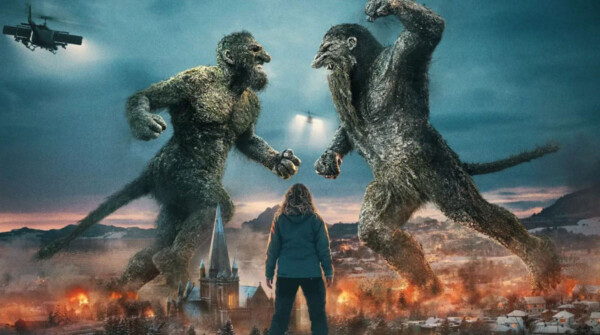
Image courtesy of Netflix.
“Troll 2” Starring Ine Marie Wilmann as eccentric troll chaser Nora Tidemann; Kim Falck as lovable self‑sacrificing Andreas Isaksen; what‑a‑great‑name Mads Sjøgård Pettersen as studly but kind Major Kristoffer Holm; Sara Khorami as sultry scientist and bureaucrat Marion Auryn Rhadani; and others. Directed by what‑another‑great‑name Roar Uthaug. 1 hour, 45 minutes. Rated TV-14. Streaming on Netflix.
Plot summary: After centuries of hibernation, a gigantic mountain troll is awakened and goes on a revenge-fueled rampage. A scratch group of lovable but eccentric scientists and lovable but bumbling bureaucrats must stop the creature before it reduces Norway to rubble.
Spoilers: Yes, this is a movie review after all.
Mladen’s take
When I imagine a troll, it’s a humanoid shape with a size that falls somewhere between a dwarf and an ogre or, in real world terms, between Rubio and Trump. I’m wrong about their size, if you believe Norwegians know more about trolls than me, a Croatian. In both the original 2022 “Troll” and the recently released “Troll 2,” these mythical creatures are, what, 15 stories tall, sentient, and scruffy. Without question, they should take some hair styling cues from Del.
While “Troll” is a very good movie, “Troll 2” is not. It just makes the cut as a B- because it’s too derived from the first “Troll” movie and predictable. But, “Troll 2” does have some merits despite its paint‑by‑numbers plot.
Ah, yes, the plot.
The federal government of Norway has shackled a tough‑looking mature male troll that was found hibernating. How do I know the troll is a male when its pubic region is covered by a thick growth of lichen? It lacks boobs, that’s how. Come to think of it, the algae beard is a bit of a giveaway, too.
Anyway, government scientists have reached a dead end studying the critter. They recruit troll whisperer Tidemann to help. She becomes instantly disgruntled because the bureaucrats and the military are treating the troll as an object and a threat because the troll in the first “Troll” movie rampaged trying to find its home in the mountains. Poof, in no time Tidemann is at the top of the scaffold erected near the troll. She approaches the troll, touches its warty nose, hums a Norwegian lullaby, and, whamo, the troll awakes. Mayhem ensues after the grandaddy of trolls, who I’ll call Buster, breaks free, steps on a few humans, and busts through the mountain redoubt where the government has been hiding him.
You may be asking why Buster is so angry, so determined, so focused on whapping Norway, whose people I’ve always thought of as being among the happiest and nicest in the world. Well, as it turns out, Norwegians haven’t always been so nice, especially when one of their medieval kings decided to force feed them, and trolls, Catholic Christianity.
I was enjoying the movie until Tidemann, accompanied by Isaksen, Holm, and Rhadani, commits a very non‑science‑y act. She goes to a cave where a late puberty troll is hiding from the world. She then asks the kid troll to stop the adult troll from wrecking Norway. And, I’m like, girl, ain’t no way your troll, ironically nicknamed “Beautiful,” stands a chance against Buster. So, yeah, Buster takes out Beautiful without the former every laying a hand, a paw, whatever, on the latter. I concede that the no‑fight is one of the cooler scenes in the movie. It deftly illustrated that Buster was a smart troll, indeed, but that scene, and a couple of others, aren’t enough to elevate the second movie to the original film’s level.
The CGI in “Troll 2” is good. The characters likable. The soundtrack adequate. Despite my unenthusiastic grade for the film, I recommend that you watch it. “Troll 2” has just enough moments sprinkled through its reasonable runtime to make it enjoyable. And, though you don’t need to see the original “Troll” to enjoy the unoriginal “Troll 2,” it won’t hurt. The way I figure it, you may as well see both to better prepare for the third Troll universe film that’s on the way.
Del’s take
First things first, let’s sort out the plethora of troll movies.
Back in the ’80s we had “Troll,” a not very good B horror movie, followed by a sequel in 1990, “Troll 2.” Didn’t much care for either. The trolls looked like Rat Fink dolls. (Fun facts: The lead actor in “Troll” was Noah Hathaway, who played the young boy Boxey in the original “Battlestar Galactica,” and Atreyu in “The Neverending Story.” His “Troll” character’s fictional name was “Harry Potter.”)
Then in 2010 came “Troll Hunter,” the first feature-length movie I watched on Netflix. That movie blew my mind. Or it might have been the six-pack of Corona I consumed while watching it. Either way, “Troll Hunter” set the standard for troll movies. I mean, c’mon on – a troll as big as a mountain contracting RABIES? What a trip!
Then in 2022, Netflix rolled out “Troll,” unrelated to the ’80s “Troll” or “Troll Hunter.” This new troll became Norway’s Godzilla – it stomped around, squashing buildings and whatnot. No fire breath. That could have helped. I liked it, though not as much as “Troll Hunter.”

Now we have “Troll 2,” another Netflix production and a sequel to the 2022 film. Same characters, same dilemma, just a tad sillier.
This movie’s strong points are its special effects, its setting (I never tire of seeing Norway’s beautiful back country and fjords), and its premise – that once, human beings and giant, humanoid creatures lived side-by-side in harmony, until religion arrived. That’s when trolls became persona non grata and were hunted down by marauding humans until only a few relics, unknown to modern man, remained within the deepest recesses of Norway’s Dovre Mountains.
“Troll 2’s” problems are as follows: It skimps on action, instead wasting valuable time re-establishing character backstories and hinting at romantic entanglements that go nowhere. As it happens, the pogrom against trolls is just one big screw-up resulting from a torn piece of paper – not even plausible in the error-prone Trump regime. Also, in my opinion, it relies too heavily on the viewer having seen the first movie. Apart from the viewpoint character and her military pal, I struggled to remember who these people were.
You’ll forgive my lack of wokeness on this issue, but the thought of gigantic, possibly rabies-infected monsters striding through major population centers leaves me feeling less concerned about their right to exist and more concerned about my right to not get squashed flat or eaten by said gigantic monster, which is exactly what happens in one ghastly scene where an enraged troll rips the roof off an Alpine disco and makes a quick snack of the badly dancing inhabitants within.
“Trolls 2” doesn’t give you much opportunity to worry about that. Instead, we see the military commander tasked with stopping this thing bringing his new love interest along on missions, which confused me. I thought the Tidemann character was his girlfriend. She’s not? Somebody better let her know because she, in her eccentric way, is still flirting with him. We see the newly married bureaucrat trading Star Trek puns with his wife, who is pregnant with their first child, who will be named after a Star Trek character. At that point you know he’s doomed to Red Shirt status. And we see the military commander’s bitchy girlfriend undergo a total character transformation so that by movie’s end she’s solidly Team Troll. It’s all a little too convenient and trite for my tastes.
Sounds like I didn’t like it, eh? Not true. It was OK. I don’t think it was equivalent to the first “Troll” but the premise was so interesting I couldn’t NOT like it. I’ll go along with Mladen’s grade of a B-, though I should give it a B just to disagree with him.
“Troll 2” continues a legacy of Scandinavian filmmaking that does not receive the credit it’s due. “Troll Hunter” is a classic, as is the Norwegian adventure movie “The Wave” and its followup, “The Quake.” Throw in the Finnish Nazi zombie movies “Dead Snow” and “War of the Dead,” the two Sisu films and the superb Swedish horror film “Let the Right One In” and you’ve got a fine collection of provocative – and evocative – speculative movies that deserve more attention than they’ve received.
“Troll 2” is not on the same level as those films but it comes close.
You can see it on Netflix.
Mladen Rudman is a former journalist and technical writer. Del Stone Jr. is a former journalist and writer.
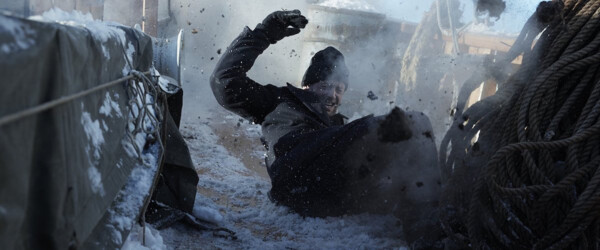
Image courtesy of IFC Midnight.
“The 12th Man” Starring Thomas Gullestad, Jonathan Rhys Meyers, Marie Blokhus and others. Directed by Harald Zwart. 135 minutes. Unrated. Hulu.
Del’s take
To describe a movie as “interesting” is to suggest it is not inspiring or intriguing or epic in its sweep. I think that’s a fair assessment of “The 12th Man,” an interesting movie that somehow falls short of the real events it seeks to depict.
Based on the 2001 book “Jan Baalsrud and Those Who Saved Him,” by Tore Haug and Astrid Karlsen, “The 12th Man” chronicles the action of a band of saboteurs who are captured trying to infiltrate German-occupied Norway during World War II. One man is shot on site, 10 are later executed, but a 12th man, Jan Baalsrud (Gullestad), escapes into the snowy wilderness. What follows is a harrowing tale of survival and near-misses as Baalsrud makes his way toward neutral Sweden while being pursued by obsessive Sturmbannführer Kurt Stage (Rhys Meyers).
“The 12th Man” is a testament to human strength and endurance. Baalsrud experiences gruesome deprivations during his months-long odyssey across the frozen landscape – he is shot, suffers hypothermia and frostbite, and starves while hiding from the relentless Stage. You wonder how a body could survive such abuse. For his pursuer, the stakes are equally painful. If Baalsrud succeeds in reaching Sweden, Stage’s failure will be noted in Berlin … with legendary Nazi displeasure.
The movie does a credible job of replaying the events of Baalsrud’s trek, which we are assured actually happened, with the exception of Stage’s pursuit. According to my research Stage did not pursue Baalsrud across frozen Norway. In fact, the Nazis believed Baalsrud drowned trying to swim across a fjord. Still, the major points of Baalsrud’s escape and the suffering he experienced remain intact and are, as I said, harrowing if not grotesque.
The movie is beautifully shot and makes effective use of the ice and snow as a kind of character unto itself, much the way snow and cold figured into the telling of “Let the Right One In.” I felt a sympathetic shiver as Baalsrud plunged into the chilly Arctic waters of a fjord as German soldiers and their dogs approached, or hid for days in the snow-covered swale of an icy boulder.
The stars of “The 12th Man” are not Baalsrud but the Norwegian people along the way who sacrificed all to facilitate his escape. It is they who risked everything to help a man they didn’t know, a patriot but a stranger who could not improve their lives under Nazi rule but could make things a hell of a lot worse if it became known they were harboring a fugitive.
The movie also reminds us the Nazis were evil, horrible men and women who did evil, horrible things to millions of innocent people. Given that fascism is on the ascendency and some of the former president’s more ardent and colorful admirers are fond of culling the Nazi playbook for political tips and strategies, maybe a stomach-turning dose of “The 12th Man” is just the tonic for this generation hell bent on re-discovering that tragic wheel of human misery.
My gripes with “The 12th Man” are, for starters, that it’s way too long. Two hours and 15 minutes of unrelenting tension is too much for an audience to endure. The movie also dwells to lurid excess on the details of Baalsrud’s suffering – I wanted to fast-forward through the scenes of blackened toes falling off or Baalsrud chipping his teeth through another bout of fjord-induced hypothermia.
My biggest complaint is that while the camera mostly focuses on Baalsrud, perhaps it should have been focused on the ordinary Norwegians who made his escape possible. Baalsrud does not do much except stay alive – no small thing, I admit. But it is the fishermen and trappers and villagers, the real stars of the movie I alluded to earlier, who take the action and pay the price for getting Baalsrud to Sweden. They will not have any movies made about them, but maybe they should.
Overall “The 12th Man” is a decent enough war movie about a real event. But it is too long, relishes a little too much the suffering of its protagonist and maybe doesn’t spend enough time detailing the heroics of its real heroes. Watch it on Hulu but gird yourself for a sometimes graphic marathon of pain and suffering.
Oh, and yes, it uses subtitles, if that’s an impediment for you.
I would grade it a B-.

Mladen’s take
Del and his people-are-wonderful-under-duress approach to reviewing a movie. Sheesh. Hey, Del, it was a stoolpigeon Norwegian who fingered the Norwegian commandos to the Germans. The indigenous stoolie was responsible for the deaths of the 11 saboteurs and our beloved Baalsrud’s prolonged exposure to the elements at high latitude as he fled east.
No, no. Let’s put the “The 12th Man” in context.
The film, though decent enough, is what I label “history revenge” cinematography. In Europe, the ongoing object of history revenge is Germany. Please, no misunderstandings. The Third Reich and its Hitler-driven National Socialism is among mankind’s most soulless societies. Tactically, however, the Wehrmacht right to the end of Word War II was one helluva fighting force and the Gestapo one helluva counter-spy and internal intelligence directorate. That’s what the “The 12th Man” is about. It tries to make the fact that one surviving Norwegian, who was a member of a raiding party that utterly failed to execute its mission and itself was executed, equaled a great victory for Norway against a country that occupied it from 1940 to 1945. What nonsense.
Europe today is far from the savage bundle of countries that colonized the globe and annihilated or oppressed cultures, ethnicities, languages, or sustainable economic systems from Africa to Asia to both Americas. The EU, the euro zone, and NATO have rendered Europe less blindingly feudal, fascistic, or mercantilist. But, all those countries that had their asses kicked by Germany between 1938 and 1945 still hold grudges.
“The 12th Man” is a manifestation of the history revenge grudge from the Norwegian perspective like 2013’s very good “Battle of Westerplatte” reflects Polish and Lithuanian history revenge. What would happen to you if you started taking about the history of Vichy France in Paris today? Your escargot would come laced with arsenic. Hell, the Russians, who obliterated Hitler’s Germany, still talk, write, sing, and make TV series and movies about the Great Patriotic War as though it happened yesterday.
We must never forget World War II, but we have to be careful of believing the way it’s portrayed in films, documentaries, fiction literature, and partisan interpretations of events. There were good guys and bad guys on the Allied and Axis sides, though some were worse than others. Norway had its share of Nazi sympathizers and straight-up fascist politicians. The continuum of World War II injustices must be understood and illuminated to withstand the diabolical revision of history that is easily spread through the internet and entertainment media.
Kicking aside my infallible law of history revenge as it applies to nationalistic re-interpretation of events long ago to look at the merits of “The 12th Man” without context, I give the film a C+.
It shouldn’t take you long to see that the movie’s producers and director (as well as the book on which the movie is based) tried to transform a lemon of a commando raid into lemonade even if you’re unaware of the geopolitics of World War II. Twelve men were sent to help the allies and one lived, an 8 percent rate of survival. What would have happened if only 8 percent of the Yanks, Tommys, and whatever the nickname for Canadian soldiers storming five beaches in 1944 Normandy lived? Uh huh. Also, most of the “The 12th Man” depicts Baalsrud trying to stay alive while running and hiding and hiding and running from Germans. He made no effort to continue the mission, explode Luftwaffe aerodromes, or stick around to use his training to help Norwegian resistance fighters.
Look, the saboteurs had balls, but in the movie as in real life, they had their balls shot off. One of them surviving with his balls intact, though a few of his toes on the right foot did not, was not a victory for Norway. It was a moment of triumph of the will for a very, very limited number of individuals. “The 12th Man” would have served better as a microcosm of a story showing us the determination and grit by the people we saw in the movie and got to know, rather than trying to convince me that their effort helped all of Norway and its millions of people endure occupation. A more disciplined, less holistic “The 12th Man” might have also allowed some 25 minutes to 30 minutes of the film to be cut.
“The 12th Man” is worth watching. The austere beauty of fjords, mountains, and snow near the Arctic circle is captured nicely in the film. There’s good acting. The women are all lookers. But, I’m no chump. There’s no way that one soldier surviving a busted mission improved life in a country overrun by a conquering army.
Mladen Rudman is a former journalist and technical writer. Del Stone Jr. is a former journalist and author.