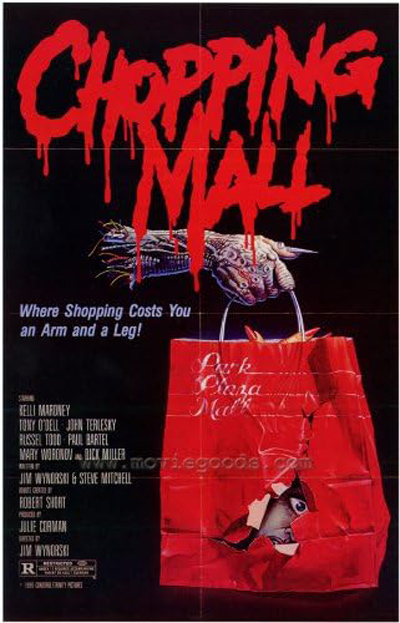
Del and Mladen review ‘Chopping Mall’

Image courtesy of Concorede Pictures.
“Chopping Mall” stars Kelli Maroney as Alison Parks, Tony O’Dell as Ferdy Meisel, Russell Todd as Rick Stanton, Karrie Emerson as Linda Stanton, Barbara Crampton as Suzie Linn, and Nick Segal as Greg Williams. Directed by Jim Wynorski. Rated R with a 1-hour, 17-minute run time. See it on Amazon Prime and Tubi.
Del’s take
“Chopping Mall” is a product of the incomparable Roger Corman, king of the independent, low-budget exploitation film.
Corman began his career in the mid-1950s making science fiction/horror movies (“The Beast with a Million Eyes”) and Westerns (“Five Guns West”), and became known as the “King of the Drive-In.” He continued in the 1960s with a series of opulent gothic horror movies based on the works of Edgar Allen Poe (“The Pit and the Pendulum”) and worked with stars such as Vincent Price, Basil Rathbone, Boris Karloff, Ray Miland and Peter Lorre.
Eventually Corman established his own studio, New World Pictures. He is credited with starting the careers of numerous A-list actors and directors, including Francis Ford Coppola, Jack Nicholson, Martin Scorcese, Peter Bogdanovich, James Cameron and Jonathan Demme, to name a few.
Corman produced “Chopping Mall,” along with his wife, Julie. It was shot mostly at the Sherman Oaks Galleria mall in Los Angeles in 20 days, with two days of studio filming. The film is described as a parable of Reaganesque consumption and has become a bit of a cult hit over the years.
The plot is fairly straightforward: A group of teenagers holds an after-hours drinking and sex party at a furniture store in a shopping mall on the same night a trio of security robots goes online for the first time. Unfortunately for the teenagers, a lightning strike damages the robots’ programming and they embark on a killing spree. Armed with tranquilizing darts, tasers and directed-energy weapons, the robots are more than a match for a group of oversexed teens … or are they?
Originally marketed as “Killbots,” (a superior title in my opinion) “Chopping Mall” was filmed at the same location as “Fast Times at Ridgemont High.” But trust me, it bears little resemblance to that classic coming-of-age movie. “Chopping Mall” is mostly a bloody excess of exploding heads, lots of jiggling breasts, tacky ’80s-esque music, some seriously terrible dialogue (which was mostly ad-libbed from what I understand) and crappy special effects – heck, they even poached the ray gun sound effects from the George Pal version of “War of the Worlds.”
But as an artifact of the ’80s, “Chopping Mall” is a fascinating time capsule. As I watched the movie I made a list of some of the uniquely ’80s features: big hair, designer jeans, pay phones, landlines, popped collars, circular glasses frames, pastels, Better Cheddar, CRTs, gun stores in a mall, cigarette machines (a pack of smokes cost $1.25), suspenders, button-down shirts, wooden skateboards, handheld calculators the size of mobile phones, khakis with pleats and shoulder boards.
Wow, those were the days. Not.
Look, “Chopping Mall” isn’t high art. It’s a low-budget exploitation film, squarely within the Roger Corman mode of a moviemaking. As silly entertainment it’s just fine. I can think of worse ways to waste an hour and 17 minutes of my life. Go into it with low expectations and you won’t be disappointed. Just be prepared for some serious gore.
I give “Chopping Mall” a grade of B. Anything higher would dishonor its low-budget aspirations. But I’m guessing Mladen will gush – it’s right up his alley. So expect multiple A’s, maybe even with a bullet. Or an exploding head.
Mladen’s take
Yeah, I was hyped when Del used the phrase “jiggling breasts” in his review. All of a sudden, I was looking forward to watching “Chopping Mall.” But trouble soon arrived. The problem? The bared breasts were front-loaded. So, the remaining four-fifths of the movie was barely tolerable to me. No more nudity, just hokey – even for a Corman film – analog-ish visual effects and blood splatter. Let’s face it, despite years of writing movie reviews with Del as my antagonist, he still has no ability to distinguish between cartoonish depiction of slit throats or exploding heads and realistic, honest-to-goodness, stomach-churning graphic violence.
Where to begin evaluating “Chopping Mall?” How about the old saying, “lightning never strikes twice in the same place?” Why? Because in “Chopping Mall” lightning struck THREE times in the same place to send the trio of Bobcat tractor-like killerbots on a hunting spree. Sheesh. From there, the movie gets better in the sense that it gets worse.
We start with four heterosexual couples and then there were three and then there were two and then one. I concede, the couples countdown was a tidy way to knock off the subadults portrayed in the film. The systematic, one-couple-slaughtered-at-a-time pace of the movie generated anticipation. “Ah,” I’d say to myself, “she bought it because she was unable to use a Molotov cocktail correctly. Burning to death sucks. How will her boyfriend meet the Grim Reaper?” Wait a few minutes and, pow, a killerbot grabs the boyfriend and drops him from the mall’s third floor. Thud, and we’re shown a pool of diluted ketchup pooling around the boyfriend’s cracked skull.
For Christ’s sake, the movie didn’t even have a decent soundtrack and it was made in the decade, 1980s, that generated some of the best songs ever. Yes, Corman’s studio did things on the cheap but, come on, why not drop a bit of change for the right to use Blondie’s “Rapture?”
Why the f— Del thought I’d like this movie, I have no idea. Maybe he thought I’d like it because it has gained somewhat of a cult following over the years. Maybe he just wanted to insult my taste in movies. No matter, “Chopping Mall” deserves no better than a C-. But, I don’t want to discourage filmgoers from watching other “Gore”man flicks. There are a lot of them. Del, here are a few that I watched and enjoyed: “The Wasp Woman,” “Carnosaur,” “Death Race 2000” and its sequel, “Death Race 2050,” and let’s not ignore “Sharktopus vs. Pteracuda.”
Mladen Rudman is a former journalist and technical writer. Del Stone Jr. is a former journalist and writer.
The sadists I work with on the wired desk have a game they play from June 1 to Nov. 30.
They know I am fascinated by hurricanes. They see my tracking charts featuring the scribbled admonition that he who steals this chart will die of earworms.
Worst of all, they know I am always anxious to study the satellite photographs.
We receive three satellite photographs each day. The first is transmitted at about 4 a.m., the second at 4 p.m. and the last at 9:30 p.m. Each has its own idiosyncrasies. The morning photo has poor resolution. The afternoon photo is usually sharp, and more closely represents the extent of the cloud cover. This is the photo we publish in the newspaper. The night photo exaggerates the cloud cover, but it can give you an idea of trends in a storm’s movement.
At any rate, I want to see them all. Enter the sadists.
My desk used to be next to the Laserphoto receiver and I could quickly intercept any photographs entering its collection tray. But now my desk is located across the room. Now I must rely on the good graces of the wire desk to supply me with satellite photos.
Ha ha ha ha ha, boy am I a schmuck. Relying on the good graces of the wire desk is like hiring a 40-foot python to babysit small children.
The game goes like this:
1. I am sitting across the room, minding my own business, when suddenly I hear the telltale click of a Laserphoto being cut and fed into the collection tray. All eyes on the wire desk also turn to the Laserphoto machine, as if were a slot machine that had just rung up four cherries.
2. Somebody on the wire desk leaps up and snares the photo.
3. A triumphant “AH HA!” rings across the newsroom.
4. The satellite photo is held so that everybody on the wire desk may see it, but not I.
5. Suddenly, everybody on the wire desk becomes an expert at interpreting satellite photography. “Looks like a suspicious cloud mass in the Caribbean,” they shout in delight. “Yes sir, I see evidence of a circulation in that cloud mass,” or, “Are those spiral bands beginning to form in that Atlantic disturbance?”
6. They sneak peeks at me and titter like schoolgirls. They want me to get p and come over there and try to beg for the photo, but I know they’d pass it from person to person in a perverse game of keep-away, so I refuse to act like I’m interested.
7. They raise the stakes by saying in loud voices, “Uh oh, this looks like a Category 5 storm to me. I don’t think we better let Del see this. I think we should tear this up and burn it. Del wouldn’t be interested, anyway.”
8. The final act in the game involves my capitulation, where I must prostrate myself and shout, “Come on you slimes, gimme that satellite photo. PLEEEZE?” This always is greeted with malicious merriment, especially if I have to get down on my knees and grovel.
Now isn’t that sick?
This column was published in the Playground Daily News sometime in the 1980s, possibly 1986, and is used with permission.
About the author:
Del Stone Jr. is a professional fiction writer. He is known primarily for his work in the contemporary dark fiction field, but has also published science fiction and contemporary fantasy. Stone’s stories, poetry and scripts have appeared in publications such as Amazing Stories, Eldritch Tales, and Bantam-Spectra’s Full Spectrum. His short fiction has been published in The Year’s Best Horror Stories XXII; Alfred Hitchcock’s Mystery Magazine; the Pocket Books anthology More Phobias; the Barnes & Noble anthologies 100 Wicked Little Witch Stories, Horrors! 365 Scary Stories, and 100 Astounding Little Alien Stories; the HWA anthology Psychos; and other short fiction venues, like Blood Muse, Live Without a Net, Zombiesque and Sex Macabre. Stone’s comic book debut was in the Clive Barker series of books, Hellraiser, published by Marvel/Epic and reprinted in The Best of Hellraiser anthology. He has also published stories in Penthouse Comix, and worked with artist Dave Dorman on many projects, including the illustrated novella “Roadkill,” a short story for the Andrew Vachss anthology Underground from Dark Horse, an ashcan titled “December” for Hero Illustrated, and several of Dorman’s Wasted Lands novellas and comics, such as Rail from Image and “The Uninvited.” Stone’s novel, Dead Heat, won the 1996 International Horror Guild’s award for best first novel and was a runner-up for the Bram Stoker Award. Stone has also been a finalist for the IHG award for short fiction, the British Fantasy Award for best novella, and a semifinalist for the Nebula and Writers of the Future awards. His stories have appeared in anthologies that have won the Bram Stoker Award and the World Fantasy Award. Two of his works were optioned for film, the novella “Black Tide” and short story “Crisis Line.”
Stone recently retired after a 41-year career in journalism. He won numerous awards for his work, and in 1986 was named Florida’s best columnist in his circulation division by the Florida Society of Newspaper Editors. In 2001 he received an honorable mention from the National Lesbian and Gay Journalists Association for his essay “When Freedom of Speech Ends” and in 2003 he was voted Best of the Best in the category of columnists by Emerald Coast Magazine. He participated in book signings and awareness campaigns, and was a guest on local television and radio programs.
As an addendum, Stone is single, kills tomatoes and morning glories with ruthless efficiency, once tied the stem of a cocktail cherry in a knot with his tongue, and carries a permanent scar on his chest after having been shot with a paintball gun. He’s in his 60s as of this writing but doesn’t look a day over 94.
Contact Del at [email protected]. He is also on Facebook, twitter, Pinterest, tumblr, TikTok, and Instagram. Visit his website at delstonejr.com .
Filmmakers would have you believe every hour of every day is fraught with adventure.
The typical cinematic day begins with an illicit love affair followed by a mysterious telephone call, a car chase and a narrowly averted assassination attempt.
But life rarely imitates art.
This occurred to me recently as I was standing in an office supply store. The clerk had just told me IBM manufactures a ribbon cassette that is compatible with my Royal typewriter.
That made me happy – inordinately happy. And I didn’t know why.
After all, small success stores such as these are not the stuff of which entertainment is made. Had I not been taught by 25 years of watching television and movies that a person could not be truly happy unless he were realizing his most extravagant dreams?
It had been a good day, so far, and as I went over the events that had made it that kind of day, I began to remember something many of us often forget under the barrage of video and celluloid fantasies.
That morning, I finally discovered a place where our writers’ group could meet. I belong to the Redneck Riviera Writers Group. We get together twice a month and compare notes on the business of writing. We had been meeting at people’s homes, or local eateries, but it soon became obvious that if we were to expand beyond our current membership of five people, we would have to find a permanent meeting place.
After a fruitless search, we found a new home at the YMCA, courtesy of Joe Lukaszewski. That made me feel good.
Something else nice happened that morning. I found a book of Ramsey Campbell short stories I hadn’t known existed. I’m a student of the short story and Campbell is a bona fide master. The book should be fascinating.
I also picked up what I think will be the perfect gift for a friend. It, too, is a book of short stories, but these are special. I had never seen the book outside of the one copy I’d been hoarding for myself. Now she can enjoy it too.
Pop artist Andy Warhol died recently. In one of his obituaries I came across a reference to a movie of his titled “Sleep.” The movie depicted a person sleeping. That’s it. Two hours of a person sleeping. The entertainment virtues of the film are less than debatable, but I think I understand what Warhol might have been saying.
The small, mundane successes and failures – things that would end up on the cutting room floor – are the body and texture of life. They are what make life an endlessly fascinating experience. Spilling coffee on the living room carpet. Finding a letter from a friend in your mailbox. The thousand things that you forget a day after they’ve happened. They are what get us through accomplishments to crises.
So it was a pretty good day.
This column was previously published in the Playground Daily News in the 1980s and is reprinted here with permission.
About the author:
Del Stone Jr. is a professional fiction writer. He is known primarily for his work in the contemporary dark fiction field, but has also published science fiction and contemporary fantasy. Stone’s stories, poetry and scripts have appeared in publications such as Amazing Stories, Eldritch Tales, and Bantam-Spectra’s Full Spectrum. His short fiction has been published in The Year’s Best Horror Stories XXII; Alfred Hitchcock’s Mystery Magazine; the Pocket Books anthology More Phobias; the Barnes & Noble anthologies 100 Wicked Little Witch Stories, Horrors! 365 Scary Stories, and 100 Astounding Little Alien Stories; the HWA anthology Psychos; and other short fiction venues, like Blood Muse, Live Without a Net, Zombiesque and Sex Macabre. Stone’s comic book debut was in the Clive Barker series of books, Hellraiser, published by Marvel/Epic and reprinted in The Best of Hellraiser anthology. He has also published stories in Penthouse Comix, and worked with artist Dave Dorman on many projects, including the illustrated novella “Roadkill,” a short story for the Andrew Vachss anthology Underground from Dark Horse, an ashcan titled “December” for Hero Illustrated, and several of Dorman’s Wasted Lands novellas and comics, such as Rail from Image and “The Uninvited.” Stone’s novel, Dead Heat, won the 1996 International Horror Guild’s award for best first novel and was a runner-up for the Bram Stoker Award. Stone has also been a finalist for the IHG award for short fiction, the British Fantasy Award for best novella, and a semifinalist for the Nebula and Writers of the Future awards. His stories have appeared in anthologies that have won the Bram Stoker Award and the World Fantasy Award. Two of his works were optioned for film, the novella “Black Tide” and short story “Crisis Line.”
Stone recently retired after a 41-year career in journalism. He won numerous awards for his work, and in 1986 was named Florida’s best columnist in his circulation division by the Florida Society of Newspaper Editors. In 2001 he received an honorable mention from the National Lesbian and Gay Journalists Association for his essay “When Freedom of Speech Ends” and in 2003 he was voted Best of the Best in the category of columnists by Emerald Coast Magazine. He participated in book signings and awareness campaigns, and was a guest on local television and radio programs.
As an addendum, Stone is single, kills tomatoes and morning glories with ruthless efficiency, once tied the stem of a cocktail cherry in a knot with his tongue, and carries a permanent scar on his chest after having been shot with a paintball gun. He’s in his 60s as of this writing but doesn’t look a day over 94.
Contact Del at [email protected]. He is also on Facebook, twitter, Pinterest, tumblr, TikTok, and Instagram. Visit his website at delstonejr.com .
As Rosanne Rosannadanna said many times, I thought I was gonna die.
The alarm clock ticked off the remaining moments of my peace and then it buzzed; my second thought – the first being that I had passed away in my sleep – was that I had awakened into some unhealthy person’s body.
I hurt everywhere. My back hurt. My throat, my ears, my chest – they all hurt. This wasn’t the body I had fallen asleep in. This was a boy on the verge of going belly up.
I had a cold.
A cold leaves me just sick enough to make life miserable, but no so sick that I feel I have to stay in bed. It seems a shame to lounge around in bed when I could be getting work done, but when I actually do those things I begin to wish I’d lounged around in bed.
I don’t know why I hadn’t foreseen this cold. Everybody in the office was sick, and relatives who were visiting were similarly smitten. When you are surrounded by people who are breeding germs faster than you can kill them, your chances of surviving unaffected are slim.
This cold was shaping up into a real barn-burner. My throat felt like Patton and his boys had chased Rommel through it. My head was stopped up and I could bells ringing – symptoms of a fever. And though the temperature outside was a balmy 73 degrees, I was freezing.
The thought of sweating it out at the office – and I use the term “sweating it out” purely in the abstract – was about as palatable as having a tooth pulled, so I phoned in sick. The building at work is usually 40 below zero, what with out overzealous air-conditioning system. I always go to work unless I’m not ambulatory, but since I felt SO bad, and since I’m OVER 30, I decided age has hits perks and this was one of them.
I lay in bed the entire day. The minutes were like hours. I would doze, look at my watch, doze a while longer, look at my watch, see that only 10 minutes had passed, doze again, knock off another five minutes. I did manage to stay awake long enough to watch “Jeopardy.”
The radio made no sense that day. I remember hearing an endless series of weather forecasts. You’d be amazed how many times radio stations give the weather forecast. I found myself comparing the weather forecast to my internal weather forecast: “Cloudy with a chance of showers today; severe thunderstorms tonight, with locally heavy rainfall possible.” Yep. That was about right.
Being sick all day means that you are awake all night and sicker still. I remember looking at the alarm clock and thinking it said 1 a.m. Then the living room clock began to toll and I counted 12 gongs.
As I write this, I am sick. I don’t feel like going back through and cleaning it up. It is freezing in here. I’m counting the minutes until 6 p.m. so I can get to the break room and eat one of those moon pie things and take more drugs.
I think I’m gonna die.
This column was originally published in the Playground Daily News in 1986 and is reprinted with permission.
About the author:
Del Stone Jr. is a professional fiction writer. He is known primarily for his work in the contemporary dark fiction field, but has also published science fiction and contemporary fantasy. Stone’s stories, poetry and scripts have appeared in publications such as Amazing Stories, Eldritch Tales, and Bantam-Spectra’s Full Spectrum. His short fiction has been published in The Year’s Best Horror Stories XXII; Alfred Hitchcock’s Mystery Magazine; the Pocket Books anthology More Phobias; the Barnes & Noble anthologies 100 Wicked Little Witch Stories, Horrors! 365 Scary Stories, and 100 Astounding Little Alien Stories; the HWA anthology Psychos; and other short fiction venues, like Blood Muse, Live Without a Net, Zombiesque and Sex Macabre. Stone’s comic book debut was in the Clive Barker series of books, Hellraiser, published by Marvel/Epic and reprinted in The Best of Hellraiser anthology. He has also published stories in Penthouse Comix, and worked with artist Dave Dorman on many projects, including the illustrated novella “Roadkill,” a short story for the Andrew Vachss anthology Underground from Dark Horse, an ashcan titled “December” for Hero Illustrated, and several of Dorman’s Wasted Lands novellas and comics, such as Rail from Image and “The Uninvited.” Stone’s novel, Dead Heat, won the 1996 International Horror Guild’s award for best first novel and was a runner-up for the Bram Stoker Award. Stone has also been a finalist for the IHG award for short fiction, the British Fantasy Award for best novella, and a semifinalist for the Nebula and Writers of the Future awards. His stories have appeared in anthologies that have won the Bram Stoker Award and the World Fantasy Award. Two of his works were optioned for film, the novella “Black Tide” and short story “Crisis Line.”
Stone recently retired after a 41-year career in journalism. He won numerous awards for his work, and in 1986 was named Florida’s best columnist in his circulation division by the Florida Society of Newspaper Editors. In 2001 he received an honorable mention from the National Lesbian and Gay Journalists Association for his essay “When Freedom of Speech Ends” and in 2003 he was voted Best of the Best in the category of columnists by Emerald Coast Magazine. He participated in book signings and awareness campaigns, and was a guest on local television and radio programs.
As an addendum, Stone is single, kills tomatoes and morning glories with ruthless efficiency, once tied the stem of a cocktail cherry in a knot with his tongue, and carries a permanent scar on his chest after having been shot with a paintball gun. He’s in his 60s as of this writing but doesn’t look a day over 94.
Contact Del at [email protected]. He is also on Facebook, twitter, Pinterest, tumblr, TikTok, and Instagram. Visit his website at delstonejr.com .
Guess what I read?
I read that someday in the future, an asteroid might hit Earth.
I was munching peanuts and swigging a glass of apple juice, and when my brain got hold of those words the peanuts and apple juice sort of mixed together the wrong way and clogged in my throat, and I thought the asteroid had landed on my head.
It’s true, folks. It has to be true because I read it in a national science magazine, although I can’t recall which one it was. An asteroid may pass very close to or strike Earth, and I am now looking into the possibility of buying waterfront property in Kansas.
If this sucker hits, it’s supposed to make Krakatoa look like a cap gun. Odds are it will impact in the water, which means a huge explosion, cubic miles of vaporized water, tidal waves, earthquakes, storms, floods – all those fun things we look forward to on weekends.
To give you a sense of perspective, some experts believe the Gulf of Mexico was formed by just such an asteroid strike.
Another theory currently in vogue is that an asteroid struck Earth long ago, and wiped out the dinosaurs. As everyone should know from watching “One Million Years B.C.,” dinosaurs are very tough characters. You can shoot them, spear them, drop rocks on them and shove them into volcanoes and they bounce back every time, annoyed and ready to eat Raquel Welch.
What’s even scarier is that the dinosaurs didn’t have a TV cable system that goes off the air when it rains, or cars that break down if you presume to drive them. An asteroid hits now and you can forget about “Miami Vice” … or even Miami.
OK. So it might hit. The question that first comes to my mind is: Why should I worry about it? In 150 years I will have been dead for 149 years, unless somebody figures out an easier way for me to work quadratic equations, which as I write this are driving me to the edge of insanity.
In 150 years my grandchildren will not be worrying about an asteroid striking Earth because I have no intention of having any grandchildren, since I wouldn’t want to bother them with the worry of buying waterfront property in Kansas.
A lot of things could change in 150 years. Look how far we’ve come since 150 years ago. Now we have purple hair, TV dinners, plastic vomit, farmers who are paid not to grow anything and tinfoil Christmas trees. Who knows what wondrous advancements will take place between now and then?
The people of the future probably will get their hands on this asteroid and turn it into a cheap tourist attraction. It’ll have its own McDonald’s, one of those miniature golf courses populated with cement dinosaurs who survived all previous asteroid strikes, a water slide, a few thousand T-shirt shops and a couple of greasy taco stands.
The prophet, Chicken “Nostradamus” Little, warned us about all this centuries ago, but we wouldn’t listen.
Now, all the choice waterfront property in Kansas is bought up.
But it’s still not too late for a greasy taco stand.
This column was originally published in the Playground Daily News in 1985 and is used with permission.
About the author:
Del Stone Jr. is a professional fiction writer. He is known primarily for his work in the contemporary dark fiction field, but has also published science fiction and contemporary fantasy. Stone’s stories, poetry and scripts have appeared in publications such as Amazing Stories, Eldritch Tales, and Bantam-Spectra’s Full Spectrum. His short fiction has been published in The Year’s Best Horror Stories XXII; Alfred Hitchcock’s Mystery Magazine; the Pocket Books anthology More Phobias; the Barnes & Noble anthologies 100 Wicked Little Witch Stories, Horrors! 365 Scary Stories, and 100 Astounding Little Alien Stories; the HWA anthology Psychos; and other short fiction venues, like Blood Muse, Live Without a Net, Zombiesque and Sex Macabre. Stone’s comic book debut was in the Clive Barker series of books, Hellraiser, published by Marvel/Epic and reprinted in The Best of Hellraiser anthology. He has also published stories in Penthouse Comix, and worked with artist Dave Dorman on many projects, including the illustrated novella “Roadkill,” a short story for the Andrew Vachss anthology Underground from Dark Horse, an ashcan titled “December” for Hero Illustrated, and several of Dorman’s Wasted Lands novellas and comics, such as Rail from Image and “The Uninvited.” Stone’s novel, Dead Heat, won the 1996 International Horror Guild’s award for best first novel and was a runner-up for the Bram Stoker Award. Stone has also been a finalist for the IHG award for short fiction, the British Fantasy Award for best novella, and a semifinalist for the Nebula and Writers of the Future awards. His stories have appeared in anthologies that have won the Bram Stoker Award and the World Fantasy Award. Two of his works were optioned for film, the novella “Black Tide” and short story “Crisis Line.”
Stone recently retired after a 41-year career in journalism. He won numerous awards for his work, and in 1986 was named Florida’s best columnist in his circulation division by the Florida Society of Newspaper Editors. In 2001 he received an honorable mention from the National Lesbian and Gay Journalists Association for his essay “When Freedom of Speech Ends” and in 2003 he was voted Best of the Best in the category of columnists by Emerald Coast Magazine. He participated in book signings and awareness campaigns, and was a guest on local television and radio programs.
As an addendum, Stone is single, kills tomatoes and morning glories with ruthless efficiency, once tied the stem of a cocktail cherry in a knot with his tongue, and carries a permanent scar on his chest after having been shot with a paintball gun. He’s in his 60s as of this writing but doesn’t look a day over 94.
Contact Del at [email protected]. He is also on Facebook, twitter, Pinterest, tumblr, TikTok, and Instagram. Visit his website at delstonejr.com .
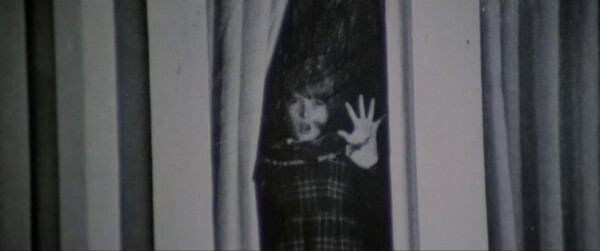
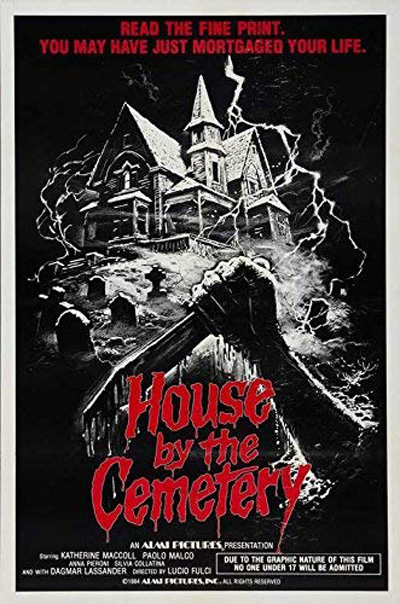
Image courtesy of De Paolis In.Co.R. Studio.
“The House by the Cemetery” Starring Catriona MacColl, Paola Malco and Ania Pieroni. Directed by Lucio Fulci. 86 minutes. Not rated.
Del’s take
“The House by the Cemetery” is a film only a horror purist could love, and love it they do, in gushing online paeans that celebrate its blood-drenched genius. Written by legendary screenwriter Dardano Sacchetti and directed by the Godfather of Gore, Lucio Fulci, “House” is itself a paean to violence, splashing its audience with viscera, maggots, and other gory tropes of Italian horror cinema.
It is part of Fulci’s Gates of Hell trilogy, which also includes “City of the Living Dead” and “The Beyond” – entries in a catalog of horror movies, spaghetti westerns and comedies that make up the erstwhile communist agitator’s body of work. Fulci passed away in 1996 due to complications from diabetes after suffering a life nearly as tragic as his horror films, but he has developed a cult following over the years and many of his fans rate “The House by the Cemetery” one of his best works.
The story is about a young academic, Dr. Norman Boyle, who brings his wife and son to a small, rural town so that he may resume the work of a colleague, identified only as Dr. Petersen. Petersen was researching the notorious Dr. Freudstein, a 19th century medical practitioner who allegedly conducted forbidden experiments resulting in disfigurement, death and, shall we say, supernatural complications. During his investigation, Petersen inexplicably loses his mind, kills his girlfriend and hangs himself from the rafters of the town library. Now Dr. Boyle has arrived to finish Petersen’s work. He has even moved his family into the house that was previously occupied by Dr. Freudstein.
The Boyles are joined by Ann, ostensibly a babysitter for young Bob, the Boyles’ blindingly blonde-haired son. But she may be in league with the supernatural forces that rule the Freudstein house. Bob’s mother, Lucy, seems to sense something is off about Ann. In fact, she knows something is off about the entire house but she soldiers on, the loving if weary spouse of an obsessed academic.
The Boyles’ presence rekindles the ghostly inhabitant of Freudstein House and all manner of jump scares, sudden spooks and not-so-ethereal attacks commence, culminating in an inevitable showdown between man and boogeyman.
The film was released in 1980, which dates it. More substantially – and jarringly – its Italian roots, and its Italian horror sensibility, establish a distance between movie and audience that “House by the Cemetery” may not be able to overcome in the United States. Its case is not helped by the oceans of blood and horrifically graphic violence that, even by today’s standards, will present a challenge to weak-stomached audience members. It could have been worse. According to lore, Fulci was mandated to slay at least some of his darlings to keep the movie at an R rating in the U.S.
More puzzling are the weird lapses in cognition experienced by the characters. For instance, in one scene a woman is brutally (and bloodily) murdered. Her body is dragged across the kitchen and down into the cellar, leaving a blood trail wide as an interstate highway. The next morning Ann, the suspicious au pair, sets about cleaning up the mess (without inquiring as to its cause, which to my mind casts her in league with the devil). Lucy walks into the kitchen, sees Ann down on the floor with her bucket and scrub brush, and asks her what she is doing. Ann says, “I made coffee,” and that answer seems satisfactory to Lucy, who turns and heads toward the stove. Blood trail? What blood trail? The movie is rife with such oversights.
Replete with overly dramatic acting, a musical score that will strike Americans as intrusively silly, and inexplicable gaps in storytelling, “House by the Cemetery” falls more into grindhouse mockery than art house storytelling.
For those reasons I won’t recommend it. I watched out of a sense of duty to Fulci and Sacchetti, but in retrospect, “House by the Cemetery” wasn’t very good.
If you are a horror purist or a collector of oddball cinema, you might enjoy the movie. Otherwise, try something a bit more modern, and a lot more consistent with reality.
“House by the Cemetery” is available on Shudder.
I rate it a D+.
Del Stone Jr. is a former journalist and author.

Image courtesy of Karolina Grabowska of Pexels by way of a Creative Commons license. https://www.pexels.com/@karolina-grabowska/
To watch Mom iron is to watch a carpenter join pieces of wood into something that ill be handed down, parent to child, for generations. It is watching an artist imbue blank canvas with timelessness. It is watching a craftsman at her trade, doing a thing I will never be able to do.
It is almost seeing art done.
She shoulders me aside – amused by my fumbled attempt to press a pair of pants – and takes the iron in hand. Suddenly it is endowed with power, supernatural, no longer inanimate but a living thing. She wields it as if it weighed nothing. She never hesitates.
The pants are splayed on the ironing board, impossible wrinkles over every square inch. They couldn’t be straightened. The thought of even trying leaves me giddy.
Mom sets to work.
“It’s important that you stretch the pants over the board,” she says, her voice stretched too, as she pulls the pants over the board’s tapered snout and spreads them flat. She sprays starch over them, then presses with the iron. It plows into the wrinkles, smoothing them. Steam rises from the fabric as the iron is drawn back, and a hot, electric smell fills the kitchen.
She gets to the pocket and pulls the pants away from the board, grabs the pocket the way one would handle an unruly child, and spreads it flat. “Always iron the pockets before you iron the outside. If you don’t, you’ll leave an imprint of the pocket on the outside.”
I wonder why I never noticed imprints of pockets on my bachelor friends’ pants. Do they know?
She shows me how it happens and, just as she explained, the imprint is there. She irons the pockets steaming flat, then flips the pants over and irons the outside. No imprint. Maybe I would’ve discovered that for myself. Maybe not.
Then she starts on the legs. She holds the pants vertically, matches the seams at the bottom. “Line these up as closely as possible,” says she, eyeballing her work as if she were about to cleave a gemstone. “They have to be matched just right or the crease won’t come out the way it’s supposed to.” I believe her. But I don’t see how she’ll manage it.
The legs are twisted beyond hope. She lays them on the board, lifts the top leg and lets it dangle over the front; she sets upon the bottom leg. Starch and steam. She moves the iron at impossible angles, finds all the lines, smoothes them under heat and pressure into a flat plane. Up the leg, over the seam and down the other side. The pants are beginning to look like pants, the improbably magically becoming possible.
She pulls the dangled leg, lays it flat against the other, then goes to work on it, too, with baffling certainty, pushing the iron over the cloth, making it presentable. She puts a crease in this leg, and it is a match with the other.
The whole business is flipped over and she starts from the opposite side, doing away with the last bit of disorder. Then she peels the pants from the board, holds them up for final inspection, slides the legs carefully through a hanger and hands them to me.
“That’s how you iron a pair of pants.”
I hang them in the closet, careful that they don’t touch the other clothes there. I’m not sure I want to put them on. They look too nice to wear.
I’ll never get the hang of it.
Mom has left the ironing board in the kitchen, and I, the understudy to some Florentine realist, am only too happy to do the easy part, to put away the artist’s easel.
This column was originally published in the Playground Daily News in the early 1980s and is used with permission.
About the author:
Del Stone Jr. is a professional fiction writer. He is known primarily for his work in the contemporary dark fiction field, but has also published science fiction and contemporary fantasy. Stone’s stories, poetry and scripts have appeared in publications such as Amazing Stories, Eldritch Tales, and Bantam-Spectra’s Full Spectrum. His short fiction has been published in The Year’s Best Horror Stories XXII; Alfred Hitchcock’s Mystery Magazine; the Pocket Books anthology More Phobias; the Barnes & Noble anthologies 100 Wicked Little Witch Stories, Horrors! 365 Scary Stories, and 100 Astounding Little Alien Stories; the HWA anthology Psychos; and other short fiction venues, like Blood Muse, Live Without a Net, Zombiesque and Sex Macabre. Stone’s comic book debut was in the Clive Barker series of books, Hellraiser, published by Marvel/Epic and reprinted in The Best of Hellraiser anthology. He has also published stories in Penthouse Comix, and worked with artist Dave Dorman on many projects, including the illustrated novella “Roadkill,” a short story for the Andrew Vachss anthology Underground from Dark Horse, an ashcan titled “December” for Hero Illustrated, and several of Dorman’s Wasted Lands novellas and comics, such as Rail from Image and “The Uninvited.” Stone’s novel, Dead Heat, won the 1996 International Horror Guild’s award for best first novel and was a runner-up for the Bram Stoker Award. Stone has also been a finalist for the IHG award for short fiction, the British Fantasy Award for best novella, and a semifinalist for the Nebula and Writers of the Future awards. His stories have appeared in anthologies that have won the Bram Stoker Award and the World Fantasy Award. Two of his works were optioned for film, the novella “Black Tide” and short story “Crisis Line.”
Stone recently retired after a 41-year career in journalism. He won numerous awards for his work, and in 1986 was named Florida’s best columnist in his circulation division by the Florida Society of Newspaper Editors. In 2001 he received an honorable mention from the National Lesbian and Gay Journalists Association for his essay “When Freedom of Speech Ends” and in 2003 he was voted Best of the Best in the category of columnists by Emerald Coast Magazine. He participated in book signings and awareness campaigns, and was a guest on local television and radio programs.
As an addendum, Stone is single, kills tomatoes and morning glories with ruthless efficiency, once tied the stem of a cocktail cherry in a knot with his tongue, and carries a permanent scar on his chest after having been shot with a paintball gun. He’s in his 60s as of this writing but doesn’t look a day over 94.
Contact Del at [email protected]. He is also on Facebook, twitter, Pinterest, tumblr, TikTok, Ello and Instagram. Visit his website at delstonejr.com .

Image by Flickr user Greg Virtucio by way of a Creative Commons license. https://www.flickr.com/photos/gregvirtucio/
I opened into my personal computer file the other day and there, at the top of the list, was a short story with a message especially for me written above it. The message read: “Good news, Del.” A little farther down was written: “Del, I just knew this would make your day.” Tom Conner, our state editor, had left it for me.
The story was about the Cuban Death’s Head Cockroach. To quote The Associated Press: “The Cuban Death’s Head Cockroach, a three-inch, thumb-sized monster, has migrated from its native Caribbean to South Florida.”
That’s just great.
The story went on to say most of the 2,000 species of roaches already live in Florida, but the new roach claims all prizes for size.
Wonderful news. Clint Eastwood couldn’t have done as much to make my day.
You are reading the words of an adult male who is mortally terrified of cockroaches. I will let snakes crawl up the sleeves of my short, pick up insects of all description, touch assorted creatures slimy and horrible, but I cannot stand the thought of a roach coming near me, the thought of breathing the same air as a “three-inch, thumb-sized monster.” The minute bug experts begin describing new cockroaches with hyphenated words, you may look for me booking it to the next county.
Del turned on the light and something moved.
I have heard horror stories about cockroaches, and I have my own to tell, but none has ever involved a “three-inch monster,” though I would say some looked a strapping 6 feet in the paralyzingly dispassionate aspect of midnight.
Consider:
– A roach somehow gained entry to a sealed envelope and was mailed from Washington, D.C. to somewhere like Nebraska; I am certain the person who opened the letter must have had all of his suspicions about bureaucracy forever confirmed.
Mom vs. the snake around her neck.
– I once covered a town commission meeting that I thought would never end – until a giant Cro-Magnon roach scurried across the wall behind the commissioners. The place emptied in about 30 seconds. And I was the first one out.
– I was at a party when a palmetto bug – not a roach but about as close a relative to a roach as, say, a rat is to a squirrel – crawled across the ceiling above the food table. Our considerate hostess swatted it and that was that, until the next day when she informed me she had found a leg the size of a well-fed mastodon’s in the French onion dip. Had I eaten any of that?
Wild Kingdom at the golf course.
– Once, as I stepped into our outdoor utility room, a roach dropped from the ceiling, slipped down the sleeve of my tank top, crawled across my ribcage and, unbeknownst of me, dropped out of my shirt and vanished to parts unknown. When they found me, I had eaten myself into a coma.
– I was riding in a car when the driver suddenly shrieked and nearly ran us through a telephone pole. A roach, she screamed, had crawled across her foot. Then I screamed. One would have thought a swarm of killer bees had moved into the glove compartment, we were out of that car so fast.
– My premier roach story involves former Daily News reporter Steve Chew. One unforgettable Sunday night, Chew found a very large, very dead cockroach on the floor in our backshop. He appropriated said cockroach and hid it beneath my keychain in a way that I could not see it. As we got ready to leave, I reached across my desk and picked up the keychain. Perversely, the roach’s rigor-mortic leg hooked on my thumb. I raised my hand and the nightmarish thing dangled from it, penduluming back and forth, a torment to me even in death. A bolt of pure fright shot up my spine and I threw down the keys, strangling on a scream I couldn’t get to come out. Chew was paralyzed with laughter.
“Three-inch monsters” invading South Florida, eh. Something tells me my days in this state are numbered.
This column was originally published in the Playground Daily News in 1983 (est.) and is used with permission.
About the author:
Del Stone Jr. is a professional fiction writer. He is known primarily for his work in the contemporary dark fiction field, but has also published science fiction and contemporary fantasy. Stone’s stories, poetry and scripts have appeared in publications such as Amazing Stories, Eldritch Tales, and Bantam-Spectra’s Full Spectrum. His short fiction has been published in The Year’s Best Horror Stories XXII; Alfred Hitchcock’s Mystery Magazine; the Pocket Books anthology More Phobias; the Barnes & Noble anthologies 100 Wicked Little Witch Stories, Horrors! 365 Scary Stories, and 100 Astounding Little Alien Stories; the HWA anthology Psychos; and other short fiction venues, like Blood Muse, Live Without a Net, Zombiesque and Sex Macabre. Stone’s comic book debut was in the Clive Barker series of books, Hellraiser, published by Marvel/Epic and reprinted in The Best of Hellraiser anthology. He has also published stories in Penthouse Comix, and worked with artist Dave Dorman on many projects, including the illustrated novella “Roadkill,” a short story for the Andrew Vachss anthology Underground from Dark Horse, an ashcan titled “December” for Hero Illustrated, and several of Dorman’s Wasted Lands novellas and comics, such as Rail from Image and “The Uninvited.” Stone’s novel, Dead Heat, won the 1996 International Horror Guild’s award for best first novel and was a runner-up for the Bram Stoker Award. Stone has also been a finalist for the IHG award for short fiction, the British Fantasy Award for best novella, and a semifinalist for the Nebula and Writers of the Future awards. His stories have appeared in anthologies that have won the Bram Stoker Award and the World Fantasy Award. Two of his works were optioned for film, the novella “Black Tide” and short story “Crisis Line.”
Stone recently retired after a 41-year career in journalism. He won numerous awards for his work, and in 1986 was named Florida’s best columnist in his circulation division by the Florida Society of Newspaper Editors. In 2001 he received an honorable mention from the National Lesbian and Gay Journalists Association for his essay “When Freedom of Speech Ends” and in 2003 he was voted Best of the Best in the category of columnists by Emerald Coast Magazine. He participated in book signings and awareness campaigns, and was a guest on local television and radio programs.
As an addendum, Stone is single, kills tomatoes and morning glories with ruthless efficiency, once tied the stem of a cocktail cherry in a knot with his tongue, and carries a permanent scar on his chest after having been shot with a paintball gun. He’s in his 60s as of this writing but doesn’t look a day over 94.
Contact Del at [email protected]. He is also on Facebook, twitter, Pinterest, tumblr, TikTok, and Instagram. Visit his website at delstonejr.com .

CC license.
We will warn you for the 3,418th time this year that the dreaded Asian cockroach is raping and pillaging its way up the Florida peninsula and will arrive in YOUR home precisely three minutes after you read this, because that is the way it always happens in monster movies.
The presence of yet another Asian import on American shores raises several important questions, mainly, “What’s in it for me?” and “How can I turn this tragedy into a personal profit-making venture?”
We’ll try to answer those questions. If we don’t, it means you’re asking the wrong questions.
Q. Are we paying import tariffs on the Asian cockroach?
A. No, we are not. The importation of Asian cockroaches is what we in the business refer to as “an act of God,” which means anything that cannot be taxed, regulated or killed by a neutron bomb also cannot be subject to import tariffs.
Q. Why should I worry about the Asian cockroach?
A. If you do not mind waking up at night unable to breathe because cockroaches have named a net in your nostrils, then you have nothing to worry about.
Q. Where are these roaches right now?
A. They are probably right outside your front door, waiting for you to put down the newspaper and let them in.
Q. No, really. Where are they?
A. They came to this country through the port of Tampa, which is not exactly one of your major industrial nerve centers of the free world. From there they migrated to, of all places, Lakeland, where many of them retired and died of old age. Now they are spreading across the United States and Canada, hitching rides on the many Winnebagos that pass through Tampa and Lakeland on their annual spring migration to the frozen North.
Q. How are these roaches different from American roaches?
A. First, Asian roaches aren’t afraid of you. When you walk into the kitchen at night and turn on the light, instead of babbling apologies and scurrying off to hide, these roaches demand money.
Second, they are avid fliers. American roaches are too lazy to fly unless they have been coated with an inch-thick layer of insecticide and are half-crazed out of their tiny, BB-size brains. Asian roaches, on the other hand, will happily swoop down to build nests in your nostrils.
Third, the Asian roach reproduces at a much faster rate, although this has caused some dissension among female Asian roaches.
Q. Why can’t the government do something about this?
A. The government IS doing something. Busy government scientists are down on their hands and knees, studying these roaches and producing reams of invaluable data that will be handsomely bound into a final report-to-end-all-reports. This report will be used to smash roaches as they swoop down to build nests in scientists’ nostrils.
This column was published during the 1980s by the Playground Daily News and is used with permission.
About the author:
Del Stone Jr. is a professional fiction writer. He is known primarily for his work in the contemporary dark fiction field, but has also published science fiction and contemporary fantasy. Stone’s stories, poetry and scripts have appeared in publications such as Amazing Stories, Eldritch Tales, and Bantam-Spectra’s Full Spectrum. His short fiction has been published in The Year’s Best Horror Stories XXII; Alfred Hitchcock’s Mystery Magazine; the Pocket Books anthology More Phobias; the Barnes & Noble anthologies 100 Wicked Little Witch Stories, Horrors! 365 Scary Stories, and 100 Astounding Little Alien Stories; the HWA anthology Psychos; and other short fiction venues, like Blood Muse, Live Without a Net, Zombiesque and Sex Macabre. Stone’s comic book debut was in the Clive Barker series of books, Hellraiser, published by Marvel/Epic and reprinted in The Best of Hellraiser anthology. He has also published stories in Penthouse Comix, and worked with artist Dave Dorman on many projects, including the illustrated novella “Roadkill,” a short story for the Andrew Vachss anthology Underground from Dark Horse, an ashcan titled “December” for Hero Illustrated, and several of Dorman’s Wasted Lands novellas and comics, such as Rail from Image and “The Uninvited.” Stone’s novel, Dead Heat, won the 1996 International Horror Guild’s award for best first novel and was a runner-up for the Bram Stoker Award. Stone has also been a finalist for the IHG award for short fiction, the British Fantasy Award for best novella, and a semifinalist for the Nebula and Writers of the Future awards. His stories have appeared in anthologies that have won the Bram Stoker Award and the World Fantasy Award. Two of his works were optioned for film, the novella “Black Tide” and short story “Crisis Line.”
Stone recently retired after a 41-year career in journalism. He won numerous awards for his work, and in 1986 was named Florida’s best columnist in his circulation division by the Florida Society of Newspaper Editors. In 2001 he received an honorable mention from the National Lesbian and Gay Journalists Association for his essay “When Freedom of Speech Ends” and in 2003 he was voted Best of the Best in the category of columnists by Emerald Coast Magazine. He participated in book signings and awareness campaigns, and was a guest on local television and radio programs.
As an addendum, Stone is single, kills tomatoes and morning glories with ruthless efficiency, once tied the stem of a cocktail cherry in a knot with his tongue, and carries a permanent scar on his chest after having been shot with a paintball gun. He’s in his 60s as of this writing but doesn’t look a day over 94.
Contact Del at [email protected]. He is also on Facebook, twitter, Pinterest, tumblr, TikTok, and Instagram. Visit his website at delstonejr.com .
Several important elected officials who are taking a break from investigating golf courses that someday might require federal assistance, have expressed shock that the U.S. embassy in Moscow has been compromised by KGB bugs.
(IMPORTANT NOTE: These bugs, of course, are not insects. Otherwise, nearly every American restaurant and breakfast cereal manufacturing plant would have throngs of important elected officials swarming over them, making important puffing gestures of concern, forming committees and generally scaring away the bugs, whose only earthly pleasure is to lay thousands of eggs in unguarded jelly sandwiches.)
These same important elected officials have learned that certain U.S. Marines guarding the embassy exchanged important government secrets to perform the sex act or purchase the latest in burlap fashions for slinky Russian temptresses.
The loss of these secrets (such as the real reason a researcher at the Gentle Ben College of Divinity received a federal grant to study the nostril hairs of the slobber-master walrus) represents an intelligence disaster for the United States and will give the Soviets an unfair advantage in the awarding of grants for studies of the animal kingdom’s private parts and other important subjects.
These important elected officials, whose knowledge of the Soviet Union consists of watching videotapes of “Dr. Zhivago,” have expressed shock that the Russians would plant listening devices in OUR embassy and seduce secrets from OUR boys, although nobody said a word when a crack team of KGB construction workers toiled since before the Bolshevik revolution to build the embassy, or Marine guards returned to their posts with cabbage on their breath.
(IMPORTANT NOTE: These important elected officials are NOT shocked to discover the Soviets have bugged our embassy. What they’re really saying is: “I am shocked to discover the Soviets have bugged our embassy, and I expected concerned voters to return me to office so that I may continue to be shocked and make important puffing gestures and form committees which will spend millions of dollars to produce reports the size of the Chinese telephone directory, which will then be used as doorsteps at U.S. embassies.”)
It is not as if these important elected officials weren’t warned. For instance, Buford “Hawg Lips” Stumpknocker, who worked at the Sunoco station just outside Scumbag, Miss., (the Snapping Turtle Capital of the Western Hemisphere) warned customers for years that “you can’t trust them egg-sucking, vodka-swilling Godless heathen red-dog commie shylocks.”
Sadly, nobody listened to Hawg Lips until he got himself elected and appointed to an important committee. Now, as all politicians, he is SHAWCKED that such a dastardly thing could be allowed to happen.
This column was previously published in the Playground Daily News in the 1980s and is used with permission.
About the author:
Del Stone Jr. is a professional fiction writer. He is known primarily for his work in the contemporary dark fiction field, but has also published science fiction and contemporary fantasy. Stone’s stories, poetry and scripts have appeared in publications such as Amazing Stories, Eldritch Tales, and Bantam-Spectra’s Full Spectrum. His short fiction has been published in The Year’s Best Horror Stories XXII; Alfred Hitchcock’s Mystery Magazine; the Pocket Books anthology More Phobias; the Barnes & Noble anthologies 100 Wicked Little Witch Stories, Horrors! 365 Scary Stories, and 100 Astounding Little Alien Stories; the HWA anthology Psychos; and other short fiction venues, like Blood Muse, Live Without a Net, Zombiesque and Sex Macabre. Stone’s comic book debut was in the Clive Barker series of books, Hellraiser, published by Marvel/Epic and reprinted in The Best of Hellraiser anthology. He has also published stories in Penthouse Comix, and worked with artist Dave Dorman on many projects, including the illustrated novella “Roadkill,” a short story for the Andrew Vachss anthology Underground from Dark Horse, an ashcan titled “December” for Hero Illustrated, and several of Dorman’s Wasted Lands novellas and comics, such as Rail from Image and “The Uninvited.” Stone’s novel, Dead Heat, won the 1996 International Horror Guild’s award for best first novel and was a runner-up for the Bram Stoker Award. Stone has also been a finalist for the IHG award for short fiction, the British Fantasy Award for best novella, and a semifinalist for the Nebula and Writers of the Future awards. His stories have appeared in anthologies that have won the Bram Stoker Award and the World Fantasy Award. Two of his works were optioned for film, the novella “Black Tide” and short story “Crisis Line.”
Stone recently retired after a 41-year career in journalism. He won numerous awards for his work, and in 1986 was named Florida’s best columnist in his circulation division by the Florida Society of Newspaper Editors. In 2001 he received an honorable mention from the National Lesbian and Gay Journalists Association for his essay “When Freedom of Speech Ends” and in 2003 he was voted Best of the Best in the category of columnists by Emerald Coast Magazine. He participated in book signings and awareness campaigns, and was a guest on local television and radio programs.
As an addendum, Stone is single, kills tomatoes and morning glories with ruthless efficiency, once tied the stem of a cocktail cherry in a knot with his tongue, and carries a permanent scar on his chest after having been shot with a paintball gun. He’s in his 60s as of this writing but doesn’t look a day over 94.
Contact Del at [email protected]. He is also on Facebook, twitter, Pinterest, tumblr, TikTok, and Instagram. Visit his website at delstonejr.com .