The Birthmark (a short horror story)
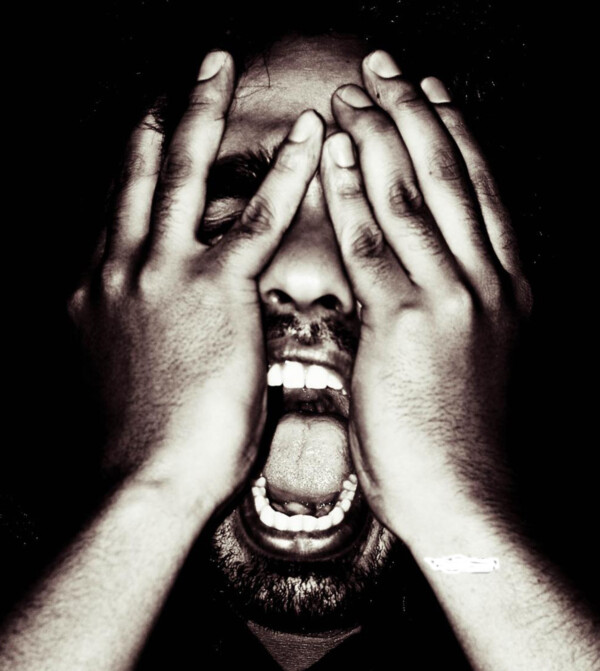
THE BIRTHMARK
A short horror story
By Del Stone Jr.
—
Introduction
I can trace the lineage of “The Birthmark” easily enough.
I wrote it sometime in the early ’90s. It was published in Pat Nielsen’s small press magazine “Crossroads,” which would also publish my short story “Companions.” That story appeared in Karl Edward Wagner’s “The Year’s Best Horror Stories XXI.”
I can’t remember the genesis of this story, but I know it is about every flytrap hole-in-the-wall bar I have ever been to, and I have been to quite a few. They all have commonalities: They’re dark, the acoustics are muffled, the air is unbreathable with smoke and the odor of beer – in fact, it is this odor of alcohol that permeates everything, from the cheap vinyl upholstery on the chairs to the peeling wallpaper, beer-soaked tabletops and even the flooring, be it fake wood or some kind of cracked, peeling vinyl. Just walking into the joint is enough to give you a hangover.
I wrote this during my bar phase. I worked at a newspaper, and down the road not half a mile was one of those neighborhood bars that were ubiquitous back in “the olden days.” This bar was called The Stardust, and every night, after the paper was put to bed, a small group of us night shift folks would troop down to The Stardust to “dust off a few.” I think every story I’ve written that features a bar was in some way fashioned after The Stardust.
Speaking of which, The Stardust closed sometime in the ’90s and now the building is a bank branch.
Barf.
I preferred it as a bar.
—
THE BIRTHMARK
I’m not sure why I stopped.
It was one of those flytrap beer joints that springs up and shrivels along the surface roads that parallel the interstate, cut off from humanity as surely as the two-horse towns going to rot out there, where nobody who had a plan for his life would go.
I guess I was tired … tired of looking away from headlights and fighting the wheel as tandem rigs blew by me in squalls of howling rubber and diesel fumes. I had a hundred miles to go before I could look for a motel and reasonably expect to be up tomorrow morning for the stretch to Miami Beach, and nothing waited for me there but another useless reconciliation, Patsy’s smile flickering and growing dim as reality settled in, squashing any hope that this time we might find a comfortable compromise.
So I’d stopped. For a quick beer, and some thinking.
It was called the Four Corners Tavern, which was stupid because one of the roads that formed the corners dead-ended against the interstate. A few cars were parked outside, old Fords and a Chrysler as big as a brontosaurus, dim shapes in the grainy dark.
Inside, it wasn’t much brighter. Neon beer signs sputtered and gave off a vague smell of cooked insulation, and the sour odor of spilled beer seemed to rise from the floor, staining and warping the ceiling panels. A battleship of a woman looked up from behind the bar as I came in, and two men parked behind shot glasses and a bottle of Jim Beam turned to see who I was. Another man, slumped over a beer down the bar, away from everybody else, ignored me. A plume of cigarette smoke rose above him and gathered into a mushroom cloud that drifted sluggishly toward a ceiling fan at the other end of the room.
I sat to his right.
He was muttering something and I almost didn’t notice that the woman was asking me what I wanted. I ordered a draft. The man continued to mutter, and from the sidelong glances he was getting from the other two, I guessed he wasn’t a Four Corners Tavern regular, which was OK by me. Maybe they’d watch him and leave me alone.
I heard him say, “Stupid shits,” and then the lady brought me my beer.
“I told them not to waste their time,” the man whispered, and he sniggered, a sound somewhere between a sneeze and a gasp.
I sipped the beer and let the cold feel of it roll down my throat. I needed to think, to make plans … to wait for the alcohol to undo what 12 hours of driving had done. A hundred miles to go. Then Patsy. I took a long pull from the beer.
“It was that bitch, that fucking monster,” the man said, out loud this time, and the others indeed turned to stare at him, as I was staring. He had a baseball cap pulled low over his forehead, and he was wearing a jacket – odd, because the night was steamy with the kind of bug-filled humidity that makes you want to take a shower every five minutes. It was then I noticed the mark that encircled his wrist and spread to his fingers, as if he’d dipped his hand in red dye. A birthmark – what did they call those? Port wine stains?
“She did this to me,” he exclaimed, clenching his red fist and shaking it at his reflection in the mirror behind the bar. One fellow at the other end of the bar, his face long and narrow like a weasel’s, whispered to the other. I turned back to my beer. I’d heard his story a hundred times before; hell, I’d lived it. Everybody had a problem.
“She said I’d never get rid of her,” the man went on, “and that was the only truthful thing to come out of her mouth. And the warden says, `C’mon, pardner! We’re gonna make a new man outta you. Zap that thing off! Shrink says you’re a socio something-or-other; we get rid of that hot hand of yours, it’ll change your whole attitude. They got this new laser gadget up at the clinic in Farmington they’re just dying to try out. They say they can remove that damn birthmark.’ Bullshit.”
I knocked back the rest of the beer. I nodded at the lady for another round, and she hesitated, as if she didn’t want to walk past the man. I couldn’t blame her, really. He was starting to get on my nerves too.
“Farmington’s where they take the `volunteers’ every time there’s a new drug or a fat sucker the docs want to work the bugs out of,” the man said, almost in a sneer. “That stuff the shrink said about removing this mark – ” again, he shook the fist – “to help me adjust, that was a load of crap. Warden promised he’d take six months off my sentence if I let them zap me with their Star Trek machine. Prison overcrowding; state’s gotta make way for all the new dumb bastards who get themselves in a fix because of some monster bitch – ” He choked off the rest of the words and took a hissing drag from his cigarette, blowing the smoke in great, billowing clouds.
“Man, I loved her,” he continued, and for the first time he looked at me, and caught me watching him. “Really. I did. Until things started going wrong.”
He shook his head and sucked at the thin rind of foam floating on the surface of his beer. He started talking again before he’d finished swallowing, so the words, until he cleared his throat, came out sounding gargly. “At first, it was just piddly shit, you know, the little stuff. Sometimes I’d be out with the boys and forget to call her, or I’d oversleep and show up late for some thing she wanted to do. So she’d keelhaul my ass and I’d toe the line until some other little, fucking thing” – he accented the last three words with fingertaps to the bar – “would happen and she’d get bent out of shape.”
“Then she’d blow this stuff all out of proportion, and suddenly it was: I didn’t love her, I didn’t put her before everything else … all that crap.”
I swallowed half my beer in a single gulp. I glanced at my watch and saw it was going on 10, and I considered getting up and leaving. But what was the rush, anyway? Patsy would still be there tomorrow, and so would the dirty tide that had come between us. A simple technicality of geography hadn’t changed that.
“I loved her, but I was starting not to, what with her being such a bitch and all,” he said, his voice sliding into a mumble. “And that’s when she decided I was some kind of bastard for not treating her the way she wanted to be treated, and she was gonna punish me, make me pay. And by God, she did it. In spades, the bitch.
“She’d get mad and not speak and make me ask her what the hell was wrong, and we’d talk about it until things got smoothed out, and then she’d do it again, and again, until she was more pissed off than nice.
“So after months of this shit I decided to hell with it. I couldn’t please her. So to hell with it.”
The others were watching him intently now, their pale faces reflecting the blue and red light of a neon Michelob sign, like scouts gathered around a campfire at night while the troop leader whispered ghost stories.
“I cut her loose. She said I’d never be rid of her, and I had to slap her around a little bit, you know, just to show her who’s boss, and when I walked out her door that last night she said she’d die before I got off with fucking up her life the way I had.
“I probably should’ve killed her right then. …”
The two men at the other end of the bar glanced at each other, then turned to the woman behind the bar, who closed her eyes wearily and shook her head. I kind of knew what they were thinking; the strange ironies that living long enough allows you to experience, that one man’s passing fancy becomes another’s obsession, and how life can become engraved around a center of gravity that is more illusory than real.
“She’d drive by my place – just slow enough so I’d see her. Or the garage where I worked. She’d buy her gas there. Shoot pool at my pool hall. Eat at the diner where I had my grits and coffee every morning, the goddamned movie theater where I’d take my dates, and that place on old what’s-his-name’s farm where we’d go after the movies – that is if she hadn’t let the air out of my tires, or tipped off the cops that I’d had a tootfull at Jimmy’s, or any of the other rotten, shitty things she did to make my life miserable.
“But – ” he said, his voice jumping in decibels, so suddenly that it spooked a twitch out of me. “When she moved into the place across the street from mine, for Christ’s sake, I knew I had to do something … something drastic.”
“I tried to talk to her, but she – she – ” His expression became confused and angry, as if he were trying to sort out the words and couldn’t make sense of any of them. “She had these letters she was gonna send people. She was gonna tell them everything I’d ever said about them. She was gonna tell the sheriff about that little number I pulled three years ago, down in Harrisburg – Christ! I was drunk. I didn’t know what the hell I was doing. I knocked over a Circle K. For 33 lousy bucks. Nobody got hurt. No harm came of it. But she was gonna tell ‘em, all the personal stuff I let her in on when we were together, and she was laughing about it, laughing her ass off, her squinty eyes glittering like those marbles the taxidermists use when they stuff a ferret, and then she turned mean and reminded me of how I’d fucked up her life, that I’d turned her into this monster, and wasn’t I proud of myself? Wasn’t this the best piece of hatchet work I’d ever done on another human being?”
His voice began to tremble, and beneath the counter I could see his right knee jumping, as if an electric current had set the muscles to twitching. He lit another cigarette and took a jittery drag, exhaling with an audible pop. Patsy had drifted far from my thoughts.
“I don’t know,” he went on, falling back to a stage whisper. “I just lost it. You know? She’d fucked with me to the point I couldn’t take it anymore.” He paused and shook his head. “I shouldn’t’ve done it, but I did, and that can’t be undone. See, I had this eight-inch locking-blade knife I carried around to scare off the assholes who’ll try to whip up on you in the pool halls and such, and I just took this mother fucker and I just – I just slammed it into her chest – ”
I felt the blood drain from my skull, leaving a socket of emptiness. The bartender’s eyes widened to almost comical proportions.
“I was crazy, I was a fucking lunatic, and I just slammed it into her, hard as I could, and her ribs split like rotten two-by-fours and my hand sank into her chest – I could feel her poisonous heart coiled in there like a goddamned snake … Oh Christ, oh Jesus calamity Christ!”
I could see all this happening in my mind’s eye and I didn’t want to hear any more, but he kept talking.
“Her eyelids flapped and her tongue oozed out of her mouth like a snail, and when she arched her back I could hear bones snapping. I tried to jerk my hand out but it was like her ribs had become teeth – they were biting at me, and I cut the living shit out of my arm getting away, my blood mixing with hers, up to my wrist in blood. …”
Enough of this. I leaned on one buttock to get my wallet. It was time to go.
“They shipped me off to prison for life with parole after 25 years. I didn’t get the electric chair. I thought that was a lucky thing, until this,” He said, turning the burgundy hand this way and that, rotating it in the dim light so that his scrutiny took on overtones of a museum curator appraising some artifact.
“About three months into my term this happened, so I know it ain’t no goddamned birthmark. It’s her, goddamnit. Her poison. Her blood, inside me. And you know what else?”
He took a ferocious hit from the cigarette.
“I can hear her talking to me. From inside me. Telling me the bad things she’s gonna do to me. And sometimes I wake up at night and find my hand doing things I don’t want it to do, and I know I’m never gonna be rid of her. That’s why I said it was a waste of time. Nothing’s gonna get rid of this but me, flat on my back in a casket.”
I dug a five from wallet and flipped it onto the calendar. That simple gesture seemed to break a spell that hung over the tavern. The weasel-faced man coughed and muttered, “Crazy bastard.” The bartender turned and began wiping the counter. The talker, without looking, seemed to sense he was losing his audience and shouted, “They’re all dead now, all those doctors at Farmington. That’s where I just came from, not two hours ago. You can call the law and find out for yourself. They’re all dead.”
The bartender stopped. Her face pinched into a look of thin-blooded astonishment. I was in the middle of standing when he spoke and I simply froze, unsure of whether to collapse back into the chair or run for my life. Everything inside the tavern seemed to pause so that a heavy silence descended over the five of us, tempered only by the buzzing of the neon signs.
“They strapped me down and rigged up their gear,” he went on, his voice warbling between a cry and a shout, “and when they flipped the switch to burn off that sucker, she – ” he thrust the hand into the air – “went berserk and tore off the straps and – and – she found this.” He reached into his jacket and whipped out what appeared to be a very thin-bladed filet knife, except the blade was curved, like a toy scimitar, and angled so as to reach those hard-to-cut places. “And she began cutting at them, swinging the knife like a tennis racket. You could hear it snicking through their bleached white lab coats and the turkey wattles around their throats. Snick, snick, snick.”
A sick numbness settled along my spine and spread across my body, killing any thought of doing anything, even breathing. The two men at the other side of the bar traded glances of sheer terror; the farthest man pushed back his chair, clearing a space for escape. The woman behind the bar was surreptitiously groping beneath the counter.
“She killed them all, and when she got through there was nothing for me to do but run, and that’s what I did. Stole a car and ran like hell.” He wound down to a barely audible whisper. “And now I’m here.”
I knew that I couldn’t move, that he was bug-fuck crazy and if I dared move all that craziness would come boiling out and I would be his focal point. I wouldn’t make it to the door before he was on me with his peculiar knife, hacking and swinging and probably not even looking at me while he did it, his gaze trapped in a faraway, disconnected perspective of self-absorption.
The man snickered. He almost sobbed. His eyes dropped to the cigarette smoldering in his ash tray. The knife blade reflected a tapered C of hot magenta neon light.
“She’s gonna kill you too,” he sing-songed, almost wistfully. “Every damn one of you. She’ll keep doing it until they fry me. Fucking bitch. Fucking monster.”
Something clicked beneath the counter and the barkeep unlimbered a sawed-off shotgun. She aimed it at the man and I swear to God, at that moment I could have kissed her till she died. She announced, “Mister, I’ve heard about all I care to hear for one evening. Now you just sit tight and we won’t have any trouble. Bobby!” she snapped her head at weasel-face. “Get on the horn and call Bill Hutchison; tell him we got a live one and to bring the squad car with the mesh cage.” He slithered out of his chair and hurried toward a pay phone on the opposite wall. “And you, Teddy,” she nodded at the other. “You got your 9 mil in the Chrysler?”
“Yes ma’am,” he answered quickly.
“Well go get the damn thing. I think we can use it.”
He started to get up and then everything happened quickly, so quickly that I’m not sure I remember it the way it actually happened or with the embellishments terror decorates your memory of events. Portions seem compressed into the stop-action narrative of a music video, while everything else runs together in a senseless, expositionless blur.
I remember Teddy standing and I remember the man snarling something, his voice spiraling into an animal wail, and I remember a very bright flash of chromed light as the blade came up and the man’s chair flew back with a crash and he was up, his legs bending and bringing him down to a crouch, and he was about to lunge, to pounce, the knife out in front of him now and his face sucked into a vacuum of undiluted rage. Then the room exploded with a booming crash that seemed to pulverize the bones in my ears. A spray of blood the color of tar arced across the bar, spattering everything, and the man spasmed, as if invisible strings running through his arms and neck had been suddenly jerked taut. An empty shotgun shell spun onto the counter and wobbled on its axis like an off-kilter gyroscope. The man took one step, two steps forward – my stomach did a belly flop and I felt a lump of pure nausea shimmy up my throat, cold spit gathering beneath my tongue, and I looked away as the gun whammed again, and from the edge of vision I saw the knife fall and somebody keeling over – no, I thought I saw two people going down and my impression was that Teddy had been shot or the man had stabbed him or maybe Teddy had simply fainted.
I staggered for the door. My ears were ringing, but I could still hear the bartender moaning, “Oh Jesus! Oh sweet Jesus!” and then I was outside, the soggy night air whistling through the knot in my throat, my shirt unsticking itself from my sweaty ribcage. I dumped myself into the car and fired up the engine. The radio blared to life and I didn’t so much as flinch.
As I drove away, the tavern’s front door opened, revealing a dim rectangle of blue and red luminescence. A figure stood there a moment, then disappeared.
The door swung shut. I looked away.
—
That was two days ago.
I drove a hundred and fifty miles that night – north, away from Miami Beach. I found a Red Roof Inn off the interstate, rented a room, locked the door and hid under the covers. I must’ve slept, but I can’t really be sure.
The next afternoon, I called Patsy and told her goodbye. Was it important anymore? I don’t think so. I don’t think I’ll ever be afraid of things I understand. Not now. We all reach those junctures in life, those four corners, if you will, where hard decisions must be made, and whether we’re dragged there, kicking and screaming, or whether we go there willingly doesn’t seem to matter. I turned off the interstate onto a tiny, lost road, and now I’ll never be the same.
Because it came back to me as I lay in my bed at the Red Roof Inn, stirring in that restless state between sleep and fatigue, my thoughts going back to what I had seen, over and over, like your tongue probing a cold sore at the rim of your lip, despite the pain, or perhaps because of it.
I hear the gun going off, the thud of concussion. I see in slow-motion the fatal trajectories of individual blood droplets, flying everywhere, and I see falling bodies … the man with the red hand, except the hand is no longer red.
And the other body is not Teddy.
It is something else, something larger than either men, a scorched burgundy in color, with wild hair and a thicket of teeth that resemble curved bones filed to a point.
I can see its teeth because it is laughing. It has the man by his wrist and it is directing his hand like an orchestra conductor waving a baton, and it is laughing with a kind of lunatic glee as the man folds into himself and slumps to the floor.
It is too much to understand what real fear is. I knew this even before I discovered the fleck of dried blood on my left hand.
So I told Patsy goodbye. I hope I’m not too late.
—
About the author:
Del Stone Jr. is a professional fiction writer. He is known primarily for his work in the contemporary dark fiction field, but has also published science fiction and contemporary fantasy. Stone’s stories, poetry and scripts have appeared in publications such as Amazing Stories, Eldritch Tales, and Bantam-Spectra’s Full Spectrum. His short fiction has been published in The Year’s Best Horror Stories XXII; Alfred Hitchcock’s Mystery Magazine; the Pocket Books anthology More Phobias; the Barnes & Noble anthologies 100 Wicked Little Witch Stories, Horrors! 365 Scary Stories, and 100 Astounding Little Alien Stories; the HWA anthology Psychos; and other short fiction venues, like Blood Muse, Live Without a Net, Zombiesque and Sex Macabre. Stone’s comic book debut was in the Clive Barker series of books, Hellraiser, published by Marvel/Epic and reprinted in The Best of Hellraiser anthology. He has also published stories in Penthouse Comix, and worked with artist Dave Dorman on many projects, including the illustrated novella “Roadkill,” a short story for the Andrew Vachss anthology Underground from Dark Horse, an ashcan titled “December” for Hero Illustrated, and several of Dorman’s Wasted Lands novellas and comics, such as Rail from Image and “The Uninvited.” Stone’s novel, Dead Heat, won the 1996 International Horror Guild’s award for best first novel and was a runner-up for the Bram Stoker Award. Stone has also been a finalist for the IHG award for short fiction, the British Fantasy Award for best novella, and a semifinalist for the Nebula and Writers of the Future awards. His stories have appeared in anthologies that have won the Bram Stoker Award and the World Fantasy Award. Two of his works were optioned for film, the novella “Black Tide” and short story “Crisis Line.”
Stone recently retired after a 41-year career in journalism. He won numerous awards for his work, and in 1986 was named Florida’s best columnist in his circulation division by the Florida Society of Newspaper Editors. In 2001 he received an honorable mention from the National Lesbian and Gay Journalists Association for his essay “When Freedom of Speech Ends” and in 2003 he was voted Best of the Best in the category of columnists by Emerald Coast Magazine. He participated in book signings and awareness campaigns, and was a guest on local television and radio programs.
As an addendum, Stone is single, kills tomatoes and morning glories with ruthless efficiency, once tied the stem of a cocktail cherry in a knot with his tongue, and carries a permanent scar on his chest after having been shot with a paintball gun. He’s in his 60s as of this writing but doesn’t look a day over 94.
Contact Del at [email protected]. He is also on Facebook, twitter, Pinterest, tumblr, TikTok, and Instagram. Visit his website at delstonejr.com .

Leave a Reply