Look what AI did to my photo
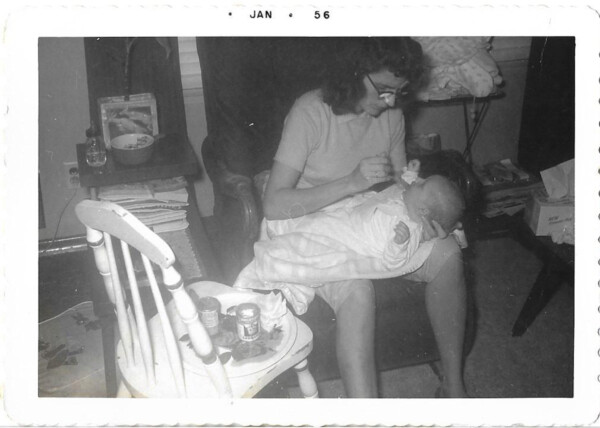
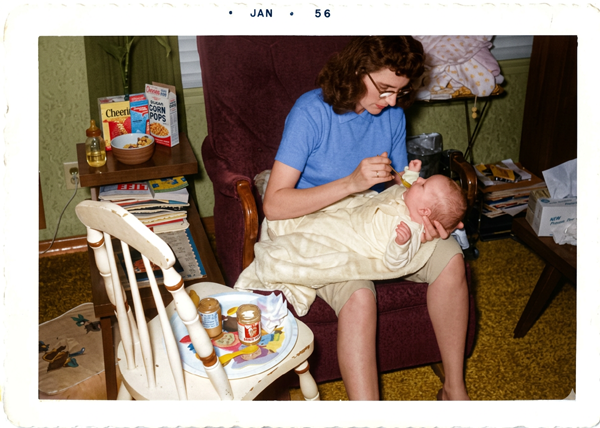
This photo, taken in January 1956, shows my mother, Laura Joyce Stone, feeding me. I was about a month-and-a-half old at the time. Photo courtesy of Del Stone Sr.
I scanned in this photo the other day. It was taken in January of 1956 and it shows me at age 1½ months being fed by my mom.
I decided to try an experiment.
I took the photo and I went to three different AIs – ChatGPT, Google and Grok – and I told each of them to colorize it. I used the identical command syntax for each AI.
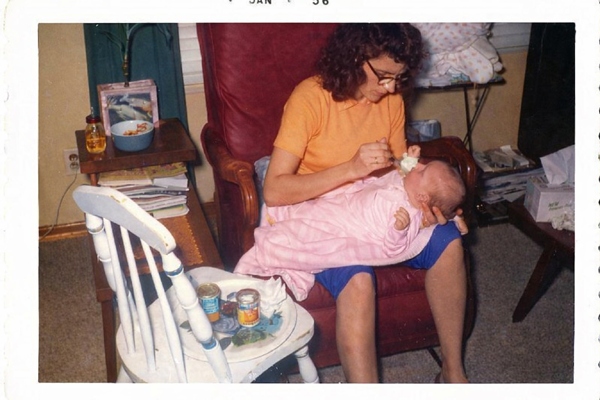
Here’s the ChatGPT version.
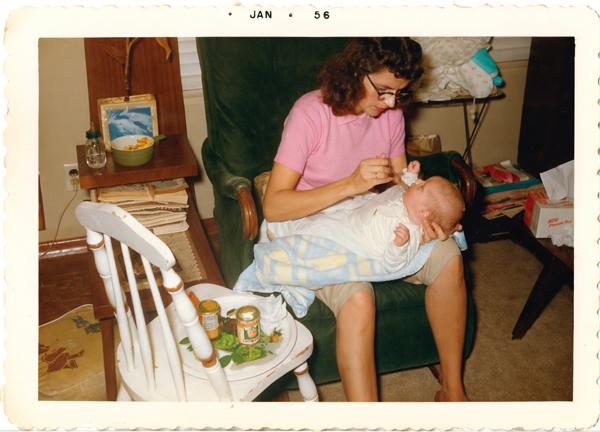
Here’s the Google AI version.
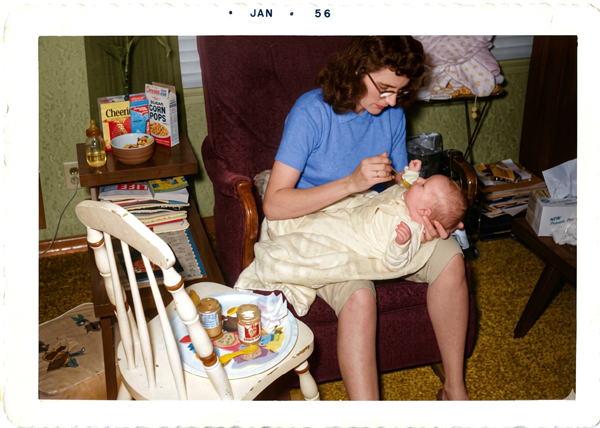
And here’s the Grok version.
They all did a decent job of coloring the photo. But when I took a closer look at the images, I began to notice some strange differences.
Here’s the original photo again.
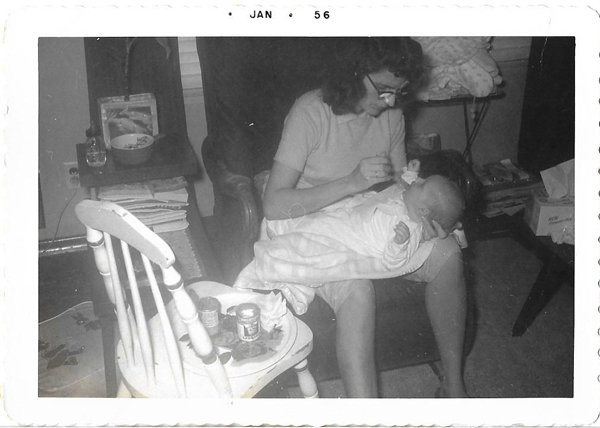
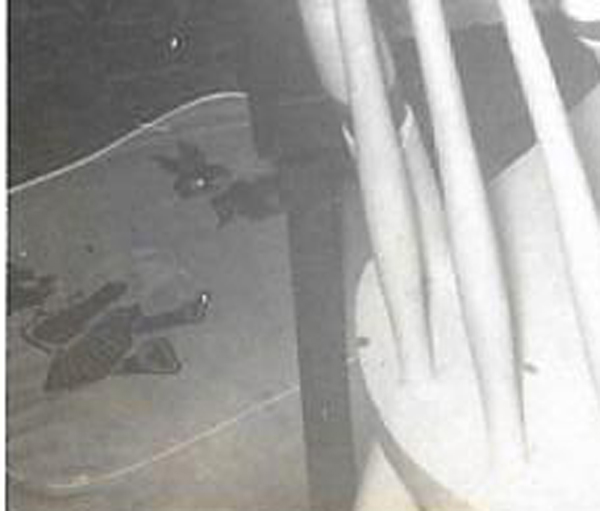
If you look at the bottom left, you can see something lying on the floor. It looks like a blanket or a pad or something. I don’t know what.
OK, so let’s take another look at the ChatGPT image.
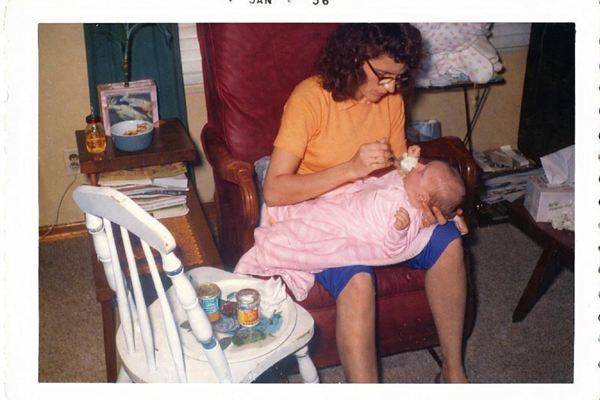
It looks like ChatGPT just deleted whatever that object was lying on the floor.

OK, so let’s take another look at the original image.
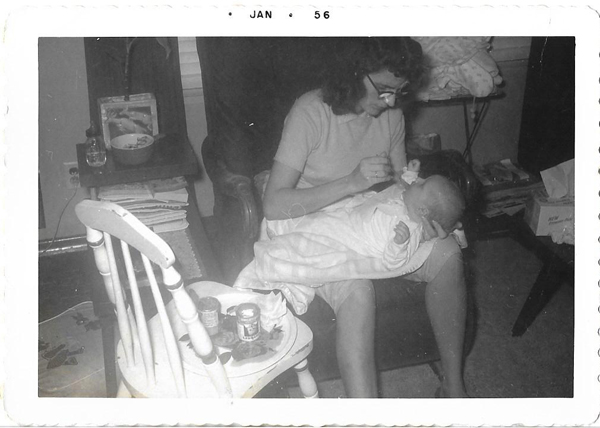
You’ll notice in the background to the left, there’s some kind of end table, with magazines on the bottom.
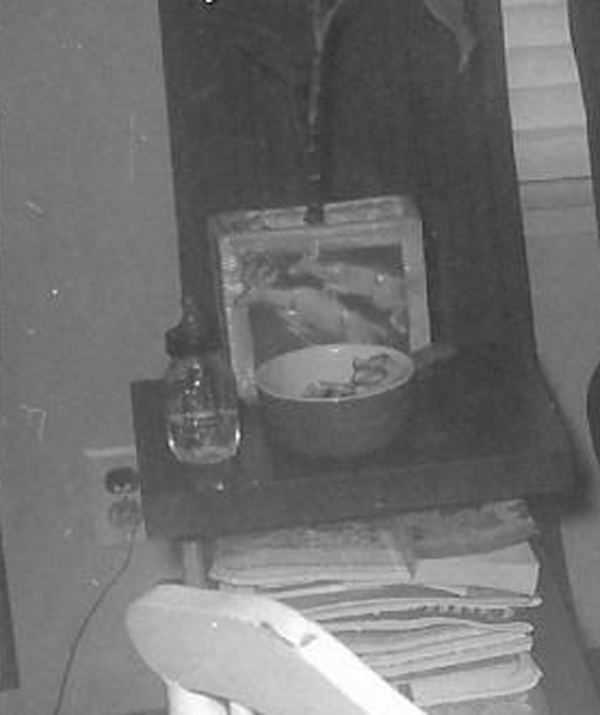
And on the top of the table there’s a flower pot with a plant growing out of it. Now let’s look at the Google version of that image.
Somehow, the flower pot has become three boxes of cereal,
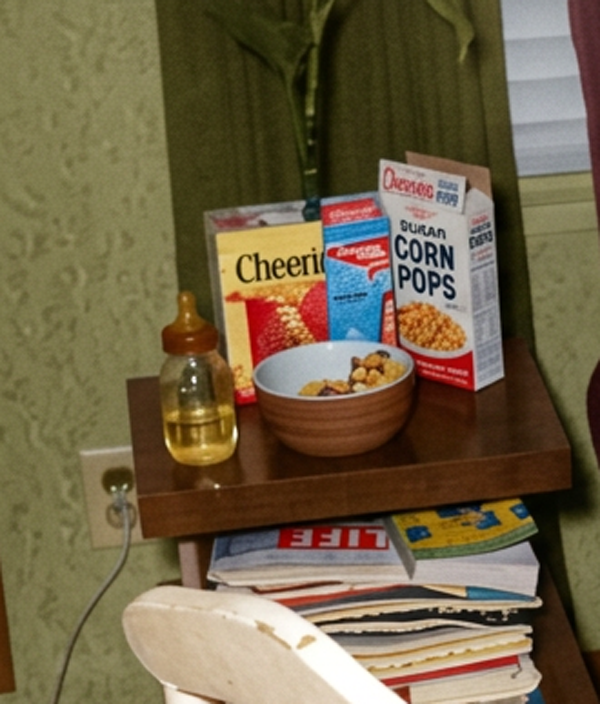
and there appears to be a plant growing out of a box of Cheerios.
Apparently, artificial intelligence is taking liberties with the historical record. It’s either deleting or reimagining content that it doesn’t know what to do with.
If it’s doing that with our photography, I can’t imagine what it’s doing with our video or the written word.
Oh, but it gets much worse.
According to a study conducted by the MIT Media Lab, people who use artificial intelligence develop a condition called cognitive atrophy, and their critical thinking skills go into decline. This comes at a time when a majority of Americans, 53 percent, can’t read above a sixth-grade level.
Artificial intelligence is not only meddling with the historical record, but it’s making us dumb.
AI is a dangerous technology, and we’re treating it as if it were a toy. It’s in the hands of for-profit corporations that have already demonstrated they do not have the public interests at heart.
The use of AI should be subject to stringent regulation and oversight, and it should not be available to the general public.
Otherwise, Orwell will have been proven right yet again.
War is peace.
Freedom is slavery.
Ignorance is strength.
About the author:
Del Stone Jr. is a professional fiction writer. He is known primarily for his work in the contemporary dark fiction field, but has also published science fiction and contemporary fantasy. Stone’s stories, poetry and scripts have appeared in publications such as Amazing Stories, Eldritch Tales, and Bantam-Spectra’s Full Spectrum. His short fiction has been published in The Year’s Best Horror Stories XXII; Alfred Hitchcock’s Mystery Magazine; the Pocket Books anthology More Phobias; the Barnes & Noble anthologies 100 Wicked Little Witch Stories, Horrors! 365 Scary Stories, and 100 Astounding Little Alien Stories; the HWA anthology Psychos; and other short fiction venues, like Blood Muse, Live Without a Net, Zombiesque and Sex Macabre. Stone’s comic book debut was in the Clive Barker series of books, Hellraiser, published by Marvel/Epic and reprinted in The Best of Hellraiser anthology. He has also published stories in Penthouse Comix, and worked with artist Dave Dorman on many projects, including the illustrated novella “Roadkill,” a short story for the Andrew Vachss anthology Underground from Dark Horse, an ashcan titled “December” for Hero Illustrated, and several of Dorman’s Wasted Lands novellas and comics, such as Rail from Image and “The Uninvited.” Stone’s novel, Dead Heat, won the 1996 International Horror Guild’s award for best first novel and was a runner-up for the Bram Stoker Award. Stone has also been a finalist for the IHG award for short fiction, the British Fantasy Award for best novella, and a semifinalist for the Nebula and Writers of the Future awards. His stories have appeared in anthologies that have won the Bram Stoker Award and the World Fantasy Award. Two of his works were optioned for film, the novella “Black Tide” and short story “Crisis Line.”
Stone recently retired after a 41-year career in journalism. He won numerous awards for his work, and in 1986 was named Florida’s best columnist in his circulation division by the Florida Society of Newspaper Editors. In 2001 he received an honorable mention from the National Lesbian and Gay Journalists Association for his essay “When Freedom of Speech Ends” and in 2003 he was voted Best of the Best in the category of columnists by Emerald Coast Magazine. He participated in book signings and awareness campaigns, and was a guest on local television and radio programs.
As an addendum, Stone is single, kills tomatoes and morning glories with ruthless efficiency, once tied the stem of a cocktail cherry in a knot with his tongue, and carries a permanent scar on his chest after having been shot with a paintball gun. He’s in his 60s as of this writing but doesn’t look a day over 94.
Contact Del at [email protected]. He is also on Facebook, twitter, Pinterest, tumblr, TikTok, and Instagram. Visit his website at delstonejr.com .

Leave a Reply