Del and Mladen review ‘Star Wars: The Mandalorian and Grogu’
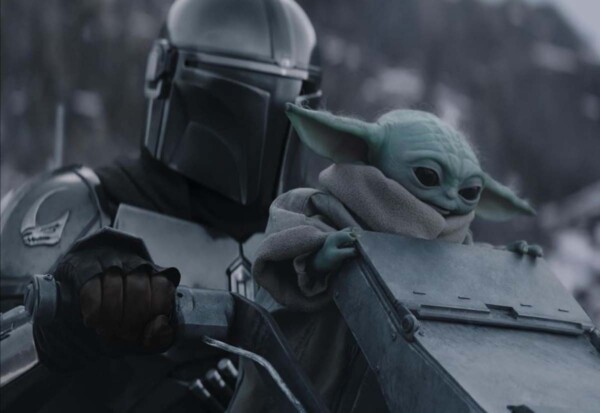
Image courtesy of Disney.
“Star Wars: The Mandalorian and Grogu” Starring Pedro Pascal as The Mandalorian, Sigourney Weaver as Colonel Ward, and the voice of Martin Scorsese as Hugo Durant, among others. Directed by John Favreau. Two hours, 12 minutes. Rated PG-13.
Plot summary: Mandalorian Din Djarin and his young companion, Grogu, must rescue the son of Jabba the Hutt from the moon Shakari in exchange for information about the location of Imperial warlord Commander Coin.
Spoilers: Of course.
Del’s take
A long time ago, in a galaxy far, far away, movies were made with such joie de vivre they exceeded the sum of their parts. Now, they are made to sell pillowcases and stuffed animals.
“Star Wars: The Mandalorian and Grogu” has a hero and a villain; a “plot,” if it can be called that; rising action and a climax; a rousing score – all the ingredients of an actual movie. But its pieces are stitched together by the thinnest narrative thread, and its performances are curiously lifeless. When director Favreau throws the switch and electricity flows into his creation, absolutely nobody will shout, “It’s alive!”
The story is about Din Djarin, a Mandalorian, and his ward, Grogu, a kind of mini-Yoda, who are tasked with rescuing the son of notorious crime lord Jabba the Hutt in exchange for information about the location of Imperial warlord Commander Coin. They discover Jabba’s son, Rotta, is actually a pawn in an evil scheme managed by the Hutt twins, cousins of Jabba and successors to his crime organization. To restore balance to – if not the force then karma – Djarin and Grogu must embark on a series of galaxy-spanning adventures that confront them with mortal peril.
The movie is structured like a James Bond film, with a pre-title sequence worthy of the ticket price. From there it settles into a string of episodic cliffhangers that carry the movie to its not very satisfying conclusion.
Like many Star Wars movies, the actors’ roles are muted – in this case suppressed to the point that nobody really gives a damn what happens to them. Even Sigourney Weaver, queen of the “Alien” and “Avatar” franchises, musters only a pale shadow of the badass gravitas she brings to those other projects. It doesn’t help that Pedro Pascal is concealed behind a helmet for most of the film, and Grogu is nothing more than a puppet designed to sell warehouses of branded junk.
Characters are given zero backstory. If you haven’t seen the Disney streaming series “The Mandalorian” you won’t have any idea what’s happening. But that doesn’t matter because the Star Wars universe has become so fraught with complication you’d need a doctorate’s in entropy to keep track of the entanglements, subplots and allegiances.
In the end, who cares? We know from experience the Mandalorian will outrun, outfight and outlive any adversary, and the strange little green puppet he’s taken on as a friend will sell whatever schlock they slap his likeness on. It’s just another episode in the endless marketing campaign that passes for art in the United States these days.
“Star Wars: The Mandalorian and Grogu” is the kind of movie AI would create if AI could make movies. It has no beating heart. Its characters are bland. The plot reads like a series of hastily sketched TV episodes. It has the look and feel of a Star Wars movie but provides nothing in the way of a relatable human experience. I saw the original Star Wars movie, “A New Hope,” in the movie theater 19 times because that movie spoke to me.
“Star Wars: The Mandalorian and Grogu” put me to sleep.
I’m giving it a C+.
Mladen’s take
I was giddy during the first explosion-laced, body count-filled, mystique-building 5 minutes of “Star Wars: The Mandalorian and Grogu.” My mind was racing. Where does Mando and Grog belong in the Top Five List of the best Star Wars movies? I put it in 4th place.
Man, from the score and its Andes Mountains bass recorder serenity to Imperial walkers detonating, Din Djarin blasts away from the shadows. When he emerges from the dark, the set pieces become a combination of the finest street-level fighting in any Star Wars film. It’s Jedi, Grammaton Cleric, and Wick hand-to-hand spliced together. Just beautiful. The pacing and, this is important, the realism of the destruction is palpable.
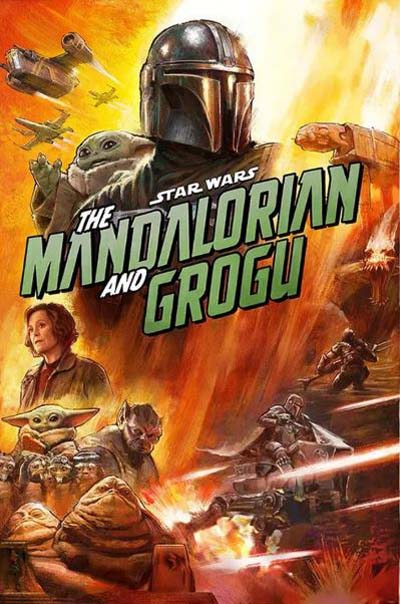
Then, Mando and Grog deteriorates, though not linearly. There are moments that had me thinking there’s yet hope for this film. When the scene cuts to Mando in the spacious cockpit of his ST-70 Assault Ship Razor Crest, I floated into my own sci-fi fantasy. There I am flying my hijacked Va’Ruun Dirge with its vast solar wind canopy hiding nothing in front of me as I explore the worlds of the video game “Starfield.” Lovely.
But, Mando and Grog never realize my hope. The film’s unemotional, way too calm, expository, and plodding dialogue never relented. It sounded too much like humans talk on planet Earth today. The idioms annoyed me. There’s too much of us in this movie. At least Mando never pulled a cell phone from his cloak to post a selfie of him blasting a man-sized centipede‑like creature during an enclosed arena kickboxing-like showdown.
Mando and Grog is too much action and too little story as Del noted, I must concede, very nicely in his take despite getting all French‑y on us. Joie de vivre, Del? Tu es snob? The scriptwriters and the director blew the opportunity to make Mando and Grog an iconic Star Wars flick.
Another problem with the film is a very, very long stretch of cinematography that seemed to exist for no better reason than demonstrating puppeteering. Yeah, Grogu is cute but only becomes relevant late in the film when he saves Din’s life. And that took too long.
As I brooded about the movie, which Del and I saw in unnecessary 3D, its fatal flaw finally occurred to me. More than any other factor, Mando and Grog misfires because it lacks a magnificent Bad Guy. The Hutts are vapid. The former Empire officers turned criminals are puny and weak.
The revelation also helped me understand how I rank Star Wars movies. The best Star Wars movies starting with the best of the best are: “Rogue One: A Star Wars Story,” “Star Wars Episode IV – A New Hope,” “Star Wars – The Empire Strikes Back,” and “Star Wars Episode VI – Return of the Jedi.” Note that there are only four exceptional films. Why? Because they have Darth Vader. Because they are Darth Vader, more than anything else.
Vader, now dead in the lore and resurrecting him like the Emperor in “Star Wars: The Rise of Skywalker” is impossible because it would annihilate the Star Wars universe, is also the reason there’ll never be another great Star Wars movie though a very good one remains possible.
Vader has no equal in Bad Guy moviedom. Sure Agent Smith of The Matrix comes close but he’s only software. Vader of the Dark Side is both Satan and God and he looks and sounds like it. His purpose muddies gradually across the four great Star Wars movies. And, as an aside, his “cameo” at the end of Rogue One is one of the most spectacular scenes generated by any moviemaker anywhere.
So, what’s left for the world of Star Wars? Recognizing that each new film needs a fresh plot codified by a great script supplemented by a majestic score that’s enhanced through stunning visual effects without 3D bullshit. In that order. If Disney is unable to do that with the next film sans (there I go getting all French‑y) AI, it’s spacetime for Star Wars to be sucked into a black hole to be never again seen.
“The Mandalorian and Grogu” is a C worth seeing in the theater by those who enjoy action for action’s sake.
Mladen Rudman is a former journalist and technical writer. Del Stone Jr. is a former journalist and writer.

Photo by Del Stone Jr.
Something weird is happening in Choctawhatchee Bay.
It’s changing, in ways we may not like.
I base this hypothesis, first, on the anecdotal evidence of my own eyes.
You’re probably tired of hearing me say I’ve lived in Fort Walton Beach since 1964, but it’s true. I have. The first five years we lived inland, off Robinwood Drive. Then in 1969 we moved to Elliot Point, one street off Choctawhatchee Bay. That move instantly changed my life.
I became a water person.
Living near the water changes you. Over time you come to know every mood, every nuance, every topographical and hydrological detail of this body of water which, in my case, borders my little world on two sides. My first enduring memory of the bay is waking up the Saturday morning before Hurricane Camille struck Gulfport, Miss., and hearing waves pummel the shoreline of Choctawhatchee Bay.
We lived on this bay. I learned how to water ski on the flats by the old Vortac station on the island. Dad and I caught bluefish and speckled trout on the grass beds just west of Crab Island. We picnicked on Bird Island northwest of Destin. We hunted ducks in Santa Rosa Sound. We sailed in with the Bowlegs krewe, bombs and all. We watched fireworks from The Point.
For all the time I’ve lived next to Choctawhatchee Bay – that would be 57 years now – its waters were a tannic brown, stained by the trees that made up the watershed through which the rivers that filled the bay flowed. Right around the East Pass and Crab Island bay water gave way to Gulf of Mexico water, which was a gorgeous, jewel-like emerald in color. But farther inland, tea-colored, brackish water was the order of the day.
Over the past few years, however, that has changed.
Now, the water along the bay coastline in Fort Walton Beach, even into Cinco Bayou and Shalimar, is taking on the same emerald hue as water along our Gulf beaches. That can mean only one thing:
More Gulf water is coming into the bay. The question is, why?
I can think of three reasons:
1. Water flowing into the bay from rivers has been reduced by more development along the watershed.
2. Changes in rainfall patterns could reduce the volume of water flowing into the bay from rivers.
3. Rising sea levels.
I looked at the most recent water quality study of Choctawhatchee Bay by the Choctawhatchee Basin Alliance. According to that report, salinity levels in the bay are increasing. That means more water from the gulf is entering the bay.
But I wanted to be sure, so I contacted the CBA on Facebook. I told them I’d noticed the color of the bay was changing and I asked them why that was happening. This is what they said:
“Hi! Yes, it is most likely attributed to rising sea levels, more king tides and higher tides, as well as a drier cycle over the last several years. Our data shows increasing salinity trends over the last ten years. We can surmise the reasons listed above, but we have no definitive study.”
If there hasn’t been a definitive study of this issue done before, there sure as hell needs to be one done now, because this would confirm sea level rise and climate change. It would also confirm why, for instance, water tables across the state of Florida are rising, and inland areas are starting to experience flooding. We need much more information about this subject because lives and property hang in the balance. Instead, the DeSantis administration here in Florida and the Trump administration at the federal level are either ignoring or suppressing these areas of inquiry.
I don’t need an expensive study to tell me Choctawhatchee Bay is changing. I can see it with my own eyes. The water is definitely different. In the future, meaning this summer, hurricanes could push water into areas that have never seen it.
Climate change deniers take heed – you’re rejecting the evidence of your own eyes. It’s happening, and whether you like it or not, you too will be affected.
Better to bail water as the boat is sinking, not after it has already sunk.
About the author:
Del Stone Jr. is a professional fiction writer. He is known primarily for his work in the contemporary dark fiction field, but has also published science fiction and contemporary fantasy. Stone’s stories, poetry and scripts have appeared in publications such as Amazing Stories, Eldritch Tales, and Bantam-Spectra’s Full Spectrum. His short fiction has been published in The Year’s Best Horror Stories XXII; Alfred Hitchcock’s Mystery Magazine; the Pocket Books anthology More Phobias; the Barnes & Noble anthologies 100 Wicked Little Witch Stories, Horrors! 365 Scary Stories, and 100 Astounding Little Alien Stories; the HWA anthology Psychos; and other short fiction venues, like Blood Muse, Live Without a Net, Zombiesque and Sex Macabre. Stone’s comic book debut was in the Clive Barker series of books, Hellraiser, published by Marvel/Epic and reprinted in The Best of Hellraiser anthology. He has also published stories in Penthouse Comix, and worked with artist Dave Dorman on many projects, including the illustrated novella “Roadkill,” a short story for the Andrew Vachss anthology Underground from Dark Horse, an ashcan titled “December” for Hero Illustrated, and several of Dorman’s Wasted Lands novellas and comics, such as Rail from Image and “The Uninvited.” Stone’s novel, Dead Heat, won the 1996 International Horror Guild’s award for best first novel and was a runner-up for the Bram Stoker Award. Stone has also been a finalist for the IHG award for short fiction, the British Fantasy Award for best novella, and a semifinalist for the Nebula and Writers of the Future awards. His stories have appeared in anthologies that have won the Bram Stoker Award and the World Fantasy Award. Two of his works were optioned for film, the novella “Black Tide” and short story “Crisis Line.”
Stone recently retired after a 41-year career in journalism. He won numerous awards for his work, and in 1986 was named Florida’s best columnist in his circulation division by the Florida Society of Newspaper Editors. In 2001 he received an honorable mention from the National Lesbian and Gay Journalists Association for his essay “When Freedom of Speech Ends” and in 2003 he was voted Best of the Best in the category of columnists by Emerald Coast Magazine. He participated in book signings and awareness campaigns, and was a guest on local television and radio programs.
As an addendum, Stone is single, kills tomatoes and morning glories with ruthless efficiency, once tied the stem of a cocktail cherry in a knot with his tongue, and carries a permanent scar on his chest after having been shot with a paintball gun. He’s in his 60s as of this writing but doesn’t look a day over 94.
Contact Del at [email protected]. He is also on Facebook, twitter, Pinterest, tumblr, TikTok, and Instagram. Visit his website at delstonejr.com .

I was sitting in an office, having a conversation with a doctor, when his nurse poked her head through the door and said, “Is that your little white car out in the parking lot?”
You always want to hear those words.
And yes, it was my little white car in the parking lot. I asked her if it had been hit. She said yes, it had. I didn’t know what to do. The doctor suggested we go outside and take a look, so out we went, into a gentle rain, where a gray Toyota Tundra was butt cheek to butt cheek against my Honda HRV. In fact, I’m still trying to figure out how that happened.
The lady who did it was extremely upset and very apologetic. I wanted to tell her that’s why they call them “accidents.” I wanted to tell her if her husband gave her a hard time, remind him of the time HE dented the fender. But I was too distracted.
The two were separated. At first, it appeared only the mirror had been scraped. But then I noticed the driver’s side door had been dented. That would need fixing.
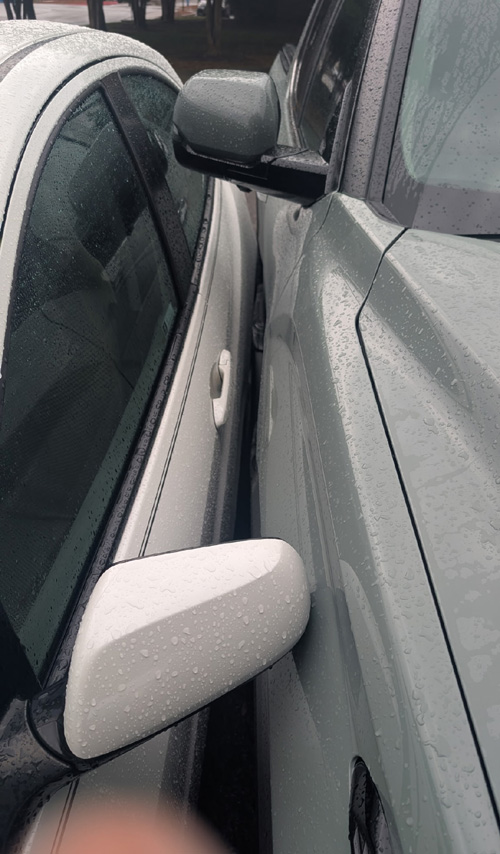
The medical clinic staff was magnificent. While I returned to the doctor’s office, they gathered the woman’s insurance information, took photos, and called the Florida Highway Patrol, which said if the accident occurred in a parking lot and nobody was injured, they wouldn’t respond. Many kudos and thanks to those folks.
The lady’s insurance company was the same as mine. I thought that would make it easier. Looking back, I’d say it added another layer of confusion. When I called to file a claim, I had to make sure they were filing it against HER policy, not mine. I’d hate to see my rates go up. I don’t see how they can go much higher, but never tempt the insurance company gods.
My car is in the shop right now being fixed. The insurance company provided me with a car. Yes, a car. It’s fine, except it sits a lot lower than my admittedly small SUV. Getting out of the car is like raising the Titanic. And it’s got technology my 8-year-old SUV doesn’t have, like a blind-spot warning light, which I love, and push-button start, of which I’m suspicious. How does one start the car when the fob battery dies?
Oh, and I just got off the phone with the insurance company claims adjuster. Somehow, she had it in her “narrative” that I had backed out of a parking spot and hit the other vehicle. I said no, that’s not right. She said, tell me in your own words what happened. I said, I was not even in the car. A woman tried to park next to me and hit my car. She said, “I’m just reading what’s in the narrative.” I said, Well, sorry, but your narrative is wrong. She didn’t seem to appreciate my snarky tone.
Then I told her we both have the same car insurance company – the one she works for. Ohhhhh. That made a difference. She did some digging. I had to listen to some awful corporate hold music. Then she came back online and said yes, she understood now.
I fully expect that when my next insurance bill comes due it’ll be $500 higher because of the accident “I caused,” and I’ll spend days on the phone trying to explain to insurance adjusters that I did NOT cause the accident, that I was NOT even in the car, and then who knows?
Maybe I’ll just get rid of the car and take Uber from now on.
About the author:
Del Stone Jr. is a professional fiction writer. He is known primarily for his work in the contemporary dark fiction field, but has also published science fiction and contemporary fantasy. Stone’s stories, poetry and scripts have appeared in publications such as Amazing Stories, Eldritch Tales, and Bantam-Spectra’s Full Spectrum. His short fiction has been published in The Year’s Best Horror Stories XXII; Alfred Hitchcock’s Mystery Magazine; the Pocket Books anthology More Phobias; the Barnes & Noble anthologies 100 Wicked Little Witch Stories, Horrors! 365 Scary Stories, and 100 Astounding Little Alien Stories; the HWA anthology Psychos; and other short fiction venues, like Blood Muse, Live Without a Net, Zombiesque and Sex Macabre. Stone’s comic book debut was in the Clive Barker series of books, Hellraiser, published by Marvel/Epic and reprinted in The Best of Hellraiser anthology. He has also published stories in Penthouse Comix, and worked with artist Dave Dorman on many projects, including the illustrated novella “Roadkill,” a short story for the Andrew Vachss anthology Underground from Dark Horse, an ashcan titled “December” for Hero Illustrated, and several of Dorman’s Wasted Lands novellas and comics, such as Rail from Image and “The Uninvited.” Stone’s novel, Dead Heat, won the 1996 International Horror Guild’s award for best first novel and was a runner-up for the Bram Stoker Award. Stone has also been a finalist for the IHG award for short fiction, the British Fantasy Award for best novella, and a semifinalist for the Nebula and Writers of the Future awards. His stories have appeared in anthologies that have won the Bram Stoker Award and the World Fantasy Award. Two of his works were optioned for film, the novella “Black Tide” and short story “Crisis Line.”
Stone recently retired after a 41-year career in journalism. He won numerous awards for his work, and in 1986 was named Florida’s best columnist in his circulation division by the Florida Society of Newspaper Editors. In 2001 he received an honorable mention from the National Lesbian and Gay Journalists Association for his essay “When Freedom of Speech Ends” and in 2003 he was voted Best of the Best in the category of columnists by Emerald Coast Magazine. He participated in book signings and awareness campaigns, and was a guest on local television and radio programs.
As an addendum, Stone is single, kills tomatoes and morning glories with ruthless efficiency, once tied the stem of a cocktail cherry in a knot with his tongue, and carries a permanent scar on his chest after having been shot with a paintball gun. He’s in his 60s as of this writing but doesn’t look a day over 94.
Contact Del at [email protected]. He is also on Facebook, twitter, Pinterest, tumblr, TikTok, and Instagram. Visit his website at delstonejr.com .
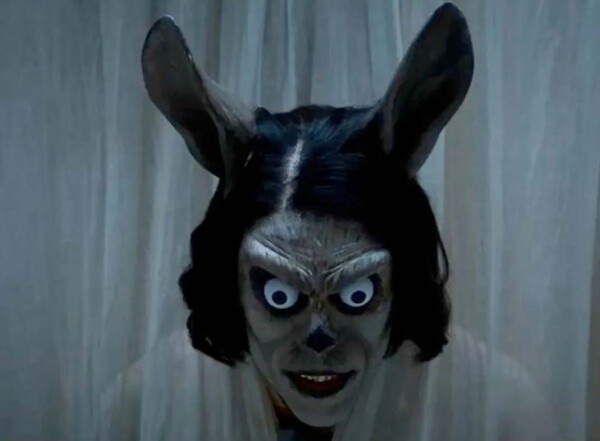
Image courtesy of Neon.
“Hokum” Starring Adam Scott as tortured asswipe Ohm Bauman, Peter Coonan as bumbling bad guy Mal, Florence Ordesh as wispy but likeable Fiona, Brendan Conroy as decent Cob, and others. Directed by Damian McCarthy. 1 hour, 47 minutes. Rated R. Theatrical release.
Plot summary: Caustic Bauman is a successful novel writer with a past that haunts him. He heads for Ireland to disperse the ashes of his mother and father at the place where they honeymooned, a backwoods hotel. There, Bauman encounters a bundle of characters who lead him toward a reckoning filled with terror and regret and salvation.
Spoilers: Gotta tell you something about the movie to make the review make sense. No?
Mladen’s take
If I had to guess, and I will, “Hokum” will probably make a little bit of money in the theaters before getting shoved into the capacious jaws of the beast of streaming. That’s too bad because this horror crime thriller of a film is pretty darned good on a couple of planes.
More than anything, the movie’s sound effects and score are superb.
Even at the old theater where Del and I saw the film, the speakers generated an immersive mood. Rain plinking gutters. Wind sweeping through the canopy of towering pines. The hotel creaking from age or moaning from its disused basement. It was all so crisp and satisfyingly phlegmatic. Loved it to no end.
The cinematography was real. No computer-generated imagery here. The narrow stone passageways, the ghostly honeymoon suite, the cramped dumbwaiter, all practical effects well used.
“Hokum” builds suspense, throws in a jump scare or two, and ends with a satisfying, if not dubious, lesson: The truly evil do get punished, at least at the Bilberry Woods Hotel.
To top it all off, the movie offers nothing obscene. Blood doesn’t spray. Guts don’t spill. Heads aren’t separated from shoulders. There’s no nudity. Normally, the lack of any of those in a horror movie disappoints me. Not so in this case.
“Hokum” plays very nicely with lighting. Dimness is the film’s ally. And there’s no better way to create it but with the use of the plain and simple incandescent bulb. Their orange glow doesn’t travel far. It seemed that the “Hokum” set was designed to eat light. It barely reflected from any surface. It cast shadows that trifled with your imagination. Lovely, indeed.
What’s the consequence of masterful use of lighting in film. Is there a demon looking up at you from the dumbwaiter’s deep shaft? Maybe. What’s that circling you? Only its silhouette is visible through the thin fabric of the curtain shrouding the bed where you’re hiding.
My principal gripe with “Hokum” is the chattiness of the Irish folk who Bauman encounters at the hotel. They disclose more than warranted to the stranger in their midst and continue doing so.
Also, I’m no fan of the suicide. It’s misplaced as a story arc. The person offing themselves may have been a dickhead but there was no evidence of suicidal tendencies or, for that matter, ideation.
Still, the film’s moodiness, coupled to the good acting by all the principal players, makes for good horror. “Hokum” is but a witch’s cold breath from an A-.
Del’s take
Wait just a minute, Mladen. Aren’t you the one who said, “Why are you making me watch horror?” as the trailers ended and the opening credits for “Hokum” rolled across the screen? I thought you didn’t like horror. Yet here you are, giving an A- to a horror movie. You old softie. I bet you like cats, too.
But you’re right, Mladen. “Hokum” is a damn fine movie, worth every pixel of your digital approbation. But I should clarify – “Hokum” is not a horror movie per se, although it’s being pitched as such. “Hokum” is a haunted house story that evolves into a murder mystery, in the spirit of 2000’s “What Lies Beneath.”
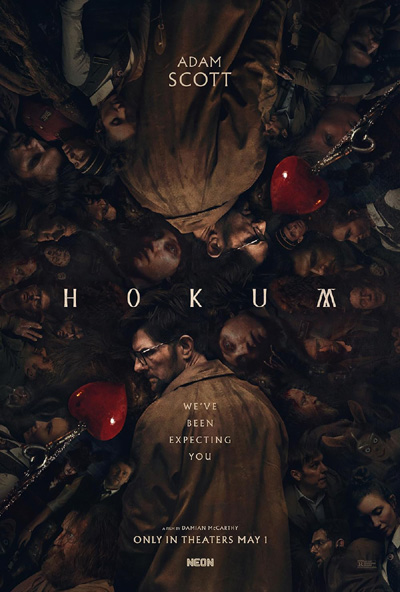
Kudos to Adam Scott for reigning in his comedic impulses and delivering an excellent dramatic performance as the unlikeable Ohm Bauman. Mladen, did you notice the possible significance of his first name, “Ohm,” which is a measure of electrical resistance? You might say he’s stubborn, which would play well with the image of the ram skull, another symbol of unyielding resistance. Bauman is a hard-hearted fellow who has shut off his feelings after a tragedy of his childhood, one for which he blames himself. Yet he yearns for the true vision of himself, just like the goats that climb onto cars in this movie because they seek a reflective surface after eating the magic mushrooms of the forest.
Kudos also to director Damian McCarthy for his steady hand at the tiller, eschewing the temptation of jump scares and gore in favor of mood, shadows and eerie music to build tension in this very scary movie. McCarthy seems to recognize the less seen the better in a movie where everything we’re witnessing just might be a fever dream concocted by a hallucinogenic fungi.
My only quibble: At one point Bauman becomes trapped in a room. I kept asking myself: Why doesn’t he simply break out a window and jump?
Still, “Hokum” is a terrific example of horror, ghost stories, murder mysteries – whatever you want to call them – done right. It pits the Ugly American against Old World Courtliness, and in the end … well, I won’t say, because I don’t want to spoil it for you. Do go see “Hokum” in the theater. It’s much spookier that way.
Oh, and Mladen, I’ll call your A-.
Mladen Rudman is a former journalist and technical writer. Del Stone Jr. is a former journalist and writer.