I prefer change that benefits us all
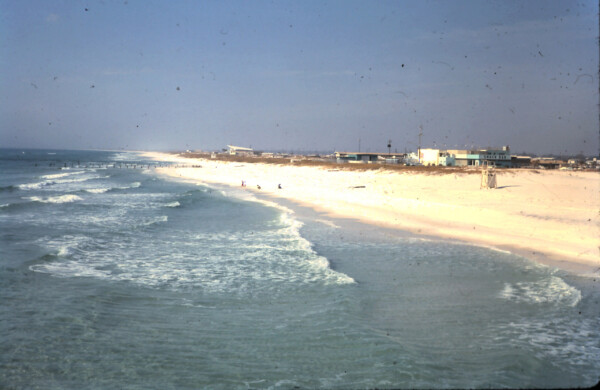
In 1964 the beach along Okaloosa Island was mostly free of condos and other buildings. This photo was taken from the Okaloosa Island fishing pier. Image courtesy of Del Stone Sr.
When it comes to the history of Fort Walton Beach, I have an unfair advantage.
Not only have I lived here a long time, but my mother’s family, the Readys, moved to the area in the 1930s. On lazy Sunday afternoons, after I’ve finished killing whatever plant it is I’m trying to grow in Mom’s yard, I sit on her front porch and listen to stories about the area’s early days.
Needless to say, life was dramatically different back then.
Mom’s family lived in a house that had electricity and a wood-burning stove but little else. The kitchen was a separate structure and water came from a well.
On laundry day, the kids would build a fire in the yard and boil their clothes in a large kettle, rinsing them three times in separate kettles. The water in that last kettle had to be free of soapy residue before the clothes could be hung up to dry.
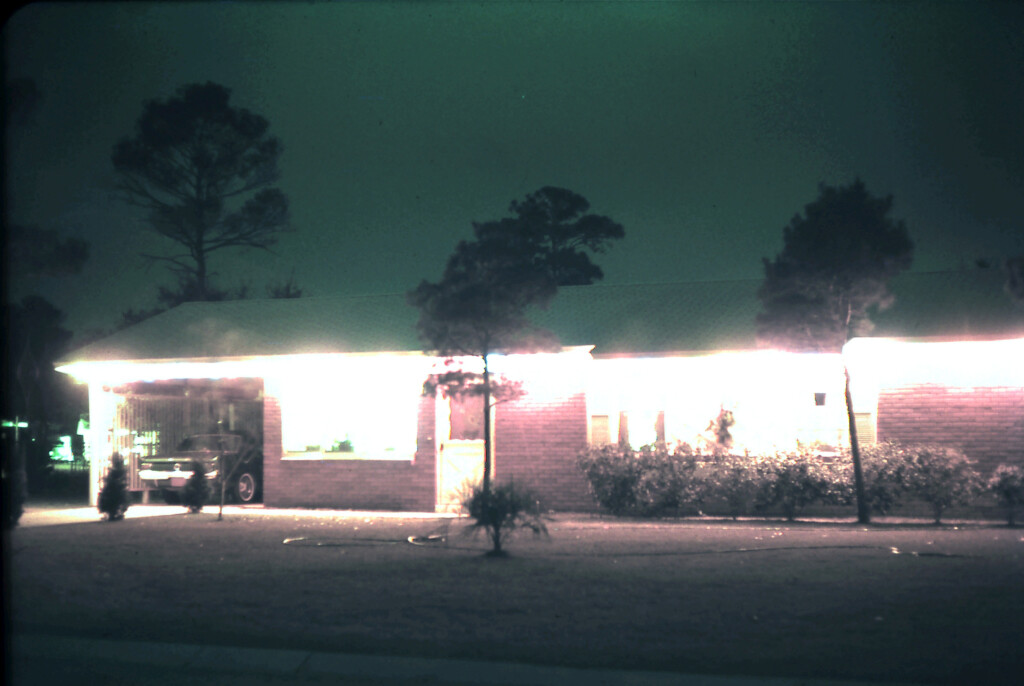
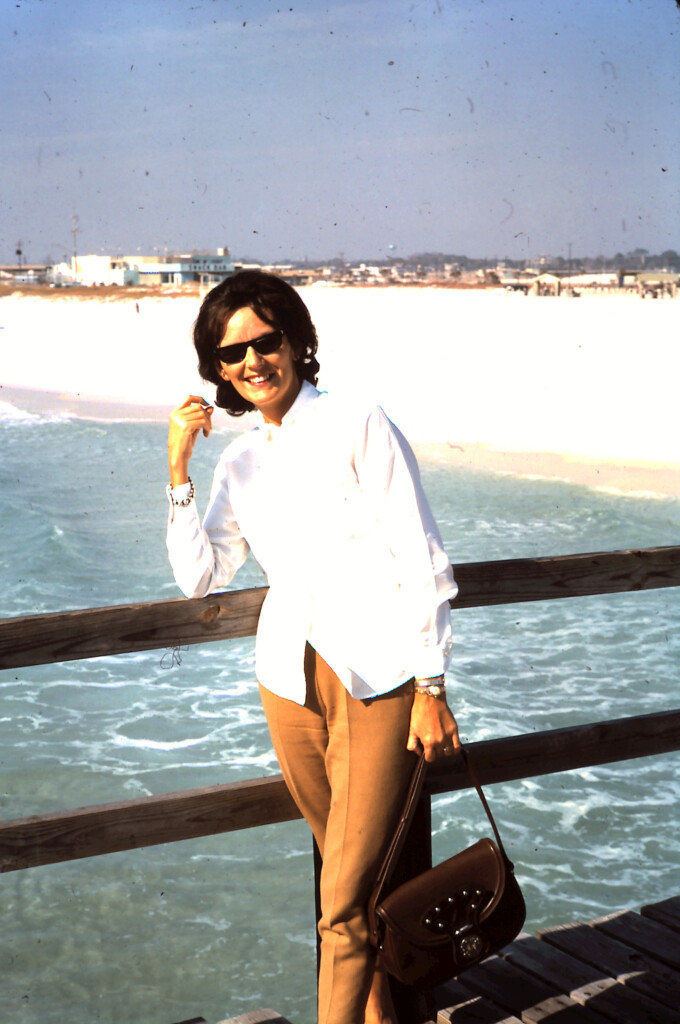
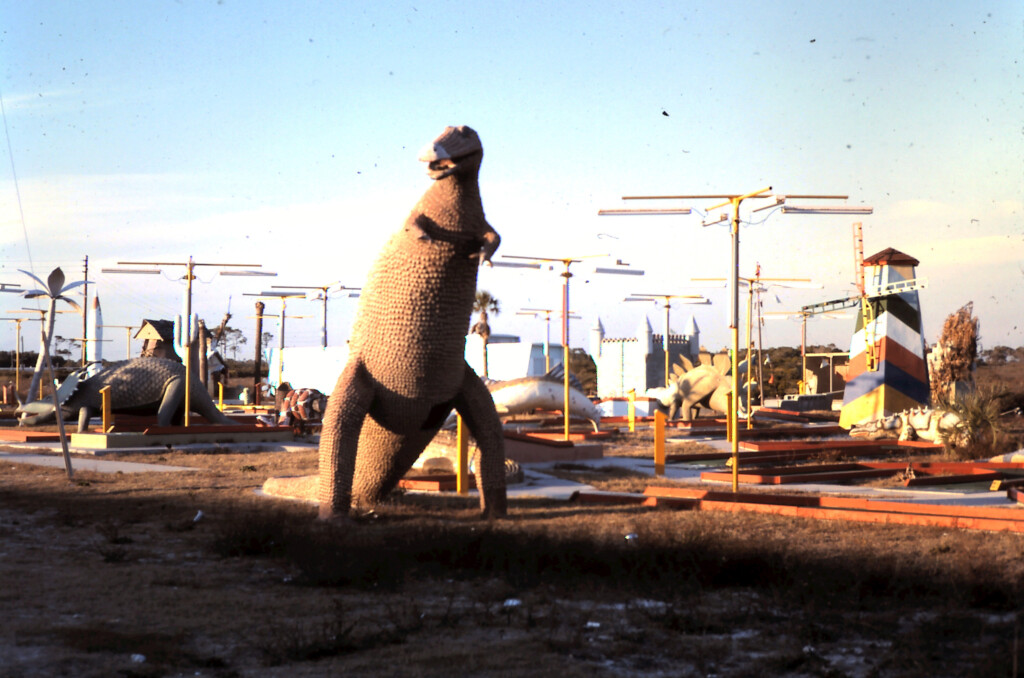
To make money, Mom and her sister, my Aunt Wendy, delivered the Pensacola newspaper on foot. They also crabbed along the shores of Choctawhatchee Bay and Santa Rosa Sound, then cleaned the crabs and sold them to the Gulfview Hotel. Grandmom made pies and cakes and sold them to the Gulfview.
Eglin Parkway was a dirt road. Deer and livestock wandered the streets of Fort Walton Beach. A cypress forest stretched from the Ferry Park area south to U.S. Highway 98 in the vicinity of Perry Avenue. It was a popular hangout for rattlesnakes.
Meanwhile, up near Cinco Bayou, alligators basked along the shoreline. Grandmom admonished the kids not to go down there where those alligators were hanging around. But it was OK to go under the house to fetch eggs from the chickens that built nests there. Sometimes a rattlesnake helped itself to those eggs, too.
The Cinco Bayou bridge was made of wood planks. Mom said that when relatives from Alabama visited, you could hear their cars crossing the bridge because the tires made a racket. The kids would then stand by the road, waiting for the relatives to pass by.
The bridge to the island was what they called a “swing bridge.” When a tall boat sailed down Santa Rosa Sound, a bridge tender would lower traffic barriers, then swing the bridge 90 degrees so the boat could pass through. Imagine how that would affect traffic today!
Bad weather tended to catch them by surprise. Mom remembers walking dirt roads and seeing fish fall from the sky. The fish were still alive. Today we know the fish were sucked up by a waterspout, but back then there was no explanation for such an event. In 1936 a hurricane struck the area. They had no warning and knew it was a hurricane only when it continuously grew worse. My Uncle Jimmy spent the storm in a cottage on Okaloosa Island. Mom, Aunt Wendy and Grandmom stayed at their house in Cinco Bayou. They even brought the cow inside to ride out the storm.
Mom was a waitress at the bus station before going to work at the Tringas Theater. During World War II, she said, they passed around a collection jar among the audience members to raise money for armaments.
She met my dad when he was stationed at Eglin. Dad was a pilot, and Mom said he would buzz their house, causing Granddad to stomp outside and shake his fist at the sky. Dad once took Mom on a joyride and performed acrobatics; Mom was not amused.
Eventually growth would come to the area, with improved roads and bridges. More people moved to Fort Walton and Mom moved away, following Dad and his career in the Army Air Corps, then the U.S. Air Force. When it came time for Dad to retire, the family moved back to Fort Walton, and here we’ve been ever since.
As a longtime resident, I am not in favor of dirt roads and alligators sharing my swimming area. But at the same time, I’m not in favor of traffic jams and blocked beaches. I realize change is inevitable, but I wish it could be change we’ll all benefit from.
About the author:
Del Stone Jr. is a professional fiction writer. He is known primarily for his work in the contemporary dark fiction field, but has also published science fiction and contemporary fantasy. Stone’s stories, poetry and scripts have appeared in publications such as Amazing Stories, Eldritch Tales, and Bantam-Spectra’s Full Spectrum. His short fiction has been published in The Year’s Best Horror Stories XXII; Alfred Hitchcock’s Mystery Magazine; the Pocket Books anthology More Phobias; the Barnes & Noble anthologies 100 Wicked Little Witch Stories, Horrors! 365 Scary Stories, and 100 Astounding Little Alien Stories; the HWA anthology Psychos; and other short fiction venues, like Blood Muse, Live Without a Net, Zombiesque and Sex Macabre. Stone’s comic book debut was in the Clive Barker series of books, Hellraiser, published by Marvel/Epic and reprinted in The Best of Hellraiser anthology. He has also published stories in Penthouse Comix, and worked with artist Dave Dorman on many projects, including the illustrated novella “Roadkill,” a short story for the Andrew Vachss anthology Underground from Dark Horse, an ashcan titled “December” for Hero Illustrated, and several of Dorman’s Wasted Lands novellas and comics, such as Rail from Image and “The Uninvited.” Stone’s novel, Dead Heat, won the 1996 International Horror Guild’s award for best first novel and was a runner-up for the Bram Stoker Award. Stone has also been a finalist for the IHG award for short fiction, the British Fantasy Award for best novella, and a semifinalist for the Nebula and Writers of the Future awards. His stories have appeared in anthologies that have won the Bram Stoker Award and the World Fantasy Award. Two of his works were optioned for film, the novella “Black Tide” and short story “Crisis Line.”
Stone recently retired after a 41-year career in journalism. He won numerous awards for his work, and in 1986 was named Florida’s best columnist in his circulation division by the Florida Society of Newspaper Editors. In 2001 he received an honorable mention from the National Lesbian and Gay Journalists Association for his essay “When Freedom of Speech Ends” and in 2003 he was voted Best of the Best in the category of columnists by Emerald Coast Magazine. He participated in book signings and awareness campaigns, and was a guest on local television and radio programs.
As an addendum, Stone is single, kills tomatoes and morning glories with ruthless efficiency, once tied the stem of a cocktail cherry in a knot with his tongue, and carries a permanent scar on his chest after having been shot with a paintball gun. He’s in his 60s as of this writing but doesn’t look a day over 94.
Contact Del at [email protected]. He is also on Facebook, twitter, Pinterest, tumblr, TikTok, and Instagram. Visit his website at delstonejr.com .
Life has changed dramatically since I was a boy, so dramatically I sometimes must remind myself I’m the same person who got up to change the TV channel, then tune the correct color balance. The world of my childhood was much different than today, in some ways better but in many ways not.
When I was a boy, American cars ruled the road – not just Chevys, Fords and Chryslers, but Nashes, Ramblers and other makes from companies that no longer exist. “Foreign” cars consisted of Volkswagen Bugs, MGs and the occasional Triumph. There were no Japanese cars. Also, people tend to think of extended cab pickup trucks as a recent development, but Dodge made extended cabs back in the ’60s for the U.S. Air Force. And Ford produced a large van called the Falcon (not the car) that rivaled anything built by Chrysler these days.
TV sets were giant boxes that sat in the corner of the living room. They were furniture, not cute little devices that could be put anywhere, and they were filled with tubes that often burned out. When a tube burned out you had to take off the back of the TV, find the offending tube, take it to a hardware store and plug it in to a machine called a tube tester. Once the tube tester confirmed it had burned out, you bought a new tube and plugged it into the TV. If you were lucky, the TV would start working. If not, you had to find the other tube that burned out.
There were no remotes. You had to get up, cross the living room and manually switch the channel with a knob. Sometimes the contacts on the knob would wear out and the TV wouldn’t tune the channel. If you had a color TV – and we didn’t get one until 1966 – you had to manually adjust the color between each network, which at the time consisted of ABC, NBC and CBS. ABC tended to produce “hot” colors, lots of reds and oranges. CBS was in the middle and NBC produced “cold” colors, bland flesh tones that always needed warming up. My sister Sandie was the champion of color balancing the picture.
Telephones were hunks of metal sitting on their own table in a strategic location. Later, we graduated to Bakelite phones mounted on the wall. Rich people had extensions in their bedrooms. It was not unusual to share a “party line” with other houses in your neighborhood. You would pick up the phone and hear other people talking. Sometimes, you had to tell them to get off the phone so you could use it.
We didn’t have icemakers. We had ice cube trays – and not the bendable plastic trays where the ice cubes pop out. These were metal contraptions with a lift arm that bent the dividers, creating fractures in the ice. You dumped the cubes into the bucket and filled the tray with water and put it back in the freezer. It was a rule the last person to use all the ice was responsible for filling the trays. This produced violent arguments about which miscreant hadn’t filled the trays.
Only the better-off families could afford a dishwasher. We washed and dried dishes by hand. Again, whose turn it was to wash dishes became a source of friction in the household.
There were no video games but plenty of board games – Monolopy, Life, Yahtzee, CandyLand, and card games.
Microwave ovens came out in 1966 and we thought they were magical. Still, we wondered if they weren’t irradiating our food. In the early ’80s, cordless phones arrived. Again, we thought they were magical. I used to brag about being able to talk on the phone and do housework at the same time. We got cable TV in the mid-’60s and it was a gift from the rabbit-eared god – until the cable went out. I remember waiting all summer for a critical scene in the afternoon soap opera “Dark Shadows,” only to have the darned TV cable crap out just before it happened. VCRs and 8-track tapes came out in the late ’70s and early ’80s. You could buy a blank VCR tape for $20, while a pre-recorded movie cost between $80 and $90. Our first home computer was a “Trash 80” that you hooked up to your TV so you could have a “monitor.” Digital calculators emerged in the early ’70s but cost anywhere from $50 to over $200. I worked for Texas Instruments building calculators in the summer of ’74 – one of the best jobs I’ve ever had.
I got my first home computer in 1991, an IBM PS1, and you could access AOL or another online “community” whose name I’ve forgotten. Problem was internet usage cost by the minute, so going online was a costly affair. I sent my first e-mail in 1990 and was amazed when I got a response. It was to a friend who worked at Eglin Air Force Base. I thought it was the stuff of science fiction. In 1995 I purchased my first cellphone, a Motorola flip phone. The thing barely worked because the network of cellphone towers didn’t exist.
And that’s the way it went. Eventually ATM cards, satellite TV, smart phones, terrabyte hard drives, fuel injection and HDTV replaced the world I once knew. I confess it’s been a struggle trying to keep up with everything. Bulletin boards, Usenet and Gopher Space have been supplanted by Facebook and other social media networks. Frozen food tastes as good or better than fresh, despite my beloved “TV dinners” of Salisbury steak, peas and carrots, and mashed potatoes and gravy. On twitter I communicate directly with scientists, whereas in the past I would’ve mailed a typewritten letter and hoped for a response.
The new world has better technology. What I liked about the old was its innocence and focus.
But I feel lucky to have lived in both.
About the author:
Del Stone Jr. is a professional fiction writer. He is known primarily for his work in the contemporary dark fiction field, but has also published science fiction and contemporary fantasy. Stone’s stories, poetry and scripts have appeared in publications such as Amazing Stories, Eldritch Tales, and Bantam-Spectra’s Full Spectrum. His short fiction has been published in The Year’s Best Horror Stories XXII; Alfred Hitchcock’s Mystery Magazine; the Pocket Books anthology More Phobias; the Barnes & Noble anthologies 100 Wicked Little Witch Stories, Horrors! 365 Scary Stories, and 100 Astounding Little Alien Stories; the HWA anthology Psychos; and other short fiction venues, like Blood Muse, Live Without a Net, Zombiesque and Sex Macabre. Stone’s comic book debut was in the Clive Barker series of books, Hellraiser, published by Marvel/Epic and reprinted in The Best of Hellraiser anthology. He has also published stories in Penthouse Comix, and worked with artist Dave Dorman on many projects, including the illustrated novella “Roadkill,” a short story for the Andrew Vachss anthology Underground from Dark Horse, an ashcan titled “December” for Hero Illustrated, and several of Dorman’s Wasted Lands novellas and comics, such as Rail from Image and “The Uninvited.” Stone’s novel, Dead Heat, won the 1996 International Horror Guild’s award for best first novel and was a runner-up for the Bram Stoker Award. Stone has also been a finalist for the IHG award for short fiction, the British Fantasy Award for best novella, and a semifinalist for the Nebula and Writers of the Future awards. His stories have appeared in anthologies that have won the Bram Stoker Award and the World Fantasy Award. Two of his works were optioned for film, the novella “Black Tide” and short story “Crisis Line.”
Stone recently retired after a 41-year career in journalism. He won numerous awards for his work, and in 1986 was named Florida’s best columnist in his circulation division by the Florida Society of Newspaper Editors. In 2001 he received an honorable mention from the National Lesbian and Gay Journalists Association for his essay “When Freedom of Speech Ends” and in 2003 he was voted Best of the Best in the category of columnists by Emerald Coast Magazine. He participated in book signings and awareness campaigns, and was a guest on local television and radio programs.
As an addendum, Stone is single, kills tomatoes and morning glories with ruthless efficiency, once tied the stem of a cocktail cherry in a knot with his tongue, and carries a permanent scar on his chest after having been shot with a paintball gun. He’s in his 60s as of this writing but doesn’t look a day over 94.
Contact Del at [email protected]. He is also on Facebook, twitter, Pinterest, tumblr, TikTok, and Instagram. Visit his website at delstonejr.com .