Paradise Cafe (a short horror story)
INTRODUCTION
Obviously I wrote this story a looong time ago. I mean, c’mon. A Falcon? The last Falcon rolled off the Ford assembly line in 1970, according to Dr. Google.
But that’s OK because the central conceit of “Paradise Café” – criminal regret – is timeless.
Seriously. Haven’t you ever done something you regretted – I mean really regretted, so much that it ate your lunch for weeks and weeks until you finally came to some kind of internal accommodation with it? I have. There are things I’ve done, things I’ve said, that make me so ashamed my brain reflexively flinches from the memory. I wish I could go back to that moment and not do the thing I did.
In “Paradise Café,” Rochester Allston did something so horrible that it has consumed his life. And now IT is about to consume him. Actually, it already has.
I wrote “Paradise Café” in the early 1980s. I’m guessing it was 1981 but truth be told I did a pretty terrible job of keeping track of things like story conception dates, so I can’t say with absolute certainty that was the year. Hell, it could have been in the late ’70s.
At that time I was mesmerized by Stephen King and was trying to write like him. I think you can see King’s influence in this story – brand names, colloquial dialogue, and a species of horror that treads somewhere between reality and fantasy. Of course it’s nowhere near King’s level of writing, but it tries.
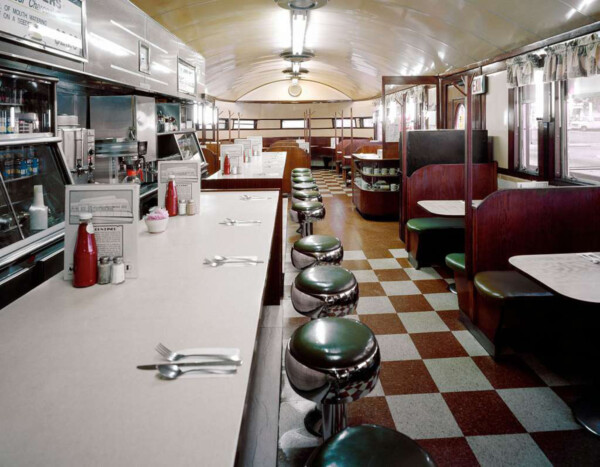
I remember “Paradise Café” being based on an actual place. Was that actual place named “Paradise Café” or something else? I can’t remember. Nor do I recall where it was located. We ate lunch a few times at a little seafood shack in Freeport, Florida, that bears a resemblance to the diner in this story. But there was also a joint called The Red Bar in Grayton Beach, Florida, that looks like the actual “Paradise Café” building. Maybe it’s an amalgam of the two.
What counts is that Rochester Allston, as do the protagonists in many horror stories of that era, meets his comeuppance. The reward for doing bad things, even for burned out, hopeless, shopworn old Bible salesmen, is often terrible and eternal.
And it is always couched in irony.
So take a seat in the Paradise Café. Wash your hands after handling the menu. They won’t have beer, but you can order an ice-cold Coke, and maybe a BLT.
Just be careful leaving.
You never know what will follow you out of a place like that.
—
PARADISE CAFE
The sign read “Paradise Cafe,” Rochester Allston saw. It was written in florid cursives that were dirt-smeared and eaten at the edges. The painted letters seemed to run in the oppressive heat of the Mississippi afternoon.
And he thought, Oh. Lord.
He slid the straw hat from his brow; it came off like it had been greased. He waited for dust to settle, then rolled down the Falcon’s window a little farther and tested a smothering breath.
This heat … playing hard on the old man. And then he almost remembered … a distant screech of tires, or was that only the echo of a memory? He still couldn’t deny it, just as he could not deny the dream that had followed, the dream that was so repugnant his mind kept all but its presence concealed from him by day, the particulars lurking in his subconscious to emerge at night as he slept, so that he awakened slicked in cold sweat, and remembered only that he had screamed.
Forget it.
He breathed more deeply and the sign still read “Paradise Cafe” and he remained hot, hotter than he’d ever remembered, soaked to the bone with sweat, his back and his armpits pools of damp, spots of perspiration little crawling things loose inside his clothes. The Falcon was sweltering with the windows down, as he’d driven the Mississippi backroads, and now that he’d found what passed for paradise the heat was everywhere at once, a drowsy presence slithering beneath a patina of road dust and grime and endless afternoons on the road, talking – talking – talking –
He’d have traded his soul for a frozen mug of Wiedemann Bohemian Special. Or just a Coke – anything cold.
He snapped shut the sample case to his right. It’s the heat. That’s what’s got me whipped, he told himself, the thought slurred and indistinct as the afternoon took hold of him. Heat. And no sleep.
He opened the car door and grabbed the case, his shirt peeling from the vinyl seat like a clammy second skin. The case was heavier than he expected; it contained a depressing burden of unsold plastic Jesus dashboard ornaments, clasped-hands-in-prayer bookmarks, and most worthy of all, the Living Waters Bible, the word of God made comprehensible to the feeble minds that populated these sweaty backwood towns through large type and lots of pictures, which at the sacrifice price of only $9.95 plus tax was reasonable beyond the expectations of any God-fearing Southern Baptist … or the legions of pretended faithful.
Well, that’s what you’d think, anyway.
He got a better grip on the case, shut the car door with his hip. He walked toward the door, half expecting hound dogs to rush out, sniffing at his heels and urinating on the car tires. The case was an anchor, dragging at his body, and as he took the steps to the door he thought of cool afternoons spent beneath ancient oaks, wrapped in the slow swoon of a hammock and the easy slumber peculiar to Saturdays when nothing needed doing anytime soon. Once, life had been like that. But it seemed things would never go that way again.
Sleep.
He pried open the screen door, stepped into the grainy twilight inside the restaurant, and found the ubiquitous heat in here, too. The screen door banged shut.
He looked across dusty floorboards and chipped, formica tabletops – each chair squared neatly against the table, each table fastidious with a glass ashtray, a napkin dispenser, a lunch menu laminated in transparent plastic, salt and pepper shakers – rice grains in the salt to keep it from crystalizing. A thermometer on the back wall said “Royal Crown Cola – the fresher refresher!” The temperature read 78, and he knew that couldn’t be right.
“Hullo.”
He searched for the voice, scanning the counter, rows of padded stools, and saw a shape through the window in the door that opened onto the kitchen, a suggestion of pink sliding in shadow.
The waitress appeared and moved along the counter, wielding a half-composed frown and looking flustered at the prospect of work. She swept a slick tendril of hair behind her crimped, white hat and said, “Hullo” again. The scowl deepened.
“How do you do, Ma’am,” Allston answered. He ran a shirtsleeve over his forehead, then moved to the table in the back, away from the window. It looked cooler there. The waitress followed.
When Allston had sat down, the waitress pulled out a notepad and Bic pen from her apron pocket. The name “Angie” was embroidered on the pink lapel of her blouse. Her gaze flitted, lizardlike, from the packing case at his foot to his face.
“What can I get for you?”
Allston leaned forward, propped his elbows on the table. He took the menu and scanned it quickly, looking but not really seeing what was printed there. At the top of the sandwiches column was a photo of a bacon, lettuce and tomato sandwich and a sweating Coke. He said, “I’ll have a BLT – says here you got BLTs.”
She nodded, scribbled words, seemed to stare through the pad at him. “Whatcha want to drink?”
“Beer. Wiedemann – ”
She shook her head. “Dry county.”
Allston closed his eyes. “Coke. A Coke. With lots of ice.”
She was gone in a whorl that set the dust astir. Allston yanked a napkin from the dispenser, pulled the neck of his shirt loose and took a long, slow swipe with the napkin. The glare coming through the window seemed unbearably bright, a hot ingot of freshly poured steel still glowing from the furnace. He tried to think of air conditioners and hammocks slung beneath oaks and Wiedemann beer. And sleep.
He pulled out his wallet and thumbed the bills. Two ones, a ten, and another one. Thirteen bucks. Never had he experienced such a run of sorry luck. No sales. No nothing. And then … that goddamned wreck – he couldn’t believe he’d said the words to himself. He wanted to forget – he really needed to forget about all that.
And he didn’t want to think about the dream.
“You’re a salesman, ain’t you?”
The waitress seemed to appear from the thin, superheated air. She set down a glass of water. Allston snapped the wallet shut, leaned and slid it into his trousers pocket.
“Whatcha got in your case?” She tapped it with her foot. He stooped and hefted it to the table and undid the clasps. Was she interested in buying something, or would this be another dry well?
“Oh. You’re a Bible salesman.”
“And other spiritual necessities.”
She glanced at him, then began picking and prodding at the case’s contents. He almost considered trying her out on the wonderments of the Living Waters Bible, but she’d found something else, a porcelain figurine of a young girl kneeling in solemn prayer. She clasped it like something precious, raised it to her eye and attempted a smile. She turned it to the light.
Allston said, “That’s hand-painted porcelain, ma’am. Made right here in Mississippi. It’s a beauty.”
The lines in her face hardened. She stared back at him and murmured, “I can see that.”
She set it back in the case. “You want your Coke now or with the sandwich?”
He exhaled wearily. Another dry well. He said, “Now, please.” She whirled and marched back to the kitchen.
He stared and stared, eyes away from the bright window, looking at nothing and thinking of nothing except relief, of sleep, of earlier times. It had been less complicated then, compared to now. Getting by – nothing flamboyant, but work that put bread on the table and beer in the fridge and made for lazy afternoons enveloped in dizzy lethargy. He shifted in the chair and felt his body move in a boneless rearrangement of lumps and dull aches. It was difficult to keep his eyes open. These last few weeks … he turned those events over in his mind and couldn’t touch them –
– the little girl was staring at him –
He jerked from a slouch, startled at the depths of his thoughts.
The little girl was staring.
He hadn’t noticed them come in. They’d taken the table by the window and, squinting against the brilliance, he could barely make out the blurred contours of a man – a big man, big as a diesel engine, made to look all the bigger by the sleeveless T-shirt he was wearing. His wife sat across from him and was rendered anonymous by the light. An older child sat at the woman’s left; Allston couldn’t guess its sex because of the overalls … and the little girl. The girl watched Allston with an intent that disturbed him. The little girl … she reminded him of something.
Allston pulled another napkin from the dispenser and mopped his forehead and neck. He drank from the water, frowned at its strange taste. The ice was almost melted, and it didn’t feel cool at all. Somebody had boiled a glass of water and put ice in it; that’s what he thought.
The little girl watched. She knew something about him, Allston felt. And now, he saw, her older brother/sister was staring too. Sister, he guessed. The hair. It was long; loose strands seemed to float, suspended on thermals snaking across the tabletop.
The waitress brought his Coke. He sipped and it was thick as syrup.
The family was watching him. All of them. Watching – not a word spoken among them, as if he were intruding on some space reserved exclusively for them. The room seemed 10 degrees hotter now. He breathed in gusts and glanced at the R.C. Cola thermometer. He looked over the menu again. He looked at his nails – anywhere but the window where the family baked in the sunlight and watched – where the child watched and knew.
The waitress appeared again with his sandwich, mercifully intruding on the moment. She stood between him and the window, eclipsing the square of sun. He watched her set down the plate. The toast was scorched around the edges and the sandwich had the look of something that would raise blisters on the roof of his mouth. He waited as she scribbled the check; she slid it between the ashtray and napkin dispenser, and without a word, walked away.
The girl was standing behind her.
Allston blinked and caught his breath, surprised and frightened in a single lash of tingling heat. The girl did not move; her eyes did not move, but held him immobile. Allston stared at her. He struggled and composed a slow, nervous smile. He opened the case.
“You know, I got something that might suit a pretty little girl like you.”
He withdrew the porcelain girl-in-prayer. He held it out to her. “Here. Take it.”
The child didn’t move.
“It’s yours. No charge.”
The girl reached and grasped the figurine. She did not look at it, but drew it behind her head, held it there a moment, then pitched it at him. Viciously. He was so surprised that he didn’t try to dodge or even hold up his hand, and it struck him in the forehead, landing with a thump that seemed to set every nerve in his body to thrumming. He stared in stunned amazement at her, his jaw unhinged and a cry suspended there. Her expression didn’t change. He clapped a hand over his forehead, felt oily liquid, couldn’t tell if it were sweat or blood until he looked down and saw red spatterings on his plate. Then he was overcome with nausea and thought he might puke. He grabbed a handful of napkins and held them to his forehead, a flare of pain arching behind his skull. A tear of blood ran along the ridge of his nose. The figurine rolled off his lap and clonked to the floor.
He opened one eye and looked balefully at the girl from behind a triangle of napkin. He hissed, “Get! Get outta here, you!” then closed his eyes, dropped back and let the sweaty dark come over him. His head throbbed to a cacophony of bell sounds. He felt a headache coming on, a bad one. It was hot and he’d made a mistake – a big mistake – in stopping at the Paradise Cafe and, suddenly, all eh wanted was to be away from here, this part of the country where the people seemed filled with meanness and no respect for a man trying to make an honest buck.
He folded the napkins and reached for his case, all before he saw that the other members of the family had joined the girl and were standing at the edge of his table, their faces unmoving and sinister. He gazed up at them, holding his breath. They watched. He thought he felt flickers of communication going between them. He thought if he moved something terrible would happen. Something awful. Like in the dream. That sickening twist of the gut right before the car wraps around the telephone pole, out of his – anybody’s – control. That thought again. The car. Tires.
For a half-minute he waited, his thoughts paralyzed. He moved his right hand slowly for his rear pocket, pulled out his wallet, removed three dollars and slid them between the ashtray and napkin holder, next to the check. He put his wallet back in his pocket.
They watched.
He rose, slowly. He turned his back to them …
… and shambled out the door.
The sun stung his exposed flesh like hot needles. He shimmied between his car and a big Ford wagon – it belonged to the family, he guessed – tossed in the case and then squeezed into the front seat. He could still feel the weight of their stares as he started the car and backed out of the dusty parking lot.
The sign still said “Paradise Cafe,” and he thought, Oh. God.
The car jounced over ruts, his head thumping in rhythm to the movement, and then he was on clean, smooth asphalt. A breath of wind snaked its way into the car.
That little girl … why?
Flickering light played across his rear-view mirror …
… a windshield, heliographing sunshine.
It was the stationwagon, bearing down on him at an impossible speed, rushing up from behind like some horrible predator, the jaws of its grill showing chrome-plated teeth.
Allston felt the blood drain from his head. He could clearly see them, the burly man, the woman next to him, two distinct silhouettes in the back seat.
Without thinking, he stood on the gas pedal. The Falcon seemed to groan as it accelerated. The tires began to howl. He didn’t care. The stationwagon was keeping up with him – it surged up to his bumper and then dropped back, surging forward again as if to exhort Allston to go faster, faster.
Allston had the steering wheel in a death grip. His gaze darted from the road to the mirror to the speedometer; when the stationwagon swung alongside his car, the speedometer needled had just nicked the 80 mark.
He snatched a glance at them. They were watching him with a kind of subdued glee. The little girl had her face pressed against the window, her nose a spatula of flesh on the glass, her eyes wide and piercing.
The stationwagon edged closer to his Falcon, seemed to brush it, to kiss it, so that the steering wheel lurched in Allston’s grip and he had to fight to keep the car on the road. The stationwagon veered in again, this time smacking soundly against the Falcon.
And suddenly, Allston knew what they wanted. His heart crawled into his throat. He tried to shake his head, his thoughts cramping into recollection. He heard tires. Rubber, grabbing asphalt. The memory of the accident began to replay in his mind, and he could not stop it, could only watch in silent horror. … He had been low, closer to zero than ever. Desperately low, ready to panhandle, to beg, God so low. And only if he could keep things going another week, Lord, just a week – that’s all he was asking – he could turn it around. Somehow. But he was low and the only antidote he knew for that was the road, the road and a couple of six-packs of Wiedemann Bohemian Special, to exorcise those inner voices that never relented, always reminding him that he had no chance for anything but scraping by, that somehow he had missed his calling. But on the road he was moving, and movement always held the possibility for a lucky turn of fortune, the one ingredient absent from his life at the moment. And so he’d bid good riddance to Tupelo and had taken to the road, a clutch of Wiedemann empties clanking around on the floorboards, half a dozen others scattered along the baking fringes of some Mississippi state road. Night had come with his hangover, the electric glare of the headlights an icepick boring into his skull. It was impossible to keep the car on the road; the center line was wandering over the asphalt in loose, serpentine undulations, and he could only think of the next gas station and another six-pack of Wiedemann to take the bite out of this thundering, skull-cruncher of a headache. Tires screamed, and it was a sound like mortal agony. A great big battleship of a stationwagon was hurtling past, slewing sideways, and for a stuttered second he had seen the little girl’s face, illuminated in the pools of his headlights, frozen in his subconscious for all time. The little girl. Her mother and father. An older sister. The stationwagon swept by his Falcon, shrugging into the soft road shoulder and flipping to smash full-on into an embankment. And then it had exploded, the fire sucking out his breath and the light from his eyes, the sound from his ears, giving it all back in a sudden, terrific CARUMP that had jarred him clear to the bone.
The car had burned. Oh God, it had burned.
He didn’t stop. He didn’t stop. He couldn’t stop, Oh Jesus, not with the empties rolling around in the floorboards and he didn’t stop, he didn’t and instead he’d run, just put the pedal to the firewall and run, all night and into the next scorching afternoon, just run anywhere, and he had to forget, he had to wipe it from memory because …
… now they came to him. In the flytrap motel rooms where he stayed when he could scrape up the bucks. In the roadside taverns where he drank to forget. In the rest areas … all the places he dared to sleep.
And that was what he could never remember, the rational part of his mind fending off recognition until the last possible moment and then purging it just as quickly. The little girl. Her family. That was the dream. Stalking him as he slept. Sending him to his death until he came away clutching a mattress or the leg of a barstool or the steering wheel, unable to remember exactly what he had dreamed but feeling an ugly presence slithering back into the inaccessible regions of his brain, waiting … waiting for him to sleep again.
He needed to forget. What had happened. What he’d done. So he would be rid of them.
That stationwagon smashed into his car. Dimly, he heard glass shattering. The steering wheel spun crazily and there was a breathtaking moment of weightlessness as the Falcon skidded off the road and somersaulted once, twice, a sickening cacophony of metal concussions drowning out any other thought but terror. The roof came down on him and he felt bones snapping. Detonations of pain erupted across his body. Something speared him in the ribs. He couldn’t breath.
The car settled with a final, jolting shudder, and Allston knew what would happen next. What always happened next. The delicate cough of spilled gasoline igniting. Flames racing through the car. He would burn, Oh God, he would burn. Scream and burn. He told himself he was dreaming this, that he’d fallen asleep at the Paradise Cafe and soon the frowning waitress would be tapping him on the shoulder to tell him his sandwich was ready and he’d awaken and know he had dreamed the awful dream again, that if he were to preserve his sanity he must erase the past from memory. He must forget.
Fire began to eat at the upholstery. He wondered if the dream always seemed this real.
—
The waitress knelt and picked up the porcelain girl-who-prayed. She remembered what the deputy said.
Heat stroke. Had t’be heat stroke, though Jesus knows I never seen a case worse’n this.
Blisters. Flesh like a slug that had been dipped in rock salt. Christ, what the hell had happened?
She crossed the dining room and stood for a moment in front of the air conditioner grate. Red ribbons waggled on the chilly draught of air and tickled her face. It felt good, and it offered a temporary refugee from the stink of burned hair.
Then she disappeared behind the door to the kitchen, where dishes needed washing, and hot thunderclouds of steam curled darkly at the heart of paradise.
About the author:
Del Stone Jr. is a professional fiction writer. He is known primarily for his work in the contemporary dark fiction field, but has also published science fiction and contemporary fantasy. Stone’s stories, poetry and scripts have appeared in publications such as Amazing Stories, Eldritch Tales, and Bantam-Spectra’s Full Spectrum. His short fiction has been published in The Year’s Best Horror Stories XXII; Alfred Hitchcock’s Mystery Magazine; the Pocket Books anthology More Phobias; the Barnes & Noble anthologies 100 Wicked Little Witch Stories, Horrors! 365 Scary Stories, and 100 Astounding Little Alien Stories; the HWA anthology Psychos; and other short fiction venues, like Blood Muse, Live Without a Net, Zombiesque and Sex Macabre. Stone’s comic book debut was in the Clive Barker series of books, Hellraiser, published by Marvel/Epic and reprinted in The Best of Hellraiser anthology. He has also published stories in Penthouse Comix, and worked with artist Dave Dorman on many projects, including the illustrated novella “Roadkill,” a short story for the Andrew Vachss anthology Underground from Dark Horse, an ashcan titled “December” for Hero Illustrated, and several of Dorman’s Wasted Lands novellas and comics, such as Rail from Image and “The Uninvited.” Stone’s novel, Dead Heat, won the 1996 International Horror Guild’s award for best first novel and was a runner-up for the Bram Stoker Award. Stone has also been a finalist for the IHG award for short fiction, the British Fantasy Award for best novella, and a semifinalist for the Nebula and Writers of the Future awards. His stories have appeared in anthologies that have won the Bram Stoker Award and the World Fantasy Award. Two of his works were optioned for film, the novella “Black Tide” and short story “Crisis Line.”
Stone recently retired after a 41-year career in journalism. He won numerous awards for his work, and in 1986 was named Florida’s best columnist in his circulation division by the Florida Society of Newspaper Editors. In 2001 he received an honorable mention from the National Lesbian and Gay Journalists Association for his essay “When Freedom of Speech Ends” and in 2003 he was voted Best of the Best in the category of columnists by Emerald Coast Magazine. He participated in book signings and awareness campaigns, and was a guest on local television and radio programs.
As an addendum, Stone is single, kills tomatoes and morning glories with ruthless efficiency, once tied the stem of a cocktail cherry in a knot with his tongue, and carries a permanent scar on his chest after having been shot with a paintball gun. He’s in his 60s as of this writing but doesn’t look a day over 94.
Contact Del at [email protected]. He is also on Facebook, twitter, Pinterest, tumblr, TikTok, and Instagram. Visit his website at delstonejr.com .

Warner Bros.
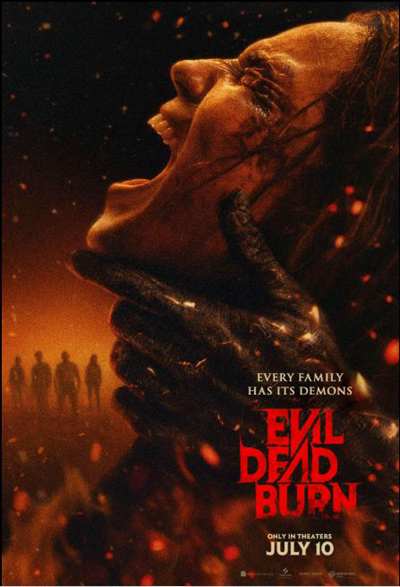
“Evil Dead Burn” starring Souheila Yacoub as I’ve‑Had‑Enough Alice; Hunter Doohan as weakling and coward Joseph; Luciane Buchanan as Up‑Yours Thya; Erroll Shand as bitter, mean, angry, and resentful Edgar; Tandi Wright as Gotta‑Keep‑Everything‑Together Susan; Maude Davey as funny, Alzheimer’s-addled grandma Polly; and others. Directed by Sébastien Vanicek. Score Composer Double Danger (Xavier Caux and Douglas Cavanna). Script Writers Florent Bernard, Sam Raimi, and Sébastien Vanicek. One hour, 50 minutes. Rated R. Theatrical release.
Plot summary: What happens when members of a dysfunctional family get possessed, one by one, by demons trying to keep themselves from getting kicked back to Hell? The family’s dysfunctions get amplified to 11 as they corral, at times, the demons to settle long festering, or newly minted, grudges to even the score.
Spoilers: Ah, yeah.
Mladen’s take
The Horror is all around me in real life.
The high-end apartment complex going up across from my office that only military personnel will be able to afford because they’re BAH‑ed. I can no longer access my favorite fishing spots on the beach because the Air Force has made them No Trespass land. Northwest Florida has become one giant parking lot, day or night. Oh, poser Florida Gov. De‑Insane‑tis paid tens of millions of dollars to a campaign contributor to buy worthless Norriego Point in Destin. It’ll blow away when the next hurricane hits the area and so will the tax dollars, your tax dollars, that Fahrenheit 451 Ron used to pay off one of his besties for the spit of sand. The Gulf Stream is starting to not stream as much. The Great Pacific Garbage Patch is getting greater by the minute. The Sixth Mass Extinction is well on its way to playing out. The Fabulous Five Fascists – Xi, Putin, Erdogan, Netanyahu, and Trump – still have tens of millions of supplicants enabling their “Animal Farm” ways. The Horror.
So, I groaned when Del invited me to see pretend horror in the form of “Evil Dead Burn.”
What can I say about that except this, thank you, Del, the on‑screen horror was pretty darned good. And less grotesque than what’s actually going on around us.
“Evil Dead Burn” gets a B+ from me and that’s just because of the dropped dagger thing.
Know that “Evil Dead Burn” is only mildly scary. What drives this mature bit of horror filmmaking is a solid script, good acting, and its sincere commitment to old‑style graphic violence. It’s “The Exorcist” melded with “The Omen” (the original films) with tints of “Hellraiser.” Don’t get me wrong. “Evil Dead Burn” is not as good as those classics but, tell you what, it ain’t bad.
The movie cuts to the chase really fast. First couple of minutes set up the story, so, no, you need not watch the preceding five Evil Deads to understand what’s about to happen.
Also, “Evil Dead Burn” does a good job of weaving a plot – family dynamics gone awry – with a lot, and I mean a lot, of top‑notch, true-blue and red and purple and mushy and stringy and oozing and spraying and pulpy body mutilation. Heck, a couple of scenes meandered into disgusting. Wait ’til you see how Thya infects Polly with demon seed. Yuck. Times 1,000. Can’t decide, though, which was more bonkers gross, the Polly‑Thya moment or the Susan‑Edgar make out scene. Wait, I’ve decided. It’s Thya mercilessly infecting the demented grandmother.
More than anything, though, I give “Evil Dead Burn” a nod for recognizing that events happening in the background are critical to good storytelling on the Big Screen. Pay attention toward the middle of the movie to what’s erupting behind and around our lovely and unpossessed Alice as she tries to escape the demons. Loved it. The Alice moment was a beautiful reminder of the best slaughter ever captured on cellulose. The film is “Let the Right One In” (Swedish, 2008). The set is a pool and the bloodletting distant as Oskar, being held under water, is getting bullied.
Visually, “Evil Dead Burn” sets the mood with dreary weather, a dreary landscape, and a dilapidating house. Aurally, the soundtrack does the film a solid by propelling the story without overwhelming it as happened, for example, with 2025’s “Tron: Ares.”
“Evil Dead Burn” is worth seeing in a theater. Drop the change to help make it a success. I’d like to see what comes out of the two teasers that come at the end of the movie.
Del’s take
Is an Evil Dead movie really an Evil Dead movie without the presence of Bruce Campbell? Take comfort, Deadheads. Campbell is an executive producer of this sixth installment of Sam Raimi’s low-budget horror series that began at a remote cabin in the woods way back in 1981. All the Evil Dead tropes have been lovingly preserved – the goopy, nausea-inducing gore; the cackling, maniacal demons; and the weird, leaf blower-level POV of approaching evil. What “Evil Dead Burn” offers that the first two films didn’t – “Evil Dead” and 1987’s “Evil Dead 2” – is an actual plot, and an interesting plot at that, though not wholly realistic.
The movie begins innocently enough, with a birthday celebration for Joseph Price (Hunter Doohan) at his brother Will’s club (George Pullar). Joseph’s girlfriend Thya (Luciane Buchanan) is present, along with Will’s wife, Alice (Yacoub). Will and Alice argue – it’s suggested a history of domestic violence exists between the two – and Will storms off in a drunken huff. Joseph tries to keep him from driving but Will, the older of the two, asserts himself and leaves, after which he promptly runs over a demon-possessed Jessica (Greta Van Den Brink), who causes Will to crash, and then passes the demon to him as he burns to death in the wreckage of his car.
Later, the family gathers at a crematorium for Will’s service, and in a nice bit of claustrophobic horror Will’s father, Edgar (Erroll Shand) is attacked by a reanimated Will who is pounding on the casket about to be fed to the flames. Edgar now becomes the carrier and proceeds to infect the others as they gather at the old family house, now crumbling into ruin under Joseph’s neglect, for a tense, miserable wake. Will’s mother, Susan (Tandi Wright) and Edgar blame Alice for Will’s death. And they resent that it was Joseph who lived and not Will because Will was making something of himself while Joseph seemed weak and directionless.
As each family member is infected by the demon, all pretenses of civilized behavior go out the window as the possession victims find new and inventive ways to attack, and those defending themselves find new and inventive ways to fend off those attacks. There are knives involved, plus guns, plus shards of glass, plus toilet bowls, plus gasoline-powered edgers, plus chainsaws, plus a collection of pointy-tipped utensils – sharp side up, of course – arranged in a dishwasher basket. The havoc and ruin these instruments produce is displayed as graphically as current camera and computer technology allows. That bucket of popcorn you bought before entering the theater will sit untouched, and if it didn’t, the bucket will serve as a handy barf bag.
For a possible B-level horror movie, the actors in “Evil Dead Burn” do a remarkably good job. Will’s mother Susan is given a brittle grip on sanity by Wright that I found totally relatable, while Shand’s depiction of father Edgar and his seething, demon-exacerbated dementia seemed entirely appropriate to the moment. Van Den Brink is terrifying as Jessica, who kicks off the massacre mayhem by murdering two friends out for an innocent day of fishing and beer-drinking. I wasn’t as impressed with Yacoub’s Alice, who inexplicably stuck around despite having her ass kicked by her husband, and then his parents treating her like a mudroom throw-rug. The one character I actively disliked was Doohan’s Joseph, who was weak, indecisive, and failed spectacular in a moment where he might have redeemed himself.
Another aspect of the movie I found remarkable was the cinematography, which was often spectacular. As Will’s car is rolling down an embankment we’re given a look at the chaos taking place inside the car – debris hovers in midair as if gravity had been suspended. And the fight scene that takes place inside the car was the best I’ve ever seen. At one point a fire extinguisher explodes, filling the car with a cloud of white chemicals that momentarily masks the horror of who is doing what to whom.
What I think most folks won’t appreciate is the jaw-dropping violence and gore, which are on par with that notorious butcher scene from “Bone Tomahawk.” It might be the most gratuitously violent movie I’ve ever seen. “Evil Dead” and “Evil Dead 2” were both violent films, but the violence was leavened by comedy. While “Burn” has its comedic moments, the tone of the violence is deadly serious. I haven’t seen 2013’s “Evil Dead” or the 2023 “Evil Dead Rise” so I can’t compare.
I’m giving “Evil Dead Burn” a B. In ways it’s better than its predecessors, but the blood and guts were too much for me.
Mladen Rudman is a former journalist and technical writer. Del Stone Jr. is a former journalist and writer.
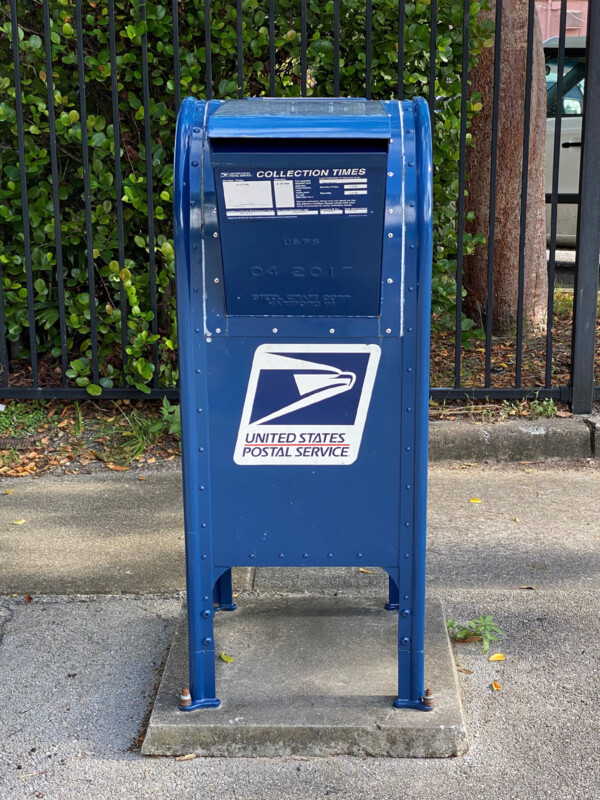
Image courtesy of Phillip Pessar by way of a Creative Commons license. https://www.flickr.com/people/25955895@N03
INTRODUCTION
I hate writing.
I really do.
I think my attitude toward writing is similar to that of my friend, Ray Aldridge, who once said (and I think he was quoting yet another writer), “I enjoy having written.”
That suits me. If I could forgo the teeth clenching, hair pulling, sick-in-the-gut stomach-wrenching AGONY of writing, and skip to the part where I look upon the finished work, knowing it is as good as I could make it, and feel the satisfaction that any new parent feels … well, life would be grand.
But life isn’t grand, at least so far as writing is concerned, and I try to avoid the painful bits as much as I can. Some people like to “talk about writing.” Not me. I hate talking about writing. Some people enjoy belonging to writers’ groups. Not me. Apart from the social aspect I think they’re a waste of time. And some people like writing about writing. Not me.
I take that back – mostly not about me.
This story is one of two exceptions.
The first, titled “Artist,” is also available as a Kindle e-book (minor sales pitch) and you can get yourself a copy here. Please buy it. I’m poor.
This is the second.
It’s a story about writing – more precisely, a story about submitting what you write.
That’s a neglected aspect of the writing conversation. You never hear people talk about the process of submitting their manuscripts for publication – it’s always about the artistic, as if they don’t want to acknowledge that a big part – maybe the biggest part – of writing is the business part. You know, the ugly, brass tacks part with editors and agents and lawyers and contracts, royalties and earn-back expenses and all the other crap that has absolutely nothing to do with lying in the clover and studying the clouds for inspiration but is absolutely essential for anyone who hopes to become a published writer.
When I finally stopped talking about writing and began actually writing and submitting my work for publication, the world was a different place. The earth’s mantle had just cooled and there were dinosaurs that stood between me and the mailbox, ferocious man-eaters who discouraged me from venturing into that bloody neighborhood. When I finally worked up the courage to go forth, a whole new subset of monsters emerged.
Those would be the monsters of impatience, and paranoia.
Back in those days there was no such thing as e-mail. You typed your manuscript on paper, inserted it into a large manila envelope, included a second manila envelope – self-addressed and with the return postage contained in a wax envelope of its own – and dispatched this package into the postal ethers. Hey, that’s what they told us to do.
I soon learned the error of their ways.
For instance, those little wax paper envelopes containing the return postage? They often did not find their way onto my self-addressed envelope. Instead, the envelope would arrive postage due. Ha ha, how could it be that the noble editor had somehow misplaced my valuable return postage, ha ha?
And those manuscripts I had laboriously typed? Sometimes they arrived folded in half. Sometimes stained with spaghetti sauce. Sometimes with sarcastic notations on the manuscript itself.
I soon learned to not submit the actual typed manuscript, but a photocopy. I explained to the editor that this was not a simultaneous submission, that I merely photocopied the original to protect the manuscript from damage incurred in the mail (ahem, yes … in the mail … right).
One part of this process I could not control was the length of time between the moment I mailed the manuscript and the moment the editor’s response appeared in my mailbox. I think every freelance writer is familiar with that part of the writing – the Vigil at the Mailbox.
That might be the most painful obstacle to becoming a freelance writer – waiting for the editor to get back to you. You want your story to sell, and you want to hear the good news as soon as possible. Wouldn’t two weeks be sufficient time to hear a response?
Well, no. Turns out two weeks is the length of time it takes for an editor to receive your submission, instantly reject it, and drop it back in the mail. Two months is the more likely norm. Meanwhile, as this invisible drama is playing out, you, the writer, stand at your mailbox every day, eyeing the bundle of letters and parcels the mailman is carrying to your box. Any large manila envelopes in there?
Yes, the Vigil at the Mailbox.
“Post Office” was inspired by such a vigil. One stretch in the 1980s – I don’t remember the exact dates – most if not all of my manuscripts were suspiciously late getting back to me. I was accustomed to the longer-than-expected waiting period, but this was ridiculous. It seemed like eons since I’d last gotten a yea or nay (almost always nay). What the heck was going on?
The longer this drought continued, the more paranoid I became, until it occurred to me that maybe, just maybe, something that did not meet the eye was going on. Something malevolent. I am, after all, a horror writer. It was not too much of a stretch to suspect an evil entity at the post office was holding my manuscripts hostage.
Batshit crazy, right? Of course it is, in the blessed light of hindsight. But before you go off thinking Uncle Del has wandered from the rose garden at the asylum, let me reiterate – I’m a horror writer, and horror writers experience these kinds of weird departures from rational thinking. That’s how we come up with story ideas. In fact, that’s how I came up with the idea for “Post Office.”
I passed off the story as a lighthearted confection, a joke, something not to be taken with the same weighty gravitas of a real horror story. I think that’s why Kris Rusch and Dean Wesley Smith accepted it for Pulphouse. They seemed to recognize it was written with the tongue firmly implanted within cheek.
I don’t remember what happened to all those stories. Maybe they came back. Maybe I queried the editors, received no response, and withdrew them from consideration.
But I do remember this:
I really did wonder if somebody at the post office was stealing my manuscripts.
Ha ha … you laugh. Try slipping a gift card into a your niece’s next birthday card and drop it in the mail.
See what happens.
—
POST OFFICE
David reached into the metal throat of the mailbox and pulled out a clutch of white envelopes. His face was already pinched into a scowl, and as he scanned the return addresses and dealt envelopes onto the sidewalk, the scowl tightened. When the last had fluttered from his fingers, he uttered a single, derisive snort.
A Visa bill. Two solicitations: one from Greenpeace (printed on the envelope in screaming blue characters was “This is the year of Antarctica!”) and the other an invitation to buy National Wildlife Federation Christmas cards … in August. An inquiry from J.C. Penney asking if he were satisfied with his recent purchase of an MCS stereo receiver. A letter from a cousin who would probably be wanting money.
No letters from editors today. And certainly no checks. No large manila envelopes, his address typed neatly on an adhesive label and taped to the envelope for good measure.
Seven months now, and no manuscripts. Not a single one had come back in the mail.
—
David studied his log sheets, as if the titles listed there would affirm he had ever written any stories.
The one about the two buddies arguing over the existence of monsters – that one had disappeared a couple of months ago. The lesbian magazine never answered his query about the love-murder story. Likewise with the cube-that-ate-personalities piece he’d submitted to that men’s magazine.
He flipped through the log sheets.
The monster-in-the-closet story was missing.
The walk-in-the-dark story was missing.
The insect-revolt story was missing.
The end-of-the-world story was missing.
The killer playground story. The ghost story. The zombies. Amok computers.
All of them.
Missing.
—
David was a horror writer. He wrote about monsters, both real and imagined. He wrote about things that go bump in the night.
But mostly he wrote about evil. Not evil with a capital E, the evil that is pronounced with the inflection on the second syllable, as it is pronounced in those Vincent Price movies. Not an ecclesiastical evil.
David had important theories about evil, theories he could express and test only within the confines of fiction. He had decided long ago that evil was not conscious or calculated.
Evil was not the rotted face of The Beast.
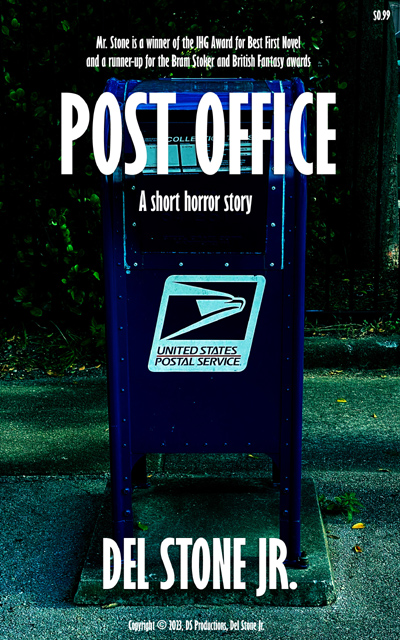
To the contrary, evil was simply a random breakdown in order. Evil chose its victims for no reason, inflicted undeserved torment on them, then inscrutably departed. Evil was a sort of anti-entropy.
To test his theories, he would take protagonists, everyday working Joes, and deposit them in execrable circumstances – for no reason at all – then have them try to wriggle their way out within the constraints of the story’s logic. Many – most – did not succeed, and that was fine with David. It validated his theories. If evil were random then there was no such thing as justice. And in a literary context, if justice were the hero riding off into the sunset, then David would have his heroes ride off into the sunset … in a hearse.
David had 15 horror stories “making the rounds” at publications as diverse as Playboy and one of those self-important literary magazines at the university upstate. Fifteen stories was a good body of work for a new writer hungry for his first sale, he thought. Fifteen stories. The time he had first picked up a pen, he hadn’t dreamed he would write 15 stories.
Fifteen stories about evil. And now they were gone.
—
If he could have believed each story was lying on an editor’s desk awaiting final approval for publication, he would have been patient … patient and goddamned jumped-out-of-his-socks ecstatic. Wasn’t it the editor of that back-to-nature magazine in California who told him having a story accepted was only a matter of it crossing the editor’s desk on the right day? Sure. She’d said that. She’d written it on a rejection slip.
But all 15 stories in seven months? Christ. Some of those losers had been “making the rounds” for two years. Editors didn’t like unhappy endings. Even if they validate important theories about evil. The possibility that all 15 stories had been accepted simultaneously was as improbable as all 15 being simultaneously swallowed up by the behemoth that is the United States Postal Service.
No. They were not lying on any editor’s desk.
—
Somebody was stealing his manuscripts.
Somebody who worked at the post office.
He was certain of it, as certain as he had ever been of anything. He deposited his manila envelopes in the same “out of town” slot used by other post office patrons, and he collected the mail as soon as the delivery man dropped it off. He wasn’t misboxing the manuscripts and they weren’t being filched from his mailbox. He had gone over the problem like an old woman worrying at a knot in her apron string, and the only unknown quantity that consistently emerged from his deliberations was the post office.
—
But why?
Why would somebody at the post office steal his manuscripts? Mail tampering was a federal crime; what kind of person would jeopardize an enviably secure civil service position to torment a two-bit horror writer, even if the two-bit horror writer had important theories about evil?
To David, the question began to assume a familiar and unsettling quality.
—
The problem, as David saw it, could be approached two ways.
There was the direct method. Make an appointment with the postmaster, explain to him what was happening and ask for his help. This had its advantages and disadvantages, the disadvantages seeming to outweigh the benefits. The postmaster would not take kindly to the suggestion that mail was being stolen from his office. And if, indeed, the manuscripts had simply been lost in the mail, David would not be able to show his face in the post office without feeling like a fool. That would be a disaster. What writer could practice his craft without using the post office?
There was the indirect approach. A threat, directed to the culprit himself. Through the mail. Very discreet, and no risk of exposure. And if it didn’t produce results, he still could meet with the postmaster, though God forbid it should come to that.
He feed a sheet of paper into his typewriter and began to type.
—
DEAR SIR OR MA’AM:
HAVE YOU ENJOYED YOURSELF? I IMAGINE YOU HAVE. WHAT BETTER WAY TO TORMENT A WRITER THAN TO STEAL HIS WORK. YES, I SUPPOSE YOU HAVE HAD A GOOD LAUGH OVER THIS. IT HAS TAKEN ME SEVEN MONTHS, BUT I AM FINALLY ONTO YOU. AND I INTEND TO DO SOMETHING ABOUT IT.
IF THIS NONSENSE DOESN’T STOP, I WILL CONTACT YOUR SUPERIORS. I WILL PRESS CHARGES. I WILL DO EVERYTHING IN MY ABILITY TO SEE THAT YOU DO NOT HAVE ANOTHER OPPORTUNITY TO HARASS ME.
I WILL GIVE YOU THIS CHANCE TO SQUARE THINGS WITH ME. DO NOT EVEN THINK ABOUT TAKING ANOTHER MANUSCRIPT, AND RETURN THE ONES YOU HAVE STOLEN. DO THIS AND WE’LL CALL IT EVEN. WE’LL LEAVE IT AT THAT.
SINCERELY,
DAVE
—
He hoped the thief was actually reading his manuscripts. It didn’t seem likely somebody would go to the trouble of stealing an envelope without at least taking a peek at what was inside.
And if the thief did read his note: Would he respond? David thought not. It was a bluff, plain and simple. What could David really do? Both of them knew the answer to that.
But threats seemed so much more forceful from the print aspect. Perhaps it would frighten the thief into returning his work. Perhaps he would leave David alone. And David would not have to make a fool of himself at the post office.
—
David paperclipped the note to a stack of blank pages to give it the feel of a “manuscript.” He inserted these into a manilla envelope. He included a rigid sheet of carboard, as he always did, so the “manuscript” would not be mutilated as it made its way through the mail. He even included a self-addressed, stamped envelope for the “manuscript’s” return.
He addressed it to himself.
There.
That afternoon, he drove to the post office. As he entered the foyer, he studied the faces of the postal employees ensconced behind their work stations. He watched to see if they watched him as he deposited the envelope in the “out-of-town” slot.
None did. But he knew that did not mean they hadn’t seen him.
—
He went over it again.
If the envelope did not return, somebody had stolen it. That was the agreed-upon conclusion.
If the envelope returned, either the thief had taken the day off, or David had beaten fantastic odds – either to his detriment or benefit.
He almost hoped it would not return.
—
Two days after mailing the “manuscript,” David opened his box to find a large manila envelope. His heart literally skipped a beat. It was addressed to him, the way he had typed it. The cancellation mark bore yesterday’s date. Everything was in order.
David stared at it, his emotions frozen somewhere between embarrassment and relief. The post office, it seemed, was blameless, which left no easy explanation for the disappearance of his manuscripts. Either they were lying in dead-letter files at 15 post offices scattered across the United States, or 15 editors were still weighing their decisions or simply hadn’t gotten around to breaking the good news to him. His breath hitched at that prospect, and he quickly corrected himself. You know that isn’t the answer. He would have heard something by now. A letter. A phone call … something. It didn’t take seven months for an editor to decide if a story was worth publishing.
Then what?
He considered it all that afternoon and into the night, and the more he denied the possibility that all 15 stories had sold, the more quickly his imagination seized on the idea. Could lightning strike 15 times? He thought it could be done, though it wasn’t likely. Poker players sometimes drew to a royal flush more than once in a night. Bowlers sometimes rolled 300 games twice in a row. Couldn’t a writer with important theories about evil enjoy a once-in-a-lifetime hammerstroke of good fortune? As the hours crawled by, that possibility evolved into a probability, and David began to feel better about himself.
Fifteen sales in a year. Christ! If it had happened – God, he hoped it had happened – he would burst upon the fiction field like no beginning writer before him. The synergy of those sales would lead to others, a novel, movie screenplays, a career as a full-time editor. …
Success. He spoke the word, tasting the syllables, and thought nothing had ever felt so good in his mouth in all his life.
The manila envelope was lying on the floor next to the file cabinet where he kept his log sheets. His gaze fell on it, and a tremor of guilt ran through him. Guilt, and embarrassment. The envelope seemed to eclipse everything else in the room, testimony to a faint heart, a small, suspicious mind, somebody who thought small and worked small and was small in shameful ways. Like believing their manuscripts had been stolen … and wrote threatening letters. He frowned and picked it up, not believing, for an instant, that he had done this shameful thing. He opened it. He would destroy the note. He would tear it into confetti, maybe burn the pieces when he was done, and nobody would ever know how bush league he had sunk.
He yanked out the contents, and in that moment, time stopped. It just stopped. His heart stopped. The tides of his blood ebbed, all at once. His surroundings, the room, the house, the world, ceased to exist. Everything but the note.
Scribbled beneath his typewritten text was: YOU WANT YOUR STORIES? COME DOWN TO THE POST OFFICE AND GET THEM.
He dropped the paper. It see-sawed through the air and tapped against the carpet. A glacier of breath was locked at the back of his throat, but he did not think to let it out.
He thought, How did he … and his mind frantically replayed the moment he had first opened the envelope. Had he noticed that it was already open? No. The flap had been glued to the envelope. The way it should have been. The way he’d done it.
It was impossible.
He looked up and in his mind’s eye he saw the image of a huge “out-of-town” slot floating dreamily. It seemed to be smiling; it seemed to be leering at him.
It seemed to whisper his name.
—
At 9:45 the morning after, David got into his car and drove to the post office. He took with the manila envelope. The note was still inside.
Impossible or not, he intended to have his questions answered.
—
A neat stack of manila envelopes was deposited in David’s mailbox the next day. If any had bothered to count them, they would have gotten to 15 before stopping.
But nobody counted them. Not the mailman, because the envelopes were heavy and he only wanted to be rid of the damn things.
And not David. Because for all his important theories about evil, he had not come back from the post office.
About the author:
Del Stone Jr. is a professional fiction writer. He is known primarily for his work in the contemporary dark fiction field, but has also published science fiction and contemporary fantasy. Stone’s stories, poetry and scripts have appeared in publications such as Amazing Stories, Eldritch Tales, and Bantam-Spectra’s Full Spectrum. His short fiction has been published in The Year’s Best Horror Stories XXII; Alfred Hitchcock’s Mystery Magazine; the Pocket Books anthology More Phobias; the Barnes & Noble anthologies 100 Wicked Little Witch Stories, Horrors! 365 Scary Stories, and 100 Astounding Little Alien Stories; the HWA anthology Psychos; and other short fiction venues, like Blood Muse, Live Without a Net, Zombiesque and Sex Macabre. Stone’s comic book debut was in the Clive Barker series of books, Hellraiser, published by Marvel/Epic and reprinted in The Best of Hellraiser anthology. He has also published stories in Penthouse Comix, and worked with artist Dave Dorman on many projects, including the illustrated novella “Roadkill,” a short story for the Andrew Vachss anthology Underground from Dark Horse, an ashcan titled “December” for Hero Illustrated, and several of Dorman’s Wasted Lands novellas and comics, such as Rail from Image and “The Uninvited.” Stone’s novel, Dead Heat, won the 1996 International Horror Guild’s award for best first novel and was a runner-up for the Bram Stoker Award. Stone has also been a finalist for the IHG award for short fiction, the British Fantasy Award for best novella, and a semifinalist for the Nebula and Writers of the Future awards. His stories have appeared in anthologies that have won the Bram Stoker Award and the World Fantasy Award. Two of his works were optioned for film, the novella “Black Tide” and short story “Crisis Line.”
Stone recently retired after a 41-year career in journalism. He won numerous awards for his work, and in 1986 was named Florida’s best columnist in his circulation division by the Florida Society of Newspaper Editors. In 2001 he received an honorable mention from the National Lesbian and Gay Journalists Association for his essay “When Freedom of Speech Ends” and in 2003 he was voted Best of the Best in the category of columnists by Emerald Coast Magazine. He participated in book signings and awareness campaigns, and was a guest on local television and radio programs.
As an addendum, Stone is single, kills tomatoes and morning glories with ruthless efficiency, once tied the stem of a cocktail cherry in a knot with his tongue, and carries a permanent scar on his chest after having been shot with a paintball gun. He’s in his 60s as of this writing but doesn’t look a day over 94.
Contact Del at [email protected]. He is also on Facebook, twitter, Pinterest, tumblr, TikTok, and Instagram. Visit his website at delstonejr.com .

Photo courtesy of Nels Olsen by way of a Creative Commons license. https://www.flickr.com/people/7776581@N04
INTRODUCTION
The Rocket Slide exists!
It’s a real thing and I stole it directly from a creepy, hidden-away playground in my old neighborhood. Whether it can be used by a vengeful ex-husband to kidnap his children … that’s another matter.
But yes, I had lived in the neighborhood for years without knowing that just down the street, behind a grassy verge that separated two of the more splendid homes from the others, lay a secret park with a secret playground filled with death-dealing rides that would never pass muster on a modern playground.
It was as if the rides had been designed by somebody who wanted children to be hurt. It had all the standard 1960s features – swings, a merry-go-round (which, when spun sufficiently fast, could fling a kid off into another dimension), and a couple of non-standard features.
For instance, there was an odd slide that consisted of a gigantic wedge-shaped piece of metal. It was mounted at a steep angle and to make correct use of it you had to start at the tapered in and, using the edge as a handgrip, drag yourself up to the top, then let go.
During the summer its metal hide would cook the flesh off your bones, and to successfully slide one had to reduce its adhesion – we used very fine sand flung up to the top of the slide. It was one broken arm or leg away from being a helluva lot of fun.
And then there was the Rocket Slide.
I remember it as an enclosed, twisty tunnel of a slide, but it may very well have been a straight slide. The words “Rocket Slide” were emblazoned on the side of the tube, written in flaming italic characters, as if the ride were not stationary but shooting through the atmosphere at the speed of sound. Children would climb a ladder to the top, sit down, and slide through the tunnel to emerge from the bottom, like a screaming, laughing chunk of Pez freshly clicked from the dispenser.
As I watched kids playing on the slide I wondered: What would happen if one of them went into the slide but didn’t come out? And what if an anxious mom looked up the metal throat of the slide and saw nothing but clear air. Just exactly how – and why – would something like that come to pass?
You ever wonder where writers get their ideas? THAT is where writers get their ideas – from everyday life, viewed from a slightly askew angle.
Stephen King made laundry machines evil.
Dennis Etchison made ambulance drivers evil.
And now I, Del Stone Jr., am making playground equipment evil.
I remember working on this story over and over, trying to give it significance larger than the basic idea of a playground slide that ate little kids. The anxious mother and vengeful father came along after I had finished the first version and sent it around to a few places. It finally found a home with Jeffery Thomas’ The End.
Since writing “Rocket Slide” I have never looked at playground equipment the same way.
I mean, seriously. Who knows what’s really inside the Rocket Slide? When was the last time you were inside the Rocket Slide?
Do you have a spouse working on a top-secret government who you recently split up with?
Do yourself a favor.
Keep your kids out of the Rocket Slide.
—
ROCKET SLIDE
The playground did not move, the way a living thing sometimes will not move.
Children dashed along its flanks, butterfly motes of motion flitting across its grassy expanse, from jungles of monkey bars and nodding teeter-totters to the giddy merry-go-round and best of all best, rising above the rain-washed landscape like a metal tower, the Rocket Slide. Children laughed and cried out, whirling and swinging in the delight that is exclusive to children, while mothers filled benches and watched, satisfied in their own ways.
All but one.
Jenny sat, tense, at the edge of the wooden seat, its whitewashed boards resembling teeth that might snap at her if she settled more comfortably into its jaw, and when a certain little girl wandered too close to the swings, Jenny would stand and call, “Amanda! Not behind the swings!” Or if the girl dared to explore the jungle gym and climbed too high, Jenny would shout, “Come down honey! You might fall!”
And for perhaps the third time that afternoon, after they had come out from beneath the bright gazebo when the rain had finished, the mother’s friend reached to her, touched her lightly on the shoulder, as if flesh would convey what words could not, and whispered, “Jen, let her play.” A pause. “You worry too much.”
Jenny thought, No … that’s not true. If you had a child … and an ex-husband … you’d understand. She turned to her friend and said, “I don’t know, Angie. There’s – there’s something – I don’t know. Something different. …” And then she sat, and her unease settled around her like a heavy shroud, locking in a chill.
Angela chuckled. Her voice was light as mist. Her arm slid around Jenny’s shoulder.
“Oh come on, Jen. It’s the playground. You’ve been here a hundred times. What could possibly be different?”
Jenny closed her eyes, opened them. “I don’t know. I’m just worried, I guess.”
What she could not describe was the feeling of being surrounded by hidden, prying eyes, everywhere, eyes that watched her thoughts, the way she perched at the edge of the bench, the nervous intake of breath and her darting gaze, flicking birdlike as she followed her daughter’s movement from one troublesome park peril to the next. She felt a wrongness here. Call it a mother’s intuition. She did not like this park anymore. She’d come her against her better judgment, giving into Angela’s unshakeable insistence that they spend the afternoon here so that Amanda might play and Angela could share the minutia she’d accumulated since they’d last spent an afternoon together. But Jenny didn’t like the park anymore. She didn’t like the swings – swings from which a child might be tossed to the ground – nor did she trust the creaking teeter-totters or the jungle gym or the narcotic whirl of the merry-go-round. Least of all did she trust the Rocket Slide, a tall metal tube wrapped around the steep incline of a slide. They cylinder was painted metallic red and was adorned with rocket fins; the characters R-O-C-K-E-T S-L-I-D-E were exhaust-fire yellow along its sides, around which stars and crescent moons and ringed planets capered. It was too high, Jenny decided, remembering how her heart would crawl into her throat when Amanda used to play on it. A child might take a spill from there and hurt herself. A young girl of five, for instance, who was precious beyond price to a mother who might be watching from too far away.
A young girl she’d fought to keep.
Rocket Slide. Jenny spoke the words to herself. Her lip curled imperceptibly at the dank taste of the syllables.
She watched a boy clamber up the ladder, apelike, to the waiting mouth of the slide, fit himself against the shiny metal tongue and push into its throat, swallowed by moons and stars and yellow rocket flare. She looked away before he could emerge.
“It’s Roger, I’ll bet. You and Roger used to come here every Saturday afternoon – at least until he started the project. A person could set his watch by you and Roger going to the playground. You’re afraid he might show up, aren’t you?” Angela was saying. Jenny didn’t turn, didn’t flinch, and wondered if the lack of reaction was incriminating. Finally, she murmured a simple, “No.” Not Roger. Please, not Roger. Not after what the lawyer told her the last time Roger came, attorneys in tow, ready to claim what he still insisted belonged to him.
No. Well … maybe. A little.
She shook her head and gazed across the park to make sure Amanda was nowhere near the Rocket Slide. She felt watched. An older girl, Amanda’s size, was making her way up the slide, moving with a quickness that suggested expertise in climbing ladders and touching feet-to-clouds from swings and all manner of playground skills.
“So you had the cops on him because he was harassing you. I think any woman in your position would have done the same thing. If it hadn’t been for that Pentagon bigshot running interference, Roger might be in jail now.”
“Yeah,” Jenny mused. Her memories of that sorry episode were bundled into a tidy package she found herself mentally tripping over a hundred times a day.
Roger Clemmons, Phd. The physicist – ”quantum theory of gravity physicist,” he’d correct her, as if he were amplifying a misdelivered introduction. She’d met him at the Caltech admission office. She’d worked there as a clerk, entering schedules and adjustments to the office’s mainframe. He’d dropped in one afternoon to clear up an error in his class time schedule and it had been immediate infatuation … at least on his part, she thought at the time. She considered him old and a bit eccentric, but after three months of effusive, often embarrassing pursuit, she’d given in. They had nothing in common and he’d seemed to like that. But after seven years of marriage, the novelty had worn off. Only Amanda still seemed able to captivate him.
A year after they were married the university had granted his sabbatical. Roger had wheedled and connived – persistence was his other distinctive quality, aside from a quickness to anger – and had gotten himself a grubstake from the dwindling pool of SDI money to pursue an applied research project he’d been kicking around for years, a mysterious project that he would reveal to nobody except, presumably, the agencies that were underwriting the costs.
She knew its name.
Bootleg.
And she knew a little bit more.
Roger would’ve been furious. She never told him about the envelope, the one she found in his coat pocket as she was checking it before sending it off to the cleaners. The envelope was scribbled with hieroglyphics of formulae and notations – maybe he’d been working up a presentation or a report, or maybe he’d had a brainstorm while eating lunch at that greasy spoon he and his grad students inhabited almost every afternoon.
The notes were cryptic: “Effect is localized. Can be g-rated from our end to coordin (garbled) silo, war room. 1 man job. Stable apertures; loss rates acceptable.”
She’d read the notes and then returned the envelope to his pocket, and that night, after Roger came home, she mentioned she was taking his suit to the cleaners.
The next morning, the envelope was gone.
Bootleg.
And when Bootleg was going badly, if something hadn’t worked – she always knew when something hadn’t worked – Roger would rage, his anger inevitably focusing on her attempts to console him, then on her. She could not reveal what she knew about Bootleg – a security breach, as he’d warned her the times she’d asked about his work, could cost him the project and maybe land him in the federal stockade to boot. So she could offer him no encouragement, no solace, nothing beyond the meaningless assurances that he’d eventually discover a way around the problem, whatever it was. But that seemed only to aggravate him, as if he knew he’d never solve the riddle of Bootleg and resented her blind confidence he would.
Finally, she couldn’t stand it anymore. His stormy outbursts, his anger and browbeating. She filed for divorce. The project was going nowhere. Funding was dying on the vine. Roger was consumed by hate – for her, for Bootleg, for just everything.
“Jenny?” Angela asked.
Jenny shook her head. The girl mounted the Rocket Slide, and a silent claxon within Jenny began to gong, No! Don’t do that! Get down from there before – before –
The girl swooshed and disappeared.
“ – devil’s advocate, you know. You wouldn’t think that, would you?” Angela was saying, cautiously. She hesitated, the lines around her mouth tight with an effected frown, and stared deeply into Jenny’s eyes. “Earth to Jenny. Are you listening?”
Jenny blinked. She turned to Angela, blushing, and laughed nervously.
“No – I mean yes. Actually … no. I’m sorry.” She cleared her throat. “I guess I’m kind of out of it today. Something about the playground, something I can’t explain. It gives me the creeps, if you want to know the truth.” She held up an arm, turned it to the bright sun. “Look at me,” and she laughed again, a sound without humor. “I’ve got goosebumps.”
Angela sighed. “It’s just a park, Jen. What could be wrong with a park? It’s not as if there were muggers and perverts hiding in the bushes.”
Jenny smiled at the notion. “It’s nothing like that. I really couldn’t explain it, but I’ve got this feeling, you know, like something isn’t right.”
“I’d call it an overactive imagination.”
Jenny looked back at the slide. Another boy was slowly climbing the ladder. The slide loomed over the park, primeval in its hugeness, a symbol for some dimly remembered horror, making even the trees seem incidental. Light glittered forbiddingly from the firebolt lettering along its neck.
“I know one thing. I do not like that slide. I think it’s too tall; a child could break his neck if he fell off it.”
The boy hoisted himself onto the smooth metal.
Angela sniffed. “Oh come on, Jen. Amanda used to play on it all the time.”
“She could fall climbing – ”
Angela shook her head. “Roger used to help her up the slide. You know, you could do the same thing.”
“I don’t like it,” Jenny insisted. “I’ve been sitting here the past five minutes watching children throw themselves into that thing – like sacrifices to some – some god …” The idea had her trembling, as if her joints had quietly come unpinned. “I don’t like the damned thing – there’s something weird about it.”
“Oh Jenny!” Angela snorted. “You’re getting twitchy in your old age.”
“I mean it.”
The boy hesitated, acted as if he’d changed his mind. The slide sucked him down. Jenny watched, waiting, a sense of foreboding winding itself tightly along the cords in her neck. She closed her eyes and rubbed them, her thoughts again uncovering the stone of memory that was Roger. She shuddered as a familiar, sick fear slithered over her, shadowy and impossible to manage.
Roger. She hadn’t heard from him in a year. Then, something had happened. A breakthrough. Something. Not a word about it in the press, of course, but she knew something had happened. Roger was back, swaggering into her living room like an Errol Flynn gone to rot, all smugness and confidence, as if the secret half of his life had finally resolved itself and he could now devote all his energies to compensating her for the distraction of a divorce.
He wouldn’t hurt her, at least not physically. He was a Phd. There were ways to hurt a person – clever ways – that might suit a quantum theorist’s penchant for elegance.
He wanted Amanda.
After countless confrontations – one that required the intervention of police – they’d gone to court. And when the judge said no, she’d seen that smear of a smirk in Roger’s eyes, that malicious squint that said no damned piece of paper could change his mind, and maybe Jenny had better lock the doors at night and keep a sharp eye, oh, a very sharp eye on Amanda, because sometimes fathers took little girls away from their mothers, no matter what the judge said. Sometimes they did things like that.
She breathed deeply and tried to muster a facade of composure. The bastard. He’d better not try it.
She gazed back out over the park, imagined little eyes scuttling to hide, and whispered, “Maybe it is Roger. Maybe.”
Angela reached around her, pulled her close. She felt hot. “You see, that’s what’s got you so worked up, Jen. Roger.”
She turned Jenny’s face to hers. “And you’ve got to stop worrying about the little shit. There’s nothing he can do; nothing at all. Never again. That was all decided in court, remember? Roger is history. He’s under a permanent restraining order, OK? So forget about him.” She cocked her head, the set of her mouth softening into a smile.
Jenny managed a tepid smile herself and nodded – an almost imperceptible movement of her head – then with greater conviction. The little shit. Her fear began to evaporate, the space it had occupied filling with gratitude. Just a little shit.
She said, “You know what I’d like?”
“What?”
Jenny paused. “I think I’d like a cup of coffee. Or a drink.”
They burst into nervous titters and sank into the maw of the bench, at once comfortable again, the tension gone. Angela whewed and answered, “I think both can be arranged. You know, you really had me going there. All that talk about slide gods. I almost expected Rod Serling to jump out of the bushes at me.”
Jenny smiled sheepishly, started to thank her, stopped, the thought derailed and clicking – my God – the words were a glacier in her throat. A small figure was at the top of the Rocket Slide, its face slack with innocent wonder. My God? A Novocaine deadness settled into the square of Jenny’s back, then faded as she was overcome with dread.
Amanda –
A hammerstroke of horror, cold as lightning is hot, surged in stinging fingers along her nerves and set them to thrumming. At first, she could not move; then she was off the bench, running a cry strangled at the back of her throat. She ran automatically, her eyes locked to the figure atop the slide. And when the girl started to sit down, as if she too would give herself to that gleaming metal throat, Jenny did scream.
Amanda looked up, saw her mother and spoke words that were incomprehensible with the distance. Her face was a question mark, a Did-I-do-something-wrong? expression. Then she stared back down into the Rocket Slide.
Jenny’s heart lurched; she drew in a whistling breath and shouted, “NO! Amanda – NO! Get down from there now!”
She hurtled around the slide, the flaming letters R-O-C-K-E-T S-L arching above her, meteors snaking down from the metal ethers. She grabbed a handrail and put her foot on the first rung and the slide seemed to throb to life, as if secret engines had been fired and would launch it into outer space. Amanda looked down at her mother, looked back into the slide … her expression slowly melting into the immaculate terror that only a child can know.
She whispered huskily, “Mommee!”
Jenny scrambled for handholds, footholds, her foot slipping from the rungs and her body flattening against the unyielding steel. An agony of pain flared from her shin. She saw that Amanda had a death grip on the guardrails. Her face was pallid, as if the monsters in closets and beneath beds were suddenly alive and lurking within the slide. Her feet stretched toward its maw as if something were trying to pull her inside. Her eyes were locked in a fierce squint.
Jenny hauled herself up, up the ladder, shivering involuntarily as she climbed. For a splintered second she thought she heard voices. The metal began to tingle and burn – frozen the way it might freeze in the stratosphere.
“MOMMEE!”
The girl’s hand slipped from the guardrail and she flipped onto her side –
“MOMMEE! I CAN’T HOLD ONE!”
And the slide pulled at her, gulping swallows of gravity, friction and inertia unbound and gone wild. The girl tried to grab the rail with her free hand and a dark cloud of panic swelled within Jenny, obliterating all thought but ascent, everything with ascent as its motive –
“HELP ME – ”
– three rungs, she was three rungs away –
“MOMMEE! MOMMEEEEE!”
– two –
“HOLD ON, AMANDA! DON’T LET GO – ”
– it pulled –
– one rung –
– the girl’s fingers slipped, one, two, three four, from the rail –
– Jenny wailed and snatched –
And grabbed a small fist. She fought to pull her daughter to her against the capering insanity of the Rocket Slide, called strength from reservoirs she hadn’t known existed, pulling her daughter out of the tunnel. She wrapped an arm around the biting, sub-zero metal and grabbed the girl by her shoulder and pulled until the girl slammed against her and the Rocket Slide heaved like a thing denied breath. Only then did she dare to look, to see into its throat –
– and stared into the vast, star-painted belly of the universe. A spiral galaxy unwound, frozen alive in the slow progression of time; wizards’ eyes of stars dusted the tunnel, shining hard and unblinking as they might from space. A ringed planet, its equator tilted insanely against the plane, loomed to one side, and as Jenny watched, a small dot of light, at first inconspicuous among the other stars, began to dilate. White light burned through, in fierce contrast to the surrounding void. The dot enlarged until it eclipsed nearly everything else in the tunnel, and a face appeared within it, blurred and amorphous. Jenny thought she could see hands reaching from the light, and she heard words, distorted at first, but gaining in clarity, as the circle of light expanded.
She thought she heard, “Come to Daddy.” She thought she recognized the voice.
Her thoughts seized on a single word: Bootleg. And everything inside her stopped.
Then Angela’s had her by the shoulders and arms, pulling her back to the top of the ladder. She gave herself to Angela, limp, and slipped fitfully beneath the surface of consciousness.
She thought she heard Amanda sobbing.
—
At dusk: An ethereal light glittered from the Rocket Slide. A lone child sat at the top of the chute, staring into the light. “No,” she shook her head. “My name’s Susie. Not ‘Manda.” And no, she didn’t know where Amanda lived because she didn’t know any Amanda, and she wasn’t lying and No! she wouldn’t come closer so he could see her.
The girl clambered down the ladder. She ran home to tell her mother about the bad man. Somebody’s father.
In the slide.
And the playground, the Rocket Slide: They did not move.