An excerpt from my novel ‘Black Tide’
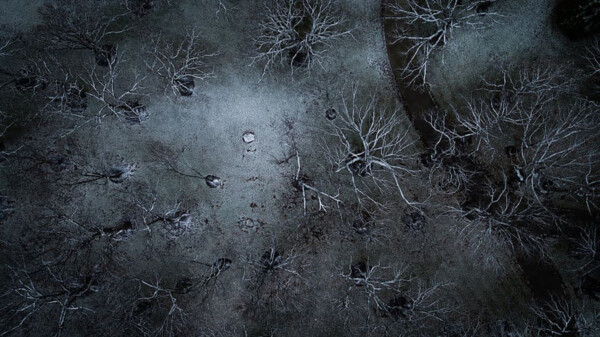
Image courtesy of Wallpaper Flare.
This is a scene from my novel “Black Tide,” which I hope to begin shopping to an agent later this year or next.
In this scene, Fred, Heather and Scotty are trapped on a spoil island in Santa Rosa Sound after a killer phytoplankton moved through the area the day before, releasing a toxic cloud that transformed animals and people into maniacal killers that are extremely light-sensitive – they burst into flames when their skin is touched by sunlight or even the light of a flashlight.
A man by the name of DeVries tried to rescue them the night before but was attacked by one of these changed people and is now undergoing the change himself. They have placed him in one of their tents to protect him from the light.
—
We slept until late in the morning, almost 11. We’d been awake all night, none of us daring to nod off, none of us able to relax to the point that sleep could overtake us. The island was surrounded by stealthy noises – surreptitious splashing, the plod of wet feet on sand, the occasional animal cry of pain. And from the mainland there were strange goings-on too, occasional flickers of light, weird hooting sounds, and other occurrences that set our nerves on edge. Once I thought I saw movement over there, something big. But my mind rejected it because it was impossible. Nothing that big could move. Scotty had kept a frantic vigil with the flashlight until about 5:30 or so, when the sun had warmed the eastern horizon with a suffocating pinkish hue. The sounds of disturbance had faded, then, as the things moved to deeper water. Scotty and Heather took the opportunity to drag DeVries, who had begun to moan and squirm, into one of the tents. If the flashlight was capable of causing his flesh to combust, the full light of the sun would produce a more … energetic reaction. The tent would afford at least some protection.
All of us, then, had collapsed into what for me was fugue-like sleep.
I awakened to find Scotty and Heather standing on the beach, taking in a very different and unfriendly world in the light of day.
Across the water, fires still burned out of control. From the bridge to the east to as far as I could see west, individual plumes of oily black smoke merged into a single pall that drifted northward. I uttered a silent prayer of thanks for that – all we needed was a stinking smoke cloud to add another layer of misery to our already miserable situation. In some areas, forestland had been ignited and was burning in a solid wall of flames producing sheets of whitish smoke. I couldn’t imagine what the damage from this catastrophe would be.
Closer, Santa Rosa Sound presented an equally unsettling sight. The surface was layered with dead fish, dead birds, dead animals … and in some cases the bodies of people floating amidst the carnage. Why these animals and people had not been transformed into the things that had attacked us at night, I couldn’t be sure. Their exposure to the toxin had been sufficient to cause death, but they had not undergone the strange metamorphosis that had changed people into nocturnal lurkers. In a former life I would have been intrigued by the challenge of researching what had happened here. But given our circumstances, all I wanted was to get off this island.
DeVries had said the authorities were sending people to find out what had taken place and look for survivors. If we could signal them – enough debris had washed ashore that we could lay out an SOS on the sand using boards and other flotsam. Or we could start a fire – not that one more fire would work as a signal. To be honest, I had no other ideas.
As we stood there, pondering the awfulness of the world around us, DeVries’ voice carried through the nylon weave of the tent at a near-shriek: ‘I’m thirsty!’
Heather sighed and turned to go up the beach. “I don’t know why he keeps saying that,” she mumbled, more to herself than anyone else. “I give him water but he won’t drink it.”
“That’s ’cause it’s not blood,” Scotty murmured and cast a furtive glance my way. He had turned his hat around so that the bib faced forward, the MAGA staring me directly in my face. Ironic, I thought. America, or at least this cranny of America, didn’t seem so great at the moment. Looking at no one, he whispered it again, “Blood,” and I didn’t respond, partly because I knew if I did it would only encourage him to further provocations, and partly because there was the chance he was right … in a way. If it were not fresh water the creatures craved, then some other component of human metabolism must be involved. At the moment I was too tired and frightened to think about it.
Heather had crawled halfway into the tent to check on DeVries when she called, “Guys. I think you’d better come look at this.” I didn’t want to look at anything, to be honest, and I could tell Scotty felt the same way because for a moment, neither one of us moved. Then Heather shouted again, “Guys!” and we both rotated and began tramping through the sand toward the pair of tents. Heather’s ass jutted from the flap and I tried not to appear too interested. I didn’t glance Scotty’s way to see if he were appraising my level of interest. Instead, I let my gaze drop to the sand.
Heather backed out of the tent, her face pinched into an expression of worry. She looked at me and said, “Fred, something’s … happening.”
I dropped to my knees and crawled forward, into the tent, which reeked of unnameable odors, some human and others unidentifiable. It was stifling inside, yet DeVries’ body vibrated as if a high-voltage current were arcing through his nerves. I recalled old black-and-white film reels on YouTube about the Pacific campaign during World War II, and the men who’d been stricken with malaria. This looked just like that. I laid the palm of my hand across DeVries’ forehead, expecting it to be clammy, but instead felt an uncharacteristic chill. His head whipped back and forth and he whispered, “Thirsty – thirsty – ” as saliva flecked with blood leaked from the corner of his mouth. I peeled away the sticky mat of T-shirt that covered his wound and reared back, revolted by what I saw. The bite was blackened as if cauterised. Tendrils the color of road tar had begun spidering through the flesh, following the paths of blood vessels. It looked for all the world as if an alien infection were consuming his body. Osmotic pressure within the veins caused them to bulge to obscene proportions.
“I’m thirsty!” DeVries moaned, this time with greater vigor. In fact, the tone of his voice carried the hint of a demand.
“Heather, can you get me a bottle of water? Let’s see if I can get him to drink.”
She scrambled away as Scotty said something in a low voice about DeVries and how we should have gotten rid of him the night before. I felt a hot breath surge through me but I bit back on commenting. Then Heather was back, handing me the water through the tent flap. Though it had been sitting out in the sun, the bottle felt worlds cooler than the sweat lodge of a tent. I unscrewed the cap and placed the lip of the bottle at DeVries mouth. “Try to drink some of this,” I told him, and reached around to hold up his head.
“I’m thirsty!” he shouted. Spit flew. I felt squeamish disgust as a fleck landed on my cheek.
“I’m thirsty!” he whispered as I tilted the bottle and poured the water between his lips. I began to feel a crawling sensation of tension, knowing that something was about to happen.
“Thirsty thirsty thirsty – ” he chanted, shaking his head and spraying the inside of the tent with blood-tainted water. I rocked back on my heels and the bottle slipped from my fingers, the water gurgling out in languid gulps to pool in the tent bottom.
“Thirsty!” DeVries whispered again and sat up, bending at the waist, a ventriloquist’s doll brought to sudden and horrible life. His eyes snapped open and they were as blank and blanched as boiled eggs. I felt the hair on the back of my neck stand on end.
His head rotated as he seemed to sense me, and some horrid recognition of appetite crept into his features, and at this moment I could swear a smile formed on those chapped and scorched lips so that I scrabbled away toward the opening in the tent. His hand flew out lightning fast, faster than I would have believed anybody in his condition could have moved, and he whispered “I am thirsty” and opened his mouth to reveal teeth that were coated with a kind of dark, clinging mucus that hung in snotty, glutinous strands as he grabbed my hair and began dragging me toward him.
I shoved my palm into his chest and blurted, “Shit – shit – shit, he’s got me! Pull me out!” and heard Scotty swear and rip open the flap to grab my arm. DeVries snarled and leaned in close, his teeth snapping as they sought hold of my flesh. I pushed with all my strength, made stronger by the electric current of terror burning through me, and held him away as he gibbered and writhed and struggled to bring me into his embrace. Scotty was hauling me back and now Heather had grabbed me around the waist, and I began to slide toward the tent opening. DeVries uttered puppy-like whining noises and redoubled his efforts, and I felt my body going back inside, toward what I knew would be a certain and grotesque death. I used my free hand to punch him in the testicles – one, two, three times in rapid succession – and his reaction was to let loose with an animal cry of rage and yank on my head with superhuman strength.
“Jesus Christ! Get him!” Scotty yelled and Heather grunted, “I’m trying!” I could smell the swampy, fetid stench of DeVries’ breath, and his skin rippled beneath my touch as though I were grasping a plastic bag filled with live eels. I shifted my grip from his chest to his throat and I could feel him trying to bend at the neck to get his teeth into my wrist.
Scotty wrapped his arms around my chest and heaved a mighty heave and I heard a tearing sound, like a Velcro fastener being undone, and a swath of my hair ripped loose as the three of us tumbled out the opening. We stared at each other – I’m not sure we understood what had happened – when DeVries growled and launched himself from the tent.
I threw myself out of his path and jumped to my feet as he came at me. His arms were outstretched and his fingers hooked into claws, and as he sprinted toward me his flesh began to wrinkle and burn.
I ran.
He began screaming as he chased me down the beach, his voice gone beyond anything that sounded human. I snatched a quick glance over my shoulder and saw that he was consumed by fire, a trail of greasy smoke unfurling behind him. His eyes had begun to smoulder and as I watched, they popped into blowtorches of flame.
Still, he came after me.
I felt my chest heaving and my lungs burning, my lack of conditioning now a fatal flaw. I moved out of the soft sand and into the hardpack area between the island proper and the water to improve my footing, and when I looked back he not only was still there but was gaining on me, now an obscene caricature of a human being, blackened and trailing smoke and flames. My thighs began to ache. A knot was forming in my side. I did not know what was worse – the physical pain I was feeling or the horror of seeing this … this thing pursuing me.
Finally, I could run no more. The pain was too great. I could not take another step.
The shoreline was littered with debris. I snatched up a board and whirled around, holding it before me like a knight prepared for a joust. DeVries slammed into the end of the board, nearly knocking it from my grasp, and reached out with flaming arms to grab me.
His reach was short. Thank God.
And I held him that way, as the fire cooked his flesh into sizzling black chunks and his screams of hunger and rage diminished to an inhuman croaking. I held him at board-point and felt myself crying as his tendons snapped and his muscles gave way to the flames and he dropped to his knees.
I was still standing there as he burned to a crisp in front of me.
END OF EXCERPT

Dear Sen. Rubio (and staff),
Thank you for taking a moment to respond to my recent letter expressing my concerns about a congressional ban on the social media app TikTok. In response to your observations, let me say the following:
You pointed out there were indications China had attempted to use TikTok to influence the outcome of the mid-term elections. We know for a fact the Russians interfered with the 2016 election using Facebook and Twitter. Why aren’t there efforts underway to ban Facebook and Twitter?
You claimed TikTok poses a threat to American users by exploiting their personal information. We know Facebook is guilty of this practice by way of the Cambridge Analytica scandal. Why isn’t Facebook being threatened with closure?
Additionally, the owners of TikTok have bent over backwards to accommodate American security concerns, even allowing an American company to sequester all data harvested from TikTok’s American users. Why do these concerns persist?
The perception among your constituents is that efforts to ban TikTok have little to do with security concerns. Instead, they seem rooted in an effort to silence opposition to the Republican Party.
It is a fact young people use TikTok to express their dissatisfaction with the increasingly vile morals and values of the GOP. Instead of trying to win the hearts and minds of voters by allowing their ideas to compete in the intellectual marketplace, Republicans seem hellbent on stifling criticism, a page from the playbooks of thugs like Benito Mussolini and Adolf Hitler.
Banning TikTok won’t silence the GOP’s critics. Young people will move to another platform. At the same time, Republicans will find themselves increasingly isolated and irrelevant in a world that is passing them by.
Again, I urge you to rethink your opposition to TikTok, and I ask that you withdraw your bill, ANTI-SOCIAL CCP Act (S. 347). It serves no purpose other than to add another nail to the Republican political coffin.
About the author:
Del Stone Jr. is a professional fiction writer. He is known primarily for his work in the contemporary dark fiction field, but has also published science fiction and contemporary fantasy. Stone’s stories, poetry and scripts have appeared in publications such as Amazing Stories, Eldritch Tales, and Bantam-Spectra’s Full Spectrum. His short fiction has been published in The Year’s Best Horror Stories XXII; Alfred Hitchcock’s Mystery Magazine; the Pocket Books anthology More Phobias; the Barnes & Noble anthologies 100 Wicked Little Witch Stories, Horrors! 365 Scary Stories, and 100 Astounding Little Alien Stories; the HWA anthology Psychos; and other short fiction venues, like Blood Muse, Live Without a Net, Zombiesque and Sex Macabre. Stone’s comic book debut was in the Clive Barker series of books, Hellraiser, published by Marvel/Epic and reprinted in The Best of Hellraiser anthology. He has also published stories in Penthouse Comix, and worked with artist Dave Dorman on many projects, including the illustrated novella “Roadkill,” a short story for the Andrew Vachss anthology Underground from Dark Horse, an ashcan titled “December” for Hero Illustrated, and several of Dorman’s Wasted Lands novellas and comics, such as Rail from Image and “The Uninvited.” Stone’s novel, Dead Heat, won the 1996 International Horror Guild’s award for best first novel and was a runner-up for the Bram Stoker Award. Stone has also been a finalist for the IHG award for short fiction, the British Fantasy Award for best novella, and a semifinalist for the Nebula and Writers of the Future awards. His stories have appeared in anthologies that have won the Bram Stoker Award and the World Fantasy Award. Two of his works were optioned for film, the novella “Black Tide” and short story “Crisis Line.”
Stone recently retired after a 41-year career in journalism. He won numerous awards for his work, and in 1986 was named Florida’s best columnist in his circulation division by the Florida Society of Newspaper Editors. In 2001 he received an honorable mention from the National Lesbian and Gay Journalists Association for his essay “When Freedom of Speech Ends” and in 2003 he was voted Best of the Best in the category of columnists by Emerald Coast Magazine. He participated in book signings and awareness campaigns, and was a guest on local television and radio programs.
As an addendum, Stone is single, kills tomatoes and morning glories with ruthless efficiency, once tied the stem of a cocktail cherry in a knot with his tongue, and carries a permanent scar on his chest after having been shot with a paintball gun. He’s in his 60s as of this writing but doesn’t look a day over 94.
Contact Del at [email protected]. He is also on Facebook, twitter, Pinterest, tumblr, TikTok, Ello and Instagram. Visit his website at delstonejr.com .

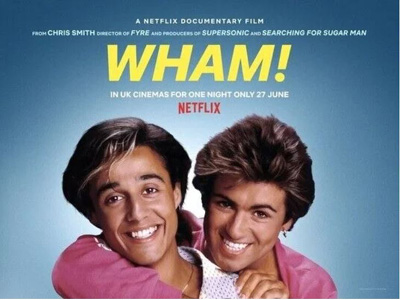
Image courtesy of Netflix.
“Wham!” Starring Andrew Ridgeley and George Michael. Directed by Chris Smith. 1 hour, 32 minutes. Rated TV-14. Netflix.
Del’s take
“Wham!” the eponymous documentary about the British pop duo who were part of the Second British Invasion, raises as many questions about their 1986 breakup as it answers. But you’ll be hard-pressed to find a more fascinating glimpse into the ascendency of a pop music phenomenon, the music industry itself, and the uniquely strange pop scene of the 1980s.
What’s known is that Andrew Ridgeley and George Michael met as adolescents who shared a love of music. As they aged into teenagers, the two joined at least one band, a short-lived ska effort called The Executive. When that failed they created Wham! and Ridgeley began courting the record industry for a contract. He eventually landed a deal with Mark Dean of Innervision records.
They released a pair of songs – “Wham Rap (Enjoy What You Do)!” and “Club Tropicana” (which required, ahem, a fact-finding trip to the Pikes in Ibeza). Those efforts generated only lukewarm interest, but a fortuitous appearance on the BBC program “Top of the Pops,” where they performed their song “Young Guns (Go for It),” propelled the duo to greater success, and their debut album, “Fantastic,” soared to No. 1 on the UK charts.
A switch to Epic/Columbia was followed by global fame. The singles everybody knows – “Wake Me Up Before You Go Go” and “Careless Whispers” – sent their sophomore album, “Make It Big,” to No. 1 in the United States and established Wham! as an equal to bands like Culture Club and Duran Duran, two other New Wave powerhouses.
But all was not well within Wham! Depending on whom you ask, either Michael was under self-imposed pressure to succeed due to a diminished sense of worth because of his homosexuality, or he was unhappy with the pop music role assigned to Wham! by record company executives who wanted the band to keep churning out danceable earworms. Either way, Michael wanted to pursue a solo career and Ridgeley agreed to the dismantling of Wham!, which took place in 1986 after a final single and a sold-out concert at London’s Wembley Stadium.
(The documentary does not address Michael’s solo career and his death in 2016, or Ridgeley’s descent into obscurity.)
Obviously for people who came of age in the ’80s, “Wham!” the documentary will evoke nostalgic memories of those happy songs. But there’s a note of melancholy that can’t be ignored, and it mostly focuses on Ridgeley.
While you can sympathize with Michael, a gay man imprisoned in his closet by fame, your heart goes out to Ridgeley, who, according to the film, voluntarily stepped back and allowed Michael to seize the spotlight for himself. This saintly altruism strikes me as iffy, but the documentary pitches it as an act of love and sacrifice, by a friend, for a friend. Other sources point out Michael was critical of Wham! and didn’t like the shallowness of their songs. Either way, what matters is Ridgeley and Michael remained friends under circumstances that would have brought others to blows. My impression, again based on the documentary, is that Ridgeley was the prime motivator in that respect.
What’s undeniable is that “Wham!” shows what it takes to succeed in any endeavor – talent, of course, but also perseverance, hard work, and a little bit of luck. It does this through archived footage, family scrapbook clippings, vintage interviews, and entertainment news reports from that time. You’ll come away with a better understanding of Ridgeley and Michael as human beings, their obvious affection for one another, and how they grappled with their personal demons.
“Wham!” the documentary is streaming on Netflix.
I grade it an A-.
Mladen’s take
The all-consuming disinterest. I can’t overcome the indifference, Del. I grew up listening to ’80s music. Pretty much loved it all but all I needed to know then, and all I need to know now, is that A) Deborah Harry was hot and B) her untamed, naturally imperfect, and perfectly charismatic voice was exactly what Blondie needed. I don’t care about the lives of the band members who moved me in stereo or shocked me like a monkey or let me know that video killed the radio star or woke me up before they go-go-ed. All I care about is the lyrics and the music they created. You forcing me to watch “Wham!,” the biopic about Wham!, drives my distaste for biopics deeper than the Mariana Trench.
Let me be clear. If you have a favorite musician, author, actor, athlete, or some other kind of paparazzi bait, never, ever through infinity should you try to learn anything about them. Why? Because they’ll turn out to be human and humans are always disappointing. The less you know about your favorite singers, the more you’ll enjoy their music. To know anything significant about the creator of something wonderful risks ruining that something wonderful because its source, inevitably, will not be. Listen to the songs. That’s all. Why listen to me? Because I’m Your Man.
I don’t care about Andrew selflessly letting George go solo. I don’t care about George’s angst about being gay. What I care about is the ideas folks with unique talents or good fortune offer to me. Wham! offered very little to me compared to U2 in their early years or the great and mighty The Clash, who were taking shots at cruel Thatcher and her besotted Tories about the same time Wham! was wiggling their butts in short shorts at teenaged girls. But, I acknowledge that Wham! was an international phenom.
If you like Frank Sinatra, learn nothing about him. If you like the Sex Pistols, learning nothing about Sid Vicious. What should you do? Listen to the Pistols cover of Sinatra’s “My Way.” The band took “My Way,” a song dripping with brazen conceit and sung so mopey-like by Sinatra that you’re unable to recognize its arrogance, and turned into a tour de force. “My Way” by the Pistols is kinetic, brash, and undisguised. Sid and his boys tell you to fuck off because they’re better than you in every way possible. Love it because that’s the story “My Way” is supposed to tell. Learn anything about Sid and you may vomit, which may lead you to never listen to the punkers again, though, as a band, they did some crazy and provocative shit.
If you like Wham!’s trite but lyrical lyrics – all their popular songs were about personal relationships – and jaunty disco-ish melodies, do not watch “Wham!.” You’ll be disappointed. It’ll take just one scene to make you second-guess your attraction to the band and its music. Pay attention to George’s reaction when one of Wham!’s most popular songs gets stuck at No. 2 on the pop charts because another spurring famine relief in Ethiopia hits No. 1.
Yeah, just listen to the music on your Walkman because video does kill the radio stars.
Mladen Rudman is a former technical writer and newspaper reporter. Del Stone Jr. is a former journalist and writer.
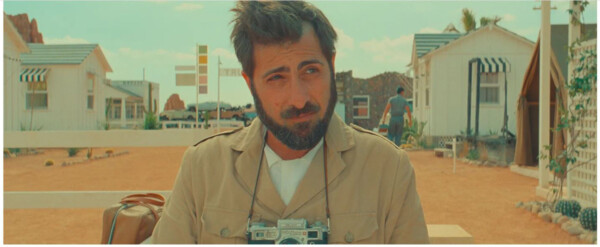
Image courtesy of Focus Features and Universal Pictures.
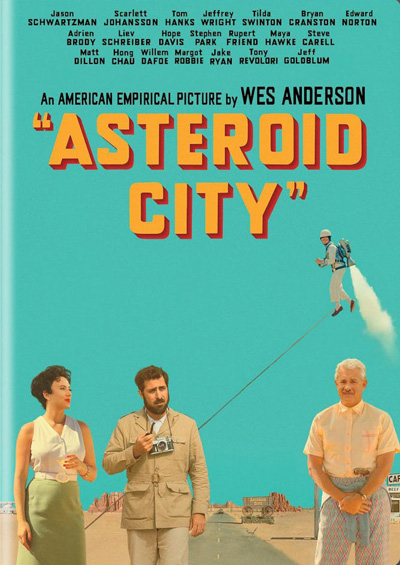
“Asteroid City” Starring Jason Schwartzman as Augie Steenbeck, Scarlett Johansson as Midge Campbell, Jake Ryan as Woodrow, Grace Edwards as Dinah, Tom Hanks as Stanley Zak, Edward Norton as Conrad Earp, Bryan Cranston as Host, and others. Directed by Wes Anderson. PG-13. 1 hour, 45 minutes. Amazon Prime.
Plot summary: What is this movie about? Beats me. There’s a bunch of mini-stories unfolding. A teenage crush. Tension between a father-in-law and his dead daughter’s husband. Loss of a loved one. An actress trapped in a malaise. What does the alien want? A weird financing scheme for desert land that you can’t own even if you buy it.
Are there spoilers in this review: Yes.
Mladen’s grade: B-
Del’s grade: B
Mladen’s take
Huh.
Huh?
Both huh’s capture my inexplicable attraction to this artsy, cartoonish, mostly rambling, well‑acted film with one helluva ditty about two-thirds of the way through. I enjoyed the movie for some reason but I’m not sure y’all will, so the grade above.
“Asteroid City” has been classified as sci-fi but I ain’t so sure it belongs squarely in that genre. Yes, there’s an alien visitation and then a second one to return what was taken by the cautious and alert biped from outer space during the first layover.
Yes, there’s talk about the planet Neptune and the solar system in general.
There’s a bit of stargazing and the geek children in the movie are all brainiacs but, really, “Asteroid City” tackles human relationships, government transparency, and the commercialization of an amazing phenomenon in quirky fashion.
In this film, people are real, as are some of the sets, but there’s also a “Who Framed Roger Rabbit” or “Space Jam” vibe. The score is good. Pay attention to the dancing roadrunner as the credits roll.
Look, I’m sure the movie has a principal message or messages. Del the analyzer will find it or them. “Asteroid City” must have a purpose or purposes. Del the detective will find it or them. What I did get from the movie is the sense that the actors – adult and child alike – seemed to enjoy working with each other.
The film’s aesthetic also worked. Though cartoonish, “Asteroid City” is not childish. Though flowing from one act to the next often led to introduction of new storylines or characters, the movie isn’t disjointed.
If anything, this movie speaks to the sole merit of big bucks streamers such as Amazon Prime taking control of movie production. The decentralized system – Hollywood ain’t in control no more – of filmmaking allows experimentation. “Asteroid City,” to me, seems to be an experiment. Note, however, that the streaming services of the world are, overall, a threat to genuine filmmaking as their AIs take control of everything.
Why watch “Asteroid City”? It has something for everyone. A look at family dynamics. A look at different kinds of people interacting with each other. The control large governments, even those framed by a constitution that protects the rights of individuals, have over our individual lives. Also highlighted is that even aliens capable of interstellar travel might be motivated by the banal and bureaucratic when they visit Earth.
Del’s take
“Asteroid City” possesses charms I recognize but don’t appreciate. Therefore, writing this review will be hard. I recognize the virtues of “Asteroid City” but I don’t like “Asteroid City.” I’ve never been a Wes Anderson fan. “Rushmore” was mildly amusing, but let’s face it: I’m either way too literal or just stupid. “The Way Way Back” is more my speed.
“Asteroid City” is put together the way Christopher Nolan assembles a movie – by the most complicated route imaginable. “Asteroid City” is a frame within a frame within a frame, a play set to film, with Bryan Cranston as The Host in a modern day iteration of the ancient Greek theatrical style, and other members of the movie’s ample star-studded cast – Ed Norton and Adrien Brody – functioning as architects of the play. The story itself is a dramatic rendering of the play, and the actors are meta-aware of their roles, though never confident they’re “doing it right.”
I suppose one could say the story is about war photographer Augie Steenbeck (Jason Schwartzman) taking his son and three daughters to a kind of Space Camp-style celebration at the site of a meteorite impact where the son, Woodrow (Jake Ryan), is to receive an award and a scholarship. Once, there strange events take place, and even stranger interactions with other award-winners and their families educate all present about the nature of life and their roles in the world.
I think Mladen overestimates my powers of observation. Yes, I think there’s a coming-of-age component to the subtext, and yes, I think the story makes observations about the meaning of life and questions our beliefs about What Really Matters. But mostly what I see are wry jabs at, for instance, the military industrial complex, or the emphasis given to tech in our culture, or the almost religious and transcendent hope that somebody is out there, maybe somebody who is smarter than we and can straighten us out as a people – in other words, a Mom and Dad for the human race.
What I don’t like about “Asteroid City” is the artifice, and yes, I know, that’s a Wes Anderson trademark. But in “Asteroid City” the artifice seemed, well, artificial, as if Anderson was trying too hard, Everything about the movie was contrived, from the multiple framing devices used to tell the story to the weird, de-saturated pastel color palette and animated backgrounds; the bizarre score (composed of old Western-themed songs by Tennessee Ernie Ford and others); the strange, flat-affect delivery of dialogue; and the overall kookiness of the cast. It was too many hammers beating out of rhythm, and for me, the result was a chaotic syncopation of sight, sound and theme.
But I recognize my viewpoint is in the minority and that a great deal of skill went into the creation of “Asteroid City,” which is much loved by people who aren’t bothered by its loony artifice. I’m prepared to concede that maybe I just didn’t get it.
For that I’ll give it a grade of B. But still, for my purposes, I think “The Way Way Back” told a similar story and did it better.
Mladen Rudman is a former journalist and technical writer. Del Stone Jr. is a former journalist and writer.

Image courtesy of Netflix.
“FUBAR” Starring Arnold Schwarzenegger, Monica Barbaro, Milan Carter, Gabriel Luna, Fortune Feimster, and Travis Van Winkle. Directed by Holly Dale, Steven A. Adelson, Phil Abraham, Stephen Surijik. Eight episodes. 45-59 minutes each. Rated TV-MA. Netflix.
Del’s take
“FUBAR,” the new Netflix series starring Arnold Schwarzenegger, should be funnier than it is. The problem is threefold:
1. Schwarzenegger still struggles with English, which means the sweet spot of his jokes comes and goes before he finishes bludgeoning his way through the dialogue.
2. “FUBAR” is not tightly edited, resulting in snappy comebacks that fall flat because they’re not very snappy.
3. The script provides an unending stream of cornball jokes minus the self-awareness that made shows like the 1960s classic, “Get Smart,” so hilarious.
That’s a shame because “FUBAR” could be a knee-slapper. Its central conceit – that a father and daughter are forced to work together after hiding from each other their careers as CIA operatives – offers a degree of comedic potential. Given the right creators, “FUBAR” could become an action-comedy classic. Alas, that potential is not met, at least not yet.

Schwarzenegger’s character is Luke Brunner, a longtime CIA agent who is retiring after a long and violent career of making the world safe for American corporations. He hopes to purchase a boat (“It’s a ship, not a boat,” is a running joke throughout the series) and sail the world with his ex-wife (Fabiano Udenio as Tally Brunner), a casualty of Luke’s career. But his close ties with Boro Polonia (Gabriel Luna), a Central American thug who is trying to sell a suitcase nuclear bomb to terrorists, means Luke must saddle-up for a final mission to save mankind.
When he arrives at Polonia’s jungle redoubt, Luke discovers his daughter (Monica Barbaro as Emma Brunner) is also a CIA operative who is also working the Polonia case. It is from this point “FUBAR” embarks on a silly globe-trotting adventure, in the tradition of a Dollar Tree James Bond, as father and daughter bicker about their fractured relationship and the fractured relationships of those around them while they battle the forces of evil.
Iffy special effects, naughty language and well-worn points of conflict bring a level of tedium to the journey. Emma’s constant whining about how her father was “never there” for her as a child becomes an annoying refrain by the second act of the first episode – imagine seven more episodes of the same. It’s the equivalent of a 3-year-old pitching a temper tantrum in the cereal aisle at Kroger’s.
The supporting cast offers little respite. Luke’s wise-cracking lesbian No. 2, Roo (Fortune Feimster), is more vulgar than clever, and self-described “honey-pot” entrapment guru Aldon (Travis Van Winkle) oscillates from earnest pathos to plain-old dick with no consistency. Only Luna presents the same face and to be honest, earns a degree of empathy as the boy whose father was murdered by the elder Brunner and is hellbent on making the world pay.
“FUBAR” resorts to the goofy wisecracks of Schwarzenegger’s earlier efforts, including those of a certain James Cameron cyborg (or Harlan Ellison, depending on whom you ask), but again, the loose editing draws the venom from these bites. It all comes across as shopworn and a little pathetic.
There may be a second season of “FUBAR.” If so, let’s hope new writers will endow this series with the cleverness it deserves. Schwarzenegger is capable of being funny but it’s a specialized flavor of humor, one that plays off his size, bulk, and Teutonic roots. That isn’t happening at the moment.
I grade the current iteration of “FUBAR” as a C. It’s harmless, silly fun, but it needs an injection of actual humor, and its physical production requires improvement.
Del Stone Jr. is a former journalist and author.

Image courtesy of Del Stone Jr.
Today I took flowers to my mother’s and sister’s gravesite. They were both mothers and it was my duty and a pleasure to remember them.
I used a mixture of flowers from Mom’s yard blended with a dozen roses I bought at Wal-Mart. I had the foresight to bring pruning shears, water, a packet of cut-flower food, and a glass vase I found beside the road (Mom would have loved that as she was an inveterate scrounger who often found treasures others had put to the curb).
I also included a note asking other cemetery visitors to please not steal my mother’s flowers and the vase, as that has become a problem lately.
The flowers came out better than I expected – I am by no means an artist at arranging flowers. With luck it will last more than a day or two.
I also included the card I got for Mom last year. I had bought it weeks before her death and hid it in my chest-of-drawers, meaning to give it to her on Mother’s Day. I didn’t find it again until after she passed.
Mom has been gone for just over a year. I still find items around the house that make me think she’s in the living room, sleeping in the recliner as something awful plays on the TV – cage fighting, American Ninja or boxing. She loved those sports and I’ve decided that’s because they featured sweaty, shirtless men doing the things sweaty, shirtless men do.
My sister’s ashes are buried with Mom, so I left a separate bunch of flowers for her. She will have been gone a year in early July.
I hope Mom, Sandie and Mom’s friend from Spain, Judi Krozier, are living it up in a shared afterlife, and there is wine, music I wouldn’t like, some kind of Southern-fried goodness, and lots and lots of sweaty, shirtless men.

About the author:
Del Stone Jr. is a professional fiction writer. He is known primarily for his work in the contemporary dark fiction field, but has also published science fiction and contemporary fantasy. Stone’s stories, poetry and scripts have appeared in publications such as Amazing Stories, Eldritch Tales, and Bantam-Spectra’s Full Spectrum. His short fiction has been published in The Year’s Best Horror Stories XXII; Alfred Hitchcock’s Mystery Magazine; the Pocket Books anthology More Phobias; the Barnes & Noble anthologies 100 Wicked Little Witch Stories, Horrors! 365 Scary Stories, and 100 Astounding Little Alien Stories; the HWA anthology Psychos; and other short fiction venues, like Blood Muse, Live Without a Net, Zombiesque and Sex Macabre. Stone’s comic book debut was in the Clive Barker series of books, Hellraiser, published by Marvel/Epic and reprinted in The Best of Hellraiser anthology. He has also published stories in Penthouse Comix, and worked with artist Dave Dorman on many projects, including the illustrated novella “Roadkill,” a short story for the Andrew Vachss anthology Underground from Dark Horse, an ashcan titled “December” for Hero Illustrated, and several of Dorman’s Wasted Lands novellas and comics, such as Rail from Image and “The Uninvited.” Stone’s novel, Dead Heat, won the 1996 International Horror Guild’s award for best first novel and was a runner-up for the Bram Stoker Award. Stone has also been a finalist for the IHG award for short fiction, the British Fantasy Award for best novella, and a semifinalist for the Nebula and Writers of the Future awards. His stories have appeared in anthologies that have won the Bram Stoker Award and the World Fantasy Award. Two of his works were optioned for film, the novella “Black Tide” and short story “Crisis Line.”
Stone recently retired after a 41-year career in journalism. He won numerous awards for his work, and in 1986 was named Florida’s best columnist in his circulation division by the Florida Society of Newspaper Editors. In 2001 he received an honorable mention from the National Lesbian and Gay Journalists Association for his essay “When Freedom of Speech Ends” and in 2003 he was voted Best of the Best in the category of columnists by Emerald Coast Magazine. He participated in book signings and awareness campaigns, and was a guest on local television and radio programs.
As an addendum, Stone is single, kills tomatoes and morning glories with ruthless efficiency, once tied the stem of a cocktail cherry in a knot with his tongue, and carries a permanent scar on his chest after having been shot with a paintball gun. He’s in his 60s as of this writing but doesn’t look a day over 94.
Contact Del at [email protected]. He is also on Facebook, twitter, Pinterest, tumblr, TikTok, Ello and Instagram. Visit his website at delstonejr.com .
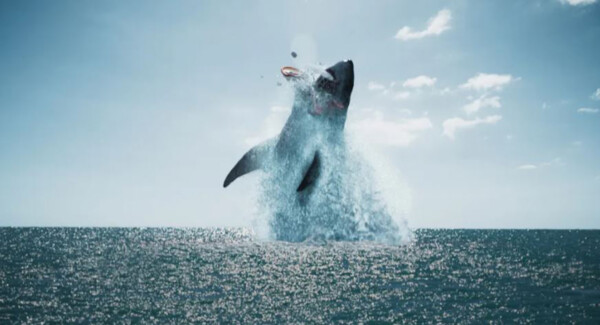
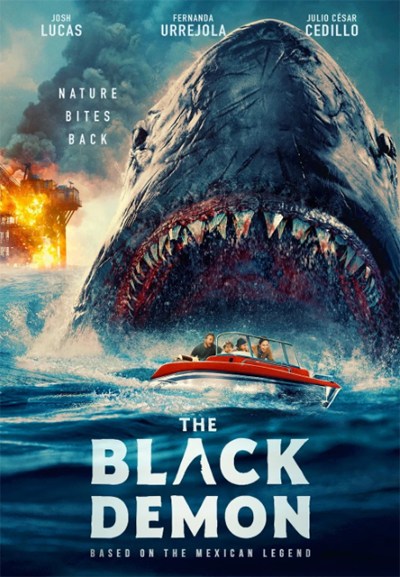
Image courtesy of The Avenue.
Starring Fernanda Urrejola as “Ines,” Josh Lucas as “Paul,” Venus Ariel as “Audrey,” Julio Cesar Cedillo as “Chato,” and Jorge A. Jimenez as “Junior” and others; Directed by Adrian Grunberg; Rated R; 100 minutes; Amazon Prime
Mladen’s take
Like a good movie can be ruined by one bad scene, a bad movie can be redeemed with one good bit of filmmaking. The problem with “The Black Demon” is that you must watch the mostly bad movie to the end to see that one good scene. You’ll know when you see it because the antagonist and the protagonist are calm when death arrives.
“The Black Demon” offers a duel between a big shark body armored with sturgeon-like scutes and humans of varied races and socioeconomic status. The big shark is the Aztec god Tlaloc incarnate. Come to think of it, maybe that’s also a reason I found the film good enough. The gringos in “The Black Demon” are unable to pronounce the name of the god without help from native Spanish speakers. The “Tl” in Tlaloc throws English speakers off balance. As a guy with a first name that also juxtaposes two seldom, if ever, side-to-side consonants in the English language, “Ml,” I sympathized with the villagers trying to teach Americans the correct pronunciation.
Anyway, Tlaloc, the god in shark’s clothing, appears as a deformed megalodon to avenge the destruction of a riveting sea polluted by the unchecked gush of oil from an offshore rig. Huh, a riveting sea polluted by the unchecked gush of oil from an offshore rig. Sound familiar? You’ve already forgotten the months-long British Petroleum Deepwater Horizon oil hemorrhage in 2010 that all but wrecked my beloved Gulf of Mexico, haven’t you?
Of course, the humans hunted by the black demon find themselves stranded on the oil rig without a way to communicate with shore or hope that some boater will come along to rescue them. And, there’s no way for the humans to wait for someone on land to realize they’re missing and send a search party because the rig is falling apart. Its demise is aided by Tlaloc occasionally ramming it. Oh, the shark god has some sort of telepathic power that allows it to conjure foreboding hallucinations in humans when they’re in the water.
The movie’s cheap thrills come along by placing children in harm’s way. I hate that. And, there’s always the accidental fall into the water or the decision to kill the shark by using a person as live bait and then what? Poison the multi-ton shark by pricking it in the mouth with a 5-inch-long, 25-gauge hypodermic needle? No, no, that was “Jaws.” Explode the shark with a jerry-rigged dart bomb triggered by attaching the contraption via cable to a car battery? No, that was “Deep Blue Sea.” Damn, how was the meg in “Meg” whacked?
Del will belly ache about the movie’s derivative character. He’ll complain about the mediocre CGI. All of that will come after he details to the nth minutia the history of big shark movies and their impact on pop culture, our eating habits, environmental preservation, and treatment of toenail fungus. My advice to you? See the movie because it’s good enough to be entertaining and among the better of the B-schlock films that have blazed across the big screen since pictures started moving.
Del’s take
Poor Mladen.
By the way, I pronounce that “muh-LAH-den.” As far as I know, that’s correct. I pronounce the Aztec god Tlaloc “tuh-LAL-oc.” I think that’s correct. And Mladen thinks I dwell too much on detail.
Yes, I’m a gringo who mispronounces the names of Aztec fish gods. I also recognize the role sharks play in the environment, but like many gringos who can’t pronounce the names of Aztec fish gods, I don’t want to be on the receiving end of that environmental role when it means having the lower half of my body reduced to shark kibble. So I’m a fan of sharks only if they come no closer than the movie screen – speaking of which, did I mention I’m tired of movies about sharks. I mean, what are we up to now? “Jaws 47”? “Meg XXXI”? “Deep Blue Sea: The Neverending Story”?
Mladen, by making me watch “The Black Demon,” thought he was punishing me for inflicting “Chopping Mall” and “Barbie” on him. I didn’t have the heart to tell him I’d already seen “The Black Demon,” already noted the shitty FX, and yes, already thought it was stupid.
“The Black Demon” is a good example of the chaff Amazon Prime uses to flesh out its movie offerings. While there’s room in my heart for bad sci-fi and horror movies, that room is leavened by nostalgia. I don’t watch “The Tingler” or “The Giant Claw” for their riveting depictions of human drama. I watch them because they remind me of when I was a little kid and believed that crap could actually happen. Alas, “The Black Demon” does not evoke such happy memories. It’s the seaside version of “Maximum Overdrive.” I watched it, didn’t like it, and flushed it down the toilet, like you would that favorite swordtail you found floating belly up in your aquarium.
I mean, c’mon. The premise of “The Black Demon” is idiotic. An American petrochemical engineer takes his wife and kids on one last job in Mexico, leaves them in a town full of hostile locals, makes his way to a haunted oil rig, the wife and kids follow along, everyone except one altruistic soul are in league with the shark, and somehow they’re supposed to defeat this – this creature that’s big enough to take out an oil rig and swims faster than a speeding cigarette boat? Next you’ll be telling me Marjorie Taylor Greene has an IQ higher than a cement block.
One point on which I and the movie agree: The real villain is the corporation responsible for the leaky oil rig, in this case an outfit called “Nixon.” Get it? Nixon, so very, very subtle. Why didn’t they just call it “Satan” and be done with it? And the real black demon may not be the shark or the pissed-off fish god, but the stuff leaking from the oil rig. But somehow I doubt that much thought was put into the movie’s subtext. In fact, I don’t think there is any subtext. I think “The Black Demon” is a movie about a supernatural shark picking off people responsible for trashing the environment in and around the oil rig. Or more basically, a movie about a scary shark-like something-or-other.
I’ll grade this movie a C- because I’ve spent worse hour-and-forty-minute time spans of my life, but unless you’re a fan of modern schlock, which I’m not, then stay out of the water.
For a real shark movie check out “Blue Water, White Death,” a darned good doc from the early ’70s. They don’t make those, or schlocky B-movies, like they used to.
Mladen Rudman is a former journalist and technical writer. Del Stone Jr. is a former journalist and writer.
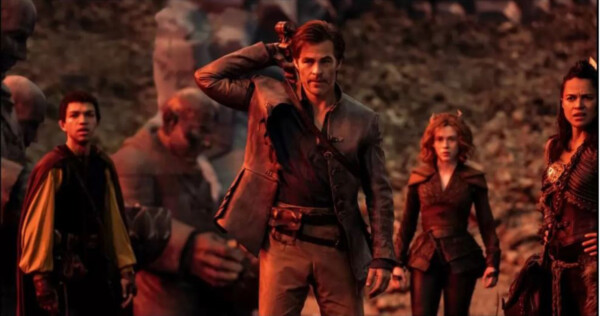
Image courtesy of Paramount.
“Dungeons & Dragons: Honor Among Thieves” Starring Chris Pine, Michelle Rodriguez, Justice Smith, Sophia Lillis and Hugh Grant. Directed by John Francis Daley and Jonathan Goldstein. 2 hours, 14 minutes. Rated PG-13. Theatrical release.
Del’s take
“Honor Among Thieves” is silly, stupid, fun, and undeniably entertaining, even for an avowed hater of all things fantasy. Yet there’s little meat on the ribs of this escapist fantasy showing at a theater near you – assuming a theater near you remains in operation.
The story is about widower Edgin Darvis (Chris Pine), whose wife was killed by a vile group of conjurers known as the Red Wizards. Edgin, along with growling sidekick Holga (Michelle Rodriguez), half-baked wizard Simon (Justice Smith) and shapeshifter druid Doric (Sophia Lillis) embark on a quest to retrieve a relic that can bring back Edgin’s wife. Along the way they must free Edgin’s estranged daughter Kira (Chloe Coleman) from the clutches of Forge Fitzwilliam (Hugh Grant), a former ally who has turned traitor, and thwart the restoration of the Red Wizards, led by Sofina (Daisy Head).

It’s not as complicated as it sounds.
The journey takes them through various magical realms where they meet new friends and defeat old enemies. Talking corpses, overweight dragons, raging owlbears and magic portals make for a colorful if not eventful quest.
Humor is pervasive, which suggests “Honor Among Thieves” does not take itself that seriously. And with Chris Pine leading the campaign, how could it? Pine imbues Edgin with plenty of James Tiberious Kirk – alternating swagger and joke-cracking – as he and his merry band of adventurers tumble from one cliffhanger to the next. The movie’s standout performer is Smith as fumbling Simon, the wizard with a heart of gold. Simon pines for Doric (Lillis) and along the way discovers that with sufficient self confidence he can reasonably go toe-to-toe with a powerful mage like Sofina.
“Honor Among Thieves” closely follows the Marvel model of moviemaking – lots of action, gorgeous special effects, not much in the way of character development or world-building, and a thin plot to frame the action sequences without telling too much of a story. Entertaining, yes. Memorable? Hardly. It’s like having a Mimosa and Eggs Benedict for brunch: By mid-afternoon you’re already wondering what’s for dinner.
As quests go “Honor Among Thieves” doesn’t compare to “Lord of the Rings.” It’s like “Narnia” with dirty jokes. You’ll be entertained but a day later you won’t remember a thing.
But do see the movie in a theater if possible. Only a theater can deliver the grandeur, and the shared experience, that all movies deserve.
I give “Dungeons & Dragons: Honor Among Thieves” a solid B. It was entertaining and well acted, but the story was forgettable.
Del Stone Jr. is a writer and former journalist.

Image courtesy of Raw Pixel by way of a Creative Commons license.
Del Stone Jr. is a professional fiction writer. He is known primarily for his work in the contemporary dark fiction field, but has also published science fiction and contemporary fantasy. Stone’s stories, poetry and scripts have appeared in publications such as Amazing Stories, Eldritch Tales, and Bantam-Spectra’s Full Spectrum. His short fiction has been published in The Year’s Best Horror Stories XXII; Alfred Hitchcock’s Mystery Magazine; the Pocket Books anthology More Phobias; the Barnes & Noble anthologies 100 Wicked Little Witch Stories, Horrors! 365 Scary Stories, and 100 Astounding Little Alien Stories; the HWA anthology Psychos; and other short fiction venues, like Blood Muse, Live Without a Net, Zombiesque and Sex Macabre. Stone’s comic book debut was in the Clive Barker series of books, Hellraiser, published by Marvel/Epic and reprinted in The Best of Hellraiser anthology. He has also published stories in Penthouse Comix, and worked with artist Dave Dorman on many projects, including the illustrated novella “Roadkill,” a short story for the Andrew Vachss anthology Underground from Dark Horse, an ashcan titled “December” for Hero Illustrated, and several of Dorman’s Wasted Lands novellas and comics, such as Rail from Image and “The Uninvited.” Stone’s novel, Dead Heat, won the 1996 International Horror Guild’s award for best first novel and was a runner-up for the Bram Stoker Award. Stone has also been a finalist for the IHG award for short fiction, the British Fantasy Award for best novella, and a semifinalist for the Nebula and Writers of the Future awards. His stories have appeared in anthologies that have won the Bram Stoker Award and the World Fantasy Award. Two of his works were optioned for film, the novella “Black Tide” and short story “Crisis Line.”
Stone recently retired after a 41-year career in journalism. He won numerous awards for his work, and in 1986 was named Florida’s best columnist in his circulation division by the Florida Society of Newspaper Editors. In 2001 he received an honorable mention from the National Lesbian and Gay Journalists Association for his essay “When Freedom of Speech Ends” and in 2003 he was voted Best of the Best in the category of columnists by Emerald Coast Magazine. He participated in book signings and awareness campaigns, and was a guest on local television and radio programs.
As an addendum, Stone is single, kills tomatoes and morning glories with ruthless efficiency, once tied the stem of a cocktail cherry in a knot with his tongue, and carries a permanent scar on his chest after having been shot with a paintball gun. He’s in his 60s as of this writing but doesn’t look a day over 94.
Contact Del at [email protected]. He is also on Facebook, twitter, Pinterest, tumblr, TikTok, Ello and Instagram. Visit his website at delstonejr.com .

Image courtesy of Mohamed Mahmoud Hassan through Public Domain Pictures.
When you are no longer able to say what you think, you are no longer free.
Florida is not free.
About the author:
Del Stone Jr. is a professional fiction writer. He is known primarily for his work in the contemporary dark fiction field, but has also published science fiction and contemporary fantasy. Stone’s stories, poetry and scripts have appeared in publications such as Amazing Stories, Eldritch Tales, and Bantam-Spectra’s Full Spectrum. His short fiction has been published in The Year’s Best Horror Stories XXII; Alfred Hitchcock’s Mystery Magazine; the Pocket Books anthology More Phobias; the Barnes & Noble anthologies 100 Wicked Little Witch Stories, Horrors! 365 Scary Stories, and 100 Astounding Little Alien Stories; the HWA anthology Psychos; and other short fiction venues, like Blood Muse, Live Without a Net, Zombiesque and Sex Macabre. Stone’s comic book debut was in the Clive Barker series of books, Hellraiser, published by Marvel/Epic and reprinted in The Best of Hellraiser anthology. He has also published stories in Penthouse Comix, and worked with artist Dave Dorman on many projects, including the illustrated novella “Roadkill,” a short story for the Andrew Vachss anthology Underground from Dark Horse, an ashcan titled “December” for Hero Illustrated, and several of Dorman’s Wasted Lands novellas and comics, such as Rail from Image and “The Uninvited.” Stone’s novel, Dead Heat, won the 1996 International Horror Guild’s award for best first novel and was a runner-up for the Bram Stoker Award. Stone has also been a finalist for the IHG award for short fiction, the British Fantasy Award for best novella, and a semifinalist for the Nebula and Writers of the Future awards. His stories have appeared in anthologies that have won the Bram Stoker Award and the World Fantasy Award. Two of his works were optioned for film, the novella “Black Tide” and short story “Crisis Line.”
Stone recently retired after a 41-year career in journalism. He won numerous awards for his work, and in 1986 was named Florida’s best columnist in his circulation division by the Florida Society of Newspaper Editors. In 2001 he received an honorable mention from the National Lesbian and Gay Journalists Association for his essay “When Freedom of Speech Ends” and in 2003 he was voted Best of the Best in the category of columnists by Emerald Coast Magazine. He participated in book signings and awareness campaigns, and was a guest on local television and radio programs.
As an addendum, Stone is single, kills tomatoes and morning glories with ruthless efficiency, once tied the stem of a cocktail cherry in a knot with his tongue, and carries a permanent scar on his chest after having been shot with a paintball gun. He’s in his 60s as of this writing but doesn’t look a day over 94.
Contact Del at [email protected]. He is also on Facebook, twitter, Pinterest, tumblr, TikTok, Ello and Instagram. Visit his website at delstonejr.com .