Mladen and Del review ‘Kate’

Image courtesy of Netflix.
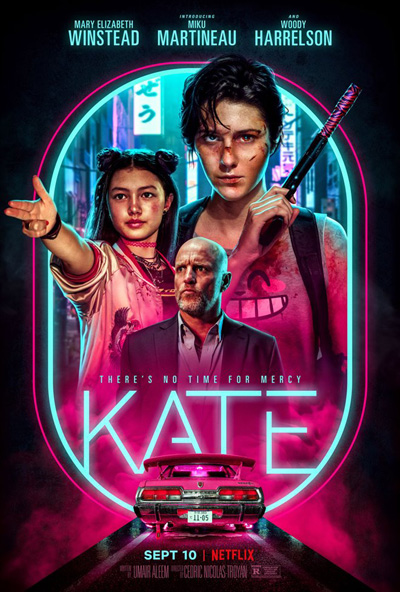
“Kate” Starring Mary Elizabeth Winstead, Miku Patricia Martineau, Jun Kunimura, Woody Harrelson, Tadanobu Asano. Directed by Cedric Nicolas-Troyan
106 minutes. Rated R. Netflix.
Mladen’s take
My deep love for Mary Elizabeth Winstead remains unabated. She’s terrific in “Kate,” the new brawler film on Netflix. She’s been terrific for years. McClane’s daughter in “Live Free or Die Hard.” Terrific as a different Kate in “The Thing” prequel. Beyond superb in “10 Cloverfield Lane.” Should have been nominated for a Best Actress Oscar but the Academy dislikes sci-fi and horror. Assholes. Winstead was the only reason “Gemini Man” was tolerable. I bet she’s terrific in “Birds of Prey” as The Huntress.
Other critics have somewhat panned “Kate.” I attribute that to silly expectations. Should anyone believe a movie about an assassin will offer us anything fundamentally original or mind boggling? No. Hell, even the John Wick trilogy gets weaker as it progresses.
Let’s take this A- movie for what it is. Winstead showing us that Theron (“The Old Guard’) and Chastain (“Ava”) are OK as killers. Garner in “Peppermint” gives Winstead a better run for her money. Blunt in “The Edge of Tomorrow” better still.
But.
Winstead is plausible physically as a trigger puller and martial arts master. Her action scenes in “Kate” are executed adroitly and confidently, lacking what I call “girl lag.” You know, that slight femininity that makes it look like a punch is thrown with hesitation or accompanied by circumspection. There also might be a pinch of awkwardness. It’s like the difference between a guy’s handwriting – generally angular, sloppy, careless, unreadable – and a gal’s – generally flowing, clean, loopy, soft.
By now, Del is, like, where the fuck is the summary, Mladen?
Here’s the summary. Kate is an orphan befriended and trained by Varrick (Woody Harrelson) to kill people. Bad people, which, of course, makes Kate a White Hat assassin. Now an adult with a string of wins, Kate is tasked with a hit. The target is the second-in-command of a powerful Yakuza clan. The top lieutenant is also the brother of clan boss Kijima (played by Jun Kunimura, who I also adore because he’s in a goodly number of Godzilla films, including “Shin Godzilla”).
The hit is a success, sort of. Kate is ordered to take out Sato (Koji Nishiyama), though he’s with his young daughter. Ani (portrayed by Miku Patricia Martineau) takes her father’s blood spray in the face as the first bullet nudges aside neck and the second perforates both temples. Some months later, Kate is slipped Polonium 204. It’s a revenge killing ordered by who? No, not Putin. As her body deteriorates – there’s no antidote for acute radiation poisoning – Kate regains her humanity while first exploiting and then protecting a precocious Ani as she hunts for her killer. Don’t listen to Del when he tells you that Martineau steals the show. Watch Winstead in the public toilet of some Tokyo back alley act human, though her skin is bruising, has sores, and hemorrhages. In fact, always pay attention to Winstead’s face. It expresses as much as the words she speaks. Love it to no end.
The car chase in the film is hokey but the rest of the action blisters. Knife fights. Gun fights. Pure hand-to-hand. Lots of blood. Lot of cussing. Everything I want in an action thriller that has no purpose other than to entertain and make you say every now and then, “No way” or “Damn, girl” while cringing with delight from the protruding blade pushed through a nasal septum.
The “Kate” score fits with the bright lights of a big Japanese city. The soundtrack is a bunch of wonderful Japanese technopopelectronicapunk.
Well done, Mary Elizabeth, if I may call you by your first name. Just make sure you don’t end up pigeon-holed as an action star. Your acting chops are Amy Adams-like. Do drama. Do cerebral sci-fi. Go experimental. It’s only a matter of time before the gold statuette is in your hands.
Del’s take
Easy there, Tiger. You keep swingin’ that libido like a baseball bat and you’re gonna put somebody’s eye out.
Mladen is talking about two separate issues – “Kate,” the movie, and Mary Elizabeth Winstead, the actor. OK, let’s do that.
Up first: Winstead.
I’ve seen several of her movies but her role in “Kate” is the first to leave an impression. I wonder why? I’ve decided it’s because she’s superb as an assassin. She has a watchability I can’t wrap my head around. I mean, she’s undeniably beautiful, with a uniquely expressive face. But there’s more to it than mere beauty. She brings a swagger to the role that other actors – Jessica Chastain and Jennifer Garner, for instance – fail to muster. She’s a much better Ripley than Katherine Waterston and that’s what we’re talking about, isn’t it? Ellen Ripley. “Aliens.” The “Get away from her you bitch!” role that set the bar for badassery among lady action figures. When the tank tops come out and the hair comes off, you know the shell casings are about to fly.
Winstead approaches her character with an understated and off-kilter confidence that was hobbled by a lame script, which always seemed to veer into the predictable just when you thought the movie was about to show you something new. That’s a shame because I think with better material Winstead could have gone toe to toe with Sigourney Weaver. Instead, we are given only moments of brilliance.
Another fine performance is delivered by – yes, Mladen – Miku Patricia Martineau, who excels as snotty Ani, a girl for whom life is nothing more than a sad simulation of her online reality, given meaning only through selfies, drama and Kate’s Terminator-like determination to complete her mission of vengeance. Ani is only a small planet orbiting Kate’s star but she revels in the baking heat when Kate goes nova.
One more comment about the acting and I’ll move along. Woody Harrelson plays Kate’s mentor and overseer, a kind of Charlie to her Angel, and I can’t decide if I hated him or the role. Harrelson played it with a loopy fatigue you see from Bruce Willis these days, but the role itself seemed poorly defined and a little too muted for its eventual octane rating.
That can be our segue into Mladen’s other second issue – the movie itself.
Is it entertaining? Absolutely. Is it original. Absolutely not. In fact, it seemed Frankensteined from just about every other recent action movie. What you get is a gumbo of clichés and soupy dialogue.
Not only that but all the characters in this rogues gallery are unlikeable, including Kate herself, the loveable assassin with a conscience. It was like watching high-decibel anti-vaxxers die of COVID-19. There’s a karmic justice at work here, yes, but the human being in you cringes as you see that metaphysical balancing go about its ugly business.
And the movie is a non-stop bloodbath. Between Kate’s wrecking ball tour of Tokyo’s Yakuza underworld to the toll on her body taken by the polonium 204, you will either avert your eyes or stop the movie and excuse yourself to the restroom.
If you’re a fan of action movies and especially those that feature a female protagonist, you’ll love “Kate.” It’s a brawl all right, with lots of firepower, graphic violence and gore. Beware of the treadworn plot and thin broth of dialogue.
I grade it a low B.
Mladen Rudman is a former journalist and technical writer. Del Stone Jr. is a former journalist and author.
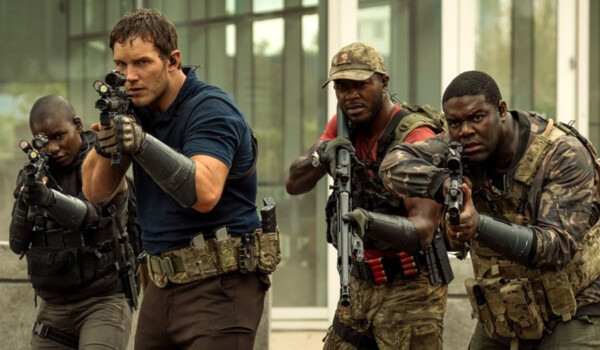
Image courtesy of Amazon Studios.
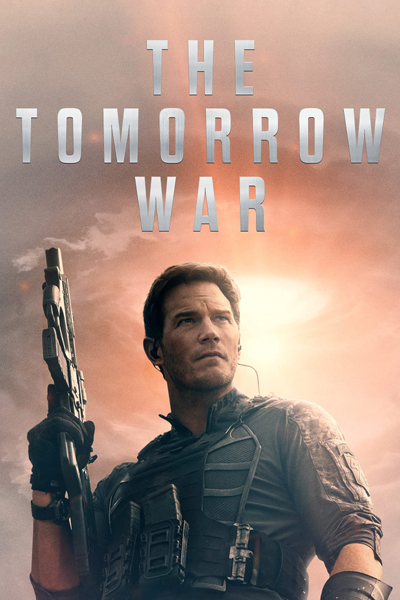
“The Tomorrow War” Starring Chris Pratt, Yvonne Strahovski, Sam Richardson, Keith Powers, Betty Gilpin, J.K. Simmons and others. Directed by Chris McKay. Too long (2 hours, 20 minutes). Rated PG-13. Amazon Prime.
Mladen’s take
“The Tomorrow War” would be an A if I could look past its derivative plot, two smulchy scenes (one on a beach and the other amid a ferocious battle with an alien matriarch), it’s PG-13 rating and that it’s a product of juggernaut Amazon, which is more of a threat to Earth than the beasts portrayed in the movie would be.
But, I can’t, so this film gets a B-, though the acting is good and the movie’s pacing decent despite its 3,000-hour run time.
Here’s the plot summary, which Del will correct: An intergalactic pet transporter carrying really mean quadrupeds that remind me of the creature in “Cloverfield” crashes in the past on our planet near the North Pole. Global warming thaws the tentacled critters, which also remind me of the mimics in “The Edge of Tomorrow,” aboard the spacecraft in the future. They proceed to nearly take over the planet after eating all its meaty life, including people. Flash to the present and the future, “Tenet”-like, comes to us via a time travel device because Future Humanity needs Current Humanity to help our species survive. How? By Current Humanity conscripting its people as soldiers to fight with Future Humanity against the carnivorous alien invaders. The now‑soldiers are transported in waves to fight in the Tomorrow War by the time travel machine.
The good thing about “The Tomorrow War” is that the time travel paradoxes created in the film are comprehensible.
The bad thing is that the director uses the time travel to insert a who-cares subplot about our protagonist, Dan Forester played by Chris Pratt, and his family. What’s hard about making a sci-fi action yarn without encumbering it with people relationships? I didn’t like Forester any better because he was frustrated with his life as I am with mine. I didn’t like him any better because he was a father as am I. Just give me a story that focuses on what would come naturally to most of us if animals tried to eat our children (and us). We’d fight until one or the other side wins.
If you like the other movies I mention above and masterpieces such as “Alien,” “Aliens,” and “The Thing,” you’ll enjoy “The Tomorrow War.” But, for a sci-fi guy like me, this movie is just one of many stopgap measures between the good stuff.
I also can’t shake the feeling that “The Tomorrow War” was put together somewhat hastily to make Bezos even more money. I don’t know, maybe he underestimated the cost of flying to the edge of space in his personal rocket and “The Tomorrow War” will help him pay the unexpected bills.
Del’s take
Mladen goes on about how he doesn’t care about people, but he really does. Beneath that so-called shriveled turnip of a heart lies the soul of a man who is not ashamed to messy-sob after hearing Netflix changed the ending of “The Notebook.” So I don’t take anything he says very seriously, especially when he fusses about relationships sullying “The Tomorrow War.”
If you removed the relationships from “The Tomorrow War” you’d be left with something like a documentary about ants in the Amazon. Not much fun there. I’d rather be blowing up spaceships and squabbling with my dad about shaving off that Unabomber beard.
“The Tomorrow War” is a perfectly adequate summer escapist movie, in the spirit of “Independence Day,” “Edge of Tomorrow” (a vastly underrated film) and “Battle: Los Angeles.” It is long on action, short on logic, and more entertaining than its length might suggest. In fact, I was shocked to learn it was 2 hours and 20 minutes. It didn’t feel like a two-hour movie.
Mladen summed the plot and you’ve likely seen much of the movie already through the ads. My advice is to turn off your brain and enjoy the cool special effects. The story offers nothing new, but then the drive-thru at McDonalds is always around the block so “new” is not high on the list of America’s entertainment palate. And Chris Pratt is, in my opinion, a huge miscast … but hey, there’s always another “Guardian of the Galaxy” or “Jurassic Park” to fall back on.
My gripe with Pratt is that he does not, in this time or any other, evoke the brawn and swagger of an action hero. He’s more teddy bear than Terminator, a plump Pillsbury Doughboy with a machine gun.
I’m a fan of J.K. Simmons but his role as Pratt’s father is reduced to an algorithmic cipher, just another piece in the blockbuster puzzle that appears to work but doesn’t. Simmons plays the role with a strange lack of emotion that made me wonder if he too wasn’t giggling about the absurdity of it all.
As the movie explodes and gore-sprays to its predictable conclusion you’re left wondering how much money this thing will put in Jeff Bezos’ pocket. From what I hear it was originally earmarked for theatrical release by Paramount until Uncle Covid and the Pandemics arrived in town, and somehow fell into Amazon’s pocket. At least they didn’t charge extra for Prime clients.
Hey look, the movie’s fine for what it is – two hours of mayhem and a chance for mankind to vent his violence on something other than the environment or himself. Don’t expect anything new or different; it’s as predictable as that glowing menu at the Mickey D’s drive-thru.
I agree with Mladen; the movie is a B-.
Mladen Rudman is a former journalist and technical writer. Del Stone Jr. is a former journalist and author.
Del Stone Jr.
I was privileged to have grown up on the Miracle Strip.
To my loss – and everyone else’s loss – the Miracle Strip is now a thing of the past.
It has been replaced by an asphalt and concrete monument to greed.
This is what I want to tell you.
—
The Miracle Strip as it once existed, the Miracle Strip of the 1950s, ’60s and even the ’70s, possessed a unique charm, a kind of innocent simplicity dipped in yellow cornmeal and buttermilk, then deep-fat fried and served with melting butter. That recipe for charm still exists in places with names like Sopchoppy and Wewahitchka, but it has long since vanished from the Greater Destin-Fort Walton Beach Hellplex.
Most striking were the beaches – radiant and opalescent, their snow-white sands and turquoise waters exceeding the color-saturated promises of every postcard ever printed. They were everywhere, wherever you wanted them to be, mile after mile of trackless miracle. You parked your car along a berm of crushed oyster shells, threaded your way through sandspurs and sea oats, and set up shop on an infinite expanse of sand so white it threw sunshine into the sky, a halo of silvery, divine light. The water was the color of bluish-green you dreamed beaches in heaven looked like, and it was warm and calm.
It was all so restorative … to lie in the sand, sit at the water’s edge, listen to the gentle sussing of wind and waves, and swim out to the sandbar. The natural quiet opened places inside you had forgotten existed. You could think. And yes, you could dream.
If you lingered at the beach until your skin burned you were in trouble. You needed to swath yourself in vinegar water to ease the pain. You went around smelling like a salad and three days later you were molting like one of those green lizards that lived below your front porch light, but at least you didn’t scream when somebody slapped you on the back. Or maybe you did.
On the way home you might pull off at one of the roadside shanties for shrimp or boiled peanuts. There were restaurants that fried the pompano living near that sandbar swam to, and even a few fast-food joints where you could get a milkshake for a quarter and fries for 15 cents. You sat in the parking lot, on the hood of your car, and wondered where Bob had gotten the money for that ’57 Chevy, and you knew Mark had rolled his bangs on a pencil to get that flip when a dab of Brylcreem would have done just as well. Stupid boys.
The boat ramps were uncluttered and the fish so thick you could track down schools of feeding blues in Choctawhatchee Bay just by looking for the froth. In those days the bay was big enough for Sunfish sailboats and Glastron ski barges, and the water was so clear you could see starfish on the bottom, or seahorses clinging to the marsh grass by the Yacht Club.
The only traffic to speak of is when they held the Billy Bowlegs Ski Show on this side of the Cinco Bayou Bridge. Rugged-looking guys wearing boxy swimming trunks would ski off ramps and sail through the air. Pretty girls in clingy one-piece bathing suits would glide past the crowd, waving their flags. It was all so daring.
After the show, a couple of drunks would putter out into the middle of the bayou and light off a batch of sky rockets they had bought from a roadside stand just north of the Florida border. Then everybody would climb into their cars and go home, except the folks stopping at the Grants or the Delchamps just around the corner. There was also a Piggly Wiggly at the corner of Hollywood and Eglin and by God it had those fancy automatic doors, the kind that opened without you having to do a thing.
It was a wonderful place to grow up because although there was nothing to do, there was everything to do, from hanging out with the teenagers at Tower Beach to bird hunting at First American Farms in Freeport or tonging for oysters on the Choctawhatchee River delta. Your fun wasn’t made for you. You invented your own, and even that was fun.
But now?
Compared to then, now is just … ugly.
—
These days, summers on the Miracle Strip are challenging, not just for locals but tourists, too.
That’s because everybody’s trying to make a buck.
From hotels, resorts and condos to restaurants, T-shirt shops and attractions, everybody’s trying to make a buck.
And that has made the Miracle Strip ugly.
For locals and tourists who aren’t staying at a beachside hotel or condo, or a nearby facility with guaranteed access, getting to the beach is … challenging.
That’s because decades ago the local leadership did not recognize the beach belongs to everybody, not just the monied haves. In other parts of Florida the beaches are available to all, but in the Greater Destin-Fort Walton Beach Hellplex they were put up for sale. The haves slithered in and snapped them up, like gators scratching and hissing over a chicken carcass at one of those South Florida reptile attractions.
And then the haves put up their “no trespassing” signs and fences, and called law enforcement when they saw people “trespassing” on “their beach.”
These days, folks who don’t own Gulf-front property are restricted to a few public beach accesses which are hopelessly overcrowded. That is no exaggeration. They are hopelessly overcrowded.
But why bother?
The beach-going experience has been made ugly by money, from aggressive beach chair and umbrella vendors to advertising boats and banner-towing aircraft hawking restaurants and bars. Parasails, sightseeing helicopters, dolphin cruises, personal watercraft rentals – all of it has reduced the beach vacation to a vulgar sales pitch designed to separate people from their money.
Away from the water it’s not much better. Hotel rooms go for $600 a night and higher. Meals at a sit-down restaurant will set you back $50-plus per person. Gas along the coast and the interstate exits costs a lot more than everywhere else. In some places you have to pay for parking.
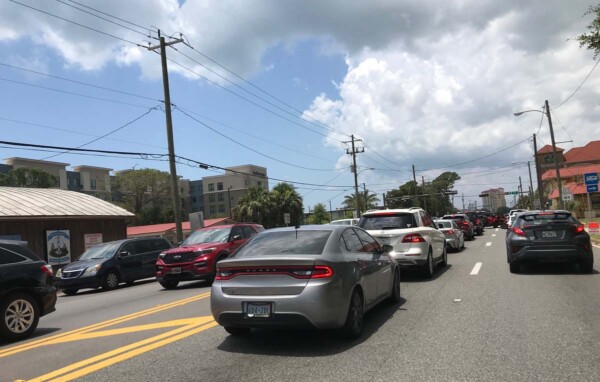
That’s the new ad slogan for the Miracle Strip – pay, pay, pay – all for the dubious pleasure of being stuck in never-ending gridlock, standing in long lines, and peeling bills out of your wallet.
—
There were those who warned against uncontrolled growth, but they were demonized as NIMBYs, opponents of progress, or Negative Nellies.
Turns out, Nelly was right. In fact, Nelly was an optimist.
The haves moved in and made their fortunes and created jobs – some good jobs but mostly low-paying jobs that provide no benefits. The haves made their millions and are enjoying the benefits of “progress.”
But for the rest of us “progress” has brought misery – a paralyzed infrastructure, exorbitant cost of living, rents so astronomical that fewer and fewer of us can afford to live here, and endless, ceaseless, hopeless crowds, noise and traffic.
This isn’t “progress” for us.
This is the sad destruction of what was once a paradise.
—
In the future, the haves will live and play on the Miracle Strip. The have-nots will be trucked in to reroof the houses, water the gardens, wash the cars and raise the kids. Fort Walton Beach, with its ample supply of storage units, gas stations, car washes and convenience stores, will become a service hub for points east.
Isn’t that the way it always goes? Money wins because everybody wants it.
But in the scrabble for a buck, an ugliness emerges that cheapens life itself. It is the ugliness of concrete monads standing like tombstones on what was once an opalescent beach. Of endless car windshields baking in the sun as traffic oozes from one quick-buck “attraction” to the next. Of credit cards being accepted and somebody, somewhere, growing fatter and richer while everybody else suffers just a little bit more.
And those lost afternoons of kneeling at the surf line, immersing yourself in the gentle ministration of wind and waves?
Gone.
The peace, serenity, and sense of place – no, make that sense of home. …
All gone.
About the author:
Del Stone Jr. is a professional fiction writer. He is known primarily for his work in the contemporary dark fiction field, but has also published science fiction and contemporary fantasy. Stone’s stories, poetry and scripts have appeared in publications such as Amazing Stories, Eldritch Tales, and Bantam-Spectra’s Full Spectrum. His short fiction has been published in The Year’s Best Horror Stories XXII; Alfred Hitchcock’s Mystery Magazine; the Pocket Books anthology More Phobias; the Barnes & Noble anthologies 100 Wicked Little Witch Stories, Horrors! 365 Scary Stories, and 100 Astounding Little Alien Stories; the HWA anthology Psychos; and other short fiction venues, like Blood Muse, Live Without a Net, Zombiesque and Sex Macabre. Stone’s comic book debut was in the Clive Barker series of books, Hellraiser, published by Marvel/Epic and reprinted in The Best of Hellraiser anthology. He has also published stories in Penthouse Comix, and worked with artist Dave Dorman on many projects, including the illustrated novella “Roadkill,” a short story for the Andrew Vachss anthology Underground from Dark Horse, an ashcan titled “December” for Hero Illustrated, and several of Dorman’s Wasted Lands novellas and comics, such as Rail from Image and “The Uninvited.” Stone’s novel, Dead Heat, won the 1996 International Horror Guild’s award for best first novel and was a runner-up for the Bram Stoker Award. Stone has also been a finalist for the IHG award for short fiction, the British Fantasy Award for best novella, and a semifinalist for the Nebula and Writers of the Future awards. His stories have appeared in anthologies that have won the Bram Stoker Award and the World Fantasy Award. Two of his works were optioned for film, the novella “Black Tide” and short story “Crisis Line.”
Stone recently retired after a 41-year career in journalism. He won numerous awards for his work, and in 1986 was named Florida’s best columnist in his circulation division by the Florida Society of Newspaper Editors. In 2001 he received an honorable mention from the National Lesbian and Gay Journalists Association for his essay “When Freedom of Speech Ends” and in 2003 he was voted Best of the Best in the category of columnists by Emerald Coast Magazine. He participated in book signings and awareness campaigns, and was a guest on local television and radio programs.
As an addendum, Stone is single, kills tomatoes and morning glories with ruthless efficiency, once tied the stem of a cocktail cherry in a knot with his tongue, and carries a permanent scar on his chest after having been shot with a paintball gun. He’s in his 60s as of this writing but doesn’t look a day over 94.
Contact Del at [email protected]. He is also on Facebook, twitter, Pinterest, tumblr, TikTok, and Instagram. Visit his website at delstonejr.com .
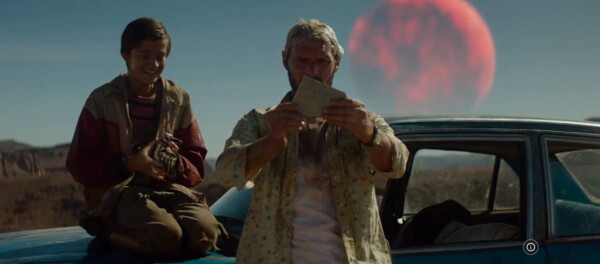
Image courtesy of Samuel Goldwyn Films.
—
“The Last Journey of Paul W.R.” Starring Hugo Becker, Lya Oussadit-Lessert, Paul Hamy and Jean Reno. Directed by Romain Quirot. 1 hour, 27 minutes. Unrated. Hulu.
Del’s take
“The Last Journey of Paul W.R.” is a visually arresting but spiritually obtuse commentary about many subjects, some personal, some cultural, some even scientific. But the viewer will decide if any of these arguments have merit and if the movie is as steeped in layers as it would have you believe.
Based on a short film by French director Romain Quirot, “The Last Journey of the Enigmatic Paul W.R.,” which premiered at the 2016 Tribeca Film Festival, “Journey” tells the story of Paul W.R. (Hugo Becker), who is the only man who can save the world.
In the near future, man’s meddling with climate and his despoiling of the environment have led to catastrophe. Rising temperatures caused by fossil fuels have transformed the earth into a desert hellscape. France now resembles Morocco, where “Journey” was actually filmed.
Salvation arrives in the guise of a planetoid called “the red moon,” which contains a mysterious substance, Lumina, a highly energetic mineral that promises to solve mankind’s energy crisis. Unfortunately, the mining of Lumina has provoked a hostile response, a powerful electromagnetic barrier that surrounds the red moon and sends it on a collision course with the Earth.
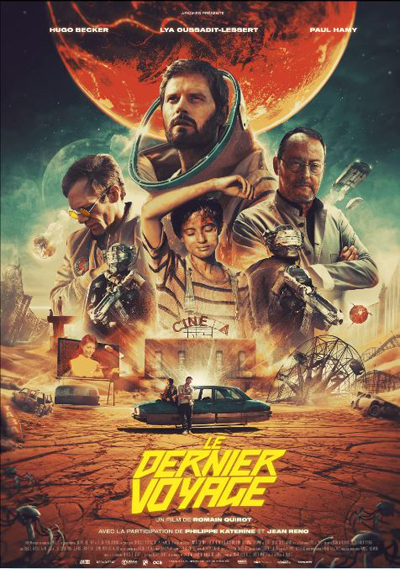
Only one man, Paul W.R., for reasons unspecified, can penetrate the electromagnetic barrier and destroy the red moon. But hours before he is due to begin his mission, Paul W.R. flees, hiding among the thousands of climate refugees that populate desert France. He connects with a disaffected teenage girl, Elma (Lya Oussadit-Lessert), and together they embark on a quest to find a forest Paul remembers from his childhood, one that may hold personal salvation.
Bound up in this hegira is Paul’s father, Henri W.R. (Jean Reno), who in the American style neglected his sons and his dying wife to ensure mankind’s access to Lumina, and Paul’s brother, Elliott W.R. (Paul Hamy), who attempted to pierce the red moon’s veil and failed, coming away from that near catastrophe with a psychic ability to compel suicides. Elliott is pursuing Paul, ostensibly to bring him back for his flight to the red moon. But it is obvious a degree of sibling rivalry may result in a different outcome.
The movie is visually beautiful. Quirot composes scenes the way a poet might arrange quatrains. But lost in the images of desert and firestorms is a sense of purpose as Quirot struggles to decide which imperative will drive his movie – the larger issue of mankind’s demise or the dysfunctional dynamics of Paul W.R.’s family. Add to this muddle the presence of Elma, clearly a symbol for innocence, and the red moon itself, which may be a metaphor for Paul W.R.’s late mother, and the result is a film going in several different directions, none of them working with the other.
“Journey” is a European movie – a French movie – though at times it does lean toward the American sensibility for gunplay and fistfights. In the end it becomes a commentary about the power of the individual, and how one must remain true to his or herself. Or perhaps not.
I give this movie a grade of C+. It has lofty ambitions and beautiful scenery, but its lack of focus means few will appreciate whatever it was Quirot tried to say.
Del Stone Jr. is a former journalist and author.

Image courtesy of Paul Sableman by way of a Creative Commons license. https://www.flickr.com/photos/pasa/31911920834
Another mass shooting.
Ten people dead this time in what has become a depressing affront to human decency.
We will react the way we always react – with declarations of “thoughts and prayers,” angry remonstrations over gun control or mental health funding, vows to vote out the politicians who don’t act on behalf of our beliefs … and do nothing.
And you know what? Nothing will change. It will happen again. We will react the same way, and again, nothing will change.
Change involves risk. As a culture, we’ve become risk-averse in everything from fighting wars to having dinner at a locally owned restaurant. We don’t like risk because it’s … risky.
Meanwhile, some of us will become a little more afraid. When we go out in public we’ll look for places to take cover. We’ll make sure we know where the exits are.
Some of us will become more cynical. We’ll throw up our hands in defeat, ask a rhetorical question about the fundamental nature of society, then move along.
Many of us – far, far too many of us – will become more hardened and extreme in our political beliefs until any kind of action, for better or worse, becomes impossible.
All of us will be asking: Why?
What compels a young man – and many of these mass shooters are young men – to pick up a gun, go to a public place and open fire on innocent people?
It’s trite and dismissive to brand them as “mentally ill” and let it go at that, as if no further explanation is necessary. Of course they’re mentally ill. It could be argued that anybody who commits premeditated murder is mentally ill, and these horrible acts are premeditated. They are not impulse killings or spree killings. They are planned and prepared for, a process that occurs only when a person’s grasp of reality has been seized by infection and rots and dies.
But what caused them to become mentally ill?
Some might say their home environment. Others blame video games and violent movies, while others say we have too many guns floating around out there.
I’ve been thinking about this question for a long time.
I’m afraid I don’t have an answer.
But I do have suspicions.
When I was a kid, most households consisted of two parents. Typically it was the mother who kept the family running and the father who went off to earn a paycheck. These days, far too many households consist of only a single parent, somebody who must work to support the family and is therefore absent a good deal of the time. Many children are raising themselves or worse, they are being raised by television and the internet. While I have known single parents who did a good job bringing up their kids, I suspect having one parent at home results in a more stable family environment. It allows children time to be children, not miniature adults with adult responsibilities. Childhood is an essential ingredient of a well balanced individual, I would say. I make no judgments about the gender, race, politics or religious persuasions of the parents. And I acknowledge that even in two-parent households, the cost of living often requires both parents to work outside the house.
Marriage, it seems, is treated as a disposable commodity. I suspect that’s a symptom of our overall attitude toward the concept of disposability. Whether you agree or not, here in the United States we live in a throw-away world. We throw away everything – small appliances, food packaging, furniture, and yes, even people. We perceive something that’s broken as replaceable, and we throw it away, because it’s cheaper than trying to fix the original.
That was not the case when I was a kid. We fixed things. If the electric can-opener broke we took it to a repairman. If a clock broke we took it to a clock shop. Soft drink bottles carried deposits, and with a bicycle basket full of Coke, Pepsi and RC Cola bottles you could earn enough money to buy a box of frozen shrimp to use as fish bait. Fixing things took time and cost money, yes. But often, the thing that was fixed was better than the original. And guess what? All those clock fixers and can opener surgeons had jobs.
Back then, couples who were having problems with their relationships tended to stay together and attempt to fix them. They didn’t always succeed but they seemed more inclined to try. Your mother was right – marriage is hard work. Not all times are good times. But in today’s throw-away culture we treat marriage and relationships as disposable, just like that clock you bought at Big Lots that stopped working three days after you hung it on the living room wall. We place less value on marriage and relationships because we know if they are not instantly gratifying, we can simply throw them away and find another one.
Gratification. That’s another ingredient in this toxic stew of cultural rot. Our technology has given us the ability to be instantly gratified in just about everything we do. Want something right now? Buy it online and have it delivered. Don’t have the money to pay for it? Put it on credit. Want attention right now? Find it online. Want to be distracted or entertained right now? Lose yourself in a mobile phone screen.
Once, anything worth having was worth working and sacrificing for. A person did without, delayed gratification and scrimped on time or money to eventually acquire that magical thing. Once they had it, they worked like hell to keep it in great shape, which is why Dad spent Saturday morning washing and waxing the car, and Mom spent so much time cleaning the house and yelling at kids who didn’t wipe their feet before they came inside. A certain pride of ownership came with every new and great thing, and that was partly because it represented, to borrow a cliché, all the blood, sweat and yes, even a few tears, to get it in the first place.
The work it took to get those things – not just material possessions but marriages, relationships and children – was instructional in and of itself. It taught us the value of hard work, gave us patience, and made us appreciative for what we had.
I guess what I’m talking about are old-fashioned values.
Life was more difficult. Everything from washing clothes to fixing the car, cooking dinner and making sure the kids toed the line, took more effort. People didn’t have time to feel sorry for themselves, spread poison on the internet or immerse themselves in screed and demented jingoism. They were too busy trying to get by.
People tended to communicate by actually talking to other people. That was partly due to necessity – there were few alternatives – and partly because it was pleasurable. People invented reasons to socialize with other people, from parties to bridge club meetings, social work, scouting or just hanging out at local restaurants. When you speak to somebody in the flesh, a magical thing happens. You engage in not only verbal communication but interpersonal communication. You see the arch of their eyebrows; you hear the tone of their voice. You know instantly when they are joking, being sarcastic, or feeling grief.
You develop empathy.
That’s a quality sadly lacking in today’s environment of text messages, email, online comments and social media posts. We communicate, yes. More than at any previous time in human history. But the quality of our communication is lacking. It is disposable, just like everything else in our culture. We treat others online in ways we would never do in person – as a person who grew up before the arrival of the internet, I would say we rarely treated people as savagely as we do now in comments and social media posts. The lack of immediate physical presence has exerted a profound influence on not only what we say to others but how we say it. The dearth of empathy has turned many of us into sociopaths.
The internet has been a boon to mankind. Commerce, communication, the availability of knowledge – all of these activities have been revolutionized by the invention of the world wide web. Just today, for instance, I went online to search for a way to replace the batteries in an LED lantern. When I found the instructions in a PDF, I had to search for a way to mirror an image in Photoshop because the text was backwards. It would have taken me weeks to get those answers 50 years ago, and the Photoshop question would have been moot, because it didn’t exist 50 years ago.
I spend a great deal of my time online, from posting my ramblings on social media to checking weather models for hurricane development, watching movies, and offering my fiction for sale to readers directly.
But the digital world is a double-edged sword. I have an advantage over younger people in that I grew up with and learned a tradition of study and contemplation. I read quite a few books per year – some by excellent writers, others throw-away trash designed to entertain, not inform (I do not throw them away! I donate them to the SOCKS thrift shop to support their mission of saving and finding homes for abandoned cats and kittens in the Fort Walton Beach area.)
But for every online opportunity to learn, share information or spread kindness, there are a thousand ways to waste time, indulge in trash or even poison, and be cruel to other people. Pornography is rampant, for instance. While I personally don’t have a problem with porn, its easy availability means children are seeing it, and it is shaping their views about sex, romance, and relationships. Jingoism, political dogma and the echo chambers of extremism are also only a few clicks away. Nazis, racists, left- and right-wing extremists and others who never, ever would have received much of an audience in the past now make their voices as loud or louder than the mainstream.
The result is a skewed perception of reality. Marshall McLuhan told us that the medium is the message. If that’s the case, the message is that the United States is awash in rage, from angry comments to political extremism and violence. A kind of cultural lawlessness is at work in the absence of everything that leavened our behavior – hard work, struggle, delay of gratification, studiousness, and the consideration of others. These days it seems even acts of kindness we hear about are freighted with an expectation of reward other than the mere satisfaction of having done something nice.
It must sound as if I’m demonizing the present and deifying the past. I suppose I am, to an extent. I acknowledge life today, in many ways, is vastly superior to what it was 50 years ago. I can communicate instantly with people halfway around the world; in the past that would have required a costly telephone call. I take a pill that keeps my blood pressure down; in the past I would probably be dead of a stroke already. I underwent a laser iridotomy to treat my acute-angle glaucoma. It was an office procedure and I drove myself home. In the past it would have required major surgery. And it’s not just things – attitudes have changed. Although we are still struggling, we are making progress in eliminating racial discrimination. It is no longer an automatic death sentence for a man to admit he loves another man. We care about the environment (except for President Imbecile). We can build a device and send it out of the solar system to capture fantastic photos of objects we will not, in our lifetime, see for ourselves.
Life is so much better in so many ways.
But in other ways it is worse.
Families are fractured and kids are left to fend for themselves. People communicate vicariously, and much is lost in translation. Technology is a dehumanizing wall that is transforming us into misanthropes and sociopaths. Our obsession with disposability has extended to our relationships and how we treat others. Our technology has created a vast laziness that affects not only what we think but how we think it, corrupting both the medium and the message.
The medium and the message.
I would say many of these mass shootings represent a reservoir of anger generated by the way we live, coupled with a cry for attention from a generation of kids who desperately need some stability and love in their lives.
In the balance of things, our efforts to make life easier have not done us many favors.
Calls for additional gun controls, or more guns carried by more people, or more mental health funding, or any of the knee-jerk solutions offered by angry and frightened people in the wake of a mass shooting, are probably not going to work. Simple solutions to complex problems never do. The problem is a hydra, with many, many faces. One answer does not fit all.
So how do we fix this? I have some ideas, but because my analysis of the problem is made up of suspicions, so is my answer. Bear that in mind as you read this, if you are still with me.
I think the only answer is to re-establish certain values. People need to put down their phones and spend time with their kids. They need to get involved in their communities on a face-to-face basis and meet their neighbors. They need to make time for the important things in life – family and community – and stop throwing it away on self-indulgence and comfort. They need to make time for contemplation, thoughtfulness, and at least a small measure of scholarship. Sacrifice. Work hard. Delay gratification. Be nice.
And again, for God’s sake, spend time with your kids.
Those things won’t happen, but if they did, mass shootings might become a thing of the past.
About the author:
Del Stone Jr. is a professional fiction writer. He is known primarily for his work in the contemporary dark fiction field, but has also published science fiction and contemporary fantasy. Stone’s stories, poetry and scripts have appeared in publications such as Amazing Stories, Eldritch Tales, and Bantam-Spectra’s Full Spectrum. His short fiction has been published in The Year’s Best Horror Stories XXII; Alfred Hitchcock’s Mystery Magazine; the Pocket Books anthology More Phobias; the Barnes & Noble anthologies 100 Wicked Little Witch Stories, Horrors! 365 Scary Stories, and 100 Astounding Little Alien Stories; the HWA anthology Psychos; and other short fiction venues, like Blood Muse, Live Without a Net, Zombiesque and Sex Macabre. Stone’s comic book debut was in the Clive Barker series of books, Hellraiser, published by Marvel/Epic and reprinted in The Best of Hellraiser anthology. He has also published stories in Penthouse Comix, and worked with artist Dave Dorman on many projects, including the illustrated novella “Roadkill,” a short story for the Andrew Vachss anthology Underground from Dark Horse, an ashcan titled “December” for Hero Illustrated, and several of Dorman’s Wasted Lands novellas and comics, such as Rail from Image and “The Uninvited.” Stone’s novel, Dead Heat, won the 1996 International Horror Guild’s award for best first novel and was a runner-up for the Bram Stoker Award. Stone has also been a finalist for the IHG award for short fiction, the British Fantasy Award for best novella, and a semifinalist for the Nebula and Writers of the Future awards. His stories have appeared in anthologies that have won the Bram Stoker Award and the World Fantasy Award. Two of his works were optioned for film, the novella “Black Tide” and short story “Crisis Line.”
Stone recently retired after a 41-year career in journalism. He won numerous awards for his work, and in 1986 was named Florida’s best columnist in his circulation division by the Florida Society of Newspaper Editors. In 2001 he received an honorable mention from the National Lesbian and Gay Journalists Association for his essay “When Freedom of Speech Ends” and in 2003 he was voted Best of the Best in the category of columnists by Emerald Coast Magazine. He participated in book signings and awareness campaigns, and was a guest on local television and radio programs.
As an addendum, Stone is single, kills tomatoes and morning glories with ruthless efficiency, once tied the stem of a cocktail cherry in a knot with his tongue, and carries a permanent scar on his chest after having been shot with a paintball gun. He’s in his 60s as of this writing but doesn’t look a day over 94.
Contact Del at [email protected]. He is also on Facebook, twitter, Pinterest, tumblr, TikTok, Ello and Instagram. Visit his website at delstonejr.com .

Image courtesy of Del Stone Jr.
This is a copy of an email I just sent to the Fort Walton Beach City Council:
My name is Del Stone Jr.
I consider Fort Walton Beach my home. I’ve lived in the city since 1964 and my mother’s family, the Readys, have lived in the city since the early 1930s.
I recently moved into Mom’s house on Elliott Point to help her, and to look after the house and property. She and Dad bought this house in 1969 and I grew up in it. My enduring memories of this neighborhood are of the “old Fort Walton Beach,” with its oversized lots, forests of live oaks and hickories, and its closeness to the water.
That closeness to the water is what made my life special. Prior to Elliott Point we lived in a neighborhood off Robinwood Drive, which was well inland. Once we moved to our current location my life took a new direction, one that included swimming, fishing, boating, or just contemplating existence from the peace and quiet of an undeveloped beach on Choctawhatchee Bay.
We were able to do that back in the ’70s and ’80s because Elliott Point offered numerous public accesses to the water. Our favorites were “The Point,” a public beach at the end of Hood Avenue, the launch ramp on Walkedge, and the bay access at the end of Bay Drive and Brooks Street. From there we could launch our john boats, swim across a lagoon or stroll the beach and swim.
Times have changed.
Most waterfront locations on Elliott Point are now blocked by docks and seawalls. The Point has shrunk to a fraction of what it once was, and if you stray beyond those narrow confines an angry homeowner will shake his fist and threaten to call the police. The boat ramp remains but the land across the lagoon has been developed. The beaches there are pretty much off-limits.
That leaves the water access at Bay Drive and Brooks Street.
I now hear the City of Fort Walton Beach might vacate the property at the request of the resident at 44 Bay Drive S.E. I am writing to urge that the city not take that action.
While I can understand the resident’s wish to own the property, the fact is that lot represents the last meaningful access to the water for ALL of Elliott Point. Without it, neighborhood residents will have no access to the beach apart from a sliver of land at Hood and the “park” at the end of Hollywood Boulevard, which is blocked by rip-rap.
The other lot in question, a pond that borders Brooks Street, is an established wetlands area. As such, it protects the quality of water in the bay, provides a repository for storm water, and offers a habitat for small animals and birds. It cannot simply be “filled in” without serious repercussions for the rest of the neighborhood.
Given the erosions in our quality of life due to overdevelopment, the city should, in my opinion, reverse that trend by allowing this tiny slice of property to remain public so that today’s children will be able to enjoy a small sample of the “old Fort Walton Beach” I took for granted in 1969.
Sincerely,
Del Stone Jr.
About the author:
Del Stone Jr. is a professional fiction writer. He is known primarily for his work in the contemporary dark fiction field, but has also published science fiction and contemporary fantasy. Stone’s stories, poetry and scripts have appeared in publications such as Amazing Stories, Eldritch Tales, and Bantam-Spectra’s Full Spectrum. His short fiction has been published in The Year’s Best Horror Stories XXII; Alfred Hitchcock’s Mystery Magazine; the Pocket Books anthology More Phobias; the Barnes & Noble anthologies 100 Wicked Little Witch Stories, Horrors! 365 Scary Stories, and 100 Astounding Little Alien Stories; the HWA anthology Psychos; and other short fiction venues, like Blood Muse, Live Without a Net, Zombiesque and Sex Macabre. Stone’s comic book debut was in the Clive Barker series of books, Hellraiser, published by Marvel/Epic and reprinted in The Best of Hellraiser anthology. He has also published stories in Penthouse Comix, and worked with artist Dave Dorman on many projects, including the illustrated novella “Roadkill,” a short story for the Andrew Vachss anthology Underground from Dark Horse, an ashcan titled “December” for Hero Illustrated, and several of Dorman’s Wasted Lands novellas and comics, such as Rail from Image and “The Uninvited.” Stone’s novel, Dead Heat, won the 1996 International Horror Guild’s award for best first novel and was a runner-up for the Bram Stoker Award. Stone has also been a finalist for the IHG award for short fiction, the British Fantasy Award for best novella, and a semifinalist for the Nebula and Writers of the Future awards. His stories have appeared in anthologies that have won the Bram Stoker Award and the World Fantasy Award. Two of his works were optioned for film, the novella “Black Tide” and short story “Crisis Line.”
Stone recently retired after a 41-year career in journalism. He won numerous awards for his work, and in 1986 was named Florida’s best columnist in his circulation division by the Florida Society of Newspaper Editors. In 2001 he received an honorable mention from the National Lesbian and Gay Journalists Association for his essay “When Freedom of Speech Ends” and in 2003 he was voted Best of the Best in the category of columnists by Emerald Coast Magazine. He participated in book signings and awareness campaigns, and was a guest on local television and radio programs.
As an addendum, Stone is single, kills tomatoes and morning glories with ruthless efficiency, once tied the stem of a cocktail cherry in a knot with his tongue, and carries a permanent scar on his chest after having been shot with a paintball gun. He’s in his 60s as of this writing but doesn’t look a day over 94.
Contact Del at [email protected]. He is also on Facebook, twitter, Pinterest, tumblr, TikTok, and Instagram. Visit his website at delstonejr.com .
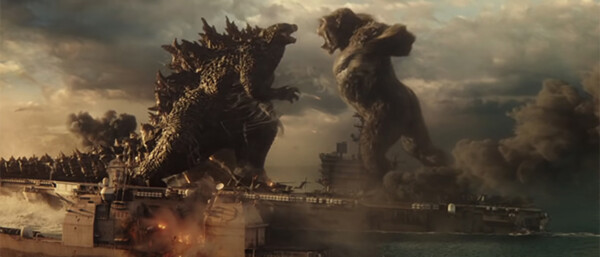
Image courtesy of Warner Bros. and Toho.
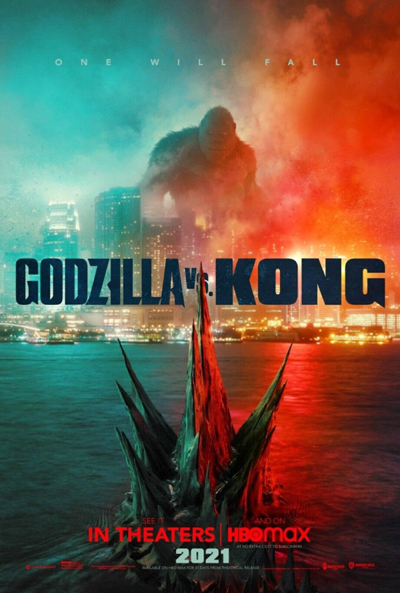
“Godzilla vs. Kong” Starring Alexander Skarsgard, Millie Bobby Brown, Rebecca Hall, Shun Oguri and others. Directed by Adam Wingard. 113 minutes. Rated PG-13. Theaters and HBO Max.
Del’s take
It’s quite the compliment to the Florida Panhandle that “Godzilla vs. Kong” opens with the king of the kaiju unleashing radioactive hell on the Apex Cybernetics facility in Pensacola, though I doubt the Chamber of Commerce is holding mixers to revel in its newfound celebrity. Still, it’s cool for us nerdists and might help the next Pensacon recruit some real celebrity muscle.
Meanwhile, that maiden salvo of destructo-porn sets the pace for this third installment of the “new” Godzilla, who in my book looks a lot less charming or even convincing than the original guy in the rubber suit. Freshened up with modern FX and a 21st century sensibility, Godzilla stomps onto the screen as an avenging angel out to punish mankind for making such a sloppy mess of the Earth. But then he’s always done that.
Next you’ve got Kong, the giant ape, who has received an updated and politically correct sentience PLUS a sense of morality to boot. When the two square off it’s not a clash of titans but a clash of value systems, with an evil corporation – yes, there’s always an evil corporation – operating as the fulcrum for the conflict.
“Godzilla vs. Kong” is the story – well, it’s three stories really – of Kong’s attempt to finally go “home,” Godzilla’s attempt to make sure he remains at the top of the apex predator heap and Apex Cybernetics’ attempt to obtain a new and powerful energy source that will allow them to engage full-throttle in various evil, shadowy, corporation-y things.
The particulars are a lot more confusing and I will go into them only to the extent of setting the stage: The Apex Corporation has discovered a new source of energy in a hollow realm at the center of the Earth and needs this energy to adequately power a “project” it is working on. It hires expert Nathan Lind (Alexander Skarsgard) to lead an expedition there, assisted by Dr. Ilene Andrews (Rebecca Hall) and her hearing-impaired daughter Jia (Kaylee Hottle), who are studying Kong. Apex needs Kong to show them the source of this new energy. Meanwhile, Godzilla, responding to its natural imperative to be the biggest and baddest monster of ’em all, senses the presence of Kong and goes on the offensive, much to the chagrin of Monarch Project scientist Mark Russell and his monster-attuned daughter Madison (Millie Bobby Brown). She teams up with conspiracy investigator and podcaster Bernie Hayes (Brian Tyree Henry) to investigate Godzilla’s newfound aggression and whatever link that might have to Apex, and drags along her buddy Josh Valentine (Julian Dennison) as comedic ballast.
Did I mention it was complicated?
Suffice it to say that all three storylines converge and loose strings are tied after some romp ’em stomp ’em, bad-ass kaiju/Kong butt-kicking. Some of the resolutions are happy while others are merely satisfying. The point is, the viewer will have been entertained for two hours and Legendary Entertainment and Warner Brothers will have earned another $200 million, which should keep the lights on over the next few weeks.
The performances are all good. I would single out young Kaylee Hottle as Jia, the remaining member of a tribe that was extinguished on Skull Island by a natural disaster, as the showcase of the lot. She and Kong were kindred spirits in loss, and her performance effectively portrayed that subtextual link in their relationship.
The rest of the movie was not as compelling. The original “Godzilla” exhibited a kind of primeval ferocity that has endured over the past 66 years and inspired countless sequels and remakes, most of which traded the animal nobility of the original for cheap yucks and self-parody. The modern iterations – “Godzilla,” “Godzilla: King of the Monsters” and now “Godzilla vs. Kong” – exchange parody for politically correct, touchy feely emotional imperatives that are no more satisfying to the palate than a quivering plate of tofu prime rib.
What saves “Godzilla vs. Kong” are the spectacular special effects, the fight scenes between Kong and Godzilla, and Kong’s humanity, which worked a lot better than it should have. It really felt like Kong was one of the characters and not merely a CGI-generated killer ape.
If the story had been as strong as the acting and special effects, I’d give the movie an A. As it is, “Godzilla vs. Kong” gets a B. It’s better than some other B-graded movies but not as good as others, and I think that’s fair. I can’t advise you to see the movie in a theater in the middle of a global pandemic, but I expect it’s a visual spectacle on the big screen.
Mladen’s take
“Godzilla vs. Kong” is a bonkers movie. Del’s modulated review of the film is, ah, too modulated. Because “G v. K” is utterly bonkers, the film deserves an extreme grade, A or F. But, because I saw the movie at an Imax theater my perception has been distorted. Let me tell you, Imax sound makes my fairly sophisticated, newish AVR-driven, 7.1 surround-sound system sound like an AM broadcast from 1930.
“G v. K” is an F, if you’re interested in a story that links the Monsterverse’s previous three movies to its fourth. I was insulted by the film’s flimsy, disingenuous effort to make it seem part of a continuity. Particularly distasteful was the improper dose of homage to the name of Serizawa. Depending on my mood, I may even characterize it as insulting. The physics of Hollow Earth is bonkers. Godzilla and Kong balancing while they fight on a ship that’s, I don’t know, a magnitude lighter and significantly less wide than the beasts are tall is bonkers. G and K fall overboard to fight underwater and the humans try to help Kong by launching Hedgehog-like depth charges to disorient the reptile and it worked. Bonkers. Why wouldn’t Kong get disoriented, too, and continue on his merry way to drowning? Huh? If the Kong whisperers were worried about Godzilla sniffing out Kong if the ape left his Skull Island containment facility, why would they transport Kong by boat across the Pacific? Godzilla is amphibious. Godzilla lives in the ocean. Godzilla has, apparently, extrasensory power to detect an Alpha interloper. Transport by water was bonkers. Hell, a few scenes later, the humans are moving the ape to Antarctica via sling and a lot of helicopters. Bonkers storytelling to the left of me. Bonkers storytelling to the right. I bonked my head a few times to orient myself to the insane worldbuilding, the deconstruction of the storyline in the preceding three Godzilla films, or the uselessness of the daughter of the bad guy. What the hell happened to the eco-terrorist dude in “Godzilla: King of Monsters” who bought a severed Ghidorah head from some down-on-their luck fishermen?
In the areas – vision, plot, script writing, directing – that make or break a movie, “G v. K” is sheer F-ness. Really. No joke. I’m serious. The fact that the visual and sound effects are so good augments the F-ness. It’s clear that producers and the director thought they could substitute coherence and the internal logic an impossible movie premise must generate for a lot of spectacular FX fighting and some damn fine sound effects. The soundtrack is good as is most of the acting. Where Del the modulator gives the kid in the film kudos, I bow to Rebecca Hall’s Andrews. Her delivery of lines and an assortment of gestures help mitigate the harshness of the dys-reality of the realm created in G v. K. Hall did for “G v. K” what Mila Kunis’s Jupiter did for “Jupiter Ascending,” plausibly explain or soften the absurdity of what unfolds on the screen.
Yes, I’ll probably see “G v. K” in an Imax theater, again. Yes, I’ll buy the movie in Blu-ray format when it becomes available. But, listen to me, “G v. K” is crappy, unless you’re sound-o-phile.
Mladen Rudman is a former journalist and technical writer. Del Stone Jr. is a former journalist and author.
It was an unpleasant reminder of life under the previous administration and I refused to be a part of it.
I unfriended two people on social media today for circulating rumors about the current president and vice president. I’ll do it again and I’ll keep doing it until I have no friends left if I have to.
One of the rumors was that President Biden has Alzheimer’s disease.
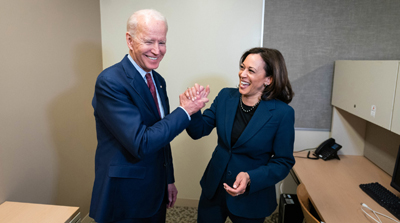
Biden has never been diagnosed with Alzheimer’s disease. He has not, to my knowledge, been tested for cognitive decline. His predecessor bragged about “acing” a cognitive test that required him to memorize the words “person, woman, man, camera, TV.” Too bad they didn’t ask him to memorize “compassion, humility, generosity, truth, law.”
Neurologists who have observed Biden’s performance both during the election campaign and after he assumed the presidency say he does not exhibit signs of having Alzheimer’s.
What Biden does have is an inability to speak with articulation, and a speech impediment. Speech pathologists say Biden appears to be thinking of multiple subjects as he speaks, which can cause him to lose his train of thought and not complete his original point. Also, a common strategy for managing a stutter is to pause in one’s speech until the urge to stutter passes, then resume speaking.
Unless we are descending into the barbarism that characterized the previous four years, when people with disabilities where ridiculed and mocked, I see no value in spreading malicious rumors about Biden.
When he is diagnosed by a neurologist, not a urologist with an agenda, and the rumor becomes a fact, then it will be OK to say he has Alzheimer’s. But when it’s Cousin Jed on Facebook making the diagnosis, well, Cousin Jed and his ilk can pop another Natty Lite and sashay across the barn floor at their little hate hoedown by themselves.
The other rumor is that Vice President Harris was a “call girl.”
I had to do a doubletake on that one. I had never heard it before. A “call girl”? Really? So of course I turned to my friend Google for a possible answer.
The rumor seems to be an outgrowth of a one-year relationship Harris had with former San Francisco Mayor Willie Brown. He was married at the time, though he and his wife had been separated for 10 years. The rumor-mongers have it that Harris was a “high-priced call girl” paid to attend events with Brown. A few things about that.
Dating somebody who occupies a spot higher on the power curve doesn’t make one a “call girl” or a “gigolo.” It might make them an ambitious power-grasper and that was my impression of Hillary Clinton after she remained with hubby Bill once the Monica Lewinsky story came to light. But I have no reason to think that about Harris because I don’t know a whole lot about her relationship with Brown. Maybe they actually liked each other. I don’t know, and I hasten to add that Cousin Jed on Facebook doesn’t know either. I also hasten to add that even if Harris did pursue a relationship with Brown to further her career, that peccadillo is about a 2 on a 1-to-10 scale of sin. It certainly doesn’t make her a “call girl.” And in light of the actual crimes, possible crimes, and documented cases of favor-currying, exhibitions of execrable taste and embarrassing improprieties by the previous administration that were either overlooked or forgiven, I see no reason for critics to fuss about Harris’ strategies for breaking the glass ceiling.
But mostly I just don’t want to hear this nonsense anymore. I’ve filled this lifetime’s quota of science-hating disinformation, agenda-driven quackery and political jingoism mindlessly and irresponsibly circulated by uninformed xenophobes who would rather support a traitorous insurrectionist criminal than allow a trans woman to hold a Cabinet-level position.
My solution is to delete the @$%&ers. I know. Not very nice.
But it’s what I got for now.
About the author:
Del Stone Jr. is a professional fiction writer. He is known primarily for his work in the contemporary dark fiction field, but has also published science fiction and contemporary fantasy. Stone’s stories, poetry and scripts have appeared in publications such as Amazing Stories, Eldritch Tales, and Bantam-Spectra’s Full Spectrum. His short fiction has been published in The Year’s Best Horror Stories XXII; Alfred Hitchcock’s Mystery Magazine; the Pocket Books anthology More Phobias; the Barnes & Noble anthologies 100 Wicked Little Witch Stories, Horrors! 365 Scary Stories, and 100 Astounding Little Alien Stories; the HWA anthology Psychos; and other short fiction venues, like Blood Muse, Live Without a Net, Zombiesque and Sex Macabre. Stone’s comic book debut was in the Clive Barker series of books, Hellraiser, published by Marvel/Epic and reprinted in The Best of Hellraiser anthology. He has also published stories in Penthouse Comix, and worked with artist Dave Dorman on many projects, including the illustrated novella “Roadkill,” a short story for the Andrew Vachss anthology Underground from Dark Horse, an ashcan titled “December” for Hero Illustrated, and several of Dorman’s Wasted Lands novellas and comics, such as Rail from Image and “The Uninvited.” Stone’s novel, Dead Heat, won the 1996 International Horror Guild’s award for best first novel and was a runner-up for the Bram Stoker Award. Stone has also been a finalist for the IHG award for short fiction, the British Fantasy Award for best novella, and a semifinalist for the Nebula and Writers of the Future awards. His stories have appeared in anthologies that have won the Bram Stoker Award and the World Fantasy Award. Two of his works were optioned for film, the novella “Black Tide” and short story “Crisis Line.”
Stone recently retired after a 41-year career in journalism. He won numerous awards for his work, and in 1986 was named Florida’s best columnist in his circulation division by the Florida Society of Newspaper Editors. In 2001 he received an honorable mention from the National Lesbian and Gay Journalists Association for his essay “When Freedom of Speech Ends” and in 2003 he was voted Best of the Best in the category of columnists by Emerald Coast Magazine. He participated in book signings and awareness campaigns, and was a guest on local television and radio programs.
As an addendum, Stone is single, kills tomatoes and morning glories with ruthless efficiency, once tied the stem of a cocktail cherry in a knot with his tongue, and carries a permanent scar on his chest after having been shot with a paintball gun. He’s in his 60s as of this writing but doesn’t look a day over 94.
Contact Del at [email protected]. He is also on Facebook, twitter, Pinterest, tumblr, TikTok, and Instagram. Visit his website at delstonejr.com .
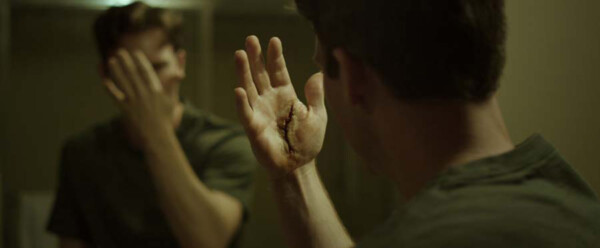
Image courtesy of The Arbors Production with The Red Arrow Studios Company.
“The Arbors” Starring Drew Matthews, Ryan Davenport, Sarah Cochrane and Alexandra Rose. Directed by Clayton Witmer. 1 hour, 59 minutes. Unrated. Streaming on Amazon Prime, Tubi TV.
Del’s take
Ethan Duanes (Drew Matthews) has a problem.
His problem is life.
Ethan is a locksmith but he cannot unlock the secret to happiness. All he can do is remember an earlier time when his parents were still alive and his younger brother a constant companion. The world seemed better then.
Now, the world isn’t better. His parents have passed away and his brother, Shane (Ryan Davenport), has started a family. The ancestral home, like Ethan, is slowly succumbing to rot and ruin, and the future seems as dark as the night shifts Ethan works.
One night, as Ethan is driving back to his rented house after a call, he comes across a dead deer in the road. He notices something moving inside the deer, a kind of insect or arachnid. He takes the carcass home, builds a container to hold the strange creature and lures it inside with cuts of meat. Then, he proceeds to care for it.
Until the creature breaks out. And people in the community begin to die.
That is the premise of “The Arbors,” a “monster movie” that isn’t a “monster movie.” It is less about things that go bump in the night as things that go bump in the heart.
“The Arbors” earns high marks for its layers and its obvious pathos. Ethan is a sympathetic loser to whom many people can relate: He is overwhelmed by life, fearful of change and nostalgic for the simpler times of the past. This theme of resistance to change operates throughout the movie – Ethan says it more than once by rhetorically asking, “Can’t this all be over?” His fidelity to the past is expressed in other ways, too. He is constantly sorting through photographs of him and his brother when they were kids. He gives his brother the gift of a toy soldier from a game they played as children called Out of Time! Ethan has kept the game; his brother absent-mindedly drops the toy soldier on the floor and before movie’s end it returns to Ethan’s possession. Ethan tells his young niece, Robin (Sarah Cochrane), he hopes to purchase the family home and restore it so that he may live there again. When Shane reveals he and his wife, Lynn (Alexandra Rose) are contemplating a move out of state, Ethan becomes agitated and for once, shows strong emotion.
Where “The Arbors” fails is its glacial pacing and the infuriating passivity of its viewpoint character. Ethan doesn’t simply miss the past; he is mired in it and will never escape. He rejects chance after chance to change his circumstances, at one point avoiding a former friend who has offered to take him away from his ennui and show him the world. In truth he doesn’t want to escape, and he would draw everybody around him into the tar pit of his inertia. This slow vortex of apathy oozes over both character and audience alike, preserving the misery in a sluggish and vapid shadowbox that never answers the question “Why?”
And when the “monster” kills people who have threatened Ethan’s attempt to restore the past to the present, “The Arbors” morphs into “Donnie Darko” and the audience is left with a new batch of questions.
What’s remarkable about “The Arbors” is that it was shot in the Winston-Salem, N.C., area in 25 days on a budget of $14,000, then finished for another $11,000.
Witmer deserves kudos for trying to rise above the meager expectations of the genre, but “The Arbors” has some deficiencies that outweigh its virtues. Still, it’s not a bad movie. Just slow, with unanswered questions and motivations. I expect Witmer will do better his next time out of the gate.
I grade “The Arbors” a C+.
Mladen’s take
Through much of “The Arbors” I kept telling myself, “Wow, the kid playing the principal misfit really looks like a young Dennis Quaid.”
That’s how I managed to stay entertained when “The Arbors” got batty or the story cryptic or incoherent, which wasn’t all the time. Just much of the time.
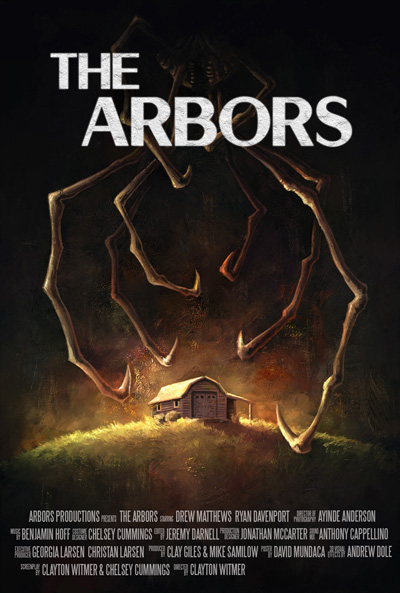
Del blew a lot of words summing the plot. I’ll do it for you with one, short sentence: Rogue nostalgia is a deadly when you’re connected to person-sized spider with a mammal-like mouth packing white shark teeth.
One of my biggest problems with the movie is that I have no idea how or why Ethan and pseudo-spider are telepathically linked. If I was the angry wayward mutant arachnid, I’d be pissed at Ethan for putting me in a cage when I was but a maggot or whatever. That would be reason enough to eat his eyeballs rather than serve as an executioner for the human.
And, who the hell where those guys in the white hazmat suits? And, why didn’t at least one of them have a gun for self-defense because they were chasing an aberration of nature?
I don’t mind that “The Arbors” portrays itself as horror but is really about shitty, navel-gazing stuff like hurt feelings. People, after all, are more frightening than zombie werewolves with rabies waving Trump is My President flags. But, at times, I felt like I was watching, I don’t know, “Kramer v. Kramer” or “Steel Magnolias.”
The problem is that the film seems to want to get good and then backs off. A scene of driving at night might be too long. Or there’s the crappy voice acting when Ethan is talking to someone on his flip phone. Yes, director, I get it that Ethan is stuck in a time that no longer exists. And, why the fuck does “Connie” care about Ethan? She didn’t even sign his high school yearbook. What proof is there that she let him feel her up when they were teenagers or that they went to prom together? She materializes, tries to get him to leave town, and then de-materializes.
On the plus side, “The Arbors” provides a holistic moodiness as the backdrop of life in an unnamed town somewhere in the foothills of the Appalachians. Everything seems afflicted by Ethan’s desperate unhappiness. I liked the score. It meshed nicely with the moodiness.
The movie gets a C- because it failed to meet its promise to me like life failed to meet its promise to Ethan. It didn’t allow him to stay 13 years old forever. And, the film failed to create a sympathetic, lonely man with control of a monster who I could like.
Mladen Rudman is a former journalist and technical writer. Del Stone Jr. is a former journalist and author.
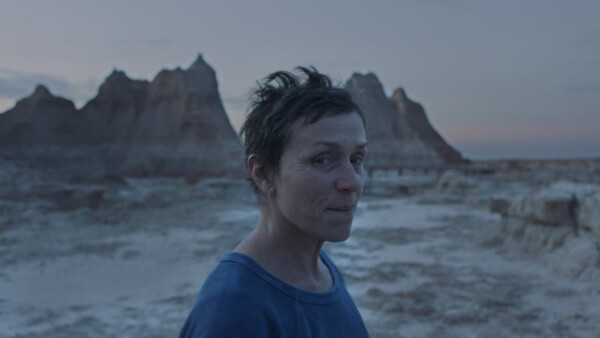
Image courtesy of Searchlight Pictures.
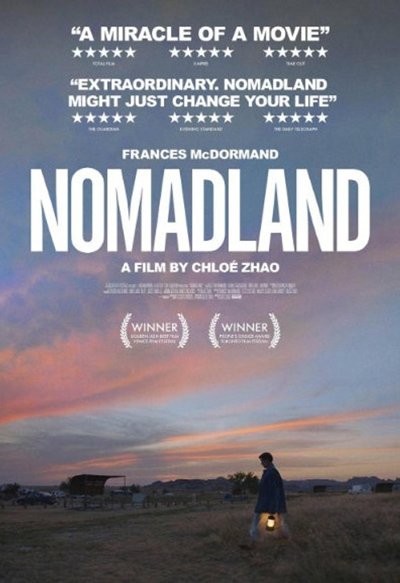
“Nomadland” Starring Frances McDormand, David Strathairn, Linda May, and others. Directed by Chloé Zhao. 107 minutes. Rated R. Hulu.
Mladen’s take
Goddamn, Del, you must hate me. What were you thinking when you suggested we review “Nomadland”? Was it something like, “This will force Mladen to commit suicide, for sure.”
While watching this film, I dropped into a weariness shrouded by miasma as potent as the story told by “Nomadland.” The movie, which carries with it the feel of a documentary, is poignant, spare, ghostly, and perfectly bleak.
To uplift myself, I had no choice but to watch “Judge Dredd” the same night. “Dredd,” the one with Karl Urban as judge, jury, and executioner, made a narcotics-doused, hyperviolent, and environmentally devasted country of the future run by fascist Republicans seem like paradise compared to the U.S. of today portrayed in “Nomadland.”
The principal character in “Nomadland,” Fern, portrayed brilliantly by one of the finest actors in the business, Frances McDormand, is somehow unfathomably sympathetic and gallingly annoying at the same time. Yes, Fern was a grieving widow. Yes, Fern was an older worker displaced by the Great Recession, which destroyed her town when its largest employer, a mining company, shut down. Yes, working as a seasonal employee at an Amazon warehouse is the equivalent of getting exposed to a vast, barren, dehumanizing nothing of a space symbolizing senseless consumerism in which destitute Fern was unable to partake.
What troubled me was Fern’s inability, maybe it was actually an unwillingness, to make a better life for herself. Why did Fern refuse Dave’s kind offer? Portrayed wonderfully by David Strathairn, Dave was a patient, gentle man who did overcome his nomadic ways and, apparently, a troubled past to accept the new and good role that life extended to him, doting grandfather.
I understand the happiness Fern once possessed was destroyed by a depthless sorrow and sense of loss precipitated by unexpected and uncontrollable change to the trajectory of her social life. It’s how I felt every time I read just a snippet about the 2021 CPAC convention.
But, holy shit, “Nomadland” is exquisite, full-throttle hopelessness wrapped in a beautiful, melancholy score and the stark scenery of America’s central plains and its west.
I will never watch this movie again because it frightens me like no other film I’ve seen. I fear “Nomadland” projects what’s heading toward America without using the hyperbole of partisan politics, the ills of rogue science, or the spectacle of wanton violence. The film offers nothing that distracts me from its message. I was unable to dismiss “Nomadland” by saying, “Oh, this isn’t real. It’s just a movie.” Underemployment. Neglect of people who are aging. Dependence on a global economy that plods without direction or mercy. “Nomadland” shows me a world where escaping outdoors to regain balance and shed the desperation of an internet-based society is no longer possible because mankind’s foul imprint is, literally, everywhere you turn. Most of us are on the way to becoming involuntary nomads.
I was troubled, possibly even hated, every minute of “Nomadland.” But, fuck, it’s impossible to give this ghastly peek into the subdued annihilation of a soul anything but an A.
Del’s take
Sorry for the downer, Mladen. My usual remedy for downers is “Reservoir Dogs.”
After my initial viewing of “Nomadland” I wrote that it was one of the “saddest, most depressing” movies I had ever seen, a comment that elicited a fair amount of grief from friends who pointed out the movie’s many virtues.
Describing “Nomadland” as sad and depressing doesn’t mean it isn’t an excellent film, or worthy commentary about the vapid nature of American culture.
Artistically, “Nomadland” is a masterpiece of acting, direction and screenplay. Zhao’s use of the intellectual, cultural and physical desert of America’s West buttresses the movie’s thematic imperatives while providing the necessary infrastructure for telling a story.
On its surface, the film is a study of dissolution. Fern has lost her job, house and husband in short order, so she packs her life into storage and hits the road in a broken down van, drifting from one temporary job to the next, partaking of one temporary relationship to the next. She freezes at night, craps in a bucket and subsists on a diet of fast food, handouts and barter.
At one point she takes a pass on a rare chance at late-in-life love, and at another she revisits the wreckage of her previous life – only to drift away into the sunset. Friends die and become rocks tossed into a campfire as the next minimum-wage job beckons. As Fern embraces this itinerate lifestyle she becomes as hardened and austere as the landscape she inhabits.
But “Nomadland” is more than the story of a woman’s loss of self. As Mladen, in one of his rare moments of lucidity, correctly pointed out, Fern is a symbol for the American dream. Under assault by an evil troika of malignant influences – self-interested corporations that treat people as commodities, incompetent and dishonest political “leaders” who serve themselves, and digital media giants that have distorted any possibility of ever knowing the truth – we get to watch that dream shrivel and die, not in a sudden and merciful blaze of combustion but in Robert Frost’s “slow, smokeless burning of decay.”
For some, “Nomadland” represents a celebration of the so-called freedom offered by a life on the road. Chucking the obligations of job and rut to discover what’s over the next hill is a fantasy as old as America itself and in fact, several of that movement’s real-life advocates appear in the film to hawk their nomadic lifestyle.
But let’s face it, the freedom offered by life on the road is merely an illusion. In “Nomadland” Fern is only as free as her limitations allow. When her van breaks down she’s forced to rely on the charity of a family member, one who is grounded in the reality Fern has repudiated.
A person’s interpretation of a movie is sometimes informed by their place in life, and a good place affords a certain charity of pathos that might allow them to see “Nomadland” as a declaration of “freedom.” Heck, maybe it is.
Or, maybe it isn’t. What I saw was the death of the middle class, and a woman trying to come to terms with her new poverty. They may have called it “freedom,” but it sure looked like the quiet desperation of somebody who knows how this is going to end and can’t do a thing to stop it.
“Nomadland” is an excellent film. But it is also a sad and depressing film, because it’s about what’s happening in America today, and that, my friends, is sad and depressing.
I give it an A.
Mladen Rudman is a former journalist and technical writer. Del Stone Jr. is a former journalist and author.