Trip to Germany: The country is surprisingly clean and well thought-out
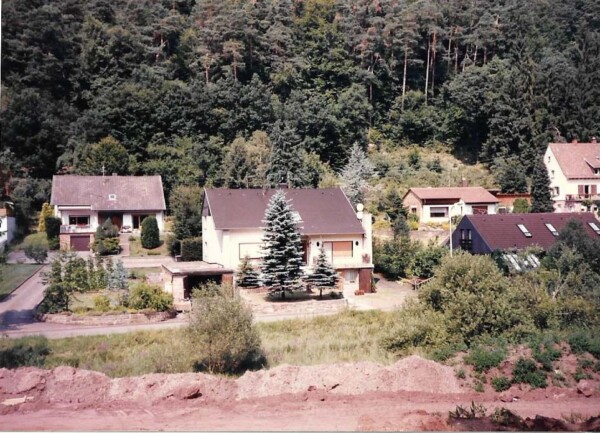
Greenery is abundant, even in German cities. Image courtesy of Del Stone Jr.
When I got back from my trip to Europe, Staff Writer Bruce Rolfsen asked me, “How many columns are you gonna milk this trip for?”
I answered, “Oh, about 14.”
He laughed. I laughed.
As I mentally laid out Column No. 3. And 4. And 5. And 6, 7, 8, …
The serial columnist strikes again. But if you’ll indulge me, I’d like to spend the next few weeks telling you about what I saw over there, beginning with this collection of unrelated impressions and observations about Germany.
– The first person I encountered at the Frankfurt airport was an immigration official who wanted to see my passport. He looked it over with a critical eye. Then, in a sinister, Gert Frobian voice, he murmured, “Your papers are NOT in order.”
“GAAAA?” I asked.
“Yes. I show you,” he said, and pointed at a line on my passport – the line for my signature.
It was blank.
He handed me a pen.
What I really needed was a nitroglycerine pill.
– Germany is an amazingly clean country. Not a speck of litter anywhere, except outside a Pizza Hut, where several English-language fliers had been strewn across a sidewalk. I collected them all out of shame for my language.
– The cities and villages were thick with trees and flowers, an amazing abundance of greenery and a delightful dearth of asphalt. It seemed every window supported a flowerbox overflowing with geraniums, and every patio was surrounded by trees and blooms.
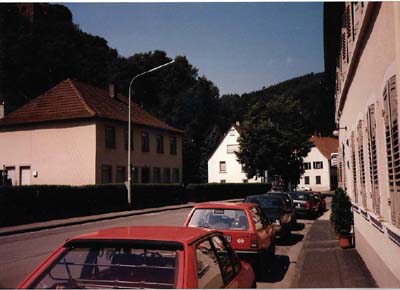
The countryside is heavily cultivated with corn, sunflowers and wheat. But huge tracts of forested land separate the fields, and in many places forest predominates. Vineyards dot the hillsides, giving way to trees farther up the hilltops.
Even in the cities, trees are abundant, which is why the urban areas never seemed hot, noisy or congested.
It was very clear to me the Germans had learned the importance of co-existing with nature.
– American urban planners, especially those who pass for such in these parts, should take a junket to southern Germany for an immediate education in municipal logic.
The cities are neat, tidy, and use space efficiently. Seldom do you see the desolate stretches of pavement, crazy quilt of construction techniques and the grotesque sprawl that blight American municipalities. Development was limited to distinct borders, an embodiment of the greenway concept, and the wisdom of that philosophy was glaringly apparent; livable cities that had not been built at the expense of surrounding wild places.
(Maybe The Nature Conservancy could better spend its limited funds on airplane tickets for the local developers.)
– Only one place in Germany reminded me of home: the crumbling, bankrupt warrens of the former East Germany. Roads were in ill repair and drab apartment complexes reared above the horizon – all of it was depressingly familiar.
– The Germans were quite friendly, and virtually everywhere I went I was able to find somebody who could speak passable English. Having only a few words and phrases in my German lexicon, I was appreciative of their language skills, and embarrassed by my own.
This column was originally published in the September 10, 1997 edition of the Northwest Florida Daily News and is used with permission.
About the author:
Del Stone Jr. is a professional fiction writer. He is known primarily for his work in the contemporary dark fiction field, but has also published science fiction and contemporary fantasy. Stone’s stories, poetry and scripts have appeared in publications such as Amazing Stories, Eldritch Tales, and Bantam-Spectra’s Full Spectrum. His short fiction has been published in The Year’s Best Horror Stories XXII; Alfred Hitchcock’s Mystery Magazine; the Pocket Books anthology More Phobias; the Barnes & Noble anthologies 100 Wicked Little Witch Stories, Horrors! 365 Scary Stories, and 100 Astounding Little Alien Stories; the HWA anthology Psychos; and other short fiction venues, like Blood Muse, Live Without a Net, Zombiesque and Sex Macabre. Stone’s comic book debut was in the Clive Barker series of books, Hellraiser, published by Marvel/Epic and reprinted in The Best of Hellraiser anthology. He has also published stories in Penthouse Comix, and worked with artist Dave Dorman on many projects, including the illustrated novella “Roadkill,” a short story for the Andrew Vachss anthology Underground from Dark Horse, an ashcan titled “December” for Hero Illustrated, and several of Dorman’s Wasted Lands novellas and comics, such as Rail from Image and “The Uninvited.” Stone’s novel, Dead Heat, won the 1996 International Horror Guild’s award for best first novel and was a runner-up for the Bram Stoker Award. Stone has also been a finalist for the IHG award for short fiction, the British Fantasy Award for best novella, and a semifinalist for the Nebula and Writers of the Future awards. His stories have appeared in anthologies that have won the Bram Stoker Award and the World Fantasy Award. Two of his works were optioned for film, the novella “Black Tide” and short story “Crisis Line.”
Stone recently retired after a 41-year career in journalism. He won numerous awards for his work, and in 1986 was named Florida’s best columnist in his circulation division by the Florida Society of Newspaper Editors. In 2001 he received an honorable mention from the National Lesbian and Gay Journalists Association for his essay “When Freedom of Speech Ends” and in 2003 he was voted Best of the Best in the category of columnists by Emerald Coast Magazine. He participated in book signings and awareness campaigns, and was a guest on local television and radio programs.
As an addendum, Stone is single, kills tomatoes and morning glories with ruthless efficiency, once tied the stem of a cocktail cherry in a knot with his tongue, and carries a permanent scar on his chest after having been shot with a paintball gun. He’s in his 60s as of this writing but doesn’t look a day over 94.
Contact Del at [email protected]. He is also on Facebook, twitter, Pinterest, tumblr, TikTok, and Instagram. Visit his website at delstonejr.com .
I recently had an opportunity to take a midwinter vacation, and because I didn’t want to spend a lot of money traveling somewhere, I decided to spend this week right here in Florida, the tourist capital of the United States,
So … what does one do when vacationing in Florida? He goes to the beach, naturally, and that’s what I did. But early February isn’t exactly a boom season for beach-lounging.
I picked up garbage.
At this point you must be thinking, “He’s finally done something to earn one of those jackets with no sleeves and permanent residency in a padded cell.” Picking up garbage might not constitute a vacation you write home about, but if nothing else, it was an education for me.
A few years ago I took another midwinter vacation, and I spent that week exploring nearby places I had never seen. One stretch of beach particularly impressed me with its unspoiled beauty. It must have looked that way for hundreds of years. Except for the garbage.
The garbage had been left there by boaters and explorers like myself who were less appreciative of the natural wonder about them. It made me angry, and this time I decided to do something about it.
I spent only four days picking up garbage. It rained three days and I took off a day because I hurt my back with all that bending over and lifting. But in those four days I hauled 30 bags of garbage from a stretch of land I’d estimate to be 200 yards in length.
In a way it was fun, because you wouldn’t believe some of the junk I found. Empty flare cartridges. Light bulbs – who takes light bulbs to the beach? Disposable diapers (yech!). Shot cups from shotgun shells. Broken toys. Shoes. Socks. Photos that apparently had fallen from somebody’s wallet. Somebody’s boat registration (It was sealed in a plastic bag, and the owner’s address was printed on the front, So I returned it to him. Water had gotten inside the bag, but I think he could dry it in the oven).
But 90 percent of the garbage consisted of bottles and plastic, and I am now convinced this state needs a bottle deposit law. You simply would not believe the number of bottles I found. Some had been broken in horrifying ways. It was commonplace to find huge, jagged pieces of glass protruding from the sand. If someone had stepped on the glass, he would have needed a trip to the hospital.
And the plastic! Bags and pieces of rope and plastic containers were scattered everywhere. They were ensnarled in tree roots; they littered the dunes and thatches of beach scrub.
Seeing this kind of thing can give you an unhealthy disrespect for your fellow man.
You read stories and you watch television programs about the environment and how mankind’s disregard for the world around him is laying nature to waste. You never see those stories about this area, though. Everything is supposed to be generally OK in these parts.
Well, if this is OK, I’d hate to see the really bad places. Because nothing must live there, not even people.
This column was originally published in the March 3, 1988 edition of the Northwest Florida Daily News and is used with permission.
About the author:
Del Stone Jr. is a professional fiction writer. He is known primarily for his work in the contemporary dark fiction field, but has also published science fiction and contemporary fantasy. Stone’s stories, poetry and scripts have appeared in publications such as Amazing Stories, Eldritch Tales, and Bantam-Spectra’s Full Spectrum. His short fiction has been published in The Year’s Best Horror Stories XXII; Alfred Hitchcock’s Mystery Magazine; the Pocket Books anthology More Phobias; the Barnes & Noble anthologies 100 Wicked Little Witch Stories, Horrors! 365 Scary Stories, and 100 Astounding Little Alien Stories; the HWA anthology Psychos; and other short fiction venues, like Blood Muse, Live Without a Net, Zombiesque and Sex Macabre. Stone’s comic book debut was in the Clive Barker series of books, Hellraiser, published by Marvel/Epic and reprinted in The Best of Hellraiser anthology. He has also published stories in Penthouse Comix, and worked with artist Dave Dorman on many projects, including the illustrated novella “Roadkill,” a short story for the Andrew Vachss anthology Underground from Dark Horse, an ashcan titled “December” for Hero Illustrated, and several of Dorman’s Wasted Lands novellas and comics, such as Rail from Image and “The Uninvited.” Stone’s novel, Dead Heat, won the 1996 International Horror Guild’s award for best first novel and was a runner-up for the Bram Stoker Award. Stone has also been a finalist for the IHG award for short fiction, the British Fantasy Award for best novella, and a semifinalist for the Nebula and Writers of the Future awards. His stories have appeared in anthologies that have won the Bram Stoker Award and the World Fantasy Award. Two of his works were optioned for film, the novella “Black Tide” and short story “Crisis Line.”
Stone recently retired after a 41-year career in journalism. He won numerous awards for his work, and in 1986 was named Florida’s best columnist in his circulation division by the Florida Society of Newspaper Editors. In 2001 he received an honorable mention from the National Lesbian and Gay Journalists Association for his essay “When Freedom of Speech Ends” and in 2003 he was voted Best of the Best in the category of columnists by Emerald Coast Magazine. He participated in book signings and awareness campaigns, and was a guest on local television and radio programs.
As an addendum, Stone is single, kills tomatoes and morning glories with ruthless efficiency, once tied the stem of a cocktail cherry in a knot with his tongue, and carries a permanent scar on his chest after having been shot with a paintball gun. He’s in his 60s as of this writing but doesn’t look a day over 94.
Contact Del at [email protected]. He is also on Facebook, twitter, Pinterest, tumblr, TikTok, and Instagram. Visit his website at delstonejr.com .