On junk phone calls and the ‘homosexual lifestyle’

Image courtesy of ph by way of a Creative Commons license.
Odds and ends from here and there:
Universal Bingo is sponsoring S.O.C.K.S. (Save Our Cats and Kittens), a no-kill kitty shelter, on Feb. 22 at 7 p.m. Universal is next to Kinfolks on Racetrack Road.
Get this: It’s 8 o’clock on a Saturday morning. I’m lying in bed, savoring my sleep-in time. The phone rings.
It’s somebody calling for a service group, wanting a donation. They ask me how I am.
“I’m in bed,” I answer tartly. “It’s Saturday. Eight in the morning.”
“Oh, well I’ll be brief,” the lady says and launches into her sales pitch.
Click.
More wire weirdness: The Associated Press reported that a Russian man in the Crimean village of Verkhnesadovoye, believed his neighbor to be a witch, walked next door, whacked her over the head with a hammer (What, no sickle?), dragged her to a nearby vineyard and burned her at the stake. The man was arrested.
After that, who knows? Maybe he ran for the School Board.
What’s with the doofs crying about Bill Campbell’s “Jewish defense contractors” quip?
All he said was the defense budget had so much pork in that Jewish defense contractors felt badly about bidding on contracts.
Hello? Does the world J-O-K-E ring any bells? Sheesh.
I got a letter last week from a woman who said I once referred to the “homosexual lifestyle” as “exotic.” (Actually, I referred to a friend of mine, who was gay, as “exotic.” Plus, I’ve never known what the term “homosexual lifestyle” means. Do all gay people live the same?)
The woman wrote to warn me that the Bible doesn’t approve of homosexuality, and that practitioners are doomed to an eternity as Satan’s Charcoal Briquettes.
Sorry lady.
Your religion may hate gay people, but I’d wager God feels differently. Spare me the venom.
Confidential to the person who spiked all the Alternative Lifestyle books at the Destin Books-A-Million with Bible quotations scribbled on Post-It Notes: Hear that flushing sound? Bye bye, notes.
I have in my hot little hands the Better Homes and Gardens cookbook “73 Years of All-Time Favorites.” As editor of the Food section I expect to put it to use.
We don’t have a “food” editor per se, a person who knows a lot about cooking. I’ve joked in the past I could burn water.
But with this book, even I might create something worthy of eating. And not by the royal food-taster!
Jerome and Norma Capusan called with a question: How do you cook those pear-like fruits that grow on the prickly pear cactus? Give ’em a call at 651-6903. Call me too. We Food editors need to know this stuff.
Here’s this week’s installment of words that should be words: “aqualibrium,” the point where the stream of drinking fountain water is at its perfect height, thus relieving the drinker from (a) having to suck the nozzle, and (b) squirting herself in the eye.
This column was originally published in the Feb. 12, 1997 edition of the Northwest Florida Daily News and is used with permission.
About the author:
Del Stone Jr. is a professional fiction writer. He is known primarily for his work in the contemporary dark fiction field, but has also published science fiction and contemporary fantasy. Stone’s stories, poetry and scripts have appeared in publications such as Amazing Stories, Eldritch Tales, and Bantam-Spectra’s Full Spectrum. His short fiction has been published in The Year’s Best Horror Stories XXII; Alfred Hitchcock’s Mystery Magazine; the Pocket Books anthology More Phobias; the Barnes & Noble anthologies 100 Wicked Little Witch Stories, Horrors! 365 Scary Stories, and 100 Astounding Little Alien Stories; the HWA anthology Psychos; and other short fiction venues, like Blood Muse, Live Without a Net, Zombiesque and Sex Macabre. Stone’s comic book debut was in the Clive Barker series of books, Hellraiser, published by Marvel/Epic and reprinted in The Best of Hellraiser anthology. He has also published stories in Penthouse Comix, and worked with artist Dave Dorman on many projects, including the illustrated novella “Roadkill,” a short story for the Andrew Vachss anthology Underground from Dark Horse, an ashcan titled “December” for Hero Illustrated, and several of Dorman’s Wasted Lands novellas and comics, such as Rail from Image and “The Uninvited.” Stone’s novel, Dead Heat, won the 1996 International Horror Guild’s award for best first novel and was a runner-up for the Bram Stoker Award. Stone has also been a finalist for the IHG award for short fiction, the British Fantasy Award for best novella, and a semifinalist for the Nebula and Writers of the Future awards. His stories have appeared in anthologies that have won the Bram Stoker Award and the World Fantasy Award. Two of his works were optioned for film, the novella “Black Tide” and short story “Crisis Line.”
Stone recently retired after a 41-year career in journalism. He won numerous awards for his work, and in 1986 was named Florida’s best columnist in his circulation division by the Florida Society of Newspaper Editors. In 2001 he received an honorable mention from the National Lesbian and Gay Journalists Association for his essay “When Freedom of Speech Ends” and in 2003 he was voted Best of the Best in the category of columnists by Emerald Coast Magazine. He participated in book signings and awareness campaigns, and was a guest on local television and radio programs.
As an addendum, Stone is single, kills tomatoes and morning glories with ruthless efficiency, once tied the stem of a cocktail cherry in a knot with his tongue, and carries a permanent scar on his chest after having been shot with a paintball gun. He’s in his 60s as of this writing but doesn’t look a day over 94.
Contact Del at [email protected]. He is also on Facebook, twitter, Pinterest, tumblr, TikTok, Ello and Instagram. Visit his website at delstonejr.com .
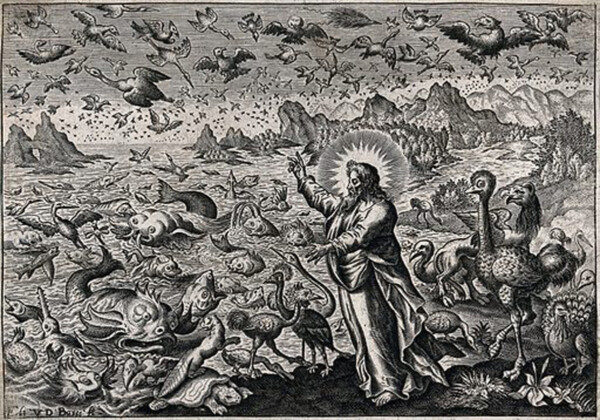
Image courtesy of the Look and Learn History Picture Archive by way of a Creative Commons search.
JAKARTA, Indonesia (AP) – Thousands of Muslims ransacked churches, banks, shops and cars Thursday after a Chinese Christian trader reportedly insulted Islam by complaining about loud evening prayers, police and witnesses said.
I have never understood why people kill for God.
The ransacking I can understand. Ransacking can be fun, AND profitable, unless you’re the ransackee – most definitely if you didn’t attach the special “ransacking” rider to your insurance policy.
But do people really think God gets his feelings hurt over snarky remarks about the Pepsi Clear in the baptismal? Maybe the tough love God of the Old Testament, who destroyed worlds if you looked at him cross-eyed. But not today’s kinder, gentler God.
Besides, mostly it’s not God who gets skewered, but religion. You know – that thing invented by man. And one man’s Mass is another man’s goat sacrifice – but try explaining that to God’s assassins.
I should talk. My own religious training can best be described as “uncertain.”
We went to church on occasion, not as infrequently as I would have liked. I remember sitting in the pew as a tiny kid, my spine pressed against the hard, cold wood as the minister droned about sin, knowing that soon the candles would ignite all those fancy tablecloths spread across the furniture and then we would have some fun!
Later, Mom and Dad went us to summer church school, where the teachers served us warm Kool-Aid, soft ginger snaps and incomprehensible Bible stories with “lessons” that were totally lost on us kids. What I remember was the white shirt I wore to those sessions. It was starched into a kind of tool of submission. If I dared make a sudden move, it would cut me. Putting on the shirt was an act of contrition. I was sorry every time I did it.
I went many years after that without setting foot in a church, convinced if I did I would spontaneously combust. But the notion of heaven and hell persisted.
Televangelists came and went, endless theistic battles wore on, and while I did not consign religion to the cynical “opiate of the masses” I had little use for it. But now I am more tolerant, and I take that as a sign of growing up. I see religion as a foundation of faith, one I choose not to partake of, myself.
But I remain puzzled by fanatics who kill for God. Can’t God do his own killing? Don’t these people realize that by killing for God, they admit God isn’t as powerful as, say, that god over there? They are falling behind in the God race.
Another thing: I don’t think God cares which football team wins.
Here’s another pseudo-word that ought to be a word: “aquadextrous,” as in possessing the ability to turn the bathtub faucet on and off with your toes.
This column was originally published in the Wednesday, Feb. 5, 1997 Northwest Florida Daily News and is used with permission.
About the author:
Del Stone Jr. is a professional fiction writer. He is known primarily for his work in the contemporary dark fiction field, but has also published science fiction and contemporary fantasy. Stone’s stories, poetry and scripts have appeared in publications such as Amazing Stories, Eldritch Tales, and Bantam-Spectra’s Full Spectrum. His short fiction has been published in The Year’s Best Horror Stories XXII; Alfred Hitchcock’s Mystery Magazine; the Pocket Books anthology More Phobias; the Barnes & Noble anthologies 100 Wicked Little Witch Stories, Horrors! 365 Scary Stories, and 100 Astounding Little Alien Stories; the HWA anthology Psychos; and other short fiction venues, like Blood Muse, Live Without a Net, Zombiesque and Sex Macabre. Stone’s comic book debut was in the Clive Barker series of books, Hellraiser, published by Marvel/Epic and reprinted in The Best of Hellraiser anthology. He has also published stories in Penthouse Comix, and worked with artist Dave Dorman on many projects, including the illustrated novella “Roadkill,” a short story for the Andrew Vachss anthology Underground from Dark Horse, an ashcan titled “December” for Hero Illustrated, and several of Dorman’s Wasted Lands novellas and comics, such as Rail from Image and “The Uninvited.” Stone’s novel, Dead Heat, won the 1996 International Horror Guild’s award for best first novel and was a runner-up for the Bram Stoker Award. Stone has also been a finalist for the IHG award for short fiction, the British Fantasy Award for best novella, and a semifinalist for the Nebula and Writers of the Future awards. His stories have appeared in anthologies that have won the Bram Stoker Award and the World Fantasy Award. Two of his works were optioned for film, the novella “Black Tide” and short story “Crisis Line.”
Stone recently retired after a 41-year career in journalism. He won numerous awards for his work, and in 1986 was named Florida’s best columnist in his circulation division by the Florida Society of Newspaper Editors. In 2001 he received an honorable mention from the National Lesbian and Gay Journalists Association for his essay “When Freedom of Speech Ends” and in 2003 he was voted Best of the Best in the category of columnists by Emerald Coast Magazine. He participated in book signings and awareness campaigns, and was a guest on local television and radio programs.
As an addendum, Stone is single, kills tomatoes and morning glories with ruthless efficiency, once tied the stem of a cocktail cherry in a knot with his tongue, and carries a permanent scar on his chest after having been shot with a paintball gun. He’s in his 60s as of this writing but doesn’t look a day over 94.
Contact Del at [email protected]. He is also on Facebook, twitter, Pinterest, tumblr, TikTok, and Instagram. Visit his website at delstonejr.com .

This is the author's first computer, an IBM PS-1, along with an Okidata dot-matrix printer and, inexplicably, a Caffeine-Free Diet Coke. Image courtesy of Del Stone Jr.
Lately I have been shopping for a new computer, which is like saying, “Lately I have been trying to answer the question: If God is omnipotent, could he create a rock he couldn’t lift?”
All computer questions are paradoxes. Paradox! Whatever. They all have the same answer. The answer is: “He could but he wouldn’t want to.”
If you’re going to co-opt this entire column by answering the easy questions I’ll change the subject to something even more metaphysically baffling, like: “Why did Hillary Clinton wear THAT hat to the inauguration?”
Computers are revenge. It’s seventh grade. I see a buck-toothed pencil-neck with glasses so thick you could burn ants with them. Skag McKill, the school bully, is dunking this kid head-first into the toilet, and the kid is yelping, “I’ll get you!”
That kid grows up, gets a job at IBM and finishes the rest of us. He is laughing now. Evil, evil laughter.
Where is Skag McKill when you need him?
You may not need a computer but feel compelled to own one; I actually need one of the soul-suckers and take no pleasure in spending perfectly good liposuction money for what I consider to be the instrument of my spiritual doom. I said the same thing about the buggy whip. I defy you to claim the world is a better place since cars arrived.
Step 1 in buying a computer is deciding whether to buy a prepackaged computer or one that has been “frankensteined” from different components. My advice is you consult all the various experts – every single one of whom will tell you, “He could but he wouldn’t want to” – then rush out on the spur of the moment and buy that sectional sofa you saw in Tuesday’s sale flier.
Next decide which brand to buy. Not all brands are created equal. In fact, no two computers – even of the same brand – are created equal, so just buy any brand and pray to God it isn’t the one they built on the Monday after the company picnic at the Old Granddad Distillery.
Now choose which features it will have. The computer wig-wags will blabber about hard drives, CD-ROMs, modems – pay no attention to that. Here’s what you look for:
Ergonomics – Does it have a flat surface you can set lots of stuff on, like all those computer manuals written in Mandarin Ebonics?
Aesthetics – What color is it? Gray computers are down a lot because they’re depressing. Think camo. Or totally transparent so you can see the actual circuits frying as the lightning bolt zooms through.
Fashion – Has it been on Oprah?
Portability – How far can you throw it when it locks up as you’re finishing the last chapter of your thousand-page doctoral thesis titled, “Metabolic Energy-Conservation Mechanisms in Ascaris lumbricoides.”
My brain swoons at all this, which is how they break you. Numbers, acronyms, and more bells and whistles than Obedience School for Sparky the Fire Dog. In the eyes of that pencil-neck who was dunked in the toilet, we are all Manchurian Candidates and he’s in permanent flashback. Do you hear the evil laughter?
They could make it easy but they won’t.
This comes from my Virginia Connection: Words that should exist.
The word for this week is “accordionated,” as in: being able to drive and refold a road map at the same time.
This column was published in the January 29, 1997 edition of the Northwest Florida Daily News and is used with permission.
About the author:
Del Stone Jr. is a professional fiction writer. He is known primarily for his work in the contemporary dark fiction field, but has also published science fiction and contemporary fantasy. Stone’s stories, poetry and scripts have appeared in publications such as Amazing Stories, Eldritch Tales, and Bantam-Spectra’s Full Spectrum. His short fiction has been published in The Year’s Best Horror Stories XXII; Alfred Hitchcock’s Mystery Magazine; the Pocket Books anthology More Phobias; the Barnes & Noble anthologies 100 Wicked Little Witch Stories, Horrors! 365 Scary Stories, and 100 Astounding Little Alien Stories; the HWA anthology Psychos; and other short fiction venues, like Blood Muse, Live Without a Net, Zombiesque and Sex Macabre. Stone’s comic book debut was in the Clive Barker series of books, Hellraiser, published by Marvel/Epic and reprinted in The Best of Hellraiser anthology. He has also published stories in Penthouse Comix, and worked with artist Dave Dorman on many projects, including the illustrated novella “Roadkill,” a short story for the Andrew Vachss anthology Underground from Dark Horse, an ashcan titled “December” for Hero Illustrated, and several of Dorman’s Wasted Lands novellas and comics, such as Rail from Image and “The Uninvited.” Stone’s novel, Dead Heat, won the 1996 International Horror Guild’s award for best first novel and was a runner-up for the Bram Stoker Award. Stone has also been a finalist for the IHG award for short fiction, the British Fantasy Award for best novella, and a semifinalist for the Nebula and Writers of the Future awards. His stories have appeared in anthologies that have won the Bram Stoker Award and the World Fantasy Award. Two of his works were optioned for film, the novella “Black Tide” and short story “Crisis Line.”
Stone recently retired after a 41-year career in journalism. He won numerous awards for his work, and in 1986 was named Florida’s best columnist in his circulation division by the Florida Society of Newspaper Editors. In 2001 he received an honorable mention from the National Lesbian and Gay Journalists Association for his essay “When Freedom of Speech Ends” and in 2003 he was voted Best of the Best in the category of columnists by Emerald Coast Magazine. He participated in book signings and awareness campaigns, and was a guest on local television and radio programs.
As an addendum, Stone is single, kills tomatoes and morning glories with ruthless efficiency, once tied the stem of a cocktail cherry in a knot with his tongue, and carries a permanent scar on his chest after having been shot with a paintball gun. He’s in his 60s as of this writing but doesn’t look a day over 94.
Contact Del at [email protected]. He is also on Facebook, twitter, Pinterest, tumblr, TikTok, and Instagram. Visit his website at delstonejr.com .

Image courtesy of Pix4Free by way of a Creative Commons license.
When I was 12 years old I got hit on the head with a rock.
Explains a lot, doesn’t it?
My pal Mark and I were playing “fighter pilot.” We climbed aboard our Spyder bikes, worked up a head of steam, raced by Mark’s brothers, Scott and Dale, who had taken cover behind a piece of plywood propped against a tree, and we hurled rocks at them. They in turn hurled rocks at us. It was great fun.
Dale hurled the fateful rock that struck me square in the forehead. I saw stars. My bike coasted halfway around the block. Blood covered my face.
When Mom saw me she nearly dropped dead of fright. I was thrown into the car and whisked to the hospital, where a nurse stitched me up.
We got home, and Mark’s mom immediately dropped by to make sure I lived. I hear Dale had gotten a licking.
While the moms stayed inside to conduct that conspiracy of parenthood that kept our neighborhoods safe back then, Mark and I went out to look for the rock. I wanted the rock as a souvenir of my first injury that required stitches.
I was relating this story to my friend Connie, whose daughter is worried about leaving her child with a babysitter. We decided a scenario like the rock-throwing incident could never unfold today the way it did in 1967.
First, the kids wouldn’t be playing “fighter pilot” outside on their bicycles. Traffic is too heavy now, and people drive too fast. We’re so obsessed with the convenience of our cars, and so fixated with getting places quickly, that we’ve sacrificed our children’s play – adults’, too.
No, the kids would be inside, playing “fighter pilot” on their computers or their video game machines. Virtual reality is much alluring than real reality.
But let’s say the rock-throwing DID happen. Here’s how it would unfold today:
Mom would race me to the hospital, where she would spend the next three hours filling out insurance and release-of-liability forms.
Once that matter was settled, and assuming I hadn’t bled to death, the doctor would then invest the next three hours trying to convince an insurance company clerk that I truly needed the treatment he’d prescribed.
Upon my departure from the emergency room, a complimentary attorney, maybe even a non-denominational spiritual adviser, would be made available to me should I need ministrations of either a secular or metaphysical nature.
Moments after returning home, Mark’s mom would show up – with Dale’s attorney. Would we be willing to sign an agreement of nonactionability? Mom would say nothing until she had contacted her attorney. The two attorneys would then hold a conference call while Mom and Mark’s mom waited nervously off to the side.
Meanwhile, HRS would be knocking at the door. Their surveillance technicians had informed them child abuse was occurring in the area. They would make note of my stitches, and take a keen interest in the rumor that Dale had received a licking. What did we know about this? Were our papers in order? Did we plan on leaving town anytime soon?
Meanwhile, Mark and I would be outside, dodging the cars of speeding attorneys and caseworkers and insurance clerks. We would be looking for the rock.
But the rock would be gone, already collected as evidence.
A trail date has not been set.
This column was published in the Wednesday, January 22, 1997 Northwest Florida Daily News and is used with permission.
About the author:
Del Stone Jr. is a professional fiction writer. He is known primarily for his work in the contemporary dark fiction field, but has also published science fiction and contemporary fantasy. Stone’s stories, poetry and scripts have appeared in publications such as Amazing Stories, Eldritch Tales, and Bantam-Spectra’s Full Spectrum. His short fiction has been published in The Year’s Best Horror Stories XXII; Alfred Hitchcock’s Mystery Magazine; the Pocket Books anthology More Phobias; the Barnes & Noble anthologies 100 Wicked Little Witch Stories, Horrors! 365 Scary Stories, and 100 Astounding Little Alien Stories; the HWA anthology Psychos; and other short fiction venues, like Blood Muse, Live Without a Net, Zombiesque and Sex Macabre. Stone’s comic book debut was in the Clive Barker series of books, Hellraiser, published by Marvel/Epic and reprinted in The Best of Hellraiser anthology. He has also published stories in Penthouse Comix, and worked with artist Dave Dorman on many projects, including the illustrated novella “Roadkill,” a short story for the Andrew Vachss anthology Underground from Dark Horse, an ashcan titled “December” for Hero Illustrated, and several of Dorman’s Wasted Lands novellas and comics, such as Rail from Image and “The Uninvited.” Stone’s novel, Dead Heat, won the 1996 International Horror Guild’s award for best first novel and was a runner-up for the Bram Stoker Award. Stone has also been a finalist for the IHG award for short fiction, the British Fantasy Award for best novella, and a semifinalist for the Nebula and Writers of the Future awards. His stories have appeared in anthologies that have won the Bram Stoker Award and the World Fantasy Award. Two of his works were optioned for film, the novella “Black Tide” and short story “Crisis Line.”
Stone recently retired after a 41-year career in journalism. He won numerous awards for his work, and in 1986 was named Florida’s best columnist in his circulation division by the Florida Society of Newspaper Editors. In 2001 he received an honorable mention from the National Lesbian and Gay Journalists Association for his essay “When Freedom of Speech Ends” and in 2003 he was voted Best of the Best in the category of columnists by Emerald Coast Magazine. He participated in book signings and awareness campaigns, and was a guest on local television and radio programs.
As an addendum, Stone is single, kills tomatoes and morning glories with ruthless efficiency, once tied the stem of a cocktail cherry in a knot with his tongue, and carries a permanent scar on his chest after having been shot with a paintball gun. He’s in his 60s as of this writing but doesn’t look a day over 94.
Contact Del at [email protected]. He is also on Facebook, twitter, Pinterest, tumblr, TikTok, and Instagram. Visit his website at delstonejr.com .
As you’ve heard – from your insurance agent probably – I have the home fix-up aptitude of a demolition expert with multiple personality disorder.
What this means is I possess all the tools, some of the desire and none of the skills to do those jobs around the house that require deft use of a hammer in some task not involving mass murder.
Recently I told you about my attempts to install a new light switch. The neighbors listened with keen interest as the smoke alarm gave them hourly updates to my progress.
This job was preceded by my “repair” of the downstairs toilet.
Some people have favorite sweaters, favorite recliner rockers, or favorite husbands.
I have a favorite toilet.
In my house it is the downstairs toilet. It is the scene where my cats and I play “rat volleyball,” which goes like this: They bat the stuffed mouse under the door; I bat it back out. This goes on until one of us “loses,” as in “loses interest.” Pretty exciting, eh? Guess you have to be there.
My favorite toilet began to malfunction. It wouldn’t flush, and it began to emit a rattling sound, as if a diamondback had taken residence in the pipe.
My solution was to “plunge” it out. I did not use one of those sissy plungers. I bought a thyroidal eggplant-shaped monster that would force a snake-strangling gulp of air down the pipe.
It didn’t work. The toilet functioned correctly for days, then plugged again, rattling menacingly. So I decided to go mano y reptile with a plumber’s snake. I disliked this route, having experienced the unique sensation of having my leg hairs rippled out by the roots with this snake.
But I tried and it too failed.
So I called a plumber – twice. And twice they plunged and snaked the toilet, only to have it resume its obstinate ways. The toilet seemed truly demon-haunted to paraphrase the late Carl Sagan.
All the while, I could hear its maddening rattle. It sounded like a child’s toy with a bead, like the small prizes you once got in Cracker Jacks. I theorized a child of a previous tenant had dropped a toy in the toilet and flushed, and here it lurked, years after the fact, haunting the porcelain.
A co-worker recommended a possible solution, a powder that, when mixed with warm water, activates a colony of microorganisms that feed on the gack that collects on pipes. Ah yes, I thought. Biological warfare. In lieu of inserting an atomic bomb down the pipe, this might do.
I tried it once. Twice. Three times.
It did not work. The toilet resisted and rattled.
I tried it three more times, and three more times the commode refused to comply.
Both I and the toilet were rattled.
Then one day I flushed the toilet and heard a loud, clunking sound. Water raced down the pipe. I flushed it again, and it worked. Again and again, it worked.
With absolutely no action on my part, the toilet had begun to operate correctly.
It had fixed itself.
I, my neighbors and the insurance company were overjoyed by this turn of events. I’m not even disappointed that I wasn’t able to do the repair myself, that I had to leave it to fate.
But sometimes I wonder … what the heck WAS that rattling sound?
This column was originally published in the Jan. 15, 1997 edition of the Northwest Florida Daily News and is used with permission.
About the author:
Del Stone Jr. is a professional fiction writer. He is known primarily for his work in the contemporary dark fiction field, but has also published science fiction and contemporary fantasy. Stone’s stories, poetry and scripts have appeared in publications such as Amazing Stories, Eldritch Tales, and Bantam-Spectra’s Full Spectrum. His short fiction has been published in The Year’s Best Horror Stories XXII; Alfred Hitchcock’s Mystery Magazine; the Pocket Books anthology More Phobias; the Barnes & Noble anthologies 100 Wicked Little Witch Stories, Horrors! 365 Scary Stories, and 100 Astounding Little Alien Stories; the HWA anthology Psychos; and other short fiction venues, like Blood Muse, Live Without a Net, Zombiesque and Sex Macabre. Stone’s comic book debut was in the Clive Barker series of books, Hellraiser, published by Marvel/Epic and reprinted in The Best of Hellraiser anthology. He has also published stories in Penthouse Comix, and worked with artist Dave Dorman on many projects, including the illustrated novella “Roadkill,” a short story for the Andrew Vachss anthology Underground from Dark Horse, an ashcan titled “December” for Hero Illustrated, and several of Dorman’s Wasted Lands novellas and comics, such as Rail from Image and “The Uninvited.” Stone’s novel, Dead Heat, won the 1996 International Horror Guild’s award for best first novel and was a runner-up for the Bram Stoker Award. Stone has also been a finalist for the IHG award for short fiction, the British Fantasy Award for best novella, and a semifinalist for the Nebula and Writers of the Future awards. His stories have appeared in anthologies that have won the Bram Stoker Award and the World Fantasy Award. Two of his works were optioned for film, the novella “Black Tide” and short story “Crisis Line.”
Stone recently retired after a 41-year career in journalism. He won numerous awards for his work, and in 1986 was named Florida’s best columnist in his circulation division by the Florida Society of Newspaper Editors. In 2001 he received an honorable mention from the National Lesbian and Gay Journalists Association for his essay “When Freedom of Speech Ends” and in 2003 he was voted Best of the Best in the category of columnists by Emerald Coast Magazine. He participated in book signings and awareness campaigns, and was a guest on local television and radio programs.
As an addendum, Stone is single, kills tomatoes and morning glories with ruthless efficiency, once tied the stem of a cocktail cherry in a knot with his tongue, and carries a permanent scar on his chest after having been shot with a paintball gun. He’s in his 60s as of this writing but doesn’t look a day over 94.
Contact Del at [email protected]. He is also on Facebook, twitter, Pinterest, tumblr, TikTok, and Instagram. Visit his website at delstonejr.com .
Recently I wrote about cats and received this letter from my friends Scott and Ann of Pensacola, who said:
“Everybody has a cat story, so here’s ours.
“Our cat is a master thief!”
A partial list of what their cat has brought home includes: “a complete set of switch plate covers … including covers for phone jacks and cable TV plugs; several sets of chains for hanging fluorescent light fixtures; a complete set of Allen wrenches; two paint rollers covers; an unopened bag of potato chips; half a bag of mini-Snickers bars (my wife’s personal favorite heist); countless packs of cigarettes; a set of gaskets for a ’67 Mustang (I’m not making this up); two large bags of decorative wood fittings; somebody’s paycheck stub; a bag of stainless deck clips like you hold a roof deck together with. … We’ve started a collection in an Easter basket and it’s overflowing. I know I’m forgetting some really great stuff.”
No sooner did I ask Scott if he’d mind my writing about his sticky-pawed feline when I received the following message:
“Alas, the prince of cat thieves died suddenly very early this morning. We found him last night in one of the bedrooms feeling very sick and acting like he was really hurting. After a midnight trip to the cat ER he was admitted to the hospital and succumbed around 5:00 this morning. The doctor said it was his heart. That’s tough. He was only 5. We thought we’d have him for years. You never know.
“Incidentally, I woke out of sound sleep at 5:13 with the full knowledge and acceptance that he was gone. I mentioned it to Ann before we called the vet so people wouldn’t think I was crazy if we talked about it. I digress.
“The world of animal lovers lost a wonderful example of why cats and people bond. I told you the other day of all the things (the cat) brought home. His final present was the sweetest. About 10 p.m. the other night he was hollering at the door as usual. I opened the door to let him in and he laid one of those oatmeal-cookie-with-cream-in-the-middle right at the doorstep. I opened the door and he just looked at me and waited for me to pick it up. When I did he just turned around and walked off as if his job was done and now he was on his own time.
“I shall miss him terribly. However, once again God’s grace is evident in the merciful way I was allowed to become aware of his death. I came awake out of a sound sleep knowing he just left within minutes of the actual time he died. With that knowledge came acceptance as fact that it was the way it was supposed to be. Not many other people talk of receiving such a gift so I assume it wasn’t ordinary.
“The acceptance of God’s will as an elemental force like wind, water, fire and earth is an incredible gift. With my parents, and all my relatives, aging I have many occasions forthcoming for which I can only pray I will be given similar comfort.”
I can think of nothing to add to Scott’s message. Except thank you.
Jeff Newell, our reporter emeritus who has been waging war against a pernicious for of cancer the past two years, got some really good news on Monday.
His CAT scan was totally clear.
Jeff has another round of chemo and then he’s through with eh hospital stuff. He vows to get back into shape, lose weight – all the things a guy in his mid-40s vows to do.
Way to go, Jeff. Lose 5 pounds for me.
This column was originally published in the Wednesday, January 8, 1997 edition of the Northwest Florida Daily News and is used with permission.
About the author:
Del Stone Jr. is a professional fiction writer. He is known primarily for his work in the contemporary dark fiction field, but has also published science fiction and contemporary fantasy. Stone’s stories, poetry and scripts have appeared in publications such as Amazing Stories, Eldritch Tales, and Bantam-Spectra’s Full Spectrum. His short fiction has been published in The Year’s Best Horror Stories XXII; Alfred Hitchcock’s Mystery Magazine; the Pocket Books anthology More Phobias; the Barnes & Noble anthologies 100 Wicked Little Witch Stories, Horrors! 365 Scary Stories, and 100 Astounding Little Alien Stories; the HWA anthology Psychos; and other short fiction venues, like Blood Muse, Live Without a Net, Zombiesque and Sex Macabre. Stone’s comic book debut was in the Clive Barker series of books, Hellraiser, published by Marvel/Epic and reprinted in The Best of Hellraiser anthology. He has also published stories in Penthouse Comix, and worked with artist Dave Dorman on many projects, including the illustrated novella “Roadkill,” a short story for the Andrew Vachss anthology Underground from Dark Horse, an ashcan titled “December” for Hero Illustrated, and several of Dorman’s Wasted Lands novellas and comics, such as Rail from Image and “The Uninvited.” Stone’s novel, Dead Heat, won the 1996 International Horror Guild’s award for best first novel and was a runner-up for the Bram Stoker Award. Stone has also been a finalist for the IHG award for short fiction, the British Fantasy Award for best novella, and a semifinalist for the Nebula and Writers of the Future awards. His stories have appeared in anthologies that have won the Bram Stoker Award and the World Fantasy Award. Two of his works were optioned for film, the novella “Black Tide” and short story “Crisis Line.”
Stone recently retired after a 41-year career in journalism. He won numerous awards for his work, and in 1986 was named Florida’s best columnist in his circulation division by the Florida Society of Newspaper Editors. In 2001 he received an honorable mention from the National Lesbian and Gay Journalists Association for his essay “When Freedom of Speech Ends” and in 2003 he was voted Best of the Best in the category of columnists by Emerald Coast Magazine. He participated in book signings and awareness campaigns, and was a guest on local television and radio programs.
As an addendum, Stone is single, kills tomatoes and morning glories with ruthless efficiency, once tied the stem of a cocktail cherry in a knot with his tongue, and carries a permanent scar on his chest after having been shot with a paintball gun. He’s in his 60s as of this writing but doesn’t look a day over 94.
Contact Del at [email protected]. He is also on Facebook, twitter, Pinterest, tumblr, TikTok, and Instagram. Visit his website at delstonejr.com .

Aquarium of the Americas visitors stand eye-to-eye with species of fish that inhabit the Atlantic Ocean. The aquarium is a favored tourist attraction of New Orelans. Image by Del Stone Jr.
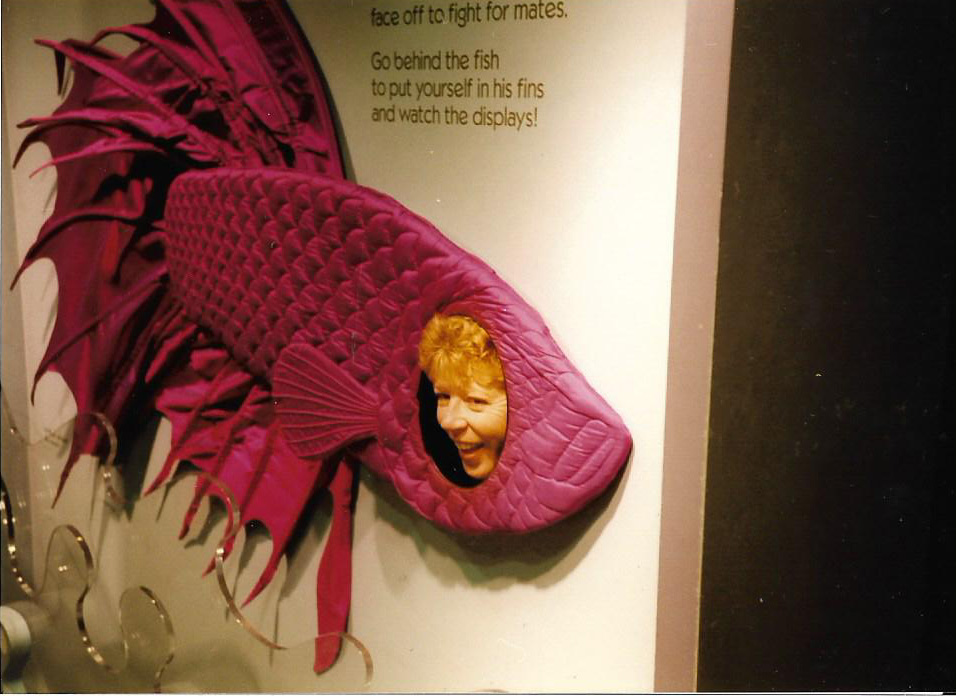
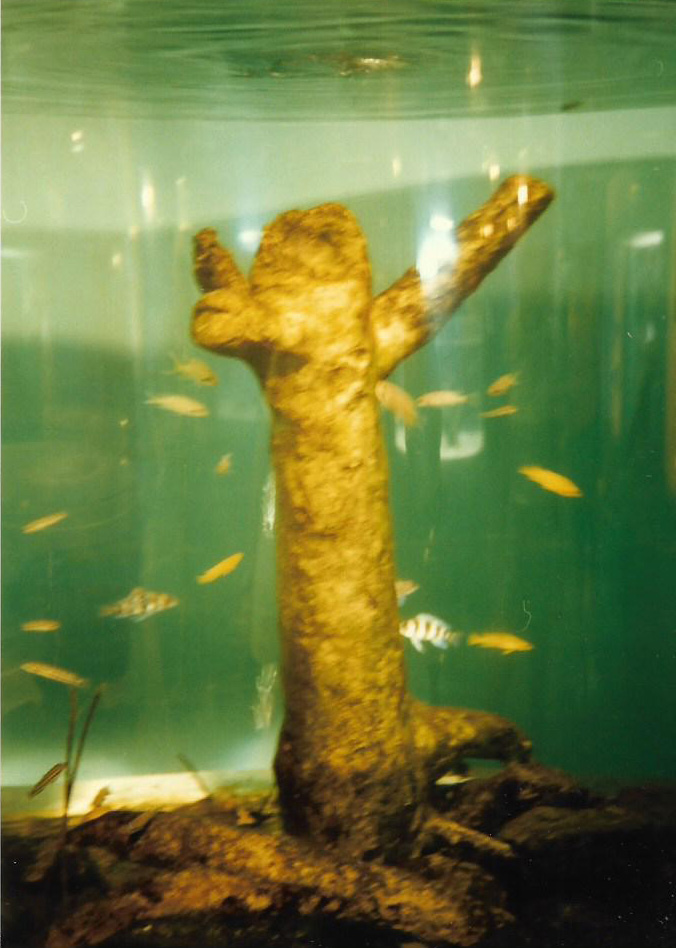
I was editing Staff Writer Pam Golden’s account of her trip to the Aquarium of the Americas in New Orleans when I was stung by the idea of getting in the face of a jellyfish.
Let’s do it, I told Connie, and we drove over on a Friday. We stayed smack in the middle of French Quarter, in a place called the Marie Antoinette, and I did not price the house guillotine – traffic was sufficiently dangerous to satisfy any thrill-seeking impulse.
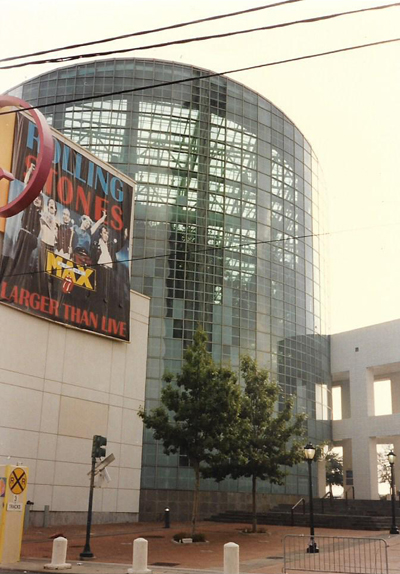
Our friends Charles and Mary took us to a lakeside restaurant where the hired help climbed aboard tables and did the Macarena, spanking their hips amongst platters of stuffed crab, boiled shrimp, fried catfish and steamed oysters – a fine opportunity to gain weight, then lose it.
Next morning we sashayed down the narrow Quarter sidewalks, dodging merchants with hoses, mule-drawn carriages, fellow tourists, and quirkily dressed creatures returning to their lairs for the day.
The aquarium is a large, glass-encased structure on the riverfront. A brick walkway bearing the names of various donors and dedications leads to the ticket booths.
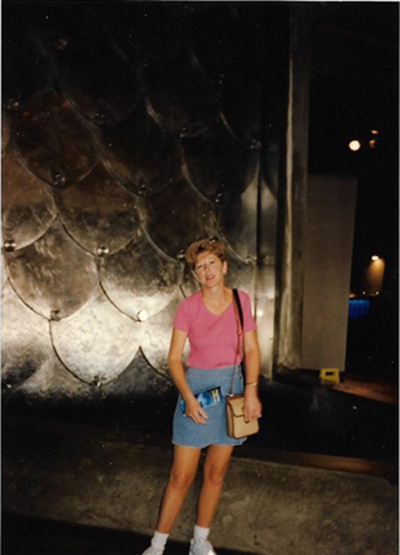
Having purchased our tickets by phone, we went inside, posed for photos beside a shimmering fish-scale sculpture, then began the tour in earnest.
Exhibit 1 is a gargantuan aquarium containing species from the Atlantic. You walk through a tunnel which allows sharks and other predatory denizens to gaze down at you longingly, licking their chops. Perversely, I wondered if these glass walls had ever sprung a leak.
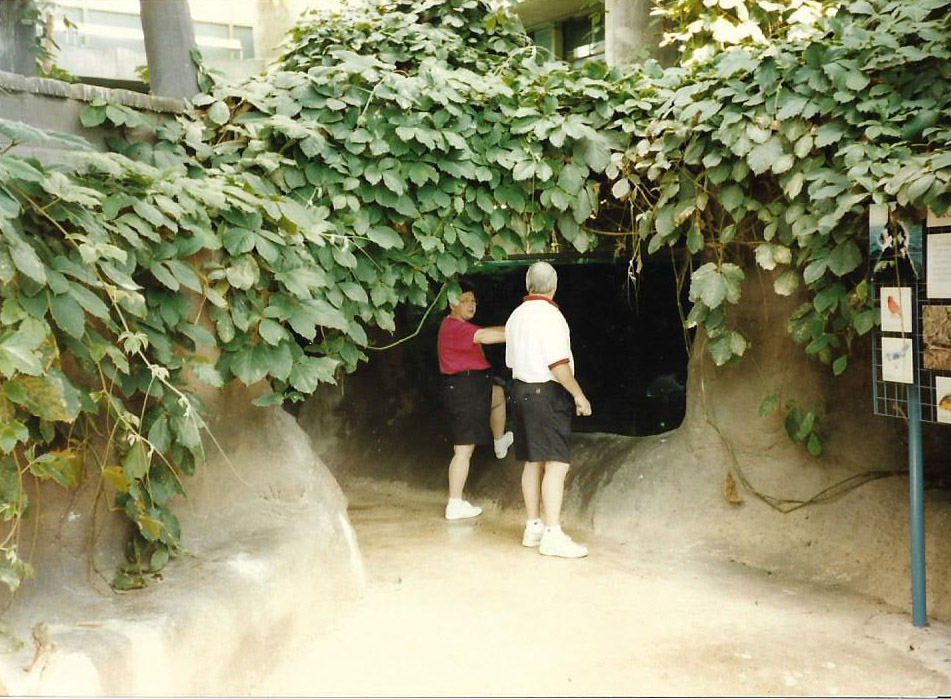
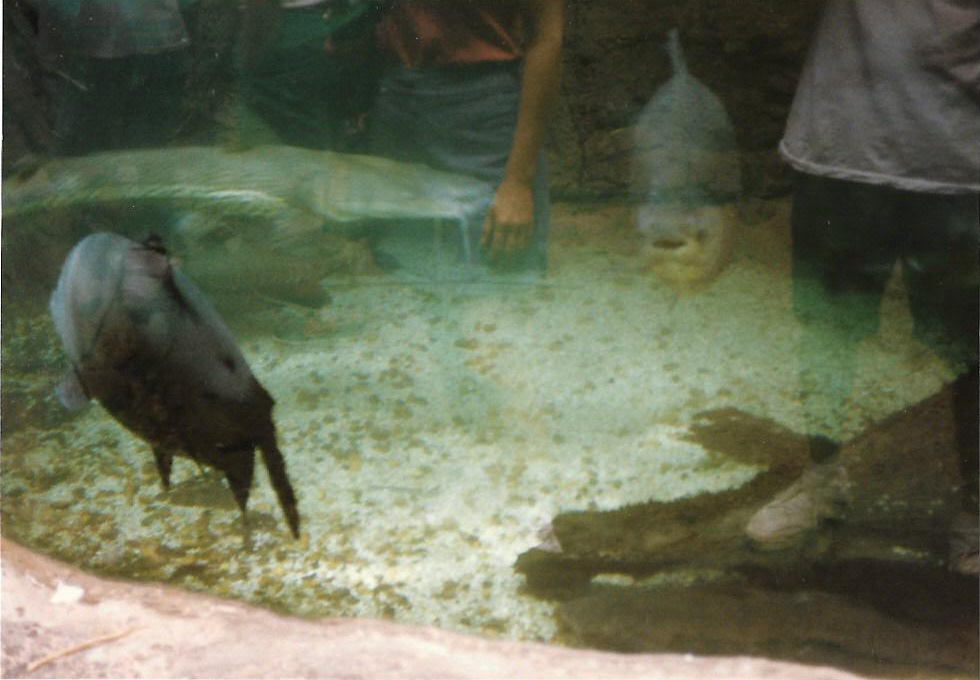
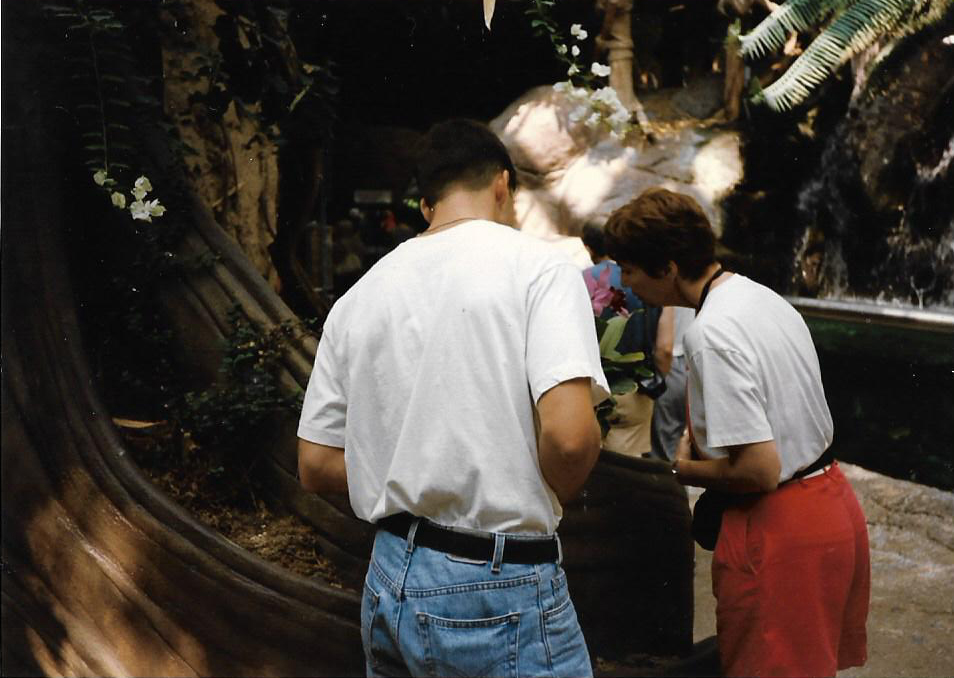
Exhibit 2, my favorite, was a real tropical rain forest, with underwater exhibits of piranha, Oscars, and other South American fishes. You walk amidst dense undergrowth as birds squawk and a waterfall humidifies the steamy atmosphere. Sprays of orchids dangle enticingly from the tree trunks. It’s all very beautiful and, I hope, authentic.
Another fun exhibit is the penguin tank, and we were lucky to be there as the staff was feeding these well-dressed little birds.
Then we tracked along a series of smaller aquariums that led us to a sluice where you could reach in and pet a shark. Hmmm. I watched shark-petters, expecting them to withdraw handless arms but that didn’t happen. A spoiled city shark, no doubt.
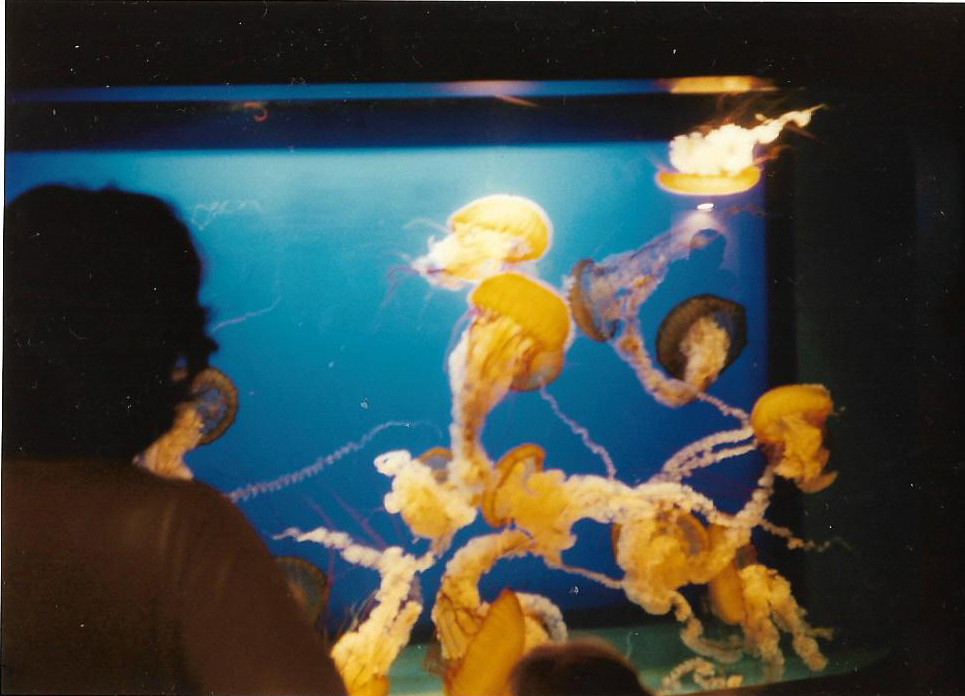
The jellyfish exhibit was splendid. The only word I can think of to describe these dainty creatures is: ethereal. I hear they don’t take well to captivity, but these jellies were maneuvering around their tanks like small, translucent angels.
Throughout all this, Connie and I debated how best to take pictures. Having viewed the results, I’d recommend two strategies: If you use a flash, take the photo at an angle to the aquarium glass. Otherwise you’ll get backflash. But the best way – and this is true if you have a Camera for Idiots like I do – is to shut off the flash, shoot with 400 speed film, and stand about 3 feet from the tank. Your photos should be fine.
After the aquarium tour we dropped by the IMAX theater for a cinematic visitation to a coral reef. You IMAX vets know that the screen fills your field of view, making for a spectacular movie-watching experience. But was IMAX with 3-D1
I hope to get over there again soon. The Aquarium was a nice, nonalcohol-related excuse to get out of town and visit The Big Easy.
This column was originally published in the Wednesday, Jan. 1, 1997 Northwest Florida Daily News and is used with permission.
About the author:
Del Stone Jr. is a professional fiction writer. He is known primarily for his work in the contemporary dark fiction field, but has also published science fiction and contemporary fantasy. Stone’s stories, poetry and scripts have appeared in publications such as Amazing Stories, Eldritch Tales, and Bantam-Spectra’s Full Spectrum. His short fiction has been published in The Year’s Best Horror Stories XXII; Alfred Hitchcock’s Mystery Magazine; the Pocket Books anthology More Phobias; the Barnes & Noble anthologies 100 Wicked Little Witch Stories, Horrors! 365 Scary Stories, and 100 Astounding Little Alien Stories; the HWA anthology Psychos; and other short fiction venues, like Blood Muse, Live Without a Net, Zombiesque and Sex Macabre. Stone’s comic book debut was in the Clive Barker series of books, Hellraiser, published by Marvel/Epic and reprinted in The Best of Hellraiser anthology. He has also published stories in Penthouse Comix, and worked with artist Dave Dorman on many projects, including the illustrated novella “Roadkill,” a short story for the Andrew Vachss anthology Underground from Dark Horse, an ashcan titled “December” for Hero Illustrated, and several of Dorman’s Wasted Lands novellas and comics, such as Rail from Image and “The Uninvited.” Stone’s novel, Dead Heat, won the 1996 International Horror Guild’s award for best first novel and was a runner-up for the Bram Stoker Award. Stone has also been a finalist for the IHG award for short fiction, the British Fantasy Award for best novella, and a semifinalist for the Nebula and Writers of the Future awards. His stories have appeared in anthologies that have won the Bram Stoker Award and the World Fantasy Award. Two of his works were optioned for film, the novella “Black Tide” and short story “Crisis Line.”
Stone recently retired after a 41-year career in journalism. He won numerous awards for his work, and in 1986 was named Florida’s best columnist in his circulation division by the Florida Society of Newspaper Editors. In 2001 he received an honorable mention from the National Lesbian and Gay Journalists Association for his essay “When Freedom of Speech Ends” and in 2003 he was voted Best of the Best in the category of columnists by Emerald Coast Magazine. He participated in book signings and awareness campaigns, and was a guest on local television and radio programs.
As an addendum, Stone is single, kills tomatoes and morning glories with ruthless efficiency, once tied the stem of a cocktail cherry in a knot with his tongue, and carries a permanent scar on his chest after having been shot with a paintball gun. He’s in his 60s as of this writing but doesn’t look a day over 94.
Contact Del at [email protected]. He is also on Facebook, twitter, Pinterest, tumblr, TikTok, and Instagram. Visit his website at delstonejr.com .






Today being Christmas, I’ll share with you some of my favorite gifts of all time.
The first is an electric blanket given to me by my friends Sandy and Dave Jacobs of Fort Walton Beach. It has warmed me for years to the point it is old and worn out.
I told my friend Ray Aldridge of Fort Walton Beach, who nagged me for years to buy a computer so I cold write a novel, that I first needed to cross off everything on my Need-To-Get List. One of those items was a Stanley hammer. Later, Ray presented me with a Stanley hammer, with a note that said: “I hope this brings you one step closer to the computer.” Next year, I bought the computer. The novel came out a month ago.
Otis Gossman presented me with a bottle of Absolut for Christmas 1983. I was a beer drinker, not a vodka drinker, but to make Otis feel better I tasted the stuff. Lo! It was splendid.
Over the years Mom and Dad have given me any number of great Christmas gifts, but the one I remember best landed on my chest-of-drawers on a July night. I was working the late shift on an assembly line to save money for college. When I got home that night, I flipped on my bedroom light, instantly knew that something was right, and saw it: a new stereo! A Sound Design with a turntable, an AM-FM tuner and an eight-track player. I wore out three needles on that turntable.
My cousin Dot, who died a few years back, had a knack for giving cool Christmas gifts. Once it was a Kodak pocket camera. Then it was U.S. currency proof sets. I still have the photos and the coins.
Jimmy Ready, my uncle, who lives here in Fort Walton Beach, gave me a portable shortwave radio one Christmas. Many were the nights I listened to Radio Moscow, if the ionosphere was right, or Radio Havana. Mostly I kept it tuned to Dutch Van on WNUE, the AM fixture at 1400 on your dial.
When I was in the seventh grade, Mom and Dad gave me a London Fog jacket for Christmas. London Fog was as necessary to my existence as Hang Ten cotton pullovers, which is to say I would not have attended classes at Pryor Junior High School that semester had I not been wearing a London Fog jacket over my Hang Ten shirt. Sadly, the jacket was stolen that spring.
Probably the best gift I ever received was given to me by the good lord on Christmas 1977. I had just graduated from college and I was jobless, with no immediate prospects. I was feeling low.
Mom, Dad and I drove to Columbus, Ohio, to spend Christmas with my sister and brother-in-law. All I remember wanting for Christmas was to feel good about something. I liked snow. Maybe a snowfall would cheer me up.
We were there a week. No snow. On Christmas Eve, a terrible storm swept through. It rained like the dickens, destroying our carefully arranged luminaria. We sat inside, watching the rain beat against the windows.
Christmas morning dawned gray and cold. We opened our gifts. The trip back to Florida loomed. And then it happened.
Big, fat flakes tumbled out of the sky, like parade confetti. This celebration gave way to a driving, no-nonsense snowfall that covered the ground.
Mom and Dad bought me a plane ticket and told me I cold stay another couple of weeks.
A miracle, for Christmas.
This column was originally published in the Northwest Florida Daily News on December 25, 1996, and is used with permission.
About the author:
Del Stone Jr. is a professional fiction writer. He is known primarily for his work in the contemporary dark fiction field, but has also published science fiction and contemporary fantasy. Stone’s stories, poetry and scripts have appeared in publications such as Amazing Stories, Eldritch Tales, and Bantam-Spectra’s Full Spectrum. His short fiction has been published in The Year’s Best Horror Stories XXII; Alfred Hitchcock’s Mystery Magazine; the Pocket Books anthology More Phobias; the Barnes & Noble anthologies 100 Wicked Little Witch Stories, Horrors! 365 Scary Stories, and 100 Astounding Little Alien Stories; the HWA anthology Psychos; and other short fiction venues, like Blood Muse, Live Without a Net, Zombiesque and Sex Macabre. Stone’s comic book debut was in the Clive Barker series of books, Hellraiser, published by Marvel/Epic and reprinted in The Best of Hellraiser anthology. He has also published stories in Penthouse Comix, and worked with artist Dave Dorman on many projects, including the illustrated novella “Roadkill,” a short story for the Andrew Vachss anthology Underground from Dark Horse, an ashcan titled “December” for Hero Illustrated, and several of Dorman’s Wasted Lands novellas and comics, such as Rail from Image and “The Uninvited.” Stone’s novel, Dead Heat, won the 1996 International Horror Guild’s award for best first novel and was a runner-up for the Bram Stoker Award. Stone has also been a finalist for the IHG award for short fiction, the British Fantasy Award for best novella, and a semifinalist for the Nebula and Writers of the Future awards. His stories have appeared in anthologies that have won the Bram Stoker Award and the World Fantasy Award. Two of his works were optioned for film, the novella “Black Tide” and short story “Crisis Line.”
Stone recently retired after a 41-year career in journalism. He won numerous awards for his work, and in 1986 was named Florida’s best columnist in his circulation division by the Florida Society of Newspaper Editors. In 2001 he received an honorable mention from the National Lesbian and Gay Journalists Association for his essay “When Freedom of Speech Ends” and in 2003 he was voted Best of the Best in the category of columnists by Emerald Coast Magazine. He participated in book signings and awareness campaigns, and was a guest on local television and radio programs.
As an addendum, Stone is single, kills tomatoes and morning glories with ruthless efficiency, once tied the stem of a cocktail cherry in a knot with his tongue, and carries a permanent scar on his chest after having been shot with a paintball gun. He’s in his 60s as of this writing but doesn’t look a day over 94.
Contact Del at [email protected]. He is also on Facebook, twitter, Pinterest, tumblr, TikTok, and Instagram. Visit his website at delstonejr.com .

This is an image from Pixabay. Creative Commons license.
If God had intended that I fix things, such as wiring, he would have given me frizzy, electricity-blasted hair.
But my hair is straight. It curls a little when I let it grow, which means I have the desire but lack the competence to fix anything that requires more than a clonging with a hammer.
Still, I try. Recently I’ve been on a kick to get some of the jobs done around the house I’ve been putting off for years. I knew it would be trouble if I tried to do this work myself. I knew I would need people with caulk in their veins.
But when the kitchen fluorescent lights went belly up, I was certain I could fix them – all by myself.
Isn’t that how all horror movies begin? With an innocent, well-intended assumption that goes terribly, terribly wrong?
That thought never entered my mind as I flipped the switch and the lights sputtered. It’s just the tubes, I told myself. They’ve burned out. I replaced them at $2.99 plus tax apiece, nearly falling off the cat-shredded chair and performing a nifty mid-air ballet maneuver as one evil tube spring from its socket and headed for the floor.
The lights still didn’t work.
All right, I thought. It must be the switch. I went to the hardware store and bought one of those fancy illuminated switches. No more fumbling in the dark. I congratulated myself. I am uptown.
I know what you’re thinking. But I didn’t forget to shut off the circuit breaker. I removed the old switch, pulling off a chunk of paint-attached Sheetrock with it. The wiring scheme looked simple enough. I rigged up the new switch and mounted it.
The lights STILL didn’t work. That’s when Dad told me about something called a “ballast,” which could burn out and would need replacing by somebody with copper wire in their veins. Fine, I thought. I’ll call the electrician on Monday.
Then I discovered NONE of the other lights in the kitchen would work either. At first, I couldn’t believe it. I kept flipping the switches, hoping I would awaken from what was fast becoming a nightmare. But they remained dark, and I tell you it was an accusing dark. I called Dad. I could sense his shaking his head in dismay. All he said was, “I’ll come over.”
He gazed in bafflement at the circuit breaker box. He tested the old switch. He scratched his head a lot, I thought. This is not good. Upstairs, the smoke alarm began to beep. I thought, Oh my God, this is REALLY not good. I asked, “Could it have anything to do with that switch I put in today?”
Dad looked at it. “What the heck is this?” he blurted, half puzzled, half amazed.
I’d connected what I thought was the ground wire to the ground post. Turns out it wasn’t the ground wire. It was the wire that supplied current to all the other lights.
“You mean that wire’s not supposed to go there?” I asked innocently. “No,” he answered, the implied You knucklehead hanging thickly in the air.
Minutes later, the lights worked, and the smoke alarm had stopped beeping (we’d accidentally shut off its power). But the big lights still wouldn’t work. The copper-veined one would fix that. Dad made me promise. …
Now I’m thinking the place could use a ceiling fan. There’s a place for one in the living room. I think I could put it in. I’ve got a hammer.
The horror. The horror.
This column was published in the Wednesday, December 18, 1996 edition of the Northwest Florida Daily News and is used with permission.
About the author:
Del Stone Jr. is a professional fiction writer. He is known primarily for his work in the contemporary dark fiction field, but has also published science fiction and contemporary fantasy. Stone’s stories, poetry and scripts have appeared in publications such as Amazing Stories, Eldritch Tales, and Bantam-Spectra’s Full Spectrum. His short fiction has been published in The Year’s Best Horror Stories XXII; Alfred Hitchcock’s Mystery Magazine; the Pocket Books anthology More Phobias; the Barnes & Noble anthologies 100 Wicked Little Witch Stories, Horrors! 365 Scary Stories, and 100 Astounding Little Alien Stories; the HWA anthology Psychos; and other short fiction venues, like Blood Muse, Live Without a Net, Zombiesque and Sex Macabre. Stone’s comic book debut was in the Clive Barker series of books, Hellraiser, published by Marvel/Epic and reprinted in The Best of Hellraiser anthology. He has also published stories in Penthouse Comix, and worked with artist Dave Dorman on many projects, including the illustrated novella “Roadkill,” a short story for the Andrew Vachss anthology Underground from Dark Horse, an ashcan titled “December” for Hero Illustrated, and several of Dorman’s Wasted Lands novellas and comics, such as Rail from Image and “The Uninvited.” Stone’s novel, Dead Heat, won the 1996 International Horror Guild’s award for best first novel and was a runner-up for the Bram Stoker Award. Stone has also been a finalist for the IHG award for short fiction, the British Fantasy Award for best novella, and a semifinalist for the Nebula and Writers of the Future awards. His stories have appeared in anthologies that have won the Bram Stoker Award and the World Fantasy Award. Two of his works were optioned for film, the novella “Black Tide” and short story “Crisis Line.”
Stone recently retired after a 41-year career in journalism. He won numerous awards for his work, and in 1986 was named Florida’s best columnist in his circulation division by the Florida Society of Newspaper Editors. In 2001 he received an honorable mention from the National Lesbian and Gay Journalists Association for his essay “When Freedom of Speech Ends” and in 2003 he was voted Best of the Best in the category of columnists by Emerald Coast Magazine. He participated in book signings and awareness campaigns, and was a guest on local television and radio programs.
As an addendum, Stone is single, kills tomatoes and morning glories with ruthless efficiency, once tied the stem of a cocktail cherry in a knot with his tongue, and carries a permanent scar on his chest after having been shot with a paintball gun. He’s in his 60s as of this writing but doesn’t look a day over 94.
Contact Del at [email protected]. He is also on Facebook, twitter, Pinterest, tumblr, TikTok, and Instagram. Visit his website at delstonejr.com .
Today, Okaloosa County holds the last of its workshops to decide the fate of a 54-acre tract on Okaloosa Island.
The debate has been fractious, with many people and institutions expressing their opinions about how the land should be used. This newspaper has editorialized that it should be developed for a conference center. Others, mostly employees of competing developments, island residents who fear congestion, and recreational interests, have said it should become a park.
I have a third suggestion.
Restore the land to what it was.
Make it a greenway.
A greenway, if you didn’t know, is an island of nature preserved within the urban environment, a slice of trees and wildlife allowed to continue in an undisturbed state as bordering land areas are developed.
Greenways offer many benefits to a community, many of which cannot be measured with a price tag.
The most obvious is that they provide a habitat, or a shelter, for animals and plants that are threatened by development. As people build ever farther into areas previously left to Mother Nature, animals and plants are being squeezed for space. A greenway provides a small haven for at least some of these species.
But the benefits for you and I are greater. A greenway, for instance, offers a small patch of nature into which we may escape at our convenience – or need. As the Emerald Coast grows and the pressures of urban living mount, we will need places like greenways to reconnect our spirit with nature and our peace with ourselves. The “drive in the countryside” may become as close as your nearest greenway.
They also serve as ways to educate children about nature. Children must experience nature firsthand to have a real understanding and appreciation for what they’re being taught. That job cannot be left to television documentaries. Greenways offer safe and accessible environments for this kind of learning.
Greenways also work as natural thermostats, absorbing some f the heat generated by urban life. And in this area they provide a measure of watershed protection, preventing our bays and bayous from becoming unlovely and uninhabitable bodies of sediment and algae.
Apart from all this, an aesthetic issue exists. How can I describe for you the pleasure I felt as I jogged beside Glenwood Park in Cinco Bayou this spring, taking in the delightful scent of flowers, and enjoying the calls of birds or the wind sighing through branches? How many times have I strolled the boardwalk through the park, allowing the cool, dark silence to recompose my wits? Part of the craziness of the world today derives from the unceasing stimulation with which we surround ourselves. A cloud-flecked sky, framed with trees, is the only cure for that malady.
Here, we have a chance to not only stop the damage we’ve inflicted on our lovely coast, but actually reverse that process. I say we clean up that mess over there. Restore it to what it was. Plant scrub pine, beach grass, sea oats. Bring in beach mice. Correct what we have undone.
A greenway may cost us tax revenue, but who can calculate the value such a land tract will bring us in the future? Look at it as a small savings account for our sanity.
See you in the clouds.
The column was originally published in the Northwest Florida Daily News on December 11, 1996 and is used with permission.
About the author:
Del Stone Jr. is a professional fiction writer. He is known primarily for his work in the contemporary dark fiction field, but has also published science fiction and contemporary fantasy. Stone’s stories, poetry and scripts have appeared in publications such as Amazing Stories, Eldritch Tales, and Bantam-Spectra’s Full Spectrum. His short fiction has been published in The Year’s Best Horror Stories XXII; Alfred Hitchcock’s Mystery Magazine; the Pocket Books anthology More Phobias; the Barnes & Noble anthologies 100 Wicked Little Witch Stories, Horrors! 365 Scary Stories, and 100 Astounding Little Alien Stories; the HWA anthology Psychos; and other short fiction venues, like Blood Muse, Live Without a Net, Zombiesque and Sex Macabre. Stone’s comic book debut was in the Clive Barker series of books, Hellraiser, published by Marvel/Epic and reprinted in The Best of Hellraiser anthology. He has also published stories in Penthouse Comix, and worked with artist Dave Dorman on many projects, including the illustrated novella “Roadkill,” a short story for the Andrew Vachss anthology Underground from Dark Horse, an ashcan titled “December” for Hero Illustrated, and several of Dorman’s Wasted Lands novellas and comics, such as Rail from Image and “The Uninvited.” Stone’s novel, Dead Heat, won the 1996 International Horror Guild’s award for best first novel and was a runner-up for the Bram Stoker Award. Stone has also been a finalist for the IHG award for short fiction, the British Fantasy Award for best novella, and a semifinalist for the Nebula and Writers of the Future awards. His stories have appeared in anthologies that have won the Bram Stoker Award and the World Fantasy Award. Two of his works were optioned for film, the novella “Black Tide” and short story “Crisis Line.”
Stone recently retired after a 41-year career in journalism. He won numerous awards for his work, and in 1986 was named Florida’s best columnist in his circulation division by the Florida Society of Newspaper Editors. In 2001 he received an honorable mention from the National Lesbian and Gay Journalists Association for his essay “When Freedom of Speech Ends” and in 2003 he was voted Best of the Best in the category of columnists by Emerald Coast Magazine. He participated in book signings and awareness campaigns, and was a guest on local television and radio programs.
As an addendum, Stone is single, kills tomatoes and morning glories with ruthless efficiency, once tied the stem of a cocktail cherry in a knot with his tongue, and carries a permanent scar on his chest after having been shot with a paintball gun. He’s in his 60s as of this writing but doesn’t look a day over 94.
Contact Del at [email protected]. He is also on Facebook, twitter, Pinterest, tumblr, TikTok, and Instagram. Visit his website at delstonejr.com .