Something weird is happening in Choctawhatchee Bay
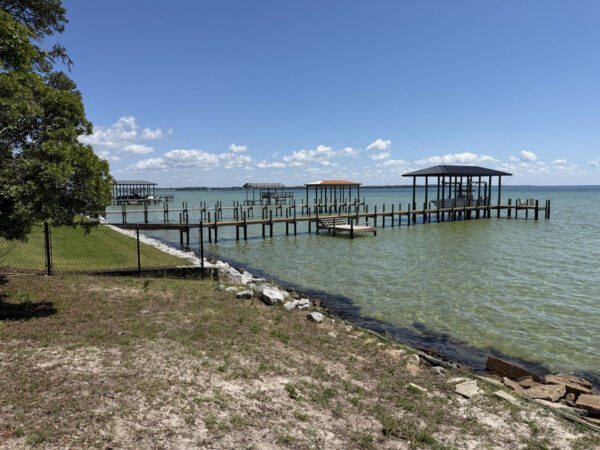
Photo by Del Stone Jr.
Something weird is happening in Choctawhatchee Bay.
It’s changing, in ways we may not like.
I base this hypothesis, first, on the anecdotal evidence of my own eyes.
You’re probably tired of hearing me say I’ve lived in Fort Walton Beach since 1964, but it’s true. I have. The first five years we lived inland, off Robinwood Drive. Then in 1969 we moved to Elliot Point, one street off Choctawhatchee Bay. That move instantly changed my life.
I became a water person.
Living near the water changes you. Over time you come to know every mood, every nuance, every topographical and hydrological detail of this body of water which, in my case, borders my little world on two sides. My first enduring memory of the bay is waking up the Saturday morning before Hurricane Camille struck Gulfport, Miss., and hearing waves pummel the shoreline of Choctawhatchee Bay.
We lived on this bay. I learned how to water ski on the flats by the old Vortac station on the island. Dad and I caught bluefish and speckled trout on the grass beds just west of Crab Island. We picnicked on Bird Island northwest of Destin. We hunted ducks in Santa Rosa Sound. We sailed in with the Bowlegs krewe, bombs and all. We watched fireworks from The Point.
For all the time I’ve lived next to Choctawhatchee Bay – that would be 57 years now – its waters were a tannic brown, stained by the trees that made up the watershed through which the rivers that filled the bay flowed. Right around the East Pass and Crab Island bay water gave way to Gulf of Mexico water, which was a gorgeous, jewel-like emerald in color. But farther inland, tea-colored, brackish water was the order of the day.
Over the past few years, however, that has changed.
Now, the water along the bay coastline in Fort Walton Beach, even into Cinco Bayou and Shalimar, is taking on the same emerald hue as water along our Gulf beaches. That can mean only one thing:
More Gulf water is coming into the bay. The question is, why?
I can think of three reasons:
1. Water flowing into the bay from rivers has been reduced by more development along the watershed.
2. Changes in rainfall patterns could reduce the volume of water flowing into the bay from rivers.
3. Rising sea levels.
I looked at the most recent water quality study of Choctawhatchee Bay by the Choctawhatchee Basin Alliance. According to that report, salinity levels in the bay are increasing. That means more water from the gulf is entering the bay.
But I wanted to be sure, so I contacted the CBA on Facebook. I told them I’d noticed the color of the bay was changing and I asked them why that was happening. This is what they said:
“Hi! Yes, it is most likely attributed to rising sea levels, more king tides and higher tides, as well as a drier cycle over the last several years. Our data shows increasing salinity trends over the last ten years. We can surmise the reasons listed above, but we have no definitive study.”
If there hasn’t been a definitive study of this issue done before, there sure as hell needs to be one done now, because this would confirm sea level rise and climate change. It would also confirm why, for instance, water tables across the state of Florida are rising, and inland areas are starting to experience flooding. We need much more information about this subject because lives and property hang in the balance. Instead, the DeSantis administration here in Florida and the Trump administration at the federal level are either ignoring or suppressing these areas of inquiry.
I don’t need an expensive study to tell me Choctawhatchee Bay is changing. I can see it with my own eyes. The water is definitely different. In the future, meaning this summer, hurricanes could push water into areas that have never seen it.
Climate change deniers take heed – you’re rejecting the evidence of your own eyes. It’s happening, and whether you like it or not, you too will be affected.
Better to bail water as the boat is sinking, not after it has already sunk.
About the author:
Del Stone Jr. is a professional fiction writer. He is known primarily for his work in the contemporary dark fiction field, but has also published science fiction and contemporary fantasy. Stone’s stories, poetry and scripts have appeared in publications such as Amazing Stories, Eldritch Tales, and Bantam-Spectra’s Full Spectrum. His short fiction has been published in The Year’s Best Horror Stories XXII; Alfred Hitchcock’s Mystery Magazine; the Pocket Books anthology More Phobias; the Barnes & Noble anthologies 100 Wicked Little Witch Stories, Horrors! 365 Scary Stories, and 100 Astounding Little Alien Stories; the HWA anthology Psychos; and other short fiction venues, like Blood Muse, Live Without a Net, Zombiesque and Sex Macabre. Stone’s comic book debut was in the Clive Barker series of books, Hellraiser, published by Marvel/Epic and reprinted in The Best of Hellraiser anthology. He has also published stories in Penthouse Comix, and worked with artist Dave Dorman on many projects, including the illustrated novella “Roadkill,” a short story for the Andrew Vachss anthology Underground from Dark Horse, an ashcan titled “December” for Hero Illustrated, and several of Dorman’s Wasted Lands novellas and comics, such as Rail from Image and “The Uninvited.” Stone’s novel, Dead Heat, won the 1996 International Horror Guild’s award for best first novel and was a runner-up for the Bram Stoker Award. Stone has also been a finalist for the IHG award for short fiction, the British Fantasy Award for best novella, and a semifinalist for the Nebula and Writers of the Future awards. His stories have appeared in anthologies that have won the Bram Stoker Award and the World Fantasy Award. Two of his works were optioned for film, the novella “Black Tide” and short story “Crisis Line.”
Stone recently retired after a 41-year career in journalism. He won numerous awards for his work, and in 1986 was named Florida’s best columnist in his circulation division by the Florida Society of Newspaper Editors. In 2001 he received an honorable mention from the National Lesbian and Gay Journalists Association for his essay “When Freedom of Speech Ends” and in 2003 he was voted Best of the Best in the category of columnists by Emerald Coast Magazine. He participated in book signings and awareness campaigns, and was a guest on local television and radio programs.
As an addendum, Stone is single, kills tomatoes and morning glories with ruthless efficiency, once tied the stem of a cocktail cherry in a knot with his tongue, and carries a permanent scar on his chest after having been shot with a paintball gun. He’s in his 60s as of this writing but doesn’t look a day over 94.
Contact Del at [email protected]. He is also on Facebook, twitter, Pinterest, tumblr, TikTok, and Instagram. Visit his website at delstonejr.com .
My post yesterday about global warming and natural variability inspired an interesting conversation about climate change and the future of Earth, one I’d like to follow up on.
So what’s the big deal about global warming?
First, a few facts about the sun.
Katina mentioned the sun would become a supernova, blasting away the solar system in a convulsion of fusion fury. Many people believe that, but there’s no need for concern. The sun doesn’t have the mass to become a supernova. Right now the sun is spinning through space, happily fusing hydrogen into helium. One day the sun will run out of hydrogen and its core will contract, raising internal pressures sufficient to fuse helium. The outer layer of the sun will expand, perhaps overtaking Earth’s orbit. But when a sufficient amount of the helium is fused (into carbon) the sun will collapse into what astronomers call a white dwarf.
A supernova, on the other hand, requires a star much more massive than the sun. When such a star burns up its helium, the core contracts and pressures rise sufficiently to “burn” carbon, transforming the star into an onion made up of layers of other elements with iron at its core. If the pressure maintaining these shells fails, the star collapses into itself, usually in a couple of seconds, generating a tremendous concentration of pressure that results in the explosion we associate with a supernova. But again, such an event requires much more mass than what our sun possesses.
Nova or supernova is a moot issue, as life on Earth should become impossible in about 800 million years, some astronomers estimate. As the sun uses up its hydrogen and starts burning helium, it will shine brighter and expand. The Earth will become too hot and too saturated with radiation for life to exist. So use your time wisely – that 800 million years will be here before you know it!
As for global warming, the issue isn’t about “saving the planet.” The Earth will roll along just fine, with or without us. The planet has been through worse disasters than a bit of a rise in atmospheric CO2.
As other folks pointed out, sea level, atmospheric carbon dioxide and mean global temperatures have been higher many times in the past. Much of that was the result of variability in solar output, vulcanism, asteroid collisions, slight changes in the Earth’s axis of rotation, and even perturbations in the Earth’s orbit. Oh, and life itself can affect climate. So it’s not as if we haven’t seen this before.
This time, however, it’s happening much faster than it should. In fact, if natural variability were taken into account, Earth should be cooling, not heating.
Also, it’s a documented fact that atmospheric greenhouse gases are increasing, and scientists can look at the isotopic signatures of those gases to see where they’re coming from. They are coming from us.
So while it’s not ironclad, there’s pretty good reason to believe human activity, from the burning of fossil fuels to deforestation, is the major culprit behind global warming.
As I said, come what may the Earth will roll along just fine no matter happens. So the issue is not about “saving the Earth.”
It’s about saving ourselves.
Right now we enjoy a standard of living unparalleled in the past. You may not believe that, but it’s true. But that standard of living is supported by an incredibly fragile infrastructure of energy, technology, transportation, and, at the heart of it, climate. Will that standard of living change as a result of global warming?
Think about. Many of our major centers of commerce are located on coastlines. Will rising sea levels imperil those centers, disrupting the economies of First World nations, which then disrupts the global economy?
Will changing climate shift the zone of arable land to other parts of the world? Right now the U.S. is self-sufficient in its production of food. If that changes, and we must start importing food, will we find nations or regimes willing to sell us what they grow?
Will we have access to fresh water? There’s good reason to believe the disaster in Syria is nothing more than a “water war.” Will nations fight over access to water? Will refugees from arid nations overwhelm those that aren’t?
Will the oceans become so acidic the food chain is disrupted, leaving a significant portion of humanity without food?
Will extreme weather events destroy the insurance industry? Stop and think: Two bad hurricane years caused insurors to leave Florida. If it’s happening everywhere, and all the time, what will the insurance industry do? And what will we do without insurance?
Will invasive species head north? Already here in Fort Walton Beach we’ve seen several new kinds of plants, birds and reptiles which in some cases have outcompeted native species. Some of them arrived naturally; others didn’t. And by “species” I don’t limit this migration to more sophisticated, vascular organisms. What about bacteria and viruses? How will the Southeast fare with malaria running rampant?
The bottom line: There are any number of social, economic, political and security reasons to be concerned about global warming.
It isn’t just about politics. I understand the conservative reluctance to embrace global warming – it sounds like baloney spouted by extremist environmental organizations, movie stars and leftist politicians.
Except the folks talking about warming are scientists, not just extremists and movie stars. And scientists have been talking about global warming and its connection to human activity since the late 1800s. Sure, sure, there were predictions of a new ice age, but in every conversation somebody takes a contrarian view. For what it’s worth, Dr. Jeff Masters of The Weather Underground went back and tallied the number of peer-reviewed papers about climate change presented in the 20th century and discovered that even during the so-called ice age scare, the vast majority of papers warned of warming, not cooling.
So these are some of the issues people need to think about when the subject of global warming comes up. It’s a complicated problem that could affect every aspect of our lives.
Scientists are often wrong, but the beauty of science is it’s self-correcting. One scientist says the sky is orange; another scientist proves it’s blue. And our body of knowledge advances.
I would rather put my faith in science than a shrill, left-leaning movie star … or a right-leaning mope who just doesn’t like movie stars.
About the author:
Del Stone Jr. is a professional fiction writer. He is known primarily for his work in the contemporary dark fiction field, but has also published science fiction and contemporary fantasy. Stone’s stories, poetry and scripts have appeared in publications such as Amazing Stories, Eldritch Tales, and Bantam-Spectra’s Full Spectrum. His short fiction has been published in The Year’s Best Horror Stories XXII; Alfred Hitchcock’s Mystery Magazine; the Pocket Books anthology More Phobias; the Barnes & Noble anthologies 100 Wicked Little Witch Stories, Horrors! 365 Scary Stories, and 100 Astounding Little Alien Stories; the HWA anthology Psychos; and other short fiction venues, like Blood Muse, Live Without a Net, Zombiesque and Sex Macabre. Stone’s comic book debut was in the Clive Barker series of books, Hellraiser, published by Marvel/Epic and reprinted in The Best of Hellraiser anthology. He has also published stories in Penthouse Comix, and worked with artist Dave Dorman on many projects, including the illustrated novella “Roadkill,” a short story for the Andrew Vachss anthology Underground from Dark Horse, an ashcan titled “December” for Hero Illustrated, and several of Dorman’s Wasted Lands novellas and comics, such as Rail from Image and “The Uninvited.” Stone’s novel, Dead Heat, won the 1996 International Horror Guild’s award for best first novel and was a runner-up for the Bram Stoker Award. Stone has also been a finalist for the IHG award for short fiction, the British Fantasy Award for best novella, and a semifinalist for the Nebula and Writers of the Future awards. His stories have appeared in anthologies that have won the Bram Stoker Award and the World Fantasy Award. Two of his works were optioned for film, the novella “Black Tide” and short story “Crisis Line.”
Stone recently retired after a 41-year career in journalism. He won numerous awards for his work, and in 1986 was named Florida’s best columnist in his circulation division by the Florida Society of Newspaper Editors. In 2001 he received an honorable mention from the National Lesbian and Gay Journalists Association for his essay “When Freedom of Speech Ends” and in 2003 he was voted Best of the Best in the category of columnists by Emerald Coast Magazine. He participated in book signings and awareness campaigns, and was a guest on local television and radio programs.
As an addendum, Stone is single, kills tomatoes and morning glories with ruthless efficiency, once tied the stem of a cocktail cherry in a knot with his tongue, and carries a permanent scar on his chest after having been shot with a paintball gun. He’s in his 60s as of this writing but doesn’t look a day over 94.
Contact Del at [email protected]. He is also on Facebook, twitter, Pinterest, tumblr, TikTok, and Instagram. Visit his website at delstonejr.com .
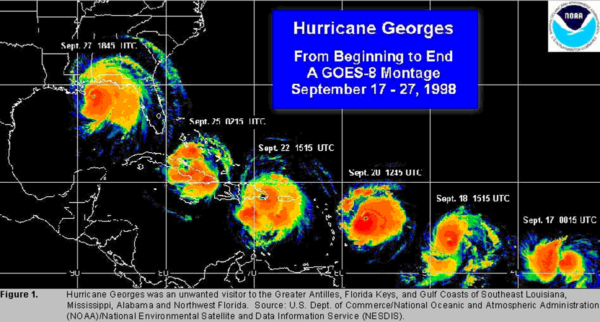
Image courtesy of NOAA.
—
As the dark clouds and the muddy waters swirl, let us pause to express our gratitude.
It could have been worse. Much worse.
The hurricane could have been named “Monica,” leaving bashful journalists deprived of verbs. How do you describe a windstorm without using the word “blow”?
Ah, but there’s no sexual connotation to that word – not according to the Clintonites, who want to move along because they’re “tired” of hearing about the lies/scandals/hypocrisy. Once again, the flatulent, huffing-their-own-gases segment of the population votes with its comfort level.
Not so for the shell-shocked denizens of the Gulf Coast, who remain glassy-eyed from the near-continuous barrage of hurricane coverage. I should be more grateful, but my eyes are still rolling in the sockets, following the leathery hand of The Weather Channel’s John Hope as he traces swirly motions over the infrared/radar/satellite image of what could be a hurricane or could be the White House after hours. It’s all a disaster looking.
Once Georges lurched ashore, it dropped brimming buckets of rain, creating an instant market for anybody who knows how to fix a leaky roof … or refloat a house.
FEMA knows how to refloat a house, especially if it’s a mansion build on a sandbar. They’ve been doing it for years, and guess whose pockets they pluck to do it. I’ll bet if the FEMA boys dug through their files, they could find a policy for Atlantis.
If the FEMAtics really want to help, give every man, woman and child in Northwest Florida his own liquor license. I’m feeling empowered already!
But I doubt the feds will cooperate. Instead, we’ll get McCarthy-era macaroni, forms in triplicate to jam under the doors, and a visit from a high-ranking official, maybe even Linda Tripp!
So let’s look on the private-sector bright side: The trend is downward for hurricanes in the Gulf of Mexico, as reported in the July 23 Daily News in a story about GLOBAL WARMING. Maybe storms Charley, Early, Francis and Georges didn’t catch that part. They got to the words GLOBAL WARMING and tuned out, the way MONICA LEWINSKY affects the fashionably flawed.
But let’s not carp about GLOBAL WARMING. It’s been debunked by editorial writers everywhere, same as the infamous OZONE HOLE. Except the ozone hole is real. Oops.
Nevertheless, be of good cheer. The wet got wetter, but with luck we won’t be one of them, and even if we are, the benevolent hand of somebody – the media, the government, maybe President Bill himself – will lift us up, or at least tell us they did.
And that’s what matters: the appearance, not the substance, of a thing.
So don’t worry. When Hurricane Monica forms, it won’t come into the gulf. And if it does, macaroni is only a stack of forms in triplicate away!
About the author:
Del Stone Jr. is a professional fiction writer. He is known primarily for his work in the contemporary dark fiction field, but has also published science fiction and contemporary fantasy. Stone’s stories, poetry and scripts have appeared in publications such as Amazing Stories, Eldritch Tales, and Bantam-Spectra’s Full Spectrum. His short fiction has been published in The Year’s Best Horror Stories XXII; Alfred Hitchcock’s Mystery Magazine; the Pocket Books anthology More Phobias; the Barnes & Noble anthologies 100 Wicked Little Witch Stories, Horrors! 365 Scary Stories, and 100 Astounding Little Alien Stories; the HWA anthology Psychos; and other short fiction venues, like Blood Muse, Live Without a Net, Zombiesque and Sex Macabre. Stone’s comic book debut was in the Clive Barker series of books, Hellraiser, published by Marvel/Epic and reprinted in The Best of Hellraiser anthology. He has also published stories in Penthouse Comix, and worked with artist Dave Dorman on many projects, including the illustrated novella “Roadkill,” a short story for the Andrew Vachss anthology Underground from Dark Horse, an ashcan titled “December” for Hero Illustrated, and several of Dorman’s Wasted Lands novellas and comics, such as Rail from Image and “The Uninvited.” Stone’s novel, Dead Heat, won the 1996 International Horror Guild’s award for best first novel and was a runner-up for the Bram Stoker Award. Stone has also been a finalist for the IHG award for short fiction, the British Fantasy Award for best novella, and a semifinalist for the Nebula and Writers of the Future awards. His stories have appeared in anthologies that have won the Bram Stoker Award and the World Fantasy Award. Two of his works were optioned for film, the novella “Black Tide” and short story “Crisis Line.”
Stone recently retired after a 41-year career in journalism. He won numerous awards for his work, and in 1986 was named Florida’s best columnist in his circulation division by the Florida Society of Newspaper Editors. In 2001 he received an honorable mention from the National Lesbian and Gay Journalists Association for his essay “When Freedom of Speech Ends” and in 2003 he was voted Best of the Best in the category of columnists by Emerald Coast Magazine. He participated in book signings and awareness campaigns, and was a guest on local television and radio programs.
As an addendum, Stone is single, kills tomatoes and morning glories with ruthless efficiency, once tied the stem of a cocktail cherry in a knot with his tongue, and carries a permanent scar on his chest after having been shot with a paintball gun. He’s in his 60s as of this writing but doesn’t look a day over 94.
Contact Del at [email protected]. He is also on Facebook, twitter, Pinterest, tumblr, TikTok, Ello and Instagram. Visit his website at delstonejr.com .
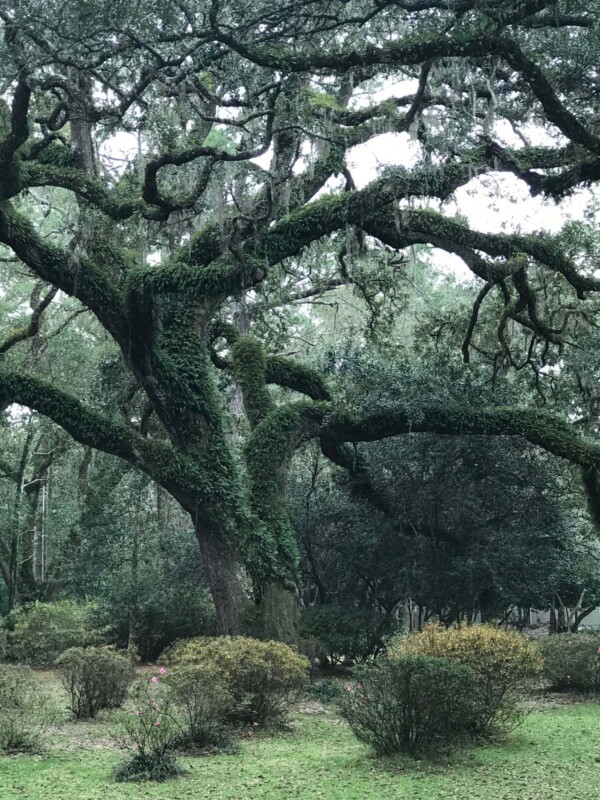
A Florida live oak at Eden Gardens State Park in Point Washington. Image courtesy of Del Stone Jr.
A wooded lot on Racetrack Road was recently cleared. A business was gained, and a couple of hundred trees were lost.
But that’s not the whole story.
A bit of smog control disappeared into the woodpile. Trees help filter pollutants from the air, which is why big cities across America are planting more and more trees within their limits. We don’t have smoke-belching factories here in Northwest Florida, but we do have cars, and cars emit pollution. Trees help clean that up.
Save a little slice of Fort Walton Beach.
The neighborhood will be a little hotter, too. Trees help regulate those torrid afternoon high temperatures by giving off water vapor through their leaves when exposed to that harsh Florida sun. And they provide shade. Now, the sun will beat down on buildings and bare ground.
Next time it rains, more soil will wash into storm drains, not just from the cleared lot but also from surrounding property. Trees help slow the velocity of raindrops, which means they cause less damage when they strike the ground. Tree roots help keep the soil in place, which slows the velocity of the water draining from the land. Now it’s more likely that after the flash showers we have around here, a torrent, not a trickle, will rush across the land.
The neighborhood will be a little noisier, too. A thick border of trees provides terrific sound insulation from the lovely clamor of tires screeching and horns honking along Racetrack Road. Now, the tumult will reach back to the businesses and families that sit on the back streets.
Northwest Florida’s natural beauty is only a pale shadow of what it once was.
The wind will blow stronger through that stretch of land. Without trees to moderate the movement of air, any of the soil left over from the gullywashers will be gone with the wind. Drivers doing the Beal Parkway Crawl past the Wal-Mart site last Saturday can tell you what that looks like: clouds of throat-parching dust sweeping across four lanes of bumper-to-bumper traffic.
And of course, a tiny oasis of life was bulldozed into history. No doubt birds and small animals inhabited that tract of woods.
And I imagine a kid or two used it to conduct imaginary explorations or Indiana Jones-style escapes into faraway lands. Every day, more places where kids are able to play and flex their minds are cut down, fenced off and built over.
I prefer change that benefits us all.
When those trees came down, a tiny percentage of carbon- and water-fixing was lost, and a tiny percentage of greenhouse gases was introduced to the atmosphere. Whether man or nature is to blame for global warming, trees help keep it in check, and this batch of trees is now lost to the cause.
It was only a small tract of land, but as you can see, it was a lot more. It was a part of an amazing machine, one that we know needs to be looked after, but don’t seem to care about.
And while this plot of land by itself won’t make any difference in the way things go, when you put all the plots of land together, you see something very big, very important, and something that will make a huge difference.
That’s the story.
This column was published in the Wednesday, June 17, 1998 edition of the Northwest Florida Daily News and is used with permission.
About the author:
Del Stone Jr. is a professional fiction writer. He is known primarily for his work in the contemporary dark fiction field, but has also published science fiction and contemporary fantasy. Stone’s stories, poetry and scripts have appeared in publications such as Amazing Stories, Eldritch Tales, and Bantam-Spectra’s Full Spectrum. His short fiction has been published in The Year’s Best Horror Stories XXII; Alfred Hitchcock’s Mystery Magazine; the Pocket Books anthology More Phobias; the Barnes & Noble anthologies 100 Wicked Little Witch Stories, Horrors! 365 Scary Stories, and 100 Astounding Little Alien Stories; the HWA anthology Psychos; and other short fiction venues, like Blood Muse, Live Without a Net, Zombiesque and Sex Macabre. Stone’s comic book debut was in the Clive Barker series of books, Hellraiser, published by Marvel/Epic and reprinted in The Best of Hellraiser anthology. He has also published stories in Penthouse Comix, and worked with artist Dave Dorman on many projects, including the illustrated novella “Roadkill,” a short story for the Andrew Vachss anthology Underground from Dark Horse, an ashcan titled “December” for Hero Illustrated, and several of Dorman’s Wasted Lands novellas and comics, such as Rail from Image and “The Uninvited.” Stone’s novel, Dead Heat, won the 1996 International Horror Guild’s award for best first novel and was a runner-up for the Bram Stoker Award. Stone has also been a finalist for the IHG award for short fiction, the British Fantasy Award for best novella, and a semifinalist for the Nebula and Writers of the Future awards. His stories have appeared in anthologies that have won the Bram Stoker Award and the World Fantasy Award. Two of his works were optioned for film, the novella “Black Tide” and short story “Crisis Line.”
Stone recently retired after a 41-year career in journalism. He won numerous awards for his work, and in 1986 was named Florida’s best columnist in his circulation division by the Florida Society of Newspaper Editors. In 2001 he received an honorable mention from the National Lesbian and Gay Journalists Association for his essay “When Freedom of Speech Ends” and in 2003 he was voted Best of the Best in the category of columnists by Emerald Coast Magazine. He participated in book signings and awareness campaigns, and was a guest on local television and radio programs.
As an addendum, Stone is single, kills tomatoes and morning glories with ruthless efficiency, once tied the stem of a cocktail cherry in a knot with his tongue, and carries a permanent scar on his chest after having been shot with a paintball gun. He’s in his 60s as of this writing but doesn’t look a day over 94.
Contact Del at [email protected]. He is also on Facebook, twitter, Pinterest, tumblr, TikTok, and Instagram. Visit his website at delstonejr.com .