I Feel My Body Grow ( a short horror story )
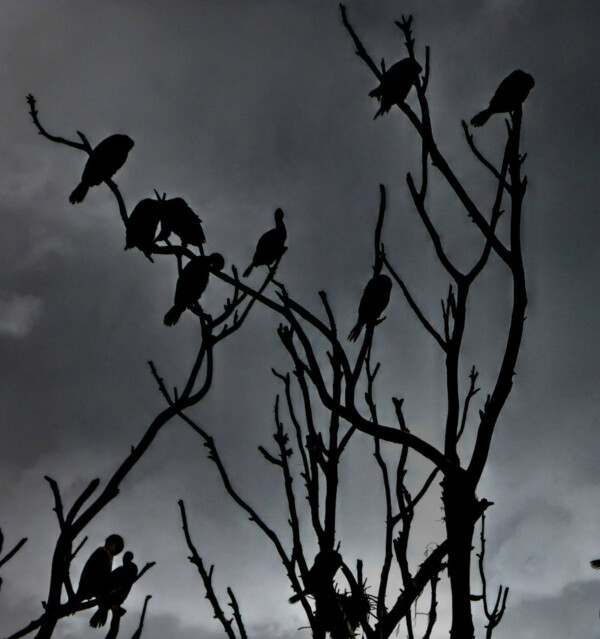
Image courtesy of Public Domain Pictures.
Introduction to “I Feel My Body Grow”
The genesis of this story was simple: I wanted to sell a story to “100 Wicked Little Witch Stories.”
During the ‘90s writer and editor Stefan Dziemianowicz helmed a number of anthologies for Barnes & Noble, all of them centered around extremely short stories. Seems publishers love short shorts, and I’m not sure if that’s because they can get more in each books or that readers prefer very short stories. As a reader I have no druthers either way, though I will pause before committing to a novelette or novella. I didn’t read Stephen King’s “The Mist” for many years because of that bias.
When I discovered Dziemianowicz was editing a book of witch stories I sat down to come up with something that would fit his premise. I knew nothing about witches except what I’ve seen in movies or TV. I knew a couple of people who claimed to be but their witchhood had less to do with eye of newt and hair of bat but the whole Mother Earth and Gaia thing, which I dismissed as a New Age hippie trend that would fade from popularity in a couple of years.
What I wanted was a witch for the modern ages, maybe not an evil witch but certainly one who was vengeful. I came up with just such a creature:
Cancer.
Cancer is the modern scourge. We think of it as evil though it has no conscious intent – it merely is.
But I asked myself: What if it did have conscious intent?
“I Feel My Body Grow” is the result.
This is a creepy story and when I re-read it recently I was gratified to see it holds up really well, from 1995 to this writing in 2023. I think it would make a terrific short feature, in a horror anthology movie like “Tales from the Crypt” or “Twilight Zone.”
I don’t believe “I Feel My Body Grow” will leave you lying awake tonight, jumping at every sound your house makes in the cooling dark. I do hope it stays with you.
—
I FEEL MY BODY GROW
She touches them, and I feel my body grow.
A man with eyes like polished knobs of bone, who stands behind a counter, trembling, the exertion of life a tension ringing through him. A hairless pupa of a child, wrapped in hospital sheets, quietly and almost lovingly feeding on itself to death. A woman dressed in white, starched and straight and sure of most things, the way women who know the tides of emotion are sure of most things.
She touches them all, and I feel my body grow.
But somehow, over the lifetimes, I still ache at the thought of her. I see my thoughts of her rising above the black chasm of all evil things that have come to pass, and somehow, I still ache at the thought of her. It is a thrall of some kind, I am sure, as sure of it as the woman in starched white is sure of most things, and I pray to be released from this thrall of sickness.
A thrall. That is what this is. Surely, it is not –
She touches a young man who is bright with life and love, and I feel my body growing, cell by twisted cell. I feel it growing through the man, a sharp angle of darkness, and soon he too will feel it, awakening one night in an astonished sweat, a dream of sickness spinning out of his mind that does not evaporate in the light of day.
A sickness. Inflicted by her, from the moment I saw her those lifetimes ago, a shy young woman dressed in simple black and white, her hair a primal darkness wrapped about her head like a coiled snake, her eyes without depth, her cheekbones and the ridge of her jawline smoothed to soft yet strong angles. Her beauty suggested intelligence and spirit, and I could not help but notice … and admire. Inflicted by her, surely. Inflicted, inflicted, inflicted –
She touches the frail hand of an elderly woman who is lying in a plump bed, surrounded by cats and photographs of loved ones and lilac cachets.
I feel my body growing. Horribly, I feel it.
Everything about her, magical. Her laughter, like wind blowing through the strings of a musical instrument; her manner, so comfortably alluring … I could not help myself.
Inflicted, and afflicted. My wife’s gaze lingering a moment too long, I sensed she heard my thoughts the way a woman who has lived with a man for many years can sense the drift of his heart. And I, too, could feel the anger growing within my wife, could feel the coolness of her shadow falling over me as I sought through prayer and meditation to rid myself of the growing sickness within.
She touches a little girl, and I feel my body growing.
Inflicted, inflicted, inflicted – through the fields I tended and the drawing of water from the stream and the recitations of prayer at Sabbath services. Everywhere and everything, I saw her face and heard her laughter and wondered and worried and prayed.
She touches and touches and touches and my body grows, bloated and monstrous and twisted, my body grows.
A thrall, then. It had to be. Nothing else could have brought me to such spiritual ruin. Nothing else could have forced me to forsake my teachings, my faith, my devotion to the laws by which we all lived. Nothing else could have driven me to follow her into the field that final night, to … to take her, her coy overtures giving way to a pretense of terror as I ripped at her clothes … my God, how could I have done it?
A thrall. It had to be. A thrall of sickness.
She touches a woman dark of hair and thin of face, a woman so much like herself, laughing and beautiful and innocent – no, it cannot be innocence! – and I feel my body grow. Against my will, it grows, and it grows to disfigure and kill. The idea of innocence sends a special knife through me, and everything that has happened before and since focuses into sharp relief, as one of the photographs people frame and hang on their walls in this lifetime, and I feel my body twisting and hurting and the unmerciful evidence of memory.
My wife. It was she who said the word.
Witch.
She touches every child in a classroom, where outside, men wearing masks are ripping fibers from a wall.
And it was I who stood before her as she coughed amid the stinking, pitch-soaked timbers, her hands and feet bound to the stake, her terrified eyes darting from mine to the men who held the torches. It was I who pronounced the sentence, choking the words out, my throat so tight I could barely breath but a greater terror falling upon me from the angry stares of the townspeople gathered ‘round for the coming spectacle.
It was I who told her that by the laws of our community, she might have one question answered before the sentence was carried out.
And so she asked me, in a voice so small I leaned closer to hear her.
She asked me how I wanted to die.
Within the Lord’s embrace, I told her, speaking in a powerful and righteous voice, despite my fear. My fear. She sensed it, and she asked me again. How did I want to die?
I felt myself frowning at her, unprepared and apprehensive, and then I answered again: within the Lord’s embrace.
She stared at me a long moment, her gaze clear and strong. And then she asked me again, the tone of her voice insisting I tell the truth: How did I want to die?
Her words seemed to reach within, to grasp my heart and squeeze it, as if she were testing for ripeness, and in a moment that arrived and departed so quickly I could not be certain it had even come at all, I felt nothing but black, rancid loathing for myself, because for that sliver of a moment I asked myself: What if this disease of lust that had afflicted me were nothing more than a weakness of my conviction? What if this woman stood wrongly accused?
And I could not help but whisper:
If you are innocent, then let me live in misery for all eternity.
She touched me.
Somehow, she slipped her hand from the bindings and touched me, in the center of my chest, a touch as feathery and insubstantial as a dream of a touch. And as I staggered back, a warmth spreading along the curves of my ribs and sinking into all the secret places inside me, the men shouted angrily and hurled their torches into the timbers, drowning everything in a sudden roar of combustion.
She did not scream.
Afterwards, I could not remain for the reconsecration of the soil. I could not bear my wife’s smirking glances. I could not perform my devotions or say a prayer. Something had fallen over me, the sudden idea of innocence a black film that covered my skin and poisoned my blood and sank into my dreams, and it stained everything I believed in with a mark of hypocrisy, murder and despair.
Lurking beneath this, I would not admit at the time, was a memory of her, the eyes, the sharp cheekbones, the spirit. The memory always brought with it a wrenching of the heart, a sinking of the gut, a bonfire of hatred for myself and my glaring wife and the good people who somehow, some way, had forced me to do this thing.
Inflicted, inflicted, inflicted … yes. But now I was no longer sure. Had it been by my own hand?
I fell ill. A physical sickness, to match the infection that had claimed my soul. The warmth in my chest became a fire, and lesions ate my flesh. I did not seek relief through poultices or ecclesiastical ministrations. I did not do anything but wait.
Until she came for me. In the night, when I knew she would come, her dark, dark hair a penumbra of shadow floating around the sharp curve of her face, her body unmarked by fire or any other flaw. She came to me and took my hand and we left, floating through walls and trees and finally the sky itself.
She said to me: You will live forever.
Ah, my heart soared. I could not believe there was room within her for mercy, or forgiveness, but she spoke the words with such conviction and compassion that I believed her. I let go of the constraints that had held me, and I told her I loved her, and I would stay with her forever.
She did not reply.
But she led me to a village, much like my own, and she took me into a cottage where a family slept around the banked embers of a fire.
We watched them a moment. Then she whispered: Goodness, and evil, exist in every act. Only truth never changes.
And then she touched the father. She touched the mother. She touched the sleeping children.
I felt my body grow.
Horribly. I felt my body grow.
And it has grown. All the years, all the lifetimes, all the ages that have passed, my body has grown.
The world is different now, a loveless place that glitters with machines and science and godlessness. My body grows quickly now, metastasizing despite the radiation and chemotherapy these people use to kill it, the tumors an ever-ripening harvest of sickness and pain that will never know end.
But somehow, I still ache at thought of her. Rising above everything else, I still do.
A thrall, yes. But by my own hand? I will never know the truth.
As she touches them, and I feel my body grow.
About the author:
Del Stone Jr. is a professional fiction writer. He is known primarily for his work in the contemporary dark fiction field, but has also published science fiction and contemporary fantasy. Stone’s stories, poetry and scripts have appeared in publications such as Amazing Stories, Eldritch Tales, and Bantam-Spectra’s Full Spectrum. His short fiction has been published in The Year’s Best Horror Stories XXII; Alfred Hitchcock’s Mystery Magazine; the Pocket Books anthology More Phobias; the Barnes & Noble anthologies 100 Wicked Little Witch Stories, Horrors! 365 Scary Stories, and 100 Astounding Little Alien Stories; the HWA anthology Psychos; and other short fiction venues, like Blood Muse, Live Without a Net, Zombiesque and Sex Macabre. Stone’s comic book debut was in the Clive Barker series of books, Hellraiser, published by Marvel/Epic and reprinted in The Best of Hellraiser anthology. He has also published stories in Penthouse Comix, and worked with artist Dave Dorman on many projects, including the illustrated novella “Roadkill,” a short story for the Andrew Vachss anthology Underground from Dark Horse, an ashcan titled “December” for Hero Illustrated, and several of Dorman’s Wasted Lands novellas and comics, such as Rail from Image and “The Uninvited.” Stone’s novel, Dead Heat, won the 1996 International Horror Guild’s award for best first novel and was a runner-up for the Bram Stoker Award. Stone has also been a finalist for the IHG award for short fiction, the British Fantasy Award for best novella, and a semifinalist for the Nebula and Writers of the Future awards. His stories have appeared in anthologies that have won the Bram Stoker Award and the World Fantasy Award. Two of his works were optioned for film, the novella “Black Tide” and short story “Crisis Line.”
Stone recently retired after a 41-year career in journalism. He won numerous awards for his work, and in 1986 was named Florida’s best columnist in his circulation division by the Florida Society of Newspaper Editors. In 2001 he received an honorable mention from the National Lesbian and Gay Journalists Association for his essay “When Freedom of Speech Ends” and in 2003 he was voted Best of the Best in the category of columnists by Emerald Coast Magazine. He participated in book signings and awareness campaigns, and was a guest on local television and radio programs.
As an addendum, Stone is single, kills tomatoes and morning glories with ruthless efficiency, once tied the stem of a cocktail cherry in a knot with his tongue, and carries a permanent scar on his chest after having been shot with a paintball gun. He’s in his 60s as of this writing but doesn’t look a day over 94.
Contact Del at [email protected]. He is also on Facebook, twitter, Pinterest, tumblr, TikTok, and Instagram. Visit his website at delstonejr.com .

Leave a Reply