‘Flatbellies’ (a short horror story)
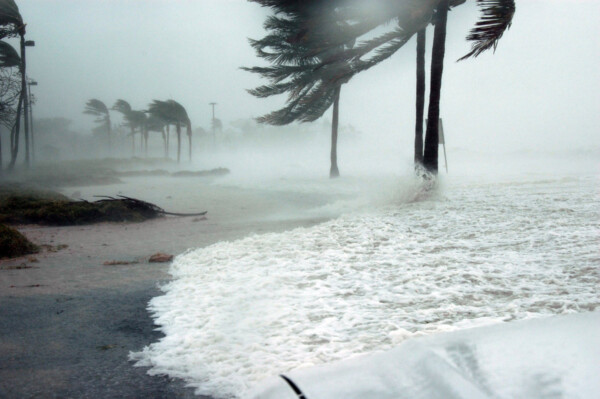
Photo courtesy of ph under the auspices of a Creative Commons license.
Introduction to “Flatbellies”
I have long wanted to write a horror story about creatures washed ashore during the storm surge of a hurricane.
I’ve experienced several hurricanes myself, though I’ve never witnessed a storm surge. You’d have to be near the shoreline to see that, and anybody near a shoreline during a hurricane has more things to worry about than looking for strange creatures tossed ashore. Storm surge is the most lethal and destructive aspect of a hurricane.
I have, however, witnessed the aftermath of storm surge. Hurricanes are good at washing seashells ashore, many of which we’ve never seen before because they exist in waters too deep for the average beachgoer. Sometimes, also, a strange sea creature will join that colorful collection of shells, washed ashore by the turbulent tides of storm.
So it is not a far reach to suppose that a monster, or monsters, could also be carried into our midst by a tropical cyclone, and that this journey is part of their reproductive cycle … a chilling thought, there, as they rely on human beings for their … food.
My friend Debbie, who worked at the Mobile Press-Register in Mobile, Ala., mentioned to me she was looking for a Halloween story to publish in her Halloween day feature section. So I wrote this story for her.
I wanted the story to feel like a local legend, an apocryphal tale related to children on Halloween night, after the candy had been sampled, the scary movies watched, and all the little ghouls and goblins lying down to sleep.
Beware the hurricanes, my little ones, because when the storm water sweeps in it brings with it some unwelcome visitors … who might just take a young boy or girl with them, back into the briny deeps.
Beware the flatbellies!
—
FLATBELLIES
Amy Martin, hands on hips, gave her brother what she hoped was a look of smoldering contempt and declared, “Congratulations, wise guy. Your children won’t go to sleep for approximately the rest of their lives.”
A jack-o-lantern leered from the corner of the living room with a flickering, gape-toothed grin. Black crepe paper bats, hanging from the ceiling by threads, twirled slowly as the Mobile, Ala., night eased through the window screen, carrying with it the wet odor of dew-soaked grass, half-chewed bubblegum, and scorched pumpkin carcass. The doorbell had not rung in a good two hours. Trick-or-treating was over for this year.
Amy’s brother, Ben, hoisted himself from the couch with an amiable grunt and hit the power button on the TV remote, cutting off Jamie Lee Curtis in mid-scream. The room fell dark. He growled playfully and wrapped his arms around Amy as she collected Atomic Fireball and Sweet Tarts wrappers from the coffee table. She couldn’t help but giggle.
“Honestly, Ben. ‘Mall of the Dead?’ ’’ she chided. “The mannequins come to life and eat the shoppers? Couldn’t you tell them a Halloween story that wouldn’t damage their brains? Something with Casper, the friendly ghost?”
Upstairs, they could hear Ben’s wife, Laurie, speaking softly to the boys, Nathan and Adam, who had tearfully departed the living room with a promise to never, ever let their parents take them to the mall again, not even if Britney Spears was giving a free concert in the food court.
“When I was a kid the mannequins ate little boys!” Ben announced, thumping his chest with in a pompous affect. “And we liked it!”
Amy rolled her eyes. “Yeah, well, your lurid story even spooked me. I’m not so sure about trying on that outfit I had in mind for my classes.” In fact, she’d moved to Mobile this past July after having lived in Biloxi, Miss., for most of the past decade. A teaching position at McGill-Toolin had suddenly become available and she jumped at the chance to put her degree in education to work.
Ben popped the jack-o-lantern’s top and blew out the candle, releasing a plume of curling white candle smoke that framed his face, giving it a weird, almost spectral appearance. He blew air from his nose and stood back, shaking away the smell. Finally, he said, “It isn’t the plastic dummies in the Tommy Hilfiger knits I’d worry about, if I were you. It’s The Flatbellies.”
Amy ambled out of the living room, a wad of candy wrappers crushed in her palm. Upstairs, Laurie was still calming the boys. She’d have a thing or two to say to Ben when she came down.
“Flatbellies? What’s that supposed to mean?” Amy called from the kitchen. “Are you implying my stomach is no longer flat?”
Ben chuckled in the dark. “No, dummy. But you live in Fairhope, don’t you?”
Yes, she did. She’d found a nice two-bedroom apartment at a fairly cheap price. It would do until she decided the job agreed with her, or she agreed with the job.
“That means you have to cross the Bayway every day,” he continued. “Tell me something. Do you ever cross it at night?”
She dumped the wrappers into the trash. “Of course. How do you think I’ll get home tonight?”
“And as you’re crossing the bridge, do you ever look out into the bay?”
“Why would I do that?” she huffed. “It’s dark out there.”
“Not entirely,” he said. “There are lights out there.”
“Flounderers, maybe,” she answered uncertainly.
From the kitchen, she could see him shaking his head. “Maybe. Or. …”
“Or?”
“Or Joe Tully,” he finished.
“I suppose there’s a story behind this,” Amy sighed. She fished a Diet Coke from the refrigerator. Maybe she should make popcorn to go along with the yarn-spinning about to commence.
“Joe Tully was a professional fisherman who lived in the back bayous all his life,” Ben began. “He was married and had a little girl. To pay the rent he operated a couple of shrimp boats, and a couple of oyster boats to boot, though the oysters you tonged from the bay, even back then, weren’t fit to eat. Still, you could find some good beds where the creeks fed into the bayous and kept the bottom fairly clean.
“But what Joe really enjoyed was taking people out on sport fishing expeditions.”
Amy cracked open the Diet Coke. She began snooping through the cabinet for a package of microwaveable popcorn.
“Mostly these were lawyers from Montgomery and Birmingham who wanted to prowl the gulf where they could hook a big marlin or a sail. Joe had bought himself a good-sized Rampage sportfisher, which was his pride and joy, though it was mostly owned by the bank. Still, he was one of those rare individuals who gets to do what he loves for a career. Just think, Amy: The man was paid for having fun all day. Wouldn’t that be the life?”
Well, she didn’t think teaching Shakespeare and gerunds was all that bad, but she understood his point.
“But like a lot of fishermen, poor old Tully fell on hard times – between the sea turtle people and the catch-limit people and the bankers calling in their loans and even the pollution regulators, it looked like Tully would have to pack in his gear, sell the boats and take up real estate. And just when things didn’t seem like they could get any worse, Hurricane Frederick came barging up the gulf, with Mobile smack dab in the crosshairs. That’s when a strange and possibly miraculous event took place.”
Amy closed the cabinet and began opening drawers. “Yes?” she asked absently.
“Hours before the storm hit, a mysterious fellow appeared at Joe’s dock. Dressed from head to toe in Eddie Bauer gear – and that was back when an Eddie Bauer goose down jacket could set you back half a year’s discretionary income. The fellow handed Joe a cashier’s check for a million bucks and said the money was his. All he had to do was take this fellow out on the bay – during Hurricane Frederick.”
“He must have been nuts,” Amy observed, rooting through packages of gravy mix, chili seasoning and hot chocolate in search of a single Orville Redenbacher’s envelope.
“Oh, it gets better,” Ben continued. “He wanted to go in one of Tully’s oyster boats.”
Amy stopped. That was crazy.
“He told Tully he was searching for a rare creature that appears only during hurricanes. It’s carried shoreward from the ocean bottom and uses the storm surge to push it into the shallow, inland waters – see, it’s not a strong swimmer at all, sort of like a jellyfish. But if it gets into those shallow waters it tends to stay there, where it breeds and … well, I don’t know how to say this.”
Amy rolled her eyes. “You’ve already terrified the kids. You might as well finish off the adults.”
Ben paused, allowing the silence to ratchet up the tension. And then he said in an ominously quiet voice, “It feeds on people.”
“I thought those were called ‘gold-diggers,’ ’’ Amy snickered.
“It pulls them off the beach, or from their cars on bridges, or out of boats, and carries them down to the bottom, where it slowly drains the fluid from their bodies, like a vampire.”
Amy curled her lip in disgust. “What planet do you come from?”
He held up his hands. “I’m not joking! How do you think all those people in Galveston died during the big storm of 1900?”
“You’re insane!” she declared. “Sometimes I wonder if we’re actually related to one another.”
“That’s what Joe Tully said. He told the man he was out of his mind, that when Frederick rolled in there’d be a 20-foot storm surge and half the city might go under. Two men in the middle of Mobile Bay in an oyster tonger wouldn’t stand a snowball’s chance in hell of surviving, monsters or no monsters, and a million dollars wouldn’t do anybody any good after that, except maybe their heirs – and that’s when Joe’s eyes lit up. Because while he was prepared to work the rest of his life to pay off his debts, there was no reason his wife and little girl had to suffer for his foolishness. Maybe if he and this stranger went out into the bay and got themselves killed, his family could pay off the house and the Rampage, and start a new life in the company of somebody who was a little more responsible with his business sense. So in a dramatic about-face, Joe told the man shoot yes, he’d do it. They ran the guy’s million-dollar check by Joe’s house (Joe didn’t say a word to his wife, Elaine, about what they were doing), packed their gear aboard the biggest tonger Joe had in his inventory, the one with the brand-new Evinrude, and set out into the stormy night.
“It was bad. Worse than can be described. The power had gone off and there was no light at all, anywhere. You tend to forget how dark it can be at night when there aren’t any lights for miles around. They plowed through waves that were 10 feet tall. Whitecaps kept sloshing over the bow, and Joe had the stranger bailing with an old Folgers coffee can just to keep the gunwales from swamping. The wind howled, and once ever so often something would flap by in the dark, a hostage to that evil wind. Joe struggled to keep the bow pointed into the waves and hoped they could keep the boat afloat until the eye of Frederick came in.
“They made it across the flats, which were under 12 feet of water, and headed out toward the bridge. There was already debris floating in the bay – broken-up docks, Dumpsters, you name it. About that time, the man started screaming about something and reached for his gear. He unpacked a long, stainless steel flounder gig. And then he scrambled up on the bow, where the search light was mounted.
“He hit the switch.”
By this time Amy had stopped searching for the popcorn. The story had actually become interesting. She waited, and when Ben said nothing, she prompted him with an impatient, “Well?”
“Well, at first Joe couldn’t see anything,” Ben continued in a near whisper. “Just sheets of rain and spray from the storm. But then, he spotted something in the water. Something that was moving.
“Something that was swimming toward the light.”
Amy felt a cool patch of gooseflesh begin to tingle at the base of her neck.
“He couldn’t make out what it was. But as it came closer, he began to see, and that’s when he began to wonder what brand of insanity had compelled him to come out here, and how he wished to God he were safely back ashore with his wife and daughter, listening to the storm swirl around them from the safety of their boarded-up house, the million dollars be damned.
“The thing in the water – it was as big as a man, with rudimentary arms and legs. But it was flat, and fishbelly white, like a flounder, with great, big staring eyes, side by side against a flat spatula of skull. And there, in the middle of its head, was a sucking mouth, like a lamprey’s, full of sharp bristles. Joe could picture this thing slithering from the water and battening onto him like a tick, or a leech, then dragging him out of the boat and hauling him down to the turbid depths of Mobile Bay, where he would remain forever.
“The man at the bow prepared to hurl his gig when suddenly, a wave caused the boat to lurch, and the searchlight beam played across the surface of the bay.
“Joe saw hundreds of the things out there, as far as the beam could reach into the howling dark. Their eyes caught the light and threw back a magenta glow, and their expressions were shot through with the remorseless hunger of a parasite. They stared without blinking, as if transfixed, and their obscene mouths opened and closed in a grotesque parody of feeding.
“The stranger shouted, ‘Too many of them! They’re attracted to the light – we must shut off the light. We must get out of here! They’ll kill us and overrun the entire Mobile Bay estuary by morning!”
In his mind’s eye, Joe could see these creatures lurking in the quiet, shallow bayous that lined the bay. He could see them creeping from the water at night to haul away some poor soul who had gone outside to see what the dog was barking at.
He could see his wife, Elaine, and their daughter, peeking from the living room window as something concealed in shadow, something flat and horrible, waited for one of them to open the door.
“Joe shouted back at the man, ‘We’re not going anywhere! If they’re attracted to light then we’ll stay here with our searchlight until after the storm surge passes, so they’ll stay with us and not hit the shallows north of here. Then the damn things can float back out into the gulf when the tide goes down!’ ’’
By this time Laurie had come downstairs. She took up a spot next to Amy in the kitchen and listened.
“The stranger freaked and tried to gig ol’ Joe, but right at that moment one of those things reached over the side and yanked him by the ankle, and the man tumbled into the bay. Joe throttled up the Evinrude and tried to swing around to grab the man, but he could see nothing was to be done – a swarm of The Flatbellies had him and were carrying him below. So Joe motored over to the bridge and moored to one of the pilings, leaving lots of slack in the line, and there he stayed, with the search light shining directly into the water. Those things surrounded the boat and tried to climb aboard, but Joe fought them using the flounder gig, and finally a paddle, and after an hour of battling and bailing, it was almost a relief to Joe when he looked south of the bridge and saw a mountain of shrieking water bearing down on him. Frederick’s storm surge had roared in.
“Joe had hoped to provide for his family by dying out there on the water, but now his only hope was that he save them from an evil far worse than a few debts.
“The next morning, when the inspectors for the Alabama Department of Transportation checked the bridge, they found his boat hanging from one of the support columns. Its searchlight was still shining in the water.
“And to this day, when people drive over the Bayway crossing Mobile Bay at night, and they see lights out there on the water, some of them who’ve heard this story wonder if Joe Tully still isn’t out there, protecting his family from whatever creepy thing might be slithering along the bottom, heading for the flats north of the bridge.
“It makes you wonder, too, doesn’t it?” Ben finished mysteriously.
Laurie looked at Amy with a puzzled expression. She said, “Did your mother drop him on his head when he was a child?”
That night, driving back to Fairhope, Amy kept her eyes straight ahead as she crossed the bridge that spanned Mobile Bay.
But it didn’t do any good. A car was parked in the breakdown lane with its lights on.
Nobody was inside.
Amy didn’t stop. She kept driving, hoping the needle on the fuel gauge would not touch E, or that a Check Engine light would come on, or any of the hundreds of things that could go wrong with a car would go wrong at that exact moment. She did not know what she would do if that were to happen.
Except that she would turn off the headlights. And NOT open the door.
And hope that somewhere, out on those marshy black flats, a searchlight would appear.
About the author:
Del Stone Jr. is a professional fiction writer. He is known primarily for his work in the contemporary dark fiction field, but has also published science fiction and contemporary fantasy. Stone’s stories, poetry and scripts have appeared in publications such as Amazing Stories, Eldritch Tales, and Bantam-Spectra’s Full Spectrum. His short fiction has been published in The Year’s Best Horror Stories XXII; Alfred Hitchcock’s Mystery Magazine; the Pocket Books anthology More Phobias; the Barnes & Noble anthologies 100 Wicked Little Witch Stories, Horrors! 365 Scary Stories, and 100 Astounding Little Alien Stories; the HWA anthology Psychos; and other short fiction venues, like Blood Muse, Live Without a Net, Zombiesque and Sex Macabre. Stone’s comic book debut was in the Clive Barker series of books, Hellraiser, published by Marvel/Epic and reprinted in The Best of Hellraiser anthology. He has also published stories in Penthouse Comix, and worked with artist Dave Dorman on many projects, including the illustrated novella “Roadkill,” a short story for the Andrew Vachss anthology Underground from Dark Horse, an ashcan titled “December” for Hero Illustrated, and several of Dorman’s Wasted Lands novellas and comics, such as Rail from Image and “The Uninvited.” Stone’s novel, Dead Heat, won the 1996 International Horror Guild’s award for best first novel and was a runner-up for the Bram Stoker Award. Stone has also been a finalist for the IHG award for short fiction, the British Fantasy Award for best novella, and a semifinalist for the Nebula and Writers of the Future awards. His stories have appeared in anthologies that have won the Bram Stoker Award and the World Fantasy Award. Two of his works were optioned for film, the novella “Black Tide” and short story “Crisis Line.”
Stone recently retired after a 41-year career in journalism. He won numerous awards for his work, and in 1986 was named Florida’s best columnist in his circulation division by the Florida Society of Newspaper Editors. In 2001 he received an honorable mention from the National Lesbian and Gay Journalists Association for his essay “When Freedom of Speech Ends” and in 2003 he was voted Best of the Best in the category of columnists by Emerald Coast Magazine. He participated in book signings and awareness campaigns, and was a guest on local television and radio programs.
As an addendum, Stone is single, kills tomatoes and morning glories with ruthless efficiency, once tied the stem of a cocktail cherry in a knot with his tongue, and carries a permanent scar on his chest after having been shot with a paintball gun. He’s in his 60s as of this writing but doesn’t look a day over 94.
Contact Del at [email protected]. He is also on Facebook, twitter, Pinterest, tumblr, TikTok, and Instagram. Visit his website at delstonejr.com .

Courtesy of Public Domain Pictures under the auspices of a Creative Commons license.
Introduction to “I Am Running”
In 1969 my parents decided to leave our safely suburban, three-bedroom, two-bath house for a dumpy little place with one bathroom and no air-conditioning that was one block off the water in another part of town.
This was one of those marriage-crisis changes so they were willing to settle for less in order to expedite the move. (As an aside, let me assure you – the approach solved nothing.)
Nobody asked me how I felt about leaving our comfortable home and my tight group of friends for a falling-down dump with a gigantic yard and bazillions of trees. If they had, I would have told them I hated the idea.
When I say the yard was gigantic, I mean it was HUGE, almost the size of a football field. The previous owners must have been raised in a garbage dump because the condition of the house and lot were beyond horrible. The back yard was littered with mounds of leaves so large they could be mistaken for middens, an open cesspool, a junked car, a rusted-out swing set, humps of burned materials, broken glass, bricks and cement blocks galore … and trees. Every make and model of tree imaginable, from water oaks to hickories, magnolias, longleaf pines and white laurels. At one point I counted the trees in the front and back yard – there were over 50.
It took us years to get that place in shape, and it was years of back-breaking work. Dad and I cut down more trees than I can count, and Dad was not a fan of tree stumps, so the tree removal began with us digging around the trunk at the ground level until a large crater had been excavated. Then we would cut the roots, one by one, until the tree threatened to topple. Dad would tie it off to keep it from falling on the house and we’d begin whittling away on the taproot until the tree fell.
We did all this with a bow saw, ax and hatchet. Dad refused to pay good money for a chainsaw.
Even after Dad felt he had removed enough trees, there was the raking. Dad required that the yard be as clean as the floor in the house, which meant days and days of raking and hauling leaves. It was a never-ending chore because we had a mix of tree species in the yard and none were synchronized with the others. The water oaks, for instance, suffered a massive leaf-fall in the spring, though they shed year-round. The hickories dropped their fluffy leaves in December and January. The magnolias shed all year long and their leaves, big as dinner plates, needed to be picked up lest they cover the grass and kill it.
I can’t count the number of times I raked my parents’ and now my yard, but I do know the job, if worked at on an all-day basis, could be finished in three or four days. That’s a LOT of leaves!
And during that mind-numbing drudgery the idea for this story emerged.
I think I might have grown batty after all that raking, hauling and dumping leaves by the side of the road for the city to pick up, followed by more raking and hauling and dumping. The monotony of it, the mind-numbing sameness and exhaustive physical effort, were killing more brain cells than the imported beer I would drink in my early 20s while partying with my friends after work.
So this story emerged. During my youth in the ’60s I had been a UFO enthusiast. I had even tried to replicate some of the UFO photos I saw in magazines by throwing a garbage can lid in the air and snapping photos of it with my little Kodak box camera. So the idea of a UFO landing in the back yard at night to disgorge aliens who looked like, what else?, my nemesis at the moment, the hated leaves, was not a far stretch.
This story is a trifle. It is not meant to change worlds or alter the universe in any way. It is a relic of my youth, when to save my brain from the boredom of performing the dull physical labor of raking and hauling leaves out of the yard, I sought to entertain myself by spinning a ridiculous yarn.
Think about it the next time you are outside, rake in hand, preparing to wage war with those naked trees who left their summer clothes lying about.
I AM RUNNING
Version 1
It is Tuesday night and very cold.
I am watching “Maude.” “Maude” is my favorite program, because I like to see her smite people down with her tongue. “Maude” is a very dominating woman. I like the way she says what she thinks and stands up for what she believes. My former wife was like that; I am like that, and let me tell you, two people like that just cannot live under the same roof. Life is, uh, how do you say, el disgusto?
I am not watching “Maude.” It is not a matter of preference, you see. The TV cable has gone off. I am very angry. I would call the TV cable company and raise hell, but I cannot, because whenever the cable goes off the air, their telephone goes off the hook.
Angry, I am turning off the TV. Augghh! The silence is killing me. I must turn on the radio to preserve my sanity. Ah? What wonderful – noise? The radio is not working. All I am hearing is static, even though I am turning the channel all the way across the receiving band.
The dog is barking. I cannot imagine what he would bark at before running to hide. He must be barking at a leaf. The past few days, he has worked up the courage to bark at leaves. He is a very peculiar dog, very peculiar indeed.
The dog is persisting in his barking. What is causing this outburst? An army of leaves? Perhaps they are trying to kill him. I wish they would hurry. I suppose to better my curiosity, I best go see what he is barking at. I have never seen an army of leaves.
The electricity is going – it is gone. Perhaps the wind blew down a line. It is certainly blowing enough leaves down. An army of them. It must be terrifically cold outside, with the wind blowing so ferociously. Perhaps it is not the wind’s fault for the lack of electricity here. Perhaps it is the army of leaves, trying to cut me off from the rest of the world. First, they will kill my dog, then come for me. I suppose I better check on the situation.
This is very peculiar. It is night, and the electricity is off, yet there is a glow coming through the window. I am astonished! What could the source of the glow be?
I am amazed! A strange, saucer-shaped vehicle is landing in my back yard. It is large, approximately 30 feet in diameter, with a ring encircling its girth. It glows yellow then a shade of white washes over it. It is coming down through my personal forest of trees, to land in a clear area. It makes not a sound. It is very peculiar. I wonder what manner of creature is piloting the vessel? Perhaps it is a secret government project. I would not put such an unscrupulous deed past the scoundrels in Washington. Maybe it is a Soviet spacecraft, or Chinese, or French, or Japanese, or Icelandic!
I have stepped into the bitter cold of the outdoors. I am sick of peering at this object from the kitchen window. Foolishly, I am standing here without my camera. I will be labeled a crackpot. I have gone out the back door, threaded my way into the unraked leaves of my back yard. The wind is gusting, yet I do not feel the cold. This object is extremely interesting. I must get closer for a better look.
Yes, I believe this vessel to definitely be of extraterrestrial origin.
It is landing – has landed, on four stilt-like legs. It continues to be silent, and the pulsing color has also ceased. It certainly is a unique craft. There are absolutely no seams on its exterior, anywhere. Very peculiar indeed.
This must be the culprit, the agent responsible for the TV cable blackout, the radio static, and the electrical failure. I am ashamed of myself, thinking of a leaf army. Very ashamed, indeed! ’Twas such an absurd notion, only a product of my imagination. I cannot recall seriously considering the hypothesis! But even suspecting such a notion! Preposterous. I have a much more rational explanation! A flying saucer is the cause of these domestic idiosyncrasies.
Oh dear! I am terribly excited. A hatch is opening. To think, I will be the first human ever to communicate with a being from outer space, unless of course, it is a government project. It is more than I can fathom.
A creature is emerging. It is certainly far from being human. It is a thin looking organism, flat with veins like a – like a leaf! Astounding! That is a perfect analogy! This being resembles a leaf! A leaf with legs!
He is approaching me. Should I run or stand my ground. My heart is beating at an excessive rate, I might add. I am staying here.
“Earthman, I am a representative of the Leaf Army. We have come for your dog.”
My dog? What could they possibly want with my dog. The leaf man is snatching up my dog – he is now leveling some sort of instrument at my dog. He is killing my dog.
Oh God! The Leaf Army! My dog, then me.
The leaf man is looking at me strangely.
I am considering the notion of running.
I am running.
I AM RUNNING
Version 2
It is a Tuesday evening. The wind is gusting vehemently from the north, and I fear for my comfort tonight because of a chill that is accompanying the gale.
I am watching the “Naomi Winters Show” on television. It is a disgusting form of entertainment, but unfortunately, due to the lack of any competition worth my while, I find myself staring at it every Tuesday night. I suppose I could listen to the radio, but the notion of having my sensibilities assaulted by what the radio media call music does not appear to me. Books are vapid beyond description. I have found it not within my capacity to successfully read a book through its entirety. In fact, now that I think about it, there is hardly anything that appeals to me. It is a wonder I have not gone completely insane (if I am not already).
Naomi Winters is an interesting character, despite the medium by which she is presented. You see, she has such forceful character. I once enjoyed watching her smite down people with her tongue. My wife also found great delight in this. In fact, my wife admired Ms. Winters to the extent of assuming the star’s personal habits and characteristics. Soon, she became unbearable. For example, on one occasion I distinctly remember asking her the common, everyday question, “What’s for dinner?” She quickly replied, “Food.” Of course, it is with my capabilities to bear out these occasional idiosyncrasies, but when she began to abuse them, I settled for a divorce. You may think me to be a bit drastic, but, naturally, you did not have to live with the poor, deranged woman.
However, in getting back to the present, I am not watching the “Naomi Winters Show.” It is not a matter of preferences. You see, the television cable has gone off the air. This does not surprise me. On every occasion available, the cable goes off. When the wind blows, it goes off. When a drop of rain touches any component of its system, it goes off. If, by some method beyond the scope of man’s comprehension, it detects a cloud in the sky, the cable goes off. I could even go so far as to say it goes off when a storm that is part of a television program flashes upon the screen.
Nevertheless, it is off, and there is nothing I can do. I would phone the cable company, but every time the system is disabled, as if by magic, their telephone is likewise disabled. I suppose from now on I will be forced to tally up the number of hours I go without television (due to their inferior equipment), and deduct an appropriate amount from their bill. That would certainly inspire them to strive for better service to their customers, if not better excuses.
I am disgusted with the television. I would turn it off, but the ensuing silence would prove to be a cure worse than the disease. Of course, I could always listen to the radio. It would certainly prove to be more entertaining than watching a thousand bumblebees a’crossing the old cathode. Yes, yes. I have succumbed to that decision.
I am turning off the TV, and am turning on the radio. What? What is this? The blasting of guitars and ear drum-pounding percussions are not issuing forth from the speaker as I previously anticipated. I am listening to nothing but static, even though I try every conceivable station in reach. Static! Nothing but static! This is indeed peculiar.
I am now turning off the radio and – wait! Yes! I don’t believe it! My dog is barking! Yes, I do believe my dog is barking! This is a noteworthy fact because, you see, my dog is the epitome of cowardice. He mortally fears all manner of living creature, and holds a regard for me slightly tainted by respect and blended with pure, unadulterated terror. He has never been one to bark, but just recently, he has mustered the courage to bark at leaves. Leaves of all things! When this trait first became apparent, I used to enjoy hid daily concerts. Obviously sensing my pleasure over his new found ability, he pursued it to the extreme, and his hourly assaults upon my sanity and the sanity of my neighbors forced me to invoke stern countermeasures. He then became very well behaved with regard to his barking. Only when an array of leaves would find it within their pleasure to overwhelm my lawn would he bark. I cannot really blame him for despising leaves. He is using a logic he wouldn’t understand, but one that I comprehend only too fully. I cannot tolerate a messy lawn. Each fall, when the annual leaf-raking endurance test comes about, I arm myself with a mighty rake and a voracious garbage can that cannot wait to wolf down the loathsome corpses. But do you think for one moment this deters the little bastards? Of course not. They come sweeping in with the vengeance of a kamikaze, and as dreadful as I appear, it does nothing to alter their course. I retaliate with quick, hard strokes of the rake as the wind, their instrument of reinforcement, plays havoc with my orderly assault. I have begun to believe that the domestic leaf possesses intelligence undetectable by men. Leaves are, of course, masters of the subtle tortures, and each autumn when their supply of nutrients is cut off, they choose their victims and attack. We have nothing to fear from the Chinese or the Russians. The war to be fought is from within, and it will not be a war of men against men. It will be a war of men against the leaf, and I know who will emerge victorious.
My dog continues to bark. I would investigate, but who wants to see more leaves falling? Especially since I just finished raking the back yard yesterday (my blisters will attest to that). An army of leaves must be falling, or my dog would not find it worthwhile to risk barking for such an extended interval. Perhaps they have worked out a new battle plan against me. Attrition. Or maybe they have decided it best to harass me by denying me my television viewing or radio listening. I can see how they could conceivably interfere with the TV cable, but I cannot account for the radio. The little demons might go so far as to kill my dog (probably frighten him to death), then come for me. That would certainly be hilarious. I can envision them now, marching to the front door, demanding entrance. Then I attack with my rake and they scatter … and cut me off from the safety of my house … and begin to overwhelm me … what nonsense!
The electricity is going … it is gone. This has really gotten out of hand. First, my television is interrupted. Then the radio is blacked out, and now the electricity has gone. And besides all of this, that damn dog is still barking. I believe I will brave the cold long enough to discipline him, then I will investigate the possibility of a blown fuse, and then see if I can raise some hell on the telephone for awhile.
This is very strange. I have walked into the back room where the door is, and even though my house is without electricity, there is a glowing emanating from outside. There are no streetlights in the vicinity, or houses or any other source of light (I live in a secluded area). And besides, this is a pale blue radiance, the likes of which I have never seen.
The dog is still barking. Perhaps the source of this light is also the cause of his agitation. I must investigate, for the sake of my curiosity. I must investigate.
This is incredible! This is absolutely fantastic! I do not believe my eyes! After peering through the window, I am witnessing the most mind-bending spectacle imaginable! There is some sort of aircraft landing in the back yard. At least I think it is an aircraft. For all I know it might be a spacecraft. It certain is on unconventional construction. It glows with a light shade of blue and violet, and is roughly spherical with a ring around its girth. Its appearance is comparable to that of the planet Saturn. It is descending very slowly, and is silent. Verry silent. I can hear the wind gusting, yet not a sound escapes this craft.
The dog has now retreated to the back step and his voice is gone. I believe he is paralyzed with fear.
Horrors upon horrors! Something terrible has occurred! It is so horrid that I can scarcely find the words to describe it! This alleged denizen of the interstellar deep has landed his spacecraft on my prime chinaberry tree. The poor thing was only two years old, and was a gift from my dear departed mother. I had nursed it from the time it was a seedling, and was hoping it might bear fruit next year. I shall certainly demand reimbursement from the occupants of this vehicle, along with an explanation accounting for their actions. Most certainly I shall!
Enough of this. I do not intend to dwell on the loss of a tree. I must obtain a closer look at this vehicle which now rests on my property. I am at the door but it refuses to open. Something has jammed it. Upon investigating I discover the agent responsible. It is my dog, who is now in a state comparable to that of rigor mortis. He has frozen rigidly against the frame and refuses to budge. I am kicking the door and he gives way, screaming in terror has he scrambled for his house. Now that he has been re-animated and driven from the door, I am allowed free access to the outside.
It is very cold and I am without a coat, but this face does not press against my mind. Even though Jack Frost is molesting me, I am totally absorbed by this curious vehicle who, by chance, has selected my yard for an appropriate landing area.
This is all very peculiar indeed. The craft is completely seamless, and resembling nothing ever conceived on this planet. Of course, it might prove to be a government secret project. I would not put such a devious plot past those scoundrels in Washington. It might perhaps be an aircraft of Soviet origin. That would certainly be a fine prize. I can see the government now, sending hundreds of men … with tanks … and machine guns … and all of them tearing up my precious flower beds and grass! They wouldn’t dare!
Great God almighty! A portal is opening! A door is opening! They are going to come out! Good heavens! Will they be human, or something else? I am wondering if I ought to stay – I am staying! This is an opportunity too fabulous to pass by. Imagine me, the first human being to communicate with an alien intelligence (if that is what they are).
Good lord! One of them has come out! Not one but two! Merciful heaven, they are aliens! They do not in the slightest way resemble humans! They are wide but thin, like sheets of paper, and veritably transparent, to the point of allowing me to see their inner system of veins and organs. I cannot really describe these creatures. If only there was something I could compare them – why, could they? Yes! That is it! A leaf! They resemble leaves! A simple, common, ordinary leaf! This is amazing (and notoriously ironic). Who would think that an alien species, the first of which I have had the opportunity to meet, would have the same phenotype as my age-old nemeses?
The alien is walking toward me. He steps lightly through the leaves scattered about the yard, as if not wanting to disturb those who rest in peace. It is very strange that I should think of it that way. His companion awaits him back at the spacecraft.
“Hello, Earth vermin,” he is saying with a sweet, trilling voice. “I hope it is not beyond the scope of your reasoning capabilities to deduce why we have come.”
For one so frail and ridiculous looking, her certainly sports a conduct unbecoming his appearance. I have decided that it is within my best interests to attempt a parley with this pre-compost ingredient.
“Let me see … I suppose you have arrived on this planet to enlighten we lowly Earth vermin to your way of life. I also assume you will extend to us an invitation to join your probable interstellar empire, once we have mastered your scientific techniques.” A rather stereotyped, baseless assumption, but somehow appropriate.
“How incredibly stupid of you, Earth vermin. Naturally, we have come for your dog. Ha ha ha ha ha ha ha ha ha! Your dog, idiot!”
My dog? What on earth could he possibly want with my dog?
“For no reason on Earth, I can assure you.”
I am stunned. These creatures are capable of reading one’s thoughts.
“I was wondering when your low level intelligence would detect our talent.”
This is very confusing. I do not know which way to turn. First he wants my dog and now he is performing telepathic magic tricks. This entire meeting has ominous overtones to it.
“Telepathy is not magic, and I resent being called ‘pre-compost material’ by you a few moments earlier. That is no way to speak of the dead.”
“I apologize for the affront, but why have you come here?”
“Stupid Earth vermin! We have come to invade your planet, and exterminate your race. It is as simple as that. We had been searching for an area to base our operation, when one of our people overheard your mention of a leaf army. Naturally, this attracted us, because by coincidence, we are called the Army of Lief. After listening to your thoughts for a short time, we realized that you were not thinking of us but of some fear-inspired fantasy, brought about by the strange effects our ship’s engine was having on certain devices in your home. However, we thought it would be rather amusing to introduce ourselves in this manner. Don’t you think it is amusing?”
“Not particularly. Besides, it is still unclear to me what dealings you have with my dog.”
The alien is looking at me like the scum he thinks I am. “The key to that is in something you were thinking only minutes ago, before we arrived.”
I am scanning my memory, but I don’t – just one moment! I now remember what I said before. Could this be the key? The little demons might go so far as to kill my dog and come for me. Good God, I believe it is!
“You are correct, Earth vermin. And now, shall I fulfill that prophecy?”
The creature has turned and is now retrieving the dog from his place of concealment. The dog is, of course, howling in terror, and for good reason too for the alien has leveled some sort of weapon at him. The dog’s pitiful canine shrieks had suddenly increased until I – they have stopped. He is dead. The dog is dead. They have killed him.
The alien is now staring at me strangely. I believe I see anticipation in his eyes. He is raising his weapon.
I am considering the notion of running.
I am running.
About the author:
Del Stone Jr. is a professional fiction writer. He is known primarily for his work in the contemporary dark fiction field, but has also published science fiction and contemporary fantasy. Stone’s stories, poetry and scripts have appeared in publications such as Amazing Stories, Eldritch Tales, and Bantam-Spectra’s Full Spectrum. His short fiction has been published in The Year’s Best Horror Stories XXII; Alfred Hitchcock’s Mystery Magazine; the Pocket Books anthology More Phobias; the Barnes & Noble anthologies 100 Wicked Little Witch Stories, Horrors! 365 Scary Stories, and 100 Astounding Little Alien Stories; the HWA anthology Psychos; and other short fiction venues, like Blood Muse, Live Without a Net, Zombiesque and Sex Macabre. Stone’s comic book debut was in the Clive Barker series of books, Hellraiser, published by Marvel/Epic and reprinted in The Best of Hellraiser anthology. He has also published stories in Penthouse Comix, and worked with artist Dave Dorman on many projects, including the illustrated novella “Roadkill,” a short story for the Andrew Vachss anthology Underground from Dark Horse, an ashcan titled “December” for Hero Illustrated, and several of Dorman’s Wasted Lands novellas and comics, such as Rail from Image and “The Uninvited.” Stone’s novel, Dead Heat, won the 1996 International Horror Guild’s award for best first novel and was a runner-up for the Bram Stoker Award. Stone has also been a finalist for the IHG award for short fiction, the British Fantasy Award for best novella, and a semifinalist for the Nebula and Writers of the Future awards. His stories have appeared in anthologies that have won the Bram Stoker Award and the World Fantasy Award. Two of his works were optioned for film, the novella “Black Tide” and short story “Crisis Line.”
Stone recently retired after a 41-year career in journalism. He won numerous awards for his work, and in 1986 was named Florida’s best columnist in his circulation division by the Florida Society of Newspaper Editors. In 2001 he received an honorable mention from the National Lesbian and Gay Journalists Association for his essay “When Freedom of Speech Ends” and in 2003 he was voted Best of the Best in the category of columnists by Emerald Coast Magazine. He participated in book signings and awareness campaigns, and was a guest on local television and radio programs.
As an addendum, Stone is single, kills tomatoes and morning glories with ruthless efficiency, once tied the stem of a cocktail cherry in a knot with his tongue, and carries a permanent scar on his chest after having been shot with a paintball gun. He’s in his 60s as of this writing but doesn’t look a day over 94.
Contact Del at [email protected]. He is also on Facebook, twitter, Pinterest, tumblr, TikTok, and Instagram. Visit his website at delstonejr.com .
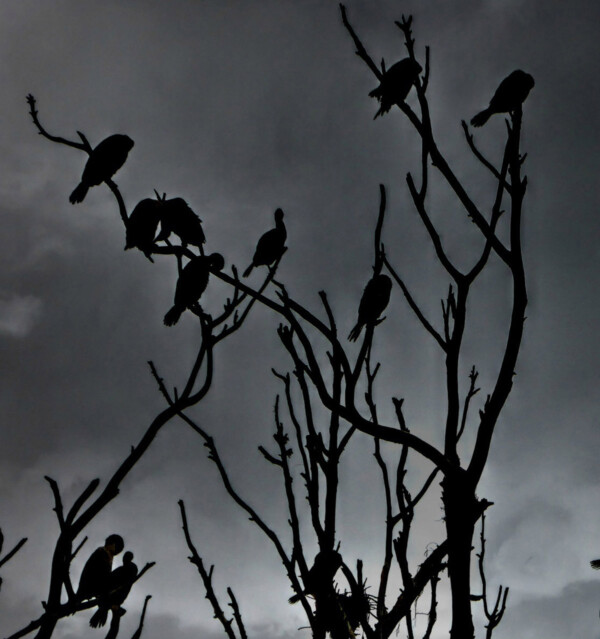
Image courtesy of Public Domain Pictures.
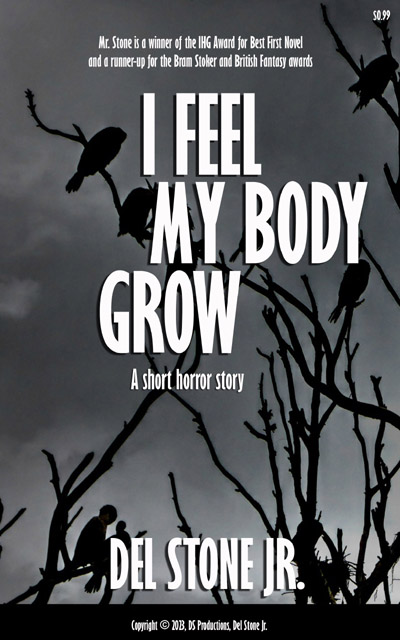
Introduction to “I Feel My Body Grow”
The genesis of this story was simple: I wanted to sell a story to “100 Wicked Little Witch Stories.”
During the ‘90s writer and editor Stefan Dziemianowicz helmed a number of anthologies for Barnes & Noble, all of them centered around extremely short stories. Seems publishers love short shorts, and I’m not sure if that’s because they can get more in each books or that readers prefer very short stories. As a reader I have no druthers either way, though I will pause before committing to a novelette or novella. I didn’t read Stephen King’s “The Mist” for many years because of that bias.
When I discovered Dziemianowicz was editing a book of witch stories I sat down to come up with something that would fit his premise. I knew nothing about witches except what I’ve seen in movies or TV. I knew a couple of people who claimed to be but their witchhood had less to do with eye of newt and hair of bat but the whole Mother Earth and Gaia thing, which I dismissed as a New Age hippie trend that would fade from popularity in a couple of years.
What I wanted was a witch for the modern ages, maybe not an evil witch but certainly one who was vengeful. I came up with just such a creature:
Cancer.
Cancer is the modern scourge. We think of it as evil though it has no conscious intent – it merely is.
But I asked myself: What if it did have conscious intent?
“I Feel My Body Grow” is the result.
This is a creepy story and when I re-read it recently I was gratified to see it holds up really well, from 1995 to this writing in 2023. I think it would make a terrific short feature, in a horror anthology movie like “Tales from the Crypt” or “Twilight Zone.”
I don’t believe “I Feel My Body Grow” will leave you lying awake tonight, jumping at every sound your house makes in the cooling dark. I do hope it stays with you.
—
I FEEL MY BODY GROW
She touches them, and I feel my body grow.
A man with eyes like polished knobs of bone, who stands behind a counter, trembling, the exertion of life a tension ringing through him. A hairless pupa of a child, wrapped in hospital sheets, quietly and almost lovingly feeding on itself to death. A woman dressed in white, starched and straight and sure of most things, the way women who know the tides of emotion are sure of most things.
She touches them all, and I feel my body grow.
But somehow, over the lifetimes, I still ache at the thought of her. I see my thoughts of her rising above the black chasm of all evil things that have come to pass, and somehow, I still ache at the thought of her. It is a thrall of some kind, I am sure, as sure of it as the woman in starched white is sure of most things, and I pray to be released from this thrall of sickness.
A thrall. That is what this is. Surely, it is not –
She touches a young man who is bright with life and love, and I feel my body growing, cell by twisted cell. I feel it growing through the man, a sharp angle of darkness, and soon he too will feel it, awakening one night in an astonished sweat, a dream of sickness spinning out of his mind that does not evaporate in the light of day.
A sickness. Inflicted by her, from the moment I saw her those lifetimes ago, a shy young woman dressed in simple black and white, her hair a primal darkness wrapped about her head like a coiled snake, her eyes without depth, her cheekbones and the ridge of her jawline smoothed to soft yet strong angles. Her beauty suggested intelligence and spirit, and I could not help but notice … and admire. Inflicted by her, surely. Inflicted, inflicted, inflicted –
She touches the frail hand of an elderly woman who is lying in a plump bed, surrounded by cats and photographs of loved ones and lilac cachets.
I feel my body growing. Horribly, I feel it.
Everything about her, magical. Her laughter, like wind blowing through the strings of a musical instrument; her manner, so comfortably alluring … I could not help myself.
Inflicted, and afflicted. My wife’s gaze lingering a moment too long, I sensed she heard my thoughts the way a woman who has lived with a man for many years can sense the drift of his heart. And I, too, could feel the anger growing within my wife, could feel the coolness of her shadow falling over me as I sought through prayer and meditation to rid myself of the growing sickness within.
She touches a little girl, and I feel my body growing.
Inflicted, inflicted, inflicted – through the fields I tended and the drawing of water from the stream and the recitations of prayer at Sabbath services. Everywhere and everything, I saw her face and heard her laughter and wondered and worried and prayed.
She touches and touches and touches and my body grows, bloated and monstrous and twisted, my body grows.
A thrall, then. It had to be. Nothing else could have brought me to such spiritual ruin. Nothing else could have forced me to forsake my teachings, my faith, my devotion to the laws by which we all lived. Nothing else could have driven me to follow her into the field that final night, to … to take her, her coy overtures giving way to a pretense of terror as I ripped at her clothes … my God, how could I have done it?
A thrall. It had to be. A thrall of sickness.
She touches a woman dark of hair and thin of face, a woman so much like herself, laughing and beautiful and innocent – no, it cannot be innocence! – and I feel my body grow. Against my will, it grows, and it grows to disfigure and kill. The idea of innocence sends a special knife through me, and everything that has happened before and since focuses into sharp relief, as one of the photographs people frame and hang on their walls in this lifetime, and I feel my body twisting and hurting and the unmerciful evidence of memory.
My wife. It was she who said the word.
Witch.
She touches every child in a classroom, where outside, men wearing masks are ripping fibers from a wall.
And it was I who stood before her as she coughed amid the stinking, pitch-soaked timbers, her hands and feet bound to the stake, her terrified eyes darting from mine to the men who held the torches. It was I who pronounced the sentence, choking the words out, my throat so tight I could barely breath but a greater terror falling upon me from the angry stares of the townspeople gathered ‘round for the coming spectacle.
It was I who told her that by the laws of our community, she might have one question answered before the sentence was carried out.
And so she asked me, in a voice so small I leaned closer to hear her.
She asked me how I wanted to die.
Within the Lord’s embrace, I told her, speaking in a powerful and righteous voice, despite my fear. My fear. She sensed it, and she asked me again. How did I want to die?
I felt myself frowning at her, unprepared and apprehensive, and then I answered again: within the Lord’s embrace.
She stared at me a long moment, her gaze clear and strong. And then she asked me again, the tone of her voice insisting I tell the truth: How did I want to die?
Her words seemed to reach within, to grasp my heart and squeeze it, as if she were testing for ripeness, and in a moment that arrived and departed so quickly I could not be certain it had even come at all, I felt nothing but black, rancid loathing for myself, because for that sliver of a moment I asked myself: What if this disease of lust that had afflicted me were nothing more than a weakness of my conviction? What if this woman stood wrongly accused?
And I could not help but whisper:
If you are innocent, then let me live in misery for all eternity.
She touched me.
Somehow, she slipped her hand from the bindings and touched me, in the center of my chest, a touch as feathery and insubstantial as a dream of a touch. And as I staggered back, a warmth spreading along the curves of my ribs and sinking into all the secret places inside me, the men shouted angrily and hurled their torches into the timbers, drowning everything in a sudden roar of combustion.
She did not scream.
Afterwards, I could not remain for the reconsecration of the soil. I could not bear my wife’s smirking glances. I could not perform my devotions or say a prayer. Something had fallen over me, the sudden idea of innocence a black film that covered my skin and poisoned my blood and sank into my dreams, and it stained everything I believed in with a mark of hypocrisy, murder and despair.
Lurking beneath this, I would not admit at the time, was a memory of her, the eyes, the sharp cheekbones, the spirit. The memory always brought with it a wrenching of the heart, a sinking of the gut, a bonfire of hatred for myself and my glaring wife and the good people who somehow, some way, had forced me to do this thing.
Inflicted, inflicted, inflicted … yes. But now I was no longer sure. Had it been by my own hand?
I fell ill. A physical sickness, to match the infection that had claimed my soul. The warmth in my chest became a fire, and lesions ate my flesh. I did not seek relief through poultices or ecclesiastical ministrations. I did not do anything but wait.
Until she came for me. In the night, when I knew she would come, her dark, dark hair a penumbra of shadow floating around the sharp curve of her face, her body unmarked by fire or any other flaw. She came to me and took my hand and we left, floating through walls and trees and finally the sky itself.
She said to me: You will live forever.
Ah, my heart soared. I could not believe there was room within her for mercy, or forgiveness, but she spoke the words with such conviction and compassion that I believed her. I let go of the constraints that had held me, and I told her I loved her, and I would stay with her forever.
She did not reply.
But she led me to a village, much like my own, and she took me into a cottage where a family slept around the banked embers of a fire.
We watched them a moment. Then she whispered: Goodness, and evil, exist in every act. Only truth never changes.
And then she touched the father. She touched the mother. She touched the sleeping children.
I felt my body grow.
Horribly. I felt my body grow.
And it has grown. All the years, all the lifetimes, all the ages that have passed, my body has grown.
The world is different now, a loveless place that glitters with machines and science and godlessness. My body grows quickly now, metastasizing despite the radiation and chemotherapy these people use to kill it, the tumors an ever-ripening harvest of sickness and pain that will never know end.
But somehow, I still ache at thought of her. Rising above everything else, I still do.
A thrall, yes. But by my own hand? I will never know the truth.
As she touches them, and I feel my body grow.
About the author:
Del Stone Jr. is a professional fiction writer. He is known primarily for his work in the contemporary dark fiction field, but has also published science fiction and contemporary fantasy. Stone’s stories, poetry and scripts have appeared in publications such as Amazing Stories, Eldritch Tales, and Bantam-Spectra’s Full Spectrum. His short fiction has been published in The Year’s Best Horror Stories XXII; Alfred Hitchcock’s Mystery Magazine; the Pocket Books anthology More Phobias; the Barnes & Noble anthologies 100 Wicked Little Witch Stories, Horrors! 365 Scary Stories, and 100 Astounding Little Alien Stories; the HWA anthology Psychos; and other short fiction venues, like Blood Muse, Live Without a Net, Zombiesque and Sex Macabre. Stone’s comic book debut was in the Clive Barker series of books, Hellraiser, published by Marvel/Epic and reprinted in The Best of Hellraiser anthology. He has also published stories in Penthouse Comix, and worked with artist Dave Dorman on many projects, including the illustrated novella “Roadkill,” a short story for the Andrew Vachss anthology Underground from Dark Horse, an ashcan titled “December” for Hero Illustrated, and several of Dorman’s Wasted Lands novellas and comics, such as Rail from Image and “The Uninvited.” Stone’s novel, Dead Heat, won the 1996 International Horror Guild’s award for best first novel and was a runner-up for the Bram Stoker Award. Stone has also been a finalist for the IHG award for short fiction, the British Fantasy Award for best novella, and a semifinalist for the Nebula and Writers of the Future awards. His stories have appeared in anthologies that have won the Bram Stoker Award and the World Fantasy Award. Two of his works were optioned for film, the novella “Black Tide” and short story “Crisis Line.”
Stone recently retired after a 41-year career in journalism. He won numerous awards for his work, and in 1986 was named Florida’s best columnist in his circulation division by the Florida Society of Newspaper Editors. In 2001 he received an honorable mention from the National Lesbian and Gay Journalists Association for his essay “When Freedom of Speech Ends” and in 2003 he was voted Best of the Best in the category of columnists by Emerald Coast Magazine. He participated in book signings and awareness campaigns, and was a guest on local television and radio programs.
As an addendum, Stone is single, kills tomatoes and morning glories with ruthless efficiency, once tied the stem of a cocktail cherry in a knot with his tongue, and carries a permanent scar on his chest after having been shot with a paintball gun. He’s in his 60s as of this writing but doesn’t look a day over 94.
Contact Del at [email protected]. He is also on Facebook, twitter, Pinterest, tumblr, TikTok, and Instagram. Visit his website at delstonejr.com .

I’ve been holding off talking about our new tropical storm in the Gulf of Mexico because I wanted to make sure it posed a legitimate threat to our part of the
Florida panhandle. That would now seem to be the case.
Tropical Storm Isiais ( ee-SIGH-ee-es ) is now in the southwest Gulf of Mexico with winds of 45 mph as of the 10 a.m. Wednesday, Oct. 7 advisory. The cyclone is drifting east-northeast, but is expected to turn north-northeast tomorrow and intensify rapidly into a category 2 hurricane with winds of 110 mph. Some weakening is expected before landfall. Isiais could move ashore somewhere in the Pensacola Beach area.
This scenario is expected to play out Friday and Friday night.
If you haven’t prepared for a hurricane, today is the day to complete those preparations. Have gas in your car, and food and water at your residence. I’m not expecting a world-ending blow, but remember: It’s been years since a hurricane struck this area. We could see quite a few fallen trees, on the order of Hurricane Erin in 1995. Consequently, some areas could experience sustained periods of no electricity – that is if the storm tracks as expected. Changes are possible and even likely.
No need to panic. Calmly go about your preparations and complete them in a timely manner. Get your information from legitimate sources, like the National Hurricane Center and your local Emergency Management folks. Avoid the doomscrollers on the internet.
Hope for the best, but prepare for the alternative.
About the author:
Del Stone Jr. is a professional fiction writer. He is known primarily for his work in the contemporary dark fiction field, but has also published science fiction and contemporary fantasy. Stone’s stories, poetry and scripts have appeared in publications such as Amazing Stories, Eldritch Tales, and Bantam-Spectra’s Full Spectrum. His short fiction has been published in The Year’s Best Horror Stories XXII; Alfred Hitchcock’s Mystery Magazine; the Pocket Books anthology More Phobias; the Barnes & Noble anthologies 100 Wicked Little Witch Stories, Horrors! 365 Scary Stories, and 100 Astounding Little Alien Stories; the HWA anthology Psychos; and other short fiction venues, like Blood Muse, Live Without a Net, Zombiesque and Sex Macabre. Stone’s comic book debut was in the Clive Barker series of books, Hellraiser, published by Marvel/Epic and reprinted in The Best of Hellraiser anthology. He has also published stories in Penthouse Comix, and worked with artist Dave Dorman on many projects, including the illustrated novella “Roadkill,” a short story for the Andrew Vachss anthology Underground from Dark Horse, an ashcan titled “December” for Hero Illustrated, and several of Dorman’s Wasted Lands novellas and comics, such as Rail from Image and “The Uninvited.” Stone’s novel, Dead Heat, won the 1996 International Horror Guild’s award for best first novel and was a runner-up for the Bram Stoker Award. Stone has also been a finalist for the IHG award for short fiction, the British Fantasy Award for best novella, and a semifinalist for the Nebula and Writers of the Future awards. His stories have appeared in anthologies that have won the Bram Stoker Award and the World Fantasy Award. Two of his works were optioned for film, the novella “Black Tide” and short story “Crisis Line.”
Stone recently retired after a 41-year career in journalism. He won numerous awards for his work, and in 1986 was named Florida’s best columnist in his circulation division by the Florida Society of Newspaper Editors. In 2001 he received an honorable mention from the National Lesbian and Gay Journalists Association for his essay “When Freedom of Speech Ends” and in 2003 he was voted Best of the Best in the category of columnists by Emerald Coast Magazine. He participated in book signings and awareness campaigns, and was a guest on local television and radio programs.
As an addendum, Stone is single, kills tomatoes and morning glories with ruthless efficiency, once tied the stem of a cocktail cherry in a knot with his tongue, and carries a permanent scar on his chest after having been shot with a paintball gun. He’s in his 60s as of this writing but doesn’t look a day over 94.
Contact Del at [email protected]. He is also on Facebook, twitter, Pinterest, tumblr, TikTok, and Instagram. Visit his website at delstonejr.com .

Warner Bros. / Legendary
“Digger” starring Tom Cruise as just‑giving‑you‑what‑you‑want oilman Digger; Riz Ahmed as there‑are‑such‑things‑as‑facts‑and‑reality scientist Ganesh; John Goodman as U.S. President Compson and Mother Earth; Sandra Huller as Emma, a person who can afford to be an environmentalist’ Jesse Plemons as a‑woe‑is‑me nepo baby Kenny; and others. Directed by Alejandro G. Iñárritu. Written by Alejandro G. Iñárritu, Alexander Dinelaris, and Nicolas Giacobone. Scoreby Cosmo Sheldrake. Rated R. 2 hours, 9 minutes. Theatrical release.
Are there spoilers: You bet your high temperature hockey stick there are! The biggest one of ’em all is in the plot summary directly below, so read at your own risk.
Plot summary: Twenty-five years after a climate‑change catastrophe swatted northern Europe and Alaska, a play recalling the series of events that led to the tragedy is shown at a refurbished theater. The play’s culprit or hero – it depends on your political tastes – is Digger (Honeywell), an oilman.
Mladen’s take
“Mickey 17” (2025) is a political and social satire movie I want to like but can’t. “Digger,” now playing in theaters, is a political and social satire film I want to dislike but can’t.
Why?
First of all, it’s a helluva acting effort by Cruise. Had “Digger” been more straightforward – it takes a while to understand how the film will unfold to tell its story of consequential climate change impacts, political corruption, bullshit religion, and heartless accounting – Cruise would be a contender for a Best Actor Oscar nomination. There’s a small chance that he’ll get it anyway but no chance of a win because the film starts off, ah, weird and annoying‑ish. I got pissed when the movie shifted to make me think that Iceberg Judy never happened, that everything I was watching was just a schtick.
But where Cruise’s Digger and the film’s message converge to make clear points is very good and satisfying and, for me at least, edifying. What we get is a knowing encapsulation of how the wealthy and their politicians wrap the “truth” with warped realism, which is itself based on our – as in the whole of humanity – need for convenience and comfort.
There’s Digger telling a bunch of, I don’t know, European Union Parliament members that they’re as much at fault for the coastal cities of their countries getting wiped out as any oilman or oil company. Want affordable electricity and gasoline now? Ain’t no way to get it without extracting Black Gold from the Earth. And, I’m like sitting in my plastic and polyester clad theater seat made from oil in a large air conditioning auditorium watching a movie propelled at the two‑story screen by a large projector running on Alternating Current (generated by, what, natural gas or oil) and thinking to myself, “Yeah, I love driving my car.”
“Digger” also does a good job making the argument that science facts are immutable no matter how we “perceive” them. That point is made nicely, again and again, by Ahmed’s Ganesh, a nonwhite scientist whose nonwhiteness is used by a U.S. Army general to discredit the facts about what caused Iceberg Judy to calve, where the billions of tons of ice will go, and the damage it would cause when it hits the continental shelf in the Baltic Sea.
Another piece of fine acting is Goodman as President Compson. Compson is Trump‑like in several ways. He’s old and his health is deteriorating. At one point, Compson rants that him and the planet are one and that makes him the only person who has the right to make decisions on behalf of all mankind. The rant is terrific. When it strays toward blaming Russia for another supermassive iceberg, this one on its way to Alaska, Compson decides its time to nuke the commies. He’s deterred only when informed that he’d have to read the instructions that accompany the Nuclear Football. “Read?” spouts an indignant Compson. He is also disappointed that there isn’t an actual red launch button that he would push to let the missiles fly. Yeah, Trump to a tee.
“Digger” is a solid B+ of political satire. The acting is good. Much of the writing is good. The score and the sound effects are top‑notch. The movie’s plot hits the mark. The problem is the gimmicky way, an after‑the‑fact play, that the story of the dangers of ignoring a warming planet is told.
Del’s take
The critics are tearing “Digger” apart.
The bean counters are declaring it the biggest flop of 2026.
They’re right. I predict “Digger” will fail, and it will fail spectacularly. Warner Bros. and Legendary Pictures will never earn back a penny they spent on this film.
But not because it’s a bad movie.
Oh, the critics hate it. They’re saying Iñárritu is a bombastic narcissist and “Digger” is nothing more than a testament to a grandiose vision of his own importance.
Moviegoers will hate it – moviegoers in America, that is.
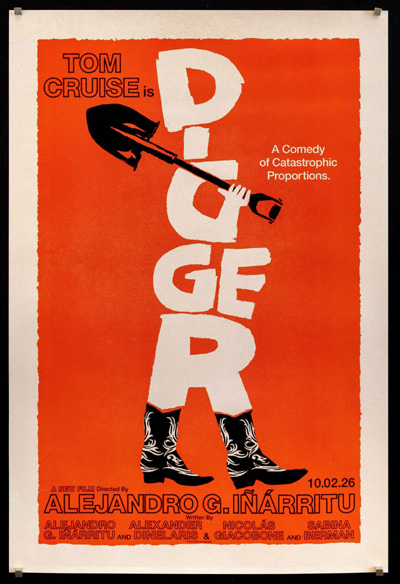
They’ll hate it because it doesn’t star a guy wearing spangly, shimmery spandex who shoots lightning bolts from his eyes. It’s not a cartoon about talking sloths who learn important lessons about sharing. It’s not a simple action movie, or comedy, or love story, or anything they can wrap their brains around without dislocating their neckbones.
It’s satire. Worse, it’s black satire, on the order of “Doctor Strangelove,” “Don’t Look Up,” and that blackest of black satire, “Being There.”
Americans don’t do satire. Americans want to be entertained, not edified. They want to leave the world behind for two hours and not think.
“Digger’s” towering flaw, however, is that it’s a two-hour lecture about climate change, and if Americans hate satire, they really hate satirical lectures about climate change. I should know. Now that I’m retired and don’t have to put on pants in the morning, I start my days with a walk at the local park, where I record rants for social media. Whenever I rant about climate change, I see the eyes of my audience rolling back in the sockets. “Engagement,” that carcinogenic metric of the 21st century, goes circling down the toilet. Many Americans believe climate change is a hoax, thanks to that Imbecile in Chief in the White House. But even Americans who DO believe in climate change won’t watch a two-hour satirical lecture about it.
That’s a shame, because despite what the critics say, “Digger” is a pretty good movie.
Hell, I remember what the critics said about “The Terminator.” They hated it, just like they hated John Carpenter’s “The Thing.”
Now, both movies are considered classics.
“Digger” won’t be a classic, but it’s pretty good and you should see it – IN the movie theater, please. It makes two important points:
No. 1: You want our oil.
By that I mean you want your cars, your Big Macs, your iPhones, your AC, your Ozempic – hell, you want all that shit made from oil or because of oil, and you want it now. You may fuss about the manatees or how hot it was last summer, but by God you’re gonna have your Sea Ray and you’re gonna drive that motherfucker 60 mph across the bay and if you chop up a few manatees along the way, well, like Digger says, that’s the cost of doing business.
No. 2: In the end, most Americans will do nothing to change anything, because their outrage is strictly performative. The president steals $20 million from border security and memorial plaques for police officers, and spends it on ads glorifying himself, in flagrant violation of federal law? Fuss about it on social media and move along. And then, in November, vote for the candidate who promises lower gas prices.
Digger is the perfect antagonist for a group of people who believe nothing is real unless they see it on TV. Or the internet.
But don’t tell them that. They’d rather swallow the fiction of beer commercials and pickup trucks, which show hard-working, simple-living, sweat-of-the-brow bootstrappers who help little old ladies cross the street and go to church every Sunday before mowing the yard, washing the car and sitting down to a family dinner of pot roast and mashed potatoes.
The reality is far uglier, as are the prospects of climate change. But let’s not think about that because it’s icky. And besides, it might mean we actually have to do something.
I’m giving “Digger” an A-. The movie’s structure is weird and there are lulls in the pacing, but Tom Cruise is terrific and very much deserves an Oscar nomination. Goodman and Huller are also gold, though Huller’s part is much smaller. Guess I just like her. Riz Ahmed as the scientist torn between his job and the truth is also excellent. He deserves a supporting Oscar nom.
But “Digger” will fail – for all the wrong reasons, in my opinion.
Maybe when the ocean comes marching in, Americans will change their mind.
Mladen Rudman is a former journalist and technical writer. Del Stone Jr. is a former journalist and writer.