‘Companions’ (a short horror story)

Photo courtesy of Ann W of Flicr via Creative Commons license. https://www.flickr.com/photos/26673926@N04
Introduction to “Companions”
I wrote this story in 1993.
The editor of Crossroads, a small press magazine, had invited me to submit a story, and one does not turn down an invitation from an editor.
Crossroads was a themed magazine, the requirement being that every story had to in some way involve a crossroad. Fair enough. I’d written enough stories to spec I felt I could easily handle this assignment. A crossroad it was.
As it was the organization of a story around a crossroad was not as easy as I’d thought. I mean, the story did have a crossroad, but it wasn’t integral to the theme. But it occurred to me as I was writing it that the viewpoint character had reached a crossroad in his sanity, and if memory serves that’s how I pitched it to the editor.
I wanted to write a story about the mental and emotional toll of being gay. See, I have a theory: Because of our culture’s disapproval of homosexuality, gay people live under stresses that heterosexuals cannot imagine – the stress of hiding from the world and pretending to be somebody else, the scorn and threat of physical harm. Being human, we react the way anybody would – sometimes with depression, other times with anti-social behavior. Drug and alcohol abuse, risky sexual behavior, mental illness and suicide are constant threats to the gay population. Perhaps if we weren’t told, over and over, that we’re defective, or evil, this wouldn’t be true.
I also think I was working out some anger over my catastrophic non-relationship, but who knows? I certainly don’t.
So I wrote “Companions,” a compact story about one man’s refusal to own up to his orientation.
Part of the story came from a dream. I don’t often use imagery from actual dreams in stories, but this dream frightened me so badly I remembered it and used it in this story. The initial segment about the couples touring the house – that was the dream. It played almost exactly as I’ve described it here.
“Companions” was published in Crossroads, and later I had the idea I might submit it to Karl Edward Wagner, editor of the annual Year’s Best Horror Stories anthology. I sent it to him and surprise of surprises, he accepted it. I was so thrilled I sent him a bottle of tequila.
Later I got a chance to meet Wagner. He attended a convention here in town. I went to his panel, and the audience was woefully unhelpful, sitting there stone-faced. So I began asking him questions and soon he was chatting animatedly and the panel became a success. Afterwards I introduced myself and he was not only pleased to meet me but thanked me on the sly for keeping the conversation going during the panel. He was surrounded by acolytes and they hustled him off to God knows where, and that was the last time I saw him.
A few years later I learned of his death, and I was sad. He had paid me $100 for the story, and when his estate was settled his brother sent me another check for $100, saying it appeared I hadn’t been paid. Well, yes, I’d been paid. So I sent the check back. His brother returned it to me, insisting Wagner’s records indicated I hadn’t been paid. So I donated the $100 to the Horror Writers Association’s hardship fund.
“Companions” was my fifth professional sale.
The year was 1993.
—
COMPANIONS
Manion was dreaming again.
He and Nina and another couple he didn’t know and a real estate agent were standing in the formal dining room of a magnificently expansive house in the countryside, a house most people would call a mansion, a house of such rarefied gentility that even within the skewed perspective of this dream, Manion knew he did not belong here and had no business posing as a buyer.
The room stretched to the horizon on one end; on the other, a pair of double-wide carved oak doors opened to a landing at the foot of a spiral staircase. The room looked through a battery of French windows into the leafless, wintery woodlands outside; slanting bars of sunlight brought airborne layers of near-motionless dust into glaring contrast.
The agent was going on about the lost art of woodworking, her hands fluttering in the sunlight, the shadows of her hands capering against the opposite walls, larger and darker than life, when Manion turned his eye to Nina, shoving his own hands into his pants pockets and simply watching, admiring. Her hair blazed in the sun, showing bronze and copper threads that appeared and disappeared within a burnt-orange cascade of lazy curls. Her hair seemed alive. Individual strands rose and fell in the still air as if Nina herself were the source of a very small, discrete center of convection.
That was when Manion heard the laughter.
It began upstairs, slithering down the staircase like fog in a horror movie, slow and very low in the throat but gaining in volume and tittering up the scale of octaves until it became a shrieking cackle that seemed to rub cold fingers against the knobs of his spine, leaving a trail of gooseflesh. Nina turned to Manion and her eyes had narrowed to a feral squint.
The agent giggled nervously. She said in a flustered voice, “Oh, don’t pay any attention to that. It’s just the demon. All old houses are inhabited by ghosts … or demons.”
Inhabited. And as the agent blathered on, the words skidding off her tongue like cars wrecking on an icy overpass, Manion turned to the wall, where the fresco of their shadows stretched to the ceiling, and saw …
… something. A shimmering blur of black silhouettes, as if the image had been liquified by twisting thermals, and from Nina’s shadow sprouted a set of horns, an arching of leathery wings … and the shadowy hint of a penis.
Then the laughter spiraled out of control and Manion jerked awake and raised himself from the pillow, his heart thudding in his chest and ears, his lungs aching for the lack of a breath.

The bedroom door was swinging open.
He’d closed and locked it the night before, and now it was opening, as if somebody had just walked out of the room.
He did not move. He did not want to think about moving. Because if he moved, he’d do it this way: reach with his right hand, over his hip, to the half of the mattress behind him, feeling for Nina. And if she were there, asleep, he might die of fright, right here in the bedroom.
The toilet flushed and he heard Nina’s familiar morning smoker’s hack, and the air gushed out of his lungs, the sheets unglueing themselves from his clammy flesh, and he collapsed back to the mattress in a fever of relief.
He took three deep breaths, the way the psychiatrist had instructed him to do, and felt the rumble of fear ease out of his muscles, subsiding to a growl, then only the suggestion of a throb, like a cold engine finally throttling down to an idle. Then a strange thought occurred to him:
I have had that dream before …
And his heart began to race anew. He thought, Is it starting again?
But he could not remember enough to answer.
—
Nina? No, not Nina.
Yet here she was, pacing the Aztec glyph-pattern throw rug he’d bought in New Mexico, her arms jittering like bat wings, her lip curling to expose her teeth, the canines jutting like fangs. He wondered how she didn’t cut her lips on those fangs. He wondered why he hadn’t noticed them before.
“Jesus, is it asking so much?” she shouted, stalking to the edge of the rug, spinning on her heel, stalking back, hands landing on hips, then flying up, fangs sliding out of then back into her mouth.
“All I want is a little consideration. All I want is to feel like I’m a part of –of – ” her arms spread as if she were soaring on her frustration, “whatever plan it is you’ve got for the future. I mean, honest to God, Manion. I feel like a frigging appliance around here. Turn me on when you need your coffee brewed or your dishes washed, turn me off when you’re done.” She stopped in front of him, her burnt-orange hair undulating like a flame, and glowered at him. “It doesn’t work that way, Manion. You have to contribute to this relationship.”
Her words weren’t the salient issue. Manion had heard them before, many times; he knew the litany by heart. It was the way she said them. It was the anger that gave rise to her words, and the glimpses of what lay behind her anger, that loomed in Manion’s thoughts. The way she moved her arms. The way she showed her teeth. Subtle clues as to what was going on here.
He’d seen this before, as he’d seen the dream, only this feeling was more touchable than a vague sense of deja vu. This was a memory. This had actually happened. If only he could remember.
Nina stood before him, her bonfire hair eclipsing the late afternoon sunlight and glowing in a corona that was hot and bright and suffocating. Yes, that was the word. Suffocating. She was suffocating him.
“Is any of this getting through to you?” she asked. She licked her lips. “Is it?” Manion thought, Her tongue … how like a snake’s tongue.
But he nodded and said, “Yes, it is. It’s getting through.”
He spotted the bulge at her crotch.
He knew he was close to remembering.
—
Nina was packing.
Manion has seen women pack before. They pack like they were taking bits and pieces of you and throwing them against the wall and smashing them into smithereens, and screaming at the top of their lungs, “You CREEP! I HATE your fucking GUTS, you BASTARD!” and lots of other unladylike things. Only Nina was shouting, “Why didn’t you TELL me! For God’s sake, all you had to do was TELL me – all this time I thought we had something going, that we were doing something for ourselves, and now THIS – ” She clenched the rolled-up magazine in her fist, her fingers curling like daggers, or claws, around the glossy color photo of a penis. Manion wondered if her penis looked like the one in the photo. She blew out a breath of disgust and he half expected the magazine to burst into flame. She slung it against the wall, where it slapped and fell dead to the floor, then resumed cramming her things into her bags: clothes, flat onyx mascara cases, bottles of fingernail polish, pentagram pads of Post-It notes, a Depression-glass hand-cream jar filled with souls – God, Manion had seen this before, too, but where? When? He couldn’t pin down the memory, and maybe that was Nina’s doing. Why should she want him to remember? Better for her if he didn’t. Better for her if he let her suffocate him, put him in her jar and move along to collect some other dumb bastard.
But Manion was no dumb bastard. The memory was very close to him now. He could feel it breathing down his neck, the hairs at the base of his skull standing erect as his excitement dovetailed with these events. Everything was falling into place, and he was beginning to sense the rightness of it all, and he was beginning to understand what he should do.
– as she snatched snakeskins of jockstrap pantyhose from the shower curtain rod –
– as she opened the medicine cabinet and raked prescription bottles of sulphur and brimstone into her bag –
– as she threw open the closet door and came out with armfuls of – Christ, Manion couldn’t think of words to describe them – the skins of her dead.
This girl, Nina, with the huge erection straining beneath her jeans, was not what she had seemed.
Manion knew what to do. Manion knew what to do.
He knew what to do.
—
Digging. In the dark. Away from the city, away from everyone, where two roads converged and where his memory lay, fully restored, like a box he’d packed off to the attic a long time ago and then couldn’t remember precisely where he had put it. He knew it was there … the rest would require a little digging.
Which is what he was doing.
He had been here before, five times in all, and he even remembered their names: Clara, who he called “Little Bo-Peep,” because she liked curls and ruffles; Maggie, who French-inhaled cigarettes and watched him with Natalie Wood eyes; Kathy, the tomboy with skinny but well-muscled legs; and Donna, who studied aerospace engineering at college and competed in water ski competitions.
He remembered them all and everything that had passed between them, the dreams, the fights, the discoveries and angry departures. Every time the same. He remembered them as he would remember Nina and the changes that had brought them all to this place: the dark woods near a lonely country intersection where he had stopped that first time, because the man had made him stop, the man who had climbed into his car at a gas station downroad with a story about a sick wife and baby at a house trailer somewhere out here. They’d stopped and Manion had asked him which way, and the man had said This way and when Manion looked at him he was clenching a tiny gun, a lady’s gun, really, and Manion’s blood had run cold because the man was taking off his trousers and ordering Manion to do the same, and – and –
Manion remembered the shame, the shame that burned him inside out, but what he remembered most, and what his mind flinched away from on an almost instinctual level, was the glow of pleasure spreading through him as the man grasped his ankles and raised them and knelt at Manion’s upturned ass and began to push inside, pushing pleasure into him and shaking him with a sinister, giggling grunt and suffocating him with not only his weight but his will, the waves of pleasure breaking over Manion’s disgust and drawing him down, farther down into the places within himself he’d refused to explore.
The man had finished and Manion’s shame re-emerged, freshly scoured and sharp, and Manion had knocked the gun from his hand and snatched it up and put a bullet through the man’s skull with a ladylike pop.
Dead.
It was months later that Manion began to remember … the man’s bat-like wings, his horns, his serpent’s tongue darting between his blistered lips. The realization came as almost a relief. It was exactly what Manion needed. An explanation. Not the explanation the psychiatrist had given him. None of that crazy business about symbols and disowning ideas about himself. This was a logical explanation, a rational explanation …
… for the pleasure. The torment. The women who were not women, the shadows of their penises visible only in dreams, slowly rising through his memory to emerge in the cold night out here, in the woods by the intersection where all this had begun, where he brought them to die again. Again.
Not dead. Yet.
“But you will be!” Manion shouted at the spot where he’d buried the man. He thought he heard a muffled gurgle of laughter. He thought he heard the leathery flutter of wings, the hiss of tongues.
From all of them.
Manion kept digging.
—
About the author:
Del Stone Jr. is a professional fiction writer. He is known primarily for his work in the contemporary dark fiction field, but has also published science fiction and contemporary fantasy. Stone’s stories, poetry and scripts have appeared in publications such as Amazing Stories, Eldritch Tales, and Bantam-Spectra’s Full Spectrum. His short fiction has been published in The Year’s Best Horror Stories XXII; Alfred Hitchcock’s Mystery Magazine; the Pocket Books anthology More Phobias; the Barnes & Noble anthologies 100 Wicked Little Witch Stories, Horrors! 365 Scary Stories, and 100 Astounding Little Alien Stories; the HWA anthology Psychos; and other short fiction venues, like Blood Muse, Live Without a Net, Zombiesque and Sex Macabre. Stone’s comic book debut was in the Clive Barker series of books, Hellraiser, published by Marvel/Epic and reprinted in The Best of Hellraiser anthology. He has also published stories in Penthouse Comix, and worked with artist Dave Dorman on many projects, including the illustrated novella “Roadkill,” a short story for the Andrew Vachss anthology Underground from Dark Horse, an ashcan titled “December” for Hero Illustrated, and several of Dorman’s Wasted Lands novellas and comics, such as Rail from Image and “The Uninvited.” Stone’s novel, Dead Heat, won the 1996 International Horror Guild’s award for best first novel and was a runner-up for the Bram Stoker Award. Stone has also been a finalist for the IHG award for short fiction, the British Fantasy Award for best novella, and a semifinalist for the Nebula and Writers of the Future awards. His stories have appeared in anthologies that have won the Bram Stoker Award and the World Fantasy Award. Two of his works were optioned for film, the novella “Black Tide” and short story “Crisis Line.”
Stone recently retired after a 41-year career in journalism. He won numerous awards for his work, and in 1986 was named Florida’s best columnist in his circulation division by the Florida Society of Newspaper Editors. In 2001 he received an honorable mention from the National Lesbian and Gay Journalists Association for his essay “When Freedom of Speech Ends” and in 2003 he was voted Best of the Best in the category of columnists by Emerald Coast Magazine. He participated in book signings and awareness campaigns, and was a guest on local television and radio programs.
As an addendum, Stone is single, kills tomatoes and morning glories with ruthless efficiency, once tied the stem of a cocktail cherry in a knot with his tongue, and carries a permanent scar on his chest after having been shot with a paintball gun. He’s in his 60s as of this writing but doesn’t look a day over 94.
Contact Del at [email protected]. He is also on Facebook, twitter, Pinterest, tumblr, TikTok, and Instagram. Visit his website at delstonejr.com .

Image courtesy of Raw Pixel
On Nov. 18, 2026 I submitted the following query to four AIs – Gemini, Claude, ChatGPT and Grok.
—
Below I have listed what are considered to be the most pressing problems America faces as of 2026. The list is not ordered in any way.
I want you to do the following:
Evaluate each problem.
Assemble a numbered list, ranking each problem relative to the threat it presents to the nation and the immediacy required to address that problem. The No. 1 item on the list should be the problem that presents the greatest peril to the United States and requires our most immediate attention, and the last item should be the problem that presents the lowest level of threat and can be addressed at our leisure.
List of problems:
– The national debt and the annual interest payments on the debt that are consuming a larger and larger portion of the federal budget.
– The impending shortage of funds for Social Security and Medicare.
– Climate change and its impact on life on the United States.
– Pollution and the depletion of natural resources.
– The crumbling education system in the United States.
– Affordability. Many Americans can no longer afford to buy a house or car. Fuel and utility prices are skyrocketing, as are insurance costs.
– Health care is becoming unavailable to many Americans because of the high cost.
– The influx of illegal immigrants and the burden of caring for them.
– Socialism and communism and their influence on American politics and economics.
– Trans people, especially as they relate to sports competitions, bathroom use and influencing our children.
– Gay people demanding greater visibility and equal rights.
– The war in Ukraine.
– Americans’ digital lifestyle and how it affects critical thinking skills.
– AI as it pertains to disrupting the internet or interfering in the political or economic life or employment opportunities for people.
– The war with Iran.
– Corruption in government, which seems to have increased by epic proportions as of late.
– The declining standard of living in the United States.
– The return of chronic diseases as a result of vaccine opposition on the part of many Americans.
– The cost of attending a college in the United States.
– The proliferation of guns in America and the resultant outbreak of mass shooting.
– Media bias.
– The growing power of corporations through mergers and the relaxing of regulations.
– Election fraud.
– Manipulation of genetics and GMOs.
– Political division in America.
– The sudden epidemic of hate, based on race, gender and sexual orientation.
—
How did I choose the items on the list? I chose frequent complaints of Republicans during recent political campaigns, claims by Democrats and Independents, and added some of my own ideas for what constituted “problems” America currently faces.
To be sure, some of these items didn’t strike me as problems. The LGBTQ and trans communities – those are not problems, but according to Republicans, conservative extremists and Christian terrorists they are, so I included them. Election fraud is itself a fraudulent claim. And illegal immigration doesn’t strike me as one of the more important problems of our time.
In some cases the AIs wanted to combine two of the problems into one. Some of them commented that these were different kinds of problems – social problems, political problems, economic problems – and comparing them to one another would be difficult.
I am now going to reproduce the specific responses I got from the AIs.
—
GROK
1. The national debt and the annual interest payments on the debt
Debt exceeds $40 trillion; FY2026 interest costs hit records around $1.3–1.4 trillion and are rising faster than revenue, spending, or GDP growth in many measures. This crowds out other priorities, raises vulnerability to rate shocks or crises, and is on an unsustainable path. Highest systemic risk.
2. The impending shortage of funds for Social Security and Medicare
Trustees’ 2026 reports project OASI insolvency around 2032 (automatic ~22% benefit cut) and Medicare HI around 2033. Combined shortfalls are measured in trillions over decades. These programs are central to the social contract and federal budget; delay makes fixes more painful. Closely tied to the debt problem.
3. Affordability (housing, cars, fuel, utilities, insurance) and the declining standard of living
Housing remains among the toughest markets in a generation: high prices, elevated mortgage rates, low sales volumes, and large shares of households unable to afford median homes or facing severe cost burdens. Healthcare, insurance, and other essentials compound the squeeze. This is the lived economic reality for tens of millions and fuels broader discontent.
4. Health care is becoming unavailable to many Americans because of the high cost
National health spending is on track for ~$6 trillion in 2026 and continues rising faster than wages and general inflation in key categories. Employer costs, premiums, and out-of-pocket burdens keep climbing. This intersects with affordability and entitlement solvency.
5. The war with Iran
Ongoing since early 2026 (U.S./Israel strikes, Iranian responses, naval issues in the Strait of Hormuz, blockade/economic pressure). Currently a “soft” or stalemated conflict with intermittent strikes rather than full-scale war, but high escalation risk, energy-market effects, and regional instability remain. Direct security and economic stakes for the U.S.
6. Corruption in government
Erodes institutional trust, competence, and the capacity to address every other problem. When severe and perceived as widespread, it multiplies fiscal waste, policy failure, and public cynicism.
7. Political division in America
Deep polarization impairs governance, crisis response, and social cohesion. It turns solvable problems into permanent fights and raises risks of institutional breakdown or violence.
8. The war in Ukraine
Still active after years of fighting, with ongoing costs in aid, global food/energy markets, and great-power competition. Less immediate direct threat to U.S. territory than the Iran conflict but strategically significant and fiscally material.
9. AI as it pertains to disrupting the internet or interfering in the political or economic life or employment opportunities
Measurable early effects include softer hiring (especially junior roles in exposed occupations), productivity shifts, and potential for deeper disruption. Not yet mass unemployment, but the trajectory and dual-use risks (misinformation, economic concentration, security) warrant serious near-term attention.
10. The crumbling education system in the United States / the cost of attending a college
Persistent learning losses, declining international rankings in key subjects, record-low public satisfaction, and high college costs that limit mobility. Long-term competitiveness and human-capital problem.
11. The influx of illegal immigrants and the burden of caring for them
Current illegal crossings and encounters are at multi-decade lows (sharp drops reported for FY2026). Accumulated effects from prior years (fiscal costs, local service strains, enforcement backlogs) remain real, but the acute “influx” pressure has eased under current enforcement.
12. Climate change and its impact on life in the United States / Pollution and the depletion of natural resources
Rising disaster costs, extreme weather, and resource pressures are measurable and growing. Impacts are real but more gradual and adaptable than acute fiscal or security crises for the U.S. specifically; ranking reflects current immediacy relative to solvency and conflict risks.
13. Media bias
Undermines shared factual baselines and fuels division. Serious for democratic function but secondary to the underlying fiscal, economic, and security drivers.
14. Election fraud
Claims and localized irregularities damage trust. Systemic evidence sufficient to overturn national outcomes has not been established at the scale of other listed threats; the bigger issue is eroded confidence itself.
15. The proliferation of guns in America and the resultant outbreak of mass shootings
Tragic and persistent public-safety problem with real human costs. Does not threaten national economic or institutional survival on the same scale as fiscal insolvency or major conflicts.
16. The growing power of corporations through mergers and the relaxing of regulations
Concentration can reduce competition, raise prices, and influence policy. Important market-structure issue but not an immediate existential threat.
17. Americans’ digital lifestyle and how it affects critical thinking skills
Contributes to attention fragmentation, polarization, and weaker civic skills. Cultural and educational problem with long-term effects.
18. Socialism and communism and their influence on American politics and economics
Ideological currents and policy proposals exist and shape debates. The U.S. remains a market-oriented economy; the practical threat is more about specific fiscal/policy choices than systemic ideological capture.
19. The return of chronic diseases as a result of vaccine opposition
Vaccine hesitancy has measurable effects on certain disease rates. Not currently at the scale of a broad national health emergency relative to cost and access problems.
20. Manipulation of genetics and GMOs
Important scientific, agricultural, and ethical domain with risks and benefits. Regulatory and research oversight issues, not an acute national peril.
21. The sudden epidemic of hate, based on race, gender and sexual orientation
Real incidents and heightened tensions exist and are amplified by polarization and media. Framing as a sudden “epidemic” is contested; overall crime and violence trends are more complex. Social cohesion issue secondary to structural economic and institutional ones.
22. Trans people, especially as they relate to sports competitions, bathroom use and influencing our children
Contentious policy and cultural flashpoints (fairness in sports, single-sex spaces, youth medical/transition issues, school curricula). Generate intense local and national conflict but affect a small population share and do not threaten core national capacity or solvency.
23. Gay people demanding greater visibility and equal rights
Legal equality on core rights (marriage, nondiscrimination in many domains) is largely settled. Remaining visibility and cultural debates are lower-stakes relative to the fiscal, economic, and security problems above.
—
GEMINI
1. The war with Iran — An active, escalating military conflict involving U.S. forces, regional allies, and critical global energy chokepoints (such as the Strait of Hormuz) carries immediate risks of wider regional war, American casualties, and severe global oil and supply-chain shocks.
2. The war in Ukraine — Ongoing direct conflict in Europe involving a nuclear-armed superpower (Russia) poses continuous risks of NATO escalation, global energy and grain instability, and sustained strain on U.S. defense stockpiles.
3. The national debt and annual interest payments — With federal interest payments exceeding $1.3 trillion annually and consuming nearly 20% of federal revenues, compounding debt threatens long-term fiscal solvency, currency stability, and the government’s ability to fund defense or respond to emergencies.
4. The impending shortage of funds for Social Security and Medicare — With trust fund insolvency projected within roughly six years (around 2032), inaction will trigger automatic, severe benefit cuts for tens of millions of retirees and destabilize household finances nationwide.
5. AI disrupting the internet, politics, the economy, and employment — Rapidly advancing artificial intelligence poses immediate, accelerating risks to labor markets, cybersecurity, critical infrastructure, and the integrity of public information ecosystems.
6. Affordability (housing, fuel, utilities, and insurance) — High structural costs for basic necessities directly squeeze household budgets, suppress consumer-driven economic growth, and fuel widespread economic insecurity.
7. Health care availability and high costs — Unaffordable medical care and insurance premiums drive household debt, worsen preventable mortality, and create a major drag on business competitiveness and federal budgets.
8. Climate change and its impact on the United States — Accelerating extreme weather events, rising insurance and infrastructure repair costs, and agricultural stress pose compounding, irreversible long-term threats to national wealth and habitability.
9. The declining standard of living in the United States — Stagnant real wage growth relative to core living expenses erodes upward mobility and intergenerational economic stability.
10. Political division in America — Deepening partisan polarization paralyzes legislative problem-solving, undermines institutional legitimacy, and heightens the risk of civil unrest.
11. Corruption in government — Institutional self-dealing and the erosion of ethical guardrails weaken public trust, distort policy outcomes in favor of special interests, and degrade democratic governance.
12. The crumbling education system in the United States — Declining K–12 proficiency in core subjects threatens long-term workforce readiness, innovation capacity, and global economic competitiveness.
13. The proliferation of guns and mass shootings — High rates of firearm violence and mass shootings impose severe human, psychological, and public-safety costs on communities across the country.
14. Pollution and the depletion of natural resources — Water scarcity, soil degradation, and chemical pollution directly endanger public health, domestic agriculture, and industrial sustainability.
15. The influx of illegal immigrants and the burden on public systems — Unmanaged migration flows strain municipal budgets, housing availability, schools, and healthcare infrastructure, while highlighting broken federal immigration laws.
16. The return of preventable diseases due to vaccine opposition — Declining immunization rates erode herd immunity, risking localized outbreaks of serious, previously controlled infectious diseases.
17. The growing power of corporations through mergers and deregulation — Reduced market competition can inflate consumer prices, suppress worker wages, and concentrate political influence.
18. The cost of attending college in the United States — Rising tuition and student debt burdens delay homeownership, family formation, and wealth accumulation for younger generations.
19. Americans’ digital lifestyle and declining critical thinking skills — Heavy reliance on algorithmic feeds and short-form media shortens attention spans, impairs analytical reasoning, and increases susceptibility to manipulation.
20. Media bias — Partisan media ecosystems fragment shared reality, reinforce confirmation bias, and make bipartisan consensus on national crises harder to achieve.
21. The sudden epidemic of hate based on race, gender, and sexual orientation — Interpersonal hostility, harassment, and hate crimes damage community cohesion and threaten the safety and civil rights of targeted groups.
22. Election fraud — While verified instances of systemic fraud remain rare in U.S. elections, vulnerabilities in election administration—and widespread distrust surrounding them—directly threaten democratic stability.
23. Socialism and communism and their influence on American politics and economics — Ideological shifts toward state-controlled economic models remain a subject of fierce political debate, though actual institutional adoption in the U.S. remains limited compared to immediate fiscal and geopolitical crises.
24. Manipulation of genetics and GMOs — Rapid developments in gene editing (such as CRISPR) and agricultural modification present long-term bioethical and ecological questions that require ongoing regulatory oversight rather than emergency intervention.
25. Trans people (sports competitions, bathroom use, and influencing children) — Debates over gender identity policies in schools, athletics, and public spaces evoke intense cultural and legal conflict, though their direct impact on macroeconomic or national survival is limited.
26. Gay people demanding greater visibility and equal rights — Ongoing legal and social discussions surrounding LGBTQ+ civil rights and representation represent standard democratic and cultural evolution rather than a structural threat to the nation.
—
CLAUDE
I ranked these by how much damage each could do to the country, how soon that damage arrives, and how much waiting costs. Some placements depend on values, so I flag those. Where I could check current data, I did.
1. The war with Iran. This is the only item on the list involving active combat, and it has the shortest fuse. The U.S. and Israel launched the war on February 28. The Strait of Hormuz carries about a fifth of the world’s oil supply in peacetime, so the war also feeds directly into fuel prices. Reuters/Ipsos polling found about seven in ten Americans want Congress to end it. www.iranintl.com +2
2. The national debt and interest costs. CBO projects net interest of about $1.04 trillion in FY2026, 3.3% of GDP, rising to 4.6% by 2036. Debt held by the public is projected at 101% of GDP this year. Analysts note this is not a sign of imminent default, but it is a compounding problem where delay raises the cost of every fix. Why It Matters +2
3. Social Security and Medicare funding. This is the hardest deadline on the list. The retirement trust fund is projected to run short in late 2032, and Medicare’s hospital fund in 2033. The result would be an across-the-board benefit cut of roughly 22% unless Congress acts. The fixes are well understood, which is why this ranks below the war but is still urgent. 2026 Social Security Trustees Report Moves Insolvency to 2032 +2
4. Affordability (housing, cars, energy, insurance). It hits households now and is politically destabilizing. It is also partly a symptom of items 1, 5 and 12.
5. Climate change. The long-run damage is potentially the largest on the list, and it is already showing up in insurance costs and disasters. It ranks fifth rather than higher only because the worst effects unfold over decades, even though delay raises the eventual cost.
6. AI disruption. The evidence so far is narrower than the headlines. There is no aggregate unemployment spike from AI yet, but the disruption is concentrated in entry-level hiring in exposed fields. The risk is a fast-moving, poorly governed technology reshaping work, information and politics. ai2
7. Health care costs. This is a chronic, broad harm that also drives federal spending.
8. Political division. It is not a crisis by itself, but it weakens the country’s ability to solve everything above it.
9. Government corruption. Perceptions differ sharply by party, and I’d treat the evidence as contested. Corruption erodes trust and governance, and it matters in proportion to how well it can be documented and prosecuted.
10. Gun proliferation and mass shootings. Mass shootings are a small share of gun deaths. Total gun deaths, including suicides, are one of the country’s larger preventable causes of death.
11. Vaccine opposition and returning disease. This has moved from theory to fact. 2026 is the worst year for measles since 1991, and the U.S. has now lost its measles elimination status. Experts expect this to keep happening until vaccination levels recover. tracking measles cases in the united states 2 +2
12. Declining standard of living. It largely overlaps with item 4.
13. The education system. It is a slow-acting but foundational problem.
14. Corporate consolidation and weaker regulation. It affects prices, wages and political influence over time.
15. The war in Ukraine. The direct threat to the U.S. is lower than for Iran, but escalation and alliance risks are real. Fighting is intensifying as peace talks stall again. georgiatoday
16. Digital lifestyle and critical thinking. The concern is plausible, but the evidence is thinner and the effects are diffuse.
17. Pollution and resource depletion. It matters locally, but it is less of a national emergency than climate.
18. Illegal immigration and its costs. This is a legitimate policy issue, but how high it ranks depends heavily on values and on contested fiscal estimates. On national-scale peril it sits below the budget and war items.
19. The cost of college. It is a serious burden for individuals, but narrower than the other cost-of-living items.
20. Hate based on race, gender and sexual orientation. It is a serious harm to the people targeted, but it is limited in scale as a national threat.
21. Election fraud. Documented fraud is very rare, so the larger issue is public confidence in elections rather than the fraud itself.
22. Media bias. It is real and affects trust, but it is a chronic condition rather than an emergency.
23. Genetic manipulation and GMOs. Mainstream scientific reviews have not found approved GMO foods to be unsafe, so I rank this as a regulatory issue to watch.
24. Socialism and communism in American politics. Policy disagreements over the role of government are normal in a democracy. No movement today threatens the system itself, so I rank this low as a threat.
25. Transgender people in sports, bathrooms and schools. This is a real values and policy debate, but it involves a small share of the population and is not a national-scale threat on the measures I used.
26. Gay people seeking visibility and equal rights. This is a civil-rights question rather than a threat to the nation, so it lands last on a threat scale. People hold sincere and differing moral views on it, but those disagreements are about values, not about harm to the country.
Three caveats apply. The order of items 1 through 7 is the most defensible, and I’d expect most economists and security analysts to agree broadly with that group. Items 8 through 20 could reasonably shuffle depending on whether you weigh deaths, money or institutions most. The Iran situation is also changing fast, so its rank could move in either direction within weeks.
—
CHATGPT
1. Political division in America. Perhaps the greatest threat because it undermines our ability to govern ourselves and address virtually every other problem. It weakens democratic institutions, encourages political extremism, and creates opportunities for foreign adversaries to exploit our divisions.
2. The national debt and escalating interest payments. Unsustainable borrowing threatens America’s long-term financial stability, limits the government’s ability to fund essential programs, and could eventually undermine confidence in the American economy and dollar.
3. The war with Iran. The possibility of a wider Middle Eastern conflict threatens American military personnel, international oil supplies, global economic stability, and the prospect of a much larger war.
4. Climate change and its impact on the United States. Increasing heat, drought, flooding, wildfires, and severe weather threaten public health, agriculture, infrastructure, property values, and the economy. Delaying action makes future consequences more expensive.
5. Health care becoming unaffordable or unavailable. Millions of Americans struggle to obtain necessary medical care because of insurance costs, deductibles, and medical expenses. This threatens public health, household financial security, and economic productivity.
6. The crumbling American education system. Inadequate education threatens America’s future economic competitiveness, technological leadership, workforce capabilities, and ability to produce informed, independent-minded citizens.
7. The impending Social Security and Medicare funding shortages. Both programs face significant financing challenges in the coming years. Failure to address them could result in substantial benefit reductions affecting millions of older and disabled Americans.
8. Affordability. Housing, automobiles, insurance, utilities, fuel, and other necessities are becoming increasingly difficult for many Americans to afford. The resulting financial insecurity contributes to declining economic mobility, delayed family formation, and political dissatisfaction.
9. Artificial intelligence and its potential disruption of American society. AI could displace workers, facilitate political manipulation, spread misinformation, increase cybersecurity threats, and concentrate economic power in a relatively small number of corporations.
10. Corruption in government. The misuse of public office for personal or political advantage undermines the rule of law, erodes public confidence, weakens democratic institutions, and makes effective government increasingly difficult.
11. The proliferation of guns and the resulting violence and mass shootings. Firearm-related deaths, including homicides, suicides, and accidental shootings, represent a substantial public-health and public-safety problem.
12. The war in Ukraine. The conflict threatens European stability, international security arrangements, and the possibility of confrontation between nuclear powers. It also carries significant economic and geopolitical consequences for the United States.
13. Pollution and the depletion of natural resources. Contaminated air and water, groundwater depletion, declining biodiversity, and unsustainable resource consumption threaten public health, agriculture, and the long-term sustainability of the American economy.
14. The growing power of corporations through mergers and relaxed regulation. Excessive corporate concentration can weaken competition, increase consumer prices, limit opportunities for smaller businesses, suppress wages, and give powerful corporations disproportionate influence over government policy.
15. The growing epidemic of hate based on race, gender, and sexual orientation. Discrimination, intimidation, and violence threaten social cohesion, individual liberty, and the principle that Americans should be treated equally under the law.
16. Americans’ digital lifestyle and its effects on critical thinking. Excessive dependence on digital devices and social media can undermine attention spans, reading habits, independent thought, and the ability to distinguish reliable information from misinformation.
17. Illegal immigration and the burden of accommodating immigrants. Poorly managed immigration can strain public services, housing, schools, and local resources. Border security and enforcement of immigration laws are legitimate national responsibilities, although immigrants also contribute substantially to the American economy.
18. The return of preventable diseases associated with vaccine opposition. Declining vaccination rates create opportunities for outbreaks of diseases such as measles and threaten public health, particularly among children and medically vulnerable populations.
19. Media bias. Increasingly partisan news coverage can distort public understanding, reinforce political divisions, undermine confidence in journalism, and make it more difficult for Americans to distinguish objective reporting from political advocacy.
20. Election fraud and threats to election integrity. Americans must have confidence that elections are conducted fairly and accurately. Election security, accurate vote counting, and protection against interference are essential, although allegations of widespread fraud should be supported by evidence.
21. The cost of attending college in the United States. Excessive tuition and student debt can burden families, limit economic opportunities, and leave graduates with financial obligations that may take decades to repay. Greater emphasis on affordable alternatives, vocational training, and apprenticeships is needed.
22. Socialism and communism and their influence on American politics and economics. Authoritarianism and the suppression of individual liberties are legitimate concerns. However, democratic socialism, government regulation, and expanded social programs should not automatically be equated with communism or threats to the nation.
23. Manipulation of genetics and genetically modified organisms. Genetic engineering offers important medical and agricultural benefits but raises legitimate concerns about environmental consequences, food safety, corporate control, and the ethical implications of altering human genetic material.
24. Transgender-related controversies involving sports, bathrooms, and children. These issues raise legitimate questions about competitive fairness, privacy, parental involvement, and the rights and welfare of transgender individuals. They deserve thoughtful, evidence-based public policy, but do not represent a significant threat to the nation as a whole.
25. Gay Americans seeking greater visibility and equal rights. The rights of gay Americans to participate openly in society and receive equal treatment under the law are consistent with fundamental American principles. Specific policy disagreements are legitimate, but gay Americans themselves do not constitute a national threat.
26. The declining standard of living in the United States. This is an important concern involving economic mobility, wealth accumulation, retirement security, and opportunities for younger generations. However, it is largely an outcome of several other problems on this list, particularly affordability, education, health care, and economic policy, rather than an entirely separate problem.
—
Next, I derived a numerical representation for each “problem” by adding up its ranking position by each of the AIs, and dividing by four to get the final rankings.
Below are the rankings for individual “problems” and how each AI ranked them:
– The national debt: 1, 3, 2, 2.
– The impending shortage of funds for Social Security and Medicare: 2, 4, 3, 7.
– Climate change and its impact on life on the United States: 12, 8, 5, 4.
– Pollution and the depletion of natural resources: 12, 14, 17, 13.
– The crumbling education system in the United States: 10, 12, 13, 6.
– Affordability: 3, 6, 4, 8.
– Health care: 4, 7, 7, 5.
– The influx of illegal immigrants and the burden of caring for them: 11, 15, 18, 17.
– Socialism and communism and their influence on American politics and economics: 18, 23, 24, 22.
– Trans people: 22, 25, 25, 24.
– Gay people: 23, 26, 26, 25.
– The war in Ukraine: 8, 2, 15, 12.
– Americans’ digital lifestyle and how it affects critical thinking skills: 17, 19, 16, 16.
– AI as it pertains to disrupting the internet or interfering in the political or economic life or employment opportunities for people: 9, 5, 6, 9.
– The war with Iran: 5, 1, 1, 3.
– Corruption in government: 6, 11, 9, 10.
– The declining standard of living in the United States: 3, 9, 12, 26.
– The return of chronic diseases: 19, 16, 11, 18.
– The cost of attending a college in the United States: 10, 18, 19, 21.
– The proliferation of guns in America and the resultant outbreak of mass shooting: 15, 13, 10, 11.
– Media bias: 13, 20, 22, 19.
– The growing power of corporations through mergers and the relaxing of regulations: 16, 17, 14, 14.
– Election fraud: 14, 22, 21, 20.
– Manipulation of genetics and GMOs: 20, 24, 23, 23.
– Political division in America: 7, 10, 8, 1.
– The sudden epidemic of hate, based on race, gender and sexual orientation: 21, 21, 20, 15.
—
After averaging each “problem’s” ranking, I assembled a final list of averaged rankings by the four AIs:
1. The national debt: 2
2. Iran: 2.5
3. Social Security and Medicare: 4
4. Affordability: 5.25
5. Health care: 5.75
6. Political division: 6.5
7. Climate change: 7.25
8. AI: 7.25
9. Corruption: 9
10. Ukraine: 9.25
11. Education: 10.25
12. Guns: 12.25
13. Standard of living: 12.5
14. Pollution / natural resources: 14
15. Illegal immigrants: 15.25
16. Corporations: 15.25
17. Diseases: 16
18. Digital lifestyle: 17
19. College costs: 17
20. Media bias: 18.5
21. Election fraud: 19.25
22. Hate: 19.25
23. Socialism / communism: 21.75
24. GMOs: 22.5
25. Trans people: 24
26. LGBTQ: 25
I could have added additional “problems” to the list, but those didn’t occur to me until after I had done these calculations.
I don’t know this for a fact but I suspect some of the AIs have been programmed to produce outcomes more favorable to a conservative viewpoint.
If you ask the AIs what they believe are the biggest “problems” faced by America you will get very different answers than these. Again, I chose these “problems” because they have been the topic of conversation and / or accusations for the past few election cycles.
Let me know if you spot any errors in the ranking order. I found and corrected two. After looking at numbers all day I was seeing stars.

Photo courtesy of Pexels by way of Creative Commons license.
Introduction to “Crisis Line”
Back in the 1970s I had a friend who worked for a crisis intervention call-in service named “Crisis Line.”
She never discussed details of the calls she took, but generally they were related to people who were suicidal because of drugs, abuse or a series of unfortunate events such as debt or job loss.
I wondered if I would be any good at such a job. I don’t know that I was especially empathetic but the job sounded intriguing – sitting at a desk during the late night, reading a book or even writing a book, smoking cigarettes and waiting for the telephone to ring. Lord knows I had provided a sympathetic ear to many a friend who found him or herself in a bad place.
I never made an effort to do anything more than think about it. Shortly after that I entered the last two years of college and that consumed every waking minute of my life. When I graduated I spent the next two years trying to find a job, and then the job I found required that I work the night shift. So, no Crisis Line work.
But I kept that image in mind – of sitting at a desk at night, waiting for the telephone to ring. And as I ramped up my efforts to become a teller of scary tales, I wondered how that person – undoubtedly in a position of trust – might abuse his or her influence over those who called.
Thus, “Crisis Line” was born.
The story appeared in “Horrors! 365 Scary Stories” and received quite a bit of attention. Years later I was contacted by a budding filmmaker who asked if he could option it. He wanted to make a film for the festival circuit. I told him yes, of course, but said film never materialized.
I think “Crisis Line” would make a neat short for an anthology show, so if any of you filmmakers out there are reading this, give me a shout!
—
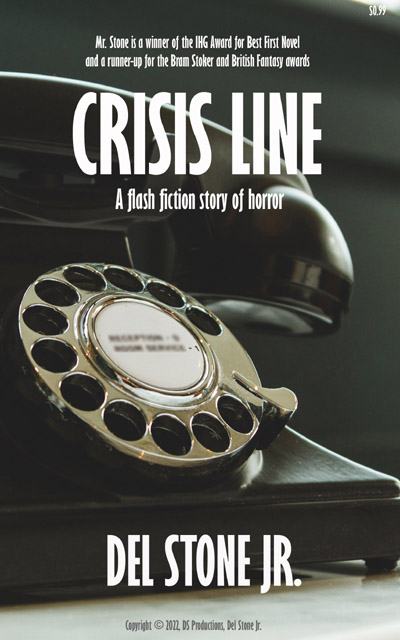
CRISIS LINE
The telephone rings. Murray swallows a mouthful of coffee, picks up the receiver and says, “This is Murray with the Crisis Line. May I help you?”
The line is silent a moment, but Murray can hear the person on the other end holding his breath, willing himself to climb the mountain of fear, to speak. Always, it is this way. But the other person will speak. If not tonight then some other night, when the craziness is howling down the dry canyons and gullies of an even more awe-inspiring mountain of terror. The other person will speak.
“Yeah,” the other person finally whispers, and Murray smiles, picturing a man cocooned in cold weather gear, planting a flag at the top of an ice-encased peak. “I’ve never done this before, you know?”
“I understand,” Murray says, sweetening his voice with sympathy. “Is there something you want to talk about?”
“Uh, yeah,” the other person stammers, and it is a man, Murray decides, although the voice could go either way. “It’s just that I’m – I’m –”
“Hurting?” Murray answers for him. He sips his coffee.
“Yeah, I guess you could say that.”
“Then maybe I can help,” Murray says.
“It’s my old lady,” the man says. “I – I don’t understand. I caught her shacking up with some other guy, and I don’t understand how she could do this to me.”
“Have the two of you been experiencing marital problems?” Murray asks.
“Oh, some,” the man answers. “Arguments – you know. The kids. Money. Sex – well, not sex, exactly. But romance. Once or twice she said the romance had gone out of our marriage. But hell!” the man continues before Murray can say anything. “I take her out once or twice a month. What more does she expect?”
“It’s not as if you were still dating,” Murray says quietly. The coffee has gone lukewarm.
“Exactly!” the man blurts. “I mean, when you get married, things are supposed to settle down. You don’t have to try as hard, you know, because you’ve done all the work. You put in your eight hours to pay the bills and raise the kids, have a little fun here and there, and enjoy life. Isn’t that what it’s all about?”
“It certainly is,” Murray agrees.
“And now this,” the man seethes. “Screwing around behind my back. She’s gotta know it’s hurting me. Why is she doing this?”
Murray sighs. “Because she’s selfish,” he says, “and because she wants to hurt you.”
“Yes,” the man chokes, and he starts to cry. “That’s – that’s exactly why.”
“And what you must do now,” Murray goes on smoothly, “is keep her from hurting you again.”
“Yes,” the man sobs. “But how?”
Murray takes a mouthful of tepid coffee and answers, “Take the direct approach. Sit her down and tell her there will be no adultery, or –”
“Or?” the man asks.
Murray pushes the coffee mug away. It has gone totally cold. “Or you’ll hurt her back.”
“How do I do that?” the man asks. He has stopped crying. A whiff of curiosity has entered his voice.
“Oh, lots of different ways,” Murray says lightly. “You can screw around behind her back. You can kick her ass. You can blow her brains out.”
The man sucks in a shocked breath. “Jesus!” he breathes. “Kill her?”
“Depends on how badly you’re hurting.”
The line is silent a moment. Then, the man says, “I’m hurting pretty bad.”
“I know you are,” Murray says.
“She’s the one who went and fucked things up.”
“That’s exactly right,” Murray says.
“She deserves to be punished.”
“You have every right to punish her,” Murray says.
“She really ought to be punished,” the man says.
“You’re right. She does.”
“OK,” the man says, his voice now agitated and hypertensive. “I’ll take care of things. I’ll take care of things.”
“I’m sure you will,” Murray says, and as the man hangs up, Murray smiles and stares at the cup of coffee. Totally cold. He sticks his index finger into the cup, and the coffee begins to boil.
“You just gotta know how to talk to ’em,” he says under his breath, licking his finger.
The telephone rings.
—
About the author:
Del Stone Jr. is a professional fiction writer. He is known primarily for his work in the contemporary dark fiction field, but has also published science fiction and contemporary fantasy. Stone’s stories, poetry and scripts have appeared in publications such as Amazing Stories, Eldritch Tales, and Bantam-Spectra’s Full Spectrum. His short fiction has been published in The Year’s Best Horror Stories XXII; Alfred Hitchcock’s Mystery Magazine; the Pocket Books anthology More Phobias; the Barnes & Noble anthologies 100 Wicked Little Witch Stories, Horrors! 365 Scary Stories, and 100 Astounding Little Alien Stories; the HWA anthology Psychos; and other short fiction venues, like Blood Muse, Live Without a Net, Zombiesque and Sex Macabre. Stone’s comic book debut was in the Clive Barker series of books, Hellraiser, published by Marvel/Epic and reprinted in The Best of Hellraiser anthology. He has also published stories in Penthouse Comix, and worked with artist Dave Dorman on many projects, including the illustrated novella “Roadkill,” a short story for the Andrew Vachss anthology Underground from Dark Horse, an ashcan titled “December” for Hero Illustrated, and several of Dorman’s Wasted Lands novellas and comics, such as Rail from Image and “The Uninvited.” Stone’s novel, Dead Heat, won the 1996 International Horror Guild’s award for best first novel and was a runner-up for the Bram Stoker Award. Stone has also been a finalist for the IHG award for short fiction, the British Fantasy Award for best novella, and a semifinalist for the Nebula and Writers of the Future awards. His stories have appeared in anthologies that have won the Bram Stoker Award and the World Fantasy Award. Two of his works were optioned for film, the novella “Black Tide” and short story “Crisis Line.”
Stone recently retired after a 41-year career in journalism. He won numerous awards for his work, and in 1986 was named Florida’s best columnist in his circulation division by the Florida Society of Newspaper Editors. In 2001 he received an honorable mention from the National Lesbian and Gay Journalists Association for his essay “When Freedom of Speech Ends” and in 2003 he was voted Best of the Best in the category of columnists by Emerald Coast Magazine. He participated in book signings and awareness campaigns, and was a guest on local television and radio programs.
As an addendum, Stone is single, kills tomatoes and morning glories with ruthless efficiency, once tied the stem of a cocktail cherry in a knot with his tongue, and carries a permanent scar on his chest after having been shot with a paintball gun. He’s in his 60s as of this writing but doesn’t look a day over 94.
Contact Del at [email protected]. He is also on Facebook, twitter, Pinterest, tumblr, TikTok, and Instagram. Visit his website at delstonejr.com .
License: https://creativecommons.org/licenses/by-sa/3.0/
I wish people would stop telling me that prostate cancer is no big deal.
Prostate cancer is a very big deal.
It is such a big deal it claims the lives of 36,500 men in this country every year. To put that into perspective, about 42,000 women lose their lives as a result of breast cancer every year. While the numbers aren’t comparable, they’re pretty darned close.
Yet people dismiss it as if it were nothing – “If you’re going to have cancer, prostate cancer is the kind you want because it takes so long to become a problem,” they say, or, “It’s contained to the prostate, so what’s the big deal?”
My prostate cancer didn’t take 20 years to become a problem. I had to decide within three months how I wanted to treat it. And it can metastasize and spread across your body just like any other cancer.
Also, as a man, I find myself being expected to keep my mouth shut and not talk about it. One friend said, “Let’s drop the subject before this becomes gross.”
I want to talk about it because that’s how I get through my rough spots. I want to talk about the fact that it affects so many aspects of my life. I want to talk about sweating the results of PSA tests every six months – will THIS be the test where my number goes higher?
Speaking of which, I had my latest PSA test yesterday, and the result was available this morning. My level was less than 0.04, which is undetectable.
Very, very, VERY good news.
I’m not asking to wallow in self-pity. All I want is a little understanding and support.
Prostate cancer is a killer. If you know somebody who’s dealing with it, don’t tell them it’s nothing, and don’t discourage them from talking about it.
About the author:
Del Stone Jr. is a professional fiction writer. He is known primarily for his work in the contemporary dark fiction field, but has also published science fiction and contemporary fantasy. Stone’s stories, poetry and scripts have appeared in publications such as Amazing Stories, Eldritch Tales, and Bantam-Spectra’s Full Spectrum. His short fiction has been published in The Year’s Best Horror Stories XXII; Alfred Hitchcock’s Mystery Magazine; the Pocket Books anthology More Phobias; the Barnes & Noble anthologies 100 Wicked Little Witch Stories, Horrors! 365 Scary Stories, and 100 Astounding Little Alien Stories; the HWA anthology Psychos; and other short fiction venues, like Blood Muse, Live Without a Net, Zombiesque and Sex Macabre. Stone’s comic book debut was in the Clive Barker series of books, Hellraiser, published by Marvel/Epic and reprinted in The Best of Hellraiser anthology. He has also published stories in Penthouse Comix, and worked with artist Dave Dorman on many projects, including the illustrated novella “Roadkill,” a short story for the Andrew Vachss anthology Underground from Dark Horse, an ashcan titled “December” for Hero Illustrated, and several of Dorman’s Wasted Lands novellas and comics, such as Rail from Image and “The Uninvited.” Stone’s novel, Dead Heat, won the 1996 International Horror Guild’s award for best first novel and was a runner-up for the Bram Stoker Award. Stone has also been a finalist for the IHG award for short fiction, the British Fantasy Award for best novella, and a semifinalist for the Nebula and Writers of the Future awards. His stories have appeared in anthologies that have won the Bram Stoker Award and the World Fantasy Award. Two of his works were optioned for film, the novella “Black Tide” and short story “Crisis Line.”
Stone recently retired after a 41-year career in journalism. He won numerous awards for his work, and in 1986 was named Florida’s best columnist in his circulation division by the Florida Society of Newspaper Editors. In 2001 he received an honorable mention from the National Lesbian and Gay Journalists Association for his essay “When Freedom of Speech Ends” and in 2003 he was voted Best of the Best in the category of columnists by Emerald Coast Magazine. He participated in book signings and awareness campaigns, and was a guest on local television and radio programs.
As an addendum, Stone is single, kills tomatoes and morning glories with ruthless efficiency, once tied the stem of a cocktail cherry in a knot with his tongue, and carries a permanent scar on his chest after having been shot with a paintball gun. He’s in his 60s as of this writing but doesn’t look a day over 94.
Contact Del at [email protected]. He is also on Facebook, twitter, Pinterest, tumblr, TikTok, and Instagram. Visit his website at delstonejr.com .
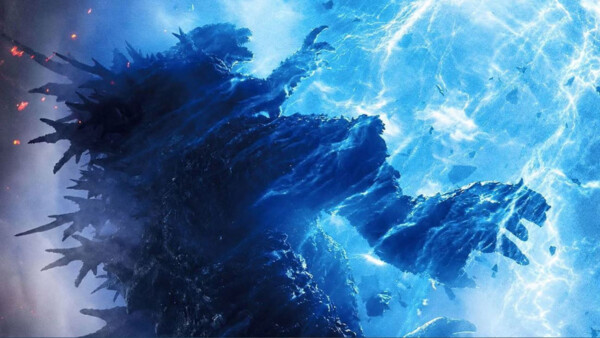
Image courtesy of Toho Studios and Robot Communications
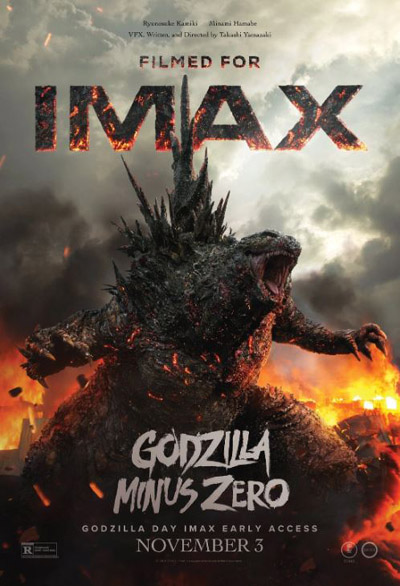
“Godzilla Minus Zero” Starring Minami Hamabi as Noriko Ôishi, Ryûnosuke Kamiki as Kôichi Shikishima, Jun Kunimura as Dr. Ogata, Hidetaka Yoshioka as Kenji Noda, Sae Nagatani as Akiko Shikishima, and others. Directed by Takashi Yamazaki. Written by Takashi Yamazaki. Two hours, 15 minutes. Rated R.
Plot summary: Just when you thought it was safe to go back into Tokyo Bay a new menace has emerged, one so powerful that only Godzilla himself can stop it.
Spoilers: Absolutely!
Del’s take
It doesn’t matter how good or bad a movie “Godzilla Minus Zero” is.
It doesn’t matter that it stomped its way to the top of the box office here in the States on its opening weekend.
The only thing that matters is: Will Mladen like it?
Mladen was traveling this weekend and could not join me to see this 39th iteration of the Godzilla franchise, which is a shame. I could really use his Godzilla expertise. Mladen is to Godzilla what people who wear Maxipads on their ears are to a certain corpulent, tangerine-tinted, pedophile-adjacent dictator-wannabe.
I think Mladen will like “Minus Zero,” although I know he doesn’t like the title. He’s already dismissed it as “dumb.” The rest of the movie is pretty good, though I think Mladen will agree it doesn’t quite measure up to the slightly more sensibly named “Godzilla Minus One.”
“Minus Zero” is a flat-out sequel to “Minus One.” Same universe, same storyline, same allegorical elements, same characters. In fact, the anti-war and Thank You – NOT – America for Hiroshima and Nagasaki elements are even more on the nose than in “Minus One.”
In this outing, Kôichi Shikishima, the reluctant hero of “Minus One,” is married to Noriko Ôishi and has accepted the ever-blubbering Akiko Shikishima as his daughter. Life is mostly good until a new threat arises, a dragon-like creature that hatches from a fallen space egg, begins devouring the local wildlife and then lays waste to Matsumoto City by shooting radioactive lightning bolts from its mouth. The creature is dubbed Ghidorah, which I believe is Greek for “What the fuck is that?” Ghidorah could be the answer to a fun riddle: What starts the movie with one head, then three, then two, then three?
The Americans, who are still inexplicably tiptoeing around the Russians at this point in the Minus timeline, take a more active role in defeating the giant kaiju wreaking havoc on Japan. Their solution? A humongous thermobaric bomb. Unfortunately, all the bomb does is piss off Ghidorah, which responds by growing three heads.
What follows is an attempt on the part of “Minus One’s” plucky band of scientists, pilots, fishermen, and, in this case, a sexy weather forecaster, to destroy Ghidorah by luring it into battle with Godzilla.
If it all sounds a bit silly, that’s because it is a bit silly. But nobody goes into a Godzilla movie expecting “Schnidler’s List.” The fact that there is any subtext at all speaks well to director/writer Yamazaki’s ambition to bring more to the Godzilla table than disaster porn. In fact, it is one of these sequences, where in a flashback to Aug. 6, 1945, Dr. Ogata remembers finding his incinerated family amid the smoking ashes of Hiroshima, that “Minus Zero” earns its R rating. Grim stuff for what is usually fun monster movie fare.
The soundtrack effectively conveys the serious tone of “Minus Zero” and in many ways reminds me of the soundtrack for “Minus One.” The cinematography is just as breathtaking, with long, loving shots of cities reeling under the onslaught of monster mayhem. Sound effects were equally comparable.
Structurally I thought “Minus Zero” contained one flaw, a long, expository piece just after the opening sequence that stalled the narrative flow. Also, for a movie featuring two warring kaiju, the monsters spend surprisingly little time on the screen. Another gripe: The CGI seemed rushed and drew more attention to itself than in “Minus One.” And there was a bit toward the end of the movie involving the little girl Akiko that could have been left out with no penalty to the film. In fact, it damaged two of the other characters for no good reason.
Still, “Minus Zero” is a good movie and certainly a worthy addition to the Godzillaverse. I’m giving it a B+. It aspires to be more than a simple monster movie, but it doesn’t do anything to advance the franchise beyond what we saw with “Minus One.”
Mladen Rudman is a former journalist and technical writer. Del Stone Jr. is a former journalist and writer.