Mladen and Del review ‘Contagion’

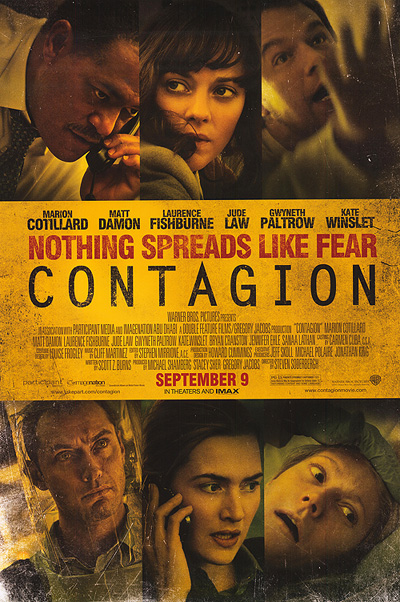
Image courtesy of Warner Brothers.
—
“Contagion.” Starring Gwyneth Paltrow, Matt Damon, Laurence Fishburne, John Hawkes, Jude Law, Marion Cotillard, Kate Winslet, Jennifer Ehle, Elliot Gould. Directed by Steven Soderbergh. 105 minutes. Rated PG-13.
Mladen’s take
Remember the best scene in the second-best movie made, “Jaws”?
Brody is ladling putrid chum into the Atlantic from the stern of charter boat Orca, when the massive white shark suddenly raises its head out of the water to look at him and then disappears as quickly and completely as it appeared.
The sheriff reflexively straightens, stiff with disbelief and fear, and says to the others aboard, “We need a bigger boat.”
Well, a similarly portentous scene unfolds between two pathologists early in the newly released film, “Contagion.”
The pathologists, one senior and the other his junior, open the skull of the dead character portrayed by Gwyneth Paltrow. As the junior pathologist pulls back the brain of the deceased, the senior medical examiner, stunned by what he sees, urges his cohort to step away from the table.
The more experienced pathologist tells the younger one that other health care professionals must be informed immediately about what they had uncovered.
“Who do I call?” asks the junior pathologist.
“Everybody,” responds the senior medical examiner. “Call everybody.”
“Contagion,” a story about a global pandemic that eventually wipes out 25 percent of humanity, is methodical. Grumpy Del would say plodding.
“Contagion” is about the way acts of selfishness or selflessness, profitmongering or altruism, panic or poise by individuals converge to create a collective reaction to a deadly virus. Del would say, “That’s boring. I want looting, gunfire, cannibalism, and other forms of grand-scale depravity.”
Alas, Del. What has become of you?
“Contagion” tackled the big questions. It just ignored some of the details.
And, the movie’s message is clear: We’re mostly on our own when a natural disaster strikes. The goal is to stay alive long enough for laws and social constraints to regain their hold.
As “Contagion” unfolds, we see a bitter blogger played by Jude Law use the Internet to market a snake oil that promises to cure those afflicted by MEV-1, a genetically simple, rapidly mutating monovalent virus. The blogger’s sales pitch includes government and corporation conspiracy theories with just enough facts to make them plausible.
A father, though he and his daughter are naturally immune to MEV-1, protects her with tenacity, but never uses violence. When a mobile Meals-Ready-To-Eat distribution center runs out of meals, others waiting in line break the cordon to storm the trucks. He protects a lady who’s attacked by another person because she had a box of MREs.
“Contagion” also notes failures in leadership. The American president flees to a hidey-hole for protection against the pandemic. By leading from the rear, his act of taxpayer-subsidized privilege contributes to the panic contorting the lives regular people.
Meanwhile, epidemiologists are working feverishly to develop a vaccine. One goes as far as using herself to test a vaccine that kept a MEV-1-infected monkey alive.
“Contagion” is filled with an all-star cast, but there’s no lead actor or actress. Though the movie shows the effect of the pandemic on well more than a dozen lives, its story is coherent.
“Contagion” is a good movie, maybe even a very good movie, but it’s not for action or blood-and-gore junkies such as Del.
Be patient, pay attention, recall what “SARS” stands for, and watch. You’ll know that you were affected by the movie if you exit the theater wondering how you’d protect your family from an unbiased – men, women, and children die – unseen organism and the chaos it unleashes.
Del’s take
The problem with a guy who loved “Transformers” scolding a guy who wanted a little more action in his “action-thriller” is that Mladen didn’t actually see “Contagion.” About halfway through he fell asleep and dreamed it was a terrific movie.
Which is not to say “Contagion” is a bad movie. Rather, it isn’t the movie I was expecting. Billed as an action-thriller, “Contagion” comes across as a medical procedural about how to create a flu vaccine, leavened by low-grade attempts to humanize the story by giving us glimpses of ordinary people and how they react to a dangerous virus sweeping across the world.
“Contagion” is told through a series of vignettes involving multiple viewpoints – officials with the Centers for Disease Control (Fishburne, Winslet and Ehle), the World Health Organization (Cotillard), a so-called “journalist” (Law), a janitor (Hawkes), and an ordinary guy (Damon) whose philandering wife has unwittingly brought the disease to America.
Medical officials quickly recognize the disease’s lethal potential and try to act but, as usual, skeptical and blundering politicians slow their progress. Meanwhile, the disease spreads, social order begins to fray and a real breakdown of the processes that sustain our society seems imminent. Only a vaccine will prevent the collapse of civilization.
“Contagion” attacks not only our immune system but the institutions dear to our American hearts. Marriage is stricken with infidelity; the sanctity of our death rituals is sullied by mass graves, body bags and a ghoulish funeral director who refuses to handle disease-ravaged corpses; law and order gives way to looting, robbery and murder. Religion is ignored.
Oh, and there’s the Internet, which receives a well-deserved bashing. Jude Law plays the part of an online conspiracy theorist who believes the disease, MEV-1, is a money- and power-making plot engineered by a cabal of government and corporate entities bent on controlling our lives. He claims a natural remedy, not the government’s possibly autism-inducing vaccine, can defeat the virus. But it’s all a fraud … or is it? At one point Law is told by Dr. Ian Sussman (Gould): “You’re not a journalist. You’re a blogger,” and “Blogging is like graffiti with punctuation.”
Law turns in a powerful performance as irresponsible and disruptive blogger Alan Krumwiede. Also excellent are Fishburne as the CDC’s Dr. Ellis Cheever and Winslet as Dr. Erin Mears. Ehle turns in the best performance as Dr. Ally Hextall, who tests the vaccine on herself. Paltrow is her usual, giggly self, and Damon looks positively vampiric throughout, though he does get one good line. After a doctor tells him his wife has died, Damon’s character, Mitch Emhoff, not quite processing what he’s been told, responds with, “Right. But can I go talk to her?”
“Contagion” is strongest when addressing the medical aspect of the pandemic; it is weakest when dealing with the human component. Soderbergh’s austere direction and his focus on the clinical rather than the emotional render a sterile, dare I say boring treatise on disease, medicine and government. Based on the trailers I was expecting more – no, Mladen, not fires and explosions.
Maybe just a few people I could care about.
On a scale of 1 to 10 I would give “Contagion” a 7. Not a bad movie, but not the action-thriller I hoped to see.
Mladen Rudman is a former journalist and technical editor. Del Stone Jr. is a former journalist and author.
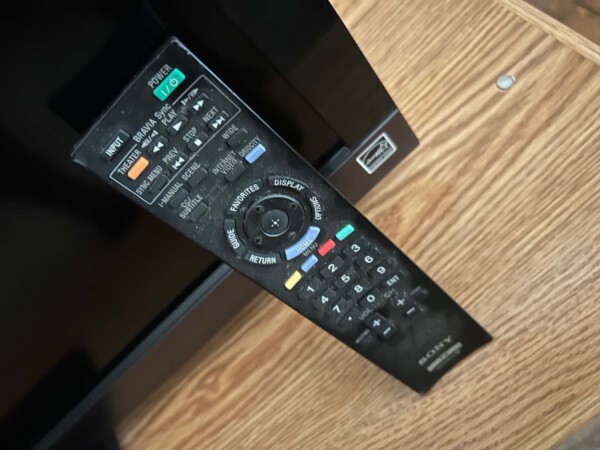
Mom's pesky TV remote looks like the control panel of an ICBM silo. Image courtesy of Del Stone Jr.
Yesterday Mom experienced her first crisis with the new TV. It took me only two hours and three phone calls to get it fixed.
Seems one of the batteries in the remote started leaking, creating that white, powdery film we are all familiar with. It was blocking the current. I got rid of those batteries, cleaned all the corrosion from the posts and put in new batteries. Remote worked just fine after that.
But every time I tried to key in an HD channel I got nothing but question marks on the screen. Called my brother-in-law, George, who told me about doing a power cycle on the box. I did that but the problem persisted, so he suggested I contact Cox technical assistance.
Unbelievably I got a tech on the phone right away, who had me do another power cycle. She asked me what the box was telling me about resolution and I read her the number, 480i. So she had me go into the settings and remove 480i as an option, leaving only 720 and 1080. I did that but still couldn’t get an HD channel. That’s when she told me the HD channels had been relocated to the 1000s. Soon as I keyed in 1003 I got a nice, sharp picture.
Sheesh. Wish I’d known they’d relocated them!
Then, I couldn’t get the monitor to shut off. When Mom got back from her walk she showed me how you have to hold down on the power button to get the monitor off. Egads, this was too, too complicated.
Today I mowed her front yard. I was a little concerned because me knee has still been bugging me. But I got the job done with virtually no pain. I think this knee is getting better, albeit slowly.
I also fixed part of her back fence, which had been knocked down, presumably by a falling branch.
Then I filled my tank (in case Irene heads our way) and took a badly needed shower.
About the author:
Del Stone Jr. is a professional fiction writer. He is known primarily for his work in the contemporary dark fiction field, but has also published science fiction and contemporary fantasy. Stone’s stories, poetry and scripts have appeared in publications such as Amazing Stories, Eldritch Tales, and Bantam-Spectra’s Full Spectrum. His short fiction has been published in The Year’s Best Horror Stories XXII; Alfred Hitchcock’s Mystery Magazine; the Pocket Books anthology More Phobias; the Barnes & Noble anthologies 100 Wicked Little Witch Stories, Horrors! 365 Scary Stories, and 100 Astounding Little Alien Stories; the HWA anthology Psychos; and other short fiction venues, like Blood Muse, Live Without a Net, Zombiesque and Sex Macabre. Stone’s comic book debut was in the Clive Barker series of books, Hellraiser, published by Marvel/Epic and reprinted in The Best of Hellraiser anthology. He has also published stories in Penthouse Comix, and worked with artist Dave Dorman on many projects, including the illustrated novella “Roadkill,” a short story for the Andrew Vachss anthology Underground from Dark Horse, an ashcan titled “December” for Hero Illustrated, and several of Dorman’s Wasted Lands novellas and comics, such as Rail from Image and “The Uninvited.” Stone’s novel, Dead Heat, won the 1996 International Horror Guild’s award for best first novel and was a runner-up for the Bram Stoker Award. Stone has also been a finalist for the IHG award for short fiction, the British Fantasy Award for best novella, and a semifinalist for the Nebula and Writers of the Future awards. His stories have appeared in anthologies that have won the Bram Stoker Award and the World Fantasy Award. Two of his works were optioned for film, the novella “Black Tide” and short story “Crisis Line.”
Stone recently retired after a 41-year career in journalism. He won numerous awards for his work, and in 1986 was named Florida’s best columnist in his circulation division by the Florida Society of Newspaper Editors. In 2001 he received an honorable mention from the National Lesbian and Gay Journalists Association for his essay “When Freedom of Speech Ends” and in 2003 he was voted Best of the Best in the category of columnists by Emerald Coast Magazine. He participated in book signings and awareness campaigns, and was a guest on local television and radio programs.
As an addendum, Stone is single, kills tomatoes and morning glories with ruthless efficiency, once tied the stem of a cocktail cherry in a knot with his tongue, and carries a permanent scar on his chest after having been shot with a paintball gun. He’s in his 60s as of this writing but doesn’t look a day over 94.
Contact Del at [email protected]. He is also on Facebook, twitter, Pinterest, tumblr, TikTok, and Instagram. Visit his website at delstonejr.com .
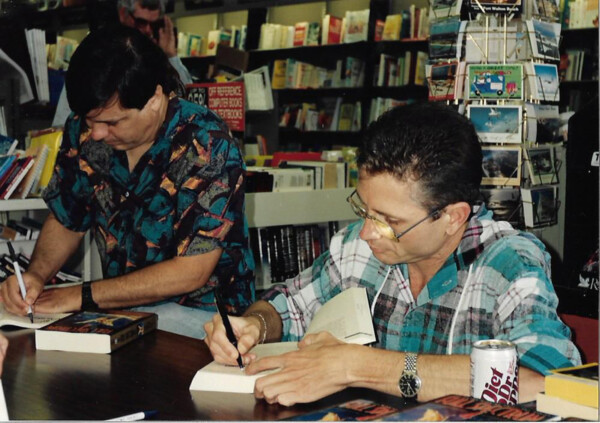
Today Borders announced it would close its bookstores and liquidate its stock, thus joining a long list of printed booksellers who have shuttered their doors. In Fort Walton Beach a single chain bookstore remains, the Books-A-Million on Mary Esther Cut-Off. Destin offers a Barnes & Noble across from Destin Commons, along with a Books-A-Million in Destin Commons.
That’s about it.
The disappearance of bookstores will not cause the earth to wobble on its axis, but it’s troubling nonetheless for reasons you may not have considered.
Nobody denies the logic of switching from printed books to e-readers. The economies are too vast to ignore. It’s easier, faster and cheaper to “print” a book to an e-reader. Printed books consume huge quantities of paper, ink, and fuel to transport. They chew up storage space. At some point they must be disposed of, taking up precious room in landfills. You can’t enlarge the print, and they offer zero opportunities for multimedia engagement.
But the loss of bookstores does present a downside – maybe several.
For starters, there’s the issue of jobs. Writers, editors, copy editors, jacket designers and agents will likely go about their business as usual. But the people who cut down the trees to make paper – they will take a hit. The people who brew the ink for printed books will suffer. The folks who transport the paper, ink, and books themselves will lose business. And, of course, the bookstore workers will no longer have a job. Collectively those numbers probably aren’t very high, but any loss of jobs in an employment-strapped economy is bad news. I suppose some of the loss will be offset by people who make, transport and sell e-readers, and people who man online retailer sites, but the gains will come nowhere near the losses.
What bugs me most about the disappearance of bookstores is the loss of a shared experience.
When you pick up a book you can feel its heft. You can smell the astringency of ink on paper. You flip through the pages and get a sense for the author’s voice: For me, too much dialogue means a writer can’t describe what the character is seeing and feeling. Too many short paragraphs means there’s not much in the way of subtext. When you buy a book you’re not just buying a story. You’re buying an artifact.
A bookstore (or a library) is, to my mind, a symbol of our most noble aspirations as a culture. It’s a place where knowledge and education are celebrated, and where people try to rise above their surroundings. Walk into a bookstore and you will notice fellow shoppers still speak in hushed voices. That’s because they implicitely recognize people in bookstores are thinking important thoughts, and that they should not be distracted by loud, vulgar prattle. That’s the problem with the Digital Age: It invades every aspect of our lives with loudness and vulgarity, which makes us uncouth, and dumb.
A bookstore offers a shared experience. It makes us part of a collective effort called civilization – all of which is reduced by an e-reader to a fleeting burst of light.
I don’t go to bookstores just to buy books. I go there to browse, be around people, and partake of the atmosphere. Maybe I’ll bump into an author signing his latest novel. Maybe I’ll meet somebody who likes the same crap I do. Heck, maybe I’ll just flop down on a couch, drink a cup of coffee and thumb through the pages of my next purchase, a pleasant thing to do on a rainy afternoon. It’s comforting to be out of the house and in a place surrounded by like-minded souls.
Try that with an e-reader.
I’m sure that one day I’ll read books on a tablet. But I’ll miss my neighborhood bookstore.
I already do.
About the author:
Del Stone Jr. is a professional fiction writer. He is known primarily for his work in the contemporary dark fiction field, but has also published science fiction and contemporary fantasy. Stone’s stories, poetry and scripts have appeared in publications such as Amazing Stories, Eldritch Tales, and Bantam-Spectra’s Full Spectrum. His short fiction has been published in The Year’s Best Horror Stories XXII; Alfred Hitchcock’s Mystery Magazine; the Pocket Books anthology More Phobias; the Barnes & Noble anthologies 100 Wicked Little Witch Stories, Horrors! 365 Scary Stories, and 100 Astounding Little Alien Stories; the HWA anthology Psychos; and other short fiction venues, like Blood Muse, Live Without a Net, Zombiesque and Sex Macabre. Stone’s comic book debut was in the Clive Barker series of books, Hellraiser, published by Marvel/Epic and reprinted in The Best of Hellraiser anthology. He has also published stories in Penthouse Comix, and worked with artist Dave Dorman on many projects, including the illustrated novella “Roadkill,” a short story for the Andrew Vachss anthology Underground from Dark Horse, an ashcan titled “December” for Hero Illustrated, and several of Dorman’s Wasted Lands novellas and comics, such as Rail from Image and “The Uninvited.” Stone’s novel, Dead Heat, won the 1996 International Horror Guild’s award for best first novel and was a runner-up for the Bram Stoker Award. Stone has also been a finalist for the IHG award for short fiction, the British Fantasy Award for best novella, and a semifinalist for the Nebula and Writers of the Future awards. His stories have appeared in anthologies that have won the Bram Stoker Award and the World Fantasy Award. Two of his works were optioned for film, the novella “Black Tide” and short story “Crisis Line.”
Stone recently retired after a 41-year career in journalism. He won numerous awards for his work, and in 1986 was named Florida’s best columnist in his circulation division by the Florida Society of Newspaper Editors. In 2001 he received an honorable mention from the National Lesbian and Gay Journalists Association for his essay “When Freedom of Speech Ends” and in 2003 he was voted Best of the Best in the category of columnists by Emerald Coast Magazine. He participated in book signings and awareness campaigns, and was a guest on local television and radio programs.
As an addendum, Stone is single, kills tomatoes and morning glories with ruthless efficiency, once tied the stem of a cocktail cherry in a knot with his tongue, and carries a permanent scar on his chest after having been shot with a paintball gun. He’s in his 60s as of this writing but doesn’t look a day over 94.
Contact Del at [email protected]. He is also on Facebook, twitter, Pinterest, tumblr, TikTok, and Instagram. Visit his website at delstonejr.com .

The beach down around Cape San Blas is nice-looking but the sand is darker than what we're accustomed to in Fort Walton Beach and Destin. What's really scary is the thin sliver of land extending out into the Gulf of Mexico. You feel like you're aboard a very small boat that could capsize at any moment. Image courtesy of Del Stone Jr.
After Mexico Beach was named (by whom I forget) one of the nation’s coolest beach towns, I became curious about that stretch of the Panhandle. I’ve lived in this region since 1964 and apart from a quick snorkeling adventure to find scallops, and a two-stay at a campground, I’d never explored the Port St. Joe-Apalachicola area. So Thursday I set out for a quick drive to see what was there. I had to be back by a certain time; my friends and I were helping Niceville pay for its fireworks show by eating a steak dinner at the community center at 6:30. So there would be no chatting with locals or digging through bins of shells … just a quick road trip to see what was there and hurriedly snap a few photos.

As you drive east out of Panama City, U.S. 98 narrows to a two-lane road and travels through some seriously forested wetlands. The environmentalist in me loved it. The driver in me wondered what the heck I’d do if the car broke down. Careening down a two-lane road at 60 mph with fully loaded logging trucks barelling at you in the opposite lane conjures images of the big wreck scene in “Final Destination 2.” Luckily it wasn’t a far drive to my first stop, the newly crowned cool beach town Mexico Beach.
Mexico Beach IS a cool town, in an old-Florida, laid-back coastal community way. It reminded me of South Walton 20 years ago before the themed resorts, gated communities and condos took over. It’s populated mostly be single-family residences and locally owned businesses. Beach accesses are plentiful, and one stretch is totally undeveloped, with lots of available parking. Beaches were not crowded as these photos prove. The architectural style of the buildings is much more consistent than the unholy mashup of clashing approaches in South Walton, where Greek Island rennaissance meets Old Mexico terra cotta meets Seaside popsicle brite meets Southern gothic which meets New England revival.








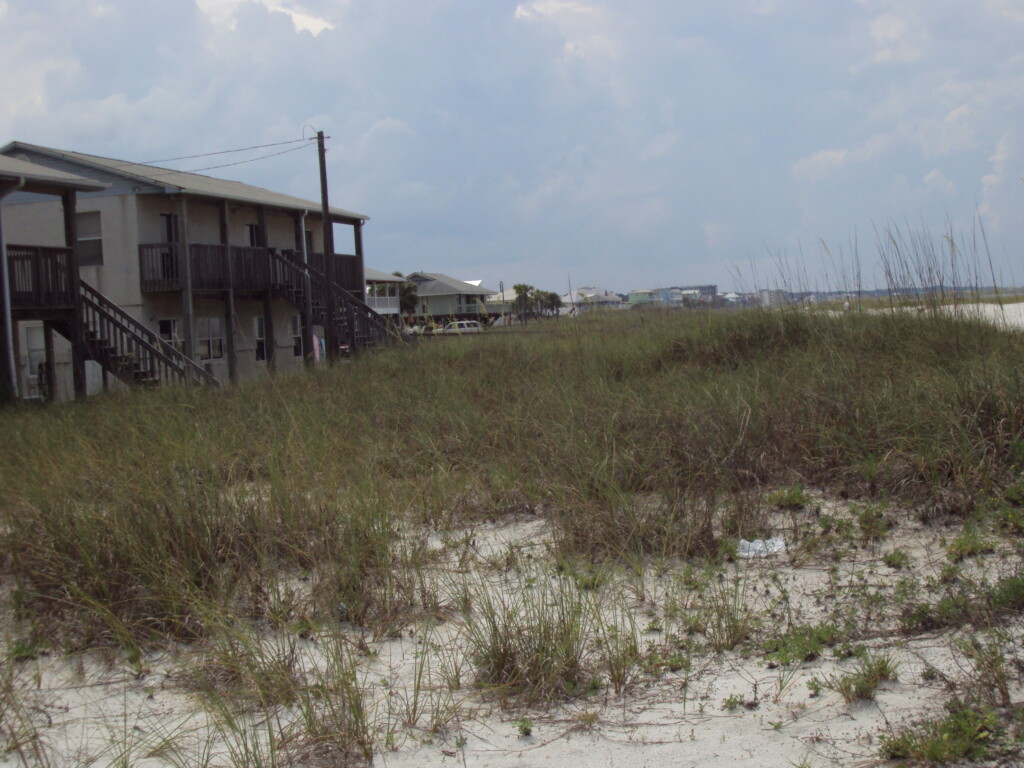


I would rate the beaches a notch below what we have in Okaloosa and Walton counties. The sand was not quite as white, the water not quite as clear. The primary difference was an issue of scope. Because of our unhindered horizon, when you stand on a beach here you get a sense of gazing onto a truly vast body of water, an ocean. From the beach at Mexico Beach you can see the curvature of the coast and what I’m guessing is the northernmost point of Cape San Blas. You don’t get that feeling of grandeur. Instead, it feels like you’re looking from the shore of a bay.
As I drove farther southeast I landed in Port St. Joe. This is a very nicely laid out, clean and pretty little town. It doesn’t have much but the people have made the most of what they’ve got. Streets are wide and sidewalks are decorated with pavers and lighting. The historical district is easy to find, and the city seems to have made some effort to preserve the town’s trees. I would wager Port St. Joe has the only waterfront Piggly Wiggly in the world.
A venture along Gulf County’s version of 30-A took me to Cape San Blas. I stopped at a bayside park with a boardwalk that ventured into the saltwater cordmeadow marsh that fringed the shoreline. The park was dedicated to an 18-year-old young man who wrecked his truck and died on the twisty, narrow two-lane that travels along the narrow isthmus. His mother was a local preservationist.
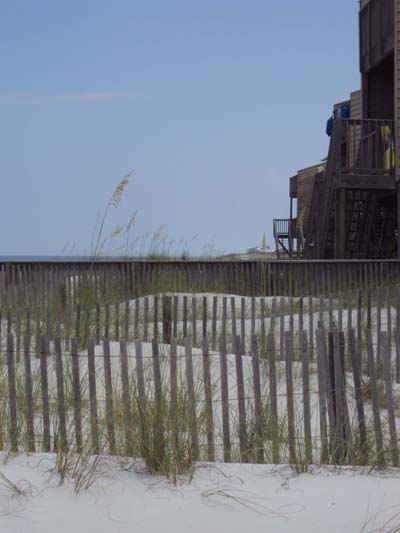
After past a scary breakwater that looked like it might send boulders tumbling onto my head I reached the cape itself, and this reminded me more of the Emerald Coast than any other location I’d seen. Sands were white and heaped into dunes covered in sea oats. Again, the buildings were mostly single-family residences. There weren’t as many beach accesses but I finally found one and tromped through the sand to gaze upon the infinity of ocean.

I never made it to Apalachicola. Time was drawing short and thunderstorms threatened. My recommendation would be that if you’re looking for a quick vacation within easy driving distance, try renting a house on the shore of Cape San Blas and prepare for a week of splendid isolation. Bring lots of groceries and books. Leave behind your cares.
On the drive back I stumbled across a Church’s fried chicken restaurant. I had always loved Church’s and missed having it here in Fort Walton Beach, so I stopped by for a snack. Hmmm … what’s that old saying? You can never go back? Better to leave some memories as memories? Yup. The restaurant was hot – stiflingly hot. It was filthy, the tables covered in crumbs, wet spots and knocked over condiments. I got the two-piece meal for $2.69 – a thigh, a leg, mashed potatoes and a biscuit. The mashed potatoes were instant, which is fine. I expected that and even like instant mashed potatoes to a degree. The biscuit was OK. But the chicken? A dripping grease bomb that exploded nauseatingly in my mouth. It actually made me physically sick. When I was done a wetted a napkin and cleaned off the table, set up the condiments and tried to make the place look reasonably neat. Never again.
As I drove home I got a sense for just how pretty Destin is. They’ve done a good job of making it look neat and attractive.
Now if they could just do something about the traffic!

About the author:
Del Stone Jr. is a professional fiction writer. He is known primarily for his work in the contemporary dark fiction field, but has also published science fiction and contemporary fantasy. Stone’s stories, poetry and scripts have appeared in publications such as Amazing Stories, Eldritch Tales, and Bantam-Spectra’s Full Spectrum. His short fiction has been published in The Year’s Best Horror Stories XXII; Alfred Hitchcock’s Mystery Magazine; the Pocket Books anthology More Phobias; the Barnes & Noble anthologies 100 Wicked Little Witch Stories, Horrors! 365 Scary Stories, and 100 Astounding Little Alien Stories; the HWA anthology Psychos; and other short fiction venues, like Blood Muse, Live Without a Net, Zombiesque and Sex Macabre. Stone’s comic book debut was in the Clive Barker series of books, Hellraiser, published by Marvel/Epic and reprinted in The Best of Hellraiser anthology. He has also published stories in Penthouse Comix, and worked with artist Dave Dorman on many projects, including the illustrated novella “Roadkill,” a short story for the Andrew Vachss anthology Underground from Dark Horse, an ashcan titled “December” for Hero Illustrated, and several of Dorman’s Wasted Lands novellas and comics, such as Rail from Image and “The Uninvited.” Stone’s novel, Dead Heat, won the 1996 International Horror Guild’s award for best first novel and was a runner-up for the Bram Stoker Award. Stone has also been a finalist for the IHG award for short fiction, the British Fantasy Award for best novella, and a semifinalist for the Nebula and Writers of the Future awards. His stories have appeared in anthologies that have won the Bram Stoker Award and the World Fantasy Award. Two of his works were optioned for film, the novella “Black Tide” and short story “Crisis Line.”
Stone recently retired after a 41-year career in journalism. He won numerous awards for his work, and in 1986 was named Florida’s best columnist in his circulation division by the Florida Society of Newspaper Editors. In 2001 he received an honorable mention from the National Lesbian and Gay Journalists Association for his essay “When Freedom of Speech Ends” and in 2003 he was voted Best of the Best in the category of columnists by Emerald Coast Magazine. He participated in book signings and awareness campaigns, and was a guest on local television and radio programs.
As an addendum, Stone is single, kills tomatoes and morning glories with ruthless efficiency, once tied the stem of a cocktail cherry in a knot with his tongue, and carries a permanent scar on his chest after having been shot with a paintball gun. He’s in his 60s as of this writing but doesn’t look a day over 94.
Contact Del at [email protected]. He is also on Facebook, twitter, Pinterest, tumblr, TikTok, and Instagram. Visit his website at delstonejr.com .
Are drivers becoming more aggressive?
This really happened. Let me lay out the scenario for you.
I was on the eastern part of Yacht Club Drive heading west toward Eglin Parkway. I approached the intersection of Yacht Club and Eglin and entered the right-turn lane. Immediately to my right is a convenience store. To my left is a Bank of America.
Eglin Parkway is a six-lane thoroughfare. In Florida you’re allowed to turn right on a red light, but I sometimes don’t do that if the middle of the three oncoming lanes is occupied. Some drivers don’t have sense enough to realize it’s a bad idea to change lanes in an intersection. This intersection is notorious for drivers doing that – on impulse they decide they need something from the convenience store and swoop into the right lane just as I’m tempted to pull out.
On this day I waited for both the right and middle lanes to clear. Suddenly, I heard somebody behind me lay on his horn.
I looked and it was a fellow in, to borrow an expresson from Dave Barry, a big honkin’ el jeffe penismobile Dodge Ram pickup. He gesticulated angrily and threw up his hands. Clearly he was not happy with my decision to wait.
He yanked the penismobile into reverse, backed up, screamed into the convenience store parking lot and took their exit to Eglin Parkway just as I made my turn. In 10 seconds he probably burned more gas than I would use during my entire drive to work that morning.
It irritated me that he would have me jeopardize my life and tens of thousands of dollars’ worth of property, and risk a lawsuit, all so that he might be on his way a few seconds earlier. But what troubled me was his rage – because I see it every day.
In awful comments left on websites. Rude people standing in lines at checkout counter. Airline passengers who balk at turning off their phones during takeoff. And nasty politicians who hit so far below the belt you wonder how they were let in the ring to begin with.
It seems rage has become the new black.
Why are people so angry?
I have a number of theories about that. For instance, maybe because I’m older, and a tad more frugal with my mortality, I see the world differently than I did when I was 25. Maybe what I see today as “rage” was a perfectly acceptable form of social interaction when I was 25.
Maybe it’s crowding. The world is more crowded today than it was when I ws 25 – by about 2 billion. I seem to remember a study from one of my education classes. It involved rats in a cage. As more were added, the rats became aggressive and attacked each other.
It could be that parents don’t teach their children manners anymore. Or spend enough time with them. Or spend enough time together as a family.
Also, people may be emulating behaviors they see in the media, from angry shouting matches between talk show antagonists to shoot ’em up movies and videogames, and violence-inspired music.
Possibly all these factors, if they are valid, have something to do with the rage quotient in our culture. But I would add another, which doesn’t get talked about very much:
Technology.
In 2004 Hurricane Ivan struck the Gulf Coast between Mobile, Ala., and Pensacola, Fla. Here in Fort Walton Beach I was without electricity about four days. I live in a townhouse complex and I can say with dread certainty that a townhouse without electricity in the middle of September in Florida is a no-win proposition. A townhouse, depending on its construction, can become an oven.
It was during this time I noticed something strange taking place in my little townhouse community, something I hadn’t noticed since the mid-1960s. Forced out of their townhouses by the heat, people began meeting their neighbors, learning their names and sharing information about each other. Soon they began holding cookouts, helping each other with repairs, and generally interacting like the communities of old.
Once electricity was restored they retreated to their now air-conditioned townhouses and resumed being strangers.
I think that’s what technology is doing to us: It’s making strangers of us all.
For all its benefits – and I won’t dispute them because they’re undeniable – technology (and by that I mean the web, computers, tablets and smart phones) exerts a dehumanizing influence on people. It destroys communities, be they towns, neighborhoods or even families, and replaces them with ersatz online communities that do nothing to socialize their constituents but do plenty to amplify some of their worst traits.
For instance, you would never tell the woman behind the cash register at the convenience store where you buy gasoline that she’s an ugly pig. You might think it but you wouldn’t tell her. Online it’s a different matter.People are not only telling the woman she’s an ugly pig but virtually stoning her to death. They do it because they can – without risk to life or limb. Try that at the convenience store and she might just climb over the counter and knock you cold. Online, however, you’re likely anonymous. She will never know who you are. You can indulge your animal instincts.
That’s how social interaction works in the real world. It delivers consequences for actions. Consequences exert a moderating influence on people’s behavior.
The end result is something we call “civilization.”
But technology dehumanizes people another way.
Need a plane ticket? Visit Travelocity, punch a few buttons and it’ll be waiting for you at the airport. Want to know if it’ll rain in the next 10 minutes? Punch up the MyRadar app on your phone. Want to fill those empty minutes driving to work by telling Aunt Sue about the cute thing your cat did this morning? Send her a text. You might kill a 12-year-old crossing the road but oh well, that’s the price of progress. Besides, it’s not your fault. Apple shouldn’t have built such an attractive nuisance into your phone – at least that’s what your lawyers will argue. Oh, and if you don’t like the bias MSNBC serves up on its web news you can call up Fox. They’ll spin the news just the way you like it.
You don’t have to wait for anything. You don’t have to work for anything. You don’t have to sacrifice. You don’t even have to think. Technology creates the expectation that everything is easy and fast and tailored to your personal tastes. To borrow a John Varley title, just “press enter.”
Technology is creating a generation of people who are selfish, rude, stupid … and angry.
A chilling example: I was once contacted by a young lady who haughtily ordered me to remove online comments that were critical of her brother. Bro had just been accused of driving drunk and running over and killing a young married couple, and commenters had a few choice words about him. “He’s not a bad person,” she snarled, “he just made a mistake.”
A mistake? I was flabbergasted, both by her lack of compassion for the couple and her apparent real concern: the online image of her brother.
You probably believe I’m a raving Luddite who would unplug the world’s computers and go back to writing notes on paper to Aunt Sue. Nothing could be farther from the truth. I love being able to purchase airline tickets online. I have the MyRadar app on my phone and I upped my text-message allowance to 500 per month because I use that feature for all kinds of communication. I regularly peruse the news sites, from Fox to CNN and SpaceNews.
But there’s something to be said for perspective.
I consider myself lucky to have grown up in a world that did not have the internet. That world endowed me with qualities that serve me well today: patience, the ability to solve problems, an appreciation for consequences, a degree of creativity, and most important, a willingness to turn the other cheek.
I look upon those qualities as virtues, not liabilities. Sure, they’re slow and old-fashioned. But in my opinion they represent the very best of what civilization has to offer.
I confess to being suspicious of a generation that does not read or write. I am suspicious of people who do not care about their community – their physical community – and who value their own comfort over everybody else’s.
And I guess I’m suspicious of people who would blow their horn at you because you won’t pull out into traffic, and who would risk the lives of everybody around them to satisfy some primal urge to get ahead.Ironically, it’s technology that allows me to post this message and communicate it to the entire world. I am a true believer in better life through technology.But I don’t let technology control me. Moderation in all things.
About the author:
Del Stone Jr. is a professional fiction writer. He is known primarily for his work in the contemporary dark fiction field, but has also published science fiction and contemporary fantasy. Stone’s stories, poetry and scripts have appeared in publications such as Amazing Stories, Eldritch Tales, and Bantam-Spectra’s Full Spectrum. His short fiction has been published in The Year’s Best Horror Stories XXII; Alfred Hitchcock’s Mystery Magazine; the Pocket Books anthology More Phobias; the Barnes & Noble anthologies 100 Wicked Little Witch Stories, Horrors! 365 Scary Stories, and 100 Astounding Little Alien Stories; the HWA anthology Psychos; and other short fiction venues, like Blood Muse, Live Without a Net, Zombiesque and Sex Macabre. Stone’s comic book debut was in the Clive Barker series of books, Hellraiser, published by Marvel/Epic and reprinted in The Best of Hellraiser anthology. He has also published stories in Penthouse Comix, and worked with artist Dave Dorman on many projects, including the illustrated novella “Roadkill,” a short story for the Andrew Vachss anthology Underground from Dark Horse, an ashcan titled “December” for Hero Illustrated, and several of Dorman’s Wasted Lands novellas and comics, such as Rail from Image and “The Uninvited.” Stone’s novel, Dead Heat, won the 1996 International Horror Guild’s award for best first novel and was a runner-up for the Bram Stoker Award. Stone has also been a finalist for the IHG award for short fiction, the British Fantasy Award for best novella, and a semifinalist for the Nebula and Writers of the Future awards. His stories have appeared in anthologies that have won the Bram Stoker Award and the World Fantasy Award. Two of his works were optioned for film, the novella “Black Tide” and short story “Crisis Line.”
Stone recently retired after a 41-year career in journalism. He won numerous awards for his work, and in 1986 was named Florida’s best columnist in his circulation division by the Florida Society of Newspaper Editors. In 2001 he received an honorable mention from the National Lesbian and Gay Journalists Association for his essay “When Freedom of Speech Ends” and in 2003 he was voted Best of the Best in the category of columnists by Emerald Coast Magazine. He participated in book signings and awareness campaigns, and was a guest on local television and radio programs.
As an addendum, Stone is single, kills tomatoes and morning glories with ruthless efficiency, once tied the stem of a cocktail cherry in a knot with his tongue, and carries a permanent scar on his chest after having been shot with a paintball gun. He’s in his 60s as of this writing but doesn’t look a day over 94.
Contact Del at [email protected]. He is also on Facebook, twitter, Pinterest, tumblr, TikTok, and Instagram. Visit his website at delstonejr.com .
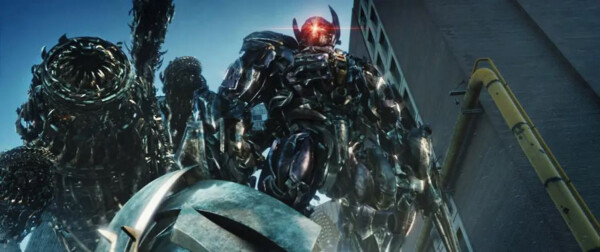
Image courtesy of Paramount.
—
“Transformers: Dark of the Moon” Starring Shia LaBeouf, Rosie Huntington-Whiteley, Tyrese Gibson, Josh Duhamel, Patrick Dempsey, Frances McDormand. Directed by Michael Bay. 157 minutes. Rated PG-13.
Mladen’s take
Two questions frequently visited my mind as I watched, in 3D, “Transformers: Dark of the Moon” on its opening weekend.
The first was: Where can I find the clearcoat that the Autobots use to protect their paint? The finish on every Autobot, when it was configured as a vehicle, shined brilliantly and the luster was undefeatable. Autobots would roll through a desert, but no dust clung to their paint. Autobots zigzagged through toppling, burning Chicago, but no soot attached to their exteriors. Amazing, I want protection like that for my non-GM car.
The second question was: When will this movie end?
Transformers 3 was “Battle: LA” multiplied by 2. Peril was interminable.
Every instance of Sam Witwicky, portrayed again by Shia LaBeouf, surviving a maelstrom of exploding light pulses and short-recoil hypervelocity projectiles was more absurd than the one that preceded it.
But, part of sitting down for a long time to watch this PG-13 blockbuster is suspending, completely, disbelief. That was made easier by the screenwriter’s effort to make Transformers 3 somewhat serious.
The film is coherent.
There are at least two betrayals in the toy-based movie. What Sentinel Prime, voiced by Leonard Nimoy, does to Optimus Prime would make former Vice President Dick Cheney flush with pride.
Humans, hit by photons, disappeared in puffs of gray ash, mimicking scenes in the 2005 remake of “War of the Worlds.”
The realism endures, though the director, I assume inadvertently, tried to wreck it.
Sam’s love interest is unconvincing.
Witwicky’s parents could have been deleted from the movie without it suffering one bit.
And, the film’s panoramic 3D shots looked childish. Cybertron at war was a tangle of metallic structures with fighting robots in stark relief against the background. They looked like plastic models set in motion. Air Force special operations airmen gliding through the Chicago skyline looked more like flying squirrels than hotshots trying to save Earth.
Product placement – I want to go buy a Lenovo computer now – is exceptionally annoying in 3D.
Another of the film’s strengths is decent acting.
America’s national director of intelligence is the woman who won the best actress Oscar for her portrayal of a cop in “Fargo.” One of the human bad guys, I was told by a friend, is the man who plays “Dr. McDreamy” in the TV show “Gray’s Anatomy.” John Torturro does an OK job reprising his quirky spy character.
“Transformers: Dark of the Moon” is the best movie of the franchise. Presumably, because the leader of the Decepticons, Megatron, is beheaded and his second-in-command, Starscream, blasted apart, there’ll be no others. There’s risk, of course, that the director and production company will opt for a prequel. Stay tuned, as I’m sure you will.
Transformers 3 is worth seeing in the theater, but the movie and all its mostly entertaining excess can be enjoyed without the extra several dollars you’d have to drop for 3D.

Del’s take
I don’t think Megatron is the only entity beheaded by this awful example of Hollywood bad-storytelling. Mladen must have been conked on the skull by a piece of Chicago’s falling skyline.
“Transformers: Dark of the Moon” is a disaster from top to bottom, the absolute worst of the three movies and the one that will convince me to never again waste my money on another Transformers movie.
Where do I begin? The bizarre score? The lousy acting and cheesy script? The absolute lack of internal logic? Or maybe the subtle discrimination. Everywhere I look in this movie I see: train wreck.
Let’s start with the score. It’s peppered with trendy clips from bands like Linkin Park, Stained, Skillet and My Chemical Romance, songs that have no business being in a rock ‘em sock ‘em action movie. It’s as if the movie’s makers wanted to endow their creation with a sound of currency, and introduce a note of empathy on the personal level. It didn’t work for me. Music is every bit a plot device as characterization, pacing and visuals. Movies like “A Clockwork Orange” and “Silence of the Lambs” used the score to, if you’ll pardon the pun, underscore the emotional amplitude of certain scenes. Here the music seems merely added on, as if cake icing were used to dress up a taco-cheeseburger-pizza.
There’s no fun in this script. There’s no fun in the actors’ performances. “Dark of the Moon” is 157 minutes of Shia LaBeouf screaming, “ GOTTA GO! LET’S GO! GO, GO, GO!” and “CARLY!” John Malkovich is a power player who looms large in LaBeouf’s employment future but becomes a simpering lap dog once the Autobots hit the fan, and the great Frances McDormand must surrender her role as national intelligence director who doesn’t care what LaBeouf did in the past to an irrelevant footnote once the Decepticons occupy Chicago and begin eradicating the populace. Critical scorn has been heaped upon Rosie Huntington-Whiteley, who plays LaBeouf’s love interest, but I found her performance to be one of the most consistent of the movie.
“Dark of the Moon’s” fatal flaw is the rampant contradictions of its own logic. I could compile a list as long as your arm but for brevity’s sake I’ll mention only two. Early in the movie the Autobots are told about a crash site on the moon that may contain the body of their leader, Sentinel Prime. They fly their own spaceship to the moon to recover his body. Yet when the Autobots are banished from Earth they must ride into space aboard a modified NASA shuttle. Um, what happened to the Transformer spaceship, guys? Second, when the Decepticons take over Chicago they seal off air access and shoot down anything trying to fly in, including speedy F-18 Hornets. Yet a flight of subsonic cruise missiles is able to penetrate their defenses, a formation of Ospreys manages to make it into the city, and soldiers hoofing it on the ground enter unmolested. It’s as if the rules of “Transformers” only apply for a few seconds.
Worse is the subtle discrimination the movie presents. Not to be a standard-bearer for all things politically correct but I was alarmed by the dialogue applied to LeBouf’s two “pet” robots, who tended to speak in black dialect and behave like clods. George Lucas took a hit for the same lapse with Jar-Jar Binks in “The Phantom Menace.” Also, an extended scene where a distraught Ken Jeong, in a men’s room stall, presents LaBeouf with evidence that the moon landings were a cover-up for something more insidious, struck me as an attempt to say, “People think we’re gay. Aren’t you embarrassed?” Would the audience have laughed if the joke had been at the expense of a Native American, a woman, or a disabled person?
“Dark Side of the Moon” has made a kabillion dollars at the box office, but I don’t care. It’s a lousy movie replete with contradictions, cheap stereotypes, a bad script and crappy acting. I’m tired of Sam Witwicky and his unbelievable foibles.
If this is what people consider quality entertainment I am clearly out of place with the times.
Mladen Rudman is a former journalist and technical editor. Del Stone Jr. is a former journalist and author.

It was a Saturday in late May, 1979, that I walked through the front door of the Daily News not as a tennis columnist but an employee. I was there to learn … the COMPUTER.
I had been writing the column “Tennis Time” for the Fort Walton Beach Tennis Club about two years when I was approached by then sports editor Ron Balicki, who told me the editor, Jim Welsh, wanted to see me. Jim was a wiry fellow with lots of energy. Strangely what I remember best was his mustache, a big, bushy beast that lay across his lip like an attack dog awaiting the command to rip out my throat.
Jim needed a police reporter. Was I interested?
Incredibly, I wasn’t.
I still had delusions of becoming an English teacher, despite the scathing evaluation I’d received from my supervising teacher during my student teaching term at Pryor Junior High School. What scared me was the notion of writing under deadline, something I’d never been good at, nevermind the rushing out to crime scenes and car accidents, monitoring the scanner and possibly landing the newspaper in a lawsuit because of an errant quote or misstated fact. I said no and went back to substitute teaching, a different kind of nightmare.
About six months later Ron again directed to Mr. Welsh’s office. He had a different job offer: Would I like to work on the wire desk laying out pages? Now that sounded interesting, but even more interesting was the $235 per week paycheck I would receive. My savings were nearly depleted. I was living with Mom and Dad, almost two years out of college. I needed to do something with my life, even if it didn’t fit in to the grand plan of teaching by day and writing by night.
I said yes.
And so there I was that Saturday afternoon, two days before my scheduled start of work, learning how to use the computer.
Truth be told the idea of using a computer scared the hell out of me. In 1979 computers were as ubiquitous as unicorns. You could buy a Radio Shack “Trash 80” and spend two hours programming it to play 10 seconds of “My Dog Has Fleas,” and that was about it. As I dropped off my tennis columns to Ron I would stare in wonder at the “computer” on his desk – turns out it was only a terminal; the real computer sat in a cold room off to the side – and marvel that anybody could be smart enough to use it. Now, here I was, responsible for learning it myself.
Shudder.
My instructor was city editor Jim Shoffner, who is now the newspaper’s editorial page editor. Jim showed me the basics of how to navigate the folders, create a file, and mark up the file so that when it was sent to a machine that composed the type, it would come out the way it was supposed to. Miss one keystroke and you could end up with yards of wasted film in “Texas agate,” body copy text set in 30 point Helvetica type. That would earn you an evil glare from Ken, the IT guy, who was also a biker.
Shoffner gave me my first writing chore for the newspaper that afternoon. The newspaper published something called the Business and Industry page, B&I for short. The page was surrounded by ads and featured a space in the middle where a “story” and photo of one of the businesses would be positioned. This week’s business was Henry’s Fina, a gas station in downtown Fort Walton Beach that sold other items popular among a certain crowd. He gave me a sheet of paper with information provided by the folks at Henry’s Fina – a precious five or six lines of type as memory serves – and somehow I was to produce a 10-inch “story” from this information.
I padded. I included information not on the sheet. I think I came up with 6 inches.
When I was done I sent the file to Shoffner and after he read it he paid me a high compliment – “You did a pretty good job of getting the most out of this.”
I was loaded with a three-ring binder of “documentation” for the computer, most of which didn’t apply as Ken had customized it for the newspaper’s use. I left late that afternoon and would spend the night studying.
What I remember most about that day, however, is when Shoffner showed me the wire folders in the computer. They were divided into basic categories: Natwire, State, Foreign, Washington, Weekday, Weekend, Sports. When he opened a queue what appeared were hundreds of stories from The Associated Press, stories from around the world … 99 percent of which people would never see as we didn’t have room in the newspaper to publish them all. Out of those thousands of stories the newspaper might publish 50 – and that was in a day when pages and advertising were plentiful.
To this day I remember my initial reaction:
My God, if people had one of these terminals in their homes they’d never buy another newspaper.
Today when I look at Yahoo News, Google News, CNN, MSNBC and other online news sources, I think back to that day in late May, 1979. People do have that “terminal” in their homes. They have it on their phones, their TVs, even their refrigerators for crying out loud. News, i.e., “information,” is as ubiquitous as computers were not in the days of KC and the Sunshine Band.
Newspapers are struggling to survive in their printed form. Even their online counterparts are competing with a multitude of wannabes who would steal their advertising dollars. But there’s hope.
Just today the newspaper covered a brush fire that threatened the neighborhoods off Lewis Turner Boulevard. As the newspaper’s coverage appeared on its website one commenter wrote: “Good Work NWFDN! Breaking News is what this site should be all about!”
Clearly there’s a hunger for news, real news. The form doesn’t matter. The song remains the same.
I look at the jobs I do on a daily basis and marvel at their difference from the jobs I did on a daily basis in 1979. I am living in age of science fiction. I am grateful I can still do them.
But I am also grateful to recognize that although decades have passed, and technology has changed, human nature has not. We all want to know what’s going on.
With luck we can still tell you.
About the author:
Del Stone Jr. is a professional fiction writer. He is known primarily for his work in the contemporary dark fiction field, but has also published science fiction and contemporary fantasy. Stone’s stories, poetry and scripts have appeared in publications such as Amazing Stories, Eldritch Tales, and Bantam-Spectra’s Full Spectrum. His short fiction has been published in The Year’s Best Horror Stories XXII; Alfred Hitchcock’s Mystery Magazine; the Pocket Books anthology More Phobias; the Barnes & Noble anthologies 100 Wicked Little Witch Stories, Horrors! 365 Scary Stories, and 100 Astounding Little Alien Stories; the HWA anthology Psychos; and other short fiction venues, like Blood Muse, Live Without a Net, Zombiesque and Sex Macabre. Stone’s comic book debut was in the Clive Barker series of books, Hellraiser, published by Marvel/Epic and reprinted in The Best of Hellraiser anthology. He has also published stories in Penthouse Comix, and worked with artist Dave Dorman on many projects, including the illustrated novella “Roadkill,” a short story for the Andrew Vachss anthology Underground from Dark Horse, an ashcan titled “December” for Hero Illustrated, and several of Dorman’s Wasted Lands novellas and comics, such as Rail from Image and “The Uninvited.” Stone’s novel, Dead Heat, won the 1996 International Horror Guild’s award for best first novel and was a runner-up for the Bram Stoker Award. Stone has also been a finalist for the IHG award for short fiction, the British Fantasy Award for best novella, and a semifinalist for the Nebula and Writers of the Future awards. His stories have appeared in anthologies that have won the Bram Stoker Award and the World Fantasy Award. Two of his works were optioned for film, the novella “Black Tide” and short story “Crisis Line.”
Stone recently retired after a 41-year career in journalism. He won numerous awards for his work, and in 1986 was named Florida’s best columnist in his circulation division by the Florida Society of Newspaper Editors. In 2001 he received an honorable mention from the National Lesbian and Gay Journalists Association for his essay “When Freedom of Speech Ends” and in 2003 he was voted Best of the Best in the category of columnists by Emerald Coast Magazine. He participated in book signings and awareness campaigns, and was a guest on local television and radio programs.
As an addendum, Stone is single, kills tomatoes and morning glories with ruthless efficiency, once tied the stem of a cocktail cherry in a knot with his tongue, and carries a permanent scar on his chest after having been shot with a paintball gun. He’s in his 60s as of this writing but doesn’t look a day over 94.
Contact Del at [email protected]. He is also on Facebook, twitter, Pinterest, tumblr, TikTok, and Instagram. Visit his website at delstonejr.com .

Image courtesy of Flickr user atomicules by way of a Creative Commons search. https://www.flickr.com/photos/i-5-m/
All that digging today reminded me of a Sunday long ago when I went to Jeff Newell’s house to help his friend Dave get rid of a dead tree in Jeff’s front yard.
Jeff was struggling with cancer so he couldn’t do the work himself; we decided to do it for him.
The tree wasn’t especially big – only about 30 or 40 feet tall – but it was unusually wide. You couldn’t put your arms around the trunk. I think it was a maple.
Dave brought two chainsaws, one gas, the other electric. He climbed the tree and began cutting the limbs. When they fell, I’d drag them off to the side, cut them into smaller pieces and put them out to the curb. In short order we had the tree down.
With some trepidation I asked Jeff what he wanted to do about the trunk. He looked at me as if I should’ve known the answer and said, “I want you to get rid of it.”
I slogged over to the stump, picked up my shovel and got to work. My side had a perverse number of roots. In some places I couldn’t dig between them. I finally found a spot where I could least carve out a wedge and was able to cut through a couple of roots, giving me room to dig.
Meanwhile, Dave was making good progress on his side – and making me look like a piker.
Once we got all the side roots cut, Dave’s wife climbed aboard the stump and wiggled it back and forth, snapping the tap root.
Then, the question became: how to get the stump out of the crater we’d dug. Dave suggested using the backfill method, where we filled in part of the crater, maneuvered the stump on top of it, then filled in the rest and proceeded from there. Dave had used the hose to wash off the roots so he could cut them without dulling his chainsaw blade. The crater had filled with water and had become a festering mud pit.
We finally got the stump high enough that we could conceivably roll it out of the crater. Jeff’s brother and his wife and son had stopped by after church and were dressed in their Sunday finest. They stood nearby, watching us struggle. I splooshed into the pit and began trying to roll the stump out. I got it mostly over the edge but my strength began to ebb and I shouted “I can’t hold it! I’m losing it!”
Jeff’s nephew, who looked like he was all of 14 or 15, jumped into that mud pit in his church clothes and shoes, and helped me push it over the edge. I was SO grateful!
We rolled it out to the curb and filled in and smoothed the crater.
When I got home, I was covered in mud and every muscle in my body was screaming. I have a bad back, so I was expecting the worst – I took a super hot shower, slathered my back in Aspercreme and swallowed two Motrins. Apart from a little soreness, I was fine.
But I sure am glad that kid jumped in there to help me. I don’t know how things would’ve turned out if that stump had rolled back on me.
About the author:
Del Stone Jr. is a professional fiction writer. He is known primarily for his work in the contemporary dark fiction field, but has also published science fiction and contemporary fantasy. Stone’s stories, poetry and scripts have appeared in publications such as Amazing Stories, Eldritch Tales, and Bantam-Spectra’s Full Spectrum. His short fiction has been published in The Year’s Best Horror Stories XXII; Alfred Hitchcock’s Mystery Magazine; the Pocket Books anthology More Phobias; the Barnes & Noble anthologies 100 Wicked Little Witch Stories, Horrors! 365 Scary Stories, and 100 Astounding Little Alien Stories; the HWA anthology Psychos; and other short fiction venues, like Blood Muse, Live Without a Net, Zombiesque and Sex Macabre. Stone’s comic book debut was in the Clive Barker series of books, Hellraiser, published by Marvel/Epic and reprinted in The Best of Hellraiser anthology. He has also published stories in Penthouse Comix, and worked with artist Dave Dorman on many projects, including the illustrated novella “Roadkill,” a short story for the Andrew Vachss anthology Underground from Dark Horse, an ashcan titled “December” for Hero Illustrated, and several of Dorman’s Wasted Lands novellas and comics, such as Rail from Image and “The Uninvited.” Stone’s novel, Dead Heat, won the 1996 International Horror Guild’s award for best first novel and was a runner-up for the Bram Stoker Award. Stone has also been a finalist for the IHG award for short fiction, the British Fantasy Award for best novella, and a semifinalist for the Nebula and Writers of the Future awards. His stories have appeared in anthologies that have won the Bram Stoker Award and the World Fantasy Award. Two of his works were optioned for film, the novella “Black Tide” and short story “Crisis Line.”
Stone recently retired after a 41-year career in journalism. He won numerous awards for his work, and in 1986 was named Florida’s best columnist in his circulation division by the Florida Society of Newspaper Editors. In 2001 he received an honorable mention from the National Lesbian and Gay Journalists Association for his essay “When Freedom of Speech Ends” and in 2003 he was voted Best of the Best in the category of columnists by Emerald Coast Magazine. He participated in book signings and awareness campaigns, and was a guest on local television and radio programs.
As an addendum, Stone is single, kills tomatoes and morning glories with ruthless efficiency, once tied the stem of a cocktail cherry in a knot with his tongue, and carries a permanent scar on his chest after having been shot with a paintball gun. He’s in his 60s as of this writing but doesn’t look a day over 94.
Contact Del at [email protected]. He is also on Facebook, twitter, Pinterest, tumblr, TikTok, and Instagram. Visit his website at delstonejr.com .
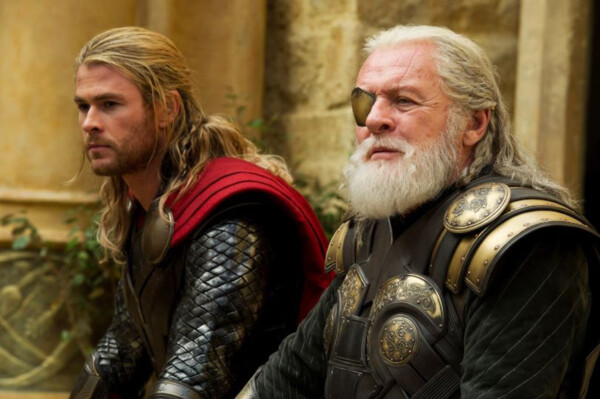
Image courtesy of Marvel Studios.
—
“Thor” Starring Chris Hemsworth, Natalie Portman, Tom Hiddleston, Anthony Hopkins. Directed by Kenneth Branagh. 114 minutes. Rated PG-13.
Del’s take
(Note: Mladen Rudman could not make the screening of “Thor.”)
“Thor” puts the hammer down on Marvel Entertainment’s canon of superhero tentpoles with a heaping helping of sound and fury that will take your breath away, if not your eardrums.
When my friend Dusty finally wheedled me into committing to “Thor” by dangling the carrot of IMAX and 3-D, I expected to hate the movie but love the look. With the possible exceptions of the original “Jason and the Argonauts” with Ray Harryhausen’s magnificent claymation effects, and Peter Jackson’s “Lord of the Rings” trilogy, movies based on mythologies are annoying and distracting. They’re hard to follow, character names are impossible to figure out and the story is one big cliche.
In “Thor” the cliché is rendered moot by terrific action sequences, spectacular special effects and really top-notch acting by its A-list cast.
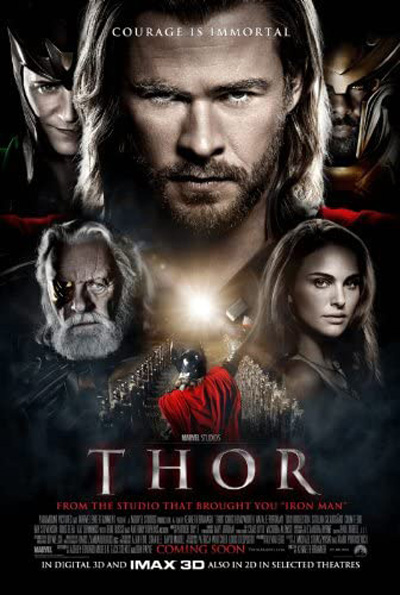
Thor (Chris Hemsworth), the god of thunder and heir to the throne of Asgard, mounts a raid on the ancient enemy the Frost Giants without his father Odin’s (Anthony Hopkins) permission. For his indiscretion Thor is banished to Earth where he meets Jane Foster (Natalie Portman), a scientist investigating atmospheric disturbances created by the comings and goings of the gods. Meanwhile Thor’s brother, Loki (Tom Hiddleston) plots to hold the crown for himself as Odin lapses into dream sleep. Part of that plan involves dispatching The Destroyer, an unkillable machine that shoots energy blasts from his eyes (reminiscent of Cyclops in The X-Men) to forever rid the universe of Thor.
The movie oscillates between absolute seriousness and absolute hilarity as the pieces fall into place. In one scene Thor wolfs down a meal at a dinner and hoists a coffee cup, draining it. He finds the drink to his liking and demands another, smashing the mug to the floor in true Viking style. In another Foster’s assistant, Darcy Lewis (Kat Dennings), admires the ripped abs of an unconscious Thor and observes, “Does he need CPR? Because I totally know CPR.”
It’s all great fun but the universe hangs in the balance as Thor must somehow get back to Asgard and foil the evil Loki’s plans to enable the Frost Giants to murder Odin. At the same time he must learn humility and wisdom if he is to become heir to Asgard’s throne. A budding romance between Thor and Foster assures that of happening.
Yet that romance seems unconvincing. While it is clear Foster is smitten by the hunky Norseman from the outset, Thor’s interest strikes the viewer as remote and indifferent until the third act. And Loki’s evil intent waxes and wanes throughout, again until the third act.
Still, the virtues of “Thor” vastly outweigh its liabilities. Hemsworth turns in a breakout performance as the arrogant god who discovers his kindler, gentler facet, while Portman radiates humor and vulnerability in a way I have never seen in her career. Hopkins is his usual, larger-than-life self and Hiddleston effectively manages the vulnerabilities and ambitions of second-fiddle Loki. Special effects are top notch and the sound will rattle your ribcage, depending on how high the theater has the volume turned up.
On a scale of A to F “Thor” rates an A minus. It’s great escapist fun and more than adequately supports the upcoming “Captain America” and “Avengers.”
Del Stone Jr. is a former journalist and author.
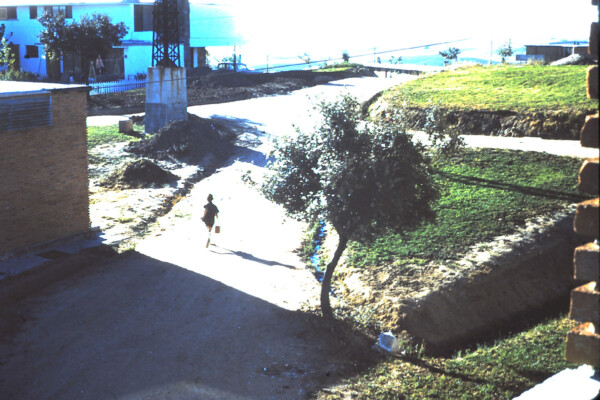
In this image the author heads out for his first day of school at Royal Oak Elementary just outside Madrid, Spain. Image courtesy of Del Stone Sr.
I try to get up every morning and walk to the Ferry Park Fitness Trail. It’s about a mile through mostly lovely scenery and it gets me fully awake so I can face the day.
Unfortunately it takes me past Elliott Point Elementary School, which always gets my dander up. Hughes Street becomes gridlocked with tiny ladies wearing visors, their hair pulled back into cute pony tails, driving Nimitz-class SUVs. Seated next to them is an even tinier student at Elliott Point.
I see them and think back to a former neighbor. She would drive her chubby son to Elliott Point each morning, firing up the family’s thunderous Ford F-150. With gas now approaching $4 per gallon – and the “little” kid tipping the scales at 150 – wasn’t this an extravagant waste of resources?
I thought back to my childhood. When I started school I walked. It was about a mile as memory serves. Sometimes I walked through snow, sometimes rain. I didn’t melt. I didn’t get kidnapped. I didn’t report my parents to DCF.
What’s wrong with the children – and parents – of today? I felt a blog simmering.
To confirm the distance I contacted my big sister, who’s seven years older. How far was it to our school in Spain.
Her answer? About a quarter-mile.
WHAT? Are you kidding me?
I remember a Lewis and Clark-style expedition each morning, slogging across rough terrain, fighting off wolves, wondering if I would ever reach my destination. Not a paltry quarter-mile. But she’s sure it was a quarter-mile. Which is nothing, of course.
Except there’s the “little” kid, who couldn’t walk a quarter-mile to school but would surely beat my fanny at Call of Duty.
I still think kids and their parents should be made to rediscover the joys of walking. But it looks like I’m no exemplar of that thesis … well, today I am, but not when I was a kid.
About the author:
Del Stone Jr. is a professional fiction writer. He is known primarily for his work in the contemporary dark fiction field, but has also published science fiction and contemporary fantasy. Stone’s stories, poetry and scripts have appeared in publications such as Amazing Stories, Eldritch Tales, and Bantam-Spectra’s Full Spectrum. His short fiction has been published in The Year’s Best Horror Stories XXII; Alfred Hitchcock’s Mystery Magazine; the Pocket Books anthology More Phobias; the Barnes & Noble anthologies 100 Wicked Little Witch Stories, Horrors! 365 Scary Stories, and 100 Astounding Little Alien Stories; the HWA anthology Psychos; and other short fiction venues, like Blood Muse, Live Without a Net, Zombiesque and Sex Macabre. Stone’s comic book debut was in the Clive Barker series of books, Hellraiser, published by Marvel/Epic and reprinted in The Best of Hellraiser anthology. He has also published stories in Penthouse Comix, and worked with artist Dave Dorman on many projects, including the illustrated novella “Roadkill,” a short story for the Andrew Vachss anthology Underground from Dark Horse, an ashcan titled “December” for Hero Illustrated, and several of Dorman’s Wasted Lands novellas and comics, such as Rail from Image and “The Uninvited.” Stone’s novel, Dead Heat, won the 1996 International Horror Guild’s award for best first novel and was a runner-up for the Bram Stoker Award. Stone has also been a finalist for the IHG award for short fiction, the British Fantasy Award for best novella, and a semifinalist for the Nebula and Writers of the Future awards. His stories have appeared in anthologies that have won the Bram Stoker Award and the World Fantasy Award. Two of his works were optioned for film, the novella “Black Tide” and short story “Crisis Line.”
Stone recently retired after a 41-year career in journalism. He won numerous awards for his work, and in 1986 was named Florida’s best columnist in his circulation division by the Florida Society of Newspaper Editors. In 2001 he received an honorable mention from the National Lesbian and Gay Journalists Association for his essay “When Freedom of Speech Ends” and in 2003 he was voted Best of the Best in the category of columnists by Emerald Coast Magazine. He participated in book signings and awareness campaigns, and was a guest on local television and radio programs.
As an addendum, Stone is single, kills tomatoes and morning glories with ruthless efficiency, once tied the stem of a cocktail cherry in a knot with his tongue, and carries a permanent scar on his chest after having been shot with a paintball gun. He’s in his 60s as of this writing but doesn’t look a day over 94.
Contact Del at [email protected]. He is also on Facebook, twitter, Pinterest, tumblr, TikTok, and Instagram. Visit his website at delstonejr.com .