‘Flatbellies,’ a short horror story
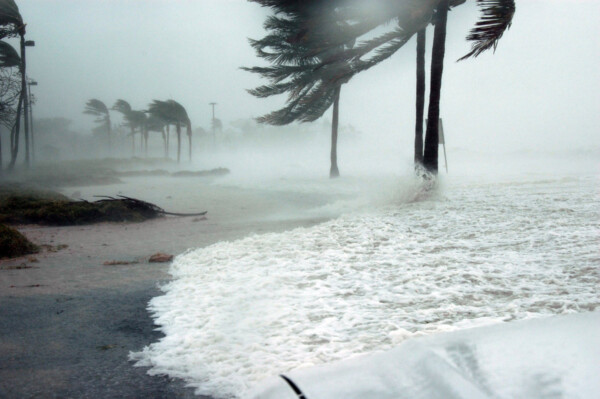
Photo courtesy of ph under the auspices of a Creative Commons license.
Introduction to “Flatbellies”
I have long wanted to write a horror story about creatures washed ashore during the storm surge of a hurricane.
I’ve experienced several hurricanes myself, though I’ve never witnessed a storm surge. You’d have to be near the shoreline to see that, and anybody near a shoreline during a hurricane has more things to worry about than looking for strange creatures tossed ashore. Storm surge is the most lethal and destructive aspect of a hurricane.
I have, however, witnessed the aftermath of storm surge. Hurricanes are good at washing seashells ashore, many of which we’ve never seen before because they exist in waters too deep for the average beachgoer. Sometimes, also, a strange sea creature will join that colorful collection of shells, washed ashore by the turbulent tides of storm.
So it is not a far reach to suppose that a monster, or monsters, could also be carried into our midst by a tropical cyclone, and that this journey is part of their reproductive cycle … a chilling thought, there, as they rely on human beings for their … food.
My friend Debbie, who worked at the Mobile Press-Register in Mobile, Ala., mentioned to me she was looking for a Halloween story to publish in her Halloween day feature section. So I wrote this story for her.
I wanted the story to feel like a local legend, an apocryphal tale related to children on Halloween night, after the candy had been sampled, the scary movies watched, and all the little ghouls and goblins lying down to sleep.
Beware the hurricanes, my little ones, because when the storm water sweeps in it brings with it some unwelcome visitors … who might just take a young boy or girl with them, back into the briny deeps.
Beware the flatbellies!
—
FLATBELLIES
Amy Martin, hands on hips, gave her brother what she hoped was a look of smoldering contempt and declared, “Congratulations, wise guy. Your children won’t go to sleep for approximately the rest of their lives.”
A jack-o-lantern leered from the corner of the living room with a flickering, gape-toothed grin. Black crepe paper bats, hanging from the ceiling by threads, twirled slowly as the Mobile, Ala., night eased through the window screen, carrying with it the wet odor of dew-soaked grass, half-chewed bubblegum, and scorched pumpkin carcass. The doorbell had not rung in a good two hours. Trick-or-treating was over for this year.
Amy’s brother, Ben, hoisted himself from the couch with an amiable grunt and hit the power button on the TV remote, cutting off Jamie Lee Curtis in mid-scream. The room fell dark. He growled playfully and wrapped his arms around Amy as she collected Atomic Fireball and Sweet Tarts wrappers from the coffee table. She couldn’t help but giggle.
“Honestly, Ben. ‘Mall of the Dead?’ ’’ she chided. “The mannequins come to life and eat the shoppers? Couldn’t you tell them a Halloween story that wouldn’t damage their brains? Something with Casper, the friendly ghost?”
Upstairs, they could hear Ben’s wife, Laurie, speaking softly to the boys, Nathan and Adam, who had tearfully departed the living room with a promise to never, ever let their parents take them to the mall again, not even if Britney Spears was giving a free concert in the food court.
“When I was a kid the mannequins ate little boys!” Ben announced, thumping his chest with in a pompous affect. “And we liked it!”
Amy rolled her eyes. “Yeah, well, your lurid story even spooked me. I’m not so sure about trying on that outfit I had in mind for my classes.” In fact, she’d moved to Mobile this past July after having lived in Biloxi, Miss., for most of the past decade. A teaching position at McGill-Toolin had suddenly become available and she jumped at the chance to put her degree in education to work.
Ben popped the jack-o-lantern’s top and blew out the candle, releasing a plume of curling white candle smoke that framed his face, giving it a weird, almost spectral appearance. He blew air from his nose and stood back, shaking away the smell. Finally, he said, “It isn’t the plastic dummies in the Tommy Hilfiger knits I’d worry about, if I were you. It’s The Flatbellies.”
Amy ambled out of the living room, a wad of candy wrappers crushed in her palm. Upstairs, Laurie was still calming the boys. She’d have a thing or two to say to Ben when she came down.
“Flatbellies? What’s that supposed to mean?” Amy called from the kitchen. “Are you implying my stomach is no longer flat?”
Ben chuckled in the dark. “No, dummy. But you live in Fairhope, don’t you?”
Yes, she did. She’d found a nice two-bedroom apartment at a fairly cheap price. It would do until she decided the job agreed with her, or she agreed with the job.
“That means you have to cross the Bayway every day,” he continued. “Tell me something. Do you ever cross it at night?”
She dumped the wrappers into the trash. “Of course. How do you think I’ll get home tonight?”
“And as you’re crossing the bridge, do you ever look out into the bay?”
“Why would I do that?” she huffed. “It’s dark out there.”
“Not entirely,” he said. “There are lights out there.”
“Flounderers, maybe,” she answered uncertainly.
From the kitchen, she could see him shaking his head. “Maybe. Or. …”
“Or?”
“Or Joe Tully,” he finished.
“I suppose there’s a story behind this,” Amy sighed. She fished a Diet Coke from the refrigerator. Maybe she should make popcorn to go along with the yarn-spinning about to commence.
“Joe Tully was a professional fisherman who lived in the back bayous all his life,” Ben began. “He was married and had a little girl. To pay the rent he operated a couple of shrimp boats, and a couple of oyster boats to boot, though the oysters you tonged from the bay, even back then, weren’t fit to eat. Still, you could find some good beds where the creeks fed into the bayous and kept the bottom fairly clean.
“But what Joe really enjoyed was taking people out on sport fishing expeditions.”
Amy cracked open the Diet Coke. She began snooping through the cabinet for a package of microwaveable popcorn.
“Mostly these were lawyers from Montgomery and Birmingham who wanted to prowl the gulf where they could hook a big marlin or a sail. Joe had bought himself a good-sized Rampage sportfisher, which was his pride and joy, though it was mostly owned by the bank. Still, he was one of those rare individuals who gets to do what he loves for a career. Just think, Amy: The man was paid for having fun all day. Wouldn’t that be the life?”
Well, she didn’t think teaching Shakespeare and gerunds was all that bad, but she understood his point.
“But like a lot of fishermen, poor old Tully fell on hard times – between the sea turtle people and the catch-limit people and the bankers calling in their loans and even the pollution regulators, it looked like Tully would have to pack in his gear, sell the boats and take up real estate. And just when things didn’t seem like they could get any worse, Hurricane Frederick came barging up the gulf, with Mobile smack dab in the crosshairs. That’s when a strange and possibly miraculous event took place.”
Amy closed the cabinet and began opening drawers. “Yes?” she asked absently.
“Hours before the storm hit, a mysterious fellow appeared at Joe’s dock. Dressed from head to toe in Eddie Bauer gear – and that was back when an Eddie Bauer goose down jacket could set you back half a year’s discretionary income. The fellow handed Joe a cashier’s check for a million bucks and said the money was his. All he had to do was take this fellow out on the bay – during Hurricane Frederick.”
“He must have been nuts,” Amy observed, rooting through packages of gravy mix, chili seasoning and hot chocolate in search of a single Orville Redenbacher’s envelope.
“Oh, it gets better,” Ben continued. “He wanted to go in one of Tully’s oyster boats.”
Amy stopped. That was crazy.
“He told Tully he was searching for a rare creature that appears only during hurricanes. It’s carried shoreward from the ocean bottom and uses the storm surge to push it into the shallow, inland waters – see, it’s not a strong swimmer at all, sort of like a jellyfish. But if it gets into those shallow waters it tends to stay there, where it breeds and … well, I don’t know how to say this.”
Amy rolled her eyes. “You’ve already terrified the kids. You might as well finish off the adults.”
Ben paused, allowing the silence to ratchet up the tension. And then he said in an ominously quiet voice, “It feeds on people.”
“I thought those were called ‘gold-diggers,’ ’’ Amy snickered.
“It pulls them off the beach, or from their cars on bridges, or out of boats, and carries them down to the bottom, where it slowly drains the fluid from their bodies, like a vampire.”
Amy curled her lip in disgust. “What planet do you come from?”
He held up his hands. “I’m not joking! How do you think all those people in Galveston died during the big storm of 1900?”
“You’re insane!” she declared. “Sometimes I wonder if we’re actually related to one another.”
“That’s what Joe Tully said. He told the man he was out of his mind, that when Frederick rolled in there’d be a 20-foot storm surge and half the city might go under. Two men in the middle of Mobile Bay in an oyster tonger wouldn’t stand a snowball’s chance in hell of surviving, monsters or no monsters, and a million dollars wouldn’t do anybody any good after that, except maybe their heirs – and that’s when Joe’s eyes lit up. Because while he was prepared to work the rest of his life to pay off his debts, there was no reason his wife and little girl had to suffer for his foolishness. Maybe if he and this stranger went out into the bay and got themselves killed, his family could pay off the house and the Rampage, and start a new life in the company of somebody who was a little more responsible with his business sense. So in a dramatic about-face, Joe told the man shoot yes, he’d do it. They ran the guy’s million-dollar check by Joe’s house (Joe didn’t say a word to his wife, Elaine, about what they were doing), packed their gear aboard the biggest tonger Joe had in his inventory, the one with the brand-new Evinrude, and set out into the stormy night.
“It was bad. Worse than can be described. The power had gone off and there was no light at all, anywhere. You tend to forget how dark it can be at night when there aren’t any lights for miles around. They plowed through waves that were 10 feet tall. Whitecaps kept sloshing over the bow, and Joe had the stranger bailing with an old Folgers coffee can just to keep the gunwales from swamping. The wind howled, and once ever so often something would flap by in the dark, a hostage to that evil wind. Joe struggled to keep the bow pointed into the waves and hoped they could keep the boat afloat until the eye of Frederick came in.
“They made it across the flats, which were under 12 feet of water, and headed out toward the bridge. There was already debris floating in the bay – broken-up docks, Dumpsters, you name it. About that time, the man started screaming about something and reached for his gear. He unpacked a long, stainless steel flounder gig. And then he scrambled up on the bow, where the search light was mounted.
“He hit the switch.”
By this time Amy had stopped searching for the popcorn. The story had actually become interesting. She waited, and when Ben said nothing, she prompted him with an impatient, “Well?”
“Well, at first Joe couldn’t see anything,” Ben continued in a near whisper. “Just sheets of rain and spray from the storm. But then, he spotted something in the water. Something that was moving.
“Something that was swimming toward the light.”
Amy felt a cool patch of gooseflesh begin to tingle at the base of her neck.
“He couldn’t make out what it was. But as it came closer, he began to see, and that’s when he began to wonder what brand of insanity had compelled him to come out here, and how he wished to God he were safely back ashore with his wife and daughter, listening to the storm swirl around them from the safety of their boarded-up house, the million dollars be damned.
“The thing in the water – it was as big as a man, with rudimentary arms and legs. But it was flat, and fishbelly white, like a flounder, with great, big staring eyes, side by side against a flat spatula of skull. And there, in the middle of its head, was a sucking mouth, like a lamprey’s, full of sharp bristles. Joe could picture this thing slithering from the water and battening onto him like a tick, or a leech, then dragging him out of the boat and hauling him down to the turbid depths of Mobile Bay, where he would remain forever.
“The man at the bow prepared to hurl his gig when suddenly, a wave caused the boat to lurch, and the searchlight beam played across the surface of the bay.
“Joe saw hundreds of the things out there, as far as the beam could reach into the howling dark. Their eyes caught the light and threw back a magenta glow, and their expressions were shot through with the remorseless hunger of a parasite. They stared without blinking, as if transfixed, and their obscene mouths opened and closed in a grotesque parody of feeding.
“The stranger shouted, ‘Too many of them! They’re attracted to the light – we must shut off the light. We must get out of here! They’ll kill us and overrun the entire Mobile Bay estuary by morning!”
In his mind’s eye, Joe could see these creatures lurking in the quiet, shallow bayous that lined the bay. He could see them creeping from the water at night to haul away some poor soul who had gone outside to see what the dog was barking at.
He could see his wife, Elaine, and their daughter, peeking from the living room window as something concealed in shadow, something flat and horrible, waited for one of them to open the door.
“Joe shouted back at the man, ‘We’re not going anywhere! If they’re attracted to light then we’ll stay here with our searchlight until after the storm surge passes, so they’ll stay with us and not hit the shallows north of here. Then the damn things can float back out into the gulf when the tide goes down!’ ’’
By this time Laurie had come downstairs. She took up a spot next to Amy in the kitchen and listened.
“The stranger freaked and tried to gig ol’ Joe, but right at that moment one of those things reached over the side and yanked him by the ankle, and the man tumbled into the bay. Joe throttled up the Evinrude and tried to swing around to grab the man, but he could see nothing was to be done – a swarm of The Flatbellies had him and were carrying him below. So Joe motored over to the bridge and moored to one of the pilings, leaving lots of slack in the line, and there he stayed, with the search light shining directly into the water. Those things surrounded the boat and tried to climb aboard, but Joe fought them using the flounder gig, and finally a paddle, and after an hour of battling and bailing, it was almost a relief to Joe when he looked south of the bridge and saw a mountain of shrieking water bearing down on him. Frederick’s storm surge had roared in.
“Joe had hoped to provide for his family by dying out there on the water, but now his only hope was that he save them from an evil far worse than a few debts.
“The next morning, when the inspectors for the Alabama Department of Transportation checked the bridge, they found his boat hanging from one of the support columns. Its searchlight was still shining in the water.
“And to this day, when people drive over the Bayway crossing Mobile Bay at night, and they see lights out there on the water, some of them who’ve heard this story wonder if Joe Tully still isn’t out there, protecting his family from whatever creepy thing might be slithering along the bottom, heading for the flats north of the bridge.
“It makes you wonder, too, doesn’t it?” Ben finished mysteriously.
Laurie looked at Amy with a puzzled expression. She said, “Did your mother drop him on his head when he was a child?”
That night, driving back to Fairhope, Amy kept her eyes straight ahead as she crossed the bridge that spanned Mobile Bay.
But it didn’t do any good. A car was parked in the breakdown lane with its lights on.
Nobody was inside.
Amy didn’t stop. She kept driving, hoping the needle on the fuel gauge would not touch E, or that a Check Engine light would come on, or any of the hundreds of things that could go wrong with a car would go wrong at that exact moment. She did not know what she would do if that were to happen.
Except that she would turn off the headlights. And NOT open the door.
And hope that somewhere, out on those marshy black flats, a searchlight would appear.
About the author:
Del Stone Jr. is a professional fiction writer. He is known primarily for his work in the contemporary dark fiction field, but has also published science fiction and contemporary fantasy. Stone’s stories, poetry and scripts have appeared in publications such as Amazing Stories, Eldritch Tales, and Bantam-Spectra’s Full Spectrum. His short fiction has been published in The Year’s Best Horror Stories XXII; Alfred Hitchcock’s Mystery Magazine; the Pocket Books anthology More Phobias; the Barnes & Noble anthologies 100 Wicked Little Witch Stories, Horrors! 365 Scary Stories, and 100 Astounding Little Alien Stories; the HWA anthology Psychos; and other short fiction venues, like Blood Muse, Live Without a Net, Zombiesque and Sex Macabre. Stone’s comic book debut was in the Clive Barker series of books, Hellraiser, published by Marvel/Epic and reprinted in The Best of Hellraiser anthology. He has also published stories in Penthouse Comix, and worked with artist Dave Dorman on many projects, including the illustrated novella “Roadkill,” a short story for the Andrew Vachss anthology Underground from Dark Horse, an ashcan titled “December” for Hero Illustrated, and several of Dorman’s Wasted Lands novellas and comics, such as Rail from Image and “The Uninvited.” Stone’s novel, Dead Heat, won the 1996 International Horror Guild’s award for best first novel and was a runner-up for the Bram Stoker Award. Stone has also been a finalist for the IHG award for short fiction, the British Fantasy Award for best novella, and a semifinalist for the Nebula and Writers of the Future awards. His stories have appeared in anthologies that have won the Bram Stoker Award and the World Fantasy Award. Two of his works were optioned for film, the novella “Black Tide” and short story “Crisis Line.”
Stone recently retired after a 41-year career in journalism. He won numerous awards for his work, and in 1986 was named Florida’s best columnist in his circulation division by the Florida Society of Newspaper Editors. In 2001 he received an honorable mention from the National Lesbian and Gay Journalists Association for his essay “When Freedom of Speech Ends” and in 2003 he was voted Best of the Best in the category of columnists by Emerald Coast Magazine. He participated in book signings and awareness campaigns, and was a guest on local television and radio programs.
As an addendum, Stone is single, kills tomatoes and morning glories with ruthless efficiency, once tied the stem of a cocktail cherry in a knot with his tongue, and carries a permanent scar on his chest after having been shot with a paintball gun. He’s in his 60s as of this writing but doesn’t look a day over 94.
Contact Del at [email protected]. He is also on Facebook, twitter, Pinterest, tumblr, TikTok, and Instagram. Visit his website at delstonejr.com .

Leave a Reply