Telephone Call (a short horror story)

Image courtesy of PickPik by way of a Creative Commons license.
TELEPHONE CALL
A short horror story
By Del Stone Jr.
—
Introduction
“Telephone Call” is one of my earlier horror stories, written in 1982 or thereabouts.
I was in love with the genre. Stephen King had brought new luster to horror with books like “’Salem’s Lot” and “The Shining,” but there were others, too – Whitley Streiber, Dennis Etchison and Anne Rice, to name a few. It seemed horror was the fashionable thing to read.
I remember wanting this story to be well-written. I labored over every sentence, struggling to imbue the prose with vivid imagery and realistic dialogue. What I accomplished was something far different.
When I read this story now I cringe, because I see I violated John Carley’s rule.
Who, you’re asking, is John Carley?
He was a columnist who wrote for the newspaper I worked for, a retired Army general and a super nice guy. We had lunch one day after I had begun writing a weekly column of my own, and he told me something about writing I’ve never forgotten:
He said that one day I’d know all the big words and would see the beauty of the small words.
You can see that lack of understanding in “Telephone Call” because it is shot through with big words and even bigger writing when something less would have done a better job. They call this “overwriting” and it’s a problem I’ve struggled with my entire writing career. Whenever I write anything I have to go back and slay slay slay my little darlings.
Finally, now, at age 68, I understand what John Carley was trying to tell me. I don’t feel bad about that; some people never learn.
So I now present to you this cautionary tale about overwriting – “Telephone Call.” Not a bad little horror story and certainly in the old gotcha style of horror storytelling, but yes, overwritten.
That’s the way things were for me in 1982.
—
TELEPHONE CALL
Light, swimming out of the nether-darkness like fluorescent goldfish, rattling their gill plates and incandescent scales and luminous, translucent fins, then corkscrewing back into that black plasma. Motes of incandescence, gathering just beyond reach, receding into the black hole of the subconscious. Inertia-less acceleration. He is drawn into that eddy of self. …
Brrring.
The cyclone is fractured – scattered under the weight of its own spin. Light dispersed into hazy shoals of anemic brilliance that spread across his subconscious field of vision like a rainbow sheen of oil on brackish water.
Brrring.
A pinprick of dawning awareness gnaws at his wounded reality. And there is perception of another impression, black and unwelcome. The sensation is discomforting. He attempts to subdue it.
Brrring.
The light fades.
Brrring.
His world collapses.
—
When Larry awakened, he didn’t know where he was.
Brrring.
A sound he thought he recognized … something he had heard on countless occasions – so often, in fact, that now, here in the dark, he was confounded by its familiarity and could not attach meaning to it.
Brrring.
God, the phone, asshole. With a focal point to which he could anchor himself and gather in memory, understanding returned to him – in disconnected snatches. His room – the unfamiliar shapes of a chest of drawers, book shelves, nightstand, filling in the gloom, giving the shadows substance – he remembered. The new apartment (in that exclusive building) Mom and Dad said he’d never be able to afford (He’d tell them about the promotion tomorrow, maybe …).
Brrring.
The telephone rang again, a rakish, shrill intrusion of obscene noise that violated the pre-dawn calm. He groaned, struggled to shift his weight from a numb shoulder. The radium leer of the clock said 2:47.
“Ohhh … oh Gawd …” he moaned. “Who in Christ’s name cou’ be callin’ this time o’ night – uh – mornin’ – ahhh — whatever. …”
Brrring.
A memory flared, a speck of light against a slate-gray wall, then shrank to a dull ember.
“Do – do I have to answer it?” And he tried to suppress a shudder. Once before, on a night that would forever remain stamped upon his brain, he had heard those same words spoken in equally harmless context – his mother had said it – when they were calling her from the plant down on Chillicuth to tell her that Dad had lost his right hand in a contour stamper while working the graveyard shift and could she please be at the emergency ward waiting room at Jonquil Medical in half an hour, that yes, he was quite all right, and what? No, he wasn’t in shock, although he’s looked better at times, that the doctor said he could go home in a few days and would eventually he’d be good as new. Well, almost.
Brrring.
Good as new. As much as a one-handed man could feel.
The memory was sour; it filled Larry with a disquieting sense of unease. He told himself: Yes. I got to. …
While asleep, he had wound the bedcovers about him into a linen sarcophagus. Now, as he peeled away the layers his warmth evaporated, was replaced by a chill that seemed to work its way beneath the flesh, down, down, into the marrow itself. He shivered.
Brrring.
He swung his feet off the bed. The shock of standing jarred him; blood coursed to his numb legs in a stinging tide that made him think: My God, am I getting old? He grabbed the door jamb to support himself, sighed, started to reach for the light switch and then thought better of it.
“No, no … don’t turn that damn thing on – ”
Brrring.
“Awright, awright,” he muttered. “I’m coming – I think.”
The bedroom opened onto an abbreviated hallway that fed into the kitchen and, ultimately, the living room. Larry knew the floorplan of the apartment well enough – had had every virtue pointed out to him by the agent who had shown him the unit. It wasn’t as if he were committing himself to unfamiliar territory.
Still … something was different. Something to which he could not attach a name. The air was oppressively heavy – humid, perhaps; it seemed charged with a … mood, or a presence that he couldn’t identify. The hall looked forbidding, festooned with mottled patches of wan, pale light reflected through the bedroom window and variegated strips of nebulous shadow. The doorways to the kitchen and living room were bottomlessly and uncomprisingly black. They concealed from him their interiors, their secrets.
Larry couldn’t name the faint stirring that was working inside him, but he did know that now, here, in the dark, turning on the lights hadn’t been such a bad idea, that he wanted them on –
Oh, for Christ’s sake! You’re acting like a goddamn kid! The thought again sent him remembering his boyhood, and lying awake late at night in the changed-over attic bedroom he and his older brother had shared, listening to Roy, who was all the time telling him, “And if you’re not asleep by eleven, you know, Loogey (that was his nickname), the boogerman comes with his boogerdogs, and he pries open the window downstairs,” (Here, he would furnish appropriate sound effects) “CREAK, CREAK, CREAK – and he comes down the hall until he gets to your bedroom door (‘Please Roy … it’s dark’) and he peeks through the door (‘Roy!’) and … HE GETS YOU!” He remembered how he had lain in heart-thudding terror, watching the very same alarm clock he had glanced at only moments before, praying he would be asleep before eleven.
Jeez … whatever happened to. …
(He wished fear could again be reduced to the simple common denominator of a boogerman, as it had been for him as a child.)
Brrring.
The sound jolted him out of his reverie, brought a new chill. A part of him still wanted the lights on, but stubbornness and adult pride and just a hint of shame forced him to wade into the soupy, nocturnal gloom (his arms outstretched, his hands crawling along the walls that should have by now become familiar to him but for some reason defied intimacy, for some reason felt alien and unnatural – as if they were …).
Brrring.
“Yeah, I’m coming!” And he thought: What’s that? The fifteenth ring? The twentieth? Shit! Why don’t the guy hang up and call back tomorrow?
Still, the phone had rung that way the night they called about –
Larry quickened his pace, and jammed his toe against the hall sideboard. He felt it strike wood, heard the lip-curling thud of flesh and bone suddenly compacted, and waited for the aftershock of pain.
Brrring.
“Ohhh, Goddammit! All right, all right!” Muttering imprecations, he turned into the dark kitchen, blindly flogged empty space. It seemed larger than he had noticed. Stupid damn idiot. Too late, he saw something loom out of the murk (a phantom shape that made his breath catch in his throat), and banged his head against a Club aluminum pan dangling from the wrought-iron rack. This set off a cacophony of clankings and rattlings among the other pots and pans hanging there that pierced the darkness, made him somehow feel vulnerable. Angrily, he snapped on the light switch and waited impatiently for the muttering fluorescents to sputter into life. (They did so with a delicate, chime-like sound, and filled the kitchen with ghostly, blue-white light.) The phone was snugged up against the wall, flush with the cabinets. He grabbed the receiver before it could ring again.
“Yeah. H’lo?”
“Lawrence J. Crockett?” The voice was dry, harsh, the sound of winter branches scraping against roofing shingles on a cold, windy evening. It rang of some terrible authority.
“Yeah, uhhh, yes, this is Larry Crockett,” he answered warily. “Whaddya want?”
“Lawrence J. Cockett of Gabled Arms Condominiums, Unit 3-C?”
Larry winced, held the receiver away from his ear. The caller had a peculiar way of enunciating each syllable so that it seemed to “click.” Words that might have been shaped by a fleshless mouth, Larry mused. They elicted various distasteful images that he refused to speculate about any further – at least not here, in the quasi-dark.
“Telephone number 234-2444?”
“Yes. Yes it is.” He frowned. Dumbass. Isn’t that the number used to get me?
“Mr. Cockett, I need to meet with you.”
Larry stared at the wall. Meet with me? A maelstrom of conflicting emotions whirled through his head. The first, and most distinct, was dread. Dread, followed by indignant anger (The gall of this bastard. What does he mean, calling me at three o’clock in the morning –). Lastly, there was curiosity. …
“What? Who – who is this, anyway?”
The line was silent a moment. Then, with dire calm: “This is Death calling, Mr. Crockett. I need to meet with you.”
Fear – the squirmy, nameless kind of fear a pseron might feel if he ever reached out into the darkness from the warmth and safety of his bed and encountered something cool and pliant that twitched beneath his touch – settled in Larry’s spine. He listened in fascinated horror, then slammed the receiver back onto its hook.
“A prank,” he whispered breathlessly to his fluttering heart. He grinned at his reflection in the glass-fronted china cabinet, took a breath. “That’s all it was. A prank.”
Brrring.
His heart missed a beat, then hitched into a loud yammering of sledgehammer blows.
He couldn’t have redialed that quickly.
“Hello?”
“I need to meet with you –”
“Leave me alone,” Larry cut in, a ragged edge of panic in his voice. “Leave me alone. Get off my telephone or I’ll call the police.” A person in the adjoining apartment thumped on the dining room wall and shouted for silence; Larry jumped. “Leave me alone!”
“I need to meet –”
He hung up, half-walked half-staggered into the kitchen where the light was better, and snatched a Dixie cup from the dispenser.
God! What’s the matter with you, Lar? You’re shaking like a goddamn schoolgirl on prom night. The Dixie cup quivered in his hand. Calm down, my man. Hell! You were spooked before you even picked up the damn telephone. He went to the refrigerator, jerked it open. The profile of his face was framed against a black background with spectral light. Where’s the orange juice? There isn’t any goddamned orange juice. He crushed the cup; shingles of wax flaked off into his palm. Then he dropped it into the trashcan and brushed his hands.
Get a grip on yourself. …
He stared at the phone as if it were a living thing, as if at any moment it might disengage itself from the wall and come stalking him.
I don’t think he’s gonna call ba –
Brrring.
Leave me alone.
Brrring.
Leave me alone!
Brrring.
Brrring.
Brrring.
The telephone was ringing. He let it go five minutes, ten, then fifteen; between each bell he held his breath, prayed the next would not come.
And when it became too much for him – when the ringing had pried its way into his brain and he began hearing bells even when the telephone was not ringing and he knew he must answer it or tear it off the wall – he worked up the courage, the anger, to storm across the kitchen –
– Wait –
He stopped, hand on receiver.
Brrring.
The phone quivered within his grasp.
Maybe – maybe you’ve been going about this all wrong. … He leaned against the counter, wrapped his arms about himself as if he would squeeze out a thought. His features were creased with a concerned frown. Humor the kook and maybe he’ll leave you alone. Maybe. Give it a try. You let ’im know you’re scared and he’ll be calling back all night, the shit.
Brrring.
He turned to the telephone, lifted the receiver from its hook (thinking: Be cool, now) and said, “Hello?”
“Mr. Crockett? I need to meet with you, Mr. Crockett. I need to meet with you, Mr. Crockett. I need to meet with you, Mr. Crockett.”
Larry’s skin crawled, as if an invisible hand had pressed frigid fingers against the base of his spine. He swallowed hard. That – that voice. There was no dealing with it. It evoked … images. Flesh stripped away, revealing the intricate ridges of vales – the convoluted topography of a skull. Cavernous eye sockets. Blank, yet somehow seeing. Not so much as a hint of cartilage about the nose. And those awful teeth, clicking and snapping as words chattered through them with the sound of a tree branch being raked across the rotten slats of some weather-blistered picket fence, clinging to the mandible and maxilla long after the gums had peeled away.
A voice from the grave.
Larry felt his gorge rising. His strategies were seared to fly ash and blown from memory, leaving him defenseless again.
“Look,” he spoke into the mouthpiece. The words came out coated with chalk. “This has been loads of fun – I’m sure you’ve enjoyed yourself – but I think we oughta call it a night, you know?” Oh God, what are doing? Don’t encourage him to say anything! Very quickly, he continued. “I mean, uh, I’ve had a rough tday and all that and I’m really worn out, you know, and I gotta get up early in the morning and to work, so could you please … please … just. …”
A brief silence. Then, “Mr. Crockett, I need to meet – ”
“GODDAMMIT NO! NO! If I have to tear this – this fucking – ” (He had to force the word out.) “– phone off the wall to keep you from calling here, then – then – ” He couldn’t trust himself to speak any further. His anger was evaporating, leaving in its place a residue of fear he would have hated seeing in himself.
“I need to meet with you, Mr. Cockett,” the voice responded with a creaking cadence that set Larry’s teeth on edge. “I need to meet with you.”
“Please. …” He was moaning now.
“I need to meet with you, Mr.Crockett.”
“Please … just leave me alone. Please?”
“Mr. Crockett, I need to meet with you.”
Quietly, almost solemnly, he set the receiver on its hook. If the telephone rang again he would not answer it – not for any reason. He would taking no more calls this evening.
Brrring.
He had expected it, but still his muscles locked. He tried to ignore the sound. He’d let it ring all night. Maybe the guy next door would come over and handle it. Let’s see how good he could do. He wheeled on stick legs and turned off the lights in the dining room and kitchen; darkness crashed down around him like a series of collapsing walls, smothering him in a cyclone of vague, shadowy forms and shapes. His eyes smarted with the afterimage of light.
Brrring.
He set his jaw and waded into the black hell that was the hallway, felt his way along still unfamiliar walls and door moldings.
Brrring.
Ignore it. Just don’t pay any attention to it.
Brrring.
His room: a sinkhole of shadows, funneling in monolithic darkness, implacable and less compromising than he had ever remembered it. This, complemented by flawless silence, stifling and oppressive, not unlike the calm found within a sealed mausoleum. Even the clock was hushed. …
Strange –
He felt his flesh begin to crawl again, felt his skin scrunch up into goosebumps. A cool breath of dread blew against the spot on his back between his shoulder blades; the hairs on his neck came alive like tiny scintilla. He held his breath.
Something was wrong. The telephone had stopped ringing and something was wrong. He knew it just as surely as he knew he was standing there now, terrified beyond articulation, not sure why and wanting only to run and hide, to pull the covers over his eyes and listen to his thumping heart (praying to God it was his heart and not someone – or something – else’s) beating so loudly, wanting desperately to hear Roy chuckle and say, “Come on, kid, stop bawlin’ for Chrissakes – I was just kiddin’. I was just having a little fun. That’s all – all – all. …”
Get into bed.
So close, the sanctuary of the bed. He could just cross the threshold and make his way around the corner of the headboard (Under the sheets and Roy youcansayanythingyouwantonceI’munderthesheetsbecausenoonecanseemeorhurtme – ) –
Something touched him on the shoulder.
He recoiled in italicized horror. The room was already occupied, but not by any childhood boogerman who, after leaving his trusted hounds at the window, had come creeping-crawling up the staircase to spirit him away at the stroke of eleven. No, this was a thing so remorselessly cold that it could hardly be considered alive.
“Hello, Mr. Crockett.”
Larry screamed.
—
UNFINISHED ALTERNATE ENDING
Author’s note: At some point I wrote, or least began, an alternate ending to “Telephone Call.” I don’t remember what I was thinking at the time, but I can guess where I was going with this:
Larry tells the entity on the phone to come on over, then alerts the doorman to approaching undesirable. But what Larry doesn’t know is, the telephone caller has already arrived at his home.
—
Larry blurted, “Come now!” and tried to stifle a malicious giggle. He had had an idea, a foolproof plan, something he knew could not fail, if things worked out the way he expected them to.
The voice said uncertainly, “Are you sure, Mr. Crockett?”
“Yes! Yes!” he answered breathlessly. “Come right now! You know the address?”
“Of course.”
Larry dropped the receiver onto the hook, sprinted across the dining room, the living room (slipping from brilliant light into smoky tendrils of shadow). He found the call box on the wall to the left of the door, jammed his thumb against the button, and shouted, “Fulton! Fulton!” During one of his many conversations with Fulton, he had discovered that the doorman had once worked as a bouncer in a nightclub. If Fulton could delay the man until the police arrived. …
It took a moment. Then came the tinny, metallic response. “Yes sir. Mr.Crockett, is it?”
“Yeah. Lis – ”
“What you doin’ up so late, Mr. Crockett?” the man asked in a paternal tone.
“That’s what I’m trying to explain. Listen: This freak, this pscyho’s been calling my place for the past thirty minutes – really bothering me, you know? At first, I thought it was one of those prank calls. But this guy’s certified nuts. Well anyway, he knows where I live, and he said he was gonna come over – ”
“When’s he s’posed to get here?”
“That’s just it,” Larry said, pressing his mouth as closely to the speaker as he could get it. “He said he was coming over now!”
“Don’t you worry yourself none, Mr. Crockett,” Fulton told him, lapsing into heavily accented black dialect. “I’ll be ready for him.”
“Good. Good. Look, I’m gonna call the police – ”
“Shiiit! Don’t need no cops!” the man growled. “I’ll just get ol’ Fred and that McKinney kid from buildin’ security. We can handle it.”
“Yeah but – but I don’t want this weirdo bothering me anymore. Tonight may be the only chance we’ll have of catching him – ”
“Like I said, Mr. Crockett. Don’t you worry ’bout a thing. We’ll fix it so he don’t bother no one for a long-ass time. You jus’ get yourself back to bed.”
Larry chuckled. “All right, Fulton. Have it your way. And thanks. You’re a lifesaver.”
“I know.” That, with mock indignation.
“I really appreciate this – hey! I’ll buy you and your buddies a drink sometime. OK?”
“I just might take you on the that, Mr. Crockett.”
“Yeah. Well, thanks again.”
“Uh huh. Goodnight, sir.” And the box was silent.
Larry turned away, smiling, and strode across the living room, through the dining room, and into the kitchen.
I wonder what they’re gonna do to him?
He punched on the light over the sink, extracted another Dixie cup from the dispenser. A roach skittered across scuffed linoleum, vanished the stove.
Funny. I thought these apartments were supposed to be clean. The refrigerator door opened with a begrudging sigh. He remembered
—
That’s where the manuscript ended. My expectation is Larry returned to his bedroom, where he encountered Death waiting for him.
About the author:
Del Stone Jr. is a professional fiction writer. He is known primarily for his work in the contemporary dark fiction field, but has also published science fiction and contemporary fantasy. Stone’s stories, poetry and scripts have appeared in publications such as Amazing Stories, Eldritch Tales, and Bantam-Spectra’s Full Spectrum. His short fiction has been published in The Year’s Best Horror Stories XXII; Alfred Hitchcock’s Mystery Magazine; the Pocket Books anthology More Phobias; the Barnes & Noble anthologies 100 Wicked Little Witch Stories, Horrors! 365 Scary Stories, and 100 Astounding Little Alien Stories; the HWA anthology Psychos; and other short fiction venues, like Blood Muse, Live Without a Net, Zombiesque and Sex Macabre. Stone’s comic book debut was in the Clive Barker series of books, Hellraiser, published by Marvel/Epic and reprinted in The Best of Hellraiser anthology. He has also published stories in Penthouse Comix, and worked with artist Dave Dorman on many projects, including the illustrated novella “Roadkill,” a short story for the Andrew Vachss anthology Underground from Dark Horse, an ashcan titled “December” for Hero Illustrated, and several of Dorman’s Wasted Lands novellas and comics, such as Rail from Image and “The Uninvited.” Stone’s novel, Dead Heat, won the 1996 International Horror Guild’s award for best first novel and was a runner-up for the Bram Stoker Award. Stone has also been a finalist for the IHG award for short fiction, the British Fantasy Award for best novella, and a semifinalist for the Nebula and Writers of the Future awards. His stories have appeared in anthologies that have won the Bram Stoker Award and the World Fantasy Award. Two of his works were optioned for film, the novella “Black Tide” and short story “Crisis Line.”
Stone recently retired after a 41-year career in journalism. He won numerous awards for his work, and in 1986 was named Florida’s best columnist in his circulation division by the Florida Society of Newspaper Editors. In 2001 he received an honorable mention from the National Lesbian and Gay Journalists Association for his essay “When Freedom of Speech Ends” and in 2003 he was voted Best of the Best in the category of columnists by Emerald Coast Magazine. He participated in book signings and awareness campaigns, and was a guest on local television and radio programs.
As an addendum, Stone is single, kills tomatoes and morning glories with ruthless efficiency, once tied the stem of a cocktail cherry in a knot with his tongue, and carries a permanent scar on his chest after having been shot with a paintball gun. He’s in his 60s as of this writing but doesn’t look a day over 94.
Contact Del at [email protected]. He is also on Facebook, twitter, Pinterest, tumblr, TikTok, and Instagram. Visit his website at delstonejr.com .
Science and mathematics are filled with misconceptions that are held to be immutable truths. I would like to debunk these myths so that we may get on with the business of learning about our world.
Myth No. 1: What goes up must come down.
What about taxes? They go up, but do they ever come down? No. They keep going up, and even if one does go down, half a dozen others you didn’t know about go up to compensate for it.
Myth No. 2: A body in motion tends to remain in motion, and a body at rest tends to remain at rest, unless acted upon by an outside force.
That isn’t true. I can be lying in bed and suddenly, for no reason at all, I’ll wake up – usually when I’m in the middle of a juicy dream. If I’m being awakened by an outside force I’d sure like to know what it is, because I lock my door before I go to sleep, and my alarm clock never wakes me up.
Myth No. 3: Matter can be neither created nor destroyed.
Whoever said that should take a look at our coffeemaker. I can pour a pot of water into the filter spout and a pot-and-a-half will come out. I’m usually three rooms away when I remember I have to be there, cup in hand, to catch the overflow.
Myth No. 4: The sun is the center of the solar system.
Many years ago, long before many of our big sisters were born, a man named Ptolemy believed Earth was the center of the solar system. This was called the “geocentric theory.” Then along came a man named Copernicus, who believed the sun was the center of the solar system. This is called the “heliocentric theory.”
None of this is true, however, because I submit to you a third theory, called the “egocentric theory,” which holds that certain pushy individuals are the true centers of the solar system, or at least they think they are.
Myth No. 5: It is impossible to travel faster than the speed of light.
Have you ever stood outside a school when the sixth-period bell rings? Don’t tell me it’s impossible to travel faster than the speed of light. Those kids have infinite mass.
Myth No. 6: For every action, there is an opposite and equal reaction.
This theory may be partly true, but I think it should be amended to say, “For every action, there is an opposite and disproportionate reaction.” For instance, if you wax your car, it rains the next three days. If you overdraft your checking account by 2 cents, you’re penalized $7. These aren’t “equal” reactions.
Myth No. 7: Distance is equal to rate multiplied by time.
No, it isn’t. I can drive from Florida to Michigan and trip takes, oh, a couple of hours. But when I drive from Michigan to Florida, the trip takes several days. And it’s downhill all the way. And I have to stop to go to the bathroom more often. I don’t understand that.
This column was published in the Playground Daily News in the 1980s and is used with permission.
One advantage of living in an area with low-power television stations is that any time I feel like it, I can relive those happy hours of my childhood spent watching some dumb animal save the world.
You know what I mean. How often were Bud and Sandy steered clear of harm’s way and onto the path of moral righteousness by that smiling dolphin they call Flipper? How many grandmothers were dragged from burning muffin parlors by Lassie?
At this point you might ask: What gives those animals the right to take the law into their own paws, for fins? You or I try to do that and we’d be called vigilantes.
It irks me to see animals portrayed as having anthropocentric motives.
Those shows were so improbable that a person could interchange the animal actors and nobody would notice the difference. Let’s say Lassie has come down with distemper and the producers are using Flipper in Lassie’s place. This is how the show would go:
June Lockart is talking on the telephone to her husband, who is at the ranger station.
“Darling, Flipper was marvelous today. First, he dug out a prospector from a mine cave-in, and then he put out 14 forest fires, and then he flopped over the Rocky Mountains to get some little girl’s cat out of a tree, and now he’s fighting a pack of grizzly bears out in the front yard.”
“That’s nice, dear,” June’s husband says. “What’s for dinner?”
“Dolphin Helper.”
Of course, Flipper defeats the grizzly bears and then goes on to rehabilitate an arsonist and wraps up the day’s adventures by performing the Heimlich maneuver on an elk.
Or, let’s say you’re watching “Flipper,” only Flipper has sneaked off for a stolen weekend with some manatee floozy, so Lassie is substituting for the wayward dolphin.
Bud is pacing back and forth along the dock, anxiously staring out over the water. His father approaches.
“What’s wrong Bud? You seem worried.”
“It’s Lassie, Dad. He’s been gone a long time and I’m starting to worry.”
“Why, Bud, didn’t you hear?” his father says. “Lassie swam to Portugal to save the crew of a submarine trapped on the ocean floor.”
“Gee, Dad. I didn’t know that.”
“It’s true. And then he’s going to kill Orca, look for survivors of the Titanic and take his orals for his master’s at SeaWorld.”
Bud cogitates upon this. “But Dad, how is Lassie going to have time for me? After all, he is my dog.”
“No, Bud, he’s not your dog,” his father corrects. “He hangs around for the free squid. When the free-squid ride ends, he’ll be off in the Gulf Stream somewhere, butting heads with Jaws. Lassie is definitely his own dog.”
“Gee, you’re right, Dad,” Bud declares. “Can I have a buzzard instead?”
Honestly, Benji leading the heat to the bad guys. Crime-fighting bears and housecats? Animals are no fools. Are we?
This column was originally published in the Playground Daily News in the 1980s and is used with permission.
About the author:
Del Stone Jr. is a professional fiction writer. He is known primarily for his work in the contemporary dark fiction field, but has also published science fiction and contemporary fantasy. Stone’s stories, poetry and scripts have appeared in publications such as Amazing Stories, Eldritch Tales, and Bantam-Spectra’s Full Spectrum. His short fiction has been published in The Year’s Best Horror Stories XXII; Alfred Hitchcock’s Mystery Magazine; the Pocket Books anthology More Phobias; the Barnes & Noble anthologies 100 Wicked Little Witch Stories, Horrors! 365 Scary Stories, and 100 Astounding Little Alien Stories; the HWA anthology Psychos; and other short fiction venues, like Blood Muse, Live Without a Net, Zombiesque and Sex Macabre. Stone’s comic book debut was in the Clive Barker series of books, Hellraiser, published by Marvel/Epic and reprinted in The Best of Hellraiser anthology. He has also published stories in Penthouse Comix, and worked with artist Dave Dorman on many projects, including the illustrated novella “Roadkill,” a short story for the Andrew Vachss anthology Underground from Dark Horse, an ashcan titled “December” for Hero Illustrated, and several of Dorman’s Wasted Lands novellas and comics, such as Rail from Image and “The Uninvited.” Stone’s novel, Dead Heat, won the 1996 International Horror Guild’s award for best first novel and was a runner-up for the Bram Stoker Award. Stone has also been a finalist for the IHG award for short fiction, the British Fantasy Award for best novella, and a semifinalist for the Nebula and Writers of the Future awards. His stories have appeared in anthologies that have won the Bram Stoker Award and the World Fantasy Award. Two of his works were optioned for film, the novella “Black Tide” and short story “Crisis Line.”
Stone recently retired after a 41-year career in journalism. He won numerous awards for his work, and in 1986 was named Florida’s best columnist in his circulation division by the Florida Society of Newspaper Editors. In 2001 he received an honorable mention from the National Lesbian and Gay Journalists Association for his essay “When Freedom of Speech Ends” and in 2003 he was voted Best of the Best in the category of columnists by Emerald Coast Magazine. He participated in book signings and awareness campaigns, and was a guest on local television and radio programs.
As an addendum, Stone is single, kills tomatoes and morning glories with ruthless efficiency, once tied the stem of a cocktail cherry in a knot with his tongue, and carries a permanent scar on his chest after having been shot with a paintball gun. He’s in his 60s as of this writing but doesn’t look a day over 94.
Contact Del at [email protected]. He is also on Facebook, twitter, Pinterest, tumblr, TikTok, and Instagram. Visit his website at delstonejr.com .

CC license.
We will warn you for the 3,418th time this year that the dreaded Asian cockroach is raping and pillaging its way up the Florida peninsula and will arrive in YOUR home precisely three minutes after you read this, because that is the way it always happens in monster movies.
The presence of yet another Asian import on American shores raises several important questions, mainly, “What’s in it for me?” and “How can I turn this tragedy into a personal profit-making venture?”
We’ll try to answer those questions. If we don’t, it means you’re asking the wrong questions.
Q. Are we paying import tariffs on the Asian cockroach?
A. No, we are not. The importation of Asian cockroaches is what we in the business refer to as “an act of God,” which means anything that cannot be taxed, regulated or killed by a neutron bomb also cannot be subject to import tariffs.
Q. Why should I worry about the Asian cockroach?
A. If you do not mind waking up at night unable to breathe because cockroaches have named a net in your nostrils, then you have nothing to worry about.
Q. Where are these roaches right now?
A. They are probably right outside your front door, waiting for you to put down the newspaper and let them in.
Q. No, really. Where are they?
A. They came to this country through the port of Tampa, which is not exactly one of your major industrial nerve centers of the free world. From there they migrated to, of all places, Lakeland, where many of them retired and died of old age. Now they are spreading across the United States and Canada, hitching rides on the many Winnebagos that pass through Tampa and Lakeland on their annual spring migration to the frozen North.
Q. How are these roaches different from American roaches?
A. First, Asian roaches aren’t afraid of you. When you walk into the kitchen at night and turn on the light, instead of babbling apologies and scurrying off to hide, these roaches demand money.
Second, they are avid fliers. American roaches are too lazy to fly unless they have been coated with an inch-thick layer of insecticide and are half-crazed out of their tiny, BB-size brains. Asian roaches, on the other hand, will happily swoop down to build nests in your nostrils.
Third, the Asian roach reproduces at a much faster rate, although this has caused some dissension among female Asian roaches.
Q. Why can’t the government do something about this?
A. The government IS doing something. Busy government scientists are down on their hands and knees, studying these roaches and producing reams of invaluable data that will be handsomely bound into a final report-to-end-all-reports. This report will be used to smash roaches as they swoop down to build nests in scientists’ nostrils.
This column was published during the 1980s by the Playground Daily News and is used with permission.
About the author:
Del Stone Jr. is a professional fiction writer. He is known primarily for his work in the contemporary dark fiction field, but has also published science fiction and contemporary fantasy. Stone’s stories, poetry and scripts have appeared in publications such as Amazing Stories, Eldritch Tales, and Bantam-Spectra’s Full Spectrum. His short fiction has been published in The Year’s Best Horror Stories XXII; Alfred Hitchcock’s Mystery Magazine; the Pocket Books anthology More Phobias; the Barnes & Noble anthologies 100 Wicked Little Witch Stories, Horrors! 365 Scary Stories, and 100 Astounding Little Alien Stories; the HWA anthology Psychos; and other short fiction venues, like Blood Muse, Live Without a Net, Zombiesque and Sex Macabre. Stone’s comic book debut was in the Clive Barker series of books, Hellraiser, published by Marvel/Epic and reprinted in The Best of Hellraiser anthology. He has also published stories in Penthouse Comix, and worked with artist Dave Dorman on many projects, including the illustrated novella “Roadkill,” a short story for the Andrew Vachss anthology Underground from Dark Horse, an ashcan titled “December” for Hero Illustrated, and several of Dorman’s Wasted Lands novellas and comics, such as Rail from Image and “The Uninvited.” Stone’s novel, Dead Heat, won the 1996 International Horror Guild’s award for best first novel and was a runner-up for the Bram Stoker Award. Stone has also been a finalist for the IHG award for short fiction, the British Fantasy Award for best novella, and a semifinalist for the Nebula and Writers of the Future awards. His stories have appeared in anthologies that have won the Bram Stoker Award and the World Fantasy Award. Two of his works were optioned for film, the novella “Black Tide” and short story “Crisis Line.”
Stone recently retired after a 41-year career in journalism. He won numerous awards for his work, and in 1986 was named Florida’s best columnist in his circulation division by the Florida Society of Newspaper Editors. In 2001 he received an honorable mention from the National Lesbian and Gay Journalists Association for his essay “When Freedom of Speech Ends” and in 2003 he was voted Best of the Best in the category of columnists by Emerald Coast Magazine. He participated in book signings and awareness campaigns, and was a guest on local television and radio programs.
As an addendum, Stone is single, kills tomatoes and morning glories with ruthless efficiency, once tied the stem of a cocktail cherry in a knot with his tongue, and carries a permanent scar on his chest after having been shot with a paintball gun. He’s in his 60s as of this writing but doesn’t look a day over 94.
Contact Del at [email protected]. He is also on Facebook, twitter, Pinterest, tumblr, TikTok, and Instagram. Visit his website at delstonejr.com .
This is why I don’t like flying:
You walk into a metal cylinder that resembles an iron lung, but rather than helping you breathe, this lung prevents you from performing that basic function. It is too small and too narrow and too confining.
If one person dares to stop in the aisle, you cannot get past him, not even if you push. The aisle is simply too small.
You stare out a window as important-looking people walk around the airplane, kicking the tires and scratching their chins over fluids dripping out of the engine. You have seen that look on the faces of mechanics wondering why your car died in the middle of the freeway.
Then the engines start and the plane shudders – a sound louder than your knees knocking together. You palms are slick; your heart yammers and you can feel it with every cell of your body.
The plane taxis to the runway. The wings wobble back and forth, and you suddenly remember the soft drink cans you’ve bent in half by working them back and forth, back and forth, until metal fatigue sets in and the cans tear. You hope the wings aren’t made of soft drink cans.
The airplane’s snout points at the dragstrip runway and the pilot steps on the gas. You’re slapped back into your seat as the plane trundles over bumps in the concrete. Your speed increases and you realize you’re going faster than you ever went in your car. The Lord never meant for you to go so fast.
The nose rises. The fuselage doesn’t want to follow it, but everything is whizzing by so quickly now that if you don’t become airborne, the plane will go off the runway.
The thudding stops as the jet claws its way into the air. The belly wallows sickeningly. You hear pops and bangs as the gear comes up. You don’t want to look out the window. You don’t want to see what’s happening. You really don’t.
The plane ascends for several minutes, and then the pilot throttles back. The change in engine pitch is enough to convince you something terrible has happened.
You cruise for a long, long time. Time stands still in an airplane. Then the engines change pitch again, the nose of the plane points earthward and you stretch into your seatbelt as your airspeed decreases. This is the crash you’ve been dreading, but the pilot announces final approach to your destination.
More pops, bangs and rattles. The gear is coming down. Weird flaps and such are moving on those flopping wings. The plane tilts this way and that. You see houses beneath you, buildings, highways with safe people in their safe cars on the blessed ground.
The plane touches down with a thud, the main gear first, then the nose wheel. The pilot switches on the thrust reversers and the plane slows as quickly as it accelerated on takeoff.
Your palms are below zero. Your heart is about to explode. You swear you’ll never fly again.
But you always do.
This column was published in the Playground Daily News during the 1980s and is used with permission.
About the author:
Del Stone Jr. is a professional fiction writer. He is known primarily for his work in the contemporary dark fiction field, but has also published science fiction and contemporary fantasy. Stone’s stories, poetry and scripts have appeared in publications such as Amazing Stories, Eldritch Tales, and Bantam-Spectra’s Full Spectrum. His short fiction has been published in The Year’s Best Horror Stories XXII; Alfred Hitchcock’s Mystery Magazine; the Pocket Books anthology More Phobias; the Barnes & Noble anthologies 100 Wicked Little Witch Stories, Horrors! 365 Scary Stories, and 100 Astounding Little Alien Stories; the HWA anthology Psychos; and other short fiction venues, like Blood Muse, Live Without a Net, Zombiesque and Sex Macabre. Stone’s comic book debut was in the Clive Barker series of books, Hellraiser, published by Marvel/Epic and reprinted in The Best of Hellraiser anthology. He has also published stories in Penthouse Comix, and worked with artist Dave Dorman on many projects, including the illustrated novella “Roadkill,” a short story for the Andrew Vachss anthology Underground from Dark Horse, an ashcan titled “December” for Hero Illustrated, and several of Dorman’s Wasted Lands novellas and comics, such as Rail from Image and “The Uninvited.” Stone’s novel, Dead Heat, won the 1996 International Horror Guild’s award for best first novel and was a runner-up for the Bram Stoker Award. Stone has also been a finalist for the IHG award for short fiction, the British Fantasy Award for best novella, and a semifinalist for the Nebula and Writers of the Future awards. His stories have appeared in anthologies that have won the Bram Stoker Award and the World Fantasy Award. Two of his works were optioned for film, the novella “Black Tide” and short story “Crisis Line.”
Stone recently retired after a 41-year career in journalism. He won numerous awards for his work, and in 1986 was named Florida’s best columnist in his circulation division by the Florida Society of Newspaper Editors. In 2001 he received an honorable mention from the National Lesbian and Gay Journalists Association for his essay “When Freedom of Speech Ends” and in 2003 he was voted Best of the Best in the category of columnists by Emerald Coast Magazine. He participated in book signings and awareness campaigns, and was a guest on local television and radio programs.
As an addendum, Stone is single, kills tomatoes and morning glories with ruthless efficiency, once tied the stem of a cocktail cherry in a knot with his tongue, and carries a permanent scar on his chest after having been shot with a paintball gun. He’s in his 60s as of this writing but doesn’t look a day over 94.
Contact Del at [email protected]. He is also on Facebook, twitter, Pinterest, tumblr, TikTok, and Instagram. Visit his website at delstonejr.com .
Several important elected officials who are taking a break from investigating golf courses that someday might require federal assistance, have expressed shock that the U.S. embassy in Moscow has been compromised by KGB bugs.
(IMPORTANT NOTE: These bugs, of course, are not insects. Otherwise, nearly every American restaurant and breakfast cereal manufacturing plant would have throngs of important elected officials swarming over them, making important puffing gestures of concern, forming committees and generally scaring away the bugs, whose only earthly pleasure is to lay thousands of eggs in unguarded jelly sandwiches.)
These same important elected officials have learned that certain U.S. Marines guarding the embassy exchanged important government secrets to perform the sex act or purchase the latest in burlap fashions for slinky Russian temptresses.
The loss of these secrets (such as the real reason a researcher at the Gentle Ben College of Divinity received a federal grant to study the nostril hairs of the slobber-master walrus) represents an intelligence disaster for the United States and will give the Soviets an unfair advantage in the awarding of grants for studies of the animal kingdom’s private parts and other important subjects.
These important elected officials, whose knowledge of the Soviet Union consists of watching videotapes of “Dr. Zhivago,” have expressed shock that the Russians would plant listening devices in OUR embassy and seduce secrets from OUR boys, although nobody said a word when a crack team of KGB construction workers toiled since before the Bolshevik revolution to build the embassy, or Marine guards returned to their posts with cabbage on their breath.
(IMPORTANT NOTE: These important elected officials are NOT shocked to discover the Soviets have bugged our embassy. What they’re really saying is: “I am shocked to discover the Soviets have bugged our embassy, and I expected concerned voters to return me to office so that I may continue to be shocked and make important puffing gestures and form committees which will spend millions of dollars to produce reports the size of the Chinese telephone directory, which will then be used as doorsteps at U.S. embassies.”)
It is not as if these important elected officials weren’t warned. For instance, Buford “Hawg Lips” Stumpknocker, who worked at the Sunoco station just outside Scumbag, Miss., (the Snapping Turtle Capital of the Western Hemisphere) warned customers for years that “you can’t trust them egg-sucking, vodka-swilling Godless heathen red-dog commie shylocks.”
Sadly, nobody listened to Hawg Lips until he got himself elected and appointed to an important committee. Now, as all politicians, he is SHAWCKED that such a dastardly thing could be allowed to happen.
This column was previously published in the Playground Daily News in the 1980s and is used with permission.
About the author:
Del Stone Jr. is a professional fiction writer. He is known primarily for his work in the contemporary dark fiction field, but has also published science fiction and contemporary fantasy. Stone’s stories, poetry and scripts have appeared in publications such as Amazing Stories, Eldritch Tales, and Bantam-Spectra’s Full Spectrum. His short fiction has been published in The Year’s Best Horror Stories XXII; Alfred Hitchcock’s Mystery Magazine; the Pocket Books anthology More Phobias; the Barnes & Noble anthologies 100 Wicked Little Witch Stories, Horrors! 365 Scary Stories, and 100 Astounding Little Alien Stories; the HWA anthology Psychos; and other short fiction venues, like Blood Muse, Live Without a Net, Zombiesque and Sex Macabre. Stone’s comic book debut was in the Clive Barker series of books, Hellraiser, published by Marvel/Epic and reprinted in The Best of Hellraiser anthology. He has also published stories in Penthouse Comix, and worked with artist Dave Dorman on many projects, including the illustrated novella “Roadkill,” a short story for the Andrew Vachss anthology Underground from Dark Horse, an ashcan titled “December” for Hero Illustrated, and several of Dorman’s Wasted Lands novellas and comics, such as Rail from Image and “The Uninvited.” Stone’s novel, Dead Heat, won the 1996 International Horror Guild’s award for best first novel and was a runner-up for the Bram Stoker Award. Stone has also been a finalist for the IHG award for short fiction, the British Fantasy Award for best novella, and a semifinalist for the Nebula and Writers of the Future awards. His stories have appeared in anthologies that have won the Bram Stoker Award and the World Fantasy Award. Two of his works were optioned for film, the novella “Black Tide” and short story “Crisis Line.”
Stone recently retired after a 41-year career in journalism. He won numerous awards for his work, and in 1986 was named Florida’s best columnist in his circulation division by the Florida Society of Newspaper Editors. In 2001 he received an honorable mention from the National Lesbian and Gay Journalists Association for his essay “When Freedom of Speech Ends” and in 2003 he was voted Best of the Best in the category of columnists by Emerald Coast Magazine. He participated in book signings and awareness campaigns, and was a guest on local television and radio programs.
As an addendum, Stone is single, kills tomatoes and morning glories with ruthless efficiency, once tied the stem of a cocktail cherry in a knot with his tongue, and carries a permanent scar on his chest after having been shot with a paintball gun. He’s in his 60s as of this writing but doesn’t look a day over 94.
Contact Del at [email protected]. He is also on Facebook, twitter, Pinterest, tumblr, TikTok, and Instagram. Visit his website at delstonejr.com .
The Car Care Council news release had a sad story to tell. It was the story of Angelo.
Angelo is like millions of other Americans – except that Angelo is fictitious. Aside from that, Angelo is a regular sort of guy.
But Angelo has a dark secret. He abuses cars.
Pinto runabouts. Chevrolets. Korean compacts … the list of his victims reads like a selection of pages from the Blue Book – which in reality is yellow, no doubt an effort to baffle those who are not in the business of buying and selling automobiles.
The iniquitous Angelo’s story began as he was driving his latest victim to the dealership to be traded in on some sweet young new model. When the light turned green at the intersection, the CCC said, Angelo stepped on the gas and Old Betsy just wouldn’t budge. Angelo had PUT OFF basic maintenance on his car TOO LONG.
Angelo didn’t want to have Old Betsy towed to the dealership, where they might try to gyp him out of the $500 trade-in they had agreed on. Instead, Angelo, ever the consummate businessman, had Old Betsy towed back to his house where he could have it repaired just long enough to unload it, as planned, on the dealership.
But Old Betsy had the last laugh. You see, Angelo had neglected to have the transmission fluid and filter changed. And the truth were known, he probably never Armor-Alled the dashboard, which left it looking cracked and peeling like the skin of an elephant with eczema. And he probably never vacuumed it or put carpet deodorizer on the floors, not even after his neighbor’s cat used it for a year and a half as a litter box. These car abusers follow predictable patterns.
Anyway, after years of this wretched existence, Old Betsy simply gave up the ghost, the automobile equivalent of hara-kiri, thus denying the wicked Angelo his $500 trade-in (plus towing charges, the CCC release was quick to add).
And what do you think Angelo learned from this experience? To stay away from cars named Old Betsy? To have the dealership salesman drive to his house on the day of the sale?
To STOP abusing his car?
Heaven forbid! Angelo learned that by abusing his car, his story would be picked up by a prestigious national organization and dramatized before a horrified and disbelieving audience of millions of people, who would be scandalized that an unthinking, unfeeling car could be so inconsiderate of its owner – the same owner who shelled out thousands of hi hard-earned dollars and asked for nothing in return but to be transported from Point A to Point B in a modicum of style and comfort, and to be able to enjoy the enhancement of his self-image by owning and operating a vehicle that functioned in a reliable manner despite its owner’s few piddling transgressions of neglect.
That isn’t exactly what the CCC news release said, but you get the picture.
This column was published in the Playground Daily News sometime in the 1980s and is used with permission.
About the author:
Del Stone Jr. is a professional fiction writer. He is known primarily for his work in the contemporary dark fiction field, but has also published science fiction and contemporary fantasy. Stone’s stories, poetry and scripts have appeared in publications such as Amazing Stories, Eldritch Tales, and Bantam-Spectra’s Full Spectrum. His short fiction has been published in The Year’s Best Horror Stories XXII; Alfred Hitchcock’s Mystery Magazine; the Pocket Books anthology More Phobias; the Barnes & Noble anthologies 100 Wicked Little Witch Stories, Horrors! 365 Scary Stories, and 100 Astounding Little Alien Stories; the HWA anthology Psychos; and other short fiction venues, like Blood Muse, Live Without a Net, Zombiesque and Sex Macabre. Stone’s comic book debut was in the Clive Barker series of books, Hellraiser, published by Marvel/Epic and reprinted in The Best of Hellraiser anthology. He has also published stories in Penthouse Comix, and worked with artist Dave Dorman on many projects, including the illustrated novella “Roadkill,” a short story for the Andrew Vachss anthology Underground from Dark Horse, an ashcan titled “December” for Hero Illustrated, and several of Dorman’s Wasted Lands novellas and comics, such as Rail from Image and “The Uninvited.” Stone’s novel, Dead Heat, won the 1996 International Horror Guild’s award for best first novel and was a runner-up for the Bram Stoker Award. Stone has also been a finalist for the IHG award for short fiction, the British Fantasy Award for best novella, and a semifinalist for the Nebula and Writers of the Future awards. His stories have appeared in anthologies that have won the Bram Stoker Award and the World Fantasy Award. Two of his works were optioned for film, the novella “Black Tide” and short story “Crisis Line.”
Stone recently retired after a 41-year career in journalism. He won numerous awards for his work, and in 1986 was named Florida’s best columnist in his circulation division by the Florida Society of Newspaper Editors. In 2001 he received an honorable mention from the National Lesbian and Gay Journalists Association for his essay “When Freedom of Speech Ends” and in 2003 he was voted Best of the Best in the category of columnists by Emerald Coast Magazine. He participated in book signings and awareness campaigns, and was a guest on local television and radio programs.
As an addendum, Stone is single, kills tomatoes and morning glories with ruthless efficiency, once tied the stem of a cocktail cherry in a knot with his tongue, and carries a permanent scar on his chest after having been shot with a paintball gun. He’s in his 60s as of this writing but doesn’t look a day over 94.
Contact Del at [email protected]. He is also on Facebook, twitter, Pinterest, tumblr, TikTok, and Instagram. Visit his website at delstonejr.com .
On the list of things not to do this summer, taking a long car trip to a vacation destination ranks second only to letting a gigantic crab enter your bathing suit.
The trip must begin with somebody forgetting to turn off a burner on the stove. This recollection usually comes flooding back after the second hour on the interstate. It is followed by a frantic stop at a gas station for a collect call to “the neighbors,” except the neighbors won’t accept the charges and the gas station attendant, who is wearing a hockey mask and is sharpening a machete, stares at you the way werewolves stare at their victims before lunging.
If the trip begins at night, the driver must ply himself with coffee so he can “stay awake at the wheel,” although his last three accidents occurred when he was wide awake. Of course, all that coffee has to go somewhere, which means stops are made at every bait shop, every backwoods grocery store and every clump of bushes that might conceal a nocturnal visitor from passing motorists.
Meanwhile, the passengers are contorting themselves into various torture positions and trying to sleep, despite having door-lock knobs forcibly inserted into their nostrils every time the car hits a bump, or enduring the threats of a late-night radio station preacher who missed a payment on his satellite dish because YOU did not send in enough money, and YOU ARE GOING TO DIE AND GO TO HELL AND BURN FOREVER, AMEN.
As the hours go by and rigor mortis sets in, the passengers try to entertain themselves with road games, such as “You Count Chevrolets and I’ll Count the Fords.” This can be a game of heart-pounding intensity at night, as the pitch dark outside the window is broken by a whizzing streak of light, so that the passengers, who are now blinded, grope among themselves shouting, “It was a Ford!” “No, it was a Chevy!” and “If you don’t stop cheating YOU ARE GOING TO DIE AND GO TO HELL AND BURN FOREVER, AMEN!”
The driver, who had confidently studies the map for an entire three seconds before pulling out of the driveway, suddenly realizes he does not know what country he is in and asks for navigational assistance from the passengers. The passengers’ navigational resources consist of one stylized map-cartoon place mat stolen from a fast-food restaurant. The place mat depicts England as being in the approximate location of New Jersey, a fact duly reported to the driver, who begins driving on the left side of the road, causing a 44-car pileup.
As night gives way to the first pearly wisps of morning smog, the bleary-eyed occupants of the car are ready to stop anywhere, be it an old gravel quarry or Madame Rosa’s Voodoo & Chiropractic Clinic. But the driver’s foot has permanently cramped to the accelerator, so stopping is not an option.
The column was published in the Playground Daily News in the 1980s and is used with permission.
About the author:
Del Stone Jr. is a professional fiction writer. He is known primarily for his work in the contemporary dark fiction field, but has also published science fiction and contemporary fantasy. Stone’s stories, poetry and scripts have appeared in publications such as Amazing Stories, Eldritch Tales, and Bantam-Spectra’s Full Spectrum. His short fiction has been published in The Year’s Best Horror Stories XXII; Alfred Hitchcock’s Mystery Magazine; the Pocket Books anthology More Phobias; the Barnes & Noble anthologies 100 Wicked Little Witch Stories, Horrors! 365 Scary Stories, and 100 Astounding Little Alien Stories; the HWA anthology Psychos; and other short fiction venues, like Blood Muse, Live Without a Net, Zombiesque and Sex Macabre. Stone’s comic book debut was in the Clive Barker series of books, Hellraiser, published by Marvel/Epic and reprinted in The Best of Hellraiser anthology. He has also published stories in Penthouse Comix, and worked with artist Dave Dorman on many projects, including the illustrated novella “Roadkill,” a short story for the Andrew Vachss anthology Underground from Dark Horse, an ashcan titled “December” for Hero Illustrated, and several of Dorman’s Wasted Lands novellas and comics, such as Rail from Image and “The Uninvited.” Stone’s novel, Dead Heat, won the 1996 International Horror Guild’s award for best first novel and was a runner-up for the Bram Stoker Award. Stone has also been a finalist for the IHG award for short fiction, the British Fantasy Award for best novella, and a semifinalist for the Nebula and Writers of the Future awards. His stories have appeared in anthologies that have won the Bram Stoker Award and the World Fantasy Award. Two of his works were optioned for film, the novella “Black Tide” and short story “Crisis Line.”
Stone recently retired after a 41-year career in journalism. He won numerous awards for his work, and in 1986 was named Florida’s best columnist in his circulation division by the Florida Society of Newspaper Editors. In 2001 he received an honorable mention from the National Lesbian and Gay Journalists Association for his essay “When Freedom of Speech Ends” and in 2003 he was voted Best of the Best in the category of columnists by Emerald Coast Magazine. He participated in book signings and awareness campaigns, and was a guest on local television and radio programs.
As an addendum, Stone is single, kills tomatoes and morning glories with ruthless efficiency, once tied the stem of a cocktail cherry in a knot with his tongue, and carries a permanent scar on his chest after having been shot with a paintball gun. He’s in his 60s as of this writing but doesn’t look a day over 94.
Contact Del at [email protected]. He is also on Facebook, twitter, Pinterest, tumblr, TikTok, and Instagram. Visit his website at delstonejr.com .
The four most terrifying words in the journalist’s lexicon are “THE-COMPUTER-IS-DOWN.”
Say these four words in any newsroom and eyes will roll back in sockets. Mouths will sag into screaming O’s.
The computer is to journalism what cheap beer is to journalism: We cannot function without it. Our every breath hinges on the wellbeing of Mr. Computer. Mr. Computer is aware of this and occasionally will take an unscheduled vacation to keep us properly servile.
Our last episode with Mr. Computer only confirmed a personal conviction I have adopted since the advent of calculators: With technology, we are painting ourselves into a corner.
Actually, I’m falsely maligning the computer. It was Mr. Air Conditioner who dropped the ball. Mr. Air Conditioner worked SO WELL that its lines froze and its mechanical heart stopped beating, and because Mr. Prima Donna Computer cannot function when the temperature in his personal suite rises above 78, we had to put out the newspaper through our sister newspaper in Panama City.
What a swell Monday.
It was swell because I got to drive my old car to Panama City. Picture this: no speedometer in the car, an excuse to drive fast, and a passenger who had not decided if I had a death wish or was just plain crazy. Gee whiz, that was fun. I haven’t had so much fun since I draped the snake around Mom’s neck.
We arrived at Panama City and the denizens of that newspaper regarded us with “well-there-goes-the-neighborhood” stares. All the time our computer technician was prattling, “Don’t worry. You’ll be able to use your own codes. Don’t worry. You’ll have access to your own stories.”
The rest of the night went like this:
COMPUTER MAN: We have to change the codes.
DEL: I am going to kill myself.
Later, COMPUTER MAN: We have to change the codes again, and you have to redo everything you have already done.
DEL: I am going to kill you before I kill myself.
Later, COMPUTER MAN: We have to change the codes a third time, and you have to redo a third time what you have already done twice.
DEL: I am going to kill you three times.
A story for the front page came out of Mr. Panama City Computer composed entirely of moons, stars and airplanes. The computer man thought it was hilarious, until he saw that I was attempting to figure out how to insert his head into an electric pencil sharpener.
At 1:15 a.m., we were finished … in many ways.
The next morning I called the newspaper and asked the computer man, “Is the computer up?”
“Yes. The air conditioner is fixed and the computer is running.
Good. He just saved his own life.
The column was published in the Playground Daily News in the 1980s and is used with permission.
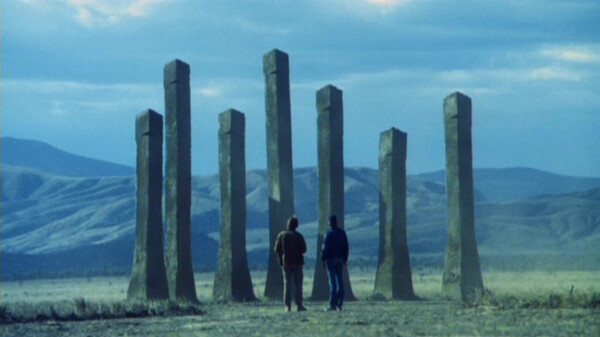
Image courtesy of Paramount Pictures.
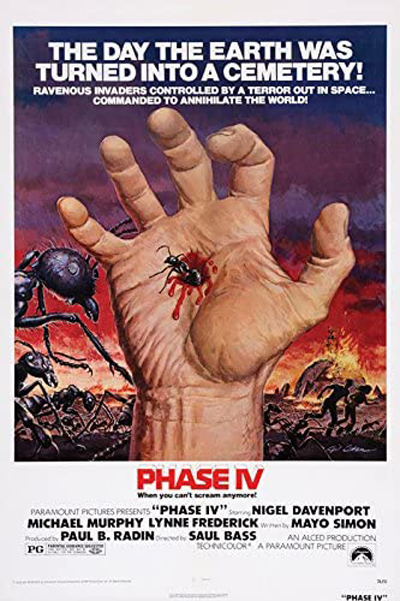
“Phase IV” Starring Nigel Davenport, Michael Murphy, Lynne Frederick, Lots of Ants and others. Directed by Saul Bass. 84 minutes. Rated PG. Hulu, Prime.
Mladen’s take
“Phase IV,” lovingly built in 1974 with an admirable effort at incorporating animated and computer graphics to enhance the film, is sci-fi at its finest – provocative and enthralling.
Remember, we’re talking about 1974 here. 1974 was 47 years ago. 1974 was the year of another Republican dickhead president’s impeachment (Nixon). Hell, I was but a sprite in 1974.
Del always bellyaches about my inadequate summaries of film plots, so I’ll give it a better shot this go-around. The problem? A completely thorough plot summary gives away the story, which, I assume, makes a movie less fun to watch.
The “Phase IV” plot: Mankind drops to the bottom of the food chain. Sufficient summary, Del? No? OK.
A burst of celestial energy, detected early and highly anticipated by scientists because of what it could do to life on Earth, passes through our planet without causing obvious change or damage. One lone entomologist, however, notices something odd unfolding in Arizona post-energy wave. Ants of different species are no longer feuding, are systematically cooperating to extinguish their predators, and appear to be gathering at pow-wows to talk strategy. The ant tribes build a half-dozen cooling towers for their massive collective nest. No big deal, right? Some regular ants (and termites) have built elevated structures to help condition the air flowing through their underground homes for tens of thousands of years, probably longer. But, the Arizona ant colony chimneys are symmetrical and constructed at right angles. They’re topped with triangular slits inside squares that face in exactly the same direction and tilt upward and back slightly. The chimneys are symbolic structures, too, maybe even a form of religious worship. The entomologist (Davenport as Dr. Ernest D. Hubbs) concludes the energy burst has rendered the ants intelligent. Trouble is on the way unless the “natural order” is restored, he advises a panel. The panel authorizes construction of a research facility smack dab in the middle of the territory of the sectarian smart ants. Hubbs recruits Lesko (Murphy) to staff the laboratory. Lesko is a numbers theorist and cryptographer with expertise in deciphering languages. There’s a third person in the story, Lynne Frederick as teenager Kendra, but she’s used to help the movie along to reach Phase IV of the Ant plan for humanity. In short, Hubbs and Lesko end up fighting the six-legged version of Star Trek’s Borg. Very, very neat.
“Phase IV” is remarkable for its capture of real ants performing ant-like duties in organized, methodical, and adaptable fashion. The humans and the smart ants duel, each species countering the other’s moves of conquest and domination. Wait until you see how the ants flush the scientists and the girl from their geodesic dome laboratory. Hell, Lesko even devises a way to communicate with the ant queen controlling the millions (billions?) of worker ants working to control the humans. She’s in no mood to negotiate a settlement or foster inter-species compromise. That’s very human-like. No?
“Phase IV” is an unambiguous A. You need to watch this blast from the past, something Del has come around to calling a “stream gem.”
Del’s take
I’ve seen bits and pieces of “Phase IV” over the years but never the entire movie until Mladen got a bee in his bonnet and suggested we review a film about super-smart ants.
I could tell it was a ’70s-vintage flick because of the Lazenby Computer Smooth font used in some of the typography. It seems every movie, book or magazine that sought to appear “modern” in the 1970s used Lazenby Computer Smooth. Now, of course, it makes me think “old.”
But that’s OK because “Phase IV” is a darned good little movie, much better than what the movie reviewers like Mladen – oops, that just slipped out – said about it. (Remember how the movie reviewers trashed “The Terminator”? Yeah. Those guys. Can’t believe a word they say.)
Mladen finally, after much ridiculing from yours truly, provided a decent plot summary, so I can get right into the critique itself.
You can’t judge “Phase IV” by today’s production standards. The music is contrived and hokey (though “modern” for its day), the characters behave in ways that would earn them a social media drubbing (Dr. Hubbs smokes!) and the special effects resemble those you and I would create if somebody handed us an 8mm movie camera and told us to revise “Plan 9 from Outer Space.”
My big gripe with “Phase IV” is that the characters seem incidental to the plot. Hubbs is a throwback to the misguided scientist who seemed to occupy every big bug movie produced in the 1950s, while his dashing sidekick – in this case Murphy’s James R. Lesko – seems more interested in 16-year-old Kendra Eldridge (Lynne Frederick) than solving the mystery of the ants, creepy even for that era. Everyone else was cannon fodder so by the end I didn’t care as much about their fates as I should have.
But the ideas! Spectacular and original barely describe them. Director Bass doesn’t limit his ants’ intelligence to mere acts of malice but has them building oddly designed towers, drilling symmetrical holes in animal flesh and using unconventional warfare to flush out their human antagonists from their protective geodesic dome. The towers alone are worth the watch, standing creepily over the desert like mysterious Easter Island statuary, festooned with alien glyphs and designed with an architecture that weirdly, at least to me, suggested a non-human intelligence.
The inventiveness of the ant intelligence is under-appreciated by movie fans not including the cult worshippers “Phase IV” has amassed over the years, and it is one of those movies you should not only watch but add to your collection, along with “Day of the Triffids,” “The Day the Earth Stood Still” (original) and “Forbidden Planet,” to name a few.
I was surprised to learn the movie was not shot in Arizona but Kenya, and that it was a box office flop, which sealed Bass’s fate as a director. That’s too bad because “Phase IV” is a classic science fiction film and a wonderful cautionary tale about mankind’s hubris.
I give it an A despite its flaws.
Mladen Rudman is a former journalist and technical writer. Del Stone Jr. is a former journalist and author.