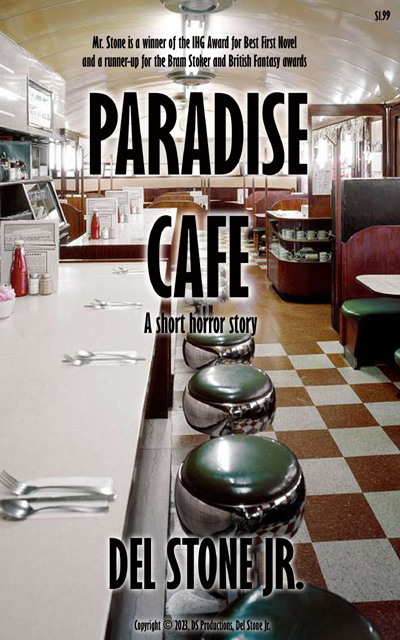
Paradise Cafe (a short horror story)
INTRODUCTION
Obviously I wrote this story a looong time ago. I mean, c’mon. A Falcon? The last Falcon rolled off the Ford assembly line in 1970, according to Dr. Google.
But that’s OK because the central conceit of “Paradise Café” – criminal regret – is timeless.
Seriously. Haven’t you ever done something you regretted – I mean really regretted, so much that it ate your lunch for weeks and weeks until you finally came to some kind of internal accommodation with it? I have. There are things I’ve done, things I’ve said, that make me so ashamed my brain reflexively flinches from the memory. I wish I could go back to that moment and not do the thing I did.
In “Paradise Café,” Rochester Allston did something so horrible that it has consumed his life. And now IT is about to consume him. Actually, it already has.
I wrote “Paradise Café” in the early 1980s. I’m guessing it was 1981 but truth be told I did a pretty terrible job of keeping track of things like story conception dates, so I can’t say with absolute certainty that was the year. Hell, it could have been in the late ’70s.
At that time I was mesmerized by Stephen King and was trying to write like him. I think you can see King’s influence in this story – brand names, colloquial dialogue, and a species of horror that treads somewhere between reality and fantasy. Of course it’s nowhere near King’s level of writing, but it tries.
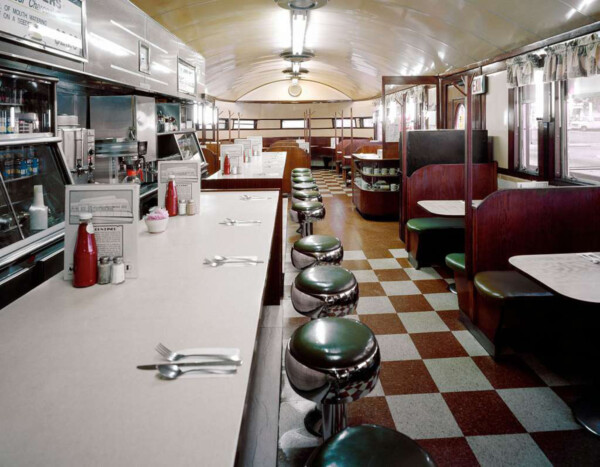
I remember “Paradise Café” being based on an actual place. Was that actual place named “Paradise Café” or something else? I can’t remember. Nor do I recall where it was located. We ate lunch a few times at a little seafood shack in Freeport, Florida, that bears a resemblance to the diner in this story. But there was also a joint called The Red Bar in Grayton Beach, Florida, that looks like the actual “Paradise Café” building. Maybe it’s an amalgam of the two.
What counts is that Rochester Allston, as do the protagonists in many horror stories of that era, meets his comeuppance. The reward for doing bad things, even for burned out, hopeless, shopworn old Bible salesmen, is often terrible and eternal.
And it is always couched in irony.
So take a seat in the Paradise Café. Wash your hands after handling the menu. They won’t have beer, but you can order an ice-cold Coke, and maybe a BLT.
Just be careful leaving.
You never know what will follow you out of a place like that.
—
PARADISE CAFE
The sign read “Paradise Cafe,” Rochester Allston saw. It was written in florid cursives that were dirt-smeared and eaten at the edges. The painted letters seemed to run in the oppressive heat of the Mississippi afternoon.
And he thought, Oh. Lord.
He slid the straw hat from his brow; it came off like it had been greased. He waited for dust to settle, then rolled down the Falcon’s window a little farther and tested a smothering breath.
This heat … playing hard on the old man. And then he almost remembered … a distant screech of tires, or was that only the echo of a memory? He still couldn’t deny it, just as he could not deny the dream that had followed, the dream that was so repugnant his mind kept all but its presence concealed from him by day, the particulars lurking in his subconscious to emerge at night as he slept, so that he awakened slicked in cold sweat, and remembered only that he had screamed.
Forget it.
He breathed more deeply and the sign still read “Paradise Cafe” and he remained hot, hotter than he’d ever remembered, soaked to the bone with sweat, his back and his armpits pools of damp, spots of perspiration little crawling things loose inside his clothes. The Falcon was sweltering with the windows down, as he’d driven the Mississippi backroads, and now that he’d found what passed for paradise the heat was everywhere at once, a drowsy presence slithering beneath a patina of road dust and grime and endless afternoons on the road, talking – talking – talking –
He’d have traded his soul for a frozen mug of Wiedemann Bohemian Special. Or just a Coke – anything cold.
He snapped shut the sample case to his right. It’s the heat. That’s what’s got me whipped, he told himself, the thought slurred and indistinct as the afternoon took hold of him. Heat. And no sleep.
He opened the car door and grabbed the case, his shirt peeling from the vinyl seat like a clammy second skin. The case was heavier than he expected; it contained a depressing burden of unsold plastic Jesus dashboard ornaments, clasped-hands-in-prayer bookmarks, and most worthy of all, the Living Waters Bible, the word of God made comprehensible to the feeble minds that populated these sweaty backwood towns through large type and lots of pictures, which at the sacrifice price of only $9.95 plus tax was reasonable beyond the expectations of any God-fearing Southern Baptist … or the legions of pretended faithful.
Well, that’s what you’d think, anyway.
He got a better grip on the case, shut the car door with his hip. He walked toward the door, half expecting hound dogs to rush out, sniffing at his heels and urinating on the car tires. The case was an anchor, dragging at his body, and as he took the steps to the door he thought of cool afternoons spent beneath ancient oaks, wrapped in the slow swoon of a hammock and the easy slumber peculiar to Saturdays when nothing needed doing anytime soon. Once, life had been like that. But it seemed things would never go that way again.
Sleep.
He pried open the screen door, stepped into the grainy twilight inside the restaurant, and found the ubiquitous heat in here, too. The screen door banged shut.
He looked across dusty floorboards and chipped, formica tabletops – each chair squared neatly against the table, each table fastidious with a glass ashtray, a napkin dispenser, a lunch menu laminated in transparent plastic, salt and pepper shakers – rice grains in the salt to keep it from crystalizing. A thermometer on the back wall said “Royal Crown Cola – the fresher refresher!” The temperature read 78, and he knew that couldn’t be right.
“Hullo.”
He searched for the voice, scanning the counter, rows of padded stools, and saw a shape through the window in the door that opened onto the kitchen, a suggestion of pink sliding in shadow.
The waitress appeared and moved along the counter, wielding a half-composed frown and looking flustered at the prospect of work. She swept a slick tendril of hair behind her crimped, white hat and said, “Hullo” again. The scowl deepened.
“How do you do, Ma’am,” Allston answered. He ran a shirtsleeve over his forehead, then moved to the table in the back, away from the window. It looked cooler there. The waitress followed.
When Allston had sat down, the waitress pulled out a notepad and Bic pen from her apron pocket. The name “Angie” was embroidered on the pink lapel of her blouse. Her gaze flitted, lizardlike, from the packing case at his foot to his face.
“What can I get for you?”
Allston leaned forward, propped his elbows on the table. He took the menu and scanned it quickly, looking but not really seeing what was printed there. At the top of the sandwiches column was a photo of a bacon, lettuce and tomato sandwich and a sweating Coke. He said, “I’ll have a BLT – says here you got BLTs.”
She nodded, scribbled words, seemed to stare through the pad at him. “Whatcha want to drink?”
“Beer. Wiedemann – ”
She shook her head. “Dry county.”
Allston closed his eyes. “Coke. A Coke. With lots of ice.”
She was gone in a whorl that set the dust astir. Allston yanked a napkin from the dispenser, pulled the neck of his shirt loose and took a long, slow swipe with the napkin. The glare coming through the window seemed unbearably bright, a hot ingot of freshly poured steel still glowing from the furnace. He tried to think of air conditioners and hammocks slung beneath oaks and Wiedemann beer. And sleep.
He pulled out his wallet and thumbed the bills. Two ones, a ten, and another one. Thirteen bucks. Never had he experienced such a run of sorry luck. No sales. No nothing. And then … that goddamned wreck – he couldn’t believe he’d said the words to himself. He wanted to forget – he really needed to forget about all that.
And he didn’t want to think about the dream.
“You’re a salesman, ain’t you?”
The waitress seemed to appear from the thin, superheated air. She set down a glass of water. Allston snapped the wallet shut, leaned and slid it into his trousers pocket.
“Whatcha got in your case?” She tapped it with her foot. He stooped and hefted it to the table and undid the clasps. Was she interested in buying something, or would this be another dry well?
“Oh. You’re a Bible salesman.”
“And other spiritual necessities.”
She glanced at him, then began picking and prodding at the case’s contents. He almost considered trying her out on the wonderments of the Living Waters Bible, but she’d found something else, a porcelain figurine of a young girl kneeling in solemn prayer. She clasped it like something precious, raised it to her eye and attempted a smile. She turned it to the light.
Allston said, “That’s hand-painted porcelain, ma’am. Made right here in Mississippi. It’s a beauty.”
The lines in her face hardened. She stared back at him and murmured, “I can see that.”
She set it back in the case. “You want your Coke now or with the sandwich?”
He exhaled wearily. Another dry well. He said, “Now, please.” She whirled and marched back to the kitchen.
He stared and stared, eyes away from the bright window, looking at nothing and thinking of nothing except relief, of sleep, of earlier times. It had been less complicated then, compared to now. Getting by – nothing flamboyant, but work that put bread on the table and beer in the fridge and made for lazy afternoons enveloped in dizzy lethargy. He shifted in the chair and felt his body move in a boneless rearrangement of lumps and dull aches. It was difficult to keep his eyes open. These last few weeks … he turned those events over in his mind and couldn’t touch them –
– the little girl was staring at him –
He jerked from a slouch, startled at the depths of his thoughts.
The little girl was staring.
He hadn’t noticed them come in. They’d taken the table by the window and, squinting against the brilliance, he could barely make out the blurred contours of a man – a big man, big as a diesel engine, made to look all the bigger by the sleeveless T-shirt he was wearing. His wife sat across from him and was rendered anonymous by the light. An older child sat at the woman’s left; Allston couldn’t guess its sex because of the overalls … and the little girl. The girl watched Allston with an intent that disturbed him. The little girl … she reminded him of something.
Allston pulled another napkin from the dispenser and mopped his forehead and neck. He drank from the water, frowned at its strange taste. The ice was almost melted, and it didn’t feel cool at all. Somebody had boiled a glass of water and put ice in it; that’s what he thought.
The little girl watched. She knew something about him, Allston felt. And now, he saw, her older brother/sister was staring too. Sister, he guessed. The hair. It was long; loose strands seemed to float, suspended on thermals snaking across the tabletop.
The waitress brought his Coke. He sipped and it was thick as syrup.
The family was watching him. All of them. Watching – not a word spoken among them, as if he were intruding on some space reserved exclusively for them. The room seemed 10 degrees hotter now. He breathed in gusts and glanced at the R.C. Cola thermometer. He looked over the menu again. He looked at his nails – anywhere but the window where the family baked in the sunlight and watched – where the child watched and knew.
The waitress appeared again with his sandwich, mercifully intruding on the moment. She stood between him and the window, eclipsing the square of sun. He watched her set down the plate. The toast was scorched around the edges and the sandwich had the look of something that would raise blisters on the roof of his mouth. He waited as she scribbled the check; she slid it between the ashtray and napkin dispenser, and without a word, walked away.
The girl was standing behind her.
Allston blinked and caught his breath, surprised and frightened in a single lash of tingling heat. The girl did not move; her eyes did not move, but held him immobile. Allston stared at her. He struggled and composed a slow, nervous smile. He opened the case.
“You know, I got something that might suit a pretty little girl like you.”
He withdrew the porcelain girl-in-prayer. He held it out to her. “Here. Take it.”
The child didn’t move.
“It’s yours. No charge.”
The girl reached and grasped the figurine. She did not look at it, but drew it behind her head, held it there a moment, then pitched it at him. Viciously. He was so surprised that he didn’t try to dodge or even hold up his hand, and it struck him in the forehead, landing with a thump that seemed to set every nerve in his body to thrumming. He stared in stunned amazement at her, his jaw unhinged and a cry suspended there. Her expression didn’t change. He clapped a hand over his forehead, felt oily liquid, couldn’t tell if it were sweat or blood until he looked down and saw red spatterings on his plate. Then he was overcome with nausea and thought he might puke. He grabbed a handful of napkins and held them to his forehead, a flare of pain arching behind his skull. A tear of blood ran along the ridge of his nose. The figurine rolled off his lap and clonked to the floor.
He opened one eye and looked balefully at the girl from behind a triangle of napkin. He hissed, “Get! Get outta here, you!” then closed his eyes, dropped back and let the sweaty dark come over him. His head throbbed to a cacophony of bell sounds. He felt a headache coming on, a bad one. It was hot and he’d made a mistake – a big mistake – in stopping at the Paradise Cafe and, suddenly, all eh wanted was to be away from here, this part of the country where the people seemed filled with meanness and no respect for a man trying to make an honest buck.
He folded the napkins and reached for his case, all before he saw that the other members of the family had joined the girl and were standing at the edge of his table, their faces unmoving and sinister. He gazed up at them, holding his breath. They watched. He thought he felt flickers of communication going between them. He thought if he moved something terrible would happen. Something awful. Like in the dream. That sickening twist of the gut right before the car wraps around the telephone pole, out of his – anybody’s – control. That thought again. The car. Tires.
For a half-minute he waited, his thoughts paralyzed. He moved his right hand slowly for his rear pocket, pulled out his wallet, removed three dollars and slid them between the ashtray and napkin holder, next to the check. He put his wallet back in his pocket.
They watched.
He rose, slowly. He turned his back to them …
… and shambled out the door.
The sun stung his exposed flesh like hot needles. He shimmied between his car and a big Ford wagon – it belonged to the family, he guessed – tossed in the case and then squeezed into the front seat. He could still feel the weight of their stares as he started the car and backed out of the dusty parking lot.
The sign still said “Paradise Cafe,” and he thought, Oh. God.
The car jounced over ruts, his head thumping in rhythm to the movement, and then he was on clean, smooth asphalt. A breath of wind snaked its way into the car.
That little girl … why?
Flickering light played across his rear-view mirror …
… a windshield, heliographing sunshine.
It was the stationwagon, bearing down on him at an impossible speed, rushing up from behind like some horrible predator, the jaws of its grill showing chrome-plated teeth.
Allston felt the blood drain from his head. He could clearly see them, the burly man, the woman next to him, two distinct silhouettes in the back seat.
Without thinking, he stood on the gas pedal. The Falcon seemed to groan as it accelerated. The tires began to howl. He didn’t care. The stationwagon was keeping up with him – it surged up to his bumper and then dropped back, surging forward again as if to exhort Allston to go faster, faster.
Allston had the steering wheel in a death grip. His gaze darted from the road to the mirror to the speedometer; when the stationwagon swung alongside his car, the speedometer needled had just nicked the 80 mark.
He snatched a glance at them. They were watching him with a kind of subdued glee. The little girl had her face pressed against the window, her nose a spatula of flesh on the glass, her eyes wide and piercing.
The stationwagon edged closer to his Falcon, seemed to brush it, to kiss it, so that the steering wheel lurched in Allston’s grip and he had to fight to keep the car on the road. The stationwagon veered in again, this time smacking soundly against the Falcon.
And suddenly, Allston knew what they wanted. His heart crawled into his throat. He tried to shake his head, his thoughts cramping into recollection. He heard tires. Rubber, grabbing asphalt. The memory of the accident began to replay in his mind, and he could not stop it, could only watch in silent horror. … He had been low, closer to zero than ever. Desperately low, ready to panhandle, to beg, God so low. And only if he could keep things going another week, Lord, just a week – that’s all he was asking – he could turn it around. Somehow. But he was low and the only antidote he knew for that was the road, the road and a couple of six-packs of Wiedemann Bohemian Special, to exorcise those inner voices that never relented, always reminding him that he had no chance for anything but scraping by, that somehow he had missed his calling. But on the road he was moving, and movement always held the possibility for a lucky turn of fortune, the one ingredient absent from his life at the moment. And so he’d bid good riddance to Tupelo and had taken to the road, a clutch of Wiedemann empties clanking around on the floorboards, half a dozen others scattered along the baking fringes of some Mississippi state road. Night had come with his hangover, the electric glare of the headlights an icepick boring into his skull. It was impossible to keep the car on the road; the center line was wandering over the asphalt in loose, serpentine undulations, and he could only think of the next gas station and another six-pack of Wiedemann to take the bite out of this thundering, skull-cruncher of a headache. Tires screamed, and it was a sound like mortal agony. A great big battleship of a stationwagon was hurtling past, slewing sideways, and for a stuttered second he had seen the little girl’s face, illuminated in the pools of his headlights, frozen in his subconscious for all time. The little girl. Her mother and father. An older sister. The stationwagon swept by his Falcon, shrugging into the soft road shoulder and flipping to smash full-on into an embankment. And then it had exploded, the fire sucking out his breath and the light from his eyes, the sound from his ears, giving it all back in a sudden, terrific CARUMP that had jarred him clear to the bone.
The car had burned. Oh God, it had burned.
He didn’t stop. He didn’t stop. He couldn’t stop, Oh Jesus, not with the empties rolling around in the floorboards and he didn’t stop, he didn’t and instead he’d run, just put the pedal to the firewall and run, all night and into the next scorching afternoon, just run anywhere, and he had to forget, he had to wipe it from memory because …
… now they came to him. In the flytrap motel rooms where he stayed when he could scrape up the bucks. In the roadside taverns where he drank to forget. In the rest areas … all the places he dared to sleep.
And that was what he could never remember, the rational part of his mind fending off recognition until the last possible moment and then purging it just as quickly. The little girl. Her family. That was the dream. Stalking him as he slept. Sending him to his death until he came away clutching a mattress or the leg of a barstool or the steering wheel, unable to remember exactly what he had dreamed but feeling an ugly presence slithering back into the inaccessible regions of his brain, waiting … waiting for him to sleep again.
He needed to forget. What had happened. What he’d done. So he would be rid of them.
That stationwagon smashed into his car. Dimly, he heard glass shattering. The steering wheel spun crazily and there was a breathtaking moment of weightlessness as the Falcon skidded off the road and somersaulted once, twice, a sickening cacophony of metal concussions drowning out any other thought but terror. The roof came down on him and he felt bones snapping. Detonations of pain erupted across his body. Something speared him in the ribs. He couldn’t breath.
The car settled with a final, jolting shudder, and Allston knew what would happen next. What always happened next. The delicate cough of spilled gasoline igniting. Flames racing through the car. He would burn, Oh God, he would burn. Scream and burn. He told himself he was dreaming this, that he’d fallen asleep at the Paradise Cafe and soon the frowning waitress would be tapping him on the shoulder to tell him his sandwich was ready and he’d awaken and know he had dreamed the awful dream again, that if he were to preserve his sanity he must erase the past from memory. He must forget.
Fire began to eat at the upholstery. He wondered if the dream always seemed this real.
—
The waitress knelt and picked up the porcelain girl-who-prayed. She remembered what the deputy said.
Heat stroke. Had t’be heat stroke, though Jesus knows I never seen a case worse’n this.
Blisters. Flesh like a slug that had been dipped in rock salt. Christ, what the hell had happened?
She crossed the dining room and stood for a moment in front of the air conditioner grate. Red ribbons waggled on the chilly draught of air and tickled her face. It felt good, and it offered a temporary refugee from the stink of burned hair.
Then she disappeared behind the door to the kitchen, where dishes needed washing, and hot thunderclouds of steam curled darkly at the heart of paradise.
About the author:
Del Stone Jr. is a professional fiction writer. He is known primarily for his work in the contemporary dark fiction field, but has also published science fiction and contemporary fantasy. Stone’s stories, poetry and scripts have appeared in publications such as Amazing Stories, Eldritch Tales, and Bantam-Spectra’s Full Spectrum. His short fiction has been published in The Year’s Best Horror Stories XXII; Alfred Hitchcock’s Mystery Magazine; the Pocket Books anthology More Phobias; the Barnes & Noble anthologies 100 Wicked Little Witch Stories, Horrors! 365 Scary Stories, and 100 Astounding Little Alien Stories; the HWA anthology Psychos; and other short fiction venues, like Blood Muse, Live Without a Net, Zombiesque and Sex Macabre. Stone’s comic book debut was in the Clive Barker series of books, Hellraiser, published by Marvel/Epic and reprinted in The Best of Hellraiser anthology. He has also published stories in Penthouse Comix, and worked with artist Dave Dorman on many projects, including the illustrated novella “Roadkill,” a short story for the Andrew Vachss anthology Underground from Dark Horse, an ashcan titled “December” for Hero Illustrated, and several of Dorman’s Wasted Lands novellas and comics, such as Rail from Image and “The Uninvited.” Stone’s novel, Dead Heat, won the 1996 International Horror Guild’s award for best first novel and was a runner-up for the Bram Stoker Award. Stone has also been a finalist for the IHG award for short fiction, the British Fantasy Award for best novella, and a semifinalist for the Nebula and Writers of the Future awards. His stories have appeared in anthologies that have won the Bram Stoker Award and the World Fantasy Award. Two of his works were optioned for film, the novella “Black Tide” and short story “Crisis Line.”
Stone recently retired after a 41-year career in journalism. He won numerous awards for his work, and in 1986 was named Florida’s best columnist in his circulation division by the Florida Society of Newspaper Editors. In 2001 he received an honorable mention from the National Lesbian and Gay Journalists Association for his essay “When Freedom of Speech Ends” and in 2003 he was voted Best of the Best in the category of columnists by Emerald Coast Magazine. He participated in book signings and awareness campaigns, and was a guest on local television and radio programs.
As an addendum, Stone is single, kills tomatoes and morning glories with ruthless efficiency, once tied the stem of a cocktail cherry in a knot with his tongue, and carries a permanent scar on his chest after having been shot with a paintball gun. He’s in his 60s as of this writing but doesn’t look a day over 94.
Contact Del at [email protected]. He is also on Facebook, twitter, Pinterest, tumblr, TikTok, and Instagram. Visit his website at delstonejr.com .

Leave a Reply