On Sunday, Mom and I went to a garage sale at the Murder House

Image courtesy of PickPic, Creative Commons license
On Sunday, Mom and I went to a garage sale at the Murder House.
“Murder House” is how the neighborhood describes the residence at 11 Pryor Road in Fort Walton Beach. Last month, William Butler snapped and stabbed his wife to death, then loaded a shotgun and killed his son and daughter. Another son managed to escape by climbing out a bedroom window and fleeing to a neighbor’s house.
I don’t know what compelled me to go there, because I have felt nothing but horror over those awful events, and pity for the 17-year-old who is now an orphan. I am not the kind of person to gawk at car accidents and I have no interest in the terrible things that sometime happen in our midst.
Still, there I was, feeling shitty at looking over their stuff … but looking nonetheless. This is what I saw.
At least one member of the Butler family was an avid fisherman. Leaning against the side of the house was a corn stack of fishing rods and reels, surrounded by tackle boxes with every kind of fishing lure you can imagine, the hooks all rusted, suggestive of salt water, not fresh water. Bluefish and speckled trout, not bream and bigmouth bass.
One table featured heaps of camouflaged clothing, which to me said: paintball. But it wasn’t paintball, because there were no masks or “markers” (i.e. guns). Instead, sitting on the ground next to camo table were two sets of archery equipment. Maybe a family member was into bowhunting.
I saw a lot of old technology, including boxes that contained reel-to-reel tape. Old movie soundtracks, music from the ‘50s and ‘60s. In some cases the tapes fluttered from the boxes like old, brittle streamers. Who listens to that stuff anymore? Where do you even find a reel-to-reel tape recorder/player? Ebay?
There were several laptops, and I could tell without looking too closely they were old. How? Because they were thick, with lots of ports for peripherals that probably no longer existed. One tablet had a shattered screen.
Another box contained hundreds of vinyl records. I could imagine collectors snapping up those LPs. I did not even look at them because I have nothing that will play a 33, but I could have bought something there that did. I saw numerous hi-fi’s and record players of varying sophistication.
There were other things – clothes, knick-knacks, candleholders, computer parts, and a paperback book with the cover ripped off.
Then, in one box, I found the item that sent me and Mom on our way.
A yearbook. From Meigs Middle School. Belonging to Katelyn Butler, who was only 14 years old when the world ended. Signed by her friends. Testimonials about their friendship, her future, the usual stuff. Notes tucked into the pages, in envelopes I didn’t open. Color photos.
Her short life, captured in a few glossy pages.
So we left.
I didn’t buy anything. I felt like a ghoul for even being there.
And now I feel even more horrible for a family I didn’t know, but one that, through their tragedy, brought a little more meaning to my life.
About the author:
Del Stone Jr. is a professional fiction writer. He is known primarily for his work in the contemporary dark fiction field, but has also published science fiction and contemporary fantasy. Stone’s stories, poetry and scripts have appeared in publications such as Amazing Stories, Eldritch Tales, and Bantam-Spectra’s Full Spectrum. His short fiction has been published in The Year’s Best Horror Stories XXII; Alfred Hitchcock’s Mystery Magazine; the Pocket Books anthology More Phobias; the Barnes & Noble anthologies 100 Wicked Little Witch Stories, Horrors! 365 Scary Stories, and 100 Astounding Little Alien Stories; the HWA anthology Psychos; and other short fiction venues, like Blood Muse, Live Without a Net, Zombiesque and Sex Macabre. Stone’s comic book debut was in the Clive Barker series of books, Hellraiser, published by Marvel/Epic and reprinted in The Best of Hellraiser anthology. He has also published stories in Penthouse Comix, and worked with artist Dave Dorman on many projects, including the illustrated novella “Roadkill,” a short story for the Andrew Vachss anthology Underground from Dark Horse, an ashcan titled “December” for Hero Illustrated, and several of Dorman’s Wasted Lands novellas and comics, such as Rail from Image and “The Uninvited.” Stone’s novel, Dead Heat, won the 1996 International Horror Guild’s award for best first novel and was a runner-up for the Bram Stoker Award. Stone has also been a finalist for the IHG award for short fiction, the British Fantasy Award for best novella, and a semifinalist for the Nebula and Writers of the Future awards. His stories have appeared in anthologies that have won the Bram Stoker Award and the World Fantasy Award. Two of his works were optioned for film, the novella “Black Tide” and short story “Crisis Line.”
Stone recently retired after a 41-year career in journalism. He won numerous awards for his work, and in 1986 was named Florida’s best columnist in his circulation division by the Florida Society of Newspaper Editors. In 2001 he received an honorable mention from the National Lesbian and Gay Journalists Association for his essay “When Freedom of Speech Ends” and in 2003 he was voted Best of the Best in the category of columnists by Emerald Coast Magazine. He participated in book signings and awareness campaigns, and was a guest on local television and radio programs.
As an addendum, Stone is single, kills tomatoes and morning glories with ruthless efficiency, once tied the stem of a cocktail cherry in a knot with his tongue, and carries a permanent scar on his chest after having been shot with a paintball gun. He’s in his 60s as of this writing but doesn’t look a day over 94.
Contact Del at [email protected]. He is also on Facebook, twitter, Pinterest, tumblr, TikTok, Ello and Instagram. Visit his website at delstonejr.com .
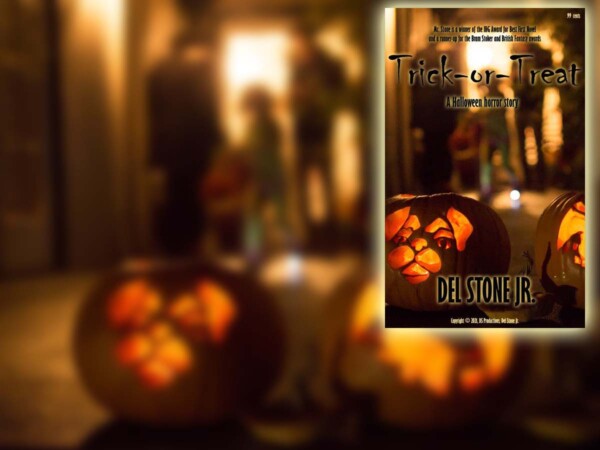
[ Cover image by Eugene Kim. ]
This is a short story, and it is short even for that. I say up front because I don’t want you to think you’ve been tricked out of your money (pardon the seasonal pun). At 99 cents, “Trick-or-Treat” is priced the lowest Amazon allows. If you don’t think a story of that length is worth a buck, please don’t buy this book.
Now, about “Trick-or-Treat”: I wrote the story back in the ’80s, and you’ll notice dated references to corded telephones and so forth. True story: The first cordless phone I ever saw was in the film “Terms of Endearment.” I remember thinking it was a trendy piece of technology I would never be able to afford, but a few years later I would own, and cherish, a Sony cordless phone.
I present to you the story as I wrote it, warts and all. I have not rewritten it or revised it in any way except to correct typos and misspellings.
Of the story I remember it was my first Halloween away from my parents. I had bought an old house across town and was a little nervous about being a homeowner. Suddenly I was responsible for a monster debt – $45,000 – and a huge obligation of repairs and maintenance. It meant I could not quit my job, nor could I suddenly up and leave for a job in another state. I was home “bound.”
The genesis of the story itself, I’m unsure of. The protagonist, Clifton, bears no resemblance to anyone I know either physically or spiritually. I have never experienced his kind of anger – I wouldn’t want to.
The story is set in the living room of that old house, and when I envision the activities taking place, they are framed by that house and neighborhood. I can see the yellowish door with the diamond-shaped window. I can see the tan shag carpeting, the sloped driveway, the buggy carport and the paint peeling from the frame.
I can even see Clifton standing in the living room during the climax that, to this day, shocks me and makes me wonder what the heck is wrong with a person who could think of a resolution so diabolical.
If you gave me your 99 cents (of which I get to keep 35; Amazon collects the rest), then I thank you and hope you enjoy “Trick-or-Treat.”
Think of it this coming Halloween.
Order a copy of “Trick-or-Treat” by following this link:
[ Cover image by Eugene Kim. ]
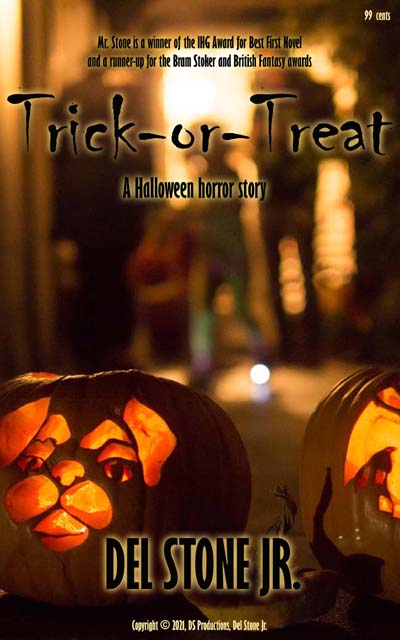
From Amazon
“While short enough to be called flash fiction, this story delivers the impact of a good horror story. Concise with no wasted words. Excellent read for Halloween.”
– Richard A. Bamberg, author of “The Hunters: Monster Hunting 101”
Trick-or-Treat: Revised, updated and enhanced with additional content, this micro-story punches far above its weight.
Clifton’s girlfriend Lisa has told him goodbye and he is not happy about it.
Not happy at all.
She said she needed space, and time. Clifton has no need of space or time, and now that Halloween is here, with all those happy kids ringing his doorbell and demanding candy, Clifton is ever reminded of his girlfriend, and her class of fourth-graders, and her young daughter, all of them gone now … or maybe not.
Because this Halloween, Clifton has a surprise for Lisa, and all the children in her life.
About the author:
Del Stone Jr. is a professional fiction writer. He is known primarily for his work in the contemporary dark fiction field, but has also published science fiction and contemporary fantasy. Stone’s stories, poetry and scripts have appeared in publications such as Amazing Stories, Eldritch Tales, and Bantam-Spectra’s Full Spectrum. His short fiction has been published in The Year’s Best Horror Stories XXII; Alfred Hitchcock’s Mystery Magazine; the Pocket Books anthology More Phobias; the Barnes & Noble anthologies 100 Wicked Little Witch Stories, Horrors! 365 Scary Stories, and 100 Astounding Little Alien Stories; the HWA anthology Psychos; and other short fiction venues, like Blood Muse, Live Without a Net, Zombiesque and Sex Macabre. Stone’s comic book debut was in the Clive Barker series of books, Hellraiser, published by Marvel/Epic and reprinted in The Best of Hellraiser anthology. He has also published stories in Penthouse Comix, and worked with artist Dave Dorman on many projects, including the illustrated novella “Roadkill,” a short story for the Andrew Vachss anthology Underground from Dark Horse, an ashcan titled “December” for Hero Illustrated, and several of Dorman’s Wasted Lands novellas and comics, such as Rail from Image and “The Uninvited.” Stone’s novel, Dead Heat, won the 1996 International Horror Guild’s award for best first novel and was a runner-up for the Bram Stoker Award. Stone has also been a finalist for the IHG award for short fiction, the British Fantasy Award for best novella, and a semifinalist for the Nebula and Writers of the Future awards. His stories have appeared in anthologies that have won the Bram Stoker Award and the World Fantasy Award. Two of his works were optioned for film, the novella “Black Tide” and short story “Crisis Line.”
Stone recently retired after a 41-year career in journalism. He won numerous awards for his work, and in 1986 was named Florida’s best columnist in his circulation division by the Florida Society of Newspaper Editors. In 2001 he received an honorable mention from the National Lesbian and Gay Journalists Association for his essay “When Freedom of Speech Ends” and in 2003 he was voted Best of the Best in the category of columnists by Emerald Coast Magazine. He participated in book signings and awareness campaigns, and was a guest on local television and radio programs.
As an addendum, Stone is single, kills tomatoes and morning glories with ruthless efficiency, once tied the stem of a cocktail cherry in a knot with his tongue, and carries a permanent scar on his chest after having been shot with a paintball gun. He’s in his 60s as of this writing but doesn’t look a day over 94.
Contact Del at [email protected]. He is also on Facebook, twitter, Pinterest, tumblr, TikTok, Ello and Instagram. Visit his website at delstonejr.com .
About this book:
“Trick-or-Treat” is a 756-word short story. It has never been published before.
The book’s total length is 3,516 words.
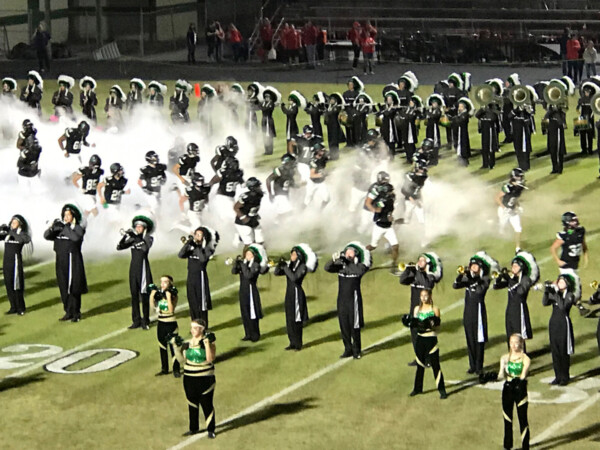
The author went to the Choctaw-Fort Walton Beach game in 2022 and snapped this photo as the Indians came onto the field. Image courtesy of Del Stone Jr.
I haven’t been to a high school football game in years. I don’t remember who won. I don’t remember caring.
I know people hereabouts take their high school football seriously, and that’s fine. I take my NFL football seriously, despite the fact it’s looking more and more like professional wrestling every day.
I haven’t kept up with the local prep sports scene. I know Niceville is a powerhouse, Choctaw is so-so and Fort Walton Beach is weak. I don’t know the whys and hows of all that. Apparently it’s complicated and immune to generalizations, but it has something to do with geography, coaches and the ability to transfer to a school that isn’t zoned for your area.
Whatever. As they say, I have no dog in this hunt.
But I can appreciate that some people do care, especially the parents of boys and girls who compete on the field. Now that college has become as expensive as a waterfront mansion, it’s important that kids earn scholarships. One of the clearest avenues to a scholarship is high school sports.
Some of those kids are walking away with full rides to play football for schools like Alabama and Florida State. And if they excel in college sports, then we’re talking the possibility of a stint in the pros, where unheard of riches await the talented athlete.
The price of things, the job market and the state of the economy are such that without a scholarship, kids may not have a college option. That’s too bad because these days we need the smartest, best-educated and most talented people running the country, not these schleps we’re being asked to vote for now.
I hear the football scene at Fort Walton Beach High School is unsettled. Their athletic director had to leave after he failed teacher certification requirements. I can sympathize; about five years ago I studied for the GRE and was amazed to discover I had forgotten much of what I learned in high school, never mind college.
Another blow: Fort Walton Beach’s quarterback, Brady Ooten, transferred to rival Choctawhatchee.
I don’t have an opinion on that. It’s none of my business. Obviously he and his parents felt it was best for his future that he make the switch. Apparently he’s a talented kid and has a chance at making it in college. With so much at stake, a transfer was probably in his best interests.
What did surprise me, and what I do have an opinion about, is the reaction Ooten’s story received on the Daily News’ Facebook page.
Predictably, some folks felt he was thinking only of himself. Others backed his decision, pointing to some of the issues I’ve raised.
What shocked me was how many people dismissed the notion of loyalty.
To them, loyalty was an outmoded, antiquated concept that had no place in today’s world of high-dollar, high-stakes high school sports. One person asked, “Being loyal to a high school team will get him where in life?”
To that person I would say: Loyalty to a high school team will get you everywhere in life.
Loyalty is a trait sadly lacking in our culture. Corporations are no longer loyal to their customers or employees. Family members aren’t loyal to each other. Yet loyalty has an instructional value that far surpasses its downsides.
Loyalty will teach you lessons that cannot be learned from any book, about how to succeed when you are surrounded by failure, and how to persevere when circumstances are lined up against you. It will teach you that some things in life are worth making sacrifices for, and nothing is gained without hard work and sometimes pain. It will also teach you that sometimes you must rely on help from others, and sometimes you must help others to succeed.
In the end, you may not win. But in losing you learn so much.
These are character-building experiences, and while they abound in our daily lives, people seem reluctant to experience them because they’re hard, and painful. The result is a generation of people who don’t see the value of loyalty.
I am not criticizing young Mr. Ooten or his parents.
But I am criticizing people who say loyalty to a losing cause has no value.
It does have value, and the fact that so many people don’t recognize that speaks volumes about their character.
This column appeared in the July 3, 2016 edition of the Northwest Florida Daily News and is used with permission.
About the author:
Del Stone Jr. is a professional fiction writer. He is known primarily for his work in the contemporary dark fiction field, but has also published science fiction and contemporary fantasy. Stone’s stories, poetry and scripts have appeared in publications such as Amazing Stories, Eldritch Tales, and Bantam-Spectra’s Full Spectrum. His short fiction has been published in The Year’s Best Horror Stories XXII; Alfred Hitchcock’s Mystery Magazine; the Pocket Books anthology More Phobias; the Barnes & Noble anthologies 100 Wicked Little Witch Stories, Horrors! 365 Scary Stories, and 100 Astounding Little Alien Stories; the HWA anthology Psychos; and other short fiction venues, like Blood Muse, Live Without a Net, Zombiesque and Sex Macabre. Stone’s comic book debut was in the Clive Barker series of books, Hellraiser, published by Marvel/Epic and reprinted in The Best of Hellraiser anthology. He has also published stories in Penthouse Comix, and worked with artist Dave Dorman on many projects, including the illustrated novella “Roadkill,” a short story for the Andrew Vachss anthology Underground from Dark Horse, an ashcan titled “December” for Hero Illustrated, and several of Dorman’s Wasted Lands novellas and comics, such as Rail from Image and “The Uninvited.” Stone’s novel, Dead Heat, won the 1996 International Horror Guild’s award for best first novel and was a runner-up for the Bram Stoker Award. Stone has also been a finalist for the IHG award for short fiction, the British Fantasy Award for best novella, and a semifinalist for the Nebula and Writers of the Future awards. His stories have appeared in anthologies that have won the Bram Stoker Award and the World Fantasy Award. Two of his works were optioned for film, the novella “Black Tide” and short story “Crisis Line.”
Stone recently retired after a 41-year career in journalism. He won numerous awards for his work, and in 1986 was named Florida’s best columnist in his circulation division by the Florida Society of Newspaper Editors. In 2001 he received an honorable mention from the National Lesbian and Gay Journalists Association for his essay “When Freedom of Speech Ends” and in 2003 he was voted Best of the Best in the category of columnists by Emerald Coast Magazine. He participated in book signings and awareness campaigns, and was a guest on local television and radio programs.
As an addendum, Stone is single, kills tomatoes and morning glories with ruthless efficiency, once tied the stem of a cocktail cherry in a knot with his tongue, and carries a permanent scar on his chest after having been shot with a paintball gun. He’s in his 60s as of this writing but doesn’t look a day over 94.
Contact Del at [email protected]. He is also on Facebook, twitter, Pinterest, tumblr, TikTok, and Instagram. Visit his website at delstonejr.com .
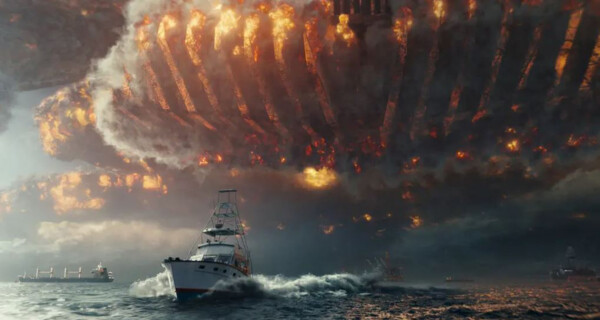
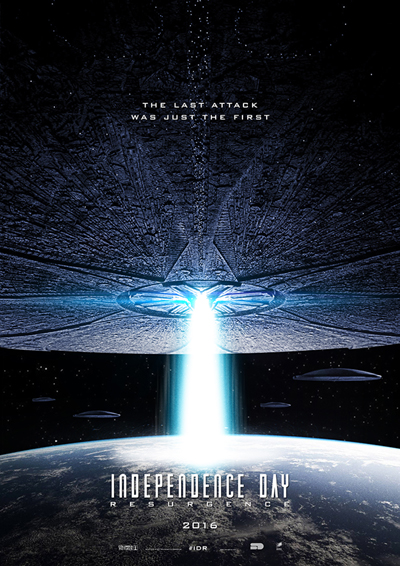
Image courtesy of 20th Century Fox.
“Independence Day: Resurgence” Starring Liam Hemsworth, Jeff Goldblum, Jessie T. Usher, Bill Pullman, and Sela Ward. Directed by Roland Emmerich. 120 minutes. Rated PG-13.
Del’s take
In “Independence Day: Regurgance” everything is bigger and louder and brighter and more menacing that the original “Independence Day.” Alas, everything is not better.
In “Regurgance” as I’m calling it, we get a double-down dose of the original film minus the wit and charm, which is a shame. It could have been a contender for a summer blockbuster. Instead, we’ll have to keep looking and hoping for something a little more filling than whatever mindless Marvel pap we’re served for 2016.
The story takes place 20 years after disrespectful aliens blew up the White House and otherwise embarked on a massive urban renewal project at major American cities, doing a good job of tearing them down but a not so good job of putting them back up. We have finally achieved peace on Earth, thanks to the aliens nearly eradicating us. After the aliens are defeated by Will Smith and Jeff Goldblum we steal their technology and make our own anti-gravity cars and phase plasma rifles in the 40-watt range. The Chinese figure heavily in this renewal and I can safely say “Regurgance” should do well in Beijing and Shanghai thanks to this crude and insulting marketing ploy.
Unfortunately we have underestimated the aliens’ resolve. This time a much larger mother ship arrives carrying an alien queen reminiscent of that “bitch” in “Aliens” who wants to steal our planet’s molten core, turning Earth into a vast wasteland, much like this movie.
Luckily the original crew minus Will Smith, who wisely had died, is back along with a newer, sleeker, younger cadre of heroes who ride to the rescue of good old terra firma. Will they succeed?
Need you ask?
Acting is so-so. Jeff Goldblum is strangely subdued, but dear old dad Judd Hirsch is as unflappable and tart-tongued as ever. Bill Pullman seems confused and maybe a little crazy, and Brent Spiner, who plays a much larger role in this film, is over-the-top kooky and a little hard to digest. The newbies are all cardboard cutouts and about as animated as such, except for sidekick Travis Tope, who shows signs of life despite the horrible lines he’s given to read.
My major gripe with the movie is it lacks the snappy dialogue and sharp wit of the original. It has its funny moments to be sure, but they are sparse and seem to work in spite of, not because of, a diminished script that does not give its actors an opportunity to spread their wings.
Couple that with clichés, a predictable plot, several deus ex machina interventions and a scale of destruction that exceeds the brain’s ability to process what is happening on the screen, and you have, dare I say, a two-hour stretch of cinematic boredom.
If “Independence Day: Regurgance” is your kind of movie then by all means see it at the movie theater, where it’s dazzling visuals are best exploited by the widescreen presentation. But do opt for the matinee when prices are a little lower. I’m not sure it’s worth a prime time movie ticket.
I rate this movie a C+.
Mladen’s take
To cleanse my memory of the worst big-budget movie I’ve seen, I watched the best. Guess which is which: “Independence Day Resurgence/Regurgance” or “The Matrix.”
I’m still worried that I may have nightmares about the nearly $9 I spent to sit for 2 hours to watch another Roland Emmerich bomb.
IDR was mostly terrible. It was boring. It was poorly acted. It was poorly scripted and the graphic portrayal of mayhem overwhelming. If much of the U.S. is wrecked by aliens, then it’ll look like someone had pulverized roads, buildings, airplanes, cars, ships, name it, into pieces from the size of thumbnails to hundreds of feet long and wide and strewn the wreckage everywhere evenly for hundreds of square miles, according to IDR special effects gurus.
What’s worse is that Emmerich suckered many of the first “Independence Day” cast, including Bill Pullman as the former U.S. president who led humanity to its victory against the alien invaders on July 4, 1996, and Jeff Goldblum, the gentle scientist who devised the technology to drop the aliens, to star in IDR. The newbies to the ID universe – yes, there’s another ID on the way unless, I imagine, “Resurgence/Regurgance” fails at the box office (which it might very well do) – aren’t worth mentioning.
Look, I wasn’t expecting high-caliber, intellectual fare from this film. What I was expecting was campy charm, charming characters, quips loaded with defiant charm, and a charming end to the franchise. Instead, the audience was exposed to silly subplots, wimpy weaponry, and an overdose of graphic mis-artistry.
The part of the movie that I enjoyed most lasted, maybe, a cumulative 5 minutes across three or four scenes. It was the crew aboard a salvage ship used to monitor an alien beam that was boring to the center of the Earth from somewhere above the Atlantic. Sound familiar? Yes, the first Star Trek remake with the Romulan mining ship and dreadnaught Narada puncturing a hole in the Pacific to reach Earth’s core to plant a baby black hole that would implode the planet.
Another idea ripped off from other movies by IDR was the configuration and smarts of the alien queen. It/she was a mash of the Alien queen in “Aliens” and the female MUTO in the crappy “Godzilla” of 2014. Why don’t studios sue each other over blatant thefts of ideas, characters, and plots? Lawsuits claiming idea stealing might have two benefits:
- Studios would be forced to create something original
- Audiences would enjoy movie-going once again because they’d be watching something original
Almost forgot, I enjoyed one other part of IDR. No, not when the movie ended, though that was a relief. Emmerich and his zealous graphics developers did a fine job depicting a giant monster (the alien queen) as she moved through a bright, sun-shiny day. It’s often the tendency of moviemakers to show their kaiju amid rain, smoke, or at night. I guess that’s because they don’t have to expend nearly as much computing power (read money) to capture a massive beast’s fine details. In IDR, the alien queen fights mankind in broad daylight and there was a good effort made to depict essentials such as shadows.
IDR was disappointing. I give it a C and that’s generous. This movie failed to deliver what it promised, silliness made entertaining by actors who enjoyed making the movie. I’m coining a new phrase to describe films that are supposed to be summer blockbusters but bust nothing except my happiness. IDR is a summer blockfarter.
Mladen Rudman is a former journalist and technical editor. Del Stone Jr. is a former journalist and author.
Image courtesy of Jernej Furman.
—
Two 84-year-olds were found dead in Destin not long ago.
They were a couple. The woman was under hospice care. The man called lawmen and said something about suicides. Both were found with gunshot wounds. That’s all I know right now. I’m sure more details will come to light.
Likely they were married for years, possibly for decades, because a man does not kill himself because his wife is dying unless he’s been in love with her a long time. There’s a kind of tragic romance to that, the stuff of songs. But there’s another aspect that is not so song-worthy. In fact, it’s pitiable.
The suffering.
Hospice does not become involved until the end is near. Its arrival, depending on the disease, is sometimes preceded by suffering – unbelievable suffering.
I watched my dad take that route. He went from a robust hulk of a man who could build anything to a frail shell who could barely walk, and in the end couldn’t even do that. This happened in the space of seven months after he was diagnosed with terminal cancer. It was sickening to watch. For him, it was much worse – the terrible pain, of course, but also the knowledge this would end only one way.
We never talked about it, but I imagine at one point he wished he could take a pill and go to sleep forever. Had I been in his position, I would. I know others in his situation wished they could take a pill. Had they not, folks like Jack Kevorkian would never have become so influential in our culture.
Yet we continue to barbarically insist our loved ones remain alive until that last excruciating breath is drawn. Why? Why would we impose such pain and suffering on the people we most care about?
I looked around for reasons to oppose euthanasia. I am still shaking my head.
“Voluntary euthanasia is unnecessary because alternative treatments exist,” according to the Christian Medical Fellowship. “Voluntary euthanasia denies patients the final stage of growth. Voluntary euthanasia undermines medical research. Voluntary euthanasia leads to euthanasia tourism.”
Are these people out of their minds?
Alternative treatments exist? To terminal cancer? I and the rest of the world would like to know what these ‘alternative treatments’ are.
Euthanasia denies patients the final stage of growth? Growth of what? If you’re talking about some lofty ideal involving one’s spirituality or maturity, count me out. That experience does me and everybody else zero good at all.
As for medical research and euthanasia tourism, please forgive my selfishness when I say those two items will not be high on my priority list when a doctor tells me I’ve got six months to live.
I find it odd we grant more humanity to our pets than we do our family members. Here, let me tell you another story from my personal experience:
Back in 2005 my cat was dying of renal failure. Ironically, it was an experience that mirrored my father’s ordeal. The cat slowly lost weight and became weaker, despite the IVs, special foods, vitamins and medicines she had received. Finally it became obvious to me her quality of life had descended below a level even I couldn’t bear. My vet assured me I would know when it was time, and it was time.
So, I let her walk in the grass a final time, then bundled her into the cat carrier and took her to the vet’s office. As she lay in my lap, the vet gave her a shot of Valium, which put her to sleep immediately. Another shot followed, the one that put her to sleep forever. I took her home and buried her in the back yard.
I’m glad I was able to do that for her, because she was suffering. The poor cat couldn’t even lie down, she hurt so bad.
I think if a person is rational, and they want to end their life, they should be allowed to. Seems to me the same safeguards built into probate could be extended to end-of-life issues. The patient, not the doctor, would be making the determination.
Instead, we cling to an outmoded view that people can’t be trusted to make such decisions for themselves.
Sometimes they do it anyway, with a bottle of pills, or a gun.
How very, very sad.
(This column was previously published in the June 5, 2016 Northwest Florida Daily News.)
About the author:
Del Stone Jr. is a professional fiction writer. He is known primarily for his work in the contemporary dark fiction field, but has also published science fiction and contemporary fantasy. Stone’s stories, poetry and scripts have appeared in publications such as Amazing Stories, Eldritch Tales, and Bantam-Spectra’s Full Spectrum. His short fiction has been published in The Year’s Best Horror Stories XXII; Alfred Hitchcock’s Mystery Magazine; the Pocket Books anthology More Phobias; the Barnes & Noble anthologies 100 Wicked Little Witch Stories, Horrors! 365 Scary Stories, and 100 Astounding Little Alien Stories; the HWA anthology Psychos; and other short fiction venues, like Blood Muse, Live Without a Net, Zombiesque and Sex Macabre. Stone’s comic book debut was in the Clive Barker series of books, Hellraiser, published by Marvel/Epic and reprinted in The Best of Hellraiser anthology. He has also published stories in Penthouse Comix, and worked with artist Dave Dorman on many projects, including the illustrated novella “Roadkill,” a short story for the Andrew Vachss anthology Underground from Dark Horse, an ashcan titled “December” for Hero Illustrated, and several of Dorman’s Wasted Lands novellas and comics, such as Rail from Image and “The Uninvited.” Stone’s novel, Dead Heat, won the 1996 International Horror Guild’s award for best first novel and was a runner-up for the Bram Stoker Award. Stone has also been a finalist for the IHG award for short fiction, the British Fantasy Award for best novella, and a semifinalist for the Nebula and Writers of the Future awards. His stories have appeared in anthologies that have won the Bram Stoker Award and the World Fantasy Award. Two of his works were optioned for film, the novella “Black Tide” and short story “Crisis Line.”
Stone recently retired after a 41-year career in journalism. He won numerous awards for his work, and in 1986 was named Florida’s best columnist in his circulation division by the Florida Society of Newspaper Editors. In 2001 he received an honorable mention from the National Lesbian and Gay Journalists Association for his essay “When Freedom of Speech Ends” and in 2003 he was voted Best of the Best in the category of columnists by Emerald Coast Magazine. He participated in book signings and awareness campaigns, and was a guest on local television and radio programs.
As an addendum, Stone is single, kills tomatoes and morning glories with ruthless efficiency, once tied the stem of a cocktail cherry in a knot with his tongue, and carries a permanent scar on his chest after having been shot with a paintball gun. He’s in his 60s as of this writing but doesn’t look a day over 94.
Contact Del at [email protected]. He is also on Facebook, twitter, Pinterest, tumblr, TikTok, Ello and Instagram. Visit his website at delstonejr.com .

Image courtesy of Del Stone Jr.
I don’t know that I’ve ever written a cross word about Peter Bos. I’m not about to start now.
He’s a businessman, and a pretty good one at that. He’s doing what businessmen do – making money. He has made his money within the confines of the law, which is more than you can say about some of our politicians.
But when I heard about Legendary’s new nine-story “Baby Grande” development coming to Destin, I became angry – not with Mr. Bos, because again, he is simply doing what businessmen do. I hate what has happened to our community. Many of you can’t know what it was like because you weren’t here. I was. You’ll have to take my word for it when I say we’ve lost a priceless resource:
Innocence.
Destin has long since been dead. That goofy little fishing village I knew from the 1950s and ’60s ceased to exist sometime in the 1980s. The Museum of Sea and Indian, tourist traps selling baby alligators by the roadside, raw oysters tonged out of the bay that morning – all those things are gone. So are the miles and miles of beaches, clean water, snorkeling for scallops and beach bonfires and pompano big as hubcaps cruising the sandbars for sand fleas – they’re either gone or you can’t get to them because a wall of rich people and condos and big money stands in the way.
It’s too bad Eglin doesn’t give guided tours of Okaloosa Island because you need to see what the whole of the Emerald Coast looked like back then. I mean to tell you, it was beautiful. Plants grew in that white sand you couldn’t find anywhere else in the world. Animals lived there, groomed by natural selection to exist nowhere else. The smell was unique — a sharp, pine-like scent mixed with salt spray and something else, maybe the empty miles across the Gulf of Mexico.
Back then, we knew it would disappear. We knew it would be discovered, and outsiders would come in with their money and cement mixers, and all would be lost. We didn’t do anything about it, and I’m not sure why. Maybe we believed our leaders would protect our interests and keep that from happening. How could we have been so naïve?
Recently the Air Force said no to a bunch of different routes for an alternate bridge to Okaloosa Island. The Florida Department of Transportation is still trying to “fix” the traffic on U.S. Highway 98, especially the stretch through downtown Fort Walton Beach and Brooks Bridge. A second bridge was among the possible cures.
A second bridge wouldn’t fix anything. You could build a dozen bridges to Okaloosa Island – and six-lane highways, tunnels, double-decker roadways – and they wouldn’t fix anything either, because we’ve overbuilt and there’s no more room left. Every aspect of our infrastructure will be popping rivets and straining at the seams to accommodate the people.
“Baby Grande” isn’t threatening the environment because the land it sits on has already been built out. What it will do is make the roads more crowded, the restaurant lines longer, the beaches more congested, and life in general just a tiny bit more difficult for those of us who call this place home.
Destin City Councilman Chatham Morgan called it a “monstrosity” and asked, “When is enough, enough?” Apparently the answer to that question is when the land and sea are no longer available, the sky goes on the market.
So we’ve lost many of the things that made this place special. What we got in return was higher costs, congestion, and ugliness. I don’t care how beautiful the building, when it’s sitting on a plot of land that was unique and irreplaceable, well, that’s ugly.
I reiterate – I am not criticizing Mr. Bos. He has done nothing wrong.
Truth is, I’m not sure who I’m mad at. Short-sighted leaders of yesteryear? Human nature? Fate?
Or maybe just the failure to figure out a better way to make a buck than unrestrained growth. If unrestrained growth is so great, why do we spend so much time and money trying to beat cancer?
Ah well. Too late now. I’m just baying at the moon.
What little moon I can see between the towers.
This column was originally published in the May 15, 2016 edition of the Northwest Florida Daily News and is reused with permission.
About the author:
Del Stone Jr. is a professional fiction writer. He is known primarily for his work in the contemporary dark fiction field, but has also published science fiction and contemporary fantasy. Stone’s stories, poetry and scripts have appeared in publications such as Amazing Stories, Eldritch Tales, and Bantam-Spectra’s Full Spectrum. His short fiction has been published in The Year’s Best Horror Stories XXII; Alfred Hitchcock’s Mystery Magazine; the Pocket Books anthology More Phobias; the Barnes & Noble anthologies 100 Wicked Little Witch Stories, Horrors! 365 Scary Stories, and 100 Astounding Little Alien Stories; the HWA anthology Psychos; and other short fiction venues, like Blood Muse, Live Without a Net, Zombiesque and Sex Macabre. Stone’s comic book debut was in the Clive Barker series of books, Hellraiser, published by Marvel/Epic and reprinted in The Best of Hellraiser anthology. He has also published stories in Penthouse Comix, and worked with artist Dave Dorman on many projects, including the illustrated novella “Roadkill,” a short story for the Andrew Vachss anthology Underground from Dark Horse, an ashcan titled “December” for Hero Illustrated, and several of Dorman’s Wasted Lands novellas and comics, such as Rail from Image and “The Uninvited.” Stone’s novel, Dead Heat, won the 1996 International Horror Guild’s award for best first novel and was a runner-up for the Bram Stoker Award. Stone has also been a finalist for the IHG award for short fiction, the British Fantasy Award for best novella, and a semifinalist for the Nebula and Writers of the Future awards. His stories have appeared in anthologies that have won the Bram Stoker Award and the World Fantasy Award. Two of his works were optioned for film, the novella “Black Tide” and short story “Crisis Line.”
Stone recently retired after a 41-year career in journalism. He won numerous awards for his work, and in 1986 was named Florida’s best columnist in his circulation division by the Florida Society of Newspaper Editors. In 2001 he received an honorable mention from the National Lesbian and Gay Journalists Association for his essay “When Freedom of Speech Ends” and in 2003 he was voted Best of the Best in the category of columnists by Emerald Coast Magazine. He participated in book signings and awareness campaigns, and was a guest on local television and radio programs.
As an addendum, Stone is single, kills tomatoes and morning glories with ruthless efficiency, once tied the stem of a cocktail cherry in a knot with his tongue, and carries a permanent scar on his chest after having been shot with a paintball gun. He’s in his 60s as of this writing but doesn’t look a day over 94.
Contact Del at [email protected]. He is also on Facebook, twitter, Pinterest, tumblr, TikTok, and Instagram. Visit his website at delstonejr.com .
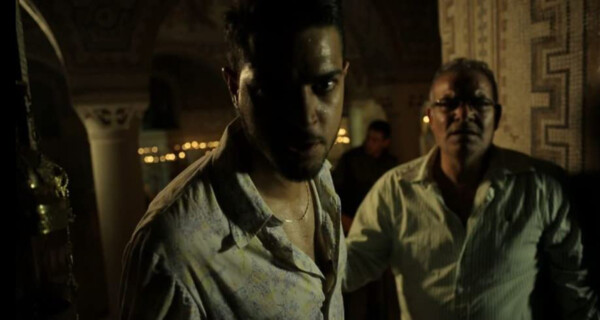
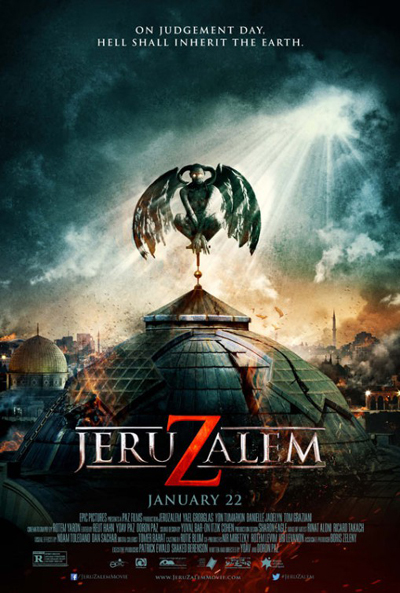
Image courtesy of Epic Pictures Releasing.
“JeruZalem” Starring Yael Grobglas, Yon Tumarkin, Danielle Jadelyn and Tom Graziani. Directed by Doran and Yoav Paz as The PAZ Brothers. 94 minutes. Rated R. Netflix.
Del’s take
The found-footage film has found a home in the horror genre, resulting in classics like “REC,” “V/H/S,” “Troll Hunter” and the grandwitchy of ’em all, “The Blair Witch Project.” It also has produced some amazing clunkers. “Paranormal Entity,” “Area 407” and “Apollo 18” come to mind.
Falling somewhere in between is “JeruZalem,” an unlikely pairing of the weighty and the frothy (Judgment Day from the point of view of a teen girl’s spring break getaway). How far it leans toward “Blair Witch” or “Apollo 18” depends on the moviegoer’s charity. While some people loath found footage as a lazy director’s approach to storytelling, others appreciate its clarity of viewpoint.
I find myself bouncing between those two worldviews. I think movies like “Troll Hunter” and “Cloverfield” are masterpieces of the genre. I even liked “Apollo 18” for what it was – a space-based horror flick with limited ambitions. But some movies don’t benefit from the found-footage viewpoint and “JeruZalem” may be one of them. Third person probably would have been a perfectly acceptable storytelling vantage point, and I would not have been distracted by irrelevant technical details such as how the lead character kept her device charged throughout the apocalypse.
I’ll probably be asking myself the same question about my phone after this Korea thing blows up.
In “JeruZalem,” young Sarah Pullman (Jadelyn) is whisked away from her overprotective and Skype-stalking father (Howard Ripp) for a whirlwind tour of the old city of Jerusalem during Yom Kippur. At the Tel Aviv airport they meet good-looking Kevin Reed (Tumarkin), an antiquities student who promises to hook them up with a hostel in the old city and show them the best clubs and sights.
There, they hook up with Omar, the young hostel owner, who takes them out for a night on the old town and stakes his claim to Rachel (Kevin has already targeted Sarah). They dance the night away as dear old dad vainly tries to Skype his daughter because he has been watching the news and hears that something weird is going on in Jerusalem.
The quartet discover the city has been quarantined and Israeli troops are battling – something. They hear gunfire, explosions and screams in the distance, not to mention an unearthly growling and screeching reminiscent of the time you accidentally shut the door on the cat’s tail.
From that point “JeruZalem” becomes an escape caper with the two American girls and their vacation boyfriends struggling to get out of the old city while monstrous events unfold around them.
The story is displayed from a pair of Google Glass-like eyeglasses that belong to Sarah, and yes, I would really like to know how she kept the damn things charged through her ordeal. My new phone will maintain a charge over a couple of days’ heavy usage, but then my phone has a battery the size of a Pop Tart. Sarah’s Glass didn’t – unless the Pop Tart was hidden in her blouse pocket.
The actors carried their parts effectively and there were no gaping holes in the plot, at least none I would try to drive a truck through. Special effects were acceptable and pacing matched the plot well enough. The found-footage viewpoint was not overly distracting, although at times the integration of technologies struck me as too seamless to be believed.
If I had a substantial criticism it would be that the storytelling mechanism trivializes the subject material. Mysterious stars in the sky over Jerusalem portending a religious disaster, sinister film footage smuggled from the Vatican showing the alleged execution of a demon, and air raid sirens that warn of something far worse than incoming Palestinian rockets are all gamely revealed through the lens of a silly pair of internet-capable glasses that display a frowny face and flash “fatal error” when dropped.
It’s all in the name of fun, however, and I confess I enjoyed “JeruZalem” despite its limited flaws.
I would give the movie a B- grade for its interesting premise, decent plot and pacing, and occasional (although sparse) flashes of genuine weirdness. I mark it down for its found-footage viewpoint, which did not serve the story effectively.
I watched it on Netflix.
Del Stone Jr. is a former journalist and author.
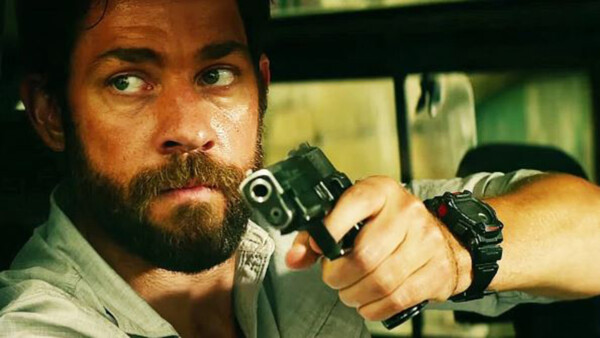
Image courtesy of Paramount Pictures.
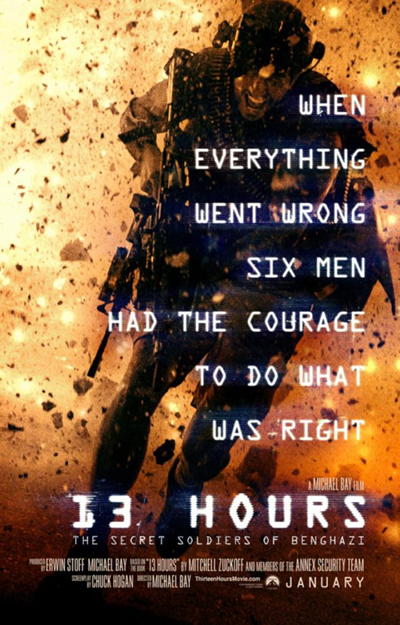
“13 Hours” Starring John Krasinski, Pablo Schreiber, and James Badge Dale. Directed by Michael Bay. 144 Minutes. Rated R.
Del’s take
Sorry, all you fine folk who refer to Hillary Clinton as “Hildabeast.” You were hoping “13 Hours,” the new Michael Bay docudrama about the 2012 attack on an American diplomatic compound in Benghazi, Libya, and a subsequent attack on a CIA outpost about a mile away, would be the stake driven through the heart of Clinton’s presidential campaign. Ain’t gonna happen. Clinton’s name is not uttered once in the two hour-plus presentation. You can go back to snuffling through the hog wallow for some stinky nugget to blow out of proportion so your insane (GOP candidate of choice) can have a chance in November.
The folks who take it on the chin in this compelling new movie are the American military and the State Department (Clinton was secretary of state at the time, but again, her name is never mentioned), both of whom are portrayed as either absent or ineffective. It is a harrowing experience, blessedly devoid of conspiracy theories or jingoistic flag-waving.
People actually clapped as the credits rolled.
The story is about an American GRS contractor named Jack Silva (John Krasinski) who joins a team of former SEALS and Delta Force soldiers charged with the protection of a CIA station in Benghazi. Meanwhile, about a mile away, the American ambassador to Libya visits a compound on the anniversary of 9/11. Before the night is over Islamic militants attack the compound. The GRS soldiers want to help defend it, but their CIA boss (David Costabile) refuses to let them go. Finally, they take matters into their own hands and fight their way into the compound, but it is too late for the ambassador, who has died in a fire set by the attackers. The soldiers then fight their way back to the CIA compound, which comes under repeated attack as they plead for U.S. military intervention. But none ever comes.
The La-Z-Boy quarterbacks who get high from huffing their own gasses love to blame Clinton for the debacle, but the movie suggests it was simple bureaucratic inertia, not a Hildabeast dislike of the military, that resulted in the tragedy. The hot-air snogglers won’t accept that, but there you go. If Adolf Hitler had been secretary of state, they would have blamed Obama.
Acting is quite good. Krasinski sheds his goofy “Office” persona for a serious role and carries it with surprising gravity. And, ladies (and some of the gentlemen) will notice he’s nicely ripped for the part. The others are all equally effective, and as a viewer you will forget they are actors and empathize with them as human beings.
As for the movie itself, Bay recuses himself from his usual absurd, over-the-top grandiosity and turns in a tense, tightly focused narrative that avoids, for the most part, the kind excessive nationalistic pomposity you saw in “Pearl Harbor.”
I’m not a fan of Hillary Clinton and have no intention of voting for her, unless confronted with a GOP candidate so utterly dangerous I have no choice but to vote against him. But to hold her accountable for what happened at Benghazi is ridiculous – a million miles of red tape and ten thousand GS-14s stood between her and Libya.
This movie says as much, and if some of the Hillary haters don’t get that, well, they deserve whatever nutbag they elect.
I rate this movie a solid B, possibly a B+. See it in a movie theater.
Mladen’s take
There was a couple of old timers behind me and a couple of middle agers in front of me while I stood in line to buy a ticket to see “13 Hours.” The old timers and the middle agers were acquainted. They chatted for a moment.
“What are you seeing?” asked one of the middle agers.
“Benghazi,” responded an old timer.
“Benghazi,” not “13 Hours.” No doubt the couple behind me watches Fox News and Listens to Limbaugh because they weren’t at the theater for entertainment. They were at the theater on a mission. That mission, I suspect, was to reinforce in their minds that Hillary Rodham Clinton, Democrat running for president, and Obama, Democrat in the White House, abandoned U.S. patriots to a mob of Libyan terrorists more than three years ago. Four Americans died in the ensuing two-day, on-again, off-again gun battle.
I also assume the couple standing behind me was disappointed. Del is correct. “13 Hours” points the finger of fault at, principally, the CIA station chief in Benghazi. He refused to let the mercenaries (i.e. former Special Operations Forces troops) hired to protect the poorly disguised CIA station in Benghazi assist the people trapped in the American consulate under attack just one mile down road.
Where facts stand and were “13 Hours” fills gaps when facts are unknown, I don’t know, but, unlike Del, I hesitate treating any product from Hollywood as accurate history. “13 Hours” is a decent film, nothing more. Generally, the characters are likable and the action intimate. This movie isn’t about remote control warfare from standoff distances. Here, bullets hit with a thunk and mortar shrapnel cuts through muscle and bone. The violence is the popping of small- and medium-caliber ammunition and the whir of RPGs.
Bay, the director, tries to infuse humanity into the mercenaries contracted to protect CIA personnel by portraying them as fathers and friends, but it was ineffective. They were in Libya by choice, rather than orders. That made them tough to appreciate as family men.
The film has its moments, particularly toward the end, of flag-waving sentimentalism, but it’s not putrid. And, it’s at the end that Bay was the most daring. “13 Hours” ends with the camera panning the battlefield outside the CIA compound. There, amid the torn white fabric, now stained red, of what once might have been a plant hothouse or animal pen with a cloth roof to protect against the sun, Libyan women and children wept at the corpses of their loved ones.
“13 Hours” is a B and worth seeing in the theater, but, be warned, the last half is bloody.
Mladen Rudman is a former journalist and technical editor. Del Stone Jr. is a former journalist and author.

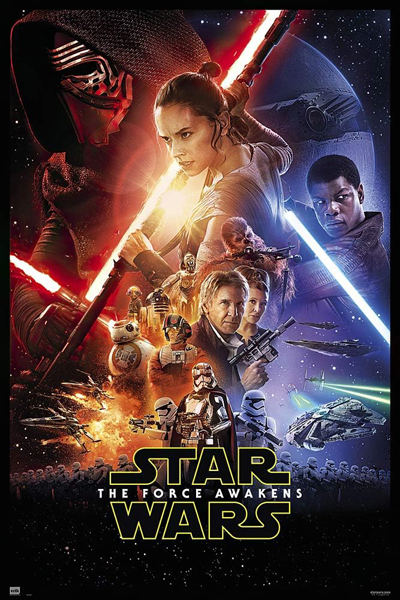
Image courtesy of Disney Studios.
“Star Wars: The Force Awakens” Starring Daisy Ridley, John Boyega, Oscar Isaac and Harrison Ford. Directed by J.J. Abrams. 135 minutes. Rated PG-13.
Del’s take
I’ve told this story before but I’ll tell it again.
My friend Sandy was feeling blue. Her husband was TDY in Korea and her teenaged kids were doing their thing. One day she decided to remedy her malaise by throwing a cookout for the kids. She took a pound of ground beef and shaped it into several thick patties. She toasted hamburger buns on the grill as the burgers sizzled. She gathered all the trimmings and condiments – tomatoes, lettuce, cheese, mustard, mayo, and ketchup.
When the kids looked at those fat, juicy, steaming burgers, they turned up their noses and sniffed, “We wanted REAL hamburgers, like McDonalds.”
Moviegoers have watched the cinematic equivalent of fast food for so long they have no idea what the real thing looks like. To them, “Star Wars: The Force Awakens” is an actual movie, and a good movie at that. But those of us who know what a real hamburger looks and tastes like know this latest installment of the Star Wars canon is little more than a dime-sized beef-like patty sandwiched between two white-bread buns topped with a pickle and a miserly squirt of watered down mustard and ketchup.
And it’s not even CREATIVE fast food. Instead, it’s a brazen, in-your-face, do-something-about-it rip-off of the first movie. Call it “The Force Awakens a New Hope” because that’s precisely what it is … a splashy, high-resolution rehash.
Here’s the plot: A droid is carrying a map that will help the rebellion find Luke Skywalker, who holds the key to … something. I think it was the revival of the Jedi, but I’m not sure. I wish it were lower popcorn prices.
Special effects are light years superior to the first movie and John Boyega does a good job as Finn. Even Harrison Ford seems to enjoy his outing as Han Solo.
But some of the performances are terrible. Domhall Gleeson’s portrayal of General Hux is comically overwrought, and Carrie Fisher reads her lines as if she were sucking to keep dentures in her mouth. Through no fault of Adam Driver, the Kylo Ren character fails to equal the ominous and imposing Darth Vader; instead, he’s a damaged little boy with daddy issues.
The movie itself seems to lurch from one adventure to the next without much in the way of connective tissue, making it one vast, pointless coincidence.
I went into “The Force Awakens” with the expectation I would see a competent if not creative re-establishment of the Star Wars franchise, much like my experience last summer with “Jurassic World.” I came out offended that J.J. Abrams has no more respect for the moviegoer than to plagiarize “A New Hope.”
The fact that this movie will become the biggest grossing film of all time leads me to believe I am forever condemned to watching the cinematic equivalent of fast food burgers. Oh well, at least it isn’t Soylent Green. Or is it?
By all means, go see “The Force Awakens a New Hope” in a movie theater, because that is where all movies should be seen. Skip the popcorn; you’ll want fries with that.
And a year from now, don’t buy the DVD. You already own it.
Mladen’s take
I want my money back. The money I paid for my “Stars Wars: The Force Awakens” ticket and the money I paid for Del’s “The Force Awakens” movie ticket.
And, I want the money back for all my friends – and the rest of the globe – who have yet to realize that the film is 1) mediocre at best and 2) saved barely by Daisy Ridley’s performance as Rey with assistance from John Boyega as Finn.
I’m also filing a claim with the Better Business Bureau against Disney for false advertising. “The Force Awakens” is not a continuation of the Star Wars saga. It is a remake of the first Star Wars movie released some four decades ago.
The more I think about the movie, the more I become frustrated.
TFA offer nothing compellingly original. A Death Planet, rather than a Death Star. Really, director JJ Abrams?
TFA is laced with weakling bad guys and improbable coincidences that keep the movie moving sideways. As Del noted during our conversation amid a round of disc golf, the movie has no plot, so it’s impossible for it to move forward. It’s worse than the least good of the three original films, “Return of the Jedi,” but better than the prequels. Of course, Jackass 4 is better than Sith tales I, II, and III.
Because I felt little for the characters, barring Rey, I paid attention to what TFA did have to offer, a solid soundtrack and terrific sound effects.
TFA is a distraction. By playing it safe and formulaic to bamboozle all the poor Star Wars fans out there hoping for something to break the disappointment of the franchise’s three most recent efforts, Disney committed a different error. The one called profit motive.
Now I understand the reason for Disney’s hyper hyperbolic marketing campaign, particular using dumbass social media. The Mickey Mouse company had to earn more box office than a heavily marketed, equally unsatisfying blockbuster of six years ago, “Avatar.” Moviegoers were used then and moviegoers have been used today. The lesson that was reinforced by the Star Wars juggernaut? Sell a movie hard enough, build expectations that touch Jakku in a galaxy far, far away, and no one will recognize the difference between a provocative, high-quality, and stimulating experience and cookiecutter entertainment packed with razzle dazzle empty calories.
I hope that this movie doesn’t sink Ridley’s and Boyega’s careers. If they’re forever typecast as Rey- and Finn-like characters, their solid acting skills will never see the light of a good film.
Mladen Rudman is a former journalist and technical editor. Del Stone Jr. is a former journalist and author.

Image courtesy of Wikimedia user Dori by way of a Creative Commons license. https://commons.wikimedia.org/wiki/User_talk:Dori
I saw something on my walk today I think would make an awesome story, maybe a fable. Here goes:
Once upon a time there was a lonely little hawk. The hawk was lonely because every time he flew to a tree to make friends with the other birds, they flew away, afraid the hawk would eat them. One day the hawk was perched on a branch, crying his little eyes out. A mourning dove took pity and asked, “Why are you crying, little hawk?” The hawk replied, “I’m lonely. I have no friends” This broke the dove’s heart. “I’ll be your friend,” the dove declared, and the hawk said, “You will? Oh, thank you!: The two had fun all day, and then the hawk ate him.
The End.
About the author:
Del Stone Jr. is a professional fiction writer. He is known primarily for his work in the contemporary dark fiction field, but has also published science fiction and contemporary fantasy. Stone’s stories, poetry and scripts have appeared in publications such as Amazing Stories, Eldritch Tales, and Bantam-Spectra’s Full Spectrum. His short fiction has been published in The Year’s Best Horror Stories XXII; Alfred Hitchcock’s Mystery Magazine; the Pocket Books anthology More Phobias; the Barnes & Noble anthologies 100 Wicked Little Witch Stories, Horrors! 365 Scary Stories, and 100 Astounding Little Alien Stories; the HWA anthology Psychos; and other short fiction venues, like Blood Muse, Live Without a Net, Zombiesque and Sex Macabre. Stone’s comic book debut was in the Clive Barker series of books, Hellraiser, published by Marvel/Epic and reprinted in The Best of Hellraiser anthology. He has also published stories in Penthouse Comix, and worked with artist Dave Dorman on many projects, including the illustrated novella “Roadkill,” a short story for the Andrew Vachss anthology Underground from Dark Horse, an ashcan titled “December” for Hero Illustrated, and several of Dorman’s Wasted Lands novellas and comics, such as Rail from Image and “The Uninvited.” Stone’s novel, Dead Heat, won the 1996 International Horror Guild’s award for best first novel and was a runner-up for the Bram Stoker Award. Stone has also been a finalist for the IHG award for short fiction, the British Fantasy Award for best novella, and a semifinalist for the Nebula and Writers of the Future awards. His stories have appeared in anthologies that have won the Bram Stoker Award and the World Fantasy Award. Two of his works were optioned for film, the novella “Black Tide” and short story “Crisis Line.”
Stone recently retired after a 41-year career in journalism. He won numerous awards for his work, and in 1986 was named Florida’s best columnist in his circulation division by the Florida Society of Newspaper Editors. In 2001 he received an honorable mention from the National Lesbian and Gay Journalists Association for his essay “When Freedom of Speech Ends” and in 2003 he was voted Best of the Best in the category of columnists by Emerald Coast Magazine. He participated in book signings and awareness campaigns, and was a guest on local television and radio programs.
As an addendum, Stone is single, kills tomatoes and morning glories with ruthless efficiency, once tied the stem of a cocktail cherry in a knot with his tongue, and carries a permanent scar on his chest after having been shot with a paintball gun. He’s in his 60s as of this writing but doesn’t look a day over 94.
Contact Del at [email protected]. He is also on Facebook, twitter, Pinterest, tumblr, TikTok, Ello and Instagram. Visit his website at delstonejr.com .